Tel:
+86 13143444311
Email:sst@szsst88.com
Fax:+0086-755-27322278
Address:Building 9, First Industrial Zone, Tantou Industrial City, Songgang Street, Baoan District, Shenzhen 518105, Guangdong, China
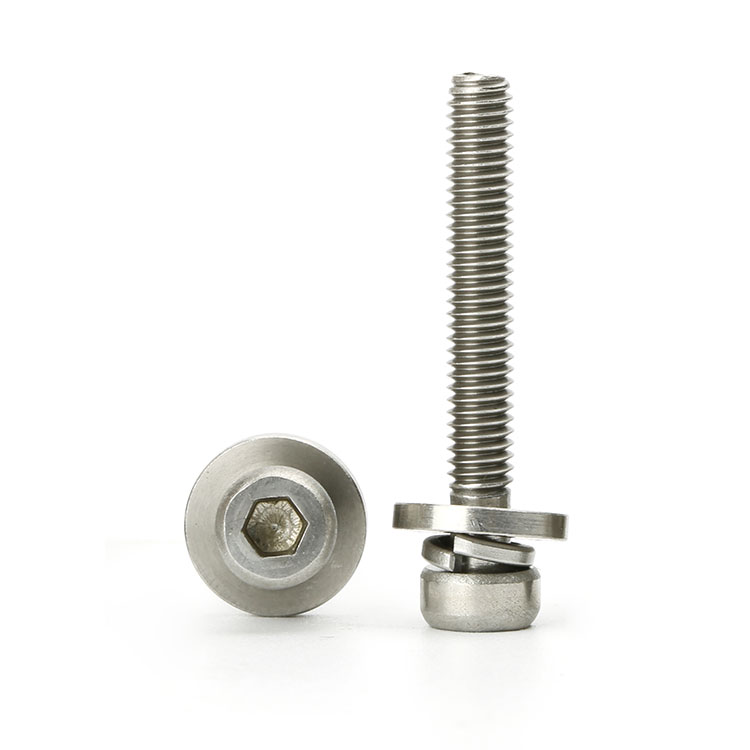
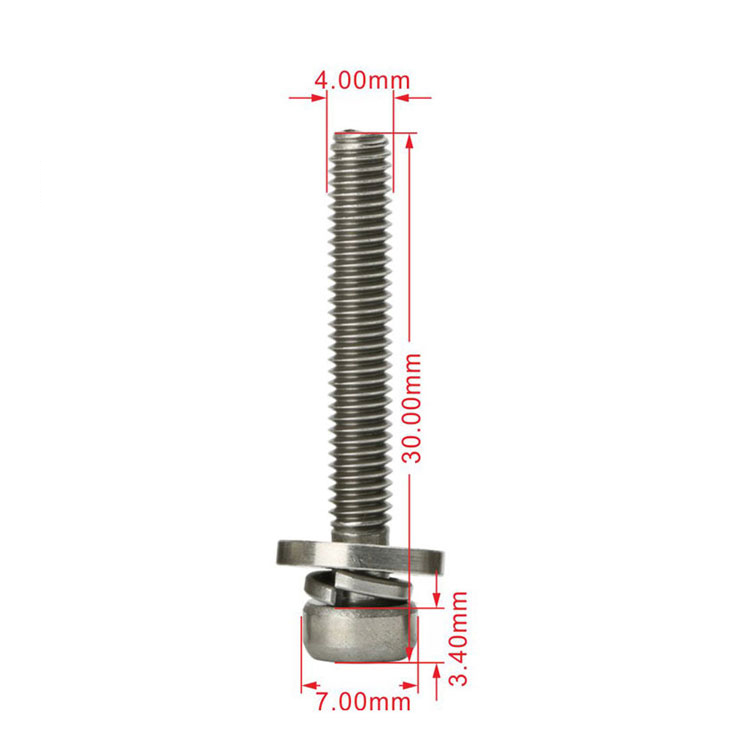
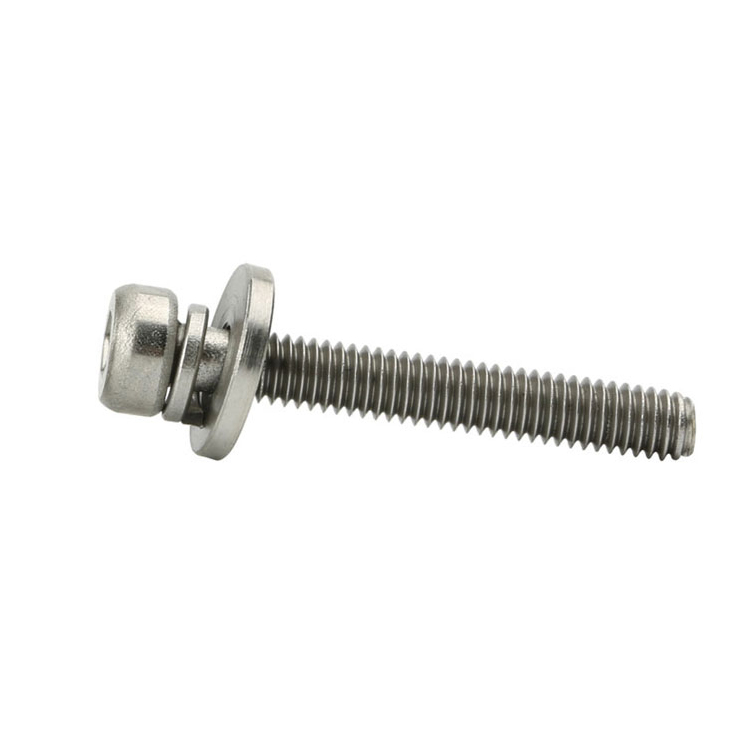
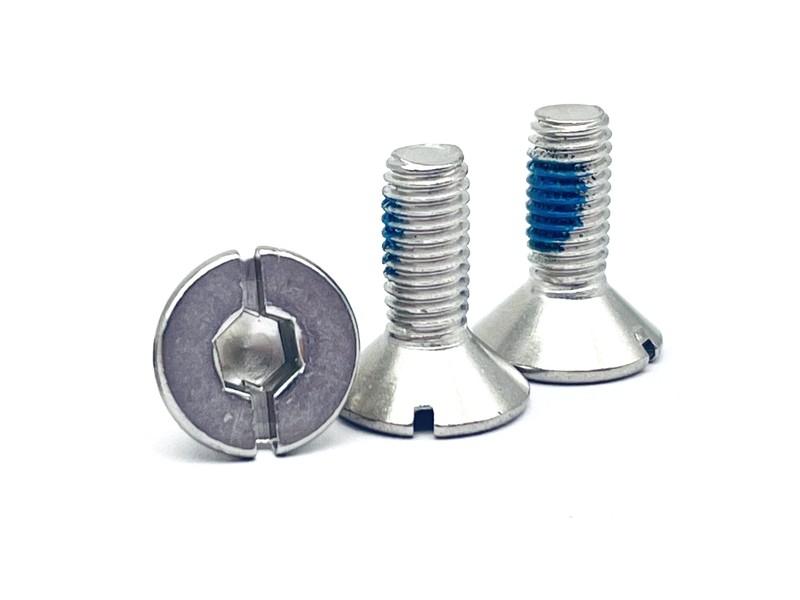
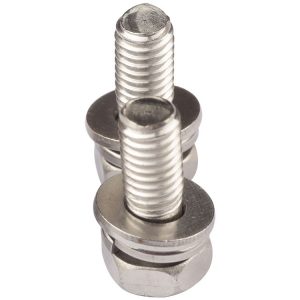
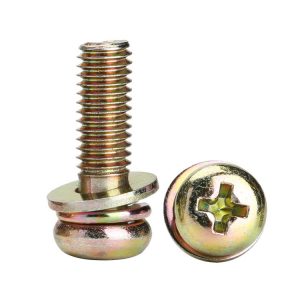
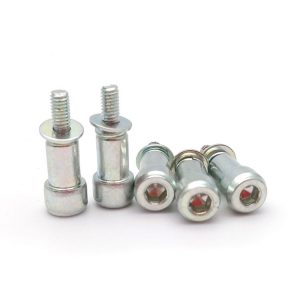
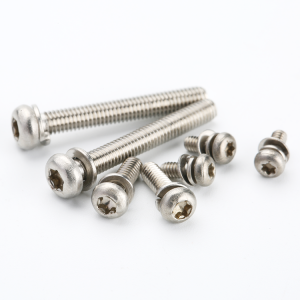
Type:Sems Screw with Captive Flat Washer, Hex Socket Cap Head (Non-Standard)
Materials:Stainless Steel
Surface treatment:Plain (cleaned and passivated, no applied coating)
Head Type:Cap Head (plain cylinder, flat top, chamfered top edge, no flange)
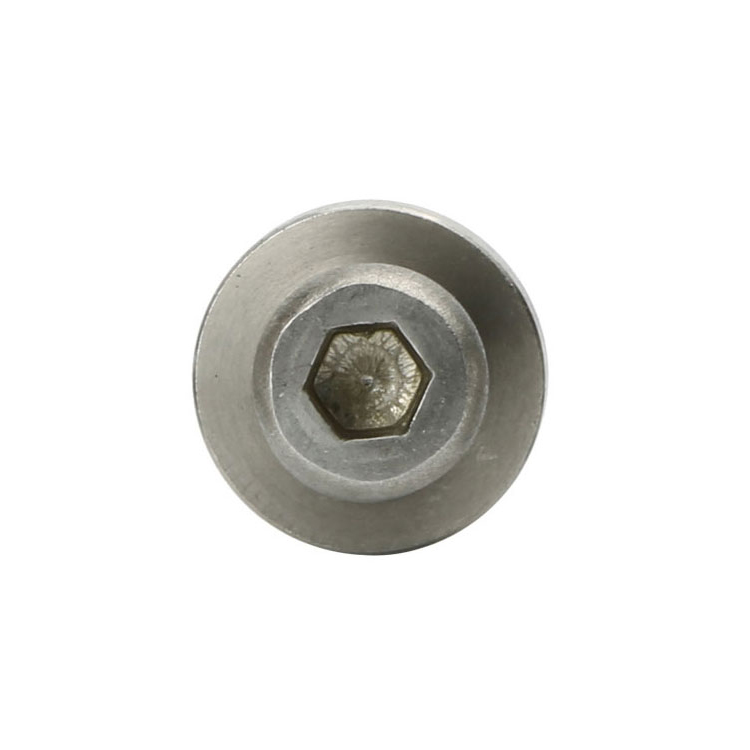
Drive:Hex socket (internal hexagon with six flats, no cross, no slot)
Washer:Captive flat washer under the head, pre-assembled and non-detachable
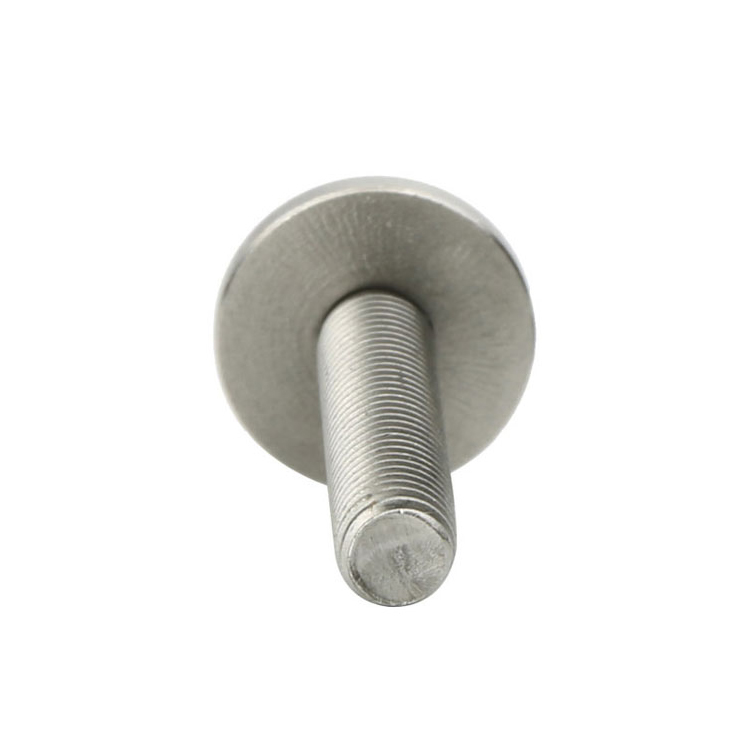
Thread:Machine thread, rolled 60 degree, full to the washer seat
Point:Blunt end with a small chamfer, no taper, no drill point
Forming:Single-die heading, washer assembly, thread rolling, cleaning and passivation, sorting
Size:M1 M2 M3 M4 M5 M6 M7 M8 M9 M10 M14
Number:299
We manufacture sems screws with flat washers: stainless steel cap head screws with a hex socket and a captive flat washer held on by the rolled thread, quoted from M1 to M14. Head, socket, washer size, length datum and thread are taken from your drawing.
Watch the factory video·Email sst@szsst88.com
ISO 9001:2015 · Manufacturing since 1998 · 8,678+ customers · 89 countries and regions
Made to order – there is no stock catalogue. Each part is produced to your drawing, and production starts after drawing review and first-article approval.
A sems screw with flat washer is a machine screw supplied with its washer already assembled and held on the shank, so the two cannot separate in handling. The recorded item on this page is a stainless steel cap head screw with a hex socket, a captive flat washer under the head, a machine thread rolled full to the washer seat and a blunt point, quoted from M1 to M14 with Number 299.
Captive, not loose. The washer is not packed in the same bag; it is trapped on the screw. The thread is rolled after the washer is in place, so the crests above the washer are larger than the hole in the washer and it cannot slide off over the point.
Cap head. A plain cylinder with a flat top and a chamfered edge. There is no flange and no dome, so the bearing area comes from the washer rather than from the head itself, and the head can be sunk into a counterbore without fouling.
Hex socket. An internal hexagon, driven with an Allen key. It carries more torque than a cross recess of the same head size, which is why it is used where the joint is tightened hard or opened often.
Machined point? No — blunt. The end is chamfered and blunt. This is a machine screw: it goes into a tapped hole or a nut, and a sems screw with flat washer is not meant to cut its own thread.
Together these decide the joint: the socket takes the torque, the cap head stays inside the counterbore, the captive washer spreads the load and cannot be lost, and the stainless body lets the part sit outdoors or in wash-down areas without a coating.
The body is stainless wire, with grade and heat number on the batch record. The cap head is upset in a single heading stroke with its flat top and chamfered edge, and the hex socket is formed in the same stroke, so the socket and the shank stay concentric. On a sems screw with flat washer that concentricity decides whether the key sits square in the socket.
Then comes the step that defines the part. The flat washer is dropped onto the shank before the thread is rolled, and the rolling dies then form the thread up to the washer. The washer is left sitting on the crests of the first thread turn, trapped between the head and the thread. That is the whole mechanism, and it is why the washer on a sems screw with flat washer cannot be swapped for a different one after the batch is made.
The washer seat is the bearing face of the assembly. It is flat and it has to stay flat: a dished washer concentrates the load on its inner edge and the joint loosens even though the screw is tight. The washer is checked flat before assembly and again on the finished part.
The socket has a depth that is set against the head height. A socket that is too shallow bottoms out on the key and the key rounds off under torque; a socket that is too deep cuts into the material that has to take the head load. On a cap head the two numbers are tied together and neither can be changed alone.
The thread runs full to the washer seat, with no plain shank. Cleaning and passivation come last, and because nothing is plated afterwards, the thread and the washer are gauged and checked in the condition they ship.
The family is quoted from M1 to M14, with M1, M2, M3, M4, M5, M6, M7, M8, M9, M10 and M14 in the recorded range. Custom lengths up to 2,000 mm are subject to DFM review after drawing submission, and on a sems screw with flat washer the washer sits inside the quoted length, so the datum matters more than on a plain screw. Sizes for a sems screw with flat washer are therefore quoted with the washer in place.
| Item | How it is defined | What we control |
|---|---|---|
| Thread | Metric machine thread, coarse pitch for the size | Gauged per batch, full to the washer seat |
| Head | Cap head, plain cylinder, chamfered top edge | Diameter and height on the projector |
| Socket | Internal hexagon sized to the thread | Depth and across-flats checked on the first article |
| Washer outside diameter | Wider than the head, set on the drawing | Measured per batch |
| Washer inside diameter | Smaller than the rolled thread crests | Checked on the assembled part |
| Washer thickness and flatness | Thickness per drawing; flat both faces | Flatness checked before assembly |
| Length datum | From the underside of the washer to the tip | Measured on the shop plate |
The length datum is the point where drawings most often disagree. The usable length of a sems screw with flat washer is measured from the underside of the washer, because that is the face that bears on the panel and the length that has to fit the hole. If a drawing quotes under-head length instead, the working length is shorter by the washer thickness, and on a thin panel that difference is enough for the screw to bottom before the washer seats.
Washer size is a joint decision too. A washer that is too small for the panel does not spread the load, and one that is too large can bridge a boss or foul a neighbouring part. The outside diameter belongs on the drawing next to the head diameter, not left to the standard.
The washer is the reason this part exists, and it changes the assembly more than the head does. A loose washer is a part that has to be counted, picked and placed; a captive one arrives with the screw and leaves with it. That is the whole case for a sems screw with flat washer on any line that places its own fixings.
| Situation | What the captive washer does | What it costs |
|---|---|---|
| Manual assembly | No loose washer to pick, drop or forget | The washer cannot be changed after the batch |
| Automated feeding | One part instead of two in the feeder | The washer thickness is fixed into the length |
| Service and re-work | The washer comes off with the screw | A damaged washer means replacing the screw |
| Soft or thin panel | Load spread over the washer face | Stack height grows by the washer thickness |
| Counterbored hole | Washer seats inside the counterbore | Counterbore depth has to allow for it |
Two checks decide whether the washer behaves. The first is retention: the washer has to spin freely but not pull off over the thread. The second is flatness. A captive washer that is slightly dished will flatten under load and lose preload, and because it is not a separate part nobody notices it until the joint comes loose.
The hex socket is the other half of the design. It transfers more torque than a cross recess, and it needs a key that fits across the flats rather than a bit that tapers into a cross. On stainless the socket is also where galling shows first: a key that is slightly worn will seize in a hard socket under load, and the usual answer is a dry film inside the socket rather than a bigger key.
There is no coating on this part. The protection comes from the alloy, and passivation removes the free iron left by heading and rolling so that the passive layer can rebuild over the whole surface, including the cut edge of the washer. On a sems screw with flat washer the washer edge is the largest rough surface in the assembly, so it is also where passivation is judged.
| Option | What it does | Where it suits | What to state on the drawing |
|---|---|---|---|
| 304 screw and 304 washer | Same alloy throughout the assembly | General indoor and outdoor work | Grade plus passivation |
| 316 screw and 316 washer | Molybdenum for chloride exposure | Coastal, marine and wash-down areas | Grade plus passivation |
| Dry film in the socket | Reduces galling between key and socket | Joints opened often | Film and where it is applied |
| Dry film on the thread | Reduces galling between stainless threads | Repeated assembly | Film and where it is applied |
| Satin bead blast | Even matte face on head and washer | Visible fixings | Grade plus blast finish |
Mixing grades inside one assembly is where problems start. A 316 screw with a 304 washer leaves a galvanic pair sitting in the same crevice, and the washer is the part that corrodes first because it is thinner. The drawing states the grade of both, and both come from the same heat record.
The washer edge is a cut edge and it is where passivation matters most. A washer punched from sheet has a rougher edge than the screw shank, and if the free iron there is not removed the assembly shows rust first at the washer, which reads as a screw fault.
Three assemblies where a screw and its washer have to arrive together:
| Where it sits | The screw closes a cover or fixes a bracket on a line where hundreds of fixings are placed per shift, with the washer under the head on a painted or coated panel. |
| When it goes wrong | A loose washer is dropped, forgotten or double-fed, and a missing washer leaves the head bearing directly on a coating it damages. |
| Why it happens | The volume is high, the parts are fed automatically or picked by hand, and a missing washer stops the line. |
| What we control | Washer retention checked by pull test, washer flatness checked per batch, and the length datum confirmed from the washer face. |
| Where it sits | The screw holds a bracket, a cover or a trim part where the joint is opened in service and the washer has to stay with the fastener. |
| When it goes wrong | A washer left behind on a bench becomes a rattle or a lost part, and a screw without its washer scores the paint when it is refitted. |
| Why it happens | The joint is serviced, the parts are handled in bins, and the finish on the surrounding panel matters. |
| What we control | Washer retention and socket depth checked on the first article, thread gauged per batch. |
| Where it sits | The screw fixes a guard, a panel or a fitting on equipment that stands outside or is washed down, with a stainless washer spreading the load on a thin sheet. |
| When it goes wrong | A plated washer rusts at the hole and stains the panel, and a washer that is too small dishes the sheet under torque. |
| Why it happens | The joint is exposed, the panel is thin, and the fixing is expected to come apart again for maintenance. |
| What we control | Grade of both parts confirmed, passivation batch recorded, and washer diameter checked against the hole. |
Four reasons that matter on an assembled fastener, each tied to what the drawing has to prove:
|
Washer and length reviewed together
The washer thickness, outside diameter and the length datum are reviewed as one set, so the working length is quoted from the washer face rather than from under the head. Basis: Washer and length datum reviewed as one set. |
Washer fitted before the thread is rolled
The washer is placed on the shank and then the thread is rolled over it, so retention comes from the thread form itself rather than from a staking step. Basis: Retention formed by the thread roll. |
|
Retention and flatness checked on the part
The washer is pulled and spun on the first article, and its flatness is checked before assembly and again on the finished screw. Basis: First article pull-tested and checked flat. |
First article to repeat production
The first article fixes the drawing revision, wire heat, washer lot, die set and thread roll; repeat orders are compared against that record. Basis: First article signed off before the batch is released. |
Shi Shi Tong forms these sems screws with flat washers on a single-die header that upsets the cap head and the hex socket in one stroke, fits the flat washer to the shank, and then rolls the machine thread up to the washer seat. The parts are cleaned and passivated. The first part of every run is measured on the head, the socket and the washer, and pulled to confirm retention, before the batch continues. Every sems screw with flat washer in a batch is made on the same sequence: head, washer, thread, passivation.


|

|
The sequence is the whole process. Rolling the thread before the washer is fitted leaves nothing to trap it, and fitting the washer after plating puts a bare washer on a plated screw. On this part the washer goes on between heading and rolling, and the passivation covers the assembly as one piece, which is why the washer edge is as clean as the shank.
What decides whether a sems screw with flat washer passes is the head, the socket, the washer, the thread and the assembly itself. The inspection agreement covers those, and the criteria come from the drawing.

Head and socket on the projector |

Thread gauged per batch |

Hardness testing against the property class |

Salt-spray testing of the passivated assembly |
Retention is checked on the first article and then sampled through the run. The washer is spun to confirm it turns freely and pulled to confirm it does not come off over the thread; a washer that is tight enough to bind or loose enough to pass the point is rejected in both directions. Retention is the first thing checked on any sems screw with flat washer, before the dimensions.
The socket is checked with the key that the customer uses, not only with a gauge. A socket that measures correctly but has a rough bottom will round the key under load, and the first article is driven at the joint torque and then inspected for marks at the hex corners.
Every shipment of sems screws with flat washers is traceable to the wire it was made from. The grade and heat number are recorded on the material certificate supplied with the parts, together with the washer lot, and the inspection records follow the criteria agreed on the drawing.

ISO 9001:2015 |

RoHS test report |

Registered trademark |

Patent: security screw and driver |
With each batch we supply the material certificate, the inspection record for the criteria on the drawing and, where it is listed, the third-party report for the material or the surface condition. The documents carry the drawing revision and the batch number, so the paperwork can be matched to the parts.
More than 8,678 customers in 89 countries and regions have ordered from Shi Shi Tong; 87% of orders come from repeat customers and 56% through referrals. Most projects follow the same route: drawing review, first-article approval, then batches checked against that sample. On an assembled part the first article settles two things at once, the joint and the washer, and both are signed off together. Buyers who specify a sems screw with flat washer usually ask to see the retention test rather than the drawing. Buyers visit during the process to review samples and to see how the washers are fitted.
|
8,678+
customers served
|
87%
of orders from repeat customers
|
56%
of orders through referrals
|
89
countries and regions shipped to
|
Buyers and quality engineers visit for sample review, process discussion and supplier audits; the visit is arranged around production so the header and the finishing line can be seen on the day the parts run.

Customer group visit – sample review |

Customer group visit – process discussion |

Customer group visit – factory tour |

Customer visit – project kick-off |

Danish customer – drawing review |

Industry exhibition – meeting customers |
It is a screw supplied with a washer already fitted and held on the shank, so the two cannot separate. The washer turns freely but cannot come off over the point.
The thread is rolled after the washer is placed on the shank. The rolled crests are larger than the hole in the washer, so it is trapped between the head and the first thread turn.
No. Retention is formed into the thread, so a different washer cannot be fitted to the same batch. If another washer size is needed, it is a new part and a new drawing.
The working length is measured from the underside of the washer to the tip, because that is the face that bears on the panel. State the datum on the drawing so it is not read as under-head length.
The socket carries more torque in the same head size, and it does not cam out the way a cross does. It needs a key that fits across the flats.
Thread size and pitch, head diameter and height, socket size, washer outside diameter, inside diameter and thickness, length and its datum, stainless grade for both parts, and the surface treatment.
How a sems screw with flat washer project runs from drawing to repeat delivery:
|
1
Send the drawing or sample
|
→ |
2
Washer and length review
|
→ |
3
First article pulled and driven
|
→ |
4
Batch production and repeat orders
|
Each step is confirmed with you before the next one starts; the drawing revision from the first article is what repeat orders are checked against.
For a quotation, send the drawing with the thread size and pitch, head diameter and height, socket size, washer outside diameter, inside diameter and thickness, length and datum, stainless grade, and surface treatment.
|
Thread size and pitch
|
Head and socket
|
Washer outside diameter
|
|
Washer inside diameter
|
Washer thickness
|
Length and datum
|
Sending a drawing? The form below does not take attachments. Email the PDF, DXF or STEP file to sst@szsst88.com with the part name and quantity in the subject line – the drawing is reviewed and a quotation follows.

 +86 13143444311
 sst@szsst88.com