Tel:
+86 13143444311
Email:sst@szsst88.com
Fax:+0086-755-27322278
Address:Building 9, First Industrial Zone, Tantou Industrial City, Songgang Street, Baoan District, Shenzhen 518105, Guangdong, China
Type:Custom Extra Long Machine Screw
Materials:Stainless Steel / Carbon Steel / Aluminum / Titanium / Copper (grades per drawing)
Surface treatment:Zinc / Zinc-Nickel / Nickel / Dacromet / Electrophoresis (selected per part and thread)
Head Type:Socket / Button / Pan / Hex / Custom
Drive type:Hex Socket / Torx / Phillips / Slotted / Custom
Thread:Machine thread, rolled; thread length and thread start as specified on the drawing
Forming:Multi-station cold heading from wire or turning from bar, with head and shank formed from one billet; thread rolled after forming
Diameter:M1.4–M12
Length:200–2,000 mm (per drawing review)
We manufacture custom extra-long machine screws in stainless steel, carbon steel, aluminum, titanium and copper, from M1.4 to M12 and 200 to 2,000 mm, produced by one-piece multi-station cold heading or turning to your drawing, for fixed battery storage modules, hydrogen stacks, hydraulic power units and motor frames. Head style, drive, thread, plain shank and finish are made to your drawing, and length, plain shank and thread start are reviewed before production.
Watch the factory video·Email sst@szsst88.com
ISO 9001:2015 · Manufacturing since 1998 · 8,678+ customers · 89 countries and regions
Made to order – there is no stock catalogue. Each extra-long screw is produced to your drawing, and production starts after drawing review and first-article approval.
A custom extra-long screw is defined by the relationships that break down as the length grows: the length-to-diameter ratio, the plain shank between head and thread, and the position of the thread start on the drawing. Length, head, drive, thread and finish are made to order, so the drawing is what the shop works from.
Length-to-diameter ratio. A long screw carries its shape from the bar and the forming route, and a small bow on a 1,000 mm extra-long screw shows up when the part is fitted through the assembly. Left unchecked, it binds in a fixed frame and pulls the whole stack out of line.
Plain shank and thread start. The plain shank keeps the unsupported span off the thread and fixes where the thread begins. If the thread start wanders, the screw runs out of engagement before the head seats.
Head and drive budget. The head must still take the specified drive once the length is made; a driver that slips on a long extra-long screw damages the recess, and the part cannot be re-driven on site.
Together these three decisions settle what the screw does on site: it goes through the stack without binding, it seats without false torque, and it can be removed and refitted during service. That is the problem a custom extra-long screw is bought to solve.
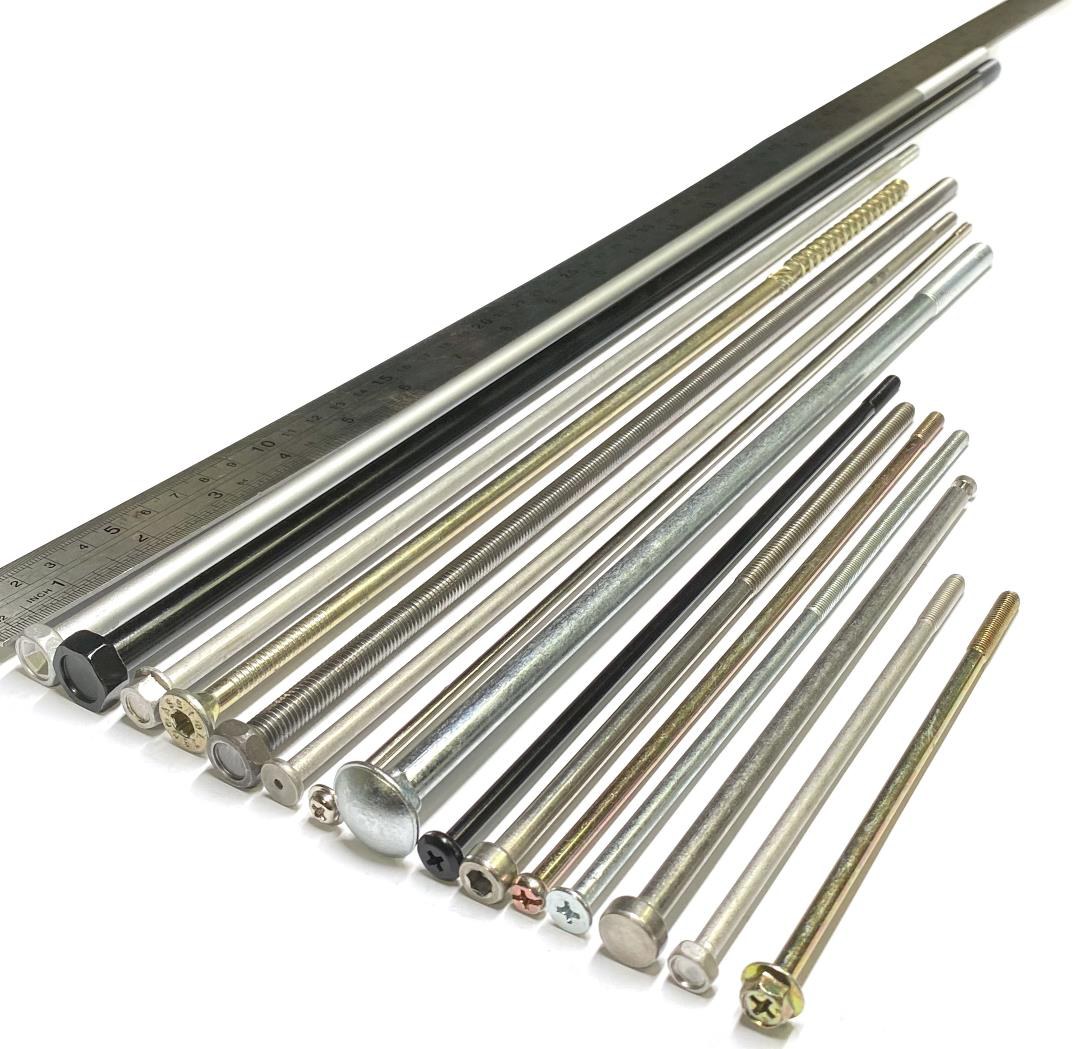
Extra-long screws in several head styles, threads and finishes – geometry defined on the drawing
An extra-long screw is made as one piece: a multi-station cold-heading route where the length and head shape allow it, or a turning route from bar where they do not. A welded or joined shank is a different structure, with a seam at the joint, and it is not offered as the default for an extra-long screw.
The route is named on the drawing because it fixes two things at once: the head-to-shank transition and the thread start. On a heading route the head and the first part of the shank are formed from the same billet; on a turning route the head and shank are cut from one bar with the same datum. Either way there is no joint to hide.
A weld seam on an extra-long screw that carries the whole stack is a corrosion path and a fatigue origin, and it cannot be inspected from the outside once the part is plated. Threads are rolled after forming on the heading route and cut on the turning route; both are gauged in the condition agreed on the drawing.
The heading window is set by diameter, length and head shape, not by a catalogue rule: a long thin shank with a large head is reviewed before a die is cut, and if the forming ratio does not support the length the part moves to turning. That decision is recorded on the drawing so the next batch follows the same route.
Extra-long screws are quoted from M1.4 to M12 and 200 mm to 2,000 mm. Length is usually held to +0/-2 mm on the drawing, and anything outside these bands is reviewed against the drawing before a quotation is issued.
| Item | How it is defined | What we control |
|---|---|---|
| Total length | From the datum (normally under the head) to the tip | Datum stated on the drawing; length measured on the shop plate |
| Thread length and position | Where the thread starts and how far it runs | Thread start checked against the drawing, not against a sample |
| Plain shank length | The unthreaded span that sits in the supports | Shank length and diameter held to the assembly stack |
| Head diameter and height | Head envelope that the recess sits in | Head checked with the drive in the same operation |
These five values are what a fixture sees. A part can be within length and still fail in assembly if the thread starts 2 mm early and takes the plain shank out of its support, so the drawing groups them rather than quoting length alone.
Diameter and length are quoted per part; each combination is checked against the drawing before a quotation is issued. A long thin part and a short thick one in the same diameter class take different routes, so the check confirms that the route can hold the length and the thread start.
The drawing for an extra-long screw fixes five things: thread size and pitch, thread length and position, plain shank length, total length and its datum, and right- or left-hand direction. On a short screw the thread is a detail; on an extra-long screw it decides where the part is supported and where it engages.
| Parameter | Why it matters on a long part | What we control |
|---|---|---|
| Thread start position | It sets where the plain shank ends and where the part can be supported | Start dimension checked on the first article and per batch |
| Engaging length | Too short leaves the joint weak; too long runs the thread into the support | Thread length and position taken from the drawing |
| Chamfer or point | The lead-in decides whether the thread starts square in a blind or floating hole | End form per drawing, checked with the threading operation |
| Handedness | A left-hand thread on a right-hand assembly will not pull the joint closed | Direction marked on the part and on the packing |
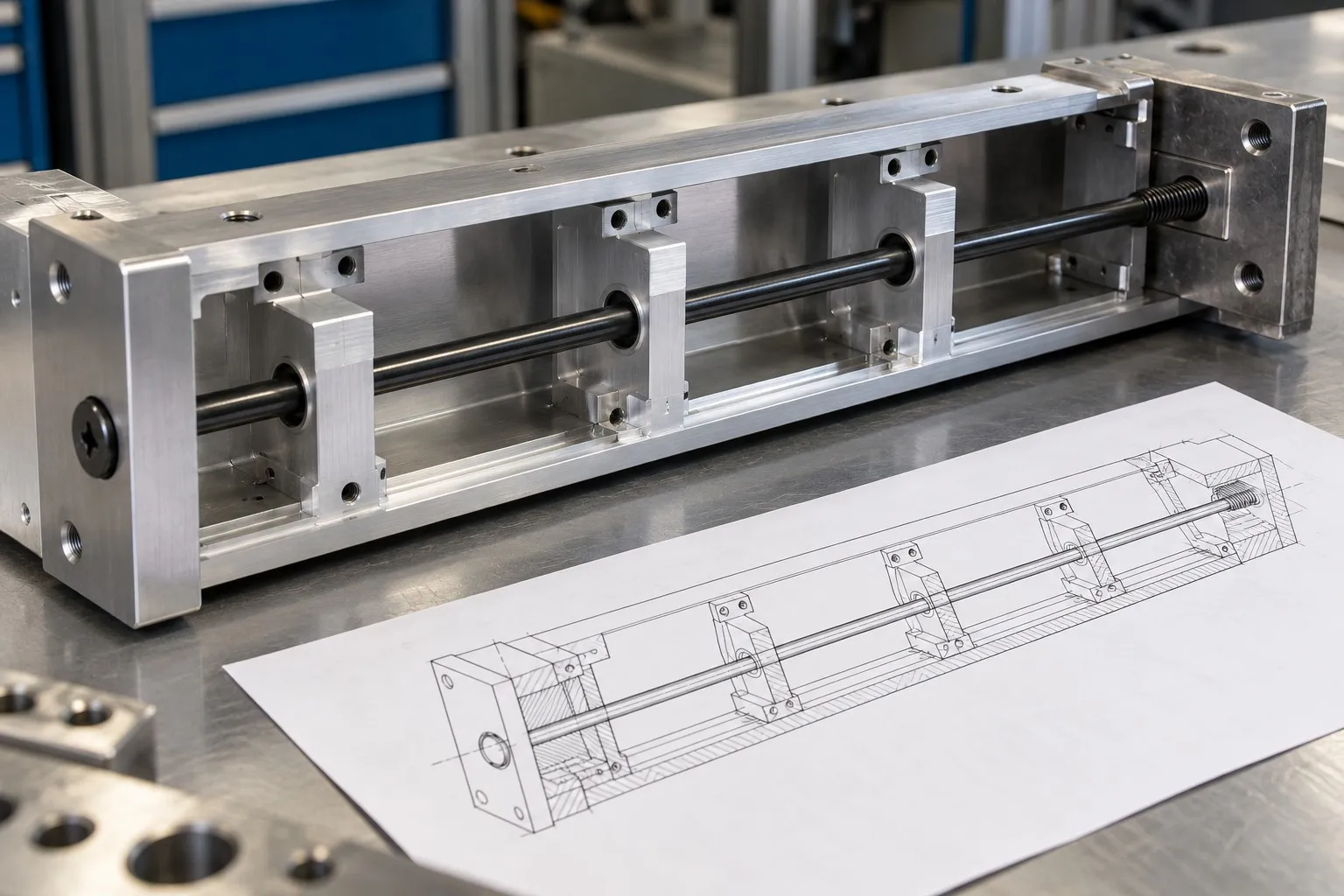
Frame assembly and its drawing – datum, thread position and plain shank settled before the quotation
Thread position matters more on a long part than on a short one: the engaging length sits at the far end of a long span, so a thread that starts too early takes the shank out of the support and a thread that starts too late leaves the joint short. That is why the drawing of an extra-long screw shows the start relative to the datum rather than the thread length alone.
Left-hand threads are quoted from the drawing and marked on the part. Mixed assemblies are checked at the packing stage so a right-hand part cannot be issued against a left-hand position in the same project.
Finish for an extra-long screw is chosen with the thread in mind. On an extra-long screw every coating adds material to the flank of the thread and to the walls of the recess, and on a long part the same coating has to stay uniform over a metre or more of shank – which is why the finish is specified on the drawing with its thickness target and the condition in which the thread is gauged.
| Finish | Typical use | Effect on thread and recess | Release state |
|---|---|---|---|
| Zinc electroplated | General machine screws, indoor assemblies | Adds a few microns to thread and recess; the drive feels tighter after coating | Gauged after coating where the thread is a fit |
| Zinc-nickel | Damp or mildly corrosive service | Thicker than zinc and more uniform on long parts; masking may be required | Thickness and thread gauging agreed per project |
| Nickel | Appearance and wear resistance | Harder film; build-up inside the recess is noticeable on small drives | Recess checked with the matching driver after coating |
| Dacromet | Wet, outdoor or high-strength parts | Thin, even film with low hydrogen risk; tone is matte grey | Coating thickness and thread fit agreed on the drawing |
| Electrophoresis | Black decorative or protective finish | Uniform film, but it fills the recess and the thread root | Thread and recess gauged in the coated condition |
| Plain / passivated | Stainless parts where the metal is the finish | No added thickness; the surface is the machined and cleaned metal | Surface and thread checked as machined |
The table is a selection guide, not a release: the finish on a given part is stated on the drawing and confirmed on the acceptance sample. Where the thread is a functional fit, the drawing says whether gauging is done before or after coating – and in practice it is the coated condition that the customer receives.
Salt-spray exposure time and the acceptance state are agreed per project and written on the drawing. On high-strength parts the plating sequence and any post-plating bake are part of the drawing review, because hydrogen picked up in plating is a risk on a part that carries load.
Packing is part of the finish specification on long parts: the shaft is braced in the tube or crate so it cannot take a set in transit, threads are protected at the ends, and the finish, batch and direction are marked on the label so the part that arrives is the part that was gauged.
Four assembly conditions where a standard length stops working, and what an extra-long screw has to do instead:
Battery storage modules
|

Battery modules – tie rods through the stack |
Hydrogen and fuel-cell stacks
|
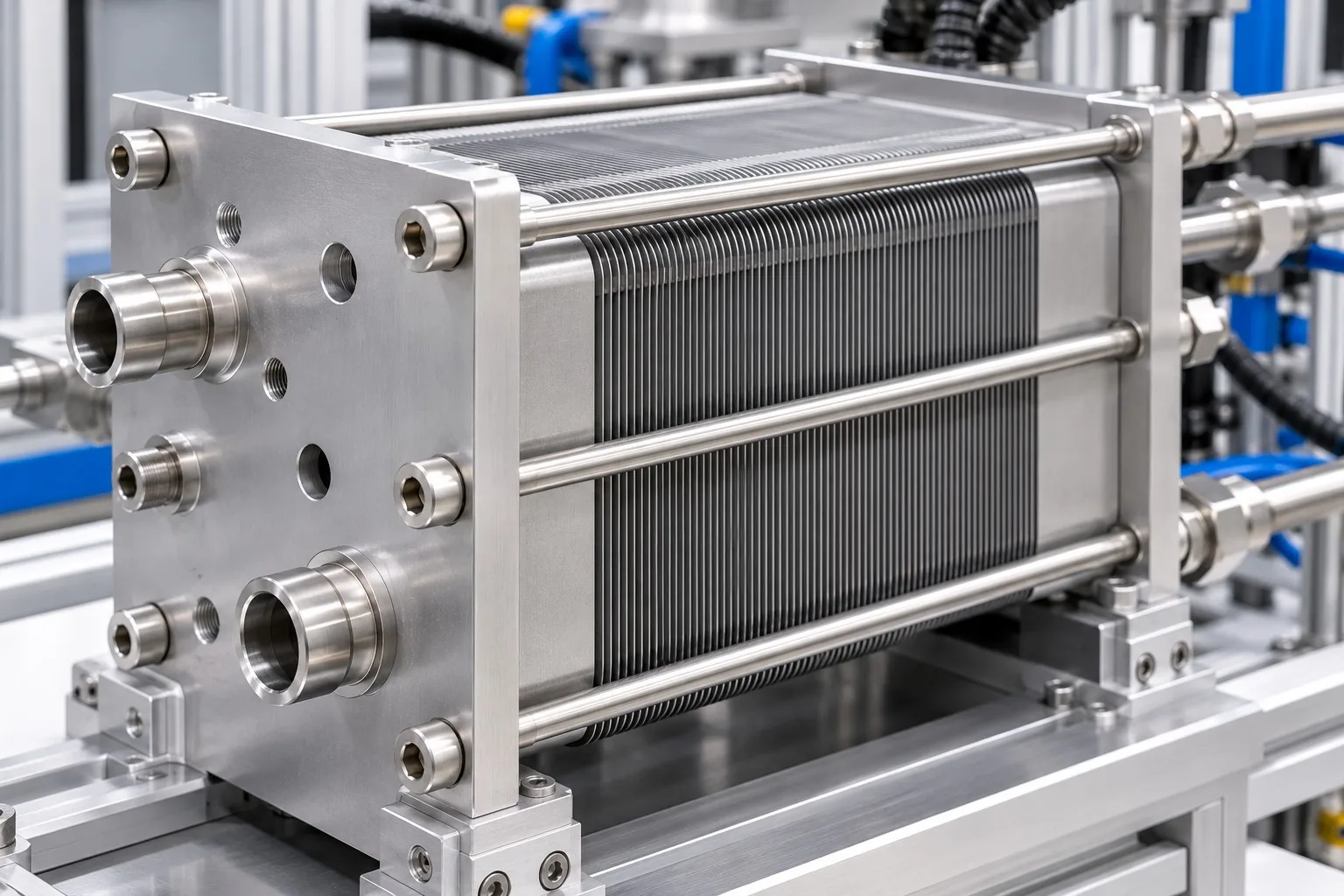
Fuel-cell stack – long tie rods through end plates |
Hydraulic power units
|
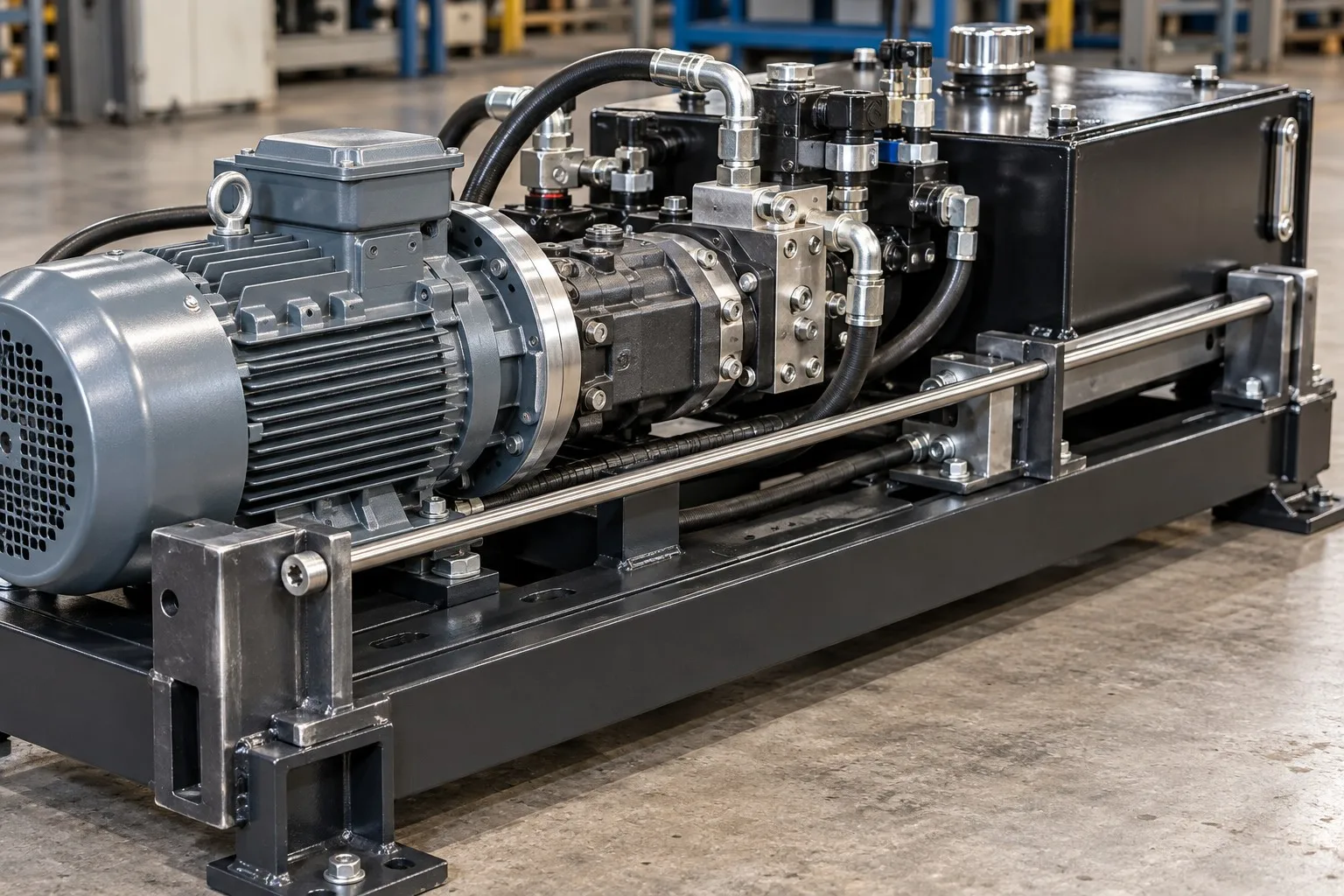
Hydraulic power unit – long tie rods through the frame |
Motor frames and drives
|
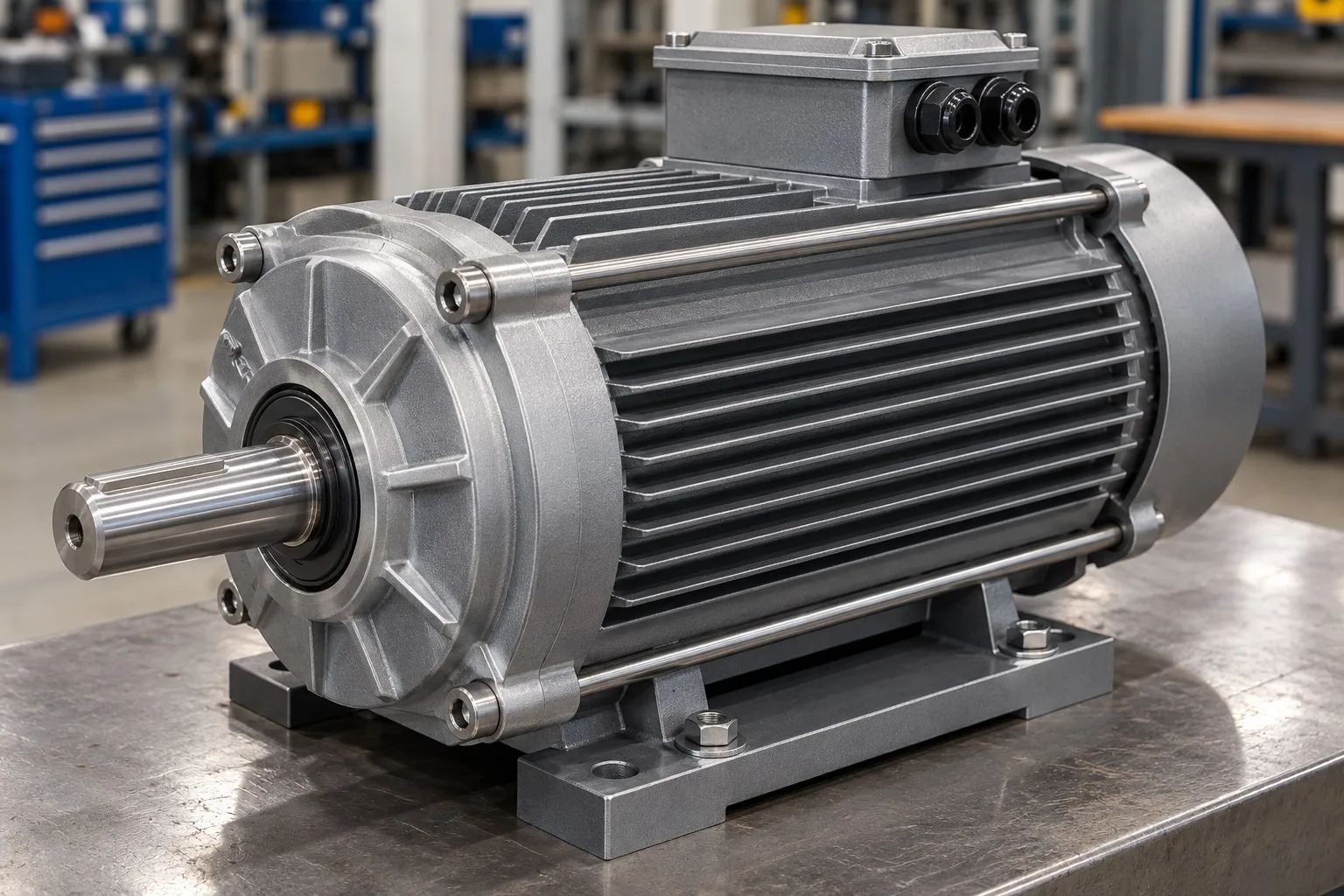
Motor frame – through-bolts clamping the stator stack |
Four reasons that matter specifically on a custom extra-long screw, each tied to what the drawing has to prove:
|
Engineering review before tooling
The thread start, plain shank and length datum are settled before a die is cut; reviewing the drawing first keeps the expensive errors out of the first sample. Basis: Drawing or sample reviewed before tooling is released. |
One piece, not a joined shank
An extra-long screw is formed or turned as one piece. A welded shank is never offered as the default, so the joint cannot become a corrosion or fatigue origin. Basis: One-piece cold heading or turning route, no welded shank. |
|
Length measured, not assumed
Length is measured from the datum under the head, so the number on the inspection sheet is the number in the fixture; the drawing decides what else is gauged on the part. Basis: Length recorded per batch with shop gauges. |
From approved sample to repeat production
The first article fixes the drawing revision, material batch, die set and measuring method; repeat orders are compared against that record rather than against memory. Basis: First article signed off before the batch is released. |
Have a drawing for an extra-long screw? Send it for a DFM review – thread size and position, plain shank, total length and datum, head and drive, material and finish. Drawings go to sst@szsst88.com and are reviewed before production.
These extra-long screws are formed, not assembled. Wire goes through multi-station cold headers along one aisle; the head and the first part of the shank are shaped from the same billet in a sequence of dies, so there is no welded joint waiting to corrode or fatigue. The die set fixes head form, plain shank and thread start together, and the operator sets the die and checks the first parts against the drawing before the run is released. Lengths that fall outside the heading window move to the turning route, where the same features are cut from bar on one datum.


|

|
The record carries the measured readings for each batch, so a repeat order is checked against numbers rather than against a photograph.
What decides whether an extra-long screw passes is not its appearance: it is length from the datum, thread fit in the condition it actually ships in, and the hardness or coating evidence the drawing asks for. The inspection agreement covers those, and the criteria are the ones written on the drawing rather than a generic standard.

Thread gauging against GO/NO-GO gauges |

Profile and dimensions on the optical projector |

Salt-spray testing on the agreed finish |

Hardness testing of the base material |
The material certificate names the grade and the heat number, and the inspection record carries the length, thread and surface readings against the drawing revision used for the batch.
Each batch is filed with its material certificate, heat number and inspection record, and the certificate travels with the shipment so a repeat order can be compared with the first delivery.
Every extra-long screw shipment is traceable to the material it was made from. The grade, heat number and standard are recorded on the material certificate supplied with the parts, and the inspection records follow the criteria agreed on the drawing.

ISO 9001:2015 |

RoHS test report |

Registered trademark |

Patent: security screw and driver |
Buyers and quality engineers visit to review samples, discuss the process and audit the cells, with the visit arranged around production.
More than 8,678 customers in 89 countries and regions have ordered from Shi Shi Tong; 87% of orders come from repeat customers and 56% through referrals. Most projects follow the same route: drawing review, first-article approval, then batches checked against that sample. Buyers visit during the process to review samples and to see the forming, thread rolling and inspection steps their parts will go through.
|
8,678+
customers served
|
87%
of orders from repeat customers
|
56%
of orders through referrals
|
89
countries and regions shipped to
|
|
Customer group visit – sample review |
Customer group visit – process discussion |
Customer group visit – factory tour |
|
Customer visit – project kick-off |
Danish customer – drawing review |
Industry exhibition – meeting customers |
An extra-long screw is a machine screw made to a length where its span, plain shank and thread position have to be planned on the drawing. Standard catalogue lengths usually stop well before 200 mm, so an extra-long screw is produced to order.
Extra-long screws are quoted from M1.4 to M12 and 200 mm to 2,000 mm, with length held to +0/-2 mm. Each combination is reviewed against the drawing, because diameter, length and process interact.
The drawing states the length datum, the plain shank and the thread position, and the forming or turning route is planned around those. Parts that arrive bent in transit are packed braced; any shape requirement beyond that is agreed on the drawing before the quotation.
Socket, button, pan, hex and custom heads, with hex socket, Torx, Phillips, slotted or custom drives. The head must still take the specified drive after the length is made, so both are dimensioned together on the drawing.
Zinc, zinc-nickel, nickel, Dacromet or electrophoresis, selected per part and thread. Where the thread is a functional fit, gauging is done in the coated condition agreed on the drawing.
Thread size and pitch, thread length and position, plain shank length, total length and datum, head and drive, material grade, finish, and the inspection condition. That package is what the quotation and the first article are checked against.
How a custom extra-long screw project runs from drawing to repeat delivery:
|
1
Send the drawing or sample
|
→ |
2
DFM review and quotation
|
→ |
3
First article approval
|
→ |
4
Batch production and repeat orders
|
Each step is confirmed with you before the next one starts; the drawing revision from the first article is what repeat orders are checked against.
For a quotation, send the drawing with thread size and position, plain shank and total length with its datum, head and drive, material grade, finish and the inspection condition. Length, plain shank and thread start are confirmed with you before production.
|
Thread size, pitch and length position
|
Plain shank length
|
Total length and datum
|
|
Head and drive
|
Material grade and finish
|
Quantity and inspection criteria
|
Sending a drawing? The form below does not take attachments. Email the PDF, DXF or STEP file to sst@szsst88.com with the part name and quantity in the subject line – the drawing is reviewed and a quotation follows.

 +86 13143444311
 sst@szsst88.com