Tel:
+86 13143444311
Email:sst@szsst88.com
Fax:+0086-755-27322278
Address:Building 9, First Industrial Zone, Tantou Industrial City, Songgang Street, Baoan District, Shenzhen 518105, Guangdong, China
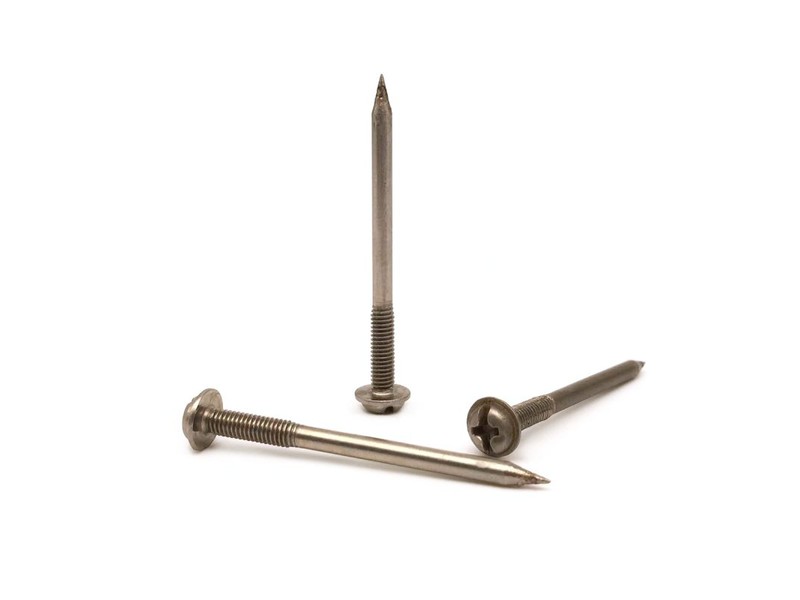
Type:Pan Head Sems Screw
Materials:Iron
Surface treatment:Color Zinc Plated
Head Type:Pan head
Drive:Phillips Cross
Thread:Machine Thread
Point:Blunt
Forming:SEMS Washer Assembly
Size:M1 M2 M3 M4 M5 M6 M7 M8 M9 M10 M14
Number:26
We make pan head sems screws in colour zinc plated carbon steel, a pan head machine screw with a flat washer, or a flat and spring washer, held captive on the shank, quoted from M1 to M14. Washer size, stack, thread and length come from your drawing, and the first article is checked for free spin and driven in your joint.
Watch the factory video·Email sst@szsst88.com
ISO 9001:2015 · Manufacturing since 1998 · 8,678+ customers · 89 countries and regions
Made to order – there is no stock catalogue. Each part is produced to your drawing, and production starts after drawing review and first-article approval.
A pan head sems screw is a pan head machine screw with a washer — or a washer and a spring washer — already assembled onto the shank so that it cannot fall off. The washer spins freely but stays on the screw, and the assembly arrives at the bench as one part. This family is made in carbon steel with a colour zinc plate, quoted from M1 to M14 with Number 26 and filed under the sems screws.
Pan head. A low dome with a wide flat bearing face and a cross recess, standard for machine screws.
Captive washer. A flat washer, sometimes with a split spring washer above it, held on a swaged shank so it cannot be removed.
Machine thread. A rolled thread for a tapped hole or a nut, ending in a blunt chamfer.
Colour zinc. A yellow-passivated zinc deposit, the familiar iridescent finish of hardware sold by the box.
A sems screw exists for one reason: to make it impossible to forget the washer. The washer is pushed onto a reduced diameter behind the thread and the material is then swaged over it so it cannot come back off. It still turns freely, which matters — a washer that is gripped by the screw would drag on the panel as the screw is driven and mark it.
That swaged step is the part of the design that has to be got right. Too tight and the washer will not spin, so it rotates with the screw and scours the surface it bears on; too loose and the washer rattles or comes off in the box. Between those two failures there is a band of free-spin that is set at the forming station and checked on the first article by hand.
On a pan head sems screw the assembly also changes the joint. The washer adds a bearing face between the head and the panel, so the clamp load is spread and the head does not mark the surface; a version with a spring washer adds a stored force that resists loosening. The stack is taller than a plain pan head, and the length has to be quoted for the washer rather than for the screw alone.
The cost side is honest arithmetic. A sems screw is more expensive per piece than a screw and a loose washer, but the assembly step disappears: no washer to feed, no washer to drop, no washer to be missing on the joint that matters. On a line assembling hundreds of units an hour, that trade almost always wins; on a one-off build, it rarely does.
The thread is unchanged, which is the reason the form is trusted. A sems screw takes the same thread, the same nut and the same tapped hole as the plain screw of the same size; what changes is what sits under the head. Where a joint has been designed around a plain pan head, a sems version usually fits and needs a little more clearance for the washer stack.
The recorded range is M1 to M14, covering M1, M2, M3, M4, M5, M6, M7, M8, M9, M10 and M14. Custom lengths up to 2,000 mm are subject to DFM review after drawing submission. For a pan head sems screw the quotation carries head diameter and height, washer outside diameter and thickness, whether a spring washer is included, and the thread size and length under the head.
| Item | How it is defined | What we control |
|---|---|---|
| Head | Pan head, flat face | Head diameter and height |
| Recess | Phillips cross | Recess size and depth |
| Washer | Captive flat washer | Outside diameter, thickness, free spin |
| Spring washer | Split washer above the flat | Included or not, as specified |
| Thread | Machine thread | Pitch and length, gauged per batch |
| Finish | Colour zinc | Deposit thickness and adhesion |
Washer outside diameter is worth quoting with the head diameter. A washer much larger than the head cannot be driven straight without cocking; one that is smaller than the head does nothing the head was not already doing. The useful washer is usually a little wider than the head, and it should be specified rather than left to the maker.
Length is measured under the head, and on a sems screw the washer sits inside that length, on the unthreaded step. In practice this means the effective grip is a little shorter than the nominal length, and a joint that was tight with a plain screw may need the next length up once a sems version is substituted.
Three features define this part: the captive washer, the pan head and the colour zinc. The first removes a component from the assembly, the second spreads the load, and the third is the finish the hardware is expected to have.
| Feature | What it gives | What it costs |
|---|---|---|
| Captive washer | Cannot be left off | Higher piece price than screw plus loose washer |
| Free spin | Washer does not scuff the panel | Needs a correctly swaged shank |
| Spring washer option | Resists loosening | A second part in the stack |
| Wide head | Load spread on thin panels | Stands proud of the surface |
| Colour zinc | Recognisable, cheap protection | Wears at the head and threads |
On a pan head sems screw the free-spin requirement is what separates a good part from a frustrating one. When the washer turns with the screw, the joint scuffs the paint and the operator feels drag; when it is free, the head turns on a stationary washer and the joint closes smoothly. It is decided by the swaging, not by the washer, and it is worth checking by hand on every first article.
The spring washer version adds a second decision. A split washer above the flat one stores force as the joint is tightened, which helps against vibration; but it also adds height and makes the washer stack stiffer to compress. On a soft panel the plain flat washer is usually the better choice; on a metal joint that vibrates, the pair is worth having.
The recorded finish is colour zinc, the yellow-iridescent passivation over a zinc deposit. It is the finish the hardware trade associates with a general-purpose screw: cheap, bright, immediately recognisable, and good enough indoors. It is not a finish for weather, and it is not the finish to specify where a bright neutral tone matters.
| Option | How it protects | Effect on washer and head | Typical use |
|---|---|---|---|
| Colour zinc | Sacrificial zinc, yellow passivate | Plate wears at the washer edge | General indoor hardware |
| White zinc | Sacrificial zinc, trivalent | Brighter, more neutral tone | Indoor, RoHS-driven work |
| Black zinc | Sacrificial zinc, dark | Marks dark panels less | Dark equipment |
| Nickel plated | Barrier deposit, bright | Decorative; wears at the recess | Visible silver hardware |
| Stainless, plain | Passive chromium oxide film | No coating to wear | Damp and outdoor joints |
The washer is where a plated sems screw shows its finish first. The edge of the washer is a cut surface with almost no plate on it, and it sits in contact with the panel, so a damp joint rusts from under the washer rather than at the head. On a colour zinc part that is accepted as normal; on a part intended for an outdoor joint it is the reason to choose stainless.
Where the environment matters, the stainless sems version does the same job without a coating. The washer is stainless too, so there is no plated edge to rust, and the captive step is formed the same way. It costs more, and it is the only version that survives being rained on.
Three assemblies where pan head sems screws are the fixing:
| Where it sits | The screw closes a panel where a washer has to be present on every joint and a dropped washer would stop the line or damage a machine. |
| When it goes wrong | A joint assembled without its washer is a joint that will loosen, and a dropped washer inside an enclosure is a fault waiting to happen. |
| Why it happens | The fixing is repeated in volume, the washer is essential, and the station cannot check every joint. |
| What we control | Washer captive and free-spinning, first article driven with the production bit. |
| Where it sits | The screw fixes a panel where the head has to spread load over thin material and the joint is driven by a hand tool. |
| When it goes wrong | A plain pan head dimples the sheet, and a washer that turns with the screw scuffs the paint. |
| Why it happens | The panel is thin and painted, the fixing is visible, and the joint is hand driven. |
| What we control | Washer diameter and face flatness checked, first article fitted to the panel. |
| Where it sits | The screw closes a cover where a spring washer is wanted for vibration and the parts are assembled by hand on site. |
| When it goes wrong | A missing spring washer goes unnoticed until the cover works loose, and a colour zinc part rusts in a damp cabinet. |
| Why it happens | The joint vibrates, it is assembled on site, and the parts are small. |
| What we control | Washer pair checked as assembled, thread gauged per batch. |
Four reasons that matter on an assembled screw-and-washer part, each tied to what the drawing has to prove:
|
Washer stack specified
The washer diameter and thickness, the spring washer and the length are quoted together, because the washer sits inside the length and changes how much thread reaches the joint. Basis: Washer stack and length agreed. |
Screw formed, washer fitted, finish applied
The pan head and the shank step are formed first, the washer is fitted and swaged, and the finish is applied to the assembled part. Basis: One route with the washer fitted before plating. |
|
Free spin checked by hand
The first article is checked for free spin and for retention, because a washer that is gripped scuffs the panel and one that is loose falls off in the box. Basis: Free spin and retention checked. |
First article fixes the setting
The first article fixes the wire, the swaging station and the plating; repeat orders are compared against that record. Basis: First article signed off before the batch is released. |
Shi Shi Tong forms these pan head sems screws from carbon steel wire on single-die headers, forming the head, the recess and the reduced shank step in one stroke, rolls the machine thread, fits the flat washer and where specified the spring washer, swages the shank over to retain them, and applies the colour zinc finish to the assembled screw. The first part of every run is measured on the head and washer and checked by hand for free spin before the batch continues.


|

|
The swaging station is where a sems screw is won or lost. The washer has to be trapped but free, and the swaged lip has to survive plating and handling without cracking. A lip that is formed a little too hard flakes at the edge, and then the washer is only retained by plating — which is not retention at all once the joint has been worked a few times.
What decides whether pan head sems screws pass is the washer, the head, the thread and the finish. The inspection agreement covers those, and the criteria come from the drawing.

Head and washer on the projector |

Thread gauged per batch |

Hardness checked on the wire |

Salt-spray testing of the plate |
The washer is checked for outside diameter, thickness and free spin, and for retention: it must not come off under a firm pull. The head is checked for diameter and height, the recess is driven with the production bit, and the thread is gauged per batch below the washer.
The finish is checked on the assembled part, with attention to the cut edge of the washer, which is where the plate is thinnest. A salt-spray sample on a sems screw shows the washer edge rusting before the head ever does, and that is the failure the customer will see first.
Every shipment of pan head sems screws is traceable to the wire it was made from and to the plating batch. The grade and heat number are recorded on the material certificate supplied with the parts, and the washer specification is kept with the inspection file.

ISO 9001:2015 |

RoHS test report |

Registered trademark |

Patent: security screw and driver |
With each batch we supply the material certificate, the inspection record for the criteria on the drawing and, where it is listed, the third-party report for the plating. The documents carry the drawing revision and the batch number, and the washer source is recorded alongside them, so a repeat order uses the same washer as the one that was approved.
More than 8,678 customers in 89 countries and regions have ordered from Shi Shi Tong; 87% of orders come from repeat customers and 56% through referrals. Most projects follow the same route: drawing review, first-article approval, then batches checked against that sample. On a sems screw the first article is checked for free spin and driven into the customer’s panel, because the washer is the reason for the part. Buyers visit during the process to review samples and to see how the parts are assembled and finished.
|
8,678+
customers served
|
87%
of orders from repeat customers
|
56%
of orders through referrals
|
89
countries and regions shipped to
|
Buyers and quality engineers visit for sample review, process discussion and supplier audits; the visit is arranged around production so the headers and the plating line can be seen on the day the parts run.

Customer group visit – sample review |

Customer group visit – process discussion |

Customer group visit – factory tour |

Customer visit – project kick-off |

Danish customer – drawing review |

Industry exhibition – meeting customers |
A screw with a captive washer pre-assembled on the shank. The washer spins freely but cannot be removed, so the joint cannot be assembled without it.
Not without damaging the swaged lip. The assembly is made to be used as delivered, and that is the point of the part.
A washer that turns with the screw scuffs the panel as the head comes down. Free spin lets the head turn on a stationary washer.
A spring washer adds stored force against vibration and adds height to the stack. On soft panels the flat washer alone is usually better.
Under the head, and the washer sits inside that length. A joint that was right with a plain screw may need the next length up.
Thread size and length, head diameter and height, washer outside diameter and thickness, whether a spring washer is included, and the finish.
How a pan head sems screw project runs from drawing to repeat delivery:
|
1
Send the drawing and the washer you need
|
→ |
2
Washer stack, length and thread agreed
|
→ |
3
First article checked for free spin and driven
|
→ |
4
Batch production and repeat orders
|
Each step is confirmed with you before the next one starts; the drawing revision from the first article is what repeat orders are checked against.
For a quotation, send the drawing with the thread size and length, the head diameter and height, the washer outside diameter and thickness, and whether a spring washer is required.
|
Thread size
|
Length
|
Head diameter
|
|
Washer OD
|
Washer thickness
|
Spring washer
|
Sending a drawing? The form below does not take attachments. Email the PDF, DXF or STEP file to sst@szsst88.com with the part name and quantity in the subject line – the drawing is reviewed and a quotation follows.

 +86 13143444311
 sst@szsst88.com