Tel:
+86 13143444311
Email:sst@szsst88.com
Fax:+0086-755-27322278
Address:Building 9, First Industrial Zone, Tantou Industrial City, Songgang Street, Baoan District, Shenzhen 518105, Guangdong, China
Place of Origin:Guangdong,China(Mainland)
Brand Name:Shi Shi Tong
Model Number:sst 97
Materials:Stainless Steel
Surface treatment:Cleaned and passivated
Head Type:Round Head
Drive:Torx
Thread:M2 machine thread
Point:Plain, chamfered
Forming:Cold headed; washer fitted; thread rolled over it
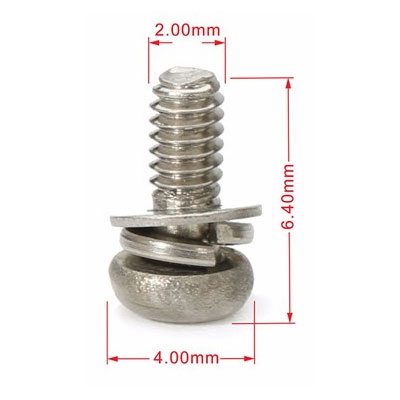
Size:M2*5
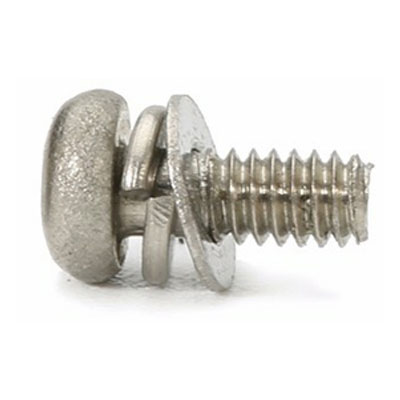
We make stainless steel sems screws with a round head, a Torx recess and a spring washer placed before the thread is rolled, so the washer is captive and still turns. The washer is the point of the part rather than an accessory, so its three dimensions and the gap at the retaining shoulder are written on the drawing and checked in the hand.
Watch the factory video·Email sst@szsst88.com
ISO 9001:2015 · Manufacturing since 1998 · 8,678+ customers · 89 countries and regions
Made to order – there is no stock catalogue. Each part is produced to your drawing, and production starts after drawing review and first-article approval.
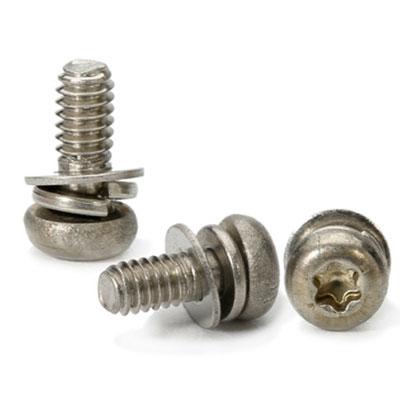
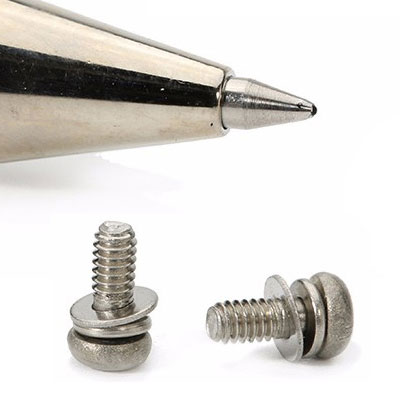
A stainless steel sems screw is a machine screw with a washer already assembled on it, held under the head so it cannot come off. This one is a round head screw, M2 by 5 mm, with a Torx recess and a free-spinning spring washer captive under the head, made in stainless steel and cleaned and passivated.
Round head. A domed head with a wide bearing rim, finished without sharp edges.
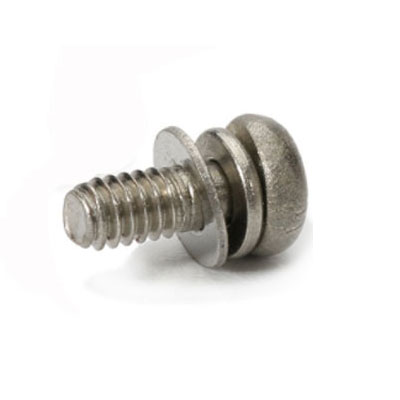
Captive spring washer. A split lock washer that turns freely but cannot fall off the screw.
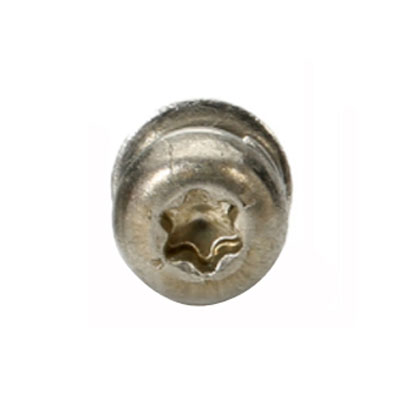
Torx recess. Six lobes that take a small bit without cam-out.
Stainless body. No coating, so the washer and the thread keep their machined size.
They are used where a washer is functionally needed and a loose washer on the line is a defect waiting to happen: electronics assemblies, connectors, small instruments, appliance internals and any station where a dropped washer would be lost inside the product.
The word sems describes a screw and washer supplied as one part. The washer is threaded on the shank before the thread is rolled, and the rolling leaves a slight shoulder that the washer cannot pass, so it turns freely under the head and cannot be removed. That single detail is what the part is bought for.
On a line that assembles small products, a separate washer is a second part to pick, place and check. It can be forgotten, it can be dropped inside a housing, and it can be fitted on the wrong side of a bracket. A sems screw removes all three failures by making the washer part of the screw, and the assembly step becomes one motion instead of two.
The lock washer underneath is not decoration. A split spring washer stores a little elastic energy, so when a joint settles or a plastic boss creeps the washer keeps a load on the thread and the screw is less likely to loosen. On a small screw the effect is modest, and it is a useful addition rather than a substitute for a proper torque.
Captive does not mean stuck. The washer has to turn, because a washer that is pinched between the head and the rolled shoulder slides on the panel instead of seating, and a sliding washer scratches the finish and gives a false torque reading. The gap between the head face and the retaining shoulder is therefore a dimension, not a by-product.
The washer also takes length away from the thread. A sems screw is specified by the length under the washer or under the head depending on the drawing, and on a 5 mm screw a washer of a few tenths is a measurable share of the engagement. That is why the drawing states which face the length is measured from.
The round head and the Torx recess complete the part. The domed head has no sharp edge to cut a wire or a finger in a crowded housing, and the Torx recess takes the torque through six lobes, which on an M2 screw is the difference between a driver that holds and one that slips and damages the head.
A stainless steel sems screw is quoted by head diameter and height, recess size, washer outside diameter, inside diameter and thickness, washer type, thread size and pitch, length and the face the length is measured from, material and finish. Custom lengths up to 2,000 mm, subject to DFM review after drawing submission. The sample is M2 by 5 mm, model sst 97, with a spring washer under a round head.
| Item | How it is defined | What we control |
|---|---|---|
| Head | Round head, domed | Diameter, height and rim |
| Recess | Torx, small size | Size, depth and lobe form |
| Washer | Spring washer, captive | Outside and inside diameter, thickness |
| Retention | Rolled shoulder above the washer | Gap and freedom of the washer |
| Thread | M2 machine thread | Size, pitch and length |
| Finish | Cleaned stainless | Surface and freedom from burr |
The washer is written with three numbers, not one. Its outside diameter sets the bearing area, its inside diameter sets whether it turns or binds on the shank, and its thickness sets how much of the screw length is used up before the thread begins to clamp.
The retention is written as a gap. The distance between the underside of the head and the rolled shoulder has to be a little more than the washer thickness, or the washer is pinched and will not spin. Too much gap and the washer rattles, which on a small screw reads as a loose part in a finished product.
The length is written with the face it is measured from. A sems screw measured under the head and a sems screw measured under the washer are different parts, and a couple of tenths of a millimetre is enough to change whether the thread reaches the last turn in a thin boss.
Four properties decide this part, and each carries a cost:
| Property | What it gives | What it costs |
|---|---|---|
| Captive washer | One part to pick, place and check | A retention shoulder that must be formed |
| Spring washer | A little stored load against loosening | A washer that must stay free to turn |
| Round head | No sharp edge in a crowded housing | A taller head than a flat or pan form |
| Stainless body | No coating to chip or change the fit | Machining cost and galling on tight threads |
The value is a washer that is always there, in the right place, at the right moment, without a second bin on the bench.
The cost is that the washer is now part of the screw’s specification. Its diameter and thickness affect the bearing area, the thread length and the torque, so it cannot be changed without changing the part.
The recorded finish is cleaned stainless steel. There is no coating over the washer or the thread, so the parts keep the size they were made to and the washer stays free on its shoulder.
| Option | How it protects | Effect on washer and thread | Typical use |
|---|---|---|---|
| Cleaned and passivated | Restores the oxide layer | None; washer stays free | General stainless assemblies |
| Bead blasted | Even matte surface | Softens head edges; washer re-checked | Visible instrument panels |
| Electropolished | Bright, smoothed surface | Removes microns; thread re-checked | Hygienic and decorative |
| Passivated and lubricated | Oxide layer plus dry film | Reduces galling; no build | Joints opened in service |
| Black oxide on stainless | Dark conversion layer | No build; colour varies | Dark visible hardware |
A coating would be a problem on this part in a way it is not on a plain screw. Any build inside the washer takes away the freedom that makes the sems design work, and any build on the retaining shoulder can lock the washer solid. That is the practical reason stainless sems screws are usually supplied bare and passivated.
Where a lubricated finish is used, the aim is to stop stainless galling on stainless. A dry film on the thread reduces the chance of the screw seizing in a stainless nut or insert, and it is thin enough not to close the washer clearance if it is applied after assembly.
Bead blasting and electropolishing are appearance finishes. Both change the edge of the head slightly, and both require the washer clearance and the recess to be checked afterwards, because a washer that turns freely before the finish can be tight after it.
Three products where a lost washer would be a defect:
| Where it sits | The screw fixes a connector, a shield or a board to a chassis where a loose washer could short a circuit. |
| When it goes wrong | A washer is found inside the housing at final test, or the joint is assembled without one. |
| Why it happens | Separate washers on a fast line, and no check that one was fitted. |
| What we control | Washer retention and freedom agreed; sample shaken and inspected. |
| Where it sits | The screw clamps a plate where the washer spreads the load on a thin wall. |
| When it goes wrong | The plate marks or cracks at the fixing, or the washer rattles. |
| Why it happens | A washer that is too small in diameter, or pinched so it cannot spread the load. |
| What we control | Washer diameter and gap controlled; sample fitted and checked. |
| Where it sits | The screw holds a bracket that sees vibration over the life of the appliance. |
| When it goes wrong | The joint loosens, or the screw backs out into a moving part. |
| Why it happens | A plain screw with no washer, or a washer that has lost its spring. |
| What we control | Washer type and torque agreed; sample run and checked for loosening. |
Four points that decide whether the washer is still free after plating and packing:
|
Washer written with three diameters
Outside diameter, inside diameter and thickness are on the drawing, because each changes the joint in a different way. Basis: Washer fully specified. |
Washer fitted before the thread is rolled
The thread is rolled after the washer is in place, so the retaining shoulder is formed by the thread itself. Basis: Washer captured by the thread. |
|
Washer turned in the hand
The first article is checked that the washer spins freely and cannot be removed, not only that it is present. Basis: Freedom proved. |
Same washer, same gap
Washer thickness and the gap at the shoulder are recorded with the drawing revision for repeat lots. Basis: Same feel across lots. |
A stainless steel sems screw fails when the washer is pinched, loose or missing, and all three are easy to miss on a visual check. These four points test the washer by turning it, and they show on the first article.
These screws are cold headed from stainless wire, the round head and the Torx recess are formed, the washer is placed on the shank, the machine thread is rolled over it to trap the washer, and the part is then cleaned and passivated. The first piece of every run is measured on head, recess, washer and thread before finishing and again after it.


|

|
The washer is fitted before the thread, and that order is the whole process. If the thread is rolled first, the washer has to be forced over the thread and will either be damaged or sit with its inside diameter opened out. Rolled after, the thread forms the shoulder that holds the washer while leaving the washer free to turn.
The washer itself is a purchased spring washer, and the useful part of incoming inspection is thickness and freedom from burr rather than a certificate. A washer that is a little thicker than the drawing takes up the gap and pinches; one with a burr on its inside diameter will not spin.
The round head is formed with the recess in one blow, and the recess depth is set against the head height. On an M2 round head the crown is thin, so a recess that is a little deep leaves a bright mark on the dome, which on a visible part is a rejection.
Cleaning and passivation come last. No coating is applied, because any film inside the washer would take away the freedom the part is bought for, and the parts are checked for burr at the washer and at the head rim before packing.
What decides whether a batch of stainless steel sems screws passes is the washer that stays on and turns, the recess that takes the bit and the thread that holds. The inspection agreement covers all three.

Head, recess and washer on the projector |

Thread checked with gauges |

Wire and part checked |

Salt-spray testing where required |
The washer is checked in the hand: it must turn freely and it must not come off. A pull test on a sample confirms that the retaining shoulder holds without deforming the washer, and the gap at the shoulder is measured on the projector.
The recess is measured for depth and lobe form and driven with the production bit. A round head with a thin crown is where an over-deep recess shows first, so the head is inspected for a bright spot or a bulge on the dome.
The thread is gauged, and the length is measured from the face named on the drawing. Where the washer sits between the head and the panel, the length under the washer is the dimension that decides engagement, and the two lengths are recorded separately.
Where salt-spray hours are specified, a sample is run and the result recorded with the alloy and the passivation. Stainless is not automatically immune, and a part with a captive washer has more surface to keep clean than a plain screw.
Every batch of stainless steel sems screws is traceable to the wire it was headed from and to the washer lot. The material certificate states the grade and the heat number, and the inspection record carries the head, recess, washer, thread and length against the drawing.

ISO 9001:2015 |

RoHS test report |

Registered trademark |

Patent: security screw and driver |
With each shipment we supply the material certificate and the inspection record for the head, washer, thread and length. The records carry the batch number, so a repeat order of stainless steel sems screws can be compared with the first on the two numbers that decide the part: washer thickness and the gap at the retaining shoulder.
More than 8,678 customers in 89 countries and regions have ordered from Shi Shi Tong; 87% of orders come from repeat customers and 56% through referrals. Most projects follow the same route: drawing review, first-article approval, then batches checked against that sample. On a stainless steel sems screw the first article is checked with the washer in the hand, because a washer that is present but pinched is the failure that looks like success. Buyers visit during the process to review samples.
|
8,678+
customers served
|
87%
of orders from repeat customers
|
56%
of orders through referrals
|
89
countries and regions shipped to
|
Buyers and quality engineers visit for sample review, process discussion and supplier audits; the visit is arranged around production so the heading cells and the finishing line can be seen on the day the parts run.

Customer group visit – sample review |

Customer group visit – process discussion |

Customer group visit – factory tour |

Customer visit – project kick-off |

Danish customer – drawing review |

Industry exhibition – meeting customers |
A screw supplied with its washer already assembled, so it cannot be lost or left off in the assembly.
Yes, it has to. A washer pinched between the head and the retaining shoulder slides on the panel instead of seating, which gives a false torque.
The thread is rolled after the washer is placed, and the rolling leaves a shoulder the washer cannot pass.
It stores a little elastic load and helps against loosening, but it is not a substitute for correct torque or for a proper locking feature.
Only on the drawing. Its diameter and thickness change the bearing area, the length and the torque, so it is part of the part.
Head diameter and height, recess, washer outside and inside diameter and thickness, the gap at the shoulder, thread, length and the face the length is measured from, alloy and finish.
How a stainless steel sems screw project runs from drawing to repeat delivery:
|
1
Send the drawing and the washer
|
→ |
2
Head, recess, washer and thread agreed
|
→ |
3
First article checked for washer freedom
|
→ |
4
Batch production and repeat orders
|
Each step is confirmed with you before the next one starts; the drawing revision used for the first article is what repeat orders are checked against.
For a quotation, send the drawing with the head and recess, the washer dimensions and type, the thread, the length and the face it is measured from, the alloy and the finish.
|
Head
|
Recess
|
Washer
|
|
Thread
|
Length
|
Finish
|
Sending a drawing? The form below does not take attachments. Email the PDF, DXF or STEP file to sst@szsst88.com with the part name and quantity in the subject line – the drawing is reviewed and a quotation follows.

 +86 13143444311
 sst@szsst88.com