Tel:
+86 13143444311
Email:sst@szsst88.com
Fax:+0086-755-27322278
Address:Building 9, First Industrial Zone, Tantou Industrial City, Songgang Street, Baoan District, Shenzhen 518105, Guangdong, China
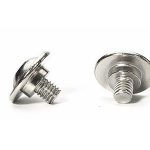
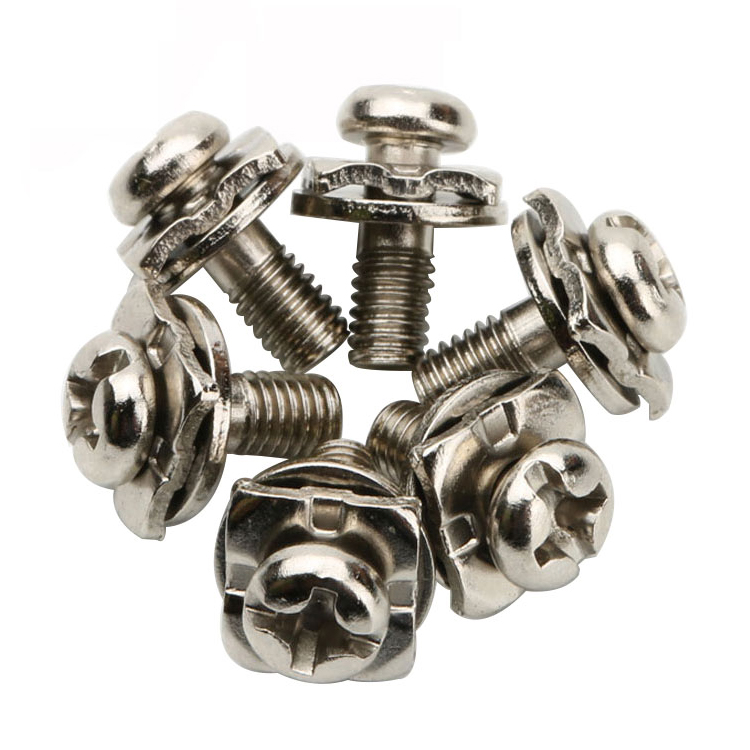
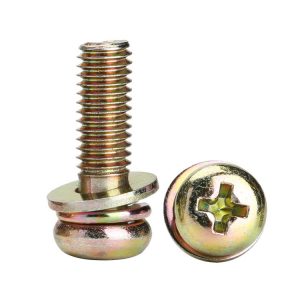
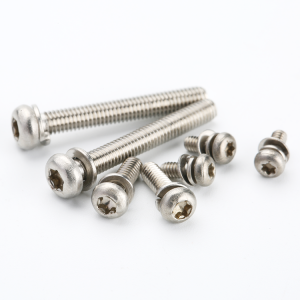
Type:Pan Head Screw With Washer
Materials:stainless steel
Surface treatment:plain
Head Type:pan head
Drive:Phillips + Slot
Thread:Machine Thread
Point:Blunt
Forming:Single Die Heading
Size:M1 M2 M3 M4 M5 M6 M7 M8 M9 M10 M14
Number:530
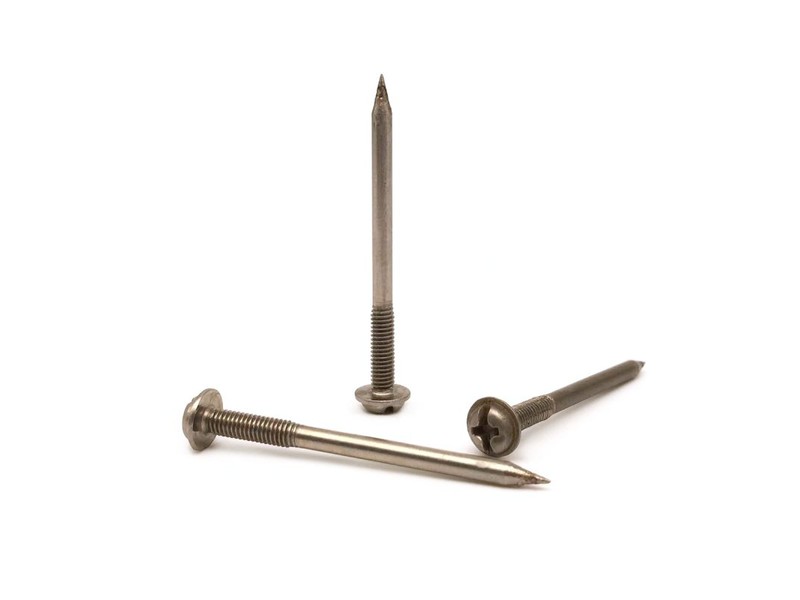
We make pan head screws with washer as assembled SEMS parts in passivated stainless, with the washer captured on a shoulder so it cannot be lost. Washer diameter and thickness, shoulder position, recess and thread come from your drawing, and the first article is checked with the washer fitted.
Watch the factory video·Email sst@szsst88.com
ISO 9001:2015 · Manufacturing since 1998 · 8,678+ customers · 89 countries and regions
Made to order – there is no stock catalogue. Each part is produced to your drawing, and production starts after drawing review and first-article approval.
A pan head screw with washer is an assembled screw: the washer is captured under the head so it cannot be lost and the joint arrives on the line as one part. The recorded item on this page is stainless with a plain finish, a pan head, a combined cross and slot recess and a machine thread, quoted from M1 to M14 with Number 530.
Captive washer. The washer sits between the head and a rolled shoulder on the shank, so it spins freely but cannot come off. It spreads the clamp load and protects the panel, and it does both without being picked up separately.
Combined cross and slot recess. A cross with a slot cut through it, so the screw can be driven with a Phillips bit or with a flat blade. The slot adds a second way in; the cross keeps the depth a blade alone would not give.
Pan head. A low dome on a flat face that bears on the washer. The dome covers the recess and the face transfers the load into the washer evenly.
Stainless, plain. Passivated and uncoated, so the screw and its washer can be handled and washed without a coating to chip at the head.
An assembled screw exists because of the shoulder. The shank is rolled or reduced just under the head, the washer is slipped over that reduction, and the thread is then rolled up to the shoulder. The washer is trapped between the head and the start of the thread, free to rotate but unable to move axially past either.
The free rotation is the point of the design and not a detail. As the screw is driven, a washer that rotates with the screw grinds the panel and can tear a painted or plated finish; a washer that spins free stays still against the panel while the screw turns under it. That is why the washer bore is deliberately loose on the shoulder rather than a press fit.
The shoulder is also the part’s weak point. It is a rolled reduction in the shank, and if the joint is over-torqued the shoulder can shear, at which point the washer is loose on the thread and the part is no longer assembled. The shoulder diameter and its distance from the head are therefore drawing dimensions, not shop choices.
The combined recess is a second compromise on the same part. Cutting a slot through a cross removes material from the two arms it crosses, so the cross is shallower than a plain Phillips and the slot is the weaker of the two drives. In practice the cross is used for the clamp and the slot is the fallback, exactly like the combined recess on a screw with no washer.
Stainless is passivated after the parts are assembled and the thread is rolled, so the inside of the washer and the shoulder are passivated too. That matters because the two surfaces rub against each other on every assembly, and a stainless washer on a stainless shoulder is the one place on this part where galling is likely.
The family is quoted from M1 to M14, with M1, M2, M3, M4, M5, M6, M7, M8, M9, M10 and M14 in the recorded range. Custom lengths up to 2,000 mm are subject to DFM review after drawing submission; on a pan head screw with washer the washer outside diameter and thickness are quoted with the head, because they add to the bearing face.
| Item | How it is defined | What we control |
|---|---|---|
| Head | Pan head, flat face | Diameter, height and face flatness |
| Recess | Cross with a slot through it | Cross depth, slot width, bit tried on the part |
| Washer | Flat, captured on a shoulder | Outside diameter, thickness and free rotation |
| Thread | Machine thread | Pitch and length, gauged per batch |
| End | Blunt, chamfered | Chamfer cut, not deburred |
| Length | From under the washer to the end | Measured on the shop plate |
Length is quoted from under the washer on this part, because the washer is what touches the panel. Quoting from under the head silently subtracts the washer thickness from the thread that reaches into the joint, and on a short screw that subtraction is the whole engagement.
The washer diameter is a functional dimension too. A washer that is too small does not spread the load beyond the deformed zone around the hole; one that is too large fouls a rib, a neighbouring fixing or a recessed pocket. It is chosen with the panel, not with the thread.
Three features define this part: the captive washer, the combined recess and the stainless body. The first saves a handling step and a lost part, the second gives two ways in, and the third is what the joint is for.
| Feature | What it gives | What it costs |
|---|---|---|
| Captive washer | No separate part to drop or forget | A shoulder that can shear if over-driven |
| Free-spinning washer | Protects the panel finish as the screw turns | A loose bore that can rattle before assembly |
| Cross plus slot | Driven by a bit or by a blade | Slot weakens the cross; cross is shallower |
| Stainless | No coating to chip, survives washing | Galls between washer and shoulder |
| Pan head | Load spread without a loose part | Taller than a low head |
The saving is easiest to see on a line. A separate washer is a bin, a pick, a drop on the floor and a joint that occasionally goes out without one. An assembled screw removes all four, and it does it without changing the driver or the torque, which is why the form spread through appliances and electronics long before anyone argued about the cost of the shoulder.
The cost is at the shoulder, and it shows up in over-torque. A joint that is driven past its torque shears the shoulder or flattens the washer against the panel, and either way the assembly loses the feature it was bought for. The torque is set from the panel and the washer thickness, not from the thread size.
The recorded finish is plain, passivated stainless. Nothing is added, so the recess is as cut and the washer is as finished, and there is no coating in the gap between the washer and the shoulder to wear away and leave a coloured smear on the panel.
| Option | How it protects | Effect on recess and washer | Typical use |
|---|---|---|---|
| Stainless A2, plain | Passive chromium oxide film | None; gauged as formed | Appliances and general fitting |
| Stainless A4, plain | Passive film with molybdenum | None; gauged as formed | Coastal and washdown |
| Zinc plated steel | Sacrificial zinc | A few microns; recess re-checked | Volume indoor work |
| Black zinc on steel | Sacrificial zinc, dark passivation | A few microns; re-checked | Dark panels |
| Nickel plated steel | Hard barrier deposit | Thicker; recess and washer re-checked | Visible handled parts |
On an assembled screw the finish has an extra place to fail: between the washer and the shoulder. A plated washer rubbing on a plated shoulder wears the deposit off both faces, and the wear debris sits in the gap where it is invisible until the joint is taken apart. Plain stainless does not produce debris, but it does gall, and a washer that has galled to its shoulder will not spin free.
Where the joint is washed or exposed, stainless is the finish that survives. There is no deposit to erode at the washer and no rust to bleed onto the panel from under it, which on a visible white appliance is the failure that gets noticed first.
Three assemblies where a pan head screw with washer is the fixing:
| Where it sits | The screw fixes a panel or a trim where the joint is finished with a visible washer and the line cannot afford a dropped part. |
| When it goes wrong | A separate washer gets forgotten, and a screw driven without one marks the coating and cracks the paint around the hole. |
| Why it happens | The panel is coated, the head is visible, and the fixing repeats thousands of times. |
| What we control | Washer rotation checked, recess driven with the production bit, thread gauged. |
| Where it sits | The screw closes a housing where a thin wall needs load spread and the joint is opened for service. |
| When it goes wrong | A screw without a washer dimples the wall, and a loose washer left inside the housing rattles. |
| Why it happens | The wall is thin, the housing is serviced, and the fixing is small. |
| What we control | Washer fit and recess depth checked, thread and length gauged. |
| Where it sits | The screw fixes a bracket or a plate where the sheet is thin and the joint is made on a line at fixed torque. |
| When it goes wrong | A washer that does not spin scores the sheet, and a shoulder that shears leaves a loose washer in the assembly. |
| Why it happens | The gauge is thin, the torque is set, and the joint is permanent. |
| What we control | Shoulder and washer checked on the first article, torque verified in the customer sheet. |
Four reasons that matter on an assembled screw, each tied to what the drawing has to prove:
|
Washer, shoulder and recess reviewed together
The washer diameter and thickness, the shoulder position and the recess depth are reviewed as one set, so a shoulder that would shear or a washer that would not spin is raised before the tool is set. Basis: Washer, shoulder and recess reviewed as one set. |
Assembly built into the forming route
The head and recess are formed, the shank is shouldered, the washer is fitted and the thread is rolled up to it in one route. Basis: One route from wire to assembled screw. |
|
Rotation and fit checked on the part
The washer is checked for free rotation and for its diameter, the recess is driven with the production bit, and the thread is gauged with the washer in place. Basis: Washer rotation checked on the first article. |
First article fixes the setting
The first article fixes the wire heat, the shoulder tool, the washer batch, the roll and the passivation; repeat orders are compared against that record. Basis: First article signed off before the batch is released. |
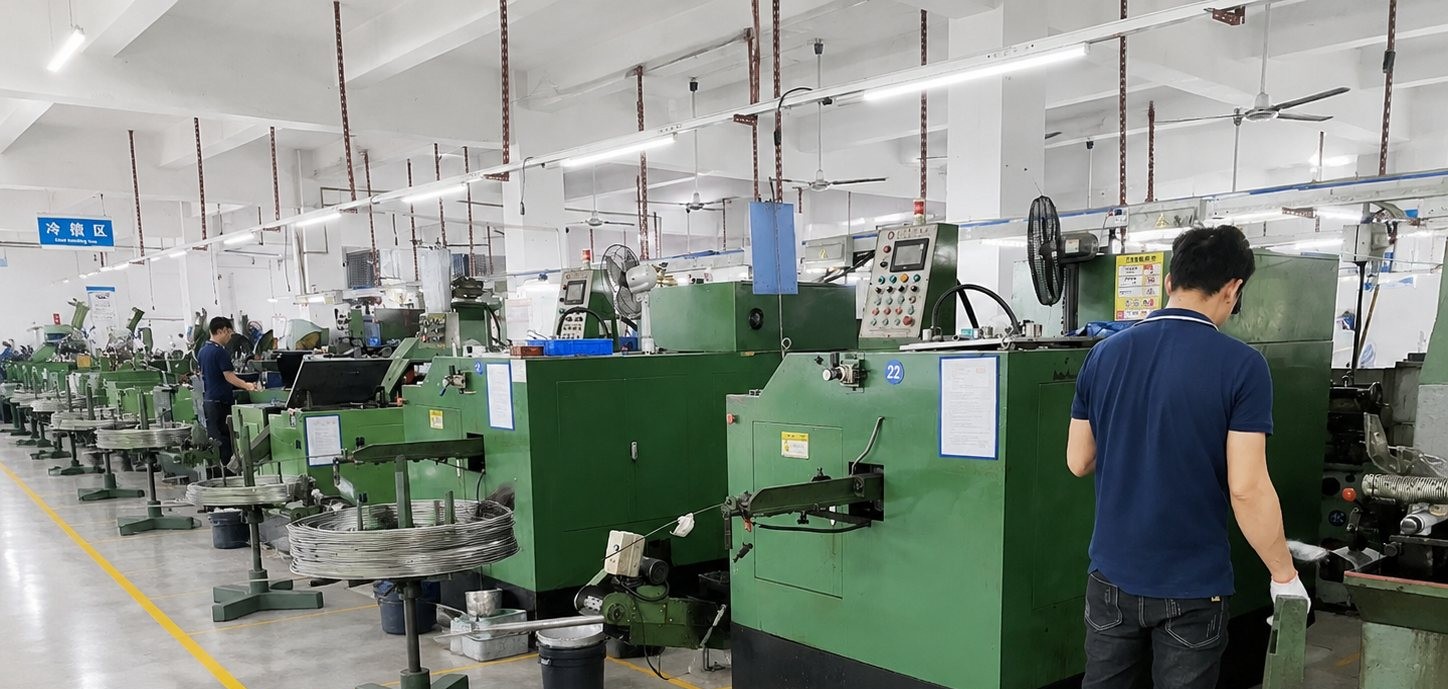
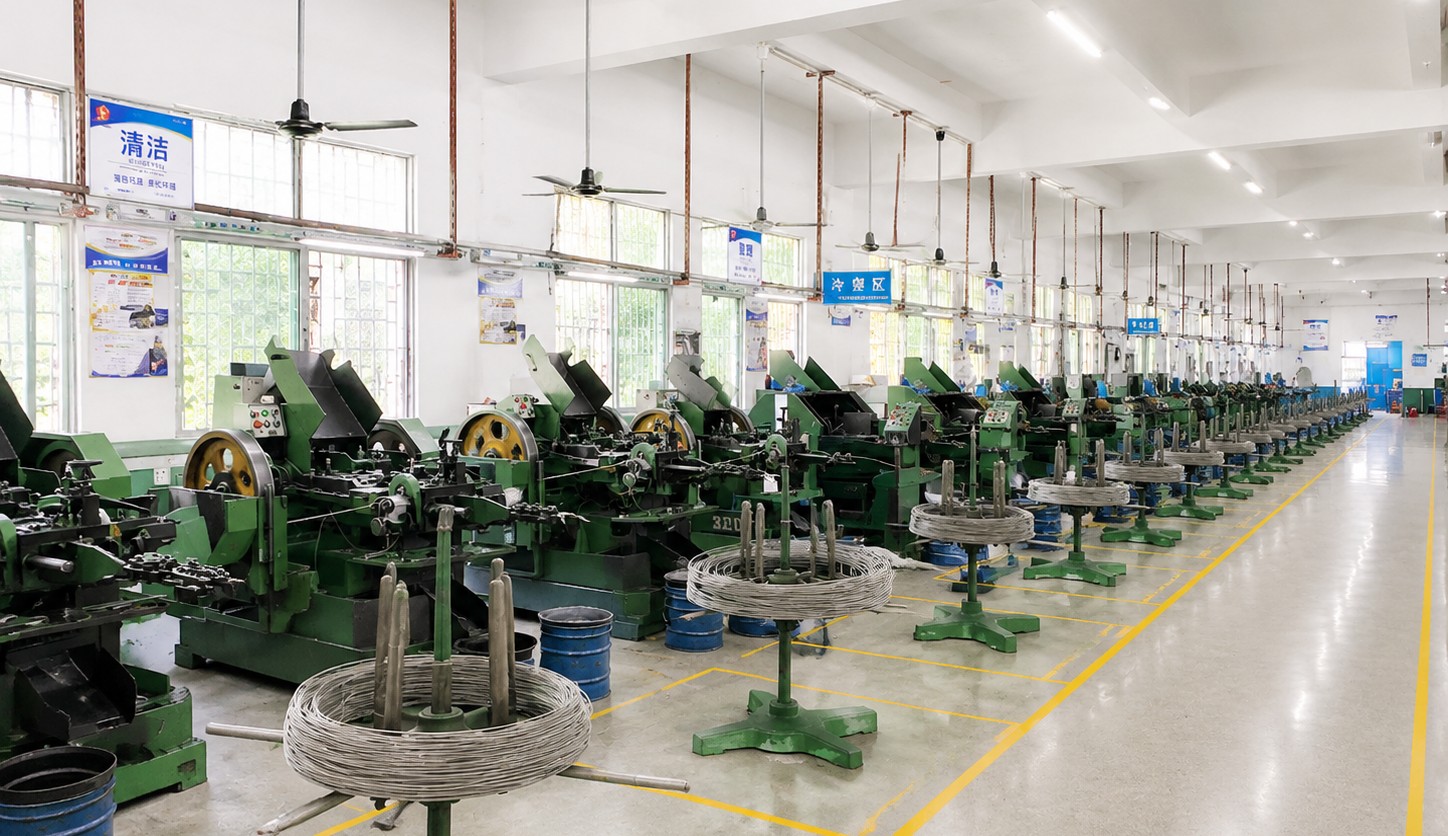
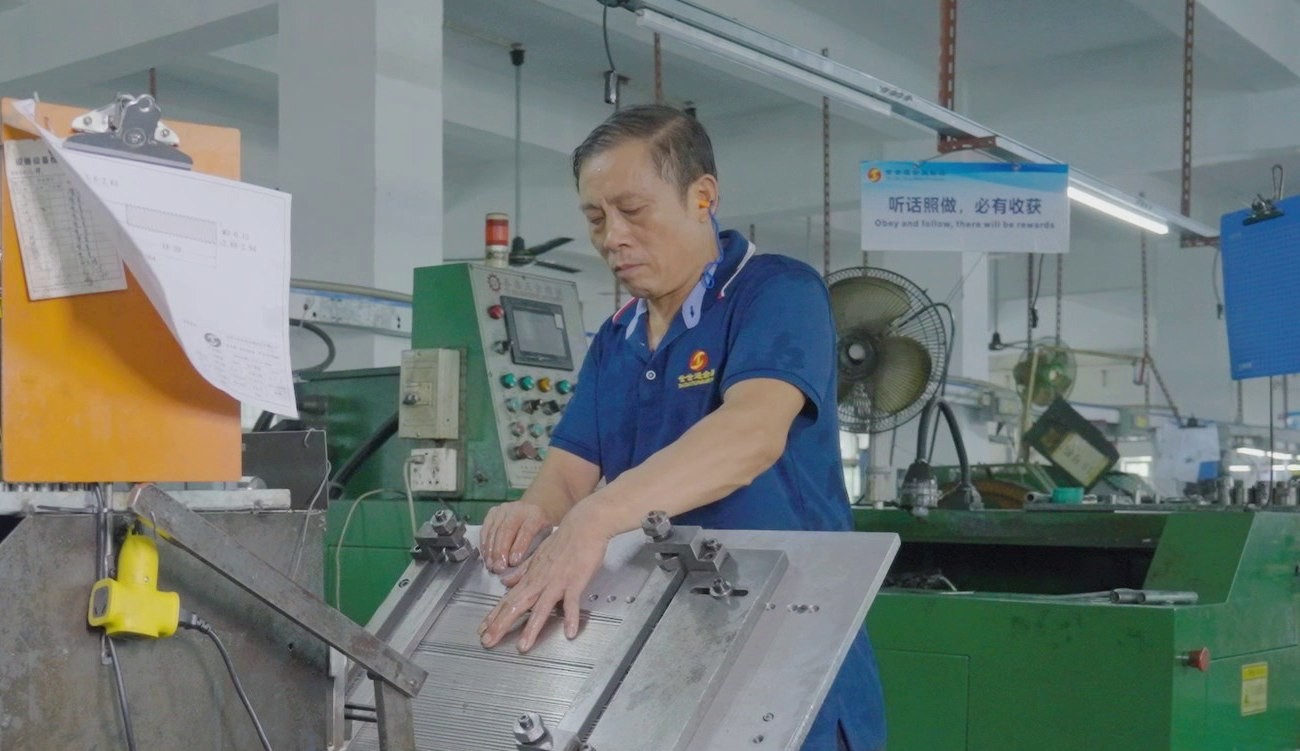
Shi Shi Tong forms these pan head screws with washer from stainless wire on single-die headers that form the pan head and the combined recess, shoulders the shank, fits the washer and rolls the machine thread up to the shoulder, then passivates the assembled parts. The first part of every run is checked with the washer in place: rotation, washer diameter, recess and thread, all before the batch continues.
|
|
The shoulder is the operation that decides whether the part works. Rolled too tight and the washer will not spin, which shows up as a screw that scores every panel it touches; rolled too loose and the washer rattles on the shank before assembly and can be shaken off in a feeder. The shoulder is set at the first article and checked with the washer fitted, not on a bare screw.
What decides whether pan head screws with washer pass is the washer, the shoulder, the recess, the thread and the alloy. The inspection agreement covers those, and the criteria come from the drawing.
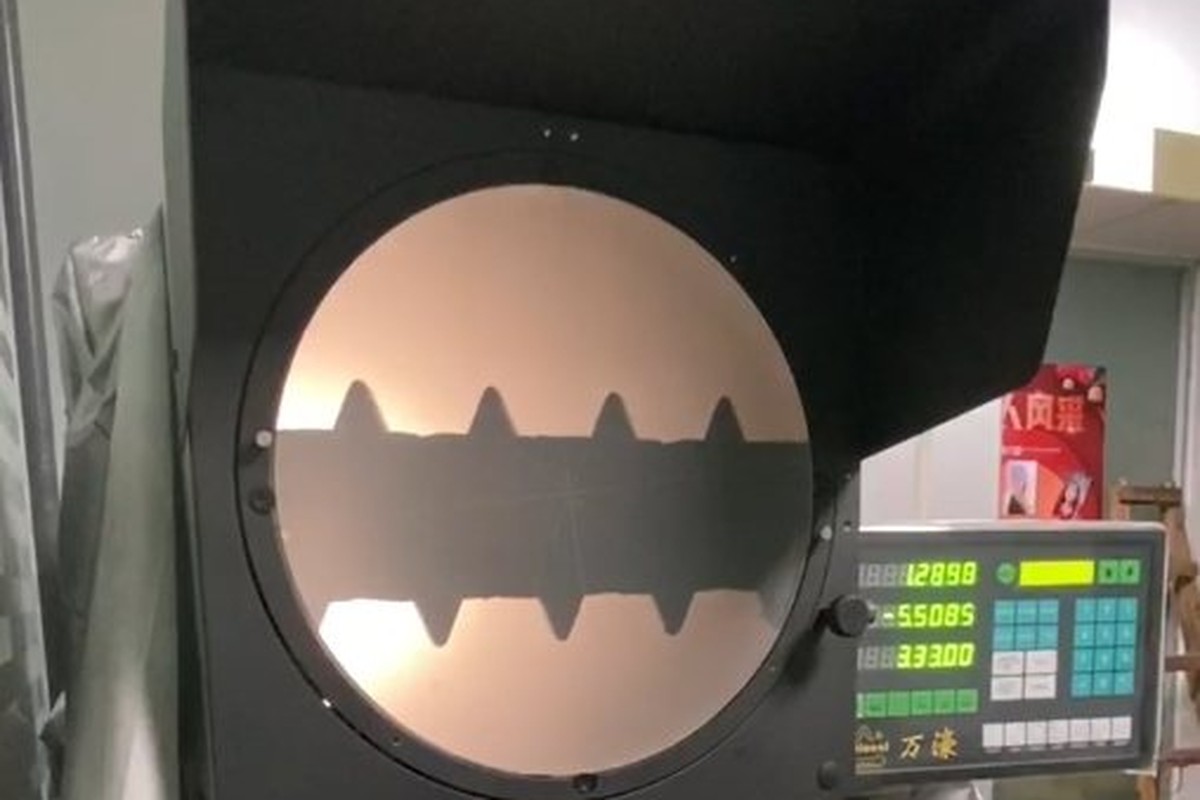
Washer and shoulder on the projector |
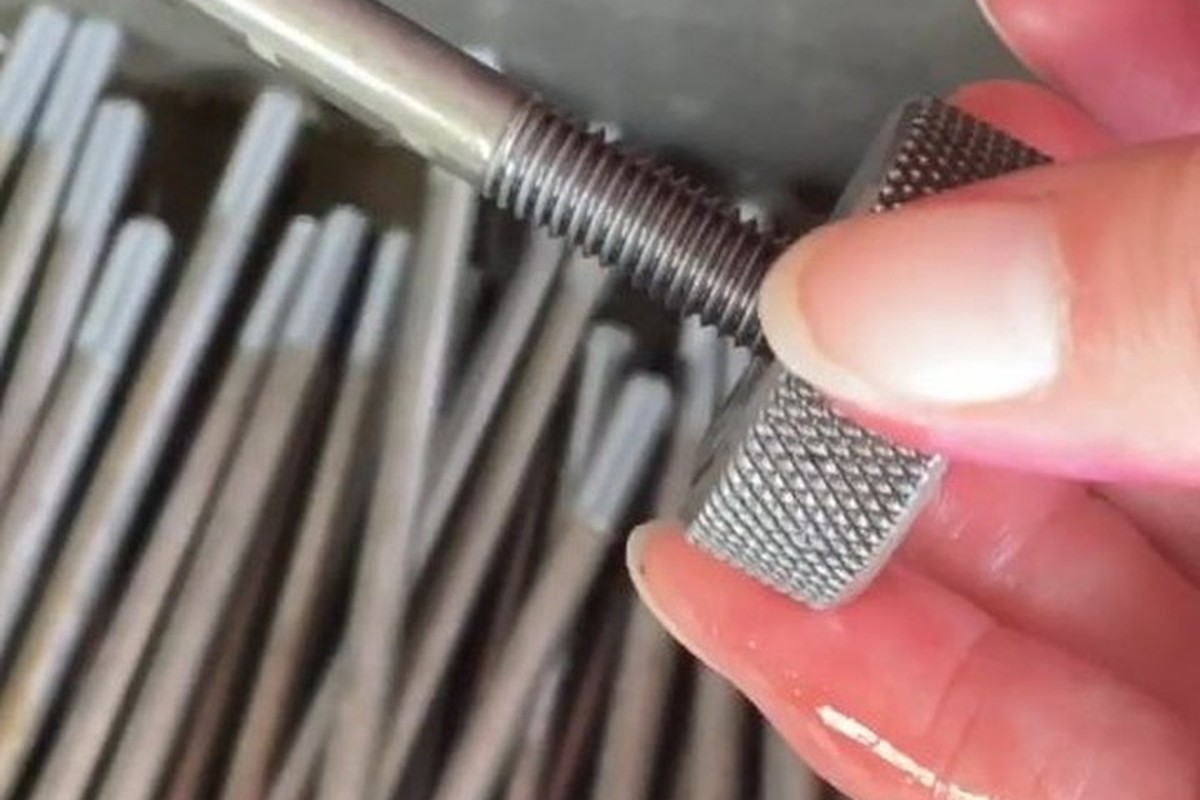
Thread gauged with the washer fitted |
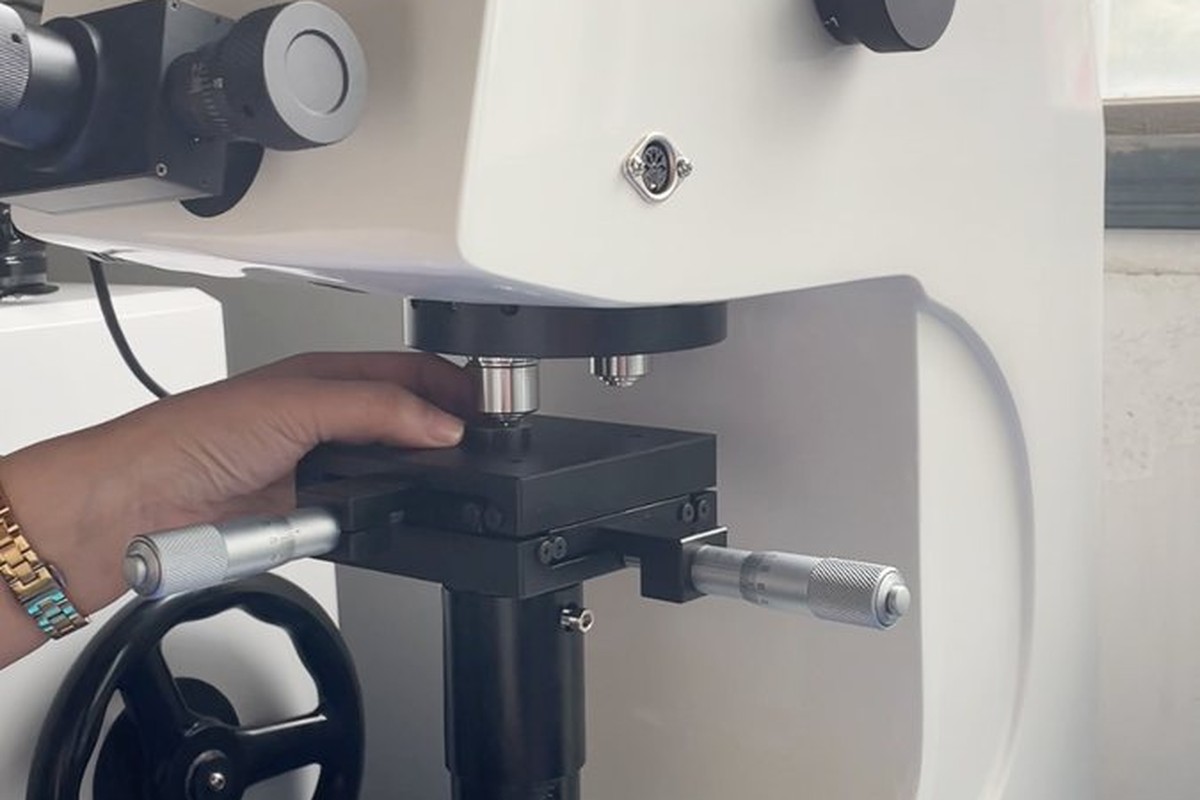
Hardness checked on the formed head |
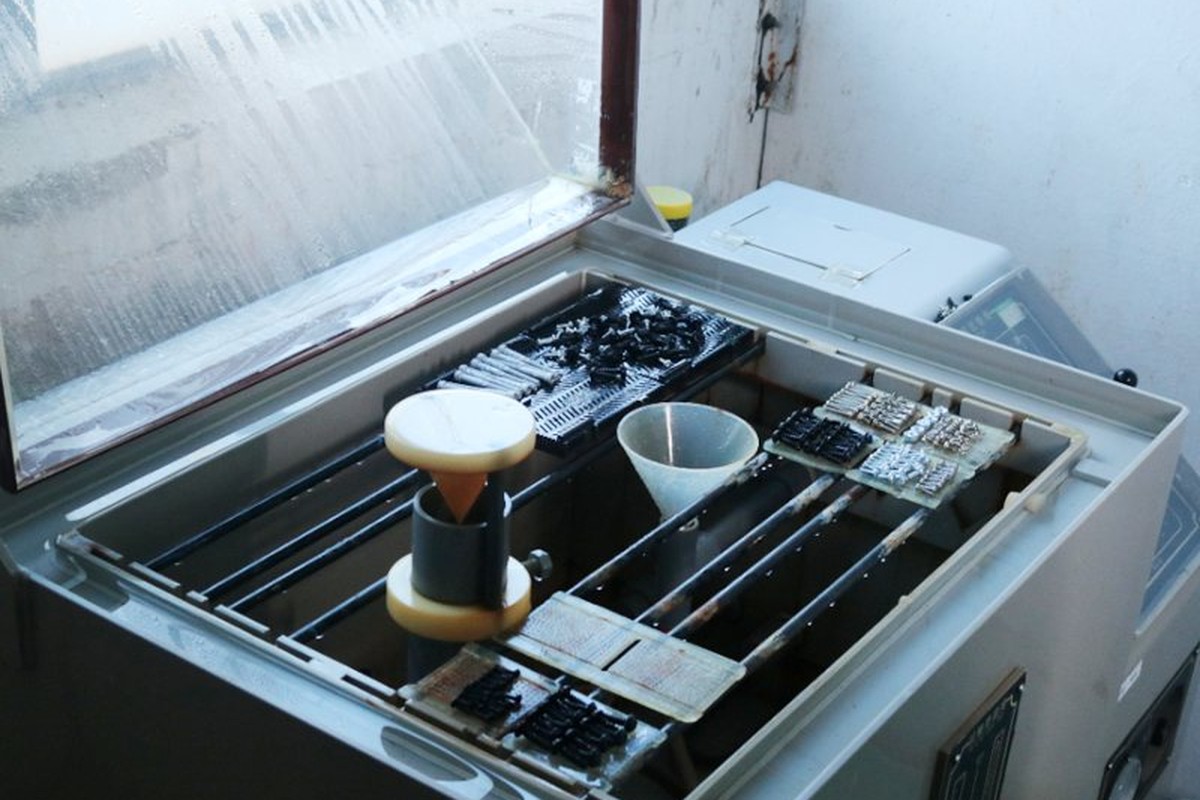
Salt-spray testing of the stainless grade |
The washer is checked for outside diameter and thickness and for free rotation on the shoulder. Rotation is the check that a gauge cannot make: it is done by hand with the washer in place, and a washer that turns stiffly or not at all will score the panel it was meant to protect.
The shoulder is checked on the section of the first article for its position and diameter, and the assembled part is pulled to confirm the washer cannot come off. On a screw that has been over-rolled the washer looks right on the outside and comes free under load — a defect that only shows in a pull test.
The recess is driven with the production bit and the thread is gauged with the washer in place, since the washer changes where the gauge stops. The length is checked from under the washer, not from under the head.
Every shipment of pan head screws with washer is traceable to the wire and to the washer batch, and to the passivation run they went through together. The grade and heat number are recorded on the material certificate supplied with the parts, and the inspection records follow the criteria agreed on the drawing.
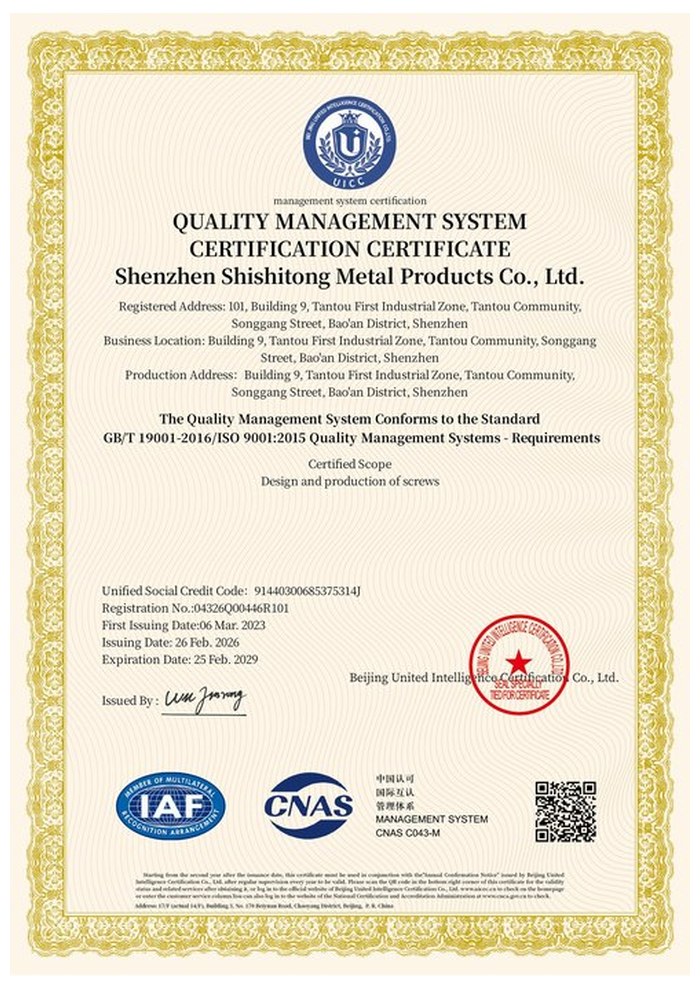
ISO 9001:2015 |
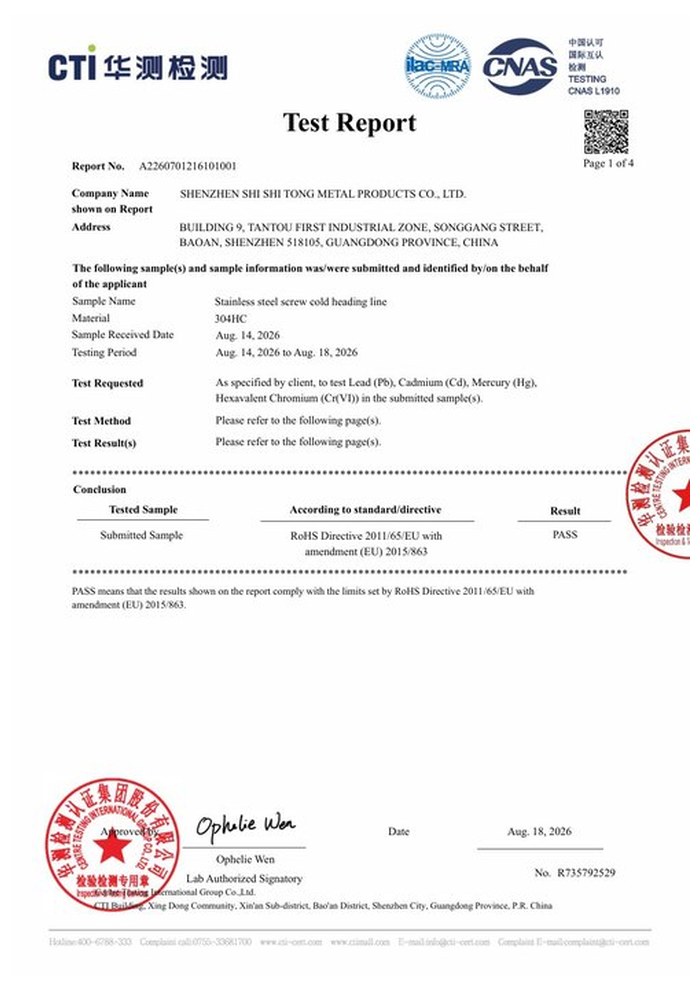
RoHS test report |
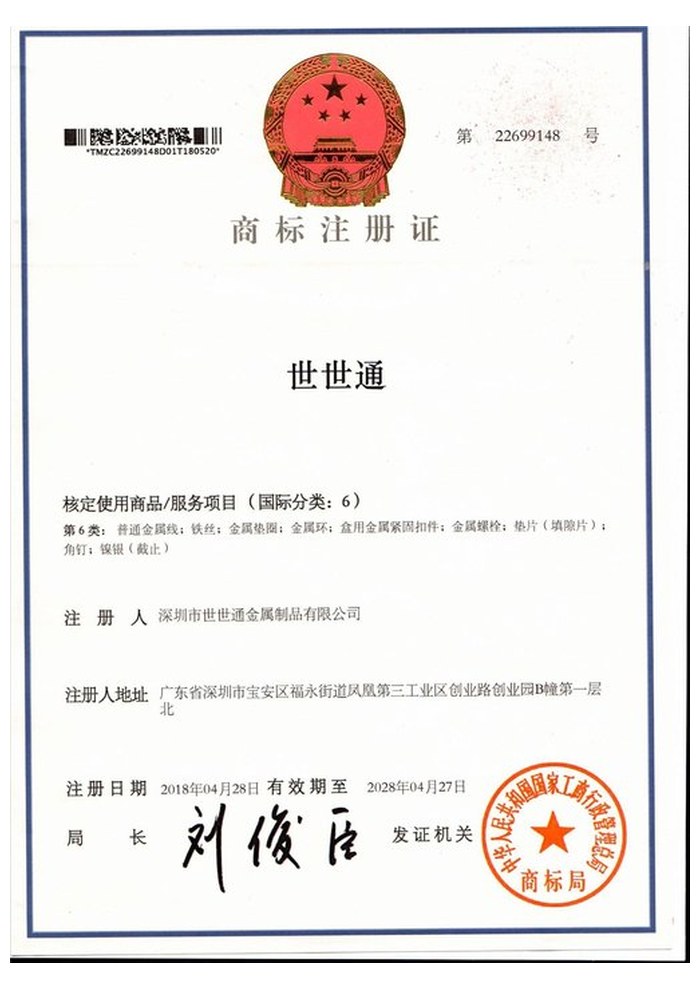
Registered trademark |
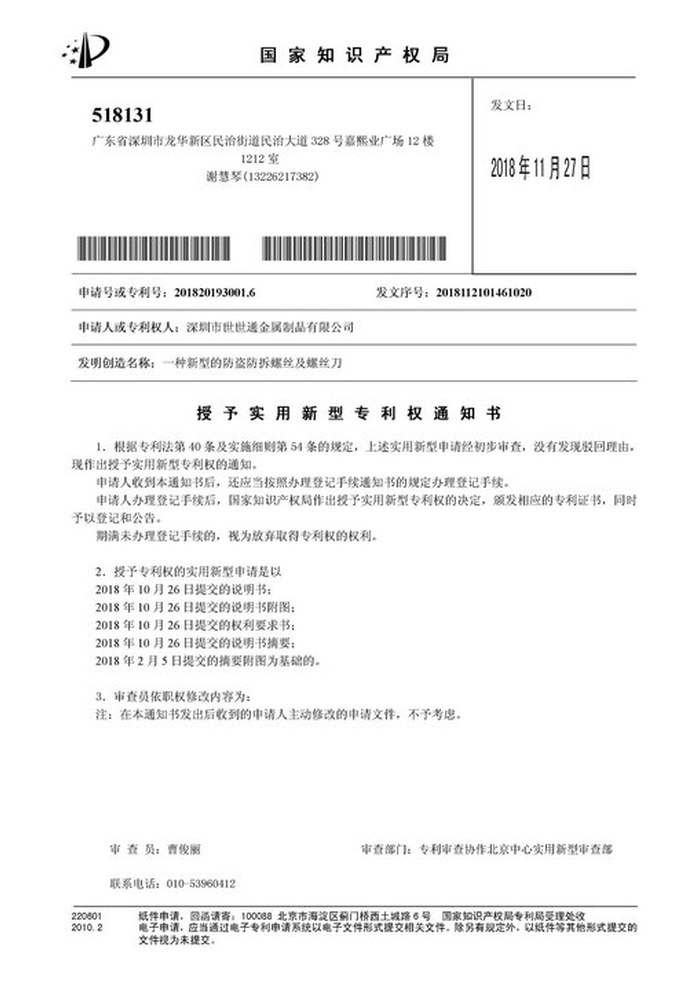
Patent: security screw and driver |
With each batch we supply the material certificate for the screw and the washer, the inspection record for the criteria on the drawing and, where it is listed, the third-party report for the grade or the passivation. The documents carry the drawing revision and the batch number, so the paperwork can be matched to the parts.
More than 8,678 customers in 89 countries and regions have ordered from Shi Shi Tong; 87% of orders come from repeat customers and 56% through referrals. Most projects follow the same route: drawing review, first-article approval, then batches checked against that sample. On an assembled screw the first article is checked with the washer on, because the washer is what the joint sees. Buyers visit during the process to review samples and to see how the heads are formed and the washers fitted.
|
8,678+
customers served
|
87%
of orders from repeat customers
|
56%
of orders through referrals
|
89
countries and regions shipped to
|
Buyers and quality engineers visit for sample review, process discussion and supplier audits; the visit is arranged around production so the headers and the assembly station can be seen on the day the parts run.
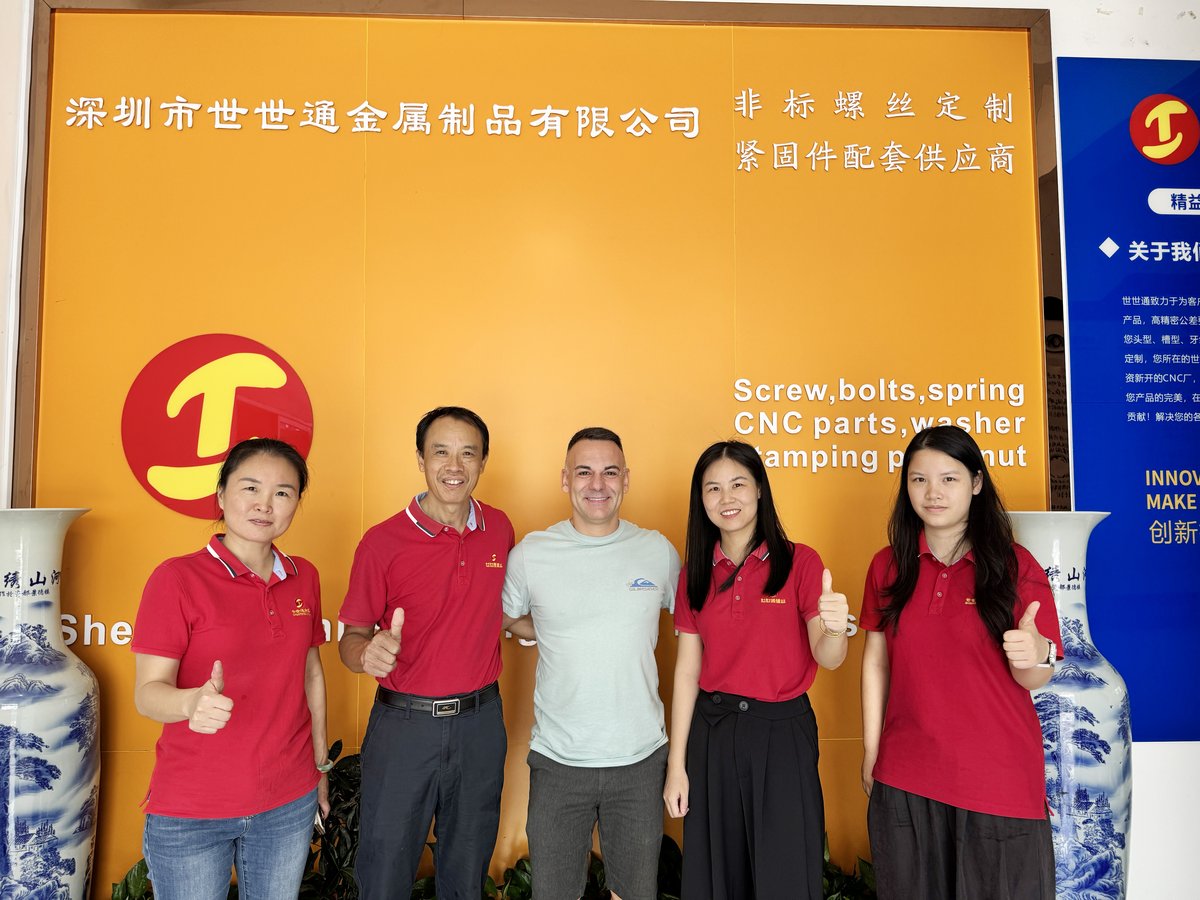
Customer group visit – sample review |

Customer group visit – process discussion |

Customer group visit – factory tour |

Customer visit – project kick-off |
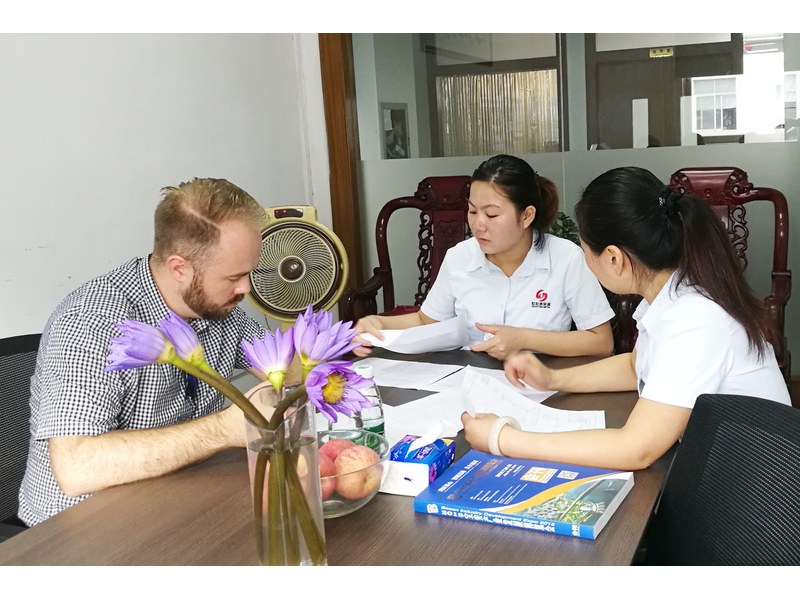
Danish customer – drawing review |
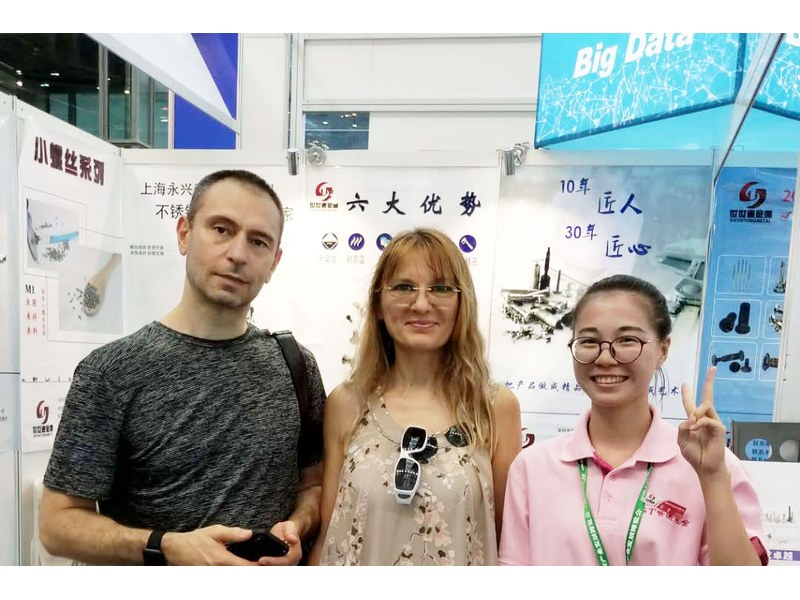
Industry exhibition – meeting customers |
So the joint arrives as one part. A separate washer is a bin, a pick and an occasional omission; a captured one cannot be forgotten or dropped inside the product.
If it turns with the screw it grinds the panel and can tear a coating as the head seats. A washer that stays still while the screw turns under it protects the finish.
The shoulder. Over-torque shears it or flattens the washer, and the part then loses the feature it was bought for. Torque is set from the panel and washer thickness.
The cross gives the clamp and the slot is a fallback for a blade. The slot removes some of the cross arms, so the cross is shallower than a plain Phillips.
From under the washer, because that is what touches the panel. From under the head would hide the washer thickness inside the thread length.
Head diameter and height, recess sizes, washer outside diameter and thickness, shoulder position, thread size and length with the datum, and the stainless grade.
How a pan head screw with washer project runs from drawing to repeat delivery:
|
1
Send the drawing and the panel sample
|
→ |
2
Washer, shoulder and recess review
|
→ |
3
First article checked with the washer on
|
→ |
4
Batch production and repeat orders
|
Each step is confirmed with you before the next one starts; the drawing revision from the first article is what repeat orders are checked against.
For a quotation, send the drawing with the head diameter and height, the recess sizes, the washer outside diameter and thickness, the thread size and length with the datum, and the stainless grade.
|
Head diameter
|
Recess sizes
|
Washer OD
|
|
Washer thickness
|
Thread and datum
|
Stainless grade
|
Sending a drawing? The form below does not take attachments. Email the PDF, DXF or STEP file to sst@szsst88.com with the part name and quantity in the subject line – the drawing is reviewed and a quotation follows.

 +86 13143444311
 sst@szsst88.com