Tel:
+86 13143444311
Email:sst@szsst88.com
Fax:+0086-755-27322278
Address:Building 9, First Industrial Zone, Tantou Industrial City, Songgang Street, Baoan District, Shenzhen 518105, Guangdong, China
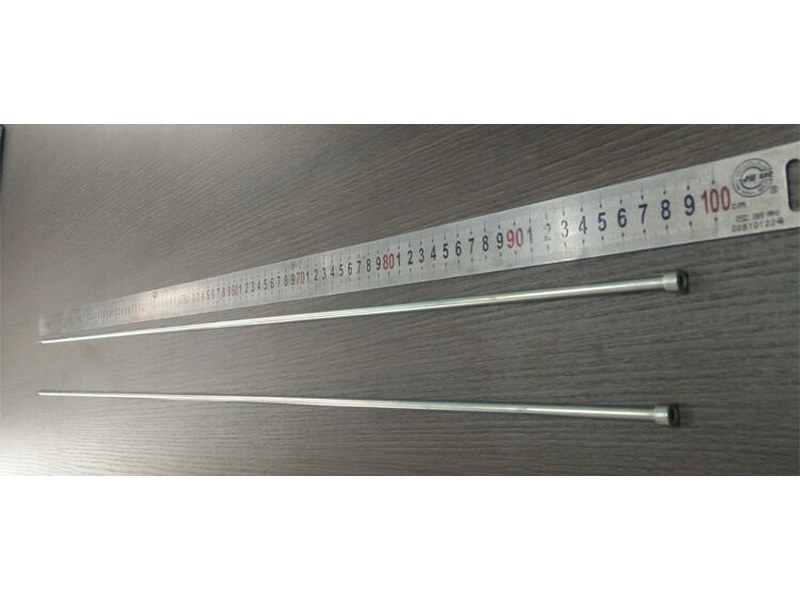
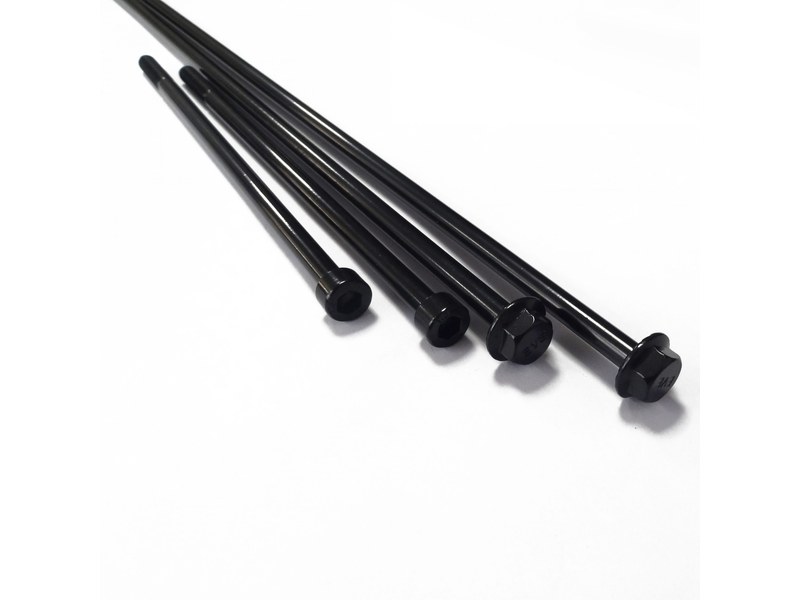
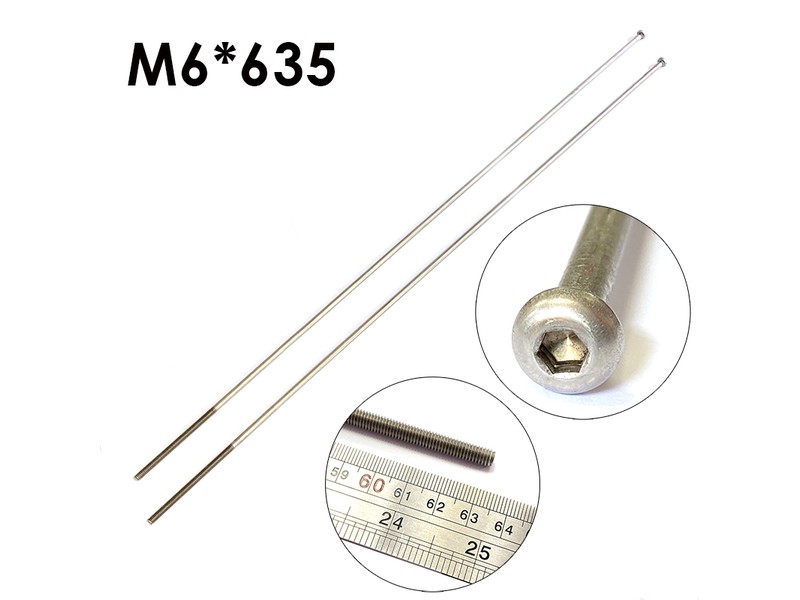
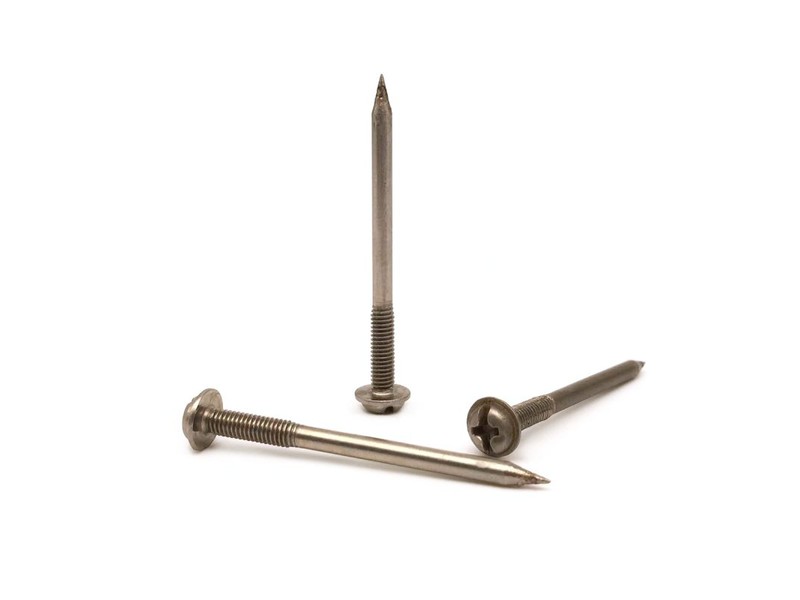
Type:Motorcycle Battery Terminal Screws
Materials:Stainless Steel
Surface treatment:Plain
Head Type:Hex Head
Drive:External hexagon, wrench or socket driven; no recess
Washer:Captive flat washer, trapped by the thread roll
Thread:Metric machine thread, rolled 60 degrees, to the blunt end
Point:Blunt end with a small chamfer; no taper, no drill point
Size:M1 M2 M3 M4 M5 M6 M7 M8 M9 M10 M14
Forming:Single-die heading of the hex head with the flat washer fitted to the shank; machine thread rolled over the washer so it is trapped; cleaned, passivated and sorted
Number:449
We manufacture motorcycle battery terminal screws in stainless steel with a hex head and a captive flat washer, a rolled machine thread and a blunt end, plain and passivated. Head, washer, thread and length are taken from your drawing, and the contact faces stay bare.
Watch the factory video·Email sst@szsst88.com
ISO 9001:2015 · Manufacturing since 1998 · 8,678+ customers · 89 countries and regions
Made to order – there is no stock catalogue. Each part is produced to your drawing, and production starts after drawing review and first-article approval.
Motorcycle battery terminal screws are the fasteners that clamp a ring terminal or a lead clamp onto a battery post, and they are a small part with an electrical job as well as a mechanical one. The recorded item on this page is a stainless steel hex head screw supplied with a captive washer, plain and passivated, quoted from M1 to M14 with Number 449.
Hex head with a captive washer. Six flats for a small wrench or socket, and a washer held on the shank so it cannot be lost down inside the battery box. On a terminal screw that matters: a dropped washer in a battery compartment is a short waiting to happen.
Electrical joint, not just a clamp. The screw carries the charging and starting current across the terminal interface, so contact area and surface condition matter as much as torque. A screw that is tight but sitting on a burr is a high-resistance joint.
Stainless body. Against acid mist and weather, stainless is the right base material: it does not rust at the thread and it does not shed a coating into the terminal. Its resistance is higher than brass or copper, which is why the contact area has to be generous.
Machine thread. A rolled thread that engages a nut or a threaded insert in the clamp, with a blunt end. The thread does not cut anything: the terminal has a nut or a captive plate waiting for it.
The soft side is the battery. Terminal posts and clamps are lead, lead alloy or soft brass, and they yield long before a stainless screw does. That single fact governs how the part is specified and how it is tightened.
The hex head is formed in one heading stroke and the flats are cut or formed to the wrench size. On a terminal screw the head height is deliberately modest: the screw sits in a recess in the battery cover or against the clamp, and a head that is too tall fouls the cover as it goes on.
The captive washer is placed on the shank before the thread is rolled, so the crests trap it. That is the same route used for any sems screw, and it is what lets a terminal screw be handled in a pit without losing its washer.
The washer is the electrical contact as much as the mechanical bearing face. A flat washer under the head spreads the clamp load over the terminal lug, and it is the surface that carries current from the ring terminal into the screw. A dished or burred washer is a bad joint even when the screw is tight.
The thread runs from the washer seat to the blunt end. It is rolled rather than cut, which leaves a smooth flank that will not gall into a soft brass nut, and it is long enough to engage the full depth of the clamp.
Cleaning and passivation follow, and the recorded finish is plain. Nothing is plated onto the washer face: a coating there is a film between two conductors, and on a terminal joint that is the last thing wanted.
The family is quoted from M1 to M14, with M1, M2, M3, M4, M5, M6, M7, M8, M9, M10 and M14 in the recorded range. Custom lengths up to 2,000 mm are subject to DFM review after drawing submission; motorcycle battery terminal screws are normally M5 or M6 with a length set by the clamp, because the clamp has a fixed thickness and the screw only has to reach through it. Motorcycle battery terminal screws are therefore quoted with the washer thickness in the stack.
| Item | How it is defined | What we control |
|---|---|---|
| Thread | Metric machine thread, rolled | Gauged per batch |
| Head across flats | External hexagon, small wrench size | Checked with the wrench on the first article |
| Head height | Modest, to clear the battery cover | Measured from the washer face |
| Washer | Captive flat washer, trapped by the thread | Diameter, thickness and flatness checked |
| End | Blunt with a small chamfer | Checked on the first article |
| Length | From under the washer to the end | Measured on the shop plate |
Length is measured from under the washer, because that is the face that bears on the lug. That is not the same as measuring from the head: the washer thickness is part of the stack, and on a clamp with a captive nut the difference decides whether the screw reaches the thread or bottoms in the clamp.
The torque is set by the terminal, not by the screw. A stainless M6 screw can take far more than a lead post can, and the joint is specified at the torque the battery manufacturer gives rather than at what the fastener allows. That is the first line on any motorcycle battery terminal screws drawing.
A battery terminal screw is one of the few fasteners where the electrical behaviour of the joint is as important as the mechanical one. Both have to be right for the bike to start.
| Feature | What it gives | What it costs |
|---|---|---|
| Captive washer | Cannot be lost in the battery box | Washer cannot be changed after the batch |
| Wide washer face | Contact area for the current path | Stack height grows by the washer thickness |
| Hex head | Wrench torque with a positive feel | Needs access for a wrench |
| Stainless body | No rust, no coating into the joint | Higher resistance than brass; galls in stainless |
| Plain finish | Bare metal on both contact faces | Will tarnish; not a cosmetic finish |
The contact area is the electrical specification. Current crosses from the ring terminal into the washer, through the screw and into the clamp, and every one of those interfaces has resistance. A washer that is dished, or a lug that is dirty, adds resistance at the joint and the voltage drop shows up as a slow crank and a battery that never quite charges.
The captive washer is the practical specification. A terminal screw is usually fitted in a pit, over a battery box full of acid mist and metal parts, and a dropped washer there is a short circuit waiting to happen. Trapping it on the shank costs nothing and removes that failure entirely.
Stainless against lead is a coupling worth understanding. The stainless is cathodic to the lead, so in the presence of acid mist the lead around the contact becomes the anode. That is why a terminal screw should be tight and dry, and why a smear of protective grease over the assembled joint is standard practice rather than a workshop habit. Motorcycle battery terminal screws are supplied bare so that grease is the only film on the joint.
The recorded finish is plain stainless, cleaned and passivated. On a terminal screw that is deliberate: the washer face and the thread are both contact surfaces, and any coating on them is a film between the current path and the clamp.
| Option | What it does | Effect on contact and thread | Typical use |
|---|---|---|---|
| Plain stainless | No film; bare alloy on the contact faces | No dimensional change | Terminal joints |
| Bright passivated | Cleaner surface, no film | No dimensional change | Visible engine-bay fittings |
| Nickel plated | Hard, bright, but a film on the contact | A few microns; contact face checked | Non-electrical trim |
| Dry film on the thread | Reduces galling in the nut | Film kept off the washer face | Terminals serviced often |
| Zinc plated steel | Sacrificial protection | A few microns; not for the contact face | Non-electrical brackets |
The rule on this part is that the contact faces stay bare. Plating on the washer face or in the thread adds a layer between two conductors and a layer that can creep under load; a bright finish is fine on the head flats, where nothing electrical happens, and not on the face that carries current.
A dry film is worth having on the thread if the terminal is serviced often, because a stainless screw into a brass nut galling is a real risk. It is applied to the thread only, and the washer face is masked, so the joint keeps its bare-metal contact. On motorcycle battery terminal screws the finish is chosen for the contact, not for the look.
Three applications where a terminal screw has to hold an electrical joint in a hard environment:
| Where it sits | The screw clamps a ring terminal or a lead clamp onto the battery post, where the joint carries starting current and sits in a pit that collects acid mist and water. |
| When it goes wrong | A loose terminal joint cranks slowly and sulfates the battery, and a steel screw with a chipped coating corrodes at the thread inside the clamp. |
| Why it happens | The joint carries starting current, the post is soft lead, and the terminal is serviced. |
| What we control | Washer flatness and thread checked, first article assembled on a sample post and the contact ring inspected. |
| Where it sits | The screw fixes the battery lead on a quad, a jet ski or a generator, where the equipment is used seasonally and stored with the battery connected. |
| When it goes wrong | A terminal that is not tight enough corrodes in storage, and a fastener that rusts into the clamp cannot be removed without cutting it. |
| Why it happens | The equipment is stored, it vibrates, and the battery is removed for charging. |
| What we control | Washer flatness and thread checked, first article assembled on a sample post. |
| Where it sits | The screw holds a busbar or a cable lug in a panel that sees spray and salt, where a reliable low-resistance joint matters more than appearance. |
| When it goes wrong | A plated fastener introduces a dissimilar metal into the current path, and a loose joint overheats under load. |
| Why it happens | The panel is exposed, the joint carries load, and it is inspected during service. |
| What we control | Grade and passivation recorded, washer face bare, thread gauged per batch. |
Four reasons that matter on a small electrical fastener, each tied to what the drawing has to prove:
|
Contact face and thread reviewed together
The washer face, the length and the thread are reviewed as one set against the clamp, so a screw that bottoms before the washer bears is raised first. Basis: Contact face and length reviewed together. |
Head, washer and thread in one route
The hex head is formed in one stroke, the washer is placed on the shank and the thread is rolled over it, so the washer cannot come off. Basis: Washer trapped by the thread roll. |
|
Washer and thread checked on the part
The washer is checked for flatness and diameter, the thread is gauged per batch, and the joint is assembled on a sample post. Basis: First article assembled on a sample post. |
First article to repeat production
The first article fixes the drawing revision, wire heat, washer lot, die set and thread roll; repeat orders are compared against that record. Basis: First article signed off before the batch is released. |
Shi Shi Tong forms these motorcycle battery terminal screws on a single-die header that upsets the hex head, fits the flat washer to the shank and rolls the machine thread over it so the washer is trapped. The parts are cleaned and passivated and sorted dry. The first part of every run is measured on the head and the washer, gauged on the thread and assembled on a sample post, before the batch continues.


|

|
The washer is the operation that decides the joint. It has to be flat before it goes on, because a washer that is dished by a few hundredths will flatten under load and lose the preload the terminal needs; and it has to be retained firmly enough not to spin off in handling. Both are checked on the first article and the flatness is sampled through the run.
What decides whether motorcycle battery terminal screws pass is the washer, the head, the thread and the surface. The inspection agreement covers those, and the criteria come from the drawing.

Head and washer on the projector |

Thread gauged per batch |

Hardness testing of the wire |

Salt-spray testing where the service requires it |
The washer is checked for flatness before assembly and for retention afterwards: it should turn freely and not come off over the thread. A washer that is tight enough to bind or loose enough to pass the point fails in both directions, and on a terminal screw either one ends with a washer in a battery box. Every batch of motorcycle battery terminal screws is checked on that retention.
The joint is assembled on a sample post at the specified torque and then taken apart to look at the contact faces. A ring that is even on the washer and on the lug is a pass; a partial ring means the washer is not flat or the screw is bottoming, and both show as a hot joint later rather than as a dimension.
Every shipment of motorcycle battery terminal screws is traceable to the wire it was made from and to the washer lot. The grade and heat number are recorded on the material certificate supplied with the parts, and the inspection records follow the criteria agreed on the drawing.

ISO 9001:2015 |

RoHS test report |

Registered trademark |

Patent: security screw and driver |
With each batch we supply the material certificate, the inspection record for the criteria on the drawing and, where it is listed, the third-party report for the material. The documents carry the drawing revision and the batch number, so the paperwork can be matched to the parts.
More than 8,678 customers in 89 countries and regions have ordered from Shi Shi Tong; 87% of orders come from repeat customers and 56% through referrals. Most projects follow the same route: drawing review, first-article approval, then batches checked against that sample. On a terminal screw the first article is assembled on a sample post, because the joint only proves itself under load. Buyers visit during the process to review samples and to see how the washers are fitted.
|
8,678+
customers served
|
87%
of orders from repeat customers
|
56%
of orders through referrals
|
89
countries and regions shipped to
|
Buyers and quality engineers visit for sample review, process discussion and supplier audits; the visit is arranged around production so the header and the finishing line can be seen on the day the parts run.

Customer group visit – sample review |

Customer group visit – process discussion |

Customer group visit – factory tour |

Customer visit – project kick-off |

Danish customer – drawing review |

Industry exhibition – meeting customers |
It carries current as well as clamping: the washer face is a contact surface, and the joint has to stay low-resistance under vibration and acid mist.
So it cannot be dropped into a battery box full of acid mist and metal parts. The washer is trapped by the thread and cannot come off.
At the torque the battery or clamp maker specifies. The post is lead or soft brass and yields long before a stainless screw does, so the terminal sets the limit.
For corrosion resistance yes, but its resistance is higher than brass or copper, which is why the washer face has to be flat and the joint tight and dry.
Stainless is cathodic to lead, so acid mist can attack the lead around the contact. A protective grease over the assembled joint is standard practice.
Thread size and pitch, across flats and head height, washer diameter and thickness, length and datum, grade and finish.
How a motorcycle battery terminal screw project runs from drawing to repeat delivery:
|
1
Send the drawing or a clamp sample
|
→ |
2
Washer and length review
|
→ |
3
First article assembled on a post
|
→ |
4
Batch production and repeat orders
|
Each step is confirmed with you before the next one starts; the drawing revision from the first article is what repeat orders are checked against.
For a quotation, send the drawing with the thread size and pitch, across flats and head height, washer diameter and thickness, length and datum, grade and finish, and the torque the terminal takes.
|
Thread and pitch
|
Across flats
|
Washer diameter and thickness
|
|
Length and datum
|
Grade and finish
|
Terminal torque
|
Sending a drawing? The form below does not take attachments. Email the PDF, DXF or STEP file to sst@szsst88.com with the part name and quantity in the subject line – the drawing is reviewed and a quotation follows.

 +86 13143444311
 sst@szsst88.com