Tel:
+86 13143444311
Email:sst@szsst88.com
Fax:+0086-755-27322278
Address:Building 9, First Industrial Zone, Tantou Industrial City, Songgang Street, Baoan District, Shenzhen 518105, Guangdong, China
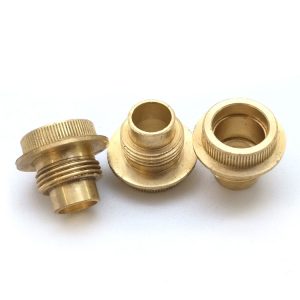
Type:CNC Machined Screws
Materials:Brass
Surface treatment:plain
Head Type:knurled head
Drive:Per Drawing
Thread:Machine Thread
Features:Shoulder / Cross Holes
Forming:CNC Turned
Size:M1 M2 M3 M4 M5 M6 M7 M8 M9 M10 M14
Number:618
We machine cnc screws and turning parts from brass, stainless and aluminium bar, with shoulders, knurls, flats, cross holes and threads cut to the drawing. Every feature is reviewed for reachability before the program is written, and the first article is measured feature by feature.
Watch the factory video·Email sst@szsst88.com
ISO 9001:2015 · Manufacturing since 1998 · 8,678+ customers · 89 countries and regions
Made to order – there is no stock catalogue. Each part is produced to your drawing, and production starts after drawing review and first-article approval.
CNC screws are fasteners cut from bar stock on a lathe or a mill instead of being headed from wire, which means the geometry is limited by the tool path rather than by a die. The recorded item is brass with a plain finish, a knurled head and a machine thread, quoted from M1 to M14 with Number 618.
Machined from bar. The head, shoulder, thread and any cross holes are produced by removing material. There is no heading die, so a new geometry costs a program rather than a tool.
Knurled head. A straight knurl rolled or cut on the head, giving a grip for fingers or a collet. On a turned part the knurl can be placed anywhere the tool can reach.
Machine thread. A cut or rolled thread for a tapped hole or a nut. On a machined part the thread can stop where the drawing says, which is what makes a shoulder screw possible.
Brass, plain. Free-cutting, conductive and non-magnetic, and it takes a fine thread without tearing. The plain finish is the metal, so there is no coating to fill a knurl or a fine thread.
A headed screw is a die product: the head shape comes from a punch, and the shank comes from wire. That is fast and cheap, and it is also why a headed screw has the features it has. A machined screw starts from bar, so the sequence of diameters, the position of a shoulder and the presence of a cross hole are all free — within the reach of the tool and the stiffness of the part.
That freedom is what cnc machined screws are bought for. A turned screw can carry a step under the head that acts as a shoulder and locates a bearing; it can have a cross hole for a pin or a safety wire; it can have flats for a spanner on a diameter too small to knurl; and it can have a thread that runs to a shoulder with an undercut, which a rolled thread cannot do cleanly.
For cnc machined screws the trade is time. A headed part is made in fractions of a second per piece; a machined part takes a cycle, and the cycle is the price. That is why cnc machined screws are specified in the quantities where the function justifies it — prototypes, small runs, instruments, and any joint where a standard fastener cannot do the job.
Design rules change for cnc machined screws. A machined screw wants generous corner radii where it can have them, an undercut at the end of a thread that must run to a shoulder, and a chamfer on every edge a tool will cross, because a burr on a turned part is a defect that shows on the first assembly. What it does not want is a feature that cannot be reached without a second operation.
Plain brass is the finish as much as the material. Free-cutting brass takes a fine thread and a crisp knurl, machines at high speed, and conducts — which matters on parts that end up in electrical or audio equipment. There is no coating, so the knurl and the thread are exactly as cut.
The family is quoted from M1 to M14, with M1, M2, M3, M4, M5, M6, M7, M8, M9, M10 and M14 in the recorded range. Custom lengths up to 2,000 mm are subject to DFM review after drawing submission; on cnc machined screws every feature is a drawing dimension, and the drawing is reviewed for reachability before the program is written.
| Item | How it is defined | What we control |
|---|---|---|
| Head | Shape per the drawing | Diameter, knurl, flats and face squareness |
| Features | Steps, shoulders, cross holes, flats | Position, tolerance and reachability |
| Thread | Machine thread, per the drawing | Pitch, length and undercut at a shoulder |
| Edges | Chamfer or radius per the drawing | Burr-free on every crossed edge |
| Finish | Plain brass or per the drawing | Surface condition and tone |
| Length | Overall, per the drawing | Measured on the shop plate |
Reachability is the dimension that a drawing often misses. A cross hole close to a shoulder, a knurl next to a chamfer, or a thread that runs into a step can each be drawn and not cut; the drawing review looks at each feature and asks whether a tool can get there without touching something else.
Length is quoted overall, and the datum for each feature is on the drawing. On a part with a shoulder, the distance from the head to the shoulder is usually the functional dimension, because that is what positions whatever sits on it.
Three things define cnc machined screws: the machined geometry, the material and the plain finish. The first is what the drawing asks for, the second is why the part machines cleanly, and the third is what makes the fine detail visible.
| Route | What it gives | What it costs | Where it fits |
|---|---|---|---|
| CNC turning | Any sequence of diameters, threads, knurls | Cycle time per part | Prototypes and small runs |
| Multi-station heading | High volume at low unit cost | Die cost and fixed geometry | Standard screws in volume |
| CNC milling | Flats, slots and cross holes off-axis | Second operation and handling | Special shapes and features |
| Cold forming plus machining | Speed plus one machined feature | Two operations to control | Volume parts with one special feature |
The comparison that matters to a buyer is not per-piece price at one quantity but which route can make the part at all. A shoulder with a cross hole and a knurled head is not a headed part; it is a turned part with a milled feature, and the drawing review says so before anyone quotes.
The other comparison is what happens when the design changes. A headed screw needs a new die, which is a fixed cost that is only worth paying at volume. A machined screw needs a new program, which is why cnc machined screws are the natural answer to a prototype and a poor answer to a million pieces.
CNC machined screws are finished plain, in brass. There is no coating, so the knurl, the thread and the chamfers are exactly as cut, and the tone is the alloy — warm when new, darker as it oxidises, with a faint green cast in a damp store.
| Finish | How it protects | Effect on detail | Typical use |
|---|---|---|---|
| Plain brass | Natural oxide, conductive | None; knurl and thread as cut | Electrical, audio, instrument work |
| Nickel plate on brass | Hard barrier deposit | A few microns; knurl softened | Bright visible parts |
| Tin plate on brass | Soft barrier, solderable | Thin; detail preserved | Solderable joints |
| Stainless, machined and passivated | Passive chromium oxide film | None; gauged as cut | Washdown and outdoor |
| Anodised aluminium | Grown oxide, dyed | A few microns; knurl re-checked | Lightweight colour-coded parts |
On cnc machined screws the finish is a decision about detail. A knurl that was cut to give grip loses some of it under a plating, and a fine thread loses clearance; where the detail is the function, plain is the specification. Where the part is visible and handled, a plated finish is applied and the knurl is cut deeper to allow for it.
Machining also allows finishes that heading does not, because the part can be made from a material that takes them. Anodised aluminium or passivated stainless machined screws are the common alternatives where weight or corrosion matters more than conductivity.
Three assemblies where cnc machined screws are the fixing:
| Where it sits | The screw carries a shoulder that locates a lens mount, a stage or a pivot, where the position of the shoulder is the function and a standard screw cannot provide it. |
| When it goes wrong | A headed screw cannot hold that diameter within tolerance, and a shoulder that is off position misaligns the optical axis. |
| Why it happens | The joint locates on a machined feature, the tolerance is tight, and the quantities are small. |
| What we control | Shoulder diameter and position checked on the projector, thread gauged, edges deburred. |
| Where it sits | The screw is part of a current path or a contact, made in brass for conductivity and non-magnetic behaviour, and often with a knurled or slotted head for finger adjustment. |
| When it goes wrong | A plated steel screw adds resistance, and a magnetic one disturbs a coil or a sensor. |
| Why it happens | The joint conducts, the part is small, and the finish has to be the metal. |
| What we control | Alloy confirmed on the certificate, knurl and thread checked, contact faces left clean. |
| Where it sits | The screw is a one-off or a short run, with a geometry that exists because the machine needed it, not because a standard offers it. |
| When it goes wrong | A die for a headed part is unaffordable, and a standard screw will not fit the space. |
| Why it happens | The quantity is small, the geometry is unusual, and the lead time matters. |
| What we control | Drawing reviewed for reachability, first article measured fully, program fixed for repeats. |
Four reasons that matter on cnc machined screws, each tied to what the drawing has to prove:
|
Geometry reviewed for reachability
Every feature is reviewed against the tool that will cut it, so a cross hole too close to a shoulder or a thread with no undercut is raised before the program is written. Basis: Every feature checked for reachability. |
Turning, milling and threading in one route
The part is turned, milled where the drawing needs it and threaded in one route, so the datums stay related and the features stay concentric. Basis: One route from bar to finished part. |
|
Measured feature by feature
The first article is measured on the projector for shoulder position, knurl and thread, and checked for burrs on every crossed edge. Basis: First article measured feature by feature. |
Program and first article fixed together
The first article fixes the program, the tool list and the material batch; repeat orders run from that program and are compared against that sample. Basis: Program signed off with the first article. |
Shi Shi Tong machines these cnc machined screws from brass bar on CNC lathes: the bar is turned to the head and shoulder diameters, the knurl is formed, any flats or cross holes are milled, and the thread is cut to the drawing with an undercut where it runs to a shoulder. The part is deburred, cleaned and inspected before packing, and the first article is measured feature by feature against the drawing.


|

|
The thread running out at a shoulder is the feature that separates a machined part from a headed one, and it is also the one that catches programs out. A cut thread needs an undercut or a relief groove to stop in, or the last thread is a partial form that will not enter a nut; where the drawing wants the thread to run right up to the shoulder, the undercut is part of the design and not an afterthought.
What decides whether cnc machined screws pass is the geometry, the thread, the knurl, the edges and the material. The inspection agreement covers those, and the criteria come from the drawing.

Shoulder and knurl on the projector |

Thread gauged to the drawing |

Hardness checked against the alloy |

Salt-spray testing where a coating is specified |
The geometry of cnc machined screws is checked feature by feature on the projector: head diameter, knurl depth and pitch, shoulder diameter and position, and the position of any cross hole. On a machined part the datums matter more than on a headed one, because every feature is positioned relative to them.
The thread on cnc machined screws is gauged and run into a sample nut, with the undercut or relief checked at the shoulder. Edges are checked for burrs under magnification, since a burr on a turned part is a defect that shows on the first assembly rather than a cosmetic issue.
The alloy is confirmed on the certificate, and the surface is inspected for tool marks. On a part with no finish, the surface is the finish, and a rubbing mark on a knurl or a torn thread flank cannot be hidden.
Every shipment of cnc machined screws is traceable to the bar they were made from. The alloy, temper and heat number are recorded on the material certificate supplied with the parts, and the inspection records follow the criteria agreed on the drawing.

ISO 9001:2015 |

RoHS test report |

Registered trademark |

Patent: security screw and driver |
With each batch we supply the material certificate for the bar, the inspection record for the criteria on the drawing and, where it is listed, the third-party report for the alloy or the coating. The documents carry the drawing revision and the batch number, so the paperwork can be matched to the parts.
More than 8,678 customers in 89 countries and regions have ordered from Shi Shi Tong; 87% of orders come from repeat customers and 56% through referrals. Most projects follow the same route: drawing review, first-article approval, then batches checked against that sample. On cnc machined screws the first article is the record of the program as much as the part, so it is kept and compared against every repeat. Buyers visit during the process to review samples and to see the lathes run.
|
8,678+
customers served
|
87%
of orders from repeat customers
|
56%
of orders through referrals
|
89
countries and regions shipped to
|
Buyers and quality engineers visit for sample review, process discussion and supplier audits; the visit is arranged around production so the lathes, the milling cell and the inspection bench can be seen on the day the parts run.

Customer group visit – sample review |

Customer group visit – process discussion |

Customer group visit – factory tour |

Customer visit – project kick-off |

Danish customer – drawing review |

Industry exhibition – meeting customers |
Any sequence of diameters, a shoulder that locates, a cross hole, flats, and a thread that runs to a shoulder with an undercut. A die cannot make shapes it does not have.
At volume. A headed screw costs a die and fractions of a second per piece; a machined one costs a program and a cycle per piece.
A cut thread needs somewhere to stop. Without a relief the last thread is a partial form that will not enter a nut.
For instrument and electrical work, yes. Where the joint needs steel strength, the material changes and the drawing says what to.
Feature by feature on the projector, plus a nut run on the thread. The first article also becomes the record of the program for repeat orders.
Every diameter with its datum, shoulder position, knurl or flats, cross holes, thread with its undercut, chamfers and radii, alloy and finish.
How a cnc machined screw project runs from drawing to repeat delivery:
|
1
Send the drawing and the function
|
→ |
2
Reachability and tolerance review
|
→ |
3
First article measured feature by feature
|
→ |
4
Batch production and repeat orders
|
Each step is confirmed with you before the next one starts; the program from the first article is what repeat orders run against.
For a quotation, send the drawing with every diameter and its datum, the shoulder position, any knurl, flats or cross holes, the thread with its undercut, the chamfers and radii, and the alloy and finish.
|
Diameters
|
Shoulder
|
Knurl and flats
|
|
Cross holes
|
Thread and undercut
|
Alloy and finish
|
Sending a drawing? The form below does not take attachments. Email the PDF, DXF or STEP file to sst@szsst88.com with the part name and quantity in the subject line – the drawing is reviewed and a quotation follows.

 +86 13143444311
 sst@szsst88.com