Tel:
+86 13143444311
Email:sst@szsst88.com
Fax:+0086-755-27322278
Address:Building 9, First Industrial Zone, Tantou Industrial City, Songgang Street, Baoan District, Shenzhen 518105, Guangdong, China
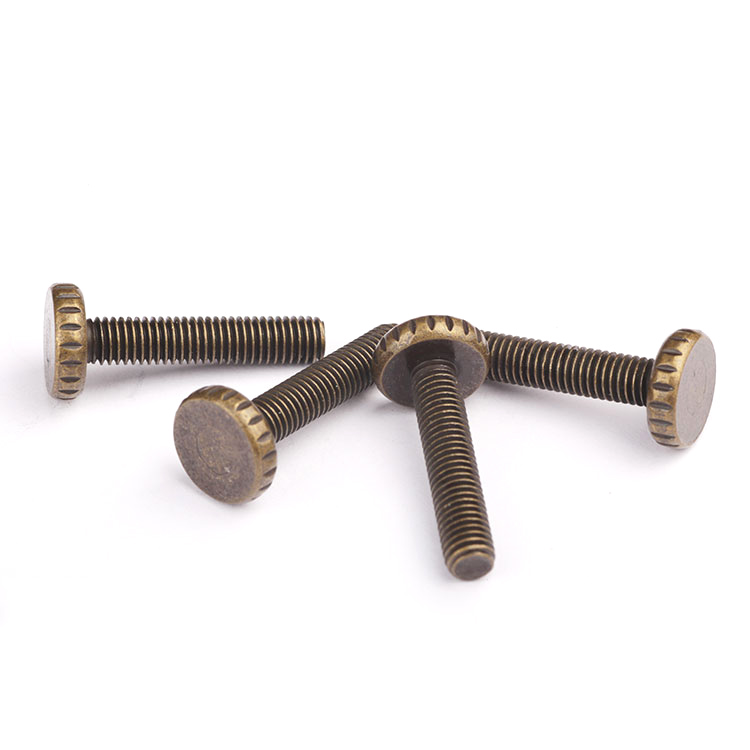
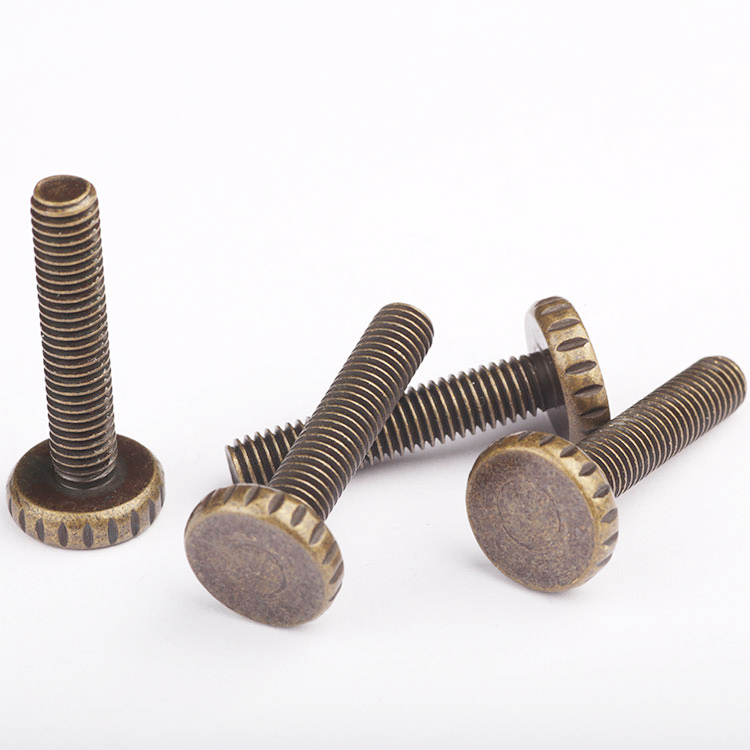
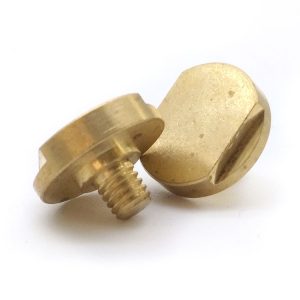
Type:Copper Machine Screws
Materials:Copper
Surface treatment:Plain
Head Type:Cap Head
Drive:Knurled Grip (No Drive Slot)
Thread:Machine Thread
Point:Blunt
Forming:Single Die Heading
Size:M1 M2 M3 M4 M5 M6 M7 M8 M9 M10 M14
Number:515
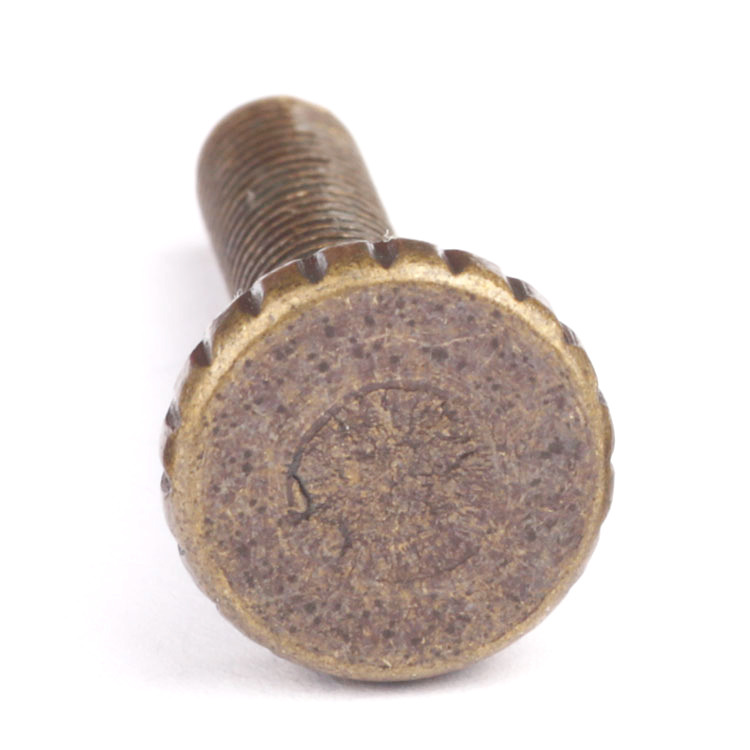
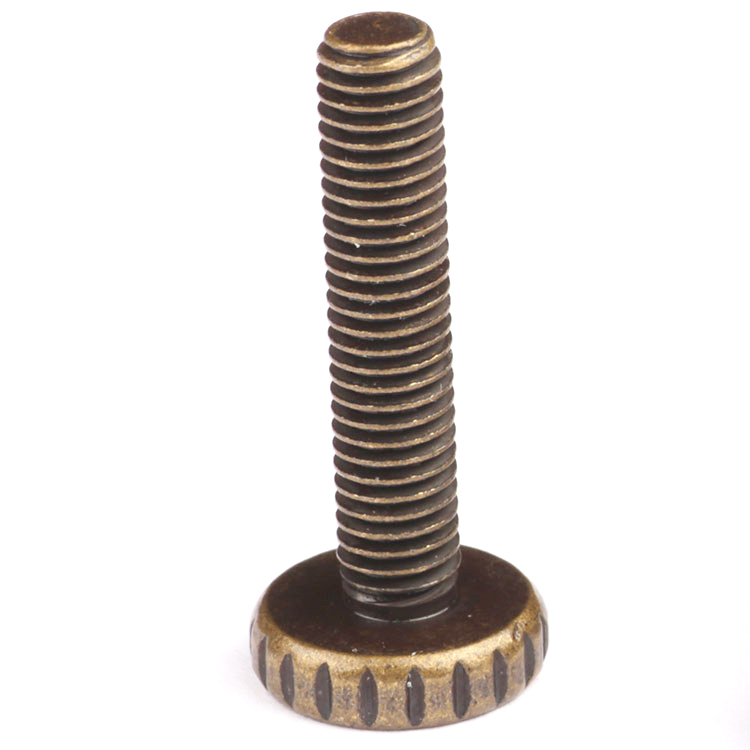
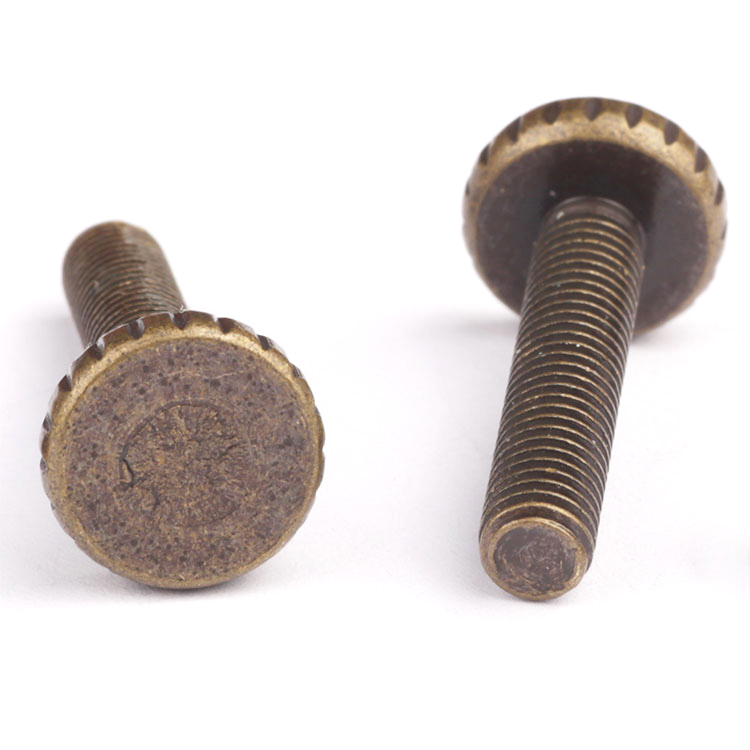
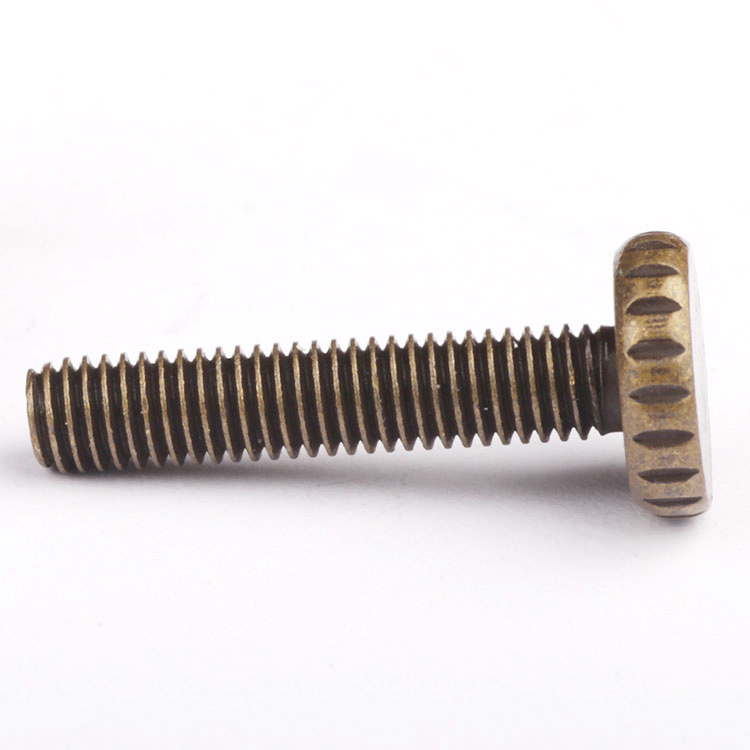
We make copper machine screws from solid copper wire, with a knurled cap head, a flat contact face and a machine thread, quoting them from M1 to M14 in plain copper. Head, contact face, thread and alloy come from your drawing, and the first article is tried by hand in your own terminal.
Watch the factory video·Email sst@szsst88.com
ISO 9001:2015 · Manufacturing since 1998 · 8,678+ customers · 89 countries and regions
Made to order – there is no stock catalogue. Each part is produced to your drawing, and production starts after drawing review and first-article approval.
Copper machine screws are machine screws cut from copper, with a knurled cap head for the fingers and no driver slot. They are used where the fastener has to be part of the electrical or thermal path as well as holding the assembly, and where the metal itself has to be copper rather than something that looks like it. This family is quoted from M1 to M14 with Number 515, plain copper with no coating.
Knurled cap head. A cylindrical head with a straight knurl, gripped between thumb and finger and turned by hand.
No drive slot. There is no recess or slot, so a tool cannot be used — and the joint cannot be over-tightened.
Machine thread. A thread for a tapped hole or a nut, ending in a small chamfer.
Plain copper. No plating. The metal is the finish, the conductor and, in time, the patina.
On a copper machine screw the head is the contact as well as the clamp, so the face under it is made as carefully as the thread: it is the surface that carries the current into the assembly.
Most screws are judged on strength and corrosion. A copper machine screw is judged on resistance. In an earthing, bonding or high-current assembly the screw is part of the circuit, and what matters is the contact resistance across the joint — how much copper actually touches copper, and what sits between them.
That changes what a good joint on copper machine screws looks like. Thread engagement matters less than the contact area under the head; a wide flat face against a copper busbar is worth more than a long thread into a small boss. It also makes the surface condition of the head as important as the thread, because an oxide film on copper is a poor conductor, and a joint that is tight but oxidised is a joint with resistance in it.
Copper is soft, and that has two consequences. The first is that it galls: copper against copper, or copper against steel, can seize as it is tightened, and a seized copper screw is easy to shear because the material is not strong. The second is that it conforms, which is exactly what a good contact needs — copper deforms into the microscopic roughness of the mating surface and closes the gaps a harder metal would bridge.
The absence of a drive is deliberate. Copper threads tolerate very little torque before they shear, and a slot or a recess invites a wrench that will end the assembly in one turn. A knurled head sets the torque limit at what a hand can do, which is roughly what a small copper thread can take, and it removes the tool that would exceed it.
Annealing is the property that surprises people. Copper work-hardens when it is cut and formed, and a part that has been headed, threaded and knurled is harder and springier than the bar it came from. Where the joint needs the soft, conforming behaviour, the finished part has to be heat treated to restore it, and that is a line on the drawing rather than an assumption.
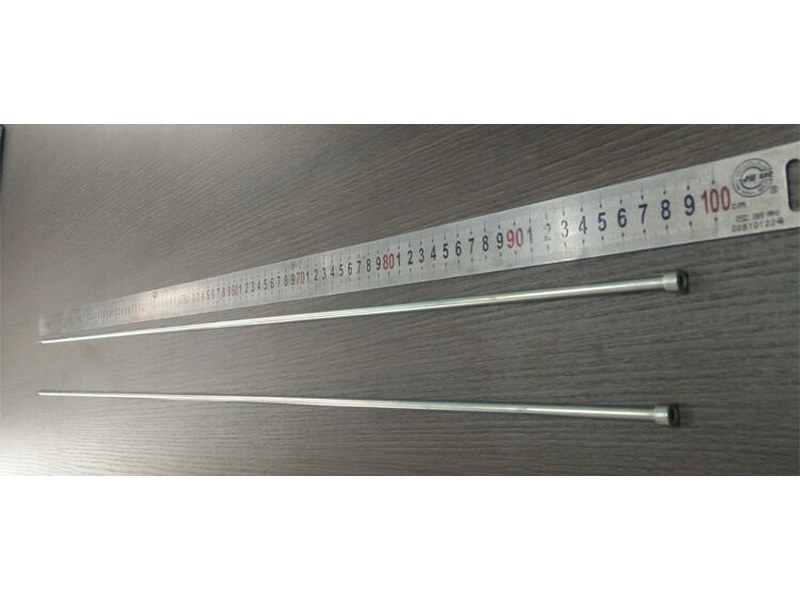
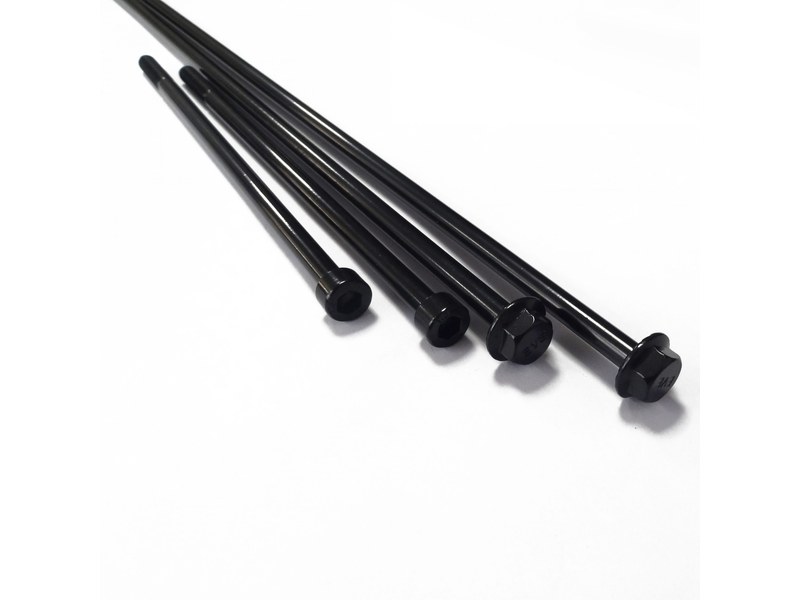
The recorded range is M1 to M14, covering M1, M2, M3, M4, M5, M6, M7, M8, M9, M10 and M14. Custom lengths up to 2,000 mm are subject to DFM review after drawing submission. For copper machine screws the quotation carries head diameter, face flatness, knurl pitch and the thread, because the contact area under the head is the electrical feature of the part.
| Item | How it is defined | What we control |
|---|---|---|
| Head | Knurled cap head | Head diameter, height and face flatness |
| Grip | Straight knurl, no slot | Knurl pitch and depth |
| Thread | Machine thread | Pitch and length, gauged per batch |
| End | Blunt, chamfered | Chamfer cut, not deburred |
| Finish | Plain copper | Surface condition and cleanliness |
| Length | Under the head | Measured on the shop plate |
Face flatness is the dimension worth specifying on a conductive part. A face that is slightly domed contacts on a ring and leaves the centre clear; a face that is flat contacts across its whole area. The difference is not visible, and it shows up as resistance rather than as a loose joint, which is why it belongs on the drawing.
Head diameter is a compromise between contact area and access. A wider head makes a better contact and needs more room around the joint; a narrow one fits into a dense terminal block and contacts on a smaller ring. On a copper part, where the head is also the conductor, that compromise is an electrical decision rather than a mechanical one.
Three features define this part: the copper body, the flat contact face and the knurled grip. The first carries the current, the second gives it somewhere to go, and the third sets the torque at what a hand can do.
| Feature | What it gives | What it costs |
|---|---|---|
| Copper body | Low resistance, high conductivity | Soft; shears and dents easily |
| Flat contact face | Full-area contact under the head | Needs a flat or lapped seat |
| Knurled grip, no slot | Hand torque only | Cannot be tightened with a tool |
| Plain surface | No coating between the metals | Oxidises; needs cleaning at assembly |
| Machine thread | Repeatable clamp in a tapped hole | Tapped hole or nut required |
On copper machine screws the combination of soft metal and hand torque is the design intent. A copper screw tightened with a key will strip its own thread before the joint is properly seated, and the failure is quiet: the thread deforms, the head still looks right, and the resistance has already risen. A knurled head stops that before it starts.
The surface is the other half of a good contact. Copper oxidises in air, and the film that forms is thin but resistive; a joint assembled onto an oxidised surface is worse than one assembled onto a cleaned one. Parts are supplied clean, and the assembly step should treat cleaning as part of the process rather than as a repair.
The recorded finish is plain copper with no coating. That is the right choice for a conductive part, because a coating of any kind sits between the copper and the mating surface, and every one of them adds resistance. The trade is that copper is unprotected: it tarnishes indoors, patinates outdoors, and in a sulphur-bearing atmosphere it darkens quickly.
| Option | How it behaves | Effect on contact | Typical use |
|---|---|---|---|
| Plain copper, cleaned | No coating; tarnishes in air | Best contact when assembled clean | Earthing and bonding |
| Plain copper, aged | Natural patina over time | Film adds resistance; clean before use | Decorative copper work |
| Tin plated copper | Thin barrier, solderable | Good contact, protects the surface | Terminals and busbar |
| Nickel plated copper | Hard barrier, bright | Higher resistance; protects the joint | Visible fittings |
| Silver plated copper | Best conductivity, costly | Lowest resistance | RF and high-current parts |
Where the joint is a permanent electrical connection, tin plating is often the practical answer: it keeps the surface solderable and stops the tarnish that makes assembly unpredictable, at a modest cost in conductivity. Where the copper is there for a visible reason rather than an electrical one, the plain surface and its patina are the point.
Whichever surface is chosen, the same rule holds on this part: the contact is the function, so the surface under the head is what matters most. A copper machine screw with a scratched thread and a clean face is far more useful than one with a perfect thread and a tarnished face.
Three assemblies where copper machine screws are the fixing:
| Where it sits | The screw bonds a copper conductor, a strap or a busbar to a chassis or a terminal block where the fastener is part of the electrical path. |
| When it goes wrong | An oxidised or plated face adds resistance, and a screw tightened with a tool shears its own thread. |
| Why it happens | The joint carries current, the path is copper, and the screw must be copper too. |
| What we control | Face flatness and cleanliness checked, hand torque trialled. |
| Where it sits | The screw clamps a lug or a bar where contact area is the design requirement and the assembly is made by hand. |
| When it goes wrong | A domed face contacts on a ring only, and a tarnished surface resists both current and inspection. |
| Why it happens | The current is high, the joint is bolted, and the surface is exposed. |
| What we control | Contact face checked flat, alloy confirmed, tarnish inspection in packing. |
| Where it sits | The screw fixes a screening plate or a ground connection where copper is chosen for shielding and for a quiet ground. |
| When it goes wrong | Mixed metals at the joint create a galvanic pair, and a magnetic fastener is wrong beside sensitive circuits. |
| Why it happens | The joint is a ground, the enclosure is non-magnetic, and the fixing is visible. |
| What we control | Alloy confirmed by certificate, thread gauged, knurl checked. |
Four reasons that matter on a conductive fastener, each tied to what the drawing has to prove:
|
Contact face and joint reviewed
The head diameter, the face flatness and the mating surface are reviewed together, because on a conductive part the area under the head is the electrical feature. Basis: Contact face and joint agreed in writing. |
Formed, knurled and threaded in one route
The knurled head and the flat face are formed in the heading stroke, the thread is rolled, and the parts are cleaned and packed without a coating. Basis: One route from wire to clean copper part. |
|
Face checked flat, thread by hand
The first article is checked for face flatness and driven by hand, because a copper thread has a low torque limit and hand feel is the acceptance criterion. Basis: First article trialled by hand. |
First article fixes the setting
The first article fixes the wire, the knurl and the thread; repeat orders are compared against that record. Basis: First article signed off before the batch is released. |
Shi Shi Tong forms these copper machine screws from copper wire on single-die headers that form the knurled cap head and its flat face in one stroke, rolls the machine thread to a chamfered end and cleans the parts, with no coating applied. The first part of every run is measured on the head, checked for face flatness and entered into a thread gauge before the batch continues.


|

|
Copper is a different material to work from steel or brass. It work-hardens as it is formed and it grabs at the die, so the heading stroke and the knurl are set with more attention to lubrication and to the temper of the wire than the same job in steel. A knurl that is over-pressed on copper leaves a hard, polished surface that grips badly; one that is pressed lightly leaves crests too soft to last.
What decides whether copper machine screws pass is the contact face, the thread, the knurl and the alloy. The inspection agreement covers those, and the criteria come from the drawing.

Head and face on the projector |

Thread gauged per batch |

Hardness and temper checked |

Corrosion testing of the surface |
The contact face is checked for flatness on the projector, because that is the part of the screw that carries the current. The thread is gauged per batch and the knurl is judged by hand as well as by instrument, since the point of the part is that it can be turned without a tool.
The alloy is confirmed on the mill certificate, and it is checked rather than assumed: copper grades differ in conductivity and in hardness, and a part made from the wrong grade can look identical and behave differently. Where the customer has a resistance requirement, the first article is measured for that as well as for dimension.
Every shipment of copper machine screws is traceable to the copper wire it was made from. The alloy and the heat or lot number are recorded on the mill certificate supplied with the parts, and the inspection records follow the criteria agreed on the drawing.

ISO 9001:2015 |

RoHS test report |

Registered trademark |

Patent: security screw and driver |
With each batch we supply the mill certificate for the wire, the inspection record for the criteria on the drawing and, where it is listed, the third-party report for the alloy. The documents carry the drawing revision and the batch number, so a repeat order is made from the same grade that was approved.
More than 8,678 customers in 89 countries and regions have ordered from Shi Shi Tong; 87% of orders come from repeat customers and 56% through referrals. Most projects follow the same route: drawing review, first-article approval, then batches checked against that sample. On copper machine screws the first article is tried by hand in the customer’s terminal, because the contact and the torque limit are the function. Buyers visit during the process to review samples and to see how the parts are formed.
|
8,678+
customers served
|
87%
of orders from repeat customers
|
56%
of orders through referrals
|
89
countries and regions shipped to
|
Buyers and quality engineers visit for sample review, process discussion and supplier audits; the visit is arranged around production so the headers and the cleaning line can be seen on the day the parts run.

Customer group visit – sample review |

Customer group visit – process discussion |

Customer group visit – factory tour |

Customer visit – project kick-off |

Danish customer – drawing review |

Industry exhibition – meeting customers |
Conductivity. Copper carries current with lower resistance than brass, and where the screw is part of a bonding or high-current path that difference matters.
To limit the torque. Copper threads shear easily, and a knurled head keeps the joint at hand torque instead of letting a tool destroy it.
Yes. Copper oxide is resistive, and a joint assembled onto a tarnished face has higher resistance than one assembled clean, even at the same torque.
Indoors it darkens; outdoors it patinates; in sulphur-bearing air it darkens quickly. Tin plating is the usual answer where a stable surface is needed.
The face is flat, so it bears rather than digs, but copper is soft and a soft panel can still show a ring. A washer face or a wider head spreads it.
Thread size and length, head diameter and height, face flatness, knurl pitch, the alloy and the surface treatment.
How a copper machine screw project runs from drawing to repeat delivery:
|
1
Send the drawing and the joint it carries current through
|
→ |
2
Head, contact face, thread and alloy agreed
|
→ |
3
First article tried by hand in your terminal
|
→ |
4
Batch production and repeat orders
|
Each step is confirmed with you before the next one starts; the drawing revision from the first article is what repeat orders are checked against.
For a quotation, send the drawing with the thread size and length, the head diameter and height, the face requirement, the knurl pitch and the alloy.
|
Thread size
|
Length
|
Head diameter
|
|
Face flatness
|
Knurl pitch
|
Alloy
|
Sending a drawing? The form below does not take attachments. Email the PDF, DXF or STEP file to sst@szsst88.com with the part name and quantity in the subject line – the drawing is reviewed and a quotation follows.

 +86 13143444311
 sst@szsst88.com