Tel:
+86 13143444311
Email:sst@szsst88.com
Fax:+0086-755-27322278
Address:Building 9, First Industrial Zone, Tantou Industrial City, Songgang Street, Baoan District, Shenzhen 518105, Guangdong, China
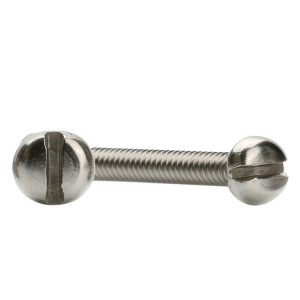
Type:Brass Pan Head Screws
Materials:Brass
Surface treatment:Plain
Head Type:Pan Head
Drive:Slotted
Thread:Machine Thread
Point:Blunt
Forming:Single Die Heading
Size:M1 M2 M3 M4 M5 M6 M7 M8 M9 M10 M14
Number:561
We make brass pan head screws in solid brass, plain and uncoated, with a single slot and a machine thread, quoting them from M1 to M14. Alloy, slot width, thread and head dimensions come from your drawing, and the first article is driven with your own blade.
Watch the factory video·Email sst@szsst88.com
ISO 9001:2015 · Manufacturing since 1998 · 8,678+ customers · 89 countries and regions
Made to order – there is no stock catalogue. Each part is produced to your drawing, and production starts after drawing review and first-article approval.
Brass pan head screws are machine screws with a low domed head, a single slot and a brass body, supplied plain with no coating. They do not rust, they conduct, and they are not magnetic, which is why they turn up on electrical fittings and on equipment where a period look is wanted. This family is quoted from M1 to M14 with Number 561.
Pan head. A low dome with a wide flat bearing face, the general-purpose machine screw head.
Single slot. One straight slot across the head, driven by a flat blade.
Machine thread. A rolled thread for a tapped hole or a nut, ending in a blunt chamfer.
Brass, plain. No plating. The alloy is the finish, and it ages into a duller tone with handling.
In use brass pan head screws are chosen for the inside of an electrical joint or for a visible period look, and the decision that matters is what metal the screw is in contact with.
Brass is cathodic to most common structural metals. Put a brass screw into an aluminium panel and the two metals form a cell, with the aluminium as the anode: the aluminium around the fixing corrodes and the brass survives. It is the least obvious thing about a brass pan head screw and the one most likely to ruin a joint a year after it was assembled.
The same is true against steel, only slower. A brass screw in a galvanised or a plain steel panel does not rust, but it makes the steel rust faster near the fixing, and the tell-tale is a ring of corrosion around the hole rather than at the screw. On a dry indoor joint that hardly matters; on anything that sees moisture it decides the service life.
What brass is genuinely good at is the inside of an electrical joint. It conducts, it does not rust, it is not magnetic, and its slot stays clean enough to drive after years in a terminal block. That combination is why brass screws outlive the equipment they are fitted to in switchgear and instrument work.
Brass is also soft, and that shapes the drive. A slot in brass cuts cleanly, but the edges of the slot burr sooner than they would in steel, and a blade that is a little too wide will mark the head. On a visible brass fixing the marks are the failure, not the strength, because nothing is going to break.
Plain brass needs no coating, and adding one would spoil the reason for choosing it. A lacquer slows the tarnish but wears off at the edges; a plating changes the colour that was the point. What it does need is care in handling, since a brass head marks where it is gripped and the mark cannot be polished out of a mass-produced part.
The recorded range is M1 to M14, covering M1, M2, M3, M4, M5, M6, M7, M8, M9, M10 and M14. Custom lengths up to 2,000 mm are subject to DFM review after drawing submission. For brass pan head screws the quotation carries head diameter and height, slot width and depth, the thread and the alloy, because the slot is the drive and brass is softer than the steels the same slot was designed for.
| Item | How it is defined | What we control |
|---|---|---|
| Head | Pan head, flat face | Head diameter and height |
| Slot | Single slot | Slot width, depth and burr |
| Thread | Machine thread | Pitch and length, gauged per batch |
| End | Blunt, chamfered | Chamfer cut, not deburred |
| Finish | Plain brass | Surface condition and cleanliness |
| Length | Under the head | Measured on the shop plate |
Slot width is worth specifying with the blade in mind. Brass is soft enough that a slot which is slightly narrow will bind and lift a burr, and one that is slightly wide will let the blade rock and mark the head. The blade that will actually be used is the reference, not the nominal slot width in a table.
The alloy is a specification item on its own. Brasses differ in machinability, in strength and in how they behave in damp air, and a screw made from the wrong one can look identical. Where the part is electrical, the alloy also decides the conductivity, which no visual check will catch.
Three features define this part: the brass body, the single slot and the plain surface. The first brings the corrosion behaviour both good and bad, the second is a drive that suits a hand tool, and the third is what makes the colour honest.
| Feature | What it gives | What it costs |
|---|---|---|
| Brass body | No rust, conductive, non-magnetic | Cathodic to aluminium and steel |
| Single slot | Simple blade, high torque | Blade can slide sideways |
| Soft metal | Clean thread, smooth turning | Slot burrs and head marks |
| Plain surface | Honest colour, no coating to wear | Tarnishes with handling |
| Machine thread | Repeatable clamp in a tapped hole | Needs a nut or a tapped hole |
The galvanic behaviour is not a reason to avoid brass, it is a reason to choose the joint. Brass into brass, brass into plastic, brass into a plated steel that is itself protected — all fine. Brass into bare aluminium outdoors is the combination that fails, and it fails quietly, with a white corrosion product spreading under the paint around the fixing.
The slot is the drive, and on a brass screw it is the part that wears. A flat blade in a straight slot takes high torque in steel because the walls are hard; in brass the walls are soft enough that over-driving spreads them. That is why brass fittings are usually snugged down rather than torqued, and why a worn blade is a bigger problem here than it looks.
The recorded finish is plain brass with no coating. It is the right choice for an electrical part, because nothing sits between the brass and the terminal, and for a decorative part, because the colour is the reason it was chosen. The trade is that brass tarnishes: it dulls indoors in a season and darkens faster where the air is humid or sulphurous.
| Option | How it behaves | Effect on slot and thread | Typical use |
|---|---|---|---|
| Plain brass | No coating; tarnishes with handling | Slot as cut | Electrical and instrument work |
| Nickel plated brass | Bright silver barrier deposit | Slot slightly rounded | Visible hardware |
| Chrome plated brass | Hard bright deposit | Slot hard, can flake at the edge | Decorative fittings |
| Clear lacquer | Thin film over the alloy | Slot feels smoother | Display and low handling |
| Tin plated brass | Thin solderable barrier | Good contact, stable surface | Terminals and busbar |
For a visible fixing the lacquer gives a longer period of looking new, at the cost of feeling slightly slicker in the slot and wearing through at the edges. For a terminal joint, tin plating is the practical choice: it keeps the contact stable and stops the tarnish that makes an assembly unpredictable.
Whatever is chosen, the finish on a brass screw is not there to prevent rust, because there is nothing to rust. It is there to change the appearance or the contact behaviour, and on a part where the head is handled it will wear off. That is worth accepting rather than fighting.
Three assemblies where brass pan head screws are the fixing:
| Where it sits | The screw clamps a conductor or a lug in a terminal block where the metal is part of the circuit and the joint is adjusted with a blade. |
| When it goes wrong | A steel screw rusts in a damp cabinet, and a magnetic fastener is wrong beside sensitive gear. |
| Why it happens | The joint is electrical, it is serviced, and the head is visible. |
| What we control | Alloy confirmed, slot driven with the production blade, conductivity noted on the certificate. |
| Where it sits | The screw fixes a plate or a bezel where a brass head is part of the intended appearance and the fixing is handled. |
| When it goes wrong | A plated screw wears at the slot and shows its base metal, and an over-driven slot burrs at the edges. |
| Why it happens | The fixing is decorative, it is serviced, and the material is chosen for the look. |
| What we control | Slot width matched to the blade, head inspected for burrs. |
| Where it sits | The screw fixes a cover where a metal that does not rust and does not corrode the surrounding material is wanted. |
| When it goes wrong | Brass into a soft housing creeps, and an over-driven screw dimples it. |
| Why it happens | The housing is non-metallic, the joint is light, and the fixing is visible. |
| What we control | Head face and slot checked, first article fitted to the housing. |
Four reasons that matter on a brass fastener, each tied to what the drawing has to prove:
|
Alloy and joint reviewed
The brass alloy and the material it is fixing are reviewed together, because brass in contact with aluminium outdoors corrodes the aluminium rather than the screw. Basis: Alloy and mating material agreed. |
Head, slot and thread in one route
The pan head and the slot are formed in the heading stroke, the thread is rolled and the parts are cleaned and packed without a coating. Basis: One route from wire to clean brass part. |
|
Slot driven with the blade
The first article is driven with the production blade, because brass is soft and a slot that measures correctly can still burr at the edge. Basis: First article driven with the blade. |
First article fixes the setting
The first article fixes the wire, the slot cutter and the cleaning; repeat orders are compared against that record. Basis: First article signed off before the batch is released. |
Shi Shi Tong forms these brass pan head screws from brass wire on single-die headers that form the pan head and cut the slot in one stroke, rolls the machine thread to a blunt chamfered end and cleans the parts, with no coating applied. The first part of every run is measured on the head and slot, driven with the production blade and entered into a thread gauge before the batch continues.


|

|
Brass cuts cleanly and that is the material’s advantage, but it also means a dull slot cutter shows immediately. The slot ends are open at the wall of the head, and a cutter that is slightly worn tears the edge there rather than cutting it, which leaves a burr that catches the blade and marks the head on the first assembly.
What decides whether brass pan head screws pass is the slot, the head, the thread and the alloy. The inspection agreement covers those, and the criteria come from the drawing.

Head and slot on the projector |

Thread gauged per batch |

Hardness checked on the alloy |

Corrosion testing of the alloy |
The slot is checked for width, depth and for burrs at both ends, then driven with the production blade. The head is checked for diameter, height and face flatness on the projector, and the alloy is confirmed on the mill certificate rather than judged by colour.
The thread is gauged per batch and the surface is checked for tool marks and cleanliness. On a brass part the alloy and the temper are the two things that a visual check cannot settle, and both come from the certificate.
Every shipment of brass pan head screws is traceable to the brass wire it was made from. The alloy and the heat or lot number are recorded on the mill certificate supplied with the parts, and the inspection records follow the criteria agreed on the drawing.

ISO 9001:2015 |

RoHS test report |

Registered trademark |

Patent: security screw and driver |
With each batch we supply the mill certificate for the wire, the inspection record for the criteria on the drawing and, where it is listed, the third-party report for the alloy. The documents carry the drawing revision and the batch number, so a repeat order is made from the same grade that was approved.
More than 8,678 customers in 89 countries and regions have ordered from Shi Shi Tong; 87% of orders come from repeat customers and 56% through referrals. Most projects follow the same route: drawing review, first-article approval, then batches checked against that sample. On a brass part the first article is tried with the customer’s blade and fitted to the panel, because the alloy and the slot are what the joint depends on. Buyers visit during the process to review samples and to see how the parts are formed.
|
8,678+
customers served
|
87%
of orders from repeat customers
|
56%
of orders through referrals
|
89
countries and regions shipped to
|
Buyers and quality engineers visit for sample review, process discussion and supplier audits; the visit is arranged around production so the headers can be seen on the day the parts run.

Customer group visit – sample review |

Customer group visit – process discussion |

Customer group visit – factory tour |

Customer visit – project kick-off |

Danish customer – drawing review |

Industry exhibition – meeting customers |
No. It tarnishes and it patinates, but it does not rust, and a brass slot stays clean enough to drive after years in a terminal.
Only with care. Brass is cathodic to aluminium, so the aluminium corrodes around the fixing when moisture is present. Indoors and dry it is tolerable; outdoors it is not.
Slower, but the same direction: the steel rusts near the fixing first. Plated steel or a plastic insert removes the problem.
Brass is soft. A blade that is slightly too wide, or a screw driven hard, spreads the slot walls. The blade should match the slot.
It is the traditional choice: conductive, non-magnetic and no coating between the metals. Confirm the alloy on the certificate.
Head diameter and height, slot width and depth, thread size and length, and the brass alloy.
How a brass pan head screw project runs from drawing to repeat delivery:
|
1
Send the drawing and the blade you use
|
→ |
2
Alloy, slot and thread agreed
|
→ |
3
First article driven and fitted
|
→ |
4
Batch production and repeat orders
|
Each step is confirmed with you before the next one starts; the drawing revision from the first article is what repeat orders are checked against.
For a quotation, send the drawing with the head diameter and height, the slot width, the thread size and length, and the brass alloy you need.
|
Head diameter
|
Head height
|
Slot width
|
|
Thread size
|
Length
|
Alloy
|
Sending a drawing? The form below does not take attachments. Email the PDF, DXF or STEP file to sst@szsst88.com with the part name and quantity in the subject line – the drawing is reviewed and a quotation follows.

 +86 13143444311
 sst@szsst88.com