Tel:
+86 13143444311
Email:sst@szsst88.com
Fax:+0086-755-27322278
Address:Building 9, First Industrial Zone, Tantou Industrial City, Songgang Street, Baoan District, Shenzhen 518105, Guangdong, China
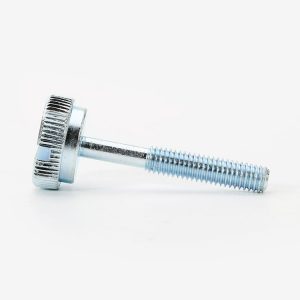
Type:Slotted Shoulder Screw Stainless Binding Head
Materials:Stainless Steel
Surface treatment:Plain
Head Type:Binding Head
Drive:Single slot
Thread:Machine thread
Point:Chamfered
Forming:Turned from bar
Size:M1 M2 M3 M4 M5 M6 M7 M8 M9 M10 M14
Number:585
We turn slotted shoulder screws in passivated A2 stainless with a binding head, a deep single slot, a plain shoulder and a machine thread, quoting them from M1 to M14. Slot width and depth, head, shoulder tolerance and thread come from your drawing, and the first article is driven with your blade.
Watch the factory video·Email sst@szsst88.com
ISO 9001:2015 · Manufacturing since 1998 · 8,678+ customers · 89 countries and regions
Made to order – there is no stock catalogue. Each part is produced to your drawing, and production starts after drawing review and first-article approval.
A slotted shoulder screw is a stainless turned fastener with a binding head, a single slot drive, a plain shoulder and a machine thread, quoted here from M1 to M14 with Number 585. The binding head is tall enough to carry a deep slot, the shoulder runs in a bore as a bearing, and the thread holds the joint.
Binding head. A head with a flat bearing face and a rounded top edge, taller than a pan head, historically used to trap a wire under the head.
Single slot. One straight cut across the head, driven with a flat blade; the slot can be deep because the head has height to spare.
Shoulder. A plain turned section that runs in a bore and carries the radial load.
Passivated stainless. A2 grade, uncoated, so the slot and the shoulder are as turned.
A slotted shoulder screw is chosen where the fixing is adjusted by hand and the head must be reachable with a blade: electrical terminals, instrument trim and small pivots that are set once and then left, with the shoulder doing the locating and the slot doing the driving.
A slotted shoulder screw looks like an old-fashioned part and it solves a particular problem. A binding head is taller than a pan head, so the slot cut into it can be deep, and a deep slot takes more torque than the shallow cross of a low head. That is why these screws survive on instruments and electrical fittings where the fixing is driven by hand and adjusted more than once.
The cost is contact area. A slot has two driving faces, where a cross has four and a star has six, so the same torque arrives on a much smaller area. The blade has to fit the slot in width and in thickness; a blade that is thin spreads the slot’s walls, a blade that is too thick does not reach the bottom, and either way the load lands on the top edge of the slot where the metal is thinnest.
The ends of the slot are the second weak point. A slot cut with square ends concentrates stress exactly where the blade pushes; a slot with radiused ends spreads it, and on a stainless head the radius is what keeps a crack from starting at the corner after a few dozen assemblies.
The shoulder underneath is the part that keeps the joint true. Because the drive is a slot and the torque is limited, the shoulder has to be sized so that the joint is held by the clamp rather than by a hard tightening. On a slotted shoulder screw the fit and the preload do the work, and the slot only has to get the screw seated.
The binding head’s extra height is also useful in another way: it lifts the slot above the surface, so a blade can be used without the handle fouling the part around the fixing. On a low head the same screw would be unserviceable in a recess.
The recorded range is M1 to M14, with the recorded sizes M2 to M10 covering the instrument and electrical work. Custom lengths up to 2,000 mm are subject to DFM review after drawing submission. For a slotted shoulder screw the quotation carries head diameter and height, slot width and depth, shoulder diameter and length, and the thread.
| Item | How it is defined | What we control |
|---|---|---|
| Head | Binding head, tall | Head diameter and height |
| Slot | Single straight slot | Slot width, depth and end radius |
| Shoulder | Plain bearing section | Diameter, tolerance and length |
| Thread | Machine thread | Pitch, length and gauging |
| Ends | Chamfered | Chamfer and thread start |
| Material | A2 stainless | Grade and heat number on the certificate |
| Finish | Passivated | Surface condition and film |
Slot width is a fit, not a nominal. It is quoted against the blade the customer uses, because a slot that is a hundredth wide allows the blade to rock and puts the load on one edge of the slot instead of both.
Shoulder and thread are dimensioned as on any shoulder part: shoulder length is the bearing length, and the thread length runs from the shoulder end. An overall length alone will not define a slotted shoulder screw.
Three features define the part: the tall binding head, the deep slot and the shoulder. The first gives the slot somewhere to live, the second is the drive, and the third is what holds the joint.
| Feature | What it gives | What it costs |
|---|---|---|
| Tall binding head | A deep slot above the surface | Head stands proud of the part |
| Deep slot | More torque than a shallow cross | Two contact faces only |
| Radiused slot ends | Resists cracking at the corners | Slot depth limited by the radius |
| Shoulder | A bearing journal | Fit must be held |
| Passivated A2 | Slot as turned, no plating build | Softer than steel; galls dry |
The tall head is the enabling feature. It is also the reason these parts are not used where a cover has to sit flat: a binding head is meant to be seen and reached, not hidden.
The single slot is the honest trade. It is the cheapest drive to make and the easiest to adjust with any thin blade, and it is the least able to take torque of the three common drives.
The recorded finish is passivation with no coating on A2 stainless. On a slotted shoulder screw that matters for the same reasons as on any precision part — a coating would narrow the slot and change the shoulder diameter — and for one more: an open slot collects plating and is difficult to mask, so a plated version is a different manufacturing problem rather than a different finish.
| Option | How it protects | Effect on slot and shoulder | Typical use |
|---|---|---|---|
| A2 stainless, passivated | Passive chromium oxide film | Slot and shoulder as turned | Instruments and electrical fittings |
| A4 stainless, passivated | Passive film with molybdenum | Slot and shoulder as turned | Marine and medical |
| Steel, nickel plated | Hard barrier deposit | Slot narrowed; re-checked | Indoor machine parts |
| Steel, black oxide | Conversion film, oiled | No measurable build | Internal mechanisms |
| Brass, plain | No coating needed | Softer slot; wears at the edges | Electrical and decorative |
Where the screw is adjusted often, the slot edges take the wear. Passivated stainless loses its edge slowly and evenly; a plated head can flake at the slot corner and leave a step that catches the blade.
Where the joint is wet, A4 is the grade to specify, and the shoulder is the surface that matters. A slot that rusts is a nuisance; a shoulder that pits in its bore seizes the joint.
Three assemblies where a slotted shoulder screw is the fixing:
| Where it sits | The screw holds a wire or a lug under a head that has to be tightened by hand and re-opened when the connection changes. |
| When it goes wrong | A loose blade spreads the slot, and the head splits at the slot end. |
| Why it happens | The joint is adjusted, the drive is a blade, and the head is tall. |
| What we control | Slot width matched to the blade; slot ends checked for radius. |
| Where it sits | The screw is a pivot or a trim fixing on an instrument where a slotted head is part of the correct appearance. |
| When it goes wrong | A deep slot in a soft head burrs and the blade no longer seats. |
| Why it happens | The joint is visible, it is serviced by hand, and appearance is specified. |
| What we control | Slot depth and edge condition checked under magnification. |
| Where it sits | The screw forms the pivot of a small linkage where the shoulder is the bearing and the head is reached from one side only. |
| When it goes wrong | A shoulder that is too tight in the bore prevents the linkage from moving freely. |
| Why it happens | The joint rotates, the head is accessible from one side, and the fit is set. |
| What we control | Shoulder tolerance and length checked; first article moved through its travel. |
Four reasons that matter on a slotted part, each tied to what the drawing has to prove:
|
Slot and blade agreed
Slot width, depth and shoulder tolerance are agreed with the blade and the bore, because on a slotted shoulder screw the drive and the bearing are the two interfaces. Basis: Slot and blade agreed. |
Turned and slotted in one route
The head and shoulder are turned, the slot is cut and the thread is rolled within one route before passivation. Basis: One route from bar to passivated part. |
|
Slot measured with the blade
The first article is turned with the customer blade and checked that the blade reaches the bottom of the slot without rocking. Basis: Slot checked with the blade. |
Shoulder tolerance recorded
The shoulder tolerance is recorded for the setup, so a repeat order keeps the bore fit the customer approved. Basis: Shoulder tolerance recorded. |
Shi Shi Tong turns slotted shoulder screws from stainless bar, cutting the binding head and the shoulder in one setup, cutting the slot with a radiused cutter and rolling or cutting the machine thread before passivating the parts. The first part of every run is measured on head height, slot width and depth, shoulder diameter and length before the batch continues.


|

|
The slot is where the part is decided. A cutter that is slightly worn leaves a slot that measures to width at the top and is narrower at the bottom, so the blade seats on the top edges only; the screw still drives, and the head splits after a few adjustments.
What decides whether slotted shoulder screws pass is the slot, the head, the shoulder and the thread. The inspection agreement covers those, and the criteria come from the drawing.

Head and slot on the projector |

Thread gauged per batch |

Hardness checked on the bar |

Salt-spray testing of the grade |
The slot is checked for width at the top and at the bottom, for depth and for the radius at each end; the head for diameter and height, and the shoulder for diameter and length. The thread is gauged per batch, and the first article is turned with the customer blade to confirm the fit.
A slot that is deep enough to take a blade and short of the head’s underside is the target. A slot that breaks through into the bearing face turns the head into a split collet, and that is a part that fails on the first tightening.
Every shipment of slotted shoulder screws is traceable to the bar it was made from and to the passivation batch. The grade and heat number are recorded on the material certificate supplied with the parts, and the inspection records follow the criteria agreed on the drawing.

ISO 9001:2015 |

RoHS test report |

Registered trademark |

Patent: security screw and driver |
With each batch we supply the material certificate, the inspection record for the criteria on the drawing and, where it is listed, the third-party report for the grade. The documents carry the drawing revision and the batch number, so a repeat order keeps the same slot width and shoulder tolerance.
More than 8,678 customers in 89 countries and regions have ordered from Shi Shi Tong; 87% of orders come from repeat customers and 56% through referrals. Most projects follow the same route: drawing review, first-article approval, then batches checked against that sample. On a slotted shoulder screw the first article is fitted in its bore and driven with the customer blade, because both interfaces belong to the customer. Buyers visit during the process to review samples and to see how the parts are turned.
|
8,678+
customers served
|
87%
of orders from repeat customers
|
56%
of orders through referrals
|
89
countries and regions shipped to
|
Buyers and quality engineers visit for sample review, process discussion and supplier audits; the visit is arranged around production so the lathes and the passivation line can be seen on the day the parts run.

Customer group visit – sample review |

Customer group visit – process discussion |

Customer group visit – factory tour |

Customer visit – project kick-off |

Danish customer – drawing review |

Industry exhibition – meeting customers |
The binding head is tall, so the slot can be deep and take real torque, and a blade is the tool that is available when the fixing is adjusted by hand.
The two contact faces of the slot and the fit of the blade. A loose blade spreads the slot and loads the top edges.
A square end concentrates stress where the blade pushes and cracks start there. A radius spreads it.
Deep enough to seat the blade, and short of the bearing face. A slot that breaks through turns the head into a split collet.
Shoulder length for the bearing, and thread length from the shoulder end.
Head diameter and height, slot width and depth, shoulder diameter and length, thread and the grade.
How a slotted shoulder screw project runs from drawing to repeat delivery:
|
1
Send the drawing and the blade you use
|
→ |
2
Slot, head and shoulder agreed
|
→ |
3
First article fitted and driven with your blade
|
→ |
4
Batch production and repeat orders
|
Each step is confirmed with you before the next one starts; the drawing revision from the first article is what repeat orders are checked against.
For a quotation, send the drawing with the head diameter and height, slot width and depth, shoulder diameter and length, thread and the grade.
|
Head diameter
|
Head height
|
Slot width
|
|
Slot depth
|
Shoulder
|
Thread
|
Sending a drawing? The form below does not take attachments. Email the PDF, DXF or STEP file to sst@szsst88.com with the part name and quantity in the subject line – the drawing is reviewed and a quotation follows.

 +86 13143444311
 sst@szsst88.com