Tel:
+86 13143444311
Email:sst@szsst88.com
Fax:+0086-755-27322278
Address:Building 9, First Industrial Zone, Tantou Industrial City, Songgang Street, Baoan District, Shenzhen 518105, Guangdong, China
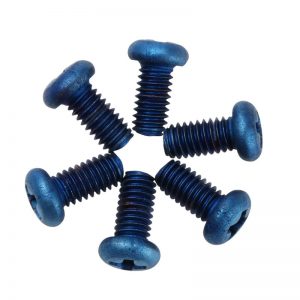
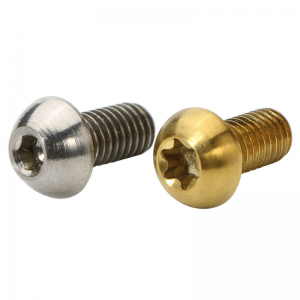
Type:Titanium Cap Screws
Materials:Titanium
Surface treatment:Anodized
Head Type:Cap Head
Drive:Per Drawing
Thread:Machine Thread
Point:Blunt
Forming:Turned
Size:M1 M2 M3 M4 M5 M6 M7 M8 M9 M10 M14
Number:350
We turn titanium cap screws from titanium bar in the grade the joint needs, with a machined cap head, a cut machine thread and an anodised finish for colour or wear. Grade, head, thread and film come from your drawing, and the grade is proved on the certificate rather than assumed from the alloy.
Watch the factory video·Email sst@szsst88.com
ISO 9001:2015 · Manufacturing since 1998 · 8,678+ customers · 89 countries and regions
Made to order – there is no stock catalogue. Each part is produced to your drawing, and production starts after drawing review and first-article approval.
Titanium cap screws are cap head machine screws machined from titanium bar and anodised for colour or wear, chosen where weight and corrosion matter more than cost. The recorded item is titanium with an anodised finish, a cap head and a machine thread, quoted from M1 to M14 with Number 350.
Titanium. About half the density of steel with a strength that depends entirely on the grade: commercially pure titanium is softer than stainless, and the alloyed grade is stronger than many steels at the same weight.
Cap head. A cylinder with a flat top and a full flat bearing face, machined rather than headed. It seats in a counterbore and spreads the clamp load over the whole head.
Anodised surface. An oxide grown from the metal itself. It carries the colour and a little wear resistance, and it does not change the dimensions of the thread in the way a plated deposit would.
Turned from bar. The part is machined, so the head, the shank and the thread are cut from a single piece of bar and any detail the drawing asks for can be produced without a die.
On titanium cap screws the grade is the material, and titanium is not one material. The two grades that matter for fasteners behave very differently, and a drawing that says titanium without a grade has not specified the screw. Commercially pure titanium is corrosion resistant and formable but modest in strength; the alloyed grade — the familiar six aluminium, four vanadium — is roughly twice as strong and is the one used where a joint has to carry load.
The strength-to-weight comparison is the reason the material is bought. A titanium cap screw of the alloyed grade can match a stainless screw’s strength at about half the weight, which on a bicycle, a drone or an aircraft fitting is the whole point. The comparison that is usually forgotten is the cost: the material and the machining both cost several times what a stainless screw does, and the machining is slower because titanium conducts heat poorly and work-hardens under the tool.
On titanium cap screws machining also shapes the design rules. A turned titanium screw wants generous radii, a sharp tool and a lot of coolant, and it does not want thin sections or sharp internal corners, because titanium is notch sensitive: a sharp corner concentrates stress and is where a crack starts. The head-to-shank transition on a turned cap screw is the feature that gets the most attention for that reason.
Anodising titanium grows an oxide rather than depositing one, so the thread and the head keep their machined dimensions. That is an advantage over plating, where a few microns on a thread changes the fit; the film is also hard and a little brittle, and it shows bright metal where the part is damaged, because the colour is the film.
The thread is machined, not rolled, and that changes its character. A rolled thread is work-hardened and has a favourable residual stress; a cut thread does not, and on titanium that difference matters at the root. Where the joint is highly loaded the drawing should say how the thread is produced rather than leaving it to the shop.
The family is quoted from M1 to M14, with M1, M2, M3, M4, M5, M6, M7, M8, M9, M10 and M14 in the recorded range. Custom lengths up to 2,000 mm are subject to DFM review after drawing submission; on titanium cap screws the grade, the head dimensions and the thread form are quoted together, because the grade sets what the joint can carry.
| Item | How it is defined | What we control |
|---|---|---|
| Grade | Commercially pure or alloyed titanium | Confirmed on the material certificate |
| Head | Cap head, flat face | Diameter, height and face flatness |
| Thread | Machine thread, cut | Pitch and length, gauged per batch |
| End | Blunt, chamfered | Chamfer cut, not deburred |
| Finish | Anodised, colour per the drawing | Film thickness and coverage |
| Length | Under the head to the end | Measured on the shop plate |
The grade is quoted because two titanium screws of the same size can differ by a factor of two in strength. Where the customer’s joint has been calculated, the calculation is against a grade; where the drawing only says titanium, the calculation has no basis and the first article cannot be judged.
Length is measured from under the head, because that face bears. On a turned cap head the head height is held to the drawing rather than to a standard, so the overall length is the sum of two machined features rather than of a standard plus a thread length.
Three features define titanium cap screws: the titanium body, the machined cap head and the anodic film. The first is the reason to buy it, the second is how it is made, and the third is what colour or wear resistance it carries.
| Feature | What it gives | What it costs |
|---|---|---|
| Titanium body | About half the weight of steel at alloyed strength | Material and machining cost several times stainless |
| Corrosion resistance | Immune to chlorides, passive film | Not immune to hot concentrated acids |
| Machined head | Any geometry the drawing asks for | Slower to make than a headed screw |
| Anodic film | Colour and light wear resistance | Brittle; damage shows bright |
| Cut thread | Machined with the part | No roll hardening at the thread root |
The comparison customers make is with stainless. Stainless is cheaper, easier to machine and available everywhere; titanium is lighter, immune to chloride where even A4 will pit, and non-magnetic by nature. On a joint that is weight-critical or in a chloride environment, the material earns its cost; on a general indoor joint, it is an expensive way to be different.
The comparison that gets missed is with a smaller steel screw. Because titanium is strong for its weight but not necessarily strong for its size, a titanium screw is often chosen one size smaller than the steel one it replaces — which is where the weight saving actually comes from, and where the joint has to be recalculated.
Titanium cap screws are finished anodised. On titanium the film is grown from the metal, and its thickness sets the colour by interference — thin films look gold, thicker ones purple or blue, and at the dark end the surface reads as graphite to black. No dye is involved, and the colour is as durable as the film.
| Finish | How it protects | Effect on thread and head | Typical use |
|---|---|---|---|
| Anodised, natural | Thin grown oxide, grey tone | No measurable change | General titanium work |
| Anodised, coloured | Controlled film thickness | No measurable change | Coded or visible hardware |
| Anodised, black | Thick film, absorbed light | Slight growth; thread re-checked | Dark visible parts |
| Polished, uncoated | Passive film only | None | Bare-metal look |
| PVD coating | Deposited hard film | Film builds; thread re-checked | Wear-critical visible parts |
The film is thin, hard and brittle. It will not survive being deformed, so a head that takes a hit or a thread that is cross-threaded shows bright metal at the damage — and on a coloured part that is more visible than a scratch would be on bare titanium. The colour also depends on the film being even, so coverage on the thread flanks and in the drive is checked rather than assumed.
Anodising also has an electrical consequence: the film insulates. Where a titanium screw is part of a ground path, the anodised surface interrupts it, and the joint has to be designed with bare contact areas or with a conductive washer.
Three assemblies where titanium cap screws are the fixing:
| Where it sits | The screw joins a bracket or a panel where every gram is counted and the part has to resist chloride and remain non-magnetic. |
| When it goes wrong | A steel screw adds weight high in the structure, and a magnetic one interferes with instruments. |
| Why it happens | The structure is weight-critical, the environment is corrosive, and the joint is inspected. |
| What we control | Grade confirmed on the certificate, thread and head checked, film coverage inspected. |
| Where it sits | The screw replaces a steel fastener on a visible component where weight and finish both matter and the part is sold on both. |
| When it goes wrong | A stainless screw is twice the weight, and a plated one shows wear at the drive. |
| Why it happens | The part is visible, weight-critical, and handled during service. |
| What we control | Colour held to the sample, socket and thread checked. |
| Where it sits | The screw fixes a fitting where chloride or a chemical is present and the joint must not corrode or shed a coating. |
| When it goes wrong | Stainless A2 pits in chloride, and a plated coating can chip into the product. |
| Why it happens | The environment is aggressive, the joint is serviced, and the part is expensive. |
| What we control | Grade and film confirmed, thread gauged, parts handled to keep the surface. |
Four reasons that matter on titanium cap screws, each tied to what the drawing has to prove:
|
Grade, geometry and film reviewed together
The titanium grade, the head and thread geometry and the anodic film are reviewed as one set, so a screw that would be too weak or a thread that would tighten after anodising is raised before the bar is cut. Basis: Grade, geometry and film reviewed as one set. |
Turned route with the thread cut to drawing
The part is turned, the thread is cut and the film is grown in one route, so the head and the thread stay concentric and the film covers the whole part. Basis: One route from bar to anodised screw. |
|
Measured where it is machined
The head, shank and thread are measured on the first article, and the film is checked for coverage rather than for thickness alone. Basis: First article measured feature by feature. |
First article and certificate together
The first article fixes the program and the grade; repeat orders are compared against that sample and against the certificate. Basis: First article and certificate signed off together. |
Shi Shi Tong turns these titanium cap screws from titanium bar: the head is turned and faced, the shank is turned to the drawing diameter, the machine thread is cut and the edges are deburred, and the part is anodised to the drawing colour. The first part of every run is measured on the head, shank and thread and checked for film coverage before the batch continues.


|

|
Titanium is slow to machine and unforgiving of a dull tool. It work-hardens at the surface, so a tool that rubs instead of cutting hardens the layer it is about to cut and shortens its own life; and it conducts heat poorly, so the heat stays in the edge. The surface finish and the thread flanks are where that shows, which is why the first article is inspected under magnification rather than by dimension alone.
What decides whether titanium cap screws pass is the grade, the head, the thread and the film. The inspection agreement covers those, and the criteria come from the drawing.

Head and shank on the projector |

Thread gauged to the drawing |

Hardness checked against the grade |

Salt-spray testing where a coating is specified |
The grade is confirmed on the certificate, and where the drawing calls for a strength it is checked by a test on the batch sample. Appearance cannot distinguish the grades: commercially pure and alloyed titanium look the same after anodising, and only the certificate or a test tells them apart.
The thread on titanium cap screws is gauged and run into a sample nut, and the head is measured for diameter, height and face flatness. The film is checked for colour and coverage on the thread flanks and in the drive, since the anodic film is the finish as well as the colour.
Every shipment of titanium cap screws is traceable to the bar they were turned from. The grade, the mill certificate and the heat number are recorded on the material certificate supplied with the parts, and the inspection records follow the criteria agreed on the drawing.

ISO 9001:2015 |

RoHS test report |

Registered trademark |

Patent: security screw and driver |
With each batch we supply the material certificate for the bar with its grade, the inspection record for the criteria on the drawing and, where it is listed, the third-party report for the grade or the coating. The documents carry the drawing revision and the batch number, so the paperwork can be matched to the parts.
More than 8,678 customers in 89 countries and regions have ordered from Shi Shi Tong; 87% of orders come from repeat customers and 56% through referrals. Most projects follow the same route: drawing review, first-article approval, then batches checked against that sample. On a titanium part the first article is also the grade and colour sample, since neither can be recovered after the bar is cut. Buyers visit during the process to review samples and to see the parts turned.
|
8,678+
customers served
|
87%
of orders from repeat customers
|
56%
of orders through referrals
|
89
countries and regions shipped to
|
Buyers and quality engineers visit for sample review, process discussion and supplier audits; the visit is arranged around production so the lathes and the anodising line can be seen on the day the parts run.

Customer group visit – sample review |

Customer group visit – process discussion |

Customer group visit – factory tour |

Customer visit – project kick-off |

Danish customer – drawing review |

Industry exhibition – meeting customers |
Commercially pure titanium is corrosion resistant and modest in strength; the alloyed grade is about twice as strong and is the one for a loaded joint. The drawing has to name it.
About half the density. At the alloyed grade a titanium screw can match a stainless one’s strength at roughly half the weight.
Yes, badly against itself. A titanium screw in a titanium nut needs a lubricant or a different material for one of them.
The film is grown rather than deposited, so the change is small; on a thick black film the thread is re-checked because the growth is measurable.
No. Titanium is non-magnetic, which is one reason it appears near instruments and sensors.
The grade, head diameter and height, thread size and length with its datum, the drive, the anodised colour and any bare contact areas.
How a titanium cap screw project runs from drawing to repeat delivery:
|
1
Send the drawing and the grade
|
→ |
2
Grade, geometry and film review
|
→ |
3
First article measured and matched
|
→ |
4
Batch production and repeat orders
|
Each step is confirmed with you before the next one starts; the drawing revision from the first article is what repeat orders are checked against.
For a quotation, send the drawing with the titanium grade, the head diameter and height, the thread size and length, the drive, the anodised colour and any areas that must stay bare.
|
Titanium grade
|
Head dimensions
|
Thread and length
|
|
Drive
|
Anodised colour
|
Bare areas
|
Sending a drawing? The form below does not take attachments. Email the PDF, DXF or STEP file to sst@szsst88.com with the part name and quantity in the subject line – the drawing is reviewed and a quotation follows.

 +86 13143444311
 sst@szsst88.com