Tel:
+86 13143444311
Email:sst@szsst88.com
Fax:+0086-755-27322278
Address:Building 9, First Industrial Zone, Tantou Industrial City, Songgang Street, Baoan District, Shenzhen 518105, Guangdong, China
Type:Tiny Screws For Glasses Titanium
Materials:Titanium
Surface treatment:Plain
Head Type:Pan Head
Drive:Phillips (cross)
Thread:Machine thread
Point:Blunt
Forming:Single Die Heading
Size:M1 M2 M3 M4 M5 M6 M7 M8 M9 M10 M14
Number:196
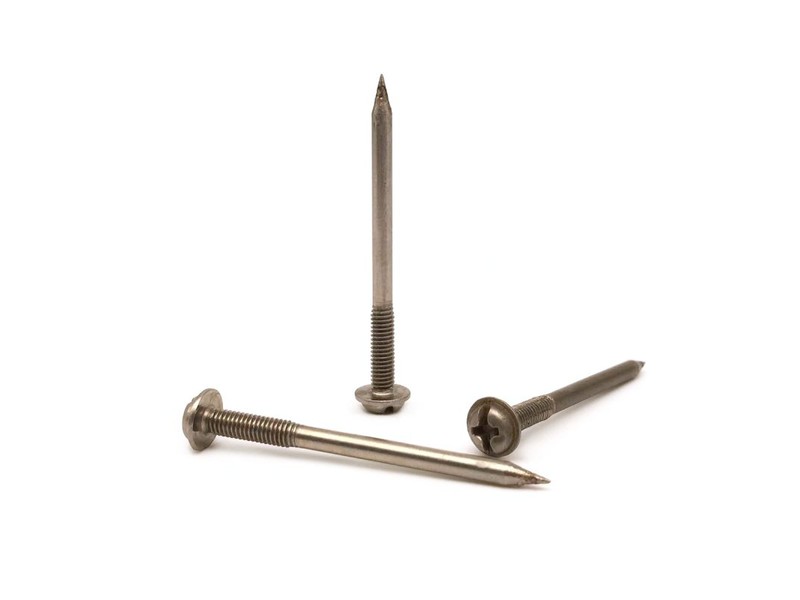
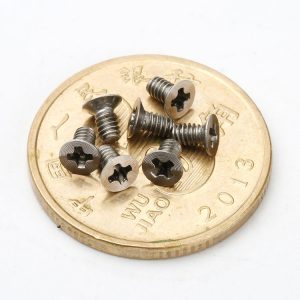
We make tiny screws for glasses in TA1 and TA2 titanium, a pan head with a Phillips recess and a machine thread, quoting them from M1 to M14. Grade, head height, recess depth, thread and finish come from your drawing, and the first article is driven into a sample hinge.
Watch the factory video·Email sst@szsst88.com
ISO 9001:2015 · Manufacturing since 1998 · 8,678+ customers · 89 countries and regions
Made to order – there is no stock catalogue. Each part is produced to your drawing, and production starts after drawing review and first-article approval.
Tiny screws for glasses in titanium are miniature pan head machine screws made from commercially pure titanium, used in the hinges, temples and lens mounts of titanium frames. This one is TA1 or TA2 with a plain finish, a Phillips recess and a machine thread, quoted from M1 to M14 with Number 196.
Commercially pure titanium. TA1 or TA2, not an alloy: soft, light, non-magnetic and resistant to skin and sweat.
Pan head. A low dome on a small bearing ring, the usual eyewear head because it stays smooth against the face.
Phillips cross recess. A PH00 recess cut into the pan head and driven with a jeweller’s driver.
Plain finish. No plating; the surface is the metal, either as machined or lightly anodised for colour.
These tiny screws for glasses are made to the hinge they serve rather than to a catalogue size: the head has to sit against the temple without proud edges, the thread has to match the frame material, and the grade has to carry the light, non-magnetic properties the frame was chosen for.
Titanium changes three things on a screw this small, and all three show up at the hinge rather than at the bench. The first is weight: titanium is about 43% lighter than steel, which on a frame that is designed around a light metal keeps the hinge from being the heaviest part of the arm. The second is strength: commercially pure titanium is softer and weaker than the steel it replaces, so tiny screws for glasses at M1.2 carry less than steel ones of the same size, and the joint should be loaded for that. The third is behaviour at the thread, and it is the one that decides whether the repair goes well.
Titanium galls. Pressed against titanium or stainless without a lubricant, the surfaces weld at high spots and tear, and the thread seizes part way in with no warning: the torque does not climb, the driver simply stops turning. A titanium screw left dry in a titanium hinge is the classic case, and it is why the assembly note for these parts usually specifies a dry-film lubricant or a molybdenum anti-seize at the thread.
Forming the head is more demanding than forming it in steel. Commercially pure titanium work-hardens quickly and has less ductility at the crest, so the thread has to be rolled once and left alone; a second pass over a rolled thread tends to flake the crest rather than improve it. The same property makes the pan head harder to upset cleanly, and a punch that is slightly worn will leave a head with a rough edge that no finishing step will hide.
Titanium cannot be plated to match a steel hinge, which is a practical limit rather than a defect. The natural colour is a warm grey, and where a frame needs a darker or coloured screw the answer is anodising, which grows an oxide rather than depositing metal and can be controlled for colour. An anodised screw also wears a little better in the recess, because the oxide is harder than the bare metal.
Non-magnetic is the property that matters in the optical lab. A tiny screw for glasses in titanium will not jump to a tool or disturb a magnetic fixture, and it does not pick up ferrous dust in a workshop where frames are ground and polished.
The recorded range is M1 to M14, with M1, M2 and M3 covering the eyewear work and the old page naming M1, M1.2, M1.4, M1.5, M1.7, M2 and M3 as the usual hinge sizes. Custom lengths up to 2,000 mm are subject to DFM review after drawing submission. For tiny screws for glasses the quotation carries the grade, the head height, the recess size and depth and the thread length, because grade decides both the weight and the torque the part will take.
| Item | How it is defined | What we control |
|---|---|---|
| Grade | TA1 or TA2 commercially pure titanium | Grade and heat number on the certificate |
| Head | Pan head, low dome | Head diameter and height |
| Recess | Phillips cross | Recess size and depth |
| Thread | Machine thread | Pitch, length and gauging |
| End | Blunt, chamfered | Chamfer cut, not deburred |
| Finish | Plain, or anodised on request | Surface condition and colour |
Grade is worth naming on the drawing. TA1 is softer and easier to form; TA2 is the usual eyewear grade because it holds a thread better. They look identical, and only the certificate tells them apart.
Thread length on tiny screws for glasses follows the hinge, not the screw. A titanium screw that threads too far into the first leaf cuts into it as the hinge closes, and pure titanium is the material least able to take that kind of repeated rubbing.
Three features define the part: the titanium body, the pan head and the plain finish. The first is the reason it is chosen for eyewear, the second is the shape the hinge needs, and the third is the honest surface that cannot hide a bad thread.
| Feature | What it gives | What it costs |
|---|---|---|
| Pure titanium body | Light, non-magnetic, skin friendly | Softer than steel; galls dry |
| Pan head | Smooth against the skin | Small bearing ring |
| Plain finish | No plating to chip or narrow the recess | Natural grey only |
| Anodising option | Colour and a harder oxide | Colour control needs a sample |
| Low weight | Keeps a light frame light | Lower strength at the same size |
The weight is the design argument for tiny screws for glasses. On a frame where every gram is counted, replacing steel hinge screws with titanium takes a few tenths of a gram out of the arm and at the same time removes a magnetic material from a product the wearer keeps against the head.
The strength is the caveat. A tiny screw for glasses in titanium at M1.2 is not a steel screw at M1.2 with less weight; it is a softer part, and the hinge design has to use it for location and light clamping rather than for a joint that is tightened hard and often.
The recorded finish is plain, with no coating. On titanium that is the natural choice: the metal forms its own oxide in air, it does not need a plating to resist sweat or cleaning, and a coating would be a second material at the thread on a part that already galls. Where colour is needed the finish is anodising, which is an oxide grown from the metal rather than a deposit on it.
| Option | What it is | Effect on thread and head | Typical use |
|---|---|---|---|
| Plain titanium | Native oxide, as formed | Thread and recess as made | Standard titanium frames |
| Anodised, clear or colour | Grown oxide layer | Thin oxide; colour controlled to sample | Coloured hardware and accents |
| Dry-film lubricated | Solid lubricant film on thread | Reduces galling at setting | Titanium on titanium hinges |
| Black anodised | Dark oxide | Colour and harder surface | Black and gunmetal frames |
Anodising is the only way to colour tiny screws for glasses consistently, and it has to be matched against a physical sample because the colour depends on the oxide thickness rather than on a dye. A screw that reads brown against a black hinge is the usual result of specifying a colour from a screen.
On tiny screws for glasses dry-film lubrication is not a finish so much as an assembly aid. On a titanium screw going into a titanium hinge it is what keeps the thread from seizing on the first turn, and it is specified in the assembly note rather than asked for as a cosmetic.
Three assemblies where titanium tiny screws for glasses are the fixing:
| Where it sits | The screw joins a titanium temple to a titanium front, where the weight and the non-magnetic metal are part of the product specification. |
| When it goes wrong | Dry titanium on titanium galls and the screw seizes in the hinge before it is tight. |
| Why it happens | The joint is small, it is titanium on titanium, and it is serviced by an optician. |
| What we control | Grade named, thread lubricant specified, first article driven in the hinge. |
| Where it sits | The screw passes through a drilled lens or a rimless mount where a magnetic or heavy screw would load the lens edge. |
| When it goes wrong | A screw that is too strong a fit cracks the lens, and a seized screw cannot be removed without damage. |
| Why it happens | The joint is fragile, the screw is small, and the load must be gentle. |
| What we control | Head and thread checked, torque limited, shank fit to the mount. |
| Where it sits | The screw closes a small case or holds a component where a non-magnetic, corrosion-resistant screw is required. |
| When it goes wrong | A plated steel screw disturbs a magnetic movement, and a seized titanium screw blocks service. |
| Why it happens | The joint is inside a precision product and is serviced rarely. |
| What we control | Grade confirmed, plain or anodised finish to sample. |
Four reasons that matter on a titanium screw, each tied to what the drawing has to prove:
|
Grade and thread agreed
TA1 or TA2 is named on the drawing with the head and thread sizes, because the grade decides both the weight and how the thread behaves. Basis: Grade named with the thread. |
Formed, threaded and passivated in one route
The pan head and recess are formed in one stroke, the thread is rolled once and the parts are cleaned and finished in one route. Basis: One route from bar to finished screw. |
|
Galled test at setting
The first article is driven into a titanium sample hinge, because galling shows up in the joint and not on the bench. Basis: First article driven in a sample hinge. |
Certificate with every batch
Every batch carries the titanium grade and heat number, because TA1 and TA2 cannot be told apart by eye. Basis: Grade certified per batch. |
Shi Shi Tong forms titanium tiny screws for glasses from TA1 or TA2 bar on single-die headers that form the pan head and cut the recess in one stroke, rolls the machine thread once to a blunt chamfered end and cleans the parts. The first part of every run is measured on head height, recess depth and thread, and driven into a sample hinge before the batch continues.


|

|
Tiny screws for glasses are less forgiving at the header than steel ones. It work-hardens as it is upset, so the punch has to form the head in one pass and the metal that has already been worked cannot be pushed again; a setup that needs two hits leaves a head that is right in size and already cracked at the fillet.
What decides whether titanium tiny screws for glasses pass is the grade, the head, the recess, the thread and the freedom from galling. The inspection agreement covers those, and the criteria come from the drawing.

Head and recess on the projector |

Thread gauged per batch |

Hardness checked on the bar |

Salt-spray testing of the material |
For tiny screws for glasses the grade is confirmed on the mill certificate, the head and recess are measured on the projector, and the thread is gauged per batch. A sample is driven into a titanium gauge thread to check that it turns without seizing, because that is the failure a dimension cannot catch.
Salt spray is less relevant to titanium than to steel, and the test that matters more is a repeated assembly: the screw is driven and released several times in the same titanium thread, and the thread is examined for pick-up afterwards.
Every shipment of titanium glasses screws is traceable to the bar it was made from. The grade and heat number are recorded on the material certificate supplied with the parts, and the inspection records follow the criteria agreed on the drawing.

ISO 9001:2015 |

RoHS test report |

Registered trademark |

Patent: security screw and driver |
With each batch we supply the material certificate, the inspection record for the criteria on the drawing and, where it is listed, the third-party report for the grade or the surface. The documents carry the drawing revision and the batch number, so a repeat order is made from the same grade and the same head geometry that were approved.
More than 8,678 customers in 89 countries and regions have ordered from Shi Shi Tong; 87% of orders come from repeat customers and 56% through referrals. Most projects follow the same route: drawing review, first-article approval, then batches checked against that sample. On tiny screws for glasses the first article is driven into a sample hinge, because galling is a property of the pair. Buyers visit during the process to review samples and to see how the heads are formed.
|
8,678+
customers served
|
87%
of orders from repeat customers
|
56%
of orders through referrals
|
89
countries and regions shipped to
|
Buyers and quality engineers visit for sample review, process discussion and supplier audits; the visit is arranged around production so the headers and the finishing line can be seen on the day the parts run.

Customer group visit – sample review |

Customer group visit – process discussion |

Customer group visit – factory tour |

Customer visit – project kick-off |

Danish customer – drawing review |

Industry exhibition – meeting customers |
It is about 43% lighter, non-magnetic and takes sweat without pitting. The trade is lower strength and a much greater tendency to seize.
Titanium galls against titanium and against stainless. A dry-film lubricant or a molybdenum anti-seize at the thread is the usual control.
TA1 or TA2, commercially pure. TA2 is the usual eyewear grade because it holds a thread better than TA1.
No. Titanium is anodised instead, which grows an oxide for colour and slightly better wear resistance.
At M1.2 it is softer and weaker than the steel it replaces. The hinge should use it to locate and lightly clamp, not to carry a hard-tightened joint.
Grade, thread size and length, head diameter and height, recess size and depth, the finish and any lubricant specified for assembly.
How a titanium screw project runs from drawing to repeat delivery:
|
1
Send the drawing and the frame hinge
|
→ |
2
Grade, head and thread agreed
|
→ |
3
First article driven in a sample hinge
|
→ |
4
Batch production and repeat orders
|
Each step is confirmed with you before the next one starts; the drawing revision from the first article is what repeat orders are checked against.
For a quotation, send the drawing with the grade, the thread size and length, the head diameter and height, the recess size and depth, and the finish.
|
Grade
|
Thread size
|
Length
|
|
Head diameter
|
Recess
|
Finish
|
Sending a drawing? The form below does not take attachments. Email the PDF, DXF or STEP file to sst@szsst88.com with the part name and quantity in the subject line – the drawing is reviewed and a quotation follows.

 +86 13143444311
 sst@szsst88.com