Tel:
+86 13143444311
Email:sst@szsst88.com
Fax:+0086-755-27322278
Address:Building 9, First Industrial Zone, Tantou Industrial City, Songgang Street, Baoan District, Shenzhen 518105, Guangdong, China
Type:Allen Head Screw
Materials:Titanium
Surface treatment:Plain
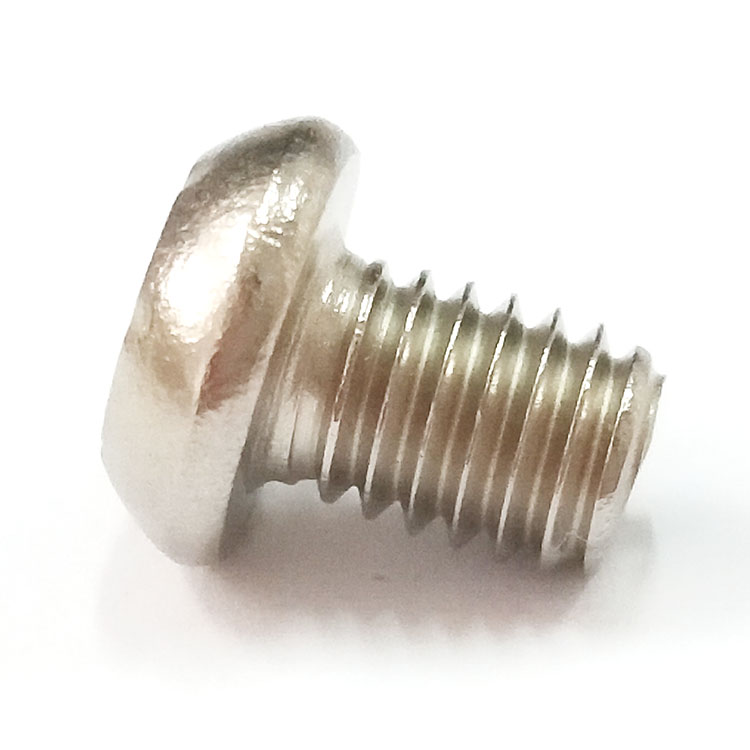
Head Type:Cup head (socket cap)
Drive:Hex socket (Allen)
Thread:Machine thread
Point:Plain, chamfered
Forming:CNC turned from bar, hex socket machined
Size:M1 M2 M3 M4 M5 M6 M7 M8 M9 M10
We turn titanium socket head screws from bar with a cup head and a hex socket, supplying them plain and quoting head, socket and grade to the drawing. Titanium stretches about twice as much as steel for the same stress, so a torque value carried over from a steel screw does not give the same preload.
Watch the factory video·Email sst@szsst88.com
ISO 9001:2015 · Manufacturing since 1998 · 8,678+ customers · 89 countries and regions
Made to order – there is no stock catalogue. Each part is produced to your drawing, and production starts after drawing review and first-article approval.
Titanium socket head screws are cap screws turned from titanium with a cylindrical head and a hex socket, driven with an Allen key. The part recorded here is commercially pure titanium, supplied plain with no coating, with a cup head and a hex socket, quoted from M1 upward with the length made to the drawing.
Titanium body. Around 4.5 g/cm3, roughly half the mass of a steel screw of the same size.
Cup head. A tall cylindrical head with a flat bearing face, made to a cap screw proportion.
Hex socket. Six flats that take the full tightening torque without a driver slipping.
Plain finish. The natural passive oxide, with no applied layer to change the fit.
The combination is used where a machine screw has to carry a real clamp load and the weight or the material signature rules out steel, in instruments, marine fittings and equipment that is handled or lifted.
A torque wrench assumes that the bolt stretches in proportion to the torque applied. Titanium has an elastic modulus of about 110 GPa against 210 for steel, so the same screw stretches almost twice as much for the same stress. That changes the arithmetic behind every torque figure: a titanium socket head screw driven to the steel value may carry less preload than intended, and one driven to a corrected value may carry more than the aluminium or plastic part around it can take.
The scatter is the harder problem. Torque is converted into preload through friction under the head and in the thread, and friction on an uncoated titanium surface is high and variable. The same wrench, the same setting and the same parts can land on preloads that differ by a third, which is why a torque figure alone is a poor way to control a titanium socket head screw.
Turn-of-nut measurement is the answer when the joint matters. Because the modulus is known, the elongation needed for a given preload is known, and counting the fraction of a turn past finger-tight removes friction from the equation. The drawing states which method applies, because the two give different results on the same screw.
The socket is the other place the material shows itself. A hex key bears on six flats with a small contact area, and titanium is soft enough at the surface that a well-used key leaves a burnished impression in the corners. That impression is not a defect on the first assembly, but repeated use with a worn key will round the corners, and a rounded socket on a high-torque joint fails at the worst moment.
Galling sits underneath all of it. Titanium threads on titanium, or on stainless, can cold-weld under pressure and slide, so the removal torque climbs above the tightening torque and the joint seizes. A dry film lubricant or a different mating material is specified where the joint will be opened, and the value in the drawing is then the lubricated one.
None of this makes titanium socket head screws difficult to use; it makes them different from steel screws of the same drawing. A supplier who quotes only the dimensions leaves the customer to discover the difference during assembly.
Titanium socket head screws are quoted by thread size, length, head diameter and height, socket size and thread class. Custom lengths up to 2,000 mm, subject to DFM review after drawing submission. The quotation carries the grade, the head, the socket, the thread and the finish.
| Item | How it is defined | What we control |
|---|---|---|
| Grade | Commercially pure or alloy | Alloy and mechanical properties |
| Head | Cup head | Diameter, height and bearing face |
| Socket | Hex socket | Across-flats, depth and corner radius |
| Thread | Machine thread | Size, pitch and class |
| Finish | Plain | Surface condition and freedom from burrs |
| Mating part | Nut or tapped hole | Depth and material agreed |
The socket depth is set by the head height, and the head height on a titanium cap screw is usually generous. A deep socket is worth having on this material: it spreads the key’s contact over more of the hex and reduces the pressure that produces the burnished corners.
The thread class matters more here than on steel. Titanium threads compress rather than cut into a steel nut, and a class that is tight in steel can be difficult to run down on titanium. The class is agreed with the mating part, and the first article is assembled with it.
The plain finish means the dimensions are the final dimensions. There is no plating to allow for, so the thread, the socket and the head can be measured on the delivered part and the drawing is the only reference needed.
Four properties decide this part, and each carries a cost:
| Property | What it gives | What it costs |
|---|---|---|
| Titanium body | Half the weight, no rust, no magnetism | Material and machining cost |
| Cup head | A high clamp load in a small footprint | Stands proud of the surface |
| Hex socket | Full torque from a standard key | Socket corners burnish and round |
| Plain finish | No coating to change the fit | Nothing resists galling on the thread |
The value is a screw that carries a machine screw’s clamp load at half the weight and does not corrode, on equipment where both are counted.
The cost is that the assembly method has to be revisited. A torque value carried over from a steel screw is not transferable, and a joint that is opened regularly needs a lubricant or a different mating part.
The fourth property, the plain finish, is the one that looks least interesting on a quotation and saves the most argument later. Because nothing is applied, there is no plating allowance to argue about and no batch-to-batch colour to match; the part measures what the drawing says, from the first lot to the last.
The recorded finish is plain: the natural oxide that forms on titanium in air, a few nanometres thick at room temperature, which regrows immediately if it is scratched. It is what gives titanium its corrosion resistance and it adds nothing to the dimensions.
| Option | How it protects | Effect on fit | Typical use |
|---|---|---|---|
| Plain | Natural passive oxide | No build; gauge as drawn | General machine parts |
| Anodised | Grown oxide, colour by thickness | No build; cross tighter | Visible instrument parts |
| Dry film lubricant | Low-friction film | Thin; eases galling | Joints opened in service |
| Molybdenum disulphide | Bonded lubricant film | Thin, dark | High-pressure threads |
| Passivated | Cleaned and thickened oxide | No build | Marine and medical parts |
Plain is chosen when the joint is assembled once and the dimensions are the priority. The absence of a coating means the head and socket are exactly as machined, which is what a tight clearance or a measured preload needs.
Where the joint is serviced, a dry film lubricant is the treatment that addresses galling without changing the fit. It is applied to the thread and, on some joints, under the head, since both are friction surfaces that decide how much of the torque becomes preload.
Three assemblies where the weight and the clamp load both matter:
| Where it sits | The screw holds a mount where every gram on a moving stage changes the settling behaviour. |
| When it goes wrong | The stage rings or settles slowly, or the thread creeps after adjustment. |
| Why it happens | Steel screws add mass at the worst place, and the preload is not controlled. |
| What we control | Head and socket measured; first article assembled and the preload checked. |
| Where it sits | The screw closes a housing that is immersed, where a steel fastener would rust solid. |
| When it goes wrong | The thread seizes after a season, or the head pits at a scratch. |
| Why it happens | Titanium galls on itself and there is no lubricant in the joint. |
| What we control | Mating material and lubricant agreed; sample exposed and dismantled. |
| Where it sits | The screw holds a frame or a module that is carried, where weight is a specification. |
| When it goes wrong | The joint loosens with handling, or the socket rounds on a field repair. |
| Why it happens | The preload is set by feel and the socket is driven with a worn key. |
| What we control | Socket depth and key fit specified; first article driven and re-driven. |
Four points that decide whether a titanium socket screw works on a real joint, each shown on the first article:
|
Grade and thread class agreed
The drawing states the titanium grade and the thread class, because both change the preload the joint will see. Basis: Grade and class on the drawing. |
Turned from bar, not coated over
The head and socket are machined to size and left plain, so the delivered part measures what the drawing measures. Basis: Final dimensions as machined. |
|
Socket driven at torque
The first article is driven at the joint torque with the key that will be used, because the socket is where the material shows. Basis: Socket proved under torque. |
Same bar, same properties
Grade and heat number are recorded with the drawing revision, so a repeat lot has the same modulus and the same thread feel. Basis: Same material across lots. |
A titanium screw is only as good as the joint it is designed into. These four points are the places where a supplier can either hand over a part that works first time or leave the assembly to discover, at the bench, that the values were carried over from steel.
Titanium socket head screws are turned from bar: the head is turned and faced, the hex socket is milled or broached, and the thread is cut or rolled depending on the size. The first piece of every run is measured on head diameter and height, socket across-flats and depth, thread and length before any of the batch is run.


|

|
Rolling a titanium thread is harder than cutting one, because the material work-hardens and resists the die. Where the thread is rolled, the blank diameter is set generously and the die is run at a lower speed; where it is cut, the tool life is short and the surface has to be checked for tearing at the crest.
The socket is the machining step that decides the torque the part can take. The corners of the hex carry the load, and a cutter that is slightly worn leaves a radius at the corner that the key does not fill. That is why the socket is checked with the key as well as on the projector.
No coating follows. The parts are cleaned, and the natural oxide forms in air within minutes, so the delivered surface is the machined one. Burrs are removed by hand or by a controlled deburr rather than by tumbling, since tumbling can round the socket corners that were just checked.
What decides whether a batch of titanium socket head screws passes is the head, the socket and the thread. The inspection agreement covers those, and the criteria come from the drawing.

Head and socket on the projector |

Thread checked with gauges |

Material checked |

Salt-spray testing where a coating applies |
The socket is measured for across-flats and depth and checked with the key that will be used on the line. A hex that measures right can still bind if the corner radii are too large, and the key test is the only way to see it.
The thread is checked with go/no-go gauges and run onto the mating nut. On titanium the run-down torque is worth recording, because a thread that runs tight will feel like galling long before the joint is loaded.
The head face is checked for flatness and for contact marks. A cup head that is dished at the bearing face contacts only at the rim, and on a titanium screw the resulting bending across the head can open a crack at the fillet.
Every batch of titanium socket head screws is traceable to the bar it was made from. The material certificate states the grade, the heat number, the chemistry and the mechanical properties, and the inspection record carries the dimensions measured against the drawing revision.

ISO 9001:2015 |

RoHS test report |

Registered trademark |

Patent: security screw and driver |
With each shipment we supply the material certificate, the inspection record for the head, the socket and the thread, and the key test result where the drawing calls for one. The records carry the batch number, so a repeat order of titanium socket head screws can be compared with the first on the property that actually decides the preload.
More than 8,678 customers in 89 countries and regions have ordered from Shi Shi Tong; 87% of orders come from repeat customers and 56% through referrals. Most projects follow the same route: drawing review, first-article approval, then batches checked against that sample. On titanium the first article also settles the assembly method, since the torque figure that works for steel is rarely the one that works here. Buyers visit during the process to review samples.
|
8,678+
customers served
|
87%
of orders from repeat customers
|
56%
of orders through referrals
|
89
countries and regions shipped to
|
Buyers and quality engineers visit for sample review, process discussion and supplier audits; the visit is arranged around production so the turning cell and the socket machining can be seen on the day the parts run.

Customer group visit – sample review |

Customer group visit – process discussion |

Customer group visit – factory tour |

Customer visit – project kick-off |

Danish customer – drawing review |

Industry exhibition – meeting customers |
No. Titanium stretches about twice as much for the same stress, so the same torque gives a different preload.
By turn of nut past finger-tight where the preload matters, with the fraction of a turn stated on the drawing.
Titanium galls against titanium and stainless under pressure. A dry film lubricant or a different mating material fixes it.
It burnishes on first use and rounds if a worn key is used repeatedly, so the socket depth and the key fit are specified.
The natural oxide regrows immediately and needs no coating; it is the best option where the dimensions matter.
Commercially pure for corrosion, an alloy where strength is the driver. The grade is stated on the material certificate.
How a titanium socket screw project runs from drawing to repeat delivery:
|
1
Send the drawing and the joint details
|
→ |
2
Grade, socket and thread class agreed
|
→ |
3
First article driven, preload checked
|
→ |
4
Batch production and repeat orders
|
Each step is confirmed with you before the next one starts; the drawing revision used for the first article is what repeat orders are checked against.
For a quotation, send the drawing with the titanium grade, head diameter and height, socket size, thread class and finish.
|
Grade
|
Head size
|
Socket
|
|
Thread
|
Finish
|
Length
|
Sending a drawing? The form below does not take attachments. Email the PDF, DXF or STEP file to sst@szsst88.com with the part name and quantity in the subject line – the drawing is reviewed and a quotation follows.

 +86 13143444311
 sst@szsst88.com