Tel:
+86 13143444311
Email:sst@szsst88.com
Fax:+0086-755-27322278
Address:Building 9, First Industrial Zone, Tantou Industrial City, Songgang Street, Baoan District, Shenzhen 518105, Guangdong, China
Type:titanium screws fastener
Materials:TA1 / Grade 1, TA2 / Grade 2, TC4 / Grade 5
Surface treatment:Custom
Head Type:Custom
Size:M1.6–M12; length and geometry subject to drawing review
Drive:Set on the drawing; drive specified with the head and thread
Thread:Machine thread, cut or rolled per drawing
Forming:CNC turning or cold heading per drawing
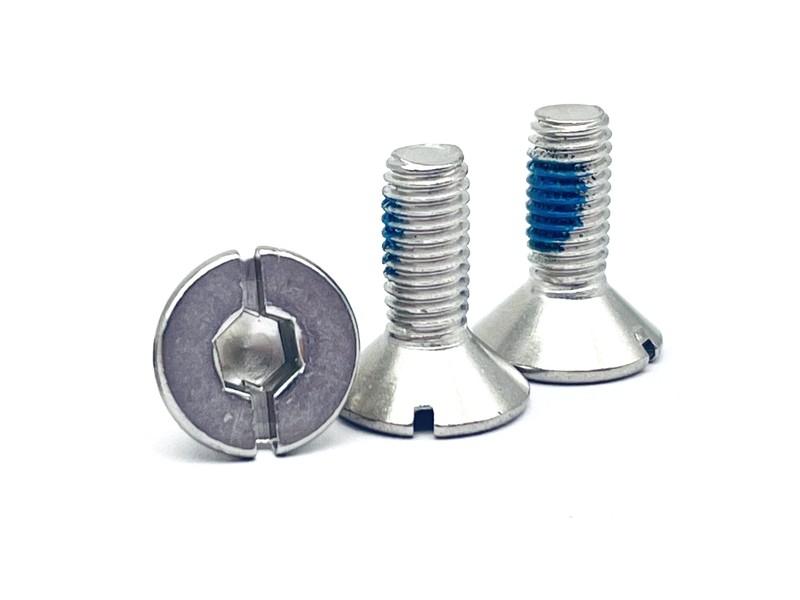
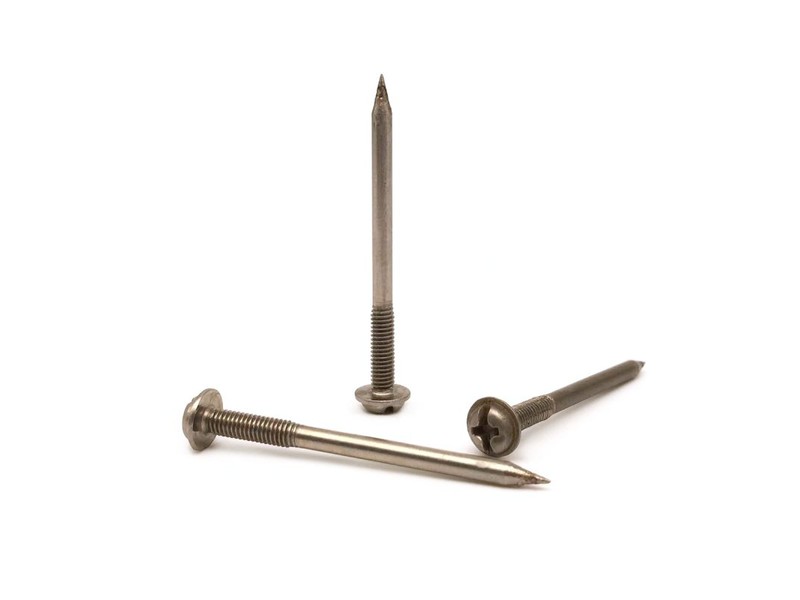
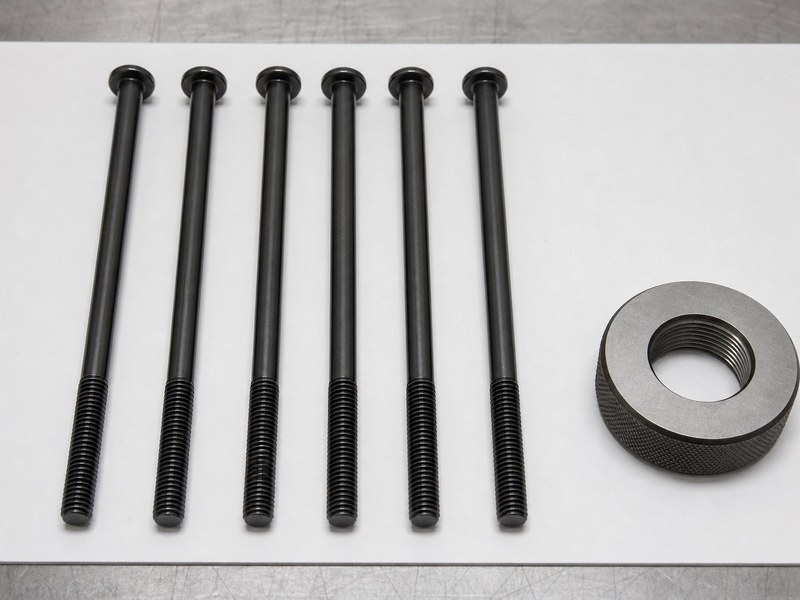
We manufacture custom titanium screws in TA1, TA2 and TC4 (Grade 5), from M1.6 to M12, turned or headed and threaded to drawing for medical, marine, chemical and aerospace assemblies. Grade, head, thread, surface and galling protection are settled before the first bar is cut.
Watch the factory video·Email sst@szsst88.com
ISO 9001:2015 · Manufacturing since 1998 · 8,678+ customers · 89 countries and regions
Made to order – there is no stock catalogue. Each part is produced to your drawing, and production starts after drawing review and first-article approval.
A titanium screw is a fastener made from titanium alloy rather than steel or stainless, chosen where weight, corrosion resistance or biocompatibility matter more than the cost of the material. The parts on this page are made to order from M1.6 to M12, with the head, drive and thread set on the drawing.
Strength against weight. Titanium carries a high strength for its density, so a titanium screw can replace a larger steel screw in a weight-critical assembly. That is the reason it appears in aerospace, motorsport and hand-held instruments before it appears anywhere else.
Corrosion without a coating. Titanium forms its own passive oxide film in air, and it holds up in seawater, chlorides and many acids without plating. A scratched titanium screw does not start a rust spot the way a plated steel one does.
Made to drawing. A titanium screw is not a stock item here. Head style, drive, thread, length and grade are set on the drawing, and the first part is measured against it before the batch runs.
Together these decide the part: it is light, it resists the environment it goes into, and it matches the drawing at the joint.
TA1, also called Grade 1, is commercially pure titanium. It is the softest of the three, the most formable and the most corrosion resistant, and it is chosen for parts that do not carry high load but have to resist a chemical or a marine environment.
TA2, Grade 2, is also commercially pure but with a little more strength. It is the general-purpose grade for titanium screws: enough strength for most assemblies, good corrosion resistance and easier to machine than the alloy grades.
TC4 is Ti-6Al-4V, Grade 5. It is the workhorse alloy: significantly stronger than the pure grades and heat-treatable, which is why it is used where the screw carries load. It is also harder to machine, and the cutting parameters are set for the grade rather than for titanium in general.
The grade is not interchangeable. A part drawn in TC4 and made in TA2 will be weaker, and a part drawn in TA2 and made in TC4 will be harder and more expensive than needed. The drawing names the grade, and the mill certificate confirms it.
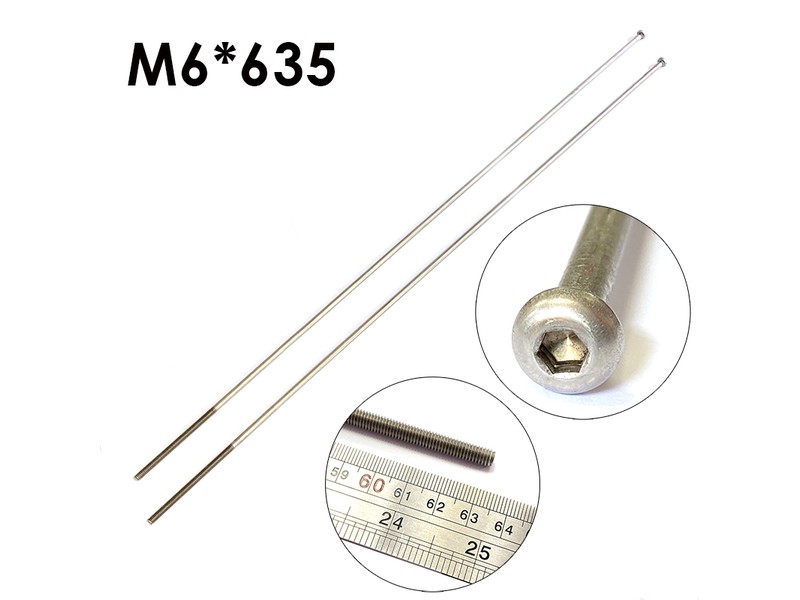
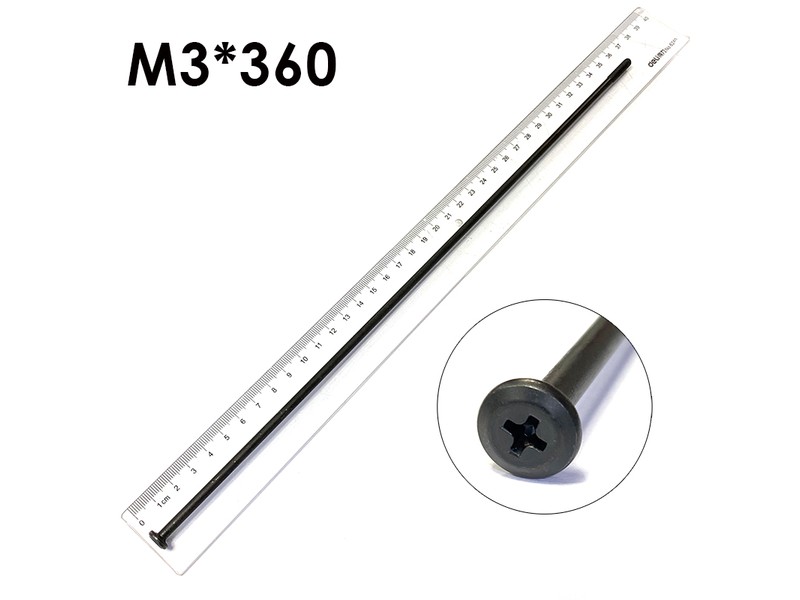
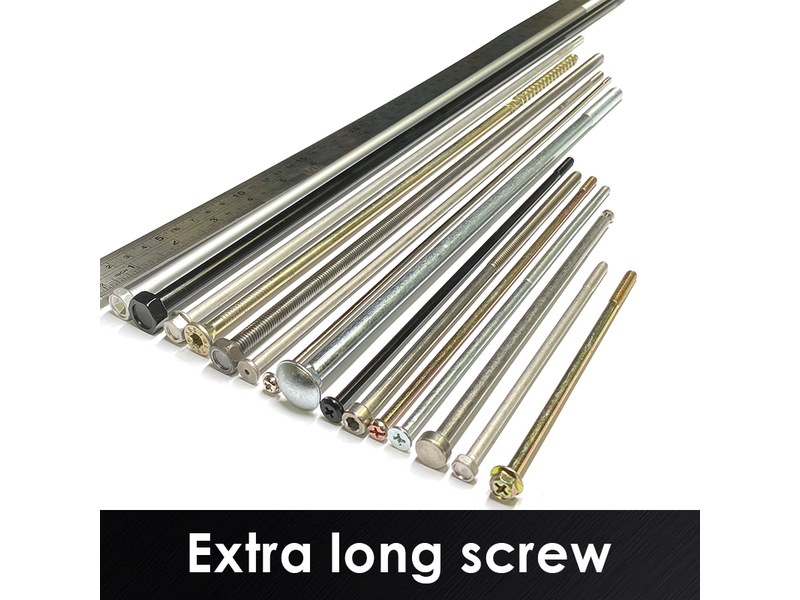
Titanium screws on this page are quoted from M1.6 to M12, with the length and geometry subject to drawing review and the head and thread measured on the projector and with gauges. Where a long version is required, custom lengths up to 2,000 mm are subject to DFM review after drawing submission.
| Item | How it is defined | What we control |
|---|---|---|
| Grade | TA1, TA2 or TC4 per drawing | Confirmed on the mill certificate |
| Head and drive | Head style and drive per drawing | Checked on the projector on the first article |
| Thread | Machine thread to the drawing | Gauged per batch |
| Diameter and length | Turned or headed dimensions | Measured with micrometers on the first article |
| Surface | Plain or anodized | Checked against the sample |
| Galling protection | Dry film or assembly lubricant | Agreed on the drawing where required |
Each size is quoted against the joint it closes. Titanium has a lower modulus than steel, so a long thin titanium screw deflects more under the same load, and the length and diameter are reviewed together rather than scaled from a steel part.
Head height is measured from the bearing face and the total length from the top of the head. The batch is checked on the features the process can drift on: thread class, head profile and surface colour.
Titanium conducts heat badly, so the heat of cutting stays at the edge instead of going into the chip or the part. Tools run hotter, wear faster and can smear the surface; the answer is a sharp edge, a lower speed and enough coolant, not a heavier cut.
Titanium also galls: titanium on titanium, or titanium on stainless, can seize when a joint is tightened dry. Where the screw will be assembled into a titanium or stainless part, the drawing states a dry film lubricant or an anti-seize, and the first article is assembled with it.
The low modulus shows up on long, thin parts. A slender titanium screw deflects under the tool and under the clamp load, so the support and the passes are set for the length, and the part is measured along its length rather than only at the ends.
Threads are cut or rolled to the drawing. Rolling is preferred where the thread is long enough to roll, because it leaves a stronger thread root; cutting is used where the geometry does not allow a roll. The method is recorded with the batch.
A titanium screw is usually supplied plain, because the alloy supplies the corrosion resistance and there is no coating to build on the thread. Where colour is used for identification or appearance, the part is anodized: the oxide layer is grown from the metal, dyed and sealed, and it is thin enough not to change the thread.
| Finish | How it protects | Effect on thread and head | Typical use |
|---|---|---|---|
| Plain titanium | Passive oxide film forms in air | No build-up; as machined | Medical, marine and chemical parts |
| Colour anodized | Thin oxide layer, dyed and sealed | Negligible build-up; colour checked to sample | Colour-coded and visible parts |
| Bead blasted | Uniform matte surface | No dimensional change | Parts where glare matters |
| Dry film lubricant | Bonded film that reduces galling | Thin film; thread checked over it | Titanium-to-titanium joints |
| Passivated | Free iron removed from the surface | No change | Parts before packing |
Salt-spray exposure is agreed per project and written on the drawing; plain titanium is tested in the condition it ships in. Colour anodizing is matched to an accepted sample, because the shade shifts with the voltage and the alloy.
Packing protects the head and the thread. Titanium parts are light and can rub in a bag, so they are packed in layers, and the label carries the batch, the grade and the finish reference.
Three assemblies where titanium screws are chosen for weight, corrosion or biocompatibility, and what the screw has to do instead:
| Where it sits | The screw holds an instrument component or a fixation where the material has to be biocompatible and resist repeated cleaning. |
| When it goes wrong | A steel screw corrodes in an autoclave cycle, and a titanium screw that galls in a titanium mating part seizes during surgery. |
| Why it happens | The parts are sterilized, the joint is small, and the material is specified rather than chosen. |
| What we control | Grade confirmed on the certificate, thread gauged, and the first article assembled with the mating part. |
| Where it sits | The screw holds a fitting or a cover in seawater or a chemical line, where a coating would fail at a scratch. |
| When it goes wrong | A plated steel screw pits at a scratch, and a titanium screw in a stainless nut can gall when it is tightened dry. |
| Why it happens | The environment is wet or aggressive, the joint is exposed, and the parts are assembled once. |
| What we control | Grade matched to the medium, galling protection agreed, and the surface checked before packing. |
| Where it sits | The screw saves weight in a structure that carries load, where every gram counts and the grade is specified. |
| When it goes wrong | A screw in the wrong grade is too weak or too heavy, and a dry titanium joint galls under assembly torque. |
| Why it happens | The assembly is weight-critical, the load is calculated, and the parts are traceable. |
| What we control | Grade and heat recorded, dimensions measured on the first article, and the thread gauged per batch. |
Four reasons that matter on a custom titanium screw, each tied to what the drawing has to prove:
|
Grade and geometry reviewed together
The grade, the head and the thread are reviewed before the bar is cut, so a screw that is too weak for the load or too long for the support is raised first. Basis: Grade and geometry reviewed before machining. |
Machined and threaded for the grade
Cutting parameters, support and thread method are set for the grade, so a TC4 part is not run like a TA2 part and the surface is not smeared. Basis: Parameters set per grade. |
|
Measured on the part
The head and diameters are measured on the first article and the thread is gauged per batch, in the plain or anodized condition the customer receives. Basis: First article measured feature by feature. |
First article to repeat production
The first article fixes the drawing revision, grade and heat, set-up and finish; repeat orders are compared against that record. Basis: First article signed off before the batch is released. |
Shi Shi Tong makes these titanium screws from bar in the grade on the drawing: the bar is checked against the mill certificate, cut and turned or headed, the thread is cut or rolled, the part is deburred and finished, and the first article is measured on every dimension. Long, thin parts are supported and cut in passes that keep the deflection inside the band.
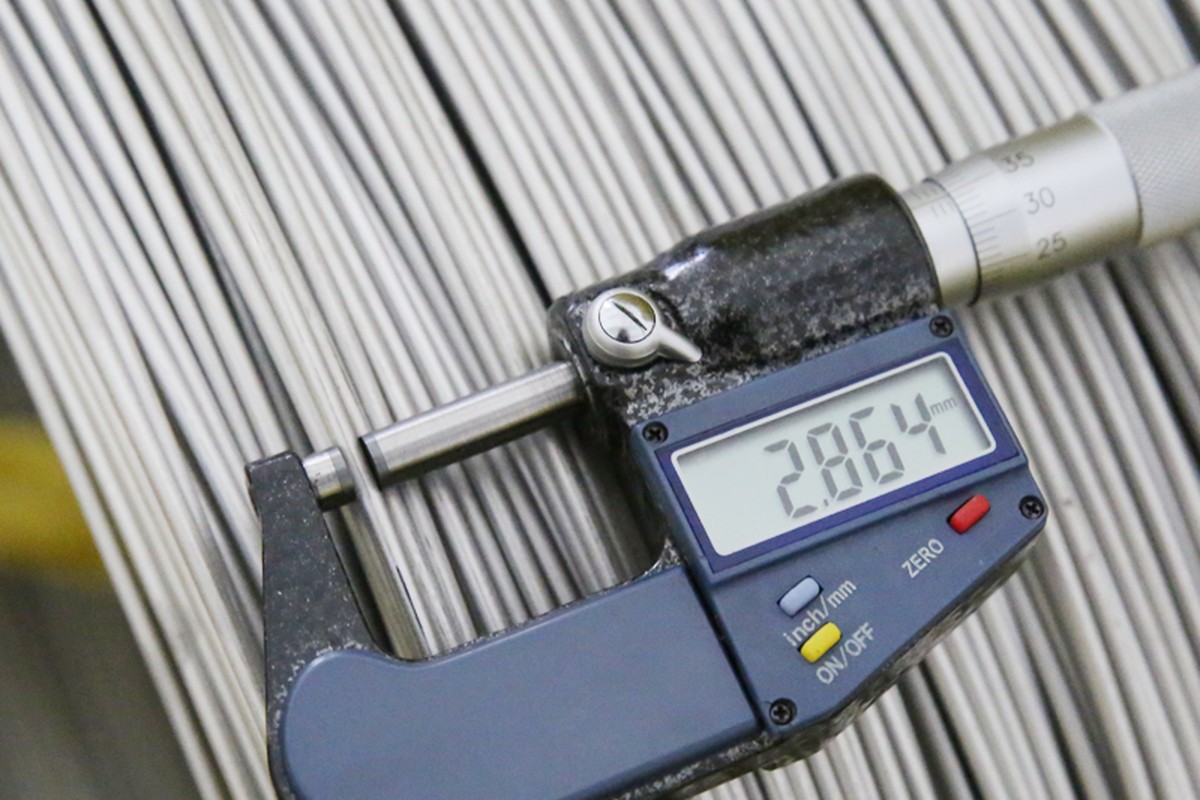
Bar and grade checked before the first cut |
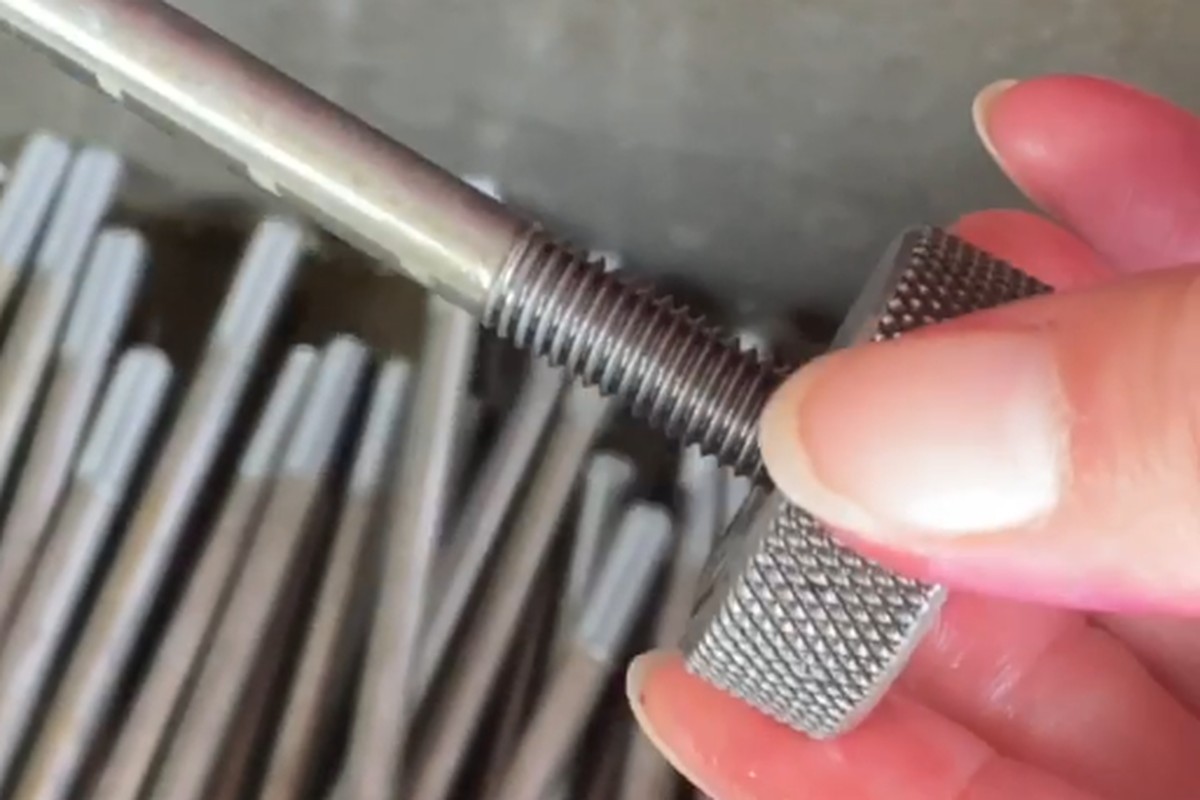
Threads gauged after machining |
Between runs the machine is set to the drawing and the thread method is recorded with the batch. A repeat order uses the same bar size and the same set-up, so the second part can be compared with the approved sample rather than with a memory of it.
What decides whether a titanium screw passes is not the colour of the metal: it is the grade on the certificate, the head and drive, the thread class and the surface condition. The inspection agreement covers those, and the criteria come from the drawing.

Thread gauging against GO/NO-GO gauges |

Head and drive on the projector |

Hardness testing where the drawing requires it |

Salt-spray testing of the agreed finish |
Each batch is recorded against the drawing revision: the grade and heat from the certificate, the head and diameters from the first article, and the thread gauged per batch. If a gauge or the surface check fails, the parts back to the last good setting are held and re-checked.
Where the drawing asks for a third-party report, it is ordered alongside the batch and filed with the inspection record under one batch number.
Every titanium screw shipment is traceable to the bar it was made from. The grade, heat number and standard are recorded on the material certificate supplied with the parts, and the inspection records follow the criteria agreed on the drawing.

ISO 9001:2015 |

RoHS test report |

Registered trademark |

Patent: security screw and driver |
With each batch we supply the material certificate, the inspection record for the criteria on the drawing and, where it is listed, the third-party report for the material or the finish. The documents carry the drawing revision and the batch number, so the paperwork can be matched to the parts.
More than 8,678 customers in 89 countries and regions have ordered from Shi Shi Tong; 87% of orders come from repeat customers and 56% through referrals. Most projects follow the same route: drawing review, first-article approval, then batches checked against that sample. Titanium parts are approved with the grade on the certificate and the thread gauged, because both decide whether the screw can be used. Buyers visit during the process to review samples and to see how the parts are machined.
|
8,678+
customers served
|
87%
of orders from repeat customers
|
56%
of orders through referrals
|
89
countries and regions shipped to
|
Buyers and quality engineers visit for sample review, process discussion and supplier audits; the visit is arranged around production so the turning cells and the inspection bench can be seen on the day the parts run.

Customer group visit – sample review |

Customer group visit – process discussion |

Customer group visit – factory tour |

Customer visit – project kick-off |

Danish customer – drawing review |

Industry exhibition – meeting customers |
It is a fastener made from titanium alloy, chosen where weight, corrosion resistance or biocompatibility matter more than the cost of the material. The parts here are made to order from M1.6 to M12.
TA1 or TA2 (Grade 1 or 2) for corrosion resistance and formability; TC4 (Grade 5, Ti-6Al-4V) where the screw carries load. The drawing names the grade, and the certificate confirms it.
No. Titanium forms its own passive oxide film in air, so it resists seawater and chlorides without plating. Colour anodizing is optional and is thin enough not to change the thread.
Titanium screws on this page are quoted from M1.6 to M12, with length and geometry subject to drawing review. Where a long version is required, custom lengths up to 2,000 mm are subject to DFM review after drawing submission.
Titanium galls when it is tightened dry against titanium or stainless. The drawing states a dry film lubricant or anti-seize where the joint needs it, and the first article is assembled with it.
Grade, head style and drive, thread size and length, diameter and total length with datum, surface or colour, galling protection and quantity.
How a titanium screw project runs from drawing to repeat delivery:
|
1
Send the drawing or sample
|
→ |
2
Grade and DFM review
|
→ |
3
First article approval
|
→ |
4
Batch production and repeat orders
|
Each step is confirmed with you before the next one starts; the drawing revision and the grade from the first article are what repeat orders are checked against.
For a titanium screw quotation, send the drawing with the grade, head style and drive, thread size and length, diameter and total length with datum, surface or colour, and any galling protection the joint needs.
|
Grade
|
Head and drive
|
Thread size and length
|
|
Diameter and length
|
Surface or colour
|
Galling protection
|
Sending a drawing? The form below does not take attachments. Email the PDF, DXF or STEP file to sst@szsst88.com with the part name and quantity in the subject line – the drawing is reviewed and a quotation follows.

 +86 13143444311
 sst@szsst88.com