Tel:
+86 13143444311
Email:sst@szsst88.com
Fax:+0086-755-27322278
Address:Building 9, First Industrial Zone, Tantou Industrial City, Songgang Street, Baoan District, Shenzhen 518105, Guangdong, China
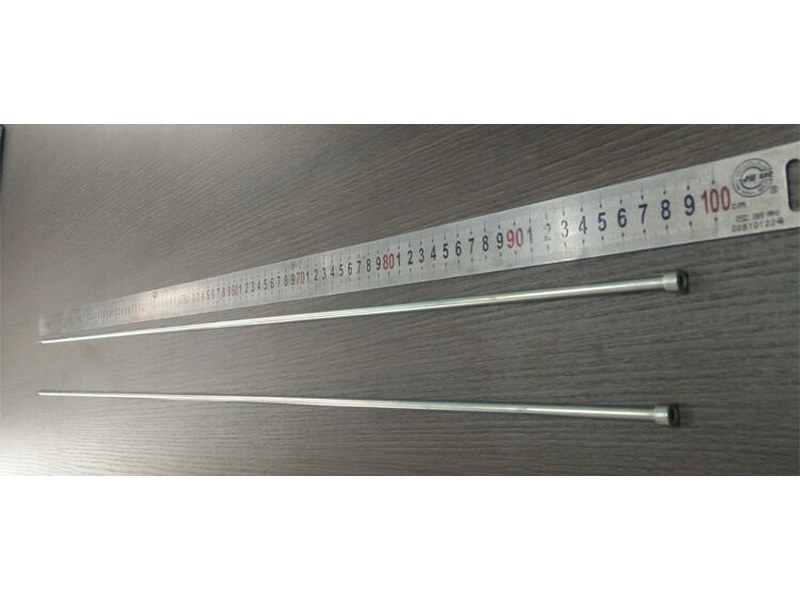
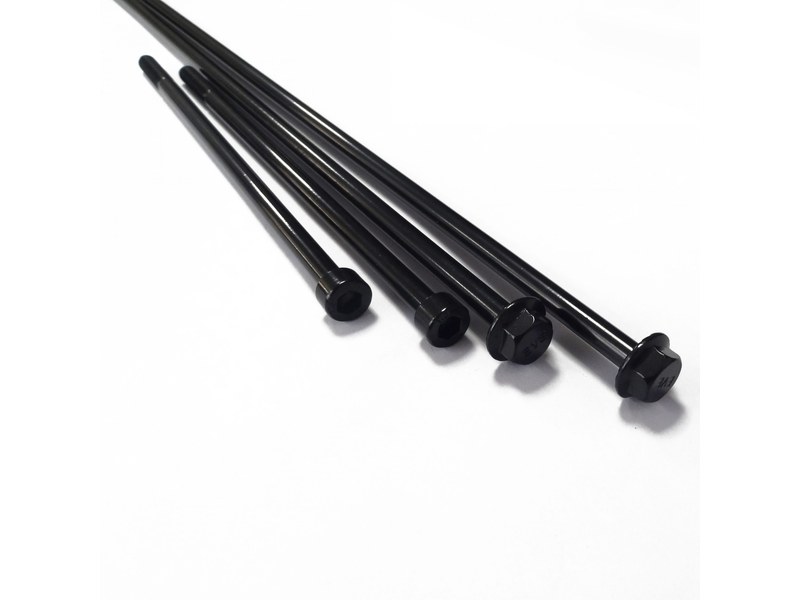
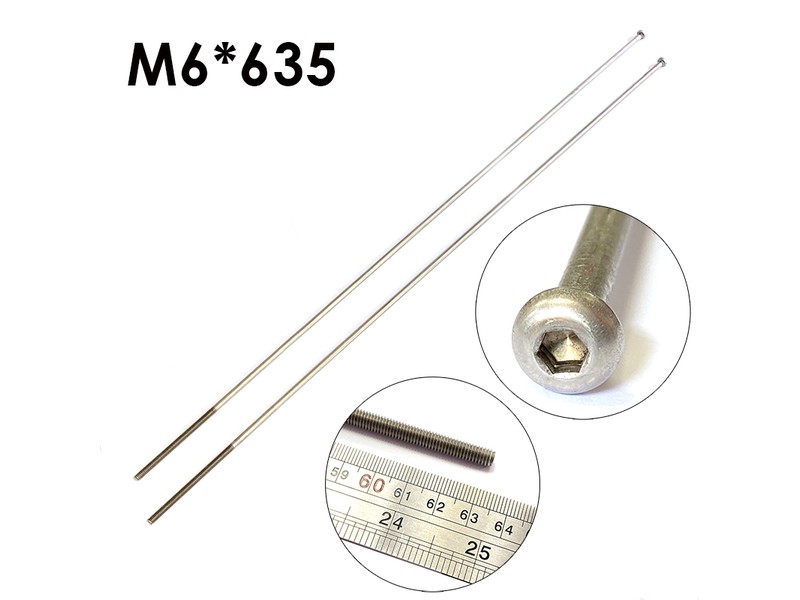
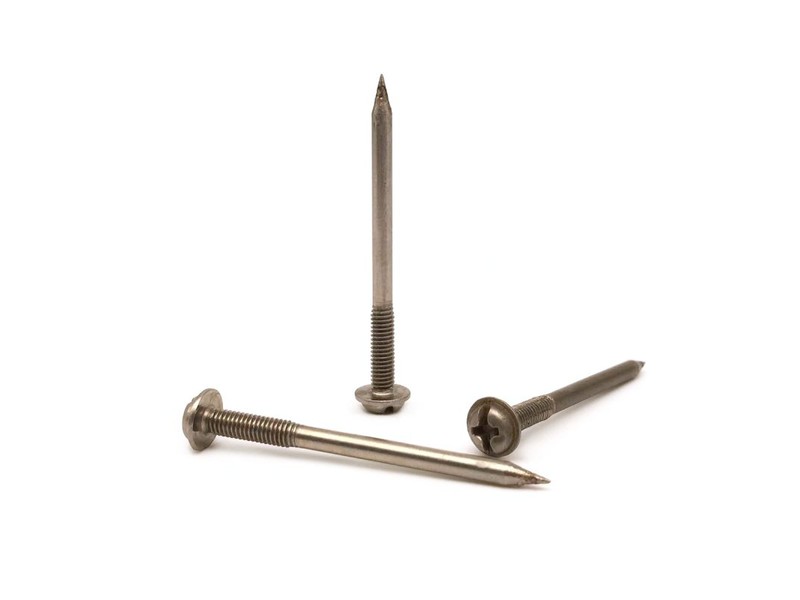
Type:Reverse Thread Screw TA1 Pure Titanium
Materials:Titanium
Surface treatment:Plain
Head Type:Flat Head
Drive:None in standard form
Thread:Left-hand, half thread
Point:Blunt
Forming:Turned from bar
Size:M1 M2 M3 M4 M5 M6 M7 M8 M9 M10 M14
Number:606
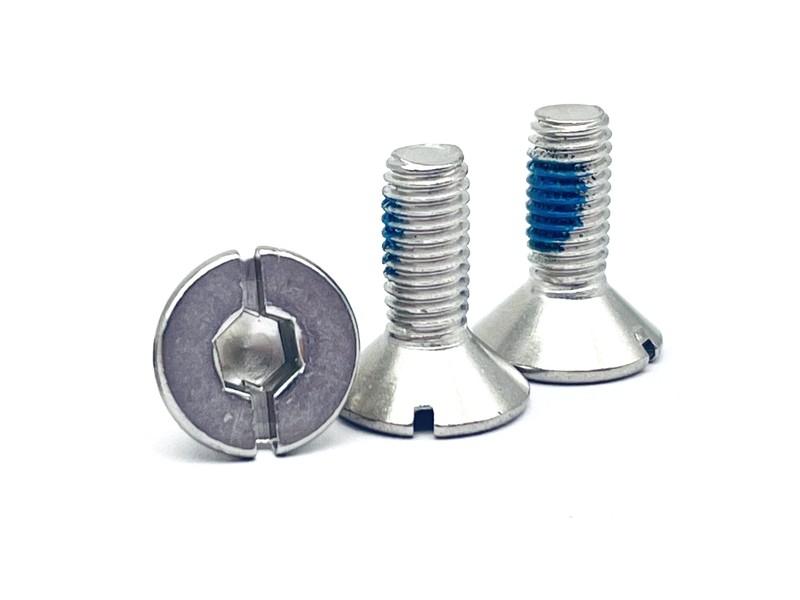
We make reverse thread screws in TA1 pure titanium: flat countersunk head with a plain face, left-hand half thread, quoted from M1 to M14. Thread direction, cone angle, lengths and grade come from your drawing, and the first article is fitted and turned the correct way.
Watch the factory video·Email sst@szsst88.com
ISO 9001:2015 · Manufacturing since 1998 · 8,678+ customers · 89 countries and regions
Made to order – there is no stock catalogue. Each part is produced to your drawing, and production starts after drawing review and first-article approval.
These are reverse thread screws: flat countersunk screws with a left-hand thread, a half thread and a plain head face, made in TA1 commercially pure titanium and quoted from M1 to M14 with Number 606.
Reverse thread. A left-hand thread that tightens anticlockwise and loosens clockwise, so rotation in service pushes it towards tight rather than loose.
Flat countersunk head. A 90-degree cone that seats in a countersink and finishes level, with a plain face in the standard version.
Half thread. The plain shank runs through the joint and the thread engages only at the far end.
TA1 titanium. Commercially pure titanium: light, non-magnetic and resistant without a coating.
Reverse thread screws are used where a joint turns and a normal thread would be worked loose by that rotation, and where the fixing has to sit flush: spindles, rotating fittings and flush covers on light equipment.
The head form on these screws follows the recess and the panel, not a catalogue.
A reverse thread screw exists to defeat rotation. On a joint that turns — a spindle, a wheel, a rotating fitting — a right-hand screw can be worked loose because the rotation acts on the thread in the loosening direction. A left-hand thread reverses that, so the same rotation tightens the joint.
The cost is that everything about service is reversed. The screw is driven anticlockwise, the nut that fits it is a left-hand nut, and a fitter working from habit will either find it will not start or, worse, drive it further in when trying to remove it. That is why a reverse thread screw needs its direction stated on the drawing and marked in the bin, not inferred.
The plain head face is a deliberate part of the design. The standard version has no slot, cross or socket, so the screw is not turned from the head at all: it is turned by the part it holds, or with a soft-jawed tool, or driven in on the thread itself. Where a drive is wanted, the drawing says so and the recess is cut to it.
The countersunk head is the seat. It carries the clamp on its cone and centres the screw, so the countersink angle and depth have to match the head; on a reverse thread the seat is also what stops the screw being turned when the far part is tightened, because there is no head drive to hold.
TA1 titanium is the material choice. It is light, non-magnetic, and does not need a coating, which matters on a part with no recess: there is nothing to wear out of a slot and nothing to flake. The trade is galling against itself and against stainless, managed with a lubricant at assembly.
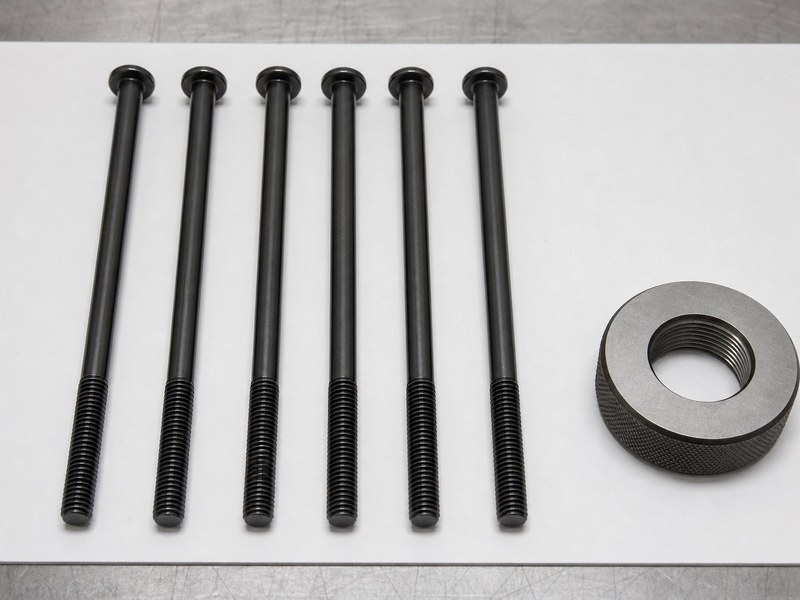
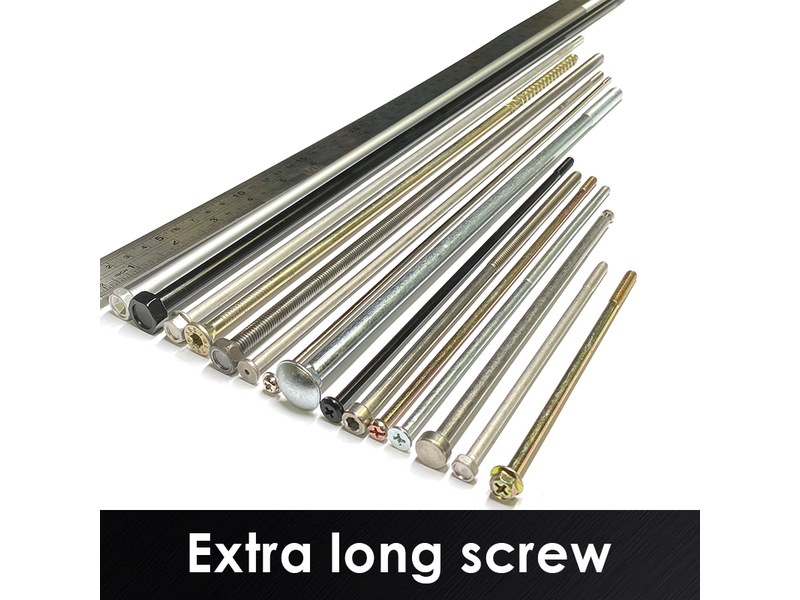
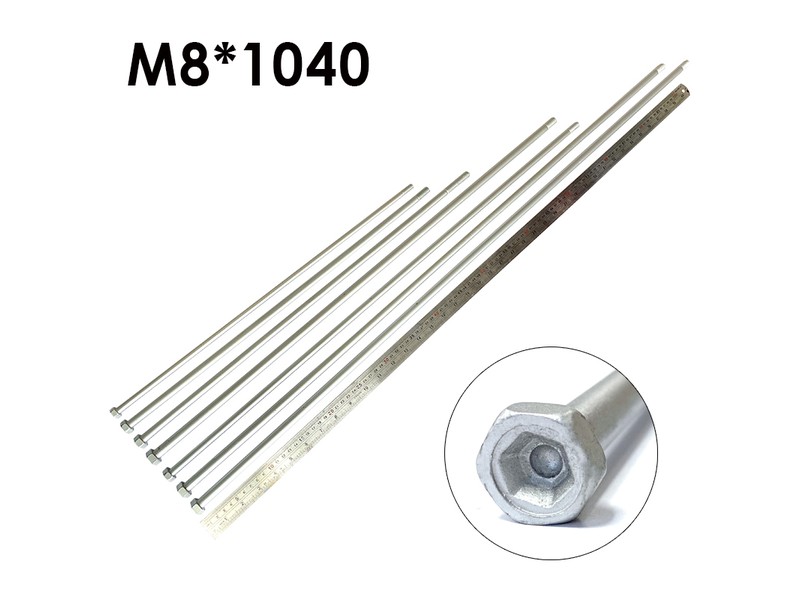
The recorded range is M1 to M14, with lengths made to the drawing. Custom lengths up to 2,000 mm are subject to DFM review after drawing submission. For a reverse thread screw the quotation carries thread direction, thread length, head diameter and cone angle, overall length and the titanium grade.
| Item | How it is defined | What we control |
|---|---|---|
| Thread direction | Left-hand, reverse | Handedness confirmed on the first article |
| Thread | Machine thread, half thread | Pitch, length and gauging |
| Head | Flat countersunk, plain face | Head diameter and cone angle |
| Shank | Plain section through the joint | Diameter and length |
| Material | TA1 titanium | Grade and heat number on the certificate |
| Finish | Plain | Surface condition and film |
| Marking | Identification of reverse thread | Mark position or none |
Thread direction is stated on the drawing and confirmed on the first article, never assumed. A batch made to the wrong hand does not assemble, and the error often surfaces at the machine rather than at goods-in.
The head face is specified as plain unless a drive is called for. A supplier who adds a recess unasked has changed the part, and on a screw that is meant to be non-turnable that is a functional change.
Three features define the part: the left-hand thread, the plain countersunk head and the titanium body. The first holds against rotation, the second seats and centres without offering a drive, and the third gives weight and corrosion without a coating.
| Feature | What it gives | What it costs |
|---|---|---|
| Reverse thread | Holds against a rotating joint | Assembly and service are reversed |
| Plain head face | Nothing to turn by hand | Needs a tool or the mating part to drive |
| Countersunk seat | Sits flush and centres | Angle and depth must match |
| TA1 titanium | Light, non-magnetic, no coating | Galls dry; softer than steel |
| Half thread | Front part stays unthreaded | Both lengths must be specified |
The reverse thread is the reason the part exists, and it is a mechanical answer rather than a chemical one: no locking compound, no patch, no washer. The joint stays tight because the rotation is working in the right direction.
The plain head is the reason it is used where it must not be re-turned. With no recess and a flush cone there is nothing for a casual tool to grip, and the screw can only be removed with the right access to the far side.
The recorded finish is plain, with no coating. On titanium that is the only finish that makes sense: the metal forms its own oxide, it does not need plating to resist corrosion, and on a head with no recess there is no drive geometry that a coating could narrow or fill.
| Option | How it protects | Effect on head and thread | Typical use |
|---|---|---|---|
| TA1 titanium, plain | Native oxide | Head and thread as made | Light, non-magnetic joints |
| A2 stainless, passivated | Passive chromium oxide film | Head and thread as made | General corrosion resistance |
| A4 stainless, passivated | Passive film with molybdenum | Head and thread as made | Marine and chemical |
| Steel, zinc plated | Sacrificial zinc | Thin build; thread re-gauged | Indoor general work |
| Steel, black oxide | Conversion film, oiled | No measurable build | Internal mechanisms |
Where the joint is wet and the part must be light, titanium is the specification; where weight does not matter, A4 stainless costs less and resists as well. Where the joint is dry and indoors, a coated steel screw works and is the cheapest of the three.
Where the screw works against another titanium or stainless thread, plan for galling. A dry titanium thread can seize during assembly, and a reverse thread that has seized is harder to release than a normal one because the instinct is to turn it the wrong way.
Three assemblies where a reverse thread screw is the fixing:
| Where it sits | The screw holds a component on a spindle where rotation would loosen a right-hand thread. |
| When it goes wrong | A fitter turns it clockwise and drives it further in instead of releasing it. |
| Why it happens | The joint rotates, the thread is left-hand, and there is no head drive to show the direction. |
| What we control | Hand confirmed on the first article; the drawing states the direction. |
| Where it sits | The screw fixes a component where weight and magnetic signature matter and the joint turns in service. |
| When it goes wrong | A steel screw would add mass and disturb a sensor. |
| Why it happens | The joint is light, non-magnetic parts are required, and it rotates. |
| What we control | Grade confirmed; first article assembled and operated. |
| Where it sits | The screw sits in a countersink where the surface has to stay level while the assembly turns. |
| When it goes wrong | A proud head catches, and a right-hand thread works loose. |
| Why it happens | The joint is flush, it rotates, and the seat is machined. |
| What we control | Cone angle and direction checked; first article fitted. |
Four reasons that matter on a left-hand part, each tied to what the drawing has to prove:
|
Direction and head agreed
Thread direction, thread length, cone angle and whether a drive exists are agreed as a set, because a reverse thread screw is defined by its hand. Basis: Direction and head agreed. |
Threaded left-hand, finished plain
The thread is cut or rolled with left-hand tooling and the parts are finished plain, so the hand and the surface are as specified. Basis: Left-hand tooling in one route. |
|
Gauged for the hand
The thread is gauged with a left-hand gauge and, where possible, fitted to the mating part, because a normal gauge will not prove the hand. Basis: Thread gauged for the hand. |
Hand recorded
The hand is recorded with the batch, so a repeat order cannot arrive threaded the other way. Basis: Hand recorded per batch. |
Shi Shi Tong makes these screws from TA1 titanium bar, forming the countersunk head with a plain face, cutting or rolling the left-hand thread to length and finishing the parts plain. The first part of every run is checked for hand before anything else, then measured on head, cone and thread.


|

|
Threading titanium takes more care than threading steel. The alloy work-hardens and galls, so the thread is formed in one pass with sharp tooling and generous lubrication; a tool that rubs rather than cuts leaves a torn thread that gauges at the ends and binds in the middle.
Every batch is checked at the first piece and then sampled through the run.
What decides whether reverse thread screws pass is the hand, the cone, the thread and the grade. The inspection agreement covers those, and the criteria come from the drawing.

Head and cone on the projector |

Thread gauged for hand |

Hardness checked on the bar |

Coating proved by salt spray |
The hand is checked first, on the first part and per batch. The cone is checked for angle and contact, the head for diameter and face, and the thread for length and pitch. The grade is confirmed on the mill certificate rather than by appearance.
The first article is fitted to the customer’s mating part and turned the correct way. That is the only test that shows the hand and the fit together, and on a left-hand part it is not optional.
Every shipment of reverse thread screws is traceable to the bar it was made from. The grade and heat number are recorded on the material certificate supplied with the parts, and the inspection records follow the criteria agreed on the drawing.

ISO 9001:2015 |

RoHS test report |

Registered trademark |

Patent: security screw and driver |
With each batch we supply the material certificate, the inspection record for the criteria on the drawing and, where it is listed, the third-party report for the grade. The documents carry the drawing revision, the batch number and the hand, so a repeat order cannot be made the other way.
More than 8,678 customers in 89 countries and regions have ordered from Shi Shi Tong; 87% of orders come from repeat customers and 56% through referrals. Most projects follow the same route: drawing review, first-article approval, then batches checked against that sample. On a reverse thread screw the first article is fitted and turned the correct way before anything else is approved. Buyers visit during the process to review samples.
|
8,678+
customers served
|
87%
of orders from repeat customers
|
56%
of orders through referrals
|
89
countries and regions shipped to
|
Buyers and quality engineers visit for sample review, process discussion and supplier audits; the visit is arranged around production so the threading and finishing stations can be seen on the day the parts run.

Customer group visit – sample review |

Customer group visit – process discussion |

Customer group visit – factory tour |

Customer visit – project kick-off |

Danish customer – drawing review |

Industry exhibition – meeting customers |
Anticlockwise. A left-hand thread tightens the opposite way to a normal screw.
The standard version has a plain face. The screw is turned by the mating part or held with a soft-jawed tool; a drive is cut only where the drawing calls for one.
It is light, non-magnetic and does not need a coating, which suits a part with no recess to wear.
Titanium and stainless can gall when driven dry. Use a lubricant at assembly, and remember a seized reverse thread is easy to tighten by mistake.
It will not assemble. The hand is confirmed on the first article and recorded with the batch.
Thread direction, thread length, head diameter and cone angle, whether a drive exists, overall length and the grade.
How a reverse thread screw project runs from drawing to repeat delivery:
|
1
Send the drawing with the thread direction
|
→ |
2
Hand, cone and lengths agreed
|
→ |
3
First article fitted and turned the right way
|
→ |
4
Batch production and repeat orders
|
Each step is confirmed with you before the next one starts; the drawing revision from the first article is what repeat orders are checked against.
For a quotation, send the drawing with the thread direction, thread length, head diameter and cone angle, whether a drive exists, overall length and the titanium grade.
|
Direction
|
Thread length
|
Cone angle
|
|
Head diameter
|
Drive
|
Grade
|
Sending a drawing? The form below does not take attachments. Email the PDF, DXF or STEP file to sst@szsst88.com with the part name and quantity in the subject line – the drawing is reviewed and a quotation follows.

 +86 13143444311
 sst@szsst88.com