Tel:
+86 13143444311
Email:sst@szsst88.com
Fax:+0086-755-27322278
Address:Building 9, First Industrial Zone, Tantou Industrial City, Songgang Street, Baoan District, Shenzhen 518105, Guangdong, China
Type:Thread Locking Screws
Materials:Steel
Surface treatment:Black Zinc Plated
Head Type:PF Head
Drive:Allen Socket
Thread:Machine Thread
Point:Blunt
Forming:Single Die Heading + Thread Patch
Size:M1 M2 M3 M4 M5 M6 M7 M8 M9 M10 M14
Number:247
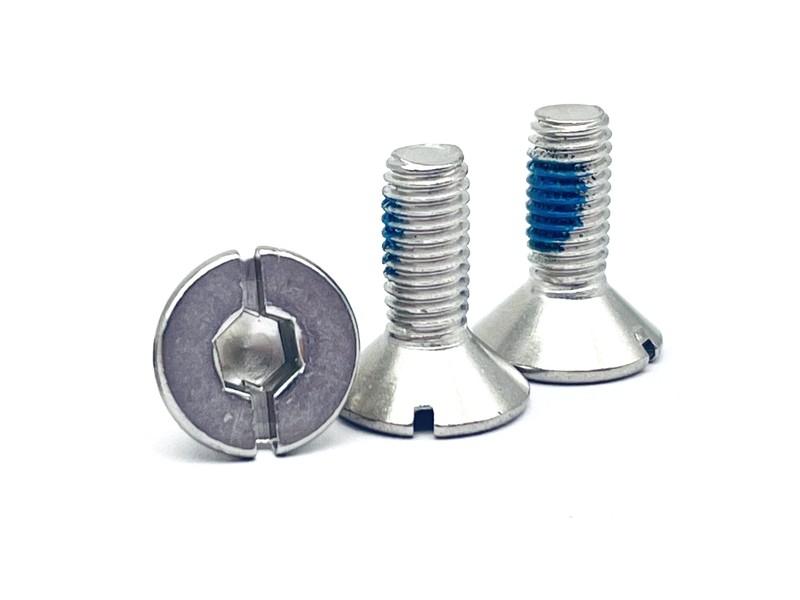
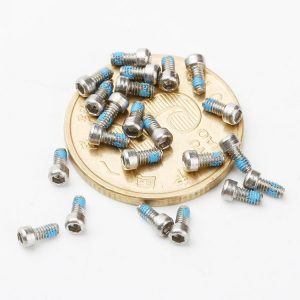
We make thread locking screws in black zinc plated steel with a pre-applied thread patch and a serrated head face, plus a hexagon socket and a machine thread, quoting them from M1 to M14. Patch position, tooth depth, socket and thread come from your drawing, and the first article is driven twice in your joint.
Watch the factory video·Email sst@szsst88.com
ISO 9001:2015 · Manufacturing since 1998 · 8,678+ customers · 89 countries and regions
Made to order – there is no stock catalogue. Each part is produced to your drawing, and production starts after drawing review and first-article approval.
Thread locking screws are machine screws with a locking feature built in, so the joint resists vibration without a separate washer or a bottle of adhesive at the bench. On the recorded item there are two of them: a patch of pre-applied thread adhesive on the thread, and a ring of teeth under the head that bites the panel. The family is made in steel with a black zinc plate, quoted from M1 to M14 with Number 247.
Pre-applied thread patch. A microencapsulated adhesive coated on the thread and dried. It is inert until the screw is driven, then cures in the thread and generates prevailing torque.
Serrated head face. Small teeth under the head that press into the surface and resist loosening from the head side.
Hexagon socket. An internal hexagon drive, sized to the thread.
Black zinc. A dark sacrificial zinc deposit, applied before the patch so the patch sits on a cured finish.
A loose joint can fail in two places, and a thread locking screw can be built to resist both. The thread can turn, which is what a thread-locking patch prevents; or the head can settle and rock, which is what the serrated face prevents. A part that carries both is not redundancy — the two features act on different surfaces.
On a thread locking screw the patch works on the thread. Microencapsulated adhesive is applied as a coating and allowed to dry, so the part arrives as a normal screw with a slightly rough, faintly coloured band on the thread. When it is driven, the capsules are crushed against the mating thread, the adhesive is released and it cures in the gap, filling the clearance and adding prevailing torque.
That has consequences worth knowing. The patch needs a clean, dry thread to cure against, so a joint that has been oiled or greased will not lock as it should. It has a shelf life, because the capsules degrade with time and heat. And it is reusable a limited number of times: the first assembly uses the full charge, the second uses what is left, and by the fourth or fifth the prevailing torque is gone.
The serrated face works on the head side. The teeth are shallow, and when the screw is tightened they press into the panel and form a mechanical key that resists rotation. On a steel or cast surface that is very effective; on a painted panel it marks the paint, and on a soft plastic it cuts in and keeps cutting each time the joint is reopened.
The two together suit a joint that vibrates and is assembled once. The patch holds the thread, the teeth hold the head, and the screw does not need a lock washer, an adhesive dispenser or a torque audit to stay put. The cost is that the joint is designed for limited reopening, and both features are consumed a little each time.
The recorded range is M1 to M14, covering M1, M2, M3, M4, M5, M6, M7, M8, M9, M10 and M14. Custom lengths up to 2,000 mm are subject to DFM review after drawing submission. For a thread locking screw the quotation has to state the patch type and its position on the thread, because a patch in the wrong place adds friction where the joint needs free running.
| Item | How it is defined | What we control |
|---|---|---|
| Head | PF head with serrated face | Head diameter, height, tooth depth |
| Patch | Pre-applied thread adhesive | Patch length, position and colour |
| Socket | Internal hexagon | Socket across flats and depth |
| Thread | Machine thread | Pitch and length, gauged per batch |
| Finish | Black zinc, then patch | Deposit thickness and adhesion |
| Length | Under the head | Measured on the shop plate |
Patch position is the detail that decides whether the joint works. A patch that runs from the point upward covers the first threads that enter the nut, which is what you want; a patch placed below the engaged length does nothing, and one that runs into the shank or the head adds drag where the panel needs to slide.
Tooth depth on the head face is a similar trade. Deeper teeth hold better but mark the panel more; shallow teeth are gentler and rely on the patch for the locking. On a visible panel the shallow version is usually the right one, and on a hidden structural joint the deeper tooth is worth the marks.
Three features define this part: the patch, the serrated face and the black zinc. The first replaces an assembly step, the second adds a mechanical key, and the third is the finish the patch is applied over.
| Feature | What it gives | What it costs |
|---|---|---|
| Pre-applied patch | No adhesive at the bench | Shelf life; limited re-use |
| Prevailing torque | Resists vibration on the thread | Joint is stiffer to drive |
| Serrated head face | Mechanical lock at the head | Marks painted panels |
| Hexagon socket | Common tool, good torque | Socket must be fully seated |
| Black zinc | Dark, sacrificial protection | Patch adhesion checked after plating |
The value of a patch on thread locking screws is in the process, not only in the mechanics. An operator who has to apply liquid adhesive at the bench will sometimes skip it, sometimes apply too much, and always add a step that can go wrong on a Friday afternoon. A pre-applied patch moves that step to the screw maker, where it is done once, in a controlled thickness.
The limit is that the patch is a one-shot device in practice. A joint that is opened and closed every week is not the application for it; a joint that is set once and then vibrates for years is exactly the application. That is the distinction to make before the drawing is released.
The recorded finish is black zinc with the patch applied on top. The order matters: the plating is cured, the patch is applied over it and dried, and the part is packed. A patch applied before the plating would be destroyed by the plating line; a coating that is not fully cured shows up later as patch adhesion failure.
| Option | How it locks | Effect on the joint | Typical use |
|---|---|---|---|
| Black zinc + thread patch | Adhesive cured in the thread | Prevailing torque; limited re-use | Vibrating joints set once |
| Black zinc + serrated head | Teeth pressed into the panel | Mechanical key; marks the surface | Hard panels, hidden joints |
| Black zinc + both | Thread and head both keyed | Most resistant; least re-openable | Structural joints, once only |
| Nylon insert lock | Plastic pellet deforms on the thread | Re-usable a few times | Serviceable joints |
| Plain black zinc | No feature; relies on torque | Cheapest; loosens under vibration | Static indoor joints |
The choice between a patch and a nylon insert comes down to how often the joint is opened. A nylon locking element deforms as it is driven and can be re-used several times; an adhesive patch gives cleaner prevailing torque on the first assembly and then declines. For equipment that is serviced, the nylon element is usually the better answer; for equipment that is sealed, the patch is, and that is the case thread locking screws are built for.
Black zinc is the finish these parts are usually asked for, because the joints they go into are inside machines and the head is visible on a dark surface. Where the joint is exposed to moisture, the patch and the zinc behave differently: the patch fills the thread gap and slows water ingress, but once the zinc at the head face is scraped by the serrations, bare steel is exposed exactly where the water sits.
Three assemblies where thread locking screws are the fixing:
| Where it sits | The screw holds a bracket, a guard or a rail on equipment that runs continuously, where a joint that loosens becomes a failure and a re-torque is not part of the service. |
| When it goes wrong | A plain screw backs out under vibration, and a lock washer alone does not stop the thread turning. |
| Why it happens | The joint vibrates, it is assembled once, and the head sits on a hard surface. |
| What we control | Patch position and tooth depth checked, first article vibrated in the fixture. |
| Where it sits | The screw fixes trim, a bracket or a plate where the joint is set in production and is not expected to be opened in service. |
| When it goes wrong | An adhesive applied by hand is uneven, and a missing patch is invisible until the joint fails. |
| Why it happens | The joint is set once, the process must be repeatable, and the head is exposed to the panel. |
| What we control | Patch coverage checked per batch, plating and patch adhesion inspected. |
| Where it sits | The screw closes a cover on equipment that sees fan and transformer vibration, where the joint is opened only for major service. |
| When it goes wrong | The cover works loose against the gasket and the enclosure stops sealing. |
| Why it happens | The joint vibrates, it is opened rarely, and the panel is painted. |
| What we control | Patch and tooth depth matched to the panel, first article trialled in the enclosure. |
Four reasons that matter on a part with pre-applied adhesive, each tied to what the drawing has to prove:
|
Patch type and joint reviewed
The patch type, its position and the joint are confirmed together, because a patch that does not run over the engaged thread locks nothing and a patch that is too long adds drag. Basis: Patch type, position and joint agreed. |
Plating, then patch, then pack
The parts are plated, the plating is cured, the patch is applied and the parts are packed with the patch date recorded, so the shelf life is known. Basis: One route with the patch last. |
|
Prevailing torque checked on the first article
The first article is driven and the prevailing torque measured, because a patch that looks complete can still be too thin to hold. Basis: Prevailing torque recorded. |
First article fixes the setting
The first article fixes the wire heat, the tooth die, the plating and the patch; repeat orders are compared against that record. Basis: First article signed off before the batch is released. |
Shi Shi Tong forms these thread locking screws from steel wire on single-die headers that form the head with its serrated face and the hexagon in one stroke, rolls the machine thread to a blunt chamfered end, plates the parts in black zinc and applies the thread patch after the plating is cured. The first part of every run is measured on the head, driven to check the prevailing torque and entered into a thread gauge before the batch continues.


|

|
On thread locking screws the patch is the part of the process that has nothing to do with metal cutting, and it is the part most easily got wrong. Thickness, coverage and drying all matter, and a batch that is packed before the patch is fully dry will arrive with the adhesive welded into a block. The application station is set up for the batch, and the first article is checked before the run continues.
What decides whether thread locking screws pass is the patch, the serrated face, the socket and the thread. The inspection agreement covers those, and the criteria come from the drawing.

Head face and thread on the projector |

Thread gauged per batch |

Hardness checked on the wire |

Salt-spray testing of the plate |
On thread locking screws the patch is checked for position, length and coverage before and after drying, and the prevailing torque on the first article is measured on the first and second assembly. The serrated face is checked for tooth depth and for a clean edge, because a burred tooth cuts the panel instead of keying into it.
The thread is gauged per batch and the socket is driven with the production key. Plating is checked for thickness and adhesion on the head face and in the socket, since the serrations are the first place the plate is scraped off in service.
Every shipment of thread locking screws is traceable to the wire it was made from, to the plating batch and to the date the patch was applied. The grade and heat number are recorded on the material certificate, and the patch date is kept with the inspection file.

ISO 9001:2015 |

RoHS test report |

Registered trademark |

Patent: security screw and driver |
With each batch we supply the material certificate, the inspection record including the prevailing torque result, and the patch date. The documents carry the drawing revision and the batch number, so the paperwork can be matched to the parts and the shelf life can be counted from a known date.
More than 8,678 customers in 89 countries and regions have ordered from Shi Shi Tong; 87% of orders come from repeat customers and 56% through referrals. Most projects follow the same route: drawing review, first-article approval, then batches checked against that sample. On thread locking screws the first article is driven twice in the customer’s joint, because prevailing torque is the function. Buyers visit during the process to review samples and to see how the heads and patches are made.
|
8,678+
customers served
|
87%
of orders from repeat customers
|
56%
of orders through referrals
|
89
countries and regions shipped to
|
Buyers and quality engineers visit for sample review, process discussion and supplier audits; the visit is arranged around production so the headers and the patch station can be seen on the day the parts run.

Customer group visit – sample review |

Customer group visit – process discussion |

Customer group visit – factory tour |

Customer visit – project kick-off |

Danish customer – drawing review |

Industry exhibition – meeting customers |
Microencapsulated adhesive is coated on the thread and dried. Driving the screw crushes the capsules, the adhesive cures in the thread gap and adds prevailing torque.
A few times at most. Each assembly uses part of the charge, so prevailing torque falls away. For a joint that is opened regularly, a nylon insert is a better choice.
Yes. Oil, grease or a thread that has been treated with a release agent stops the adhesive curing, and the joint will loosen as if there were no patch.
The teeth press into the panel and key the head mechanically, which resists loosening from the head side. On a painted panel they leave marks.
It depends on the adhesive and the storage conditions, and it is counted from the patch date on the batch record. Old stock locks less firmly.
Thread size and length, head diameter and height, tooth depth, socket size, patch type and its position on the thread, and the finish.
How a thread locking screw project runs from drawing to repeat delivery:
|
1
Send the drawing and the joint it locks
|
→ |
2
Patch type, position and tooth depth agreed
|
→ |
3
First article driven twice in your joint
|
→ |
4
Batch production and repeat orders
|
Each step is confirmed with you before the next one starts; the drawing revision from the first article is what repeat orders are checked against.
For a quotation, send the drawing with the thread size and length, the head diameter and height, the tooth depth, the socket size, and the patch type and position you need.
|
Thread size
|
Length
|
Head diameter
|
|
Tooth depth
|
Patch type
|
Finish
|
Sending a drawing? The form below does not take attachments. Email the PDF, DXF or STEP file to sst@szsst88.com with the part name and quantity in the subject line – the drawing is reviewed and a quotation follows.

 +86 13143444311
 sst@szsst88.com