Tel:
+86 13143444311
Email:sst@szsst88.com
Fax:+0086-755-27322278
Address:Building 9, First Industrial Zone, Tantou Industrial City, Songgang Street, Baoan District, Shenzhen 518105, Guangdong, China
Type:Miniature Machine Screws
Materials:Steel
Surface treatment:Black Zinc Plated
Head Type:Flat Head
Drive:Phillips
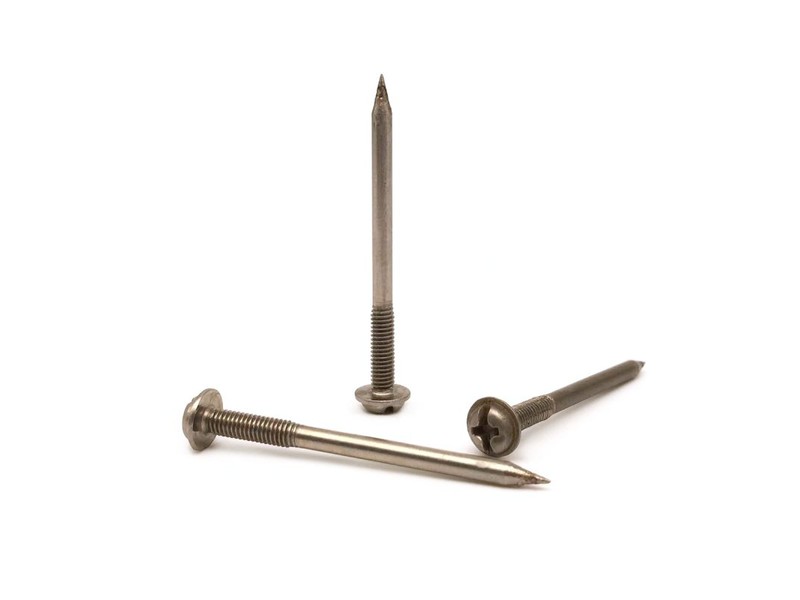
Thread:Trilobular Thread-Forming
Point:Blunt
Forming:Single Die Heading
Size:M1 M2 M3 M4 M5 M6 M7 M8 M9 M10 M14
Number:471
We make miniature machine screws in black zinc plated steel with a flat head, a cross recess and a trilobular thread that forms its own thread in a drilled hole, quoting them from M1 to M14. Cone, recess, thread form and hole size come from your drawing, and the first article is driven into your own hole.
Watch the factory video·Email sst@szsst88.com
ISO 9001:2015 · Manufacturing since 1998 · 8,678+ customers · 89 countries and regions
Made to order – there is no stock catalogue. Each part is produced to your drawing, and production starts after drawing review and first-article approval.
Miniature machine screws are small screws made to a machine screw standard rather than to an impromptu shape, which means their diameters, threads per inch and head forms come out of a published table. The recorded item on this page is black zinc plated steel with a flat head, a cross recess and a trilobular thread form, quoted from M1 to M14 with Number 471.
Miniature. The small end of the machine screw tables: numbered sizes below a quarter inch, and the metric equivalents around them. The part is not a reduced drawing of a bigger screw; the proportions and the tolerances are their own.
Flat head. A countersunk cone that seats in the part and leaves the surface unbroken, with a cross recess in the top. In a miniature size the cone is shallow and the recess is shallow with it.
Trilobular thread. A thread whose cross section is a rounded triangle rather than a circle. The lobes roll the material of the hole ahead of them and form a thread in a plain drilled hole, without cutting a chip.
Black zinc. Electroplated zinc with a dark passivation, thin enough that the trilobular form still does its work. A thick coating on a thread that forms its own way would be a contradiction.
On miniature machine screws the trilobular thread is the interesting part. It looks like a machine thread, it is specified like a machine thread, and yet it does not need a tapped hole: the three lobes are slightly proud of the pitch circle, so as the screw is driven they press the material of the hole back and form a thread in it.
The consequence is that the hole size is the specification. Instead of a tapped hole with a thread that has to match, the part needs a plain drilled hole of a defined diameter, and the lobes do the rest. Too small and the driving torque climbs until the head or the recess gives; too large and the lobes never touch, so no thread is formed and the screw turns freely.
The advantage over a cutting screw is the chip. A thread-cutting screw removes material, and in a blind hole or a sealed assembly that material goes somewhere — into a mechanism, into a connector, into the space behind a board. A forming screw displaces the material instead, so there is nothing to recover and nothing to lose inside the product.
For miniature machine screws the advantage over a tapped hole is the process. Tapping is an operation, a tool and a failure mode of its own, and on a miniature part the tap is fragile. A trilobular screw removes that operation from the customer’s line, which is the reason the form exists at all.
The flat head and the shallow recess are the constraint at the miniature end. The countersunk cone and the cross both have to fit into a small head, so the recess is shallow and the torque the drive can transmit is limited — which suits the trilobular thread, because forming a thread needs a controlled torque more than a high one.
The family is quoted from M1 to M14, with M1, M2, M3, M4, M5, M6, M7, M8, M9, M10 and M14 in the recorded range for the metric sizes, alongside the numbered inch sizes that the standard tabulates. Custom lengths up to 2,000 mm are subject to DFM review after drawing submission.
| Item | How it is defined | What we control |
|---|---|---|
| Head | Flat head, countersunk cone | Cone angle, diameter and concentricity |
| Recess | Phillips cross | Depth and width, bit tried on the part |
| Thread | Trilobular thread-forming | Form, pitch and lobe height |
| Hole | Plain drilled hole, not tapped | Agreed on the customer’s material |
| Plating | Black zinc, dark passivation | Thickness range and form retention |
| Length | From the top of the head to the end | Measured on the projector at this size |
The hole is quoted on the drawing because on a forming screw it is half the specification. A part that is compliant in every dimension and installed in a hole a few hundredths wrong will either strip or not hold, and the screw will be blamed for both.
Length is measured from the top of the head, since a countersunk head seats flush and the top face is the datum that shows. On a miniature part the head height is the same order as the measurement error, so the length is read on the projector rather than with a rule.
Three things define miniature machine screws: the flat head, the shallow recess and the trilobular thread. The first two are the miniature constraint, and the third is a process choice that changes what the customer has to do.
| Thread type | How it makes the thread | Chips | Where it fits |
|---|---|---|---|
| Trilobular forming | Rolls the material ahead of the lobes | None | Blind or sealed joints, no tapping step |
| Thread cutting | Cuts a thread, removing material | Chips | Where the material will not form |
| Machine thread | Uses a thread that already exists | None | Joints that are opened often |
| Self drilling | Drills and taps in one pass | Chips | Sheet and light section, one operation |
The trilobular form on miniature machine screws has one limit worth stating plainly: it is not designed to be run into a nut or a pre-tapped hole. The lobes deform the internal thread rather than engaging it, so a nut will go on stiff and come off damaged. Where a joint has to be opened and closed many times, a plain machine thread is the right choice and this part is the wrong one.
Within a drilled hole the opposite is true. A formed thread has no cut edges to start a crack, the material is work-hardened around the thread, and the strip torque is higher than a cutting screw of the same size in the same hole. That is why these parts are used where a joint is assembled once and has to hold.
Miniature machine screws carry a black zinc finish with a dark passivation, applied after the thread is rolled. It is a sacrificial coating, and it is thin enough that the trilobular form still presses into the hole rather than skidding on a film.
| Finish | How it protects | Effect on thread form and recess | Typical use |
|---|---|---|---|
| Black zinc | Sacrificial zinc, dark passivation | A few microns; bit tried after plating | Dark miniatures in visible assemblies |
| White zinc | Sacrificial zinc | A few microns; re-checked | General indoor work |
| Black oxide | Thin conversion film, oiled | No measurable build | Unseen miniature joints |
| Nickel plate | Hard barrier deposit | Thicker; recess and lobes re-checked | Visible decorative miniatures |
| Stainless, plain | Passive chromium oxide film | None; gauged as formed | Medical and washed assemblies |
On miniature machine screws the coating has three places to survive: the recess, where the bit bears; the lobes, where the material is pressed; and the head, where the part is seen. The lobes wear first, because they are what forms the thread, and after the first installation the coating on them is gone.
That is not a defect, but it is a reason to think twice about the finish for a joint that is wet. The protection that matters in service is on the head and on the upper thread, and a thin zinc layer in a damp joint is consumed quickly. Where the assembly sees water, the base metal is the answer rather than a heavier coat of the same finish.
Three assemblies where miniature machine screws with a forming thread are the fixing:
| Where it sits | The screw fixes a connector body, a shield or a module into a drilled hole in a metal or moulded part where a tapping operation would be another process step. |
| When it goes wrong | A tapped hole in a small part is a fragile operation, and a cutting screw leaves a chip inside the housing. |
| Why it happens | The part is small, the joint is closed once, and there is no room for chips. |
| What we control | Thread form and hole size checked, recess driven with the production bit. |
| Where it sits | The screw closes a housing where the material is a light alloy or a filled polymer and the thread has to hold without a tapped insert. |
| When it goes wrong | A tapped insert adds a part and a process, and a cutting thread in a soft alloy strips on reassembly. |
| Why it happens | The housing is small, the wall is thin, and the joint is closed once. |
| What we control | Hole agreed on the material, driving torque read on the first article. |
| Where it sits | The screw holds a plate or a bracket where the fixing is under a cover and the head has to finish flush. |
| When it goes wrong | A head that stands proud fouls the cover, and a shallow recess cams out before the thread has formed. |
| Why it happens | The head must be flush, the part is small, and the joint is assembled by hand. |
| What we control | Head height and cone checked, recess and thread form proved on the first article. |
Four reasons that matter on miniature machine screws, each tied to what the drawing has to prove:
|
Thread form, recess and hole reviewed together
The trilobular form, the recess depth and the hole diameter are reviewed as one set, so a screw that would strip or a recess that would cam out is raised before the die is cut. Basis: Thread form, recess and hole reviewed as one set. |
Heading, rolling and plating in one route
The flat head and the cross are formed in one stroke, the trilobular thread is rolled, and the parts are black zinc plated in the same route. Basis: One route from wire to plated screw. |
|
Measured at miniature scale
Head, cone and recess are measured on the projector, the thread form is checked on the section, and the recess is driven with the production bit. Basis: First article checked on the projector. |
First article fixes the setting
The first article fixes the wire heat, die set, roll and plating; repeat orders are compared against that record. Basis: First article signed off before the batch is released. |
Shi Shi Tong forms these miniature machine screws from carbon steel wire on single-die headers that cut the countersunk head and the cross recess in one stroke, rolls the trilobular thread to a blunt chamfered end and black zinc plates the parts. The first part of every run is measured on the projector, driven with the production bit and driven into a sample of the customer’s material before the batch continues.


|

|
The trilobular form is set by the roll, and it is checked on a section rather than on the outside. A roll that is slightly worn leaves lobes that are lower than the drawing, and the screw then forms a shallower thread: it drives easily, it holds at first, and it strips early. That is a defect a dimension check on the diameter will never see.
What decides whether miniature machine screws pass is the head, the recess, the thread form and the plating. The inspection agreement covers those, and the criteria come from the drawing.

Head and recess on the projector |

Thread form checked per batch |

Hardness testing against the property class |

Salt-spray testing of the black zinc plate |
The head of a miniature machine screw is checked for cone angle, diameter and concentricity, and the recess for depth and width. On a countersunk miniature the cone is the seat, and a cone that is half a degree out seats on a line: the screw looks flush and the joint rocks.
The thread form is checked on a section against the drawing, and the driving torque is measured in the customer’s material. On a forming screw the two are read together, because the lobes that look right on a section are the ones that produce the torque and the strip value.
The recess is driven with the production bit after plating, and the plating is measured on the sample. At this size a few microns inside a shallow cross is a large fraction of its depth, and that is where camming out starts.
Every shipment of miniature machine screws is traceable to the wire it was made from and to the plating batch. The grade and heat number are recorded on the material certificate supplied with the parts, and the inspection records follow the criteria agreed on the drawing.

ISO 9001:2015 |

RoHS test report |

Registered trademark |

Patent: security screw and driver |
With each batch we supply the material certificate, the inspection record for the criteria on the drawing and, where it is listed, the third-party report for the material or the plating. The documents carry the drawing revision and the batch number, so the paperwork can be matched to the parts.
More than 8,678 customers in 89 countries and regions have ordered from Shi Shi Tong; 87% of orders come from repeat customers and 56% through referrals. Most projects follow the same route: drawing review, first-article approval, then batches checked against that sample. On miniature machine screws the first article is also driven into the customer’s own hole, so the hole and the thread form are proved together. Buyers visit during the process to review samples and to see how the parts are formed.
|
8,678+
customers served
|
87%
of orders from repeat customers
|
56%
of orders through referrals
|
89
countries and regions shipped to
|
Buyers and quality engineers visit for sample review, process discussion and supplier audits; the visit is arranged around production so the headers and the plating line can be seen on the day the parts run.

Customer group visit – sample review |

Customer group visit – process discussion |

Customer group visit – factory tour |

Customer visit – project kick-off |

Danish customer – drawing review |

Industry exhibition – meeting customers |
A thread on a miniature machine screw with a rounded triangular cross section instead of a circle. The lobes roll the material of the hole ahead of them and form a thread in a plain drilled hole.
No. A plain drilled hole is what it needs, and the hole diameter is part of the specification rather than an afterthought.
Not properly. The lobes deform the internal thread instead of engaging it, so a nut will go on stiff and come off damaged. Use a machine thread for that joint.
Because the thread is formed by displacing material, not by cutting it. That is why these parts are used where a chip inside the product would be a problem.
A few times in the same hole. Every re-entry re-forms the thread a little and the strip torque falls each time.
Head cone angle and diameter, recess size, thread form and pitch, hole diameter, length from the top of the head, material and plating.
How a miniature machine screw project runs from drawing to repeat delivery:
|
1
Send the drawing and the hole detail
|
→ |
2
Form, recess and hole review
|
→ |
3
First article driven into your hole
|
→ |
4
Batch production and repeat orders
|
Each step is confirmed with you before the next one starts; the drawing revision from the first article is what repeat orders are checked against.
For a quotation, send the drawing with the head cone angle and diameter, the recess size, the thread form and pitch, the hole diameter, the length from the top of the head, and the material and plating.
|
Cone angle
|
Head diameter
|
Recess size
|
|
Thread form
|
Hole diameter
|
Material and plating
|
Sending a drawing? The form below does not take attachments. Email the PDF, DXF or STEP file to sst@szsst88.com with the part name and quantity in the subject line – the drawing is reviewed and a quotation follows.

 +86 13143444311
 sst@szsst88.com