Tel:
+86 13143444311
Email:sst@szsst88.com
Fax:+0086-755-27322278
Address:Building 9, First Industrial Zone, Tantou Industrial City, Songgang Street, Baoan District, Shenzhen 518105, Guangdong, China
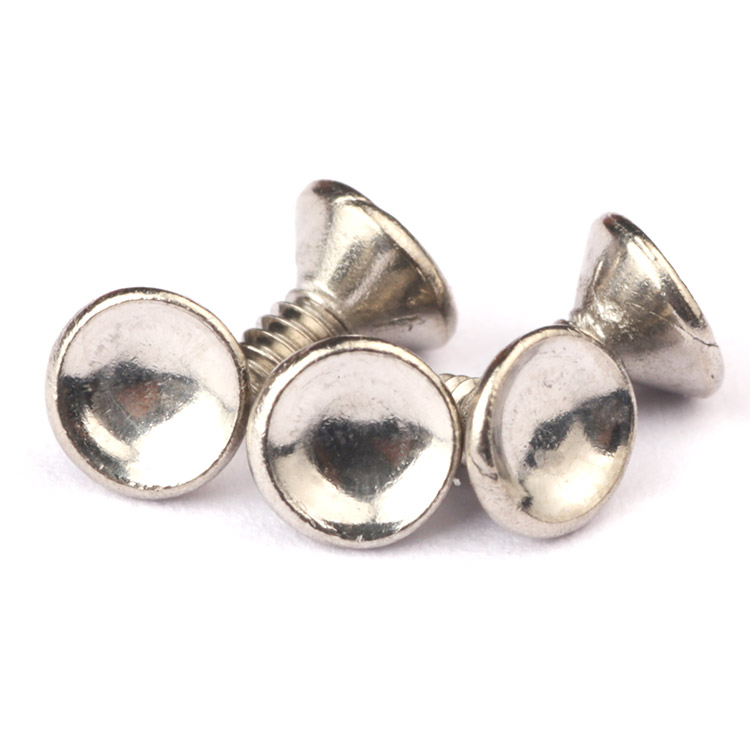
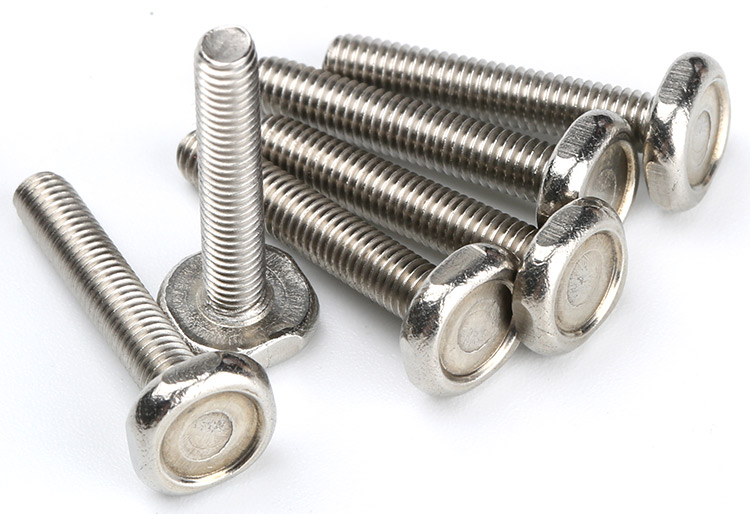
Type:Pentalobe Screw, Screw And Fastener Suppliers
Materials:Stainless Steel
Surface treatment:Plain
Head Type:Low Profile Head
Drive:Pentalobe (5-lobe)
Thread:Machine thread
Coat:Teflon paste (dry film)
Point:Dog point
Forming:Single Die Heading
Size:M1 M2 M3 M4 M5 M6 M7 M8 M9 M10
Number:864
We make pentalobe screws in plain A2 stainless with a low flat head, a five-lobe recess and a dog point, quoting them from M1 to M10. Recess size and depth, point, thread and coating come from your drawing, and the first article is driven with the correct bit.
Watch the factory video·Email sst@szsst88.com
ISO 9001:2015 · Manufacturing since 1998 · 8,678+ customers · 89 countries and regions
Made to order – there is no stock catalogue. Each part is produced to your drawing, and production starts after drawing review and first-article approval.
Pentalobe screws have a five-lobe recess with rounded instead of pointed lobes, and that shape is chosen so that an ordinary Torx key will not fit. The part recorded here is a stainless steel machine screw with a low flat head, a dog point and a dry film on the thread, quoted from M1 to M10 with Number 864.
Five-lobe recess. Five rounded lobes driven with a matching pentalobe bit, sizes P2 to P6 for the usual small diameters.
Low profile head. A flat, shallow head that sits close to the surface of a small housing.
Dog point. A short plain pilot at the end that enters the hole first and keeps the thread clear.
Dry film. A thin coating on the thread that evens out friction and adds light resistance to loosening.
A2 stainless. Passivated, with the recess and the point as formed.
Pentalobe screws appear in consumer electronics, where they keep a housing closed against casual opening, and in small equipment where the drive is also a tamper deterrent rather than a torque multiplier.
For pentalobe screws the drive is not a stronger version of a Torx. Five rounded lobes carry less load per unit area than six flats, and the recess is shallower in the same head height. What it does differently is refuse the wrong tool: a Torx bit with six points cannot seat in a five-lobe recess, and a small flat blade has nothing to catch. That refusal is the entire purpose of the drive.
That purpose comes with a real cost on pentalobe screws. A driver with the right bit takes the screw out in seconds; a driver without one will try a Torx bit, find that it almost fits, and ream the lobes. On a housing that is meant to be opened by a technician, the result is a screw that has to be drilled out, and a repair that takes an hour instead of a minute.
The low head on pentalobe screws makes that worse and is chosen anyway. A small housing has no room for a tall head, so the head is thin and the recess shallow; the pentalobe then has less depth to work with than a Torx of the same size, which is why the correct bit and a light touch matter more here than on almost any other drive.
The dog point on pentalobe screws is a separate decision that usually comes with the same housing. In a small assembly the screw has to start straight without being felt for, and a short pilot at the end does that: it locates in the hole before the thread engages and keeps the thread from cutting into the edge of a thin boss. It also protects the thread from being rolled over as the screw is pushed in by a driver.
On pentalobe screws the dry film does what it does on any small stainless screw: it evens out friction so the same torque gives the same clamp, and it reduces galling in an aluminium or plated insert. On a tamper drive it matters more, because a screw that seizes halfway is a screw that cannot be removed without damage, and the whole argument for the drive was controlled access.
The recorded range is M1 to M10, with lengths made to the drawing. Custom lengths up to 2,000 mm are subject to DFM review after drawing submission. For pentalobe screws the quotation carries head diameter and height, the pentalobe size and recess depth, the dog point diameter and length, thread pitch, coating band and overall length.
| Item | How it is defined | What we control |
|---|---|---|
| Head | Low profile, flat top | Diameter, height and top edge |
| Recess | Five rounded lobes | Size, depth, lobe form and floor thickness |
| Point | Dog point, plain pilot | Pilot diameter and length |
| Thread | Machine thread | Pitch, length and start position |
| Coat | Dry film on the thread | Coverage band and film weight |
| Length | Overall, head included | Length tolerance and thread start |
On pentalobe screws the size belongs on the drawing as a P number. A P2 bit in a P2 recess is a fit; a P2 bit in a recess made for a smaller size will enter partway and destroy the lobes, and the operator will not feel the difference until the damage is done.
Dog point diameter and length are quoted with the thread, because the point has to pass through the clearance hole in the part above and stop short of the thread. A point that is too long takes engaged length away from the joint; one that is too short does nothing.
Four features define pentalobe screws, and each one is a trade:
| Feature | What it gives | What it costs |
|---|---|---|
| Five-lobe recess | Wrong tools do not fit | Correct driver is essential; a close one reams it |
| Low profile head | Fits a shallow housing | Shallow recess; little torque |
| Dog point | Locates before the thread engages | Takes length; needs a matching clearance hole |
| Dry film | Stable friction; less galling | Wears after repeated assembly |
| Plain stainless | No coating on recess or point | Softer than the bit; galls in aluminium |
The value of pentalobe screws is controlled access rather than security against a determined person. Drivers are sold, so the drive deters the person with an ordinary kit and slows down the one with a purpose; what it reliably does is keep a housing shut during normal handling.
The cost on pentalobe screws is that a mistake is expensive. A reamed pentalobe cannot be gripped, cannot be backed out with a bigger bit, and usually means drilling the head, so the assembly procedure has to include the right driver and a torque setting from the first screw.
The recorded finish is passivation with a dry film on the thread. The head is left bare, because a coating in the recess would change how the bit seats; the film goes where it changes friction, which is the engaged thread.
| Option | How it protects | Effect on recess and point | Typical use |
|---|---|---|---|
| A2, passivated, dry film | Passive film plus friction control | Recess as formed; thread coated | Consumer electronics |
| A4, passivated, dry film | Passive film with molybdenum plus film | Recess as formed; thread coated | Wearables and medical |
| A2, passivated | Passive film only | Recess and thread as formed | Static small joints |
| Steel, black oxide | Conversion film, oiled | No measurable build | Dark housings |
| Steel, zinc plated | Sacrificial zinc | Build in recess; re-checked | Low-cost indoor work |
Where the housing is a wearable or a medical device, A4 is the grade that covers cleaning and chlorides, and the film stays on because it also keeps the joint from seizing in a plated insert.
Where a plated steel screw is used, the recess is gauged after plating. A five-lobe recess is shallower than a six-lobe one in the same head, so a zinc layer is a larger fraction of the usable depth.
Three assemblies where the five-lobe drive earns its place:
| Where it sits | The screw closes a housing that is designed to be opened only by service, where a standard screw would invite casual access. |
| When it goes wrong | A close-fitting Torx bit is used instead and the lobes are reamed. |
| Why it happens | The housing is small, the head is low, and the drive is the access control. |
| What we control | Recess size and depth checked; first article driven with the correct bit. |
| Where it sits | The screw fixes a case or a strap mount where the joint has to stay tight through daily handling. |
| When it goes wrong | The joint loosens and the case rattles after a few months. |
| Why it happens | The screw is small, the joint sees vibration, and the thread has a dry film for stability. |
| What we control | Film band and point checked; first article assembled and handled. |
| Where it sits | The screw holds a cover that should be removed with the right tool and not with a pocket knife. |
| When it goes wrong | The head is levered and the housing cracks around the boss. |
| Why it happens | The head is flush, the plastic is thin, and the access is controlled. |
| What we control | Head and recess checked; first article fitted in the housing. |
Four reasons that matter on a five-lobe recess in a small head, each tied to something the drawing has to prove:
|
Pentalobe size and depth agreed
Pentalobe size, recess depth and head height are agreed as a set, because a small low head has very little depth to give. Basis: Pentalobe size and depth agreed. |
Formed, pointed and coated in one route
The head and five-lobe recess are formed in one stroke, the dog point is formed or cut, and the film is applied to the thread band. Basis: One route from wire to coated screw. |
|
Recess proved with the P bit
The recess is proved with the pentalobe bit of the stated size, because a bit one size off damages the lobes before it slips. Basis: Recess proved with the P bit. |
First article at your torque
The first article is driven at the customer torque, because a shallow recess has a low ceiling and a seized screw cannot be corrected. Basis: First article driven at line torque. |
These screws are headed on single-die machines that form the low head and cut the five-lobe recess in one stroke, with the dog point formed at the same time or cut afterwards, and the thread rolled before the dry film is applied. The first part of every run is measured on head, recess, point, thread and length.


|

|
Cutting five rounded lobes into a low head is the step that defines pentalobe screws. The punch has to leave a floor thick enough to resist the driver and lobes deep enough to transmit torque, in a head that gives very little height; a punch a little deep produces a screw that measures correctly and deforms under the bit on the first turn.
On pentalobe screws the dog point is formed to be concentric with the thread, because its whole job is to start the screw straight. A point that is slightly off centre turns the screw into the hole at an angle, and in a small plastic boss that is how the thread cross-threads and the boss cracks.
What decides whether pentalobe screws pass is the head, the recess, the point and the thread. The inspection agreement covers those, and the criteria come from the drawing.

Head, recess and point |

Thread and start checked |

Core hardness checked |

Salt-spray testing of the grade |
Head diameter and height are measured on a projector, the recess is measured for lobe form and depth and then proved with the pentalobe bit, and the dog point is checked for diameter, length and concentricity with the thread.
For pentalobe screws a sample from every batch is driven into the customer’s housing at the joint torque and removed with the correct bit. That cycle shows a shallow recess or an off-centre point, and neither appears in a dimensional record.
Every batch is traceable to the wire it was made from and to the passivation and coating batches. The grade and heat number appear on the material certificate supplied with the parts, and the inspection records follow the criteria agreed on the drawing.

ISO 9001:2015 |

RoHS test report |

Registered trademark |

Patent: security screw and driver |
With each shipment we supply the material certificate, the inspection record for the dimensions on the drawing and the coating data sheet. The documents carry the drawing revision and the batch number, so a repeat order keeps the same recess and the same point.
More than 8,678 customers in 89 countries and regions have ordered from Shi Shi Tong; 87% of orders come from repeat customers and 56% through referrals. Most projects follow the same route: drawing review, first-article approval, then batches checked against that sample. On pentalobe screws the first article is driven with the correct bit, because a close-fitting Torx bit gives a false result on the bench. Buyers visit during the process to review samples.
|
8,678+
customers served
|
87%
of orders from repeat customers
|
56%
of orders through referrals
|
89
countries and regions shipped to
|
Buyers and quality engineers visit for sample review, process discussion and supplier audits; the visit is arranged around production so the headers and the coating line can be seen on the day the parts run.

Customer group visit – sample review |

Customer group visit – process discussion |

Customer group visit – factory tour |

Customer visit – project kick-off |

Danish customer – drawing review |

Industry exhibition – meeting customers |
A pentalobe bit of the size on the drawing. A Torx bit is close enough to enter and far enough out to ream the lobes.
It deters ordinary tools, not a determined person: pentalobe drivers are sold everywhere. It is access control, not security.
It enters the clearance hole first, so the screw starts straight and the thread does not catch on the edge of the hole.
To fit inside a small housing. The cost is a shallow recess, so the torque has a low ceiling.
A2 covers rain, A4 covers chlorides. With no coating on the head, the recess stays as formed.
Head diameter and height, pentalobe size and recess depth, dog point size, thread pitch and length.
How a pentalobe screw project runs from drawing to repeat delivery:
|
1
Send the drawing and the housing
|
→ |
2
Pentalobe size and point agreed
|
→ |
3
First article driven with the P bit
|
→ |
4
Batch production and repeat orders
|
Each step is confirmed with you before the next one starts; the drawing revision from the first article is what repeat orders are checked against.
For a quotation, send the drawing with the head diameter and height, pentalobe size and recess depth, dog point size, thread pitch and overall length.
|
Head size
|
Pentalobe size
|
Recess depth
|
|
Point
|
Thread pitch
|
Length
|
Sending a drawing? The form below does not take attachments. Email the PDF, DXF or STEP file to sst@szsst88.com with the part name and quantity in the subject line – the drawing is reviewed and a quotation follows.

 +86 13143444311
 sst@szsst88.com