Tel:
+86 13143444311
Email:sst@szsst88.com
Fax:+0086-755-27322278
Address:Building 9, First Industrial Zone, Tantou Industrial City, Songgang Street, Baoan District, Shenzhen 518105, Guangdong, China
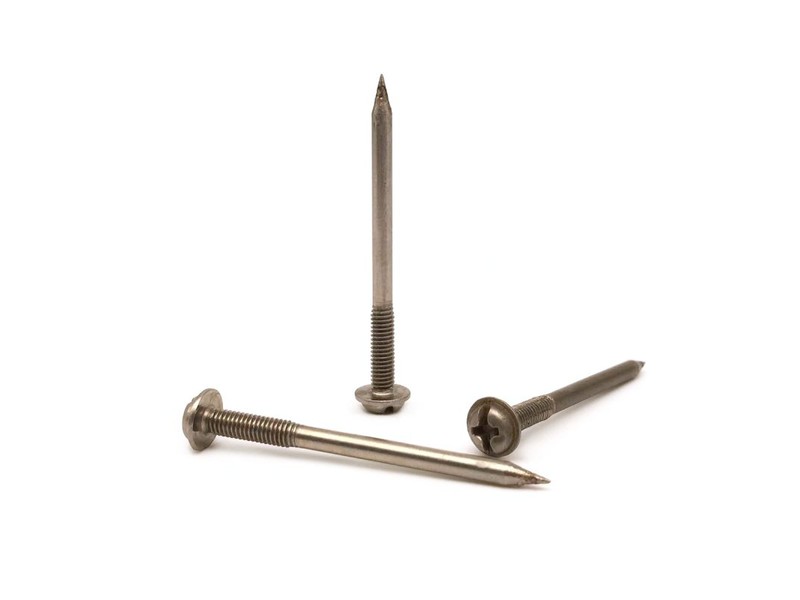
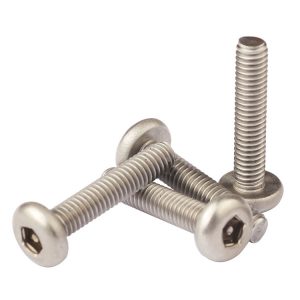
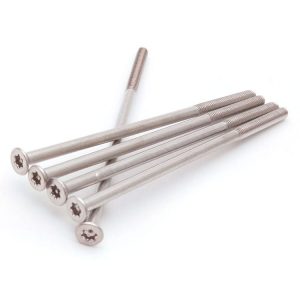
Type:Tamper Resistant Torx Screws
Materials:stainless steel
Surface treatment:plain
Head Type:pan head
Drive:Security Torx (Pin)
Thread:Machine Thread
Point:Blunt
Forming:Single Die Heading
Size:M1 M2 M3 M4 M5 M6 M7 M8 M9 M10 M14
Number:243
We make tamper resistant torx screws in passivated stainless with a six-lobe socket and a centre pin, so a plain star bit will not turn them and a security bit will. Socket size, pin diameter and height, thread and grade come from your drawing, and the first article is tried with both bit types.
Watch the factory video·Email sst@szsst88.com
ISO 9001:2015 · Manufacturing since 1998 · 8,678+ customers · 89 countries and regions
Made to order – there is no stock catalogue. Each part is produced to your drawing, and production starts after drawing review and first-article approval.
Tamper resistant torx screws are ordinary six-lobe star socket screws with a pin standing in the centre of the recess, so a plain star bit cannot seat and only the matching bit with a hole in it will turn them. The recorded item is stainless with a plain finish, a pan head and a machine thread, quoted from M1 to M14 with Number 243.
Torx socket with a pin. Six curved lobes around a small pin. The pin is the whole security feature: it occupies the centre where a standard bit needs to go, and the bit that clears it is the one with a hole drilled through its tip.
Pan head. A low dome on a flat bearing face. It covers the hole, spreads the clamp load and stays inside its own diameter.
Machine thread. A rolled thread with a blunt chamfered end, made for a tapped hole or a nut. The screw is serviceable with the right bit, so this is a deterrent rather than a permanent seal.
Stainless, plain. Passivated and uncoated, so the alloy is the whole of the protection and the socket is exactly as formed.
A tamper resistant torx screw is a normal star socket with one extra feature, and everything about how it performs follows from that. The lobes are unchanged, so the drive still transmits the torque a star socket is known for; the pin removes the ability of a plain bit to reach the floor of the recess, and that is the only thing it does.
The pin is formed by the same punch that forms the lobes, and its diameter and height are small. It has to be tall enough that a standard bit bottoms on it before the lobes engage, and wide enough that a bit cannot be forced past it; but it also cannot be so wide that the lobes lose their contact area. Those two limits run close together on a small head, which is why the pin is quoted as a dimension rather than described.
On tamper resistant torx screws the pin is also the feature that wears. It stands proud in the middle of the recess and takes the load whenever a bit is not quite seated, so a punch that has produced a slightly short pin leaves a recess that a plain bit can almost enter — and a nearly-entering bit does the most damage, because it rounds the lobes while sliding over the pin.
The chain of consequence is worth stating plainly. Because the pin is small and soft relative to the lobes, the security of the part depends on tooling consistency as much as on design: two batches of the same drawing can differ in whether an ordinary bit will rock in the recess. That is why the first article is checked with both a security bit and a standard one.
Stainless is passivated after the recess is formed. On a socket this small the passivation matters less for look and more for the pin, which is the thinnest section in the head and the first place a rust spot would appear if free iron were left on it.
The family is quoted from M1 to M14, with M1, M2, M3, M4, M5, M6, M7, M8, M9, M10 and M14 in the recorded range. Custom lengths up to 2,000 mm are subject to DFM review after drawing submission; on tamper resistant torx screws the socket size, the pin diameter and height and the head height are quoted together, because the pin and the head share the same small space.
| Item | How it is defined | What we control |
|---|---|---|
| Head | Pan head, flat bearing face | Diameter, height and face flatness |
| Socket | Torx, six lobes | Lobe width and depth, bit tried on the part |
| Pin | Centre pin in the socket | Diameter and height, security bit tried |
| Thread | Machine thread | Pitch and length, gauged per batch |
| End | Blunt, chamfered | Chamfer cut, not deburred |
| Length | From under the head to the end | Measured on the shop plate |
The pin needs to be quoted with the socket size, not on its own. A pin that is right for one socket size is too small for the next, and a drawing that gives only a lobe size leaves the shop to guess the pin — which is exactly the dimension the security depends on.
Length is measured from under the head, because that face bears on the part. On a machine thread the end is blunt and chamfered so the screw can seat without cutting into the last thread of the hole.
Three features define this part: the pinned star socket, the pan head and the stainless body. The first is the access control, the second is the bearing area, and the third is what allows the fixing to sit outdoors or in a washed enclosure.
| Feature | What it gives | What it costs |
|---|---|---|
| Pinned torx socket | Plain star bits will not turn it | A security bit is needed for service |
| Full star lobes | Almost the torque of an ordinary torx | Not quite — the pin takes the centre |
| Pan head | Load spread, low profile | Taller than a countersunk head |
| Machine thread | Removable and serviceable | Needs a tapped hole or a nut |
| Plain stainless | No coating to chip at the socket | Galls against stainless |
The reason this drive is chosen so often is that it is the least hostile security recess. The bit is a normal star bit with a hole in it, which every tool supplier sells; a technician who opens the enclosure once will have one, and the part still keeps out the person with a pocket knife and a set of cheap drivers. Compared with a tri-wing or a rotating triangular recess, it is easier to live with.
The cost is almost nothing in torque — the lobes are untouched — but it is real in service. A security bit is one more thing to lose, and a worn one will round the lobes of a stainless socket with no warning. On a joint that is opened often, the pin is a nuisance with a short useful life rather than a permanent security feature.
The recorded finish is plain, passivated stainless. Nothing is added, so the lobes and the pin are exactly as formed: no coating to narrow the socket and no build-up around the base of the pin, which is where a plated part would lose its clearance first.
| Option | How it protects | Effect on socket and pin | Typical use |
|---|---|---|---|
| Stainless A2, plain | Passive chromium oxide film | None; gauged as formed | Outdoor and public equipment |
| Stainless A4, plain | Passive film with molybdenum | None; gauged as formed | Coastal and washdown |
| Zinc plated steel | Sacrificial zinc | A few microns; socket re-checked | Indoor, cost-driven work |
| Black zinc on steel | Sacrificial zinc, dark passivation | A few microns; re-checked | Dark visible panels |
| Dacromet on steel | Zinc-aluminium flake layer | Film builds; socket re-checked | Outdoor steel assemblies |
Plating a pinned socket is a compromise, and it is worse than plating a plain one. The coating adds a few microns to the lobes and to the pin at once, so the clearance for the security bit closes from both sides; a part that was easy to drive before plating can be tight afterwards, and the bit then rocks on the pin.
Stainless has its own limit, which is galling. A stainless security torx screw turned into a stainless insert can seize, and a seized security screw is worse than an ordinary one because the bit has a hole in it and less material to work with. A lubricant on the thread, or a different grade for the insert, prevents it.
Three assemblies where tamper resistant torx screws are the fixing:
| Where it sits | The screw closes a housing or fixes a plate where the public has access, the fixing is exposed to weather, and the equipment is serviced by staff with a security bit. |
| When it goes wrong | An ordinary star socket invites the person with a cheap driver set, and a plated screw rusts at the socket. |
| Why it happens | The equipment is outdoors, the fixing repeats, and service carries the bit. |
| What we control | Socket and pin checked with both bit types, passivation confirmed, thread gauged. |
| Where it sits | The screw holds a door plate or a control cover where the contents are valuable and the fixing must survive being cleaned and being tampered with. |
| When it goes wrong | A common drive makes the cover a target, and a worn bit rounds the lobes during a legitimate service visit. |
| Why it happens | The site is unattended, the fixing is serviced, and the environment may be wet. |
| What we control | Pin height checked on the first article, recess driven with the security bit. |
| Where it sits | The screw closes a cabinet where access is restricted to staff and the fixing is outside, on a wall or a pole. |
| When it goes wrong | A cabinet that opens with a coin is a liability, and a socket that fills with water corrodes from the pin outwards. |
| Why it happens | The cabinet is exposed, access is controlled, and the joint is serviced. |
| What we control | Socket depth, pin and thread checked, stainless grade stated on the drawing. |
Four reasons that matter on a pinned socket, each tied to what the drawing has to prove:
|
Socket, pin and head reviewed together
The socket size, the pin diameter and height and the head height are reviewed as one set, so a pin that would let a plain bit rock or a head too low for the recess is raised before the die is cut. Basis: Socket, pin and head reviewed as one set. |
Heading, socketting and rolling in one route
The pan head, the star lobes and the pin are formed in one stroke, and the machine thread is rolled in the same route. Basis: Lobes and pin formed together. |
|
Both bit types tried on the part
Every first article is turned with the security bit and also checked with a standard bit to confirm it will not seat. Basis: First article tried with both bits. |
First article fixes the setting
The first article fixes the wire heat, the socket punch, the pin height and the passivation; repeat orders are compared against that record. Basis: First article signed off before the batch is released. |
Shi Shi Tong forms these tamper resistant torx screws from stainless wire on single-die headers that form the pan head, the six-lobe socket and the centre pin in one stroke, rolls the machine thread to a blunt chamfered end and passivates the parts. The first part of every run is measured on the head and socket, turned with the security bit and checked with a standard bit before the batch continues.


|

|
The pin is formed by the centre of the socket punch, and it is the first thing the punch loses. A worn pin comes out short, and a short pin is a recess that a standard bit can almost enter — the security of the part degrades before anything visible changes. The pin height is measured on the section of the first article and sampled through the run.
What decides whether tamper resistant torx screws pass is the socket, the pin, the head, the thread and the alloy. The inspection agreement covers those, and the criteria come from the drawing.

Socket and pin on the projector |

Thread gauged per batch |

Hardness checked on the formed head |

Salt-spray testing of the stainless grade |
The socket is checked for lobe width and depth and the pin for diameter and height, and then two checks are made with tools: the security bit must drive the screw, and a standard bit must not seat far enough to turn it. The second check is the one that confirms the part is what it says it is.
The head of a tamper resistant torx screw is checked for diameter, height and face flatness, and the thread is gauged per batch. On stainless the socket is read as formed, which is one of the reasons the finish is plain: there is no plating allowance to argue about and no coating to soften the lobes.
The alloy is confirmed on the certificate. Where the joint is outdoors or washed, the grade in the certificate is the only evidence the customer has before the parts are in service.
Every shipment of tamper resistant torx screws is traceable to the wire it was made from and to the passivation batch. The grade and heat number are recorded on the material certificate supplied with the parts, and the inspection records follow the criteria agreed on the drawing.

ISO 9001:2015 |

RoHS test report |

Registered trademark |

Patent: security screw and driver |
With each batch we supply the material certificate, the inspection record for the criteria on the drawing and, where it is listed, the third-party report for the grade or the passivation. The documents carry the drawing revision and the batch number, so the paperwork can be matched to the parts.
More than 8,678 customers in 89 countries and regions have ordered from Shi Shi Tong; 87% of orders come from repeat customers and 56% through referrals. Most projects follow the same route: drawing review, first-article approval, then batches checked against that sample. On a security drive the first article is also the point at which the bit is agreed, so the customer confirms the tool at the same time as the screw. Buyers visit during the process to review samples and to see how the sockets and pins are formed.
|
8,678+
customers served
|
87%
of orders from repeat customers
|
56%
of orders through referrals
|
89
countries and regions shipped to
|
Buyers and quality engineers visit for sample review, process discussion and supplier audits; the visit is arranged around production so the headers and the passivation line can be seen on the day the parts run.

Customer group visit – sample review |

Customer group visit – process discussion |

Customer group visit – factory tour |

Customer visit – project kick-off |

Danish customer – drawing review |

Industry exhibition – meeting customers |
It stands in the centre of the star socket, where a normal bit needs to be. Only a bit with a hole through its tip can reach the lobes, so a standard star bit bottoms on the pin.
Only slightly. The lobes are the same as a normal star socket; the pin takes the centre, not the contact faces.
Yes, with the matching security bit. This drive deters casual access rather than making the joint permanent.
The pin, then the lobes. A worn bit sitting on a short pin rounds the lobes with no visible warning, so the bit is replaced before it looks worn.
A2 for general outdoor work, A4 where there is chloride. The alloy is the protection, since the finish is plain.
Head diameter and height, socket size, pin diameter and height, thread size and length, length under the head, and the stainless grade.
How a tamper resistant torx screw project runs from drawing to repeat delivery:
|
1
Send the drawing and the bit you drive with
|
→ |
2
Socket, pin and thread review
|
→ |
3
First article tried with both bits
|
→ |
4
Batch production and repeat orders
|
Each step is confirmed with you before the next one starts; the drawing revision from the first article is what repeat orders are checked against.
For a quotation, send the drawing with the head diameter and height, the socket size, the pin diameter and height, the thread size and length, the length under the head and the stainless grade.
|
Head diameter
|
Head height
|
Socket size
|
|
Pin diameter
|
Pin height
|
Thread and grade
|
Sending a drawing? The form below does not take attachments. Email the PDF, DXF or STEP file to sst@szsst88.com with the part name and quantity in the subject line – the drawing is reviewed and a quotation follows.

 +86 13143444311
 sst@szsst88.com