Tel:
+86 13143444311
Email:sst@szsst88.com
Fax:+0086-755-27322278
Address:Building 9, First Industrial Zone, Tantou Industrial City, Songgang Street, Baoan District, Shenzhen 518105, Guangdong, China
Type:Anti Theft Security Screw
Materials:Carbon Steel
Surface treatment:Eco Friendly White Zinc Plated
Head Type:Pan head
Drive:Six-lobe security recess with centre pin
Thread:Self tapping thread
Point:Sharp point
Forming:Cold heading; recess and pin formed; thread rolled
Size:M1 M2 M3 M4 M5 M6 M7 M8 M9 M10 M12
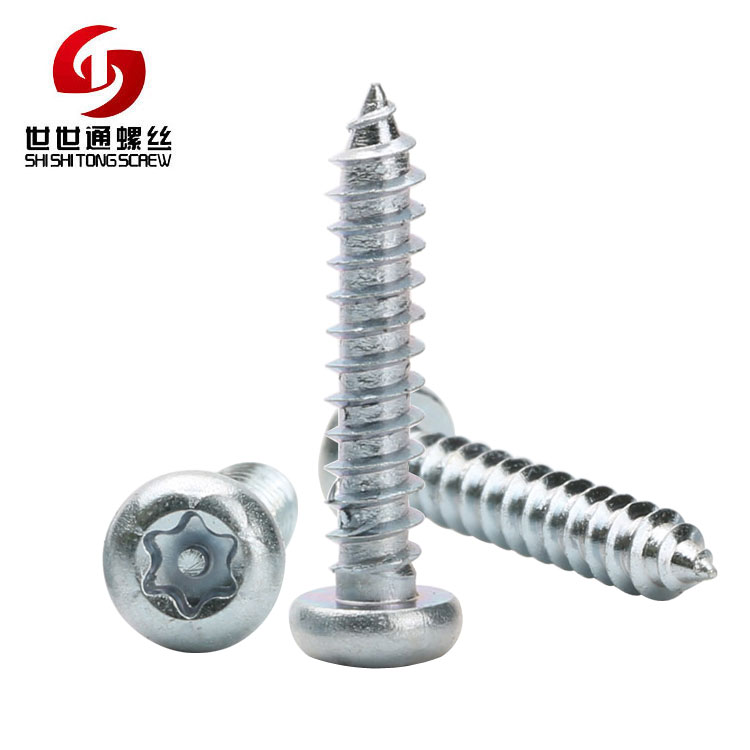
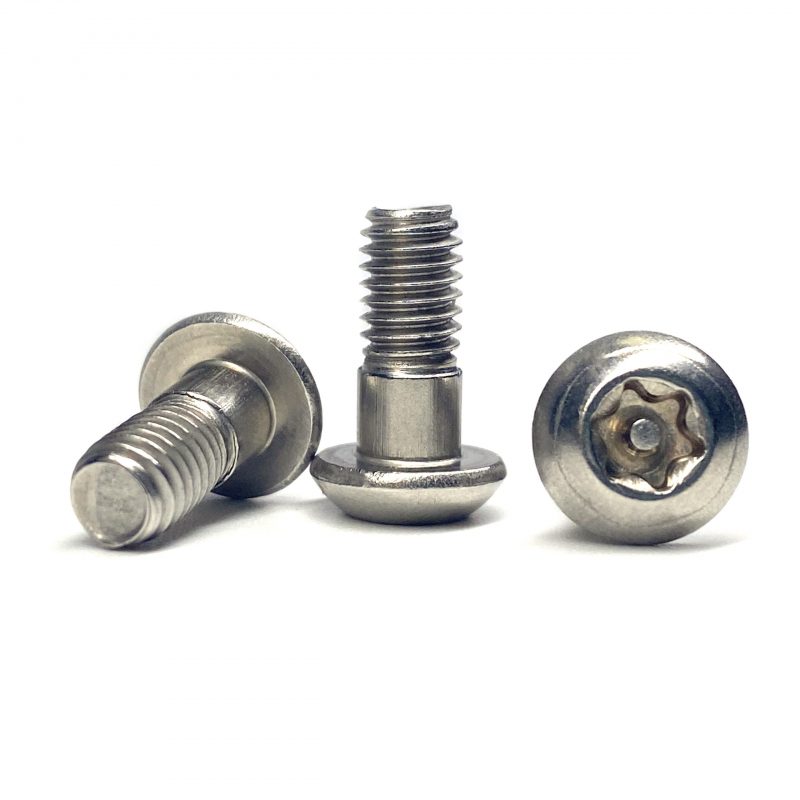
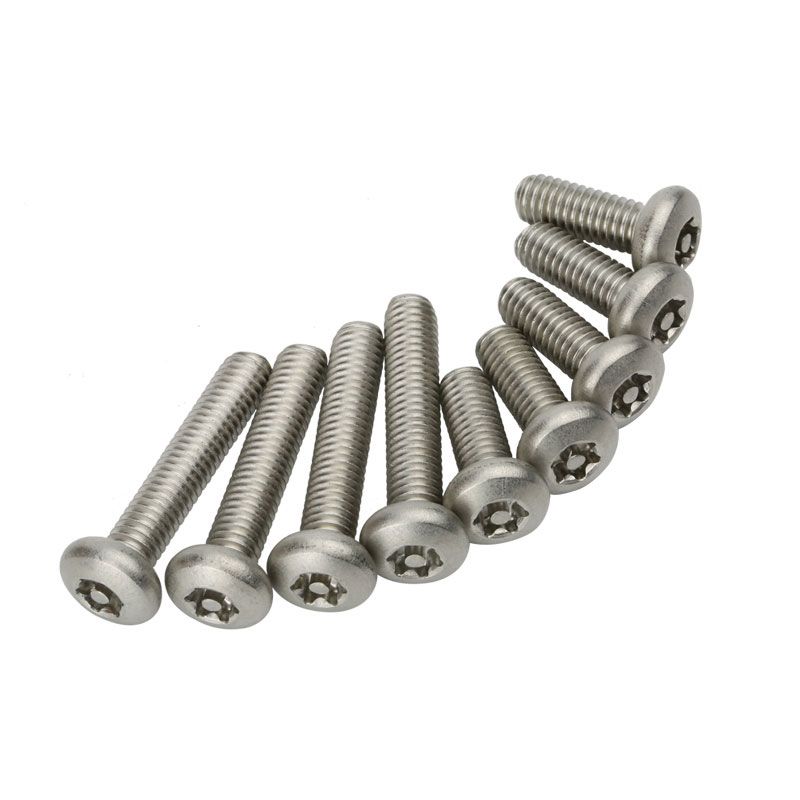
We make window security screws in carbon steel with a pan head, a six-lobe security recess with a centre pin, and a self tapping point, in eco white zinc. The pin blocks a standard bit and the smooth head blocks pliers, so the part is a deliberate one-way fixing rather than a screw with an unusual recess.
Watch the factory video·Email sst@szsst88.com
ISO 9001:2015 · Manufacturing since 1998 · 8,678+ customers · 89 countries and regions
Made to order – there is no stock catalogue. Each part is produced to your drawing, and production starts after drawing review and first-article approval.
Window security screws are self tapping screws with a drive that a standard tool cannot turn, used to fix windows, grilles and panels that are meant to stay fixed. This part is carbon steel with a pan head, a six-lobe security recess with a centre pin, and a sharp point, finished in eco white zinc.
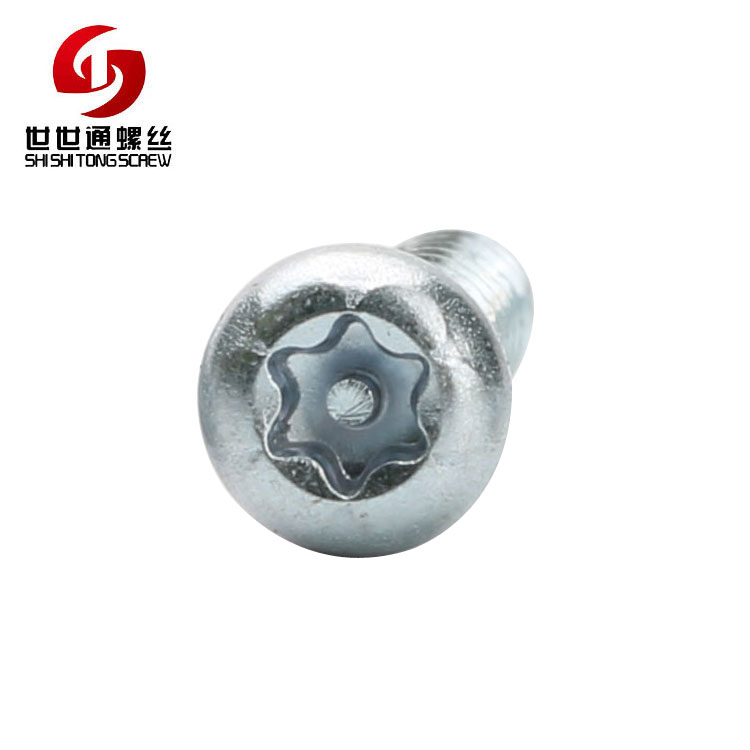
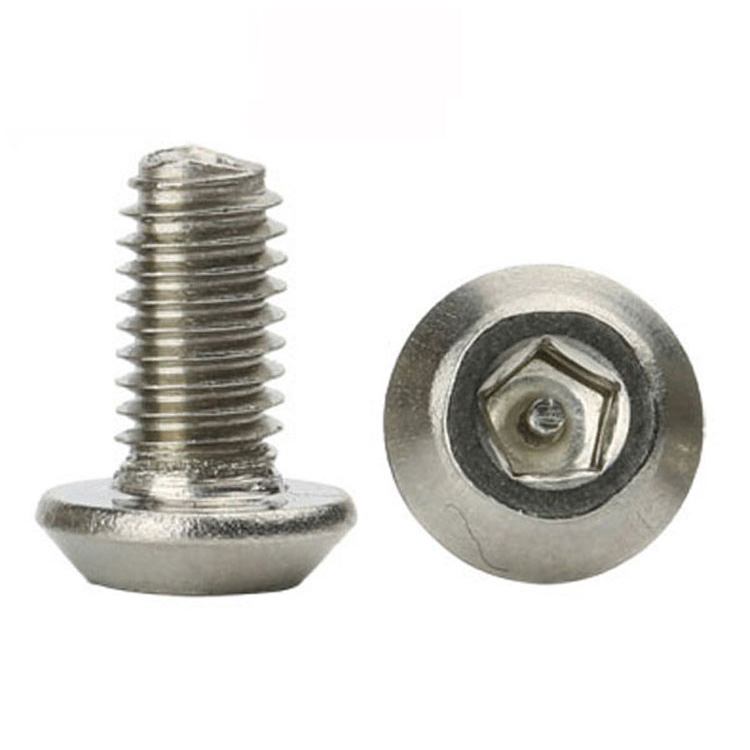
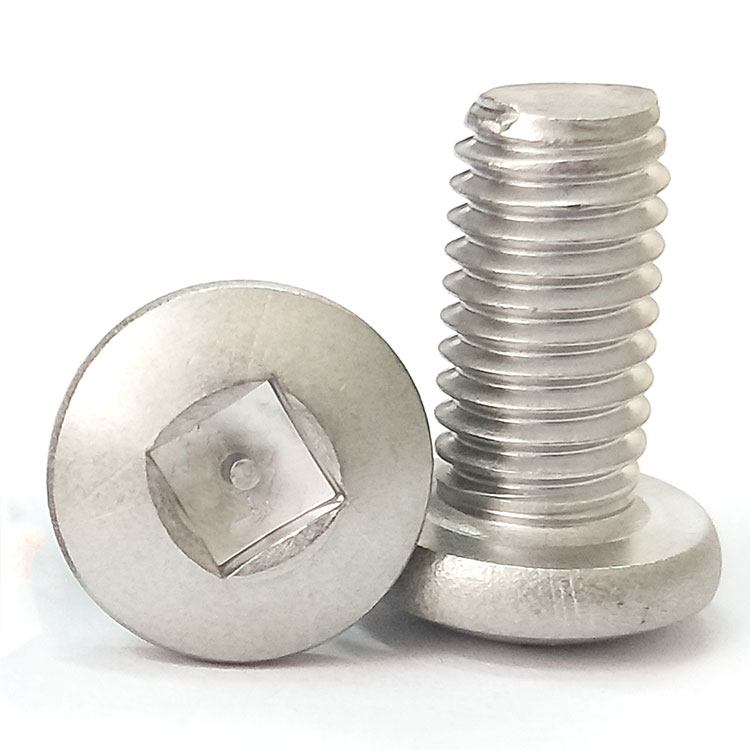
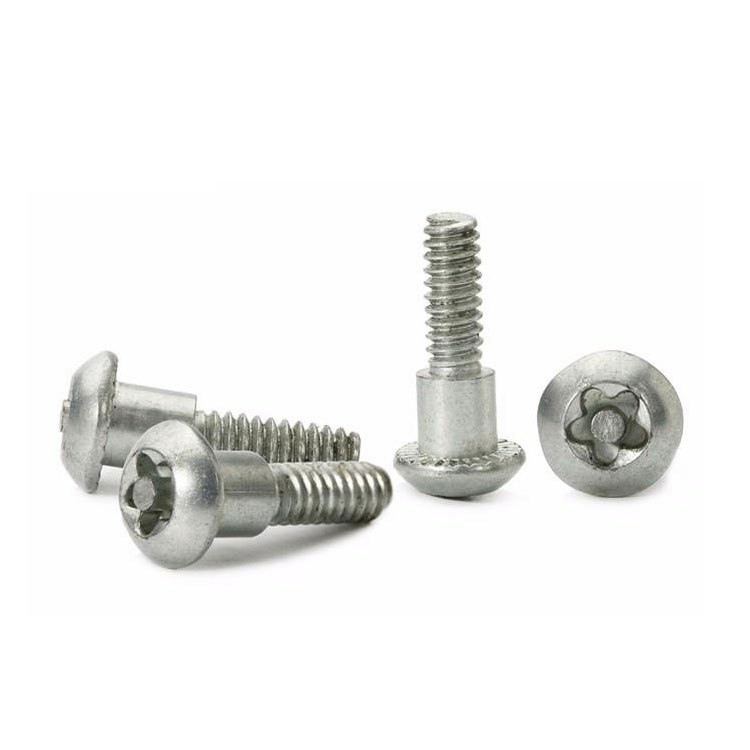
Security recess. A six-lobe star with a pin in the middle, so an ordinary Torx bit cannot seat.
Pan head. A shallow dome with a flat underside, which gives nothing for pliers to grip.
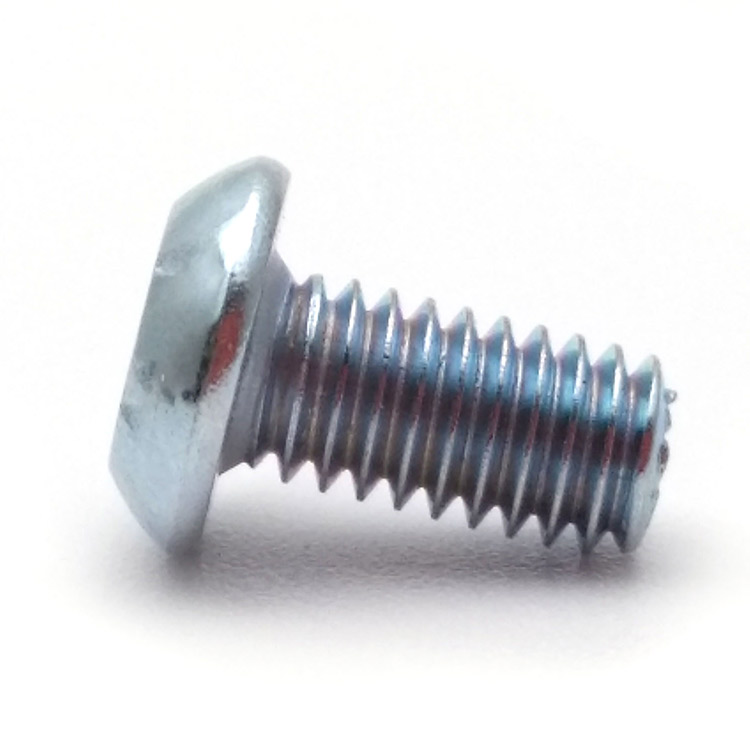
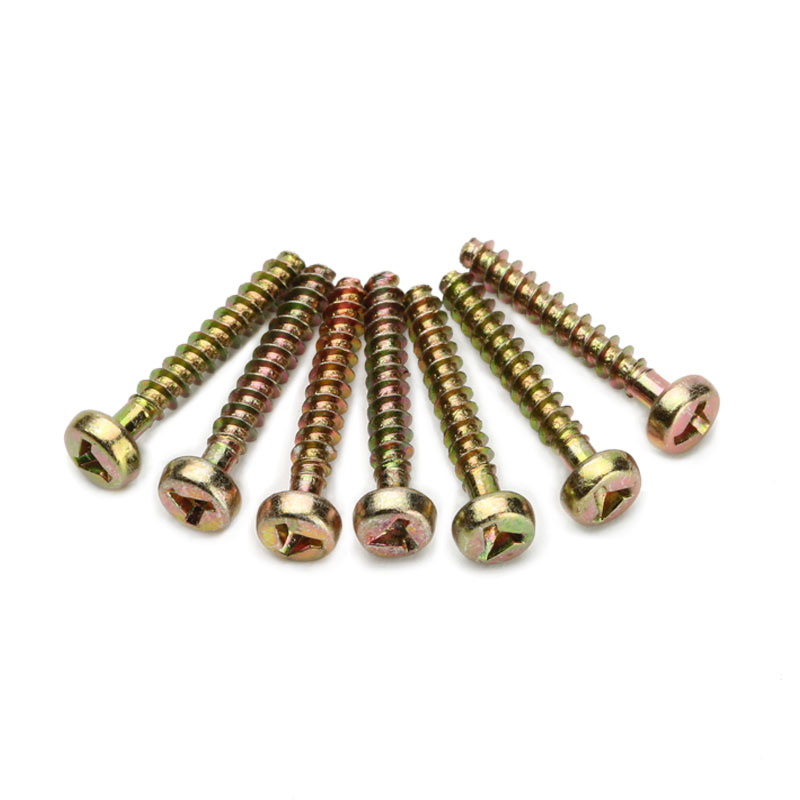
Self tapping thread. A coarse thread and a sharp point that cut their own path into the frame or the sheet.
White zinc. A thin sacrificial finish, bright enough to read as ordinary hardware.
They are used on window frames, security grilles, signage, access panels and equipment that is left unattended, where the fixing has to resist a casual attempt rather than a determined one.
Window security screws do not stop a thief; they remove the easy option. The recess is chosen so that a general-purpose bit will not fit, and the head is shaped so that there is nothing to apply pliers or a chisel to. Those two things together — a tool the person does not have and a head with no purchase — are what makes the fixing work.
On window security screws the pin in the middle of the star is the part that does the blocking. A standard Torx bit has a solid tip, and the pin will not let it reach the lobes; a bit with a hole in it, which is what the screw needs, is not something a casual passer-by carries. On a head this small the difference between a solid and a bored bit is the whole defence.
The geometry of the pin has a working side too. If the pin is too long relative to the recess depth, the bit bottoms on the pin before the lobes engage and the screw cannot be driven. If it is too short, a modified standard bit can sometimes catch the lobes anyway. The pin height and the recess depth are therefore a pair, and both belong on the drawing.
Drive depth is the other half on window security screws. A security recess is usually shallower than the standard version of the same size, because the pin takes up the centre, so the torque the recess can take is lower. That is deliberate: the screw is meant to be driven once and left, not serviced.
There is a consequence worth knowing about window security screws. A security screw that has been over-driven has a rounded recess and a smooth head, which leaves almost nothing to work with if it ever has to come out. On access panels where the joint will be reopened, the security screw is the wrong part; a captive or a tamper-evident fastener is the one that can be undone without damage.
The self tapping thread is what makes the part work on thin frames. It cuts its own thread in the aluminium or steel profile, so no nut or insert is needed behind the closed window, and the fixing can be made from the outside where the fitter is standing.
Window security screws are quoted by thread size, length, head diameter and height, recess size and pin, thread form and point, and finish. Custom lengths up to 2,000 mm, subject to DFM review after drawing submission. The quotation carries the material, the head, the recess, the thread and the plating.
| Item | How it is defined | What we control |
|---|---|---|
| Body | Carbon steel | Grade and hardness |
| Head | Pan head | Diameter, height and bearing face |
| Recess | Security star with pin | Size, depth, pin height and concentricity |
| Thread | Self tapping | Pitch, point angle and length |
| Length | Under the head | Length and thread run |
| Finish | Eco white zinc | Thickness and colour |
The recess is written with the pin as a separate dimension, because the pin is what makes the drive a security one. Two screws with the same star size can be a security part and an ordinary one depending on that pin.
On window security screws the thread form and the point are agreed with the frame material. A self tapping thread that suits aluminium will not bite the same way in a thin steel profile, and the driving torque on a security head is lower because the recess is shallower.
Length is measured under the head, and on a window fixing the length also has to clear the glazing and the frame behind it. That dimension is usually set by the profile rather than by the screw.
Four properties decide this part, and each carries a cost:
| Property | What it gives | What it costs |
|---|---|---|
| Security recess | A standard bit cannot turn it | A shallow recess with less torque capacity |
| Pan head | No flats or edges to grip | The head cannot be turned once it rounds |
| Self tapping thread | Fixing without access behind | Limited engagement in thin frames |
| White zinc | Looks like ordinary hardware | Thin film that wears at the recess |
The value is a fixing that an outsider cannot undo with the tools in a pocket, on an installation that has to stay closed and unmodified.
The cost is a part that is meant to be installed once, which is why window security screws are specified for frames and grilles rather than for anything that is opened for maintenance. Every property that makes it hard to remove also makes it hard to service, so it belongs on a joint that is not expected to come apart.
The recorded finish is eco white zinc: a thin electroplated layer with a clear passivation. It keeps the part looking like ordinary hardware, which is part of the deterrent, and it protects the steel by sacrificing itself at a scratch.
| Option | How it protects | Effect on the recess | Typical use |
|---|---|---|---|
| Eco white zinc | Sacrificial zinc | Thin; recess stays clean | Windows and panels |
| Black zinc | Sacrificial zinc plus dye | Thin; less conspicuous | Dark frames and grilles |
| Zinc-nickel | Thicker alloy layer | Builds; pin and lobes re-checked | Damp or coastal sites |
| Stainless body | No coating needed | No build; stronger recess | Marine and security doors |
| Black oxide | Conversion layer | Nearest to zero build | Dry indoor parts |
On a security screw the finish has a second job beyond corrosion: it has to leave the recess and the pin exactly as machined. A heavy coating closes the gap around the pin and the bit will not go on, which turns a working part into a scrap one.
Where the screw is outdoors for years, a zinc-nickel or a stainless body is the better choice, and the recess is then checked with the security bit rather than by gauge alone.
Three installations where the fixing has to resist being undone:
| Where it sits | The screw fixes a bead, a hinge or a restrictor into an aluminium profile from the outside. |
| When it goes wrong | The screw is removed with a standard bit, or it rounds and cannot be serviced. |
| Why it happens | The recess was a plain star, or the bit used was the wrong size. |
| What we control | Security recess and pin specified; parts supplied with the matching bit size on the box. |
| Where it sits | The screw holds a grille in a frame where the fasteners are reachable from the street. |
| When it goes wrong | The heads are levered out, or the plating rusts at the recess. |
| Why it happens | The head offers a purchase, and the zinc is thin at the recess edge. |
| What we control | Head form and finish agreed; sample levered and inspected. |
| Where it sits | The screw closes a panel that should not be opened by the public but must be serviced. |
| When it goes wrong | The screw is destroyed during the first service visit. |
| Why it happens | The part is a security type on a joint that has to be reopened. |
| What we control | Joint type reviewed; security screw or captive fastener chosen to match the service need. |
Four points that decide whether a security screw can be driven at all, and whether it stays closed:
|
Recess and pin written together
The drawing carries the star size, the depth and the pin height, because those three decide whether the bit fits and turns. Basis: Pin tied to the recess. |
Recess cut, then finished
The recess is cut and checked with the security bit, and the plating is applied so the pin and lobes still take the tool. Basis: Bit fits the finished part. |
|
Driven with the security bit
The first article is driven into the frame material with the bit the customer will use, not with a standard Torx. Basis: Drive proved with the right bit. |
Same pin every lot
Recess depth, pin height and plating thickness are recorded with the drawing revision, so a repeat lot takes the same bit. Basis: Same fit across lots. |
A security screw that cannot be driven is worse than a standard one, because it cannot be corrected on site. These four points are what keeps the part a deliberate restriction rather than an accident.
These screws are cold headed from carbon steel wire, with the pan head and the security recess formed in the heading tool or cut at a second station, the pin left standing in the centre, and the thread rolled before plating. The first piece of every run is measured on head, recess and pin, thread and length.


|

|
On window security screws the pin is the delicate feature in the process. It is small, it stands in the middle of the recess, and it has to survive heading, plating and packing without bending. A bent pin does not block a standard bit and does not let a security bit seat either, so it fails in both directions.
The recess depth is set against the pin and the head height together. On a shallow pan head there is little room, and a recess cut a fraction deep leaves a thin floor under it that cracks when the screw is driven into a hard profile.
Plating follows the recess, and the thickness is set so the recess still takes the security bit. Because the pin and the lobes are the smallest features on the part, they are the first to be affected by any build, and they are checked on the plated parts rather than on the blanks.
What decides whether a batch of window security screws passes is the recess that takes the security bit, the pin that blocks a standard one and the thread that holds in the frame. The inspection agreement covers all three.

Recess and pin on the projector |

Thread checked with gauges |

Material checked |

Salt-spray testing of the coating |
On window security screws the recess is measured for depth and lobe form, and the pin for height and concentricity. The two checks go together: a pin that is sound but off-centre will not let the bit start, and a pin that is centred but short will let a modified bit through.
Each sample is driven with the security bit into the frame material and with a standard bit in the same recess. The first must turn the screw; the second must not engage. That pair of tests is the only one that proves the part is a security screw rather than a screw with an unusual looking head.
The thread is gauged and driven into a sample of the frame. On a thin profile the driving torque has to stay below what the recess can take, so the thread and the recess are reviewed together rather than as separate features.
Every batch of window security screws is traceable to the wire, the heading lot and the plating lot. The material certificate states the grade, the heat number and the mechanical properties; the plating record carries the coating thickness and the lot, and the inspection record carries the head, recess, pin and thread.

ISO 9001:2015 |

RoHS test report |

Registered trademark |

Patent: security screw and driver |
With each shipment we supply the material certificate, the inspection record for the head, recess, pin and thread, and the plating record. The records carry the batch number, so a repeat order can be compared with the first on the feature that makes the part a security screw.
More than 8,678 customers in 89 countries and regions have ordered from Shi Shi Tong; 87% of orders come from repeat customers and 56% through referrals. Most projects follow the same route: drawing review, first-article approval, then batches checked against that sample. On a security screw the first article is driven with the customer’s own bit, because the pin and the recess are a pair with that tool. Buyers visit during the process to review samples.
|
8,678+
customers served
|
87%
of orders from repeat customers
|
56%
of orders through referrals
|
89
countries and regions shipped to
|
Buyers and quality engineers visit for sample review, process discussion and supplier audits; the visit is arranged around production so the heading cells and the plating line can be seen on the day the parts run.

Customer group visit – sample review |

Customer group visit – process discussion |

Customer group visit – factory tour |

Customer visit – project kick-off |

Danish customer – drawing review |

Industry exhibition – meeting customers |
The recess has a pin in the centre, and a solid Torx tip bottoms on it before the lobes engage.
It makes the recess shallower and lower in torque capacity, which is why the part is meant to be driven once.
With the matching security bit, yes. If the recess was rounded during installation, removal is difficult.
Only if the panel is not meant to be reopened. A captive or tamper-evident fastener suits a serviced panel better.
A smooth pan head gives pliers nothing to grip. That is part of the security, not a cosmetic choice.
Thread and point, head size, recess size, depth and pin height, length and finish.
How a window security screw project runs from drawing to repeat delivery:
|
1
Send the drawing and the frame sample
|
→ |
2
Recess, pin and thread agreed
|
→ |
3
First article driven with the security bit
|
→ |
4
Batch production and repeat orders
|
Each step is confirmed with you before the next one starts; the drawing revision used for the first article is what repeat orders are checked against.
For a quotation, send the drawing with the thread and point, head size, security recess size, depth and pin height, length and finish, plus the bit you will drive it with.
|
Head
|
Recess
|
Pin
|
|
Thread
|
Length
|
Finish
|
Sending a drawing? The form below does not take attachments. Email the PDF, DXF or STEP file to sst@szsst88.com with the part name and quantity in the subject line – the drawing is reviewed and a quotation follows.

 +86 13143444311
 sst@szsst88.com