Tel:
+86 13143444311
Email:sst@szsst88.com
Fax:+0086-755-27322278
Address:Building 9, First Industrial Zone, Tantou Industrial City, Songgang Street, Baoan District, Shenzhen 518105, Guangdong, China
Type:Stainless Steel Security Screws
Materials:SUS
Surface treatment:Plain
Head Type:Button Head
Drive:5 Point Tamper
Thread:Machine Thread
Point:Blunt
Forming:Single Die Heading
Size:M1 M2 M3 M4 M5 M6 M7 M8 M9 M10 M14
Number:255
We make stainless steel security screws with a five-point tamper drive, a centre pin and a button head, quoting them from M1 to M14 in passivated stainless. Drive size, head height, thread form and grade come from your drawing, and the first article is turned with the bit your site will use.
Watch the factory video·Email sst@szsst88.com
ISO 9001:2015 · Manufacturing since 1998 · 8,678+ customers · 89 countries and regions
Made to order – there is no stock catalogue. Each part is produced to your drawing, and production starts after drawing review and first-article approval.
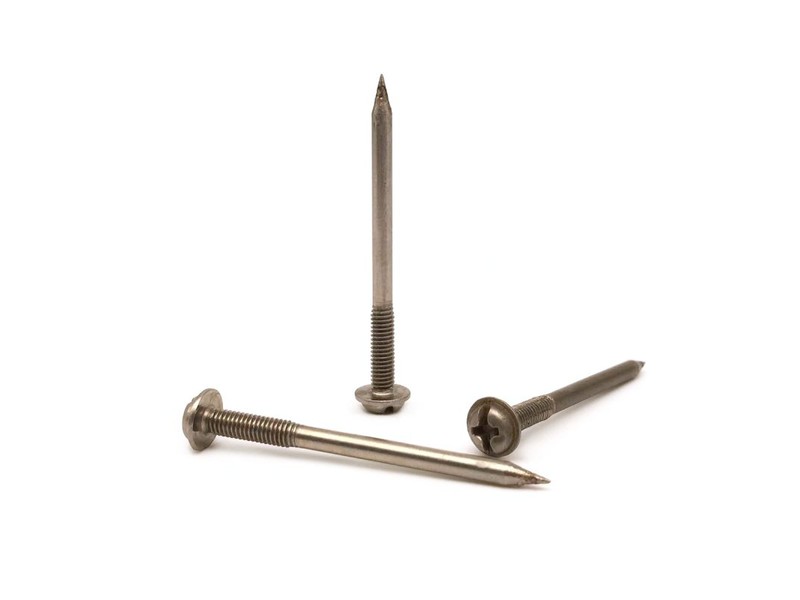
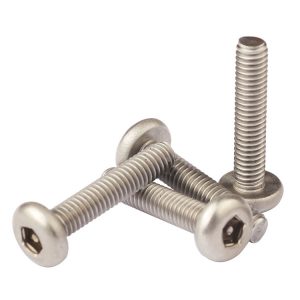
Stainless steel security screws are screws with a drive that an ordinary tool will not turn, in a body that survives weather and washing. The recorded item on this page is stainless with a plain finish, a button head and a five-point tamper drive, quoted from M1 to M14 with Number 255.
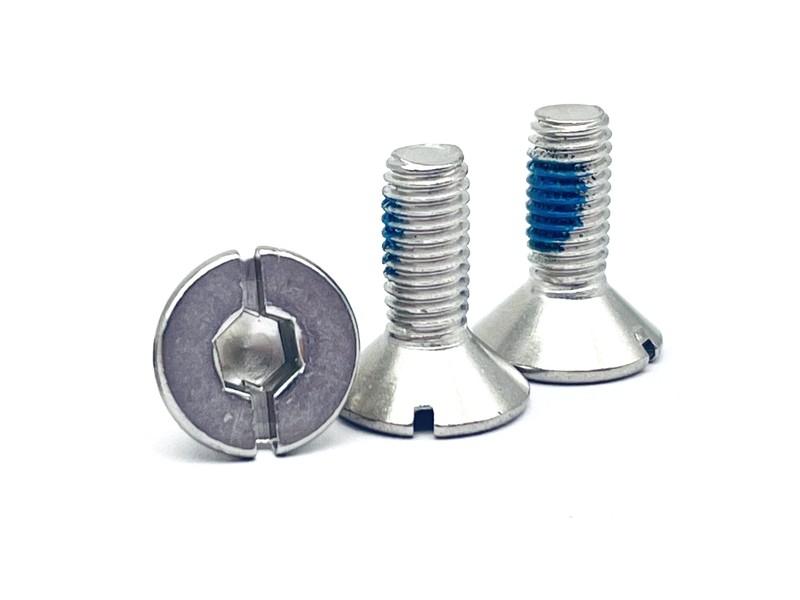
Five-point tamper drive. Five curved lobes with a small pin standing in the centre. A standard star or hex bit has nothing to seat on: the pin sits where the bit wants to go, and the lobes are the wrong count. Only the matching hollow bit turns it.
Button head. A low dome on a short cylindrical side, with a small flat bearing face. It reads as a smooth fastener rather than a machined one, which is why it appears on visible panels and public fittings.
Machine thread. A thread made to engage a tapped hole or a nut, with a blunt chamfered end. It does not cut its own way in, so the joint can be opened without damaging the part.
Stainless, plain. The alloy is the protection: a passive chromium oxide film that rebuilds itself after a scratch. There is no coating to chip at the drive, which matters because a security drive is small and a chipped coating there is a visible defect.
What security means here. A deterrent, not a lock. The bit exists and can be bought; what the drive does is make casual removal inconvenient enough that the fixing is left alone.
On a stainless steel security screw the drive is a recess formed by a punch: five lobes, evenly spaced, with a pin in the middle. The pin is formed in the same stroke and is the feature that does the work, because it occupies the centre of the recess where any ordinary bit would try to seat. The lobes then have to be cut deep enough that the matching hollow bit can transmit torque without rocking.
That geometry sets the tolerance. On a five-lobe drive the bit contacts five flanks, and the pin sits in a hole that is a fraction of a millimetre across. A punch that has worn a few hundredths leaves a recess that takes the bit but lets it rock, and a bit that rocks on five lobes rounds them faster than on any cross recess, because each lobe is smaller.
The button head limits how deep the recess can go. A button head is a low dome with a short side, so the material above the bearing face is thin; the recess therefore has to be formed within that height, and on the smallest sizes the pin is the feature that sets the minimum head height. That is why a security screw is not simply a pan head with a different punch.
The thread is a machine thread with a blunt chamfered end. In this family the thread form follows the drawing: some parts are made with a plain machine thread for a tapped hole, and some with a trilobular thread that forms its own thread in a drilled or cored hole. The two are not interchangeable in the same hole, so the drawing states which.
Stainless is headed, rolled and passivated. Passivation is what removes free iron left by the forming tools and lets the oxide film rebuild; without it a stainless screw can show rust spots on a head that never saw service, and on a visible security fixing that reads as a material failure.
The family is quoted from M1 to M14, with M1, M2, M3, M4, M5, M6, M7, M8, M9, M10 and M14 in the recorded range. Custom lengths up to 2,000 mm are subject to DFM review after drawing submission; on a stainless steel security screw the smallest size in the family is the one that decides how small the drive can be made.
| Item | How it is defined | What we control |
|---|---|---|
| Drive | Five-point tamper, pin in the centre | Lobe depth and pin diameter, bit tried on the part |
| Head | Button head, low dome | Diameter, height and face flatness |
| Thread | Machine thread, blunt end | Pitch and length, gauged per batch |
| End | Blunt, chamfered | Chamfer cut, not deburred |
| Finish | Plain stainless, passivated | Passivation and surface condition |
| Length | From under the head to the end | Measured on the shop plate |
Drive size and screw size are chosen together. A five-point drive on a very small screw has lobes that are hard to form and easy to damage; on a large screw the same drive would limit the torque below what the thread can take. The pairing is settled on the drawing, and the first article is the point at which the bit is confirmed to fit.
Length is measured from under the head, because that face bears on the part. On a button head the bearing face is small, so the joint relies on the hole being close to the head diameter; a length that runs long into a blind hole bottoms the screw before the face touches, and the head then stands proud with nothing to show why.
Three features define a stainless steel security screw: the unusual drive, the button head and the alloy. The drive is a handling decision as much as a security one, and it is worth saying so plainly.
| Feature | What it gives | What it costs |
|---|---|---|
| Five-point tamper drive | Casual removal is inconvenient | Your own service team needs the bit |
| Button head | Smooth, low, visible finish | Small bearing face; limited torque |
| Stainless body | No coating to chip at the drive | Galls against stainless; pits in chloride |
| Plain finish | Nothing to fill the lobes | No added wear resistance |
| Blunt machine thread | Re-opened without damage | Needs a tapped hole or a nut |
The honest limit of any security drive is that the tool is for sale. What the five-point pattern does is stop the person with a screwdriver in a pocket — the passer-by, the tenant, the customer in a fitting room. It does not stop someone who has decided to take the fixture apart, and it is a mistake to present it as if it did.
The cost lands on service. Every technician who opens that panel needs the hollow bit, and a bit that has worn or been lost turns a five-minute job into a damaged head. The practical answer is to supply bits with the first order and to standardise the drive across a product line, so one bit covers everything on site.
Stainless steel security screws are finished plain and passivated. Nothing is added to the drive, which is the point: a security recess has lobes measured in tenths of a millimetre, and a coating that builds a few microns there narrows the lobes and stops the bit seating. A plated security screw has to be checked with the bit after plating, every time.
| Option | How it protects | Effect on the drive | Typical use |
|---|---|---|---|
| Stainless 304, plain | Passive chromium oxide film | None; drive gauged as formed | Public fittings and panels |
| Stainless 316, plain | Passive film with molybdenum | None; drive gauged as formed | Coastal and washdown |
| Zinc plated steel | Sacrificial zinc | A few microns; bit tried after plating | Indoor, cost-driven work |
| Black oxide | Conversion film plus oil | No measurable build | Dark, dry indoor fixtures |
| Dacromet on steel | Zinc-aluminium flake layer | Film builds; drive re-checked | Outdoor steel fixtures |
Stainless has two behaviours worth knowing at this size. The first is galling: stainless against stainless can seize, and a seized security screw is worse than an ordinary one because the drive has less material to work with. A lubricant, or a different grade for the mating nut, is the usual answer.
The second is chloride. A 304 screw on a coastal installation will pit at the drive, where water sits and air is excluded, and the pit eats the lobe that carries the torque. Where that service is expected, the grade is the answer rather than the finish, and the drawing should say which grade rather than leaving it open.
Three assemblies where a stainless steel security screw is chosen to keep a fixing in place:
| Where it sits | The screw holds a bench slat, a sign plate or a fitting where the public has access and the fixing has to resist casual removal. |
| When it goes wrong | An ordinary cross head is undone with a pocket tool, and the fixture walks; a plated screw rusts at the drive and looks neglected. |
| Why it happens | The location is public, the part is visible, and the fixing is not serviced often. |
| What we control | Drive tried with the matching bit, passivation confirmed, thread gauged per batch. |
| Where it sits | The screw closes a cabinet or fixes a cover where the contents are valuable and access is restricted to staff with the right tool. |
| When it goes wrong | A standard drive invites tampering and a damaged head means the cabinet cannot be opened at all. |
| Why it happens | The cabinet is outdoors or semi-exposed, and access is controlled. |
| What we control | Drive depth and head height checked, stainless grade stated on the drawing. |
| Where it sits | The screw fixes a panel, a bracket or a cover where the part is washed and the fixing must not rust or discolour. |
| When it goes wrong | A plated screw loses its coating at the drive and bleeds rust down a white panel. |
| Why it happens | The environment is wet, the surface is visible, and the fixing is permanent. |
| What we control | Grade confirmed, passivation checked, drive tried after passivation. |
Four reasons that matter on a tamper drive, each tied to what the drawing has to prove:
|
Drive and head reviewed together
The drive size, the pin diameter and the head height are reviewed as one set, because a button head has only so much material above the bearing face for a five-lobe recess. Basis: Drive and head height reviewed as one set. |
Heading, rolling and passivation in one route
The button head and the tamper recess are formed in one stroke, the thread is rolled and the parts are passivated in the same route. Basis: One route from wire to passivated screw. |
|
Drive tried with the matching bit
The drive is gauged for lobe depth and pin diameter, then turned with the production bit, because a recess that measures in tolerance can still rock. Basis: First article turned with the production bit. |
First article fixes the setting
The first article fixes the wire heat, the drive punch, the thread roll and the passivation; repeat orders are compared against that record. Basis: First article signed off before the batch is released. |
Shi Shi Tong heads these stainless steel security screws from stainless wire on single-die headers that form the button head and the five-lobe recess with its centre pin in one stroke, rolls the machine thread to a blunt chamfered end and passivates the parts before packing. The first part of every run is measured on the head, turned with the production bit and entered into a thread gauge before the batch continues.


|

|
The drive punch is the tool that limits the life of the die. The pin wears first, because it is the smallest feature and it takes the load when a bit is not quite seated; a worn pin leaves a recess that looks right and lets the bit drop too deep, so the lobes carry load on their tips instead of their flanks. The drive is checked with the bit on the first article and sampled through the run.
What decides whether stainless steel security screws pass is the drive, the head, the thread and the alloy. The inspection agreement covers those, and the criteria come from the drawing.

Drive and pin on the projector |

Thread gauged per batch |

Hardness checked on the formed head |

Salt-spray testing of the stainless grade |
The drive is checked on the projector for lobe depth, lobe width and pin diameter, and then turned with the matching bit. The two checks answer different questions: dimensions say whether the recess is in tolerance, and the bit says whether it will transmit torque without rocking.
The head of a stainless steel security screw is checked for diameter, height and flatness of the bearing face. On a button head the bearing face is small, so a face that is not flat bears on a ring and the joint loosens; the check is made on the section of the first article as well as on the face.
The thread is gauged per batch and the alloy confirmed on the certificate. Where the drawing calls for a trilobular thread, the thread is checked against a sample of the cored hole as well as with a gauge, because the forming action is what the customer is buying.
Every shipment of stainless steel security screws is traceable to the wire it was made from and to the passivation batch. The grade and heat number are recorded on the material certificate supplied with the parts, and the inspection records follow the criteria agreed on the drawing.

ISO 9001:2015 |

RoHS test report |

Registered trademark |

Patent: security screw and driver |
With each batch we supply the material certificate, the inspection record for the criteria on the drawing and, where it is listed, the third-party report for the grade or the passivation. The documents carry the drawing revision and the batch number, so the paperwork can be matched to the parts.
More than 8,678 customers in 89 countries and regions have ordered from Shi Shi Tong; 87% of orders come from repeat customers and 56% through referrals. Most projects follow the same route: drawing review, first-article approval, then batches checked against that sample. On a security drive the first article is also the point at which the bit is agreed, so the customer confirms the tool at the same time as the screw. Buyers visit during the process to review samples and to see how the heads and drives are formed.
|
8,678+
customers served
|
87%
of orders from repeat customers
|
56%
of orders through referrals
|
89
countries and regions shipped to
|
Buyers and quality engineers visit for sample review, process discussion and supplier audits; the visit is arranged around production so the headers, the drive punches and the passivation line can be seen on the day the parts run.

Customer group visit – sample review |

Customer group visit – process discussion |

Customer group visit – factory tour |

Customer visit – project kick-off |

Danish customer – drawing review |

Industry exhibition – meeting customers |
It is a deterrent. The bit exists and can be bought, so it stops casual removal rather than determined access. It is the right answer for public fittings, not for a safe.
The hollow five-point bit that matches the drive and clears the centre pin. Standard star and hex bits will not seat, and forcing one will damage the lobes.
Yes, with the correct bit and enough downward pressure. The lobes are small, so a bit that is worn or not fully seated will round them.
It gives a smooth visible finish on a panel. The trade is bearing area: the face is small, so the hole and the surface have to be clean and close to size.
No, and a coating would be a problem on a drive this small. Passivation restores the oxide film and leaves the recess as formed.
Drive size and pin diameter, head diameter and height, thread size and form with its length, overall length and datum, and the stainless grade.
How a stainless steel security screw project runs from drawing to repeat delivery:
|
1
Send the drawing and the tool requirement
|
→ |
2
Drive, head and thread review
|
→ |
3
First article turned with the bit
|
→ |
4
Batch production and repeat orders
|
Each step is confirmed with you before the next one starts; the drawing revision from the first article is what repeat orders are checked against.
For a quotation, send the drawing with the drive size and pin diameter, the head diameter and height, the thread size and form with its length, the overall length and datum, and the stainless grade.
|
Drive size
|
Pin diameter
|
Head dimensions
|
|
Thread and form
|
Length and datum
|
Stainless grade
|
Sending a drawing? The form below does not take attachments. Email the PDF, DXF or STEP file to sst@szsst88.com with the part name and quantity in the subject line – the drawing is reviewed and a quotation follows.

 +86 13143444311
 sst@szsst88.com