Tel:
+86 13143444311
Email:sst@szsst88.com
Fax:+0086-755-27322278
Address:Building 9, First Industrial Zone, Tantou Industrial City, Songgang Street, Baoan District, Shenzhen 518105, Guangdong, China
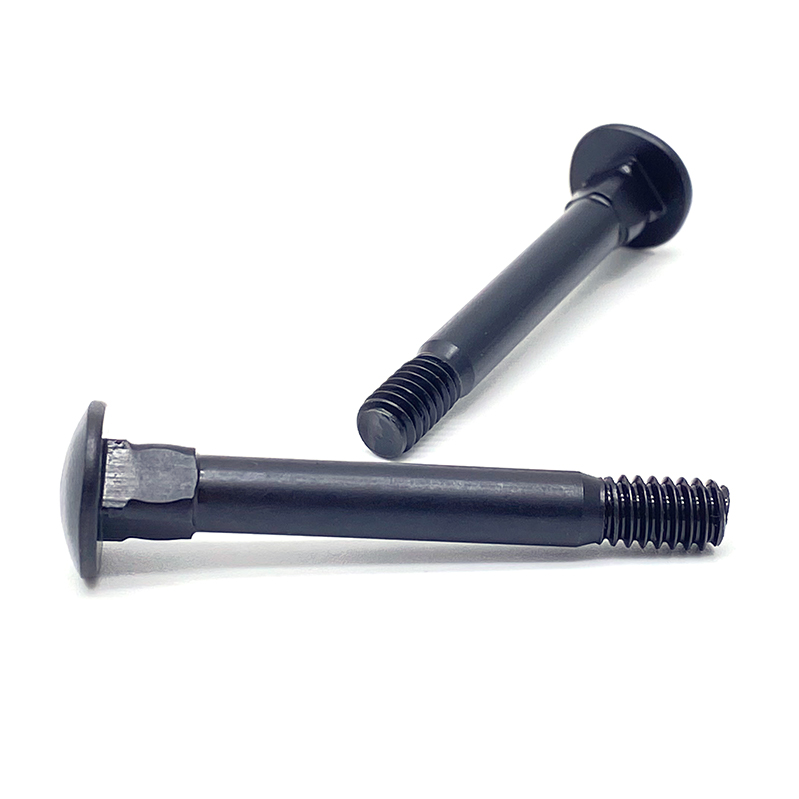
Type:Tamper Proof Screws
Materials:Stainless Steel
Surface treatment:Plain
Head Type:Round pan head
Drive:Security recess, bit specified
Thread:Machine thread
Point:Plain, chamfered
Forming:CNC turning; recess cut
Size:M1 M2 M3 M4 M5 M6 M7 M8 M9 M10
We make tamper proof screws in stainless steel with a round pan head and a security recess, quoted with the recess pattern, bit and thread to the drawing. The recess stops a standard driver and the round head stops pliers, so both are specified together and the first article is removed with your bit.
Watch the factory video·Email sst@szsst88.com
ISO 9001:2015 · Manufacturing since 1998 · 8,678+ customers · 89 countries and regions
Made to order – there is no stock catalogue. Each part is produced to your drawing, and production starts after drawing review and first-article approval.
Tamper proof screws are fasteners whose drive is deliberately not standard, so that the screw cannot be removed with an ordinary tool. The part recorded here is stainless steel left plain, with a round pan head and a security recess, quoted from M1 upward with the length made to the drawing.
Security recess. A drive that a standard bit cannot turn, so removal needs a specific tool.
Round head. A smooth head with no flats, so it cannot be gripped with pliers.
Machine thread. A thread that goes into a tapped hole or a nut over a defined engagement.
They are used on public equipment, enclosures and access panels, where the fastener has to resist casual removal rather than a determined attack, and where a missing or damaged fixing has to be obvious to a maintenance team on inspection, because the whole point is that the fixing is not quietly removed and replaced.
A tamper proof screw works only if two things are true at once. The drive has to be non-standard, so a common driver cannot turn it; and the head has to be smooth, so it cannot be gripped with pliers or a wrench. Remove either condition and the screw is easy to defeat: a security recess in a hex head can be undone with a socket, and a round head with a standard cross can be undone with a screwdriver.
That is why the head form and the drive are specified together on these parts. The round pan head gives no flats and no edge to grip, and the recess is cut so that a slotted blade, a Phillips bit and an Allen key all fail to seat. The two features are not independent: each covers the way the other can be defeated.
On tamper proof screws the recess also has a limit. A security pattern needs depth to engage its tool, and the head has to be tall enough to hold that depth without becoming thin. On a small screw that limits how much torque can be transmitted, so the joint has to be designed for a moderate clamp rather than a hard one.
The tooling becomes part of the specification. If the security bit is a standard part available anywhere, the screw resists casual removal and nothing more; if the bit is a specific pattern, the supplier of the tool is part of the access control. Either way, the customer needs a plan for the bit: how many, who holds them, and how a lost one is replaced.
The material completes the picture. Stainless is usually chosen because the screw is outdoors or in a washable environment, and because a rusted security screw is one that has to be drilled out, which defeats the purpose of installing it.
The part is quoted to the drawing with the head, the recess and the thread stated separately. Custom lengths up to 2,000 mm, subject to DFM review after drawing submission. The quotation for tamper proof screws carries the head diameter and height, the recess type and depth, the thread, the length and the bit specification.
| Item | How it is defined | What we control |
|---|---|---|
| Head | Round pan head | Diameter, height and edge |
| Recess | Security pattern | Type, depth and engagement |
| Bit | Specific tool | Recorded with the drawing |
| Thread | Machine thread | Size, pitch and length |
| Torque | For the joint | Stated, limited by the recess |
| Mating part | Nut or tapped hole | Depth agreed |
On tamper proof screws the recess type is written as a name and a size, not as a shape. Two security patterns can look similar and take different bits, and a drawing that says only ‘security’ leaves the joint unserviceable.
The head height limits the recess depth, and the recess depth limits the torque. On a small screw that chain decides the joint, which is why the head and the recess are agreed before the thread.
The thread and the mating part are agreed as a pair, and on stainless joints the possibility of galling is part of what has to be agreed, because a seized security screw is the hardest kind to remove.
Four properties decide tamper proof screws, and each one carries a cost:
| Property | What it gives | What it costs |
|---|---|---|
| Security recess | Removal needs a specific tool | The tool has to be controlled |
| Round head | Nothing for pliers to grip | No flats for a wrench either |
| Limited torque | A joint that resists casual force | Lower clamp than a standard screw |
| Stainless | No rust at the recess | Galling on stainless threads |
On tamper proof screws the value is deterrence plus accountability. The fastener raises the cost of casual removal and makes removal leave evidence, which is what most public and commercial installations actually need.
On tamper proof screws the cost is that the customer has to manage the bit. A security screw with no plan for the tool becomes a maintenance problem, and one that has to be drilled out of a public enclosure.
The recorded finish is plain stainless steel. On a security screw that keeps the recess at its cut depth and leaves no coating that could flake inside it, and it avoids rust in the one place that would force a drilled-out fastener.
| Option | How it protects | Effect on head and recess | Typical use |
|---|---|---|---|
| Plain, passivated | Passive film, no coating | Head and recess as cut | Exposed public equipment |
| Passivated 316 | Higher alloy passive layer | No build; better in chlorides | Coastal and wash-down |
| Zinc plated | Sacrificial zinc | Build inside the recess | Cost-driven indoor work |
| Black oxide | Conversion film, oiled | No measurable build | Dark enclosures |
| Nickel plated | Hard bright barrier | Thin build; recess re-gauged | Visible fixings |
On a security screw the recess is also the part that has to stay serviceable. A plate that fills the recess slightly can stop the authorised bit from seating, which turns a security feature into a breakdown, so the recess is checked with the bit after plating.
The head is the visible side. On a round head the face and the edge are what is seen, and a plate that is thin at the edge looks worn on a part that is meant to look permanent.
Three installations where casual removal has to be prevented:
| Where it sits | The screw holds a cover on equipment that is accessible to the public but maintained by staff. |
| When it goes wrong | The cover is opened with a standard tool, or the heads are chewed by attempts. |
| Why it happens | The recess is a common pattern, or the head can be gripped. |
| What we control | Recess and head form checked; first article removed with the authorised bit. |
| Where it sits | The screw closes a panel that is serviced by authorised staff only, in a place where the fixing is seen. |
| When it goes wrong | The panel cannot be removed because the bit is lost, or it is removed by anyone. |
| Why it happens | No plan for the tool, and the recess is not recorded on the drawing. |
| What we control | Bit specified with the part; first article opened and refitted. |
| Where it sits | The screw fixes a fitting that is exposed to weather and to vandalism. |
| When it goes wrong | The screw seizes and has to be drilled out, or it rusts in the recess. |
| Why it happens | The grade is not suitable for the exposure, and the recess holds water. |
| What we control | Grade confirmed on the certificate; first article exposed and inspected. |
Four reasons that matter on a fastener whose job is a small amount of friction, each tied to something the drawing or the first article proves. All four show in the sample.
|
Recess and bit recorded
The drawing names the recess pattern and the bit, because a security screw without a specified tool becomes a maintenance problem. Basis: Recess and bit agreed. |
Recess cut after the head
The recess is cut in the finished head, so its depth is measured from the surface the authorised bit meets. Basis: Recess depth controlled. |
|
Removed with the authorised bit
The first article is driven and removed with the specified bit, because that is the operation the part exists for. Basis: Removal proved. |
Same recess on repeat runs
Head, recess and grade are recorded with the drawing revision, so a repeat batch takes the same bit. Basis: Same bit across orders. |
These screws are turned from stainless bar, with the round pan head formed and faced, the security recess cut and the thread cut; the parts are cleaned, passivated and inspected. The first piece of every run is measured on head diameter and height, recess type and depth, thread and length.


|

|
On tamper proof screws the recess is the operation that defines the part. It has to be cut to the pattern, deep enough for the authorised bit to engage and shallow enough that the head keeps its section. On a small head the two limits are close, so the depth is controlled rather than maximised.
The head is finished before the recess, so the face that is seen is complete. On a round head the edge is also checked, because there are no flats to hide an irregularity, and a burr at the edge is a hand hazard on a part installed in public.
The thread is cut and the parts are passivated. Every batch is driven and removed with the specified bit, because a security screw that cannot be serviced is a failure even if its dimensions are correct.
What decides whether tamper proof screws pass is the recess, the head and the thread. The inspection agreement covers those, and the criteria come from the drawing.

Recess and head on the projector |

Thread gauged |

Material checked |

Salt-spray testing where a coating is used |
The recess is measured for depth and pattern and checked with the authorised bit, and then checked against a standard bit to confirm it will not seat. Both checks matter: a recess that takes the security bit and also takes a Phillips is not a security feature.
The head is measured for diameter and height, and the edge is checked for a burr. On a round head there are no flats, so the profile is the visible geometry and it is inspected as such.
The thread is gauged and a sample is driven into the mating part and removed. That test shows whether the bit engages over the full recess depth, which is what limits the torque on a security screw.
Every batch of tamper proof screws is traceable to the bar it was made from and to the passivation lot that finished it. The grade and heat number appear on the material certificate supplied with the parts, and the dimensional results are recorded against the drawing revision.

ISO 9001:2015 |

RoHS test report |

Registered trademark |

Patent: security screw and driver |
With each shipment we supply the material certificate, the inspection record for the dimensions on the drawing, including the recess, and the passivation record. The records carry the drawing revision and the batch number, so a repeat order of tamper proof screws takes the same bit.
More than 8,678 customers in 89 countries and regions have ordered from Shi Shi Tong; 87% of orders come from repeat customers and 56% through referrals. Most projects follow the same route: drawing review, first-article approval, then batches checked against that sample. On a security part the first article is driven and removed with the customer’s bit, because that is the operation the part exists for. Buyers visit during the process to review samples.
|
8,678+
customers served
|
87%
of orders from repeat customers
|
56%
of orders through referrals
|
89
countries and regions shipped to
|
Repeat orders of tamper proof screws are checked against the same first article, so a recess proved with one bit is reproduced. Buyers and quality engineers visit for sample review, process discussion and supplier audits; the visit is arranged around production so the recess cutting and the inspection bench can be seen on the day the parts run.

Customer group visit – sample review |

Customer group visit – process discussion |

Customer group visit – factory tour |

Customer visit – project kick-off |

Danish customer – drawing review |

Industry exhibition – meeting customers |
No screw is. It raises the cost of casual removal and needs a specific tool, which is enough for most installations.
Because a recess in a hex head can be undone with a socket. The round head removes the second way to turn it.
Yes. Depth is limited by the head height, so the joint is designed for a moderate clamp.
You need to specify it and plan for it. A security screw without a tool policy becomes a maintenance problem.
So the recess does not rust. A rusted security screw has to be drilled out, which defeats the purpose.
Head diameter and height, recess type and depth, the bit, thread and length, grade, and the mating part.
How a tamper proof screw project runs from drawing to repeat delivery:
|
1
Send the drawing and the bit
|
→ |
2
Recess, head and thread agreed
|
→ |
3
First article driven and removed
|
→ |
4
Batch production and repeat orders
|
Each step is confirmed with you before the next one starts; the drawing revision from the first article is what repeat orders are checked against.
For a quotation, send the drawing with the head diameter and height, the recess type and depth, the bit, thread and length, grade and the mating part.
|
Head size
|
Recess type
|
Recess depth
|
|
Bit
|
Thread
|
Length
|
Sending a drawing? The form below does not take attachments. Email the PDF, DXF or STEP file to sst@szsst88.com with the part name and quantity in the subject line – the drawing is reviewed and a quotation follows.

 +86 13143444311
 sst@szsst88.com