Tel:
+86 13143444311
Email:sst@szsst88.com
Fax:+0086-755-27322278
Address:Building 9, First Industrial Zone, Tantou Industrial City, Songgang Street, Baoan District, Shenzhen 518105, Guangdong, China
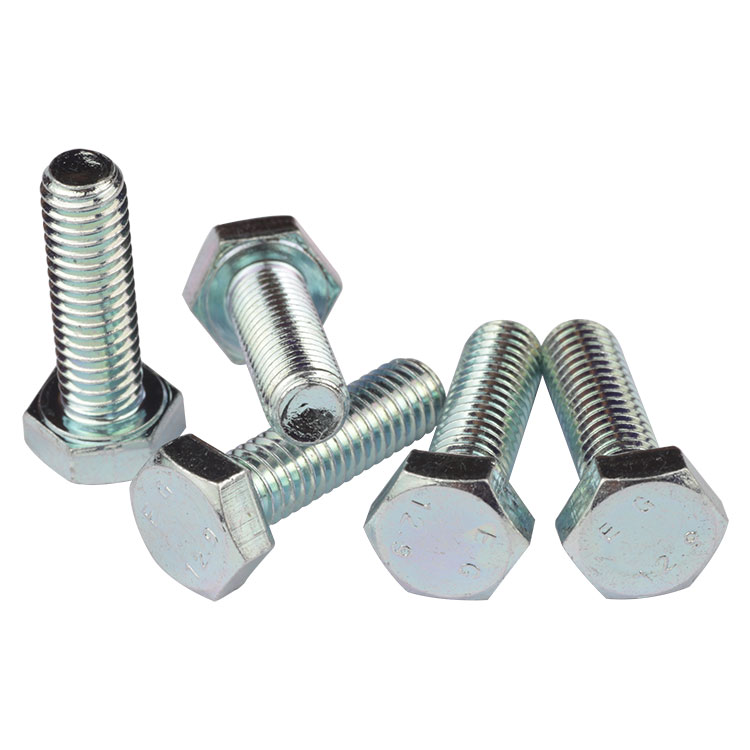
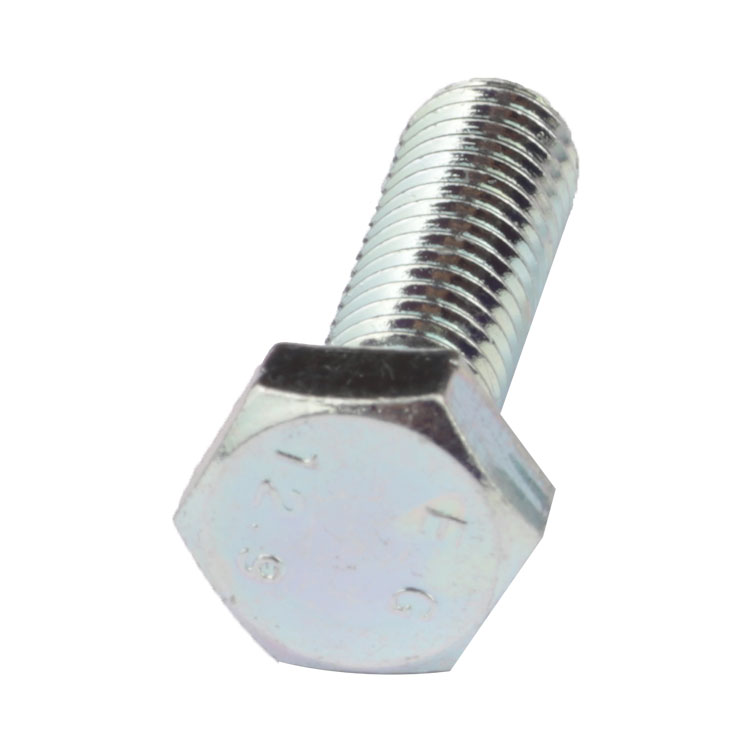
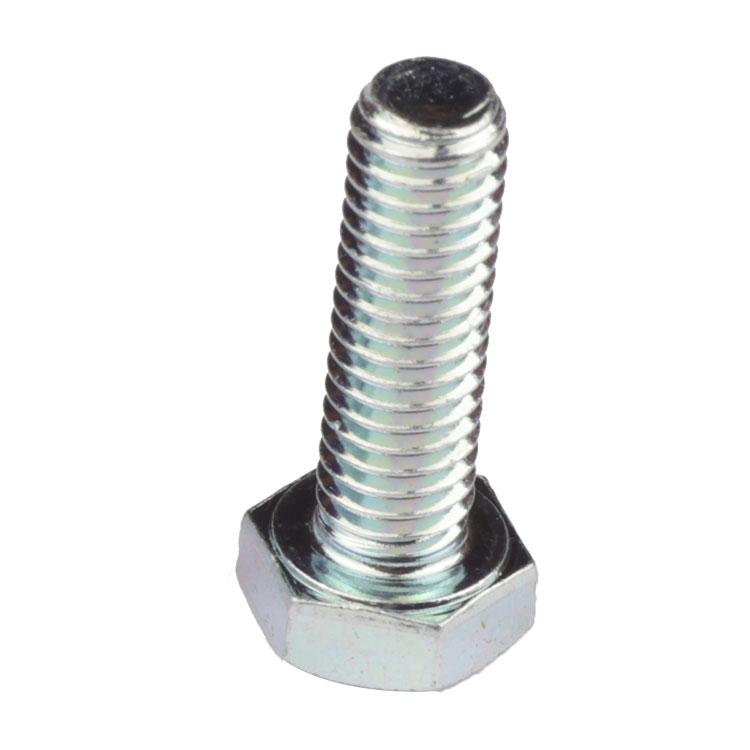
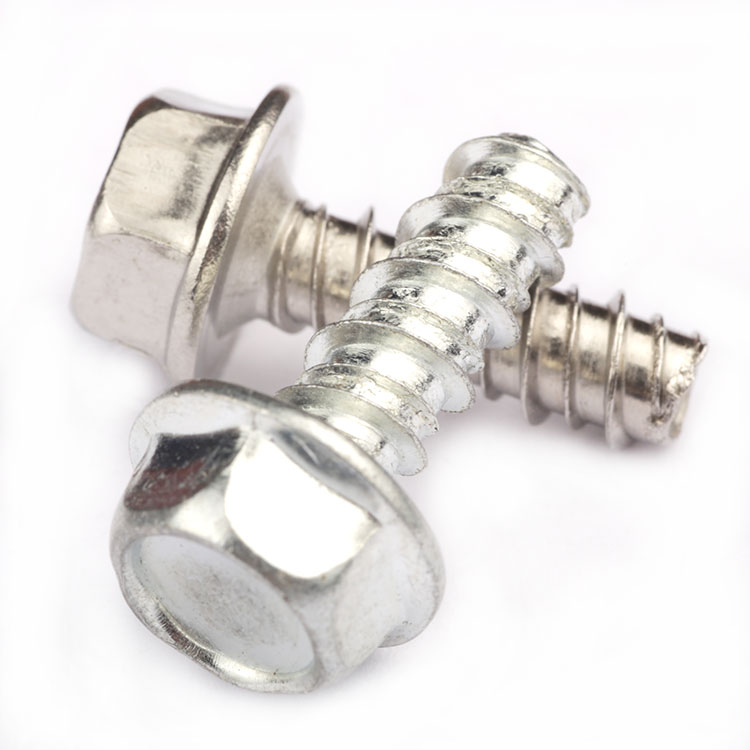
Type:Hex Head Screw
Materials:Carbon Steel
Surface treatment:Eco Blue Zinc Plated
Head Type:Hexagon head
Drive:External hex (wrench or socket)
Thread:Machine thread, coverage per drawing
Point:Plain, chamfered
Forming:Formed and threaded; face machined
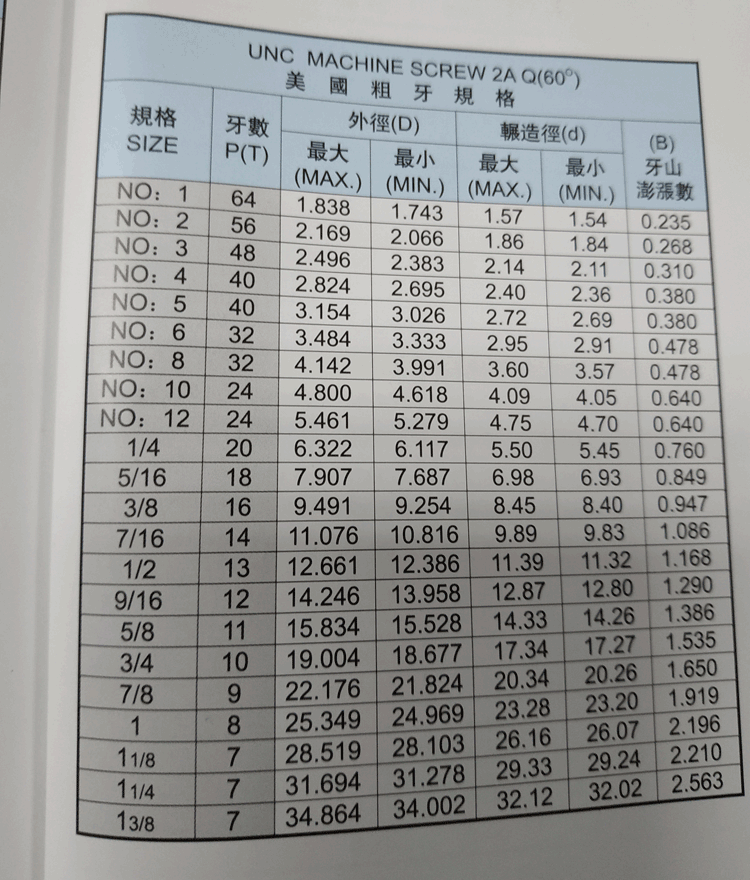
Size:M1 M2 M3 M4 M5 M6 M7 M8 M9 M10
We make hex head screws in carbon steel with an eco blue zinc plate, quoting the head across flats, the thread coverage and the length to the drawing. Partial thread keeps the full round shank in the shear plane while full thread lets the nut travel, so the coverage is a drawing decision.
Watch the factory video·Email sst@szsst88.com
ISO 9001:2015 · Manufacturing since 1998 · 8,678+ customers · 89 countries and regions
Made to order – there is no stock catalogue. Each part is produced to your drawing, and production starts after drawing review and first-article approval.
A hex head screw has an external hexagon driven with a wrench or a socket, and a machine thread that goes into a nut or a tapped hole. The part recorded here is carbon steel with an eco blue zinc plate, quoted in metric sizes from M1 upward with the length made to the drawing.
Hexagon head. Six flats on the outside of the head, so the drive surrounds it rather than sitting inside it.
Machine thread. A thread of constant form, engaged by a nut or by a tapped hole.
Eco blue zinc. A trivalent zinc plate that protects the steel sacrificially and gives a blue-white finish.
They are used in frames, brackets and general equipment, where a joint has to be tightened to a real preload with a standard wrench. A hex head screw is the form most structural drawings land on, because the wrench is universal and the head can be loaded hard.
Two hex head screws of the same size and length can differ in whether the thread runs the whole length or stops short of the head. On a drawing that looks like a detail. In a joint that carries shear it decides which part of the screw takes the load.
With a partial thread, the unthreaded shank sits in the shear plane between the joined parts, and the thread is entirely behind it, in the nut. The shear load acts on the full round diameter of the shank. With a full thread, the thread is in the shear plane, and the load acts on the thread root, which is the smallest section of the screw. For the same diameter the partial-thread screw carries more shear, simply because more material is in the loaded plane.
The same difference shows in tension. A partially threaded screw puts its unthreaded length under load along with the thread, so the stretch is distributed; a fully threaded one concentrates the stretch in the threaded length. On a joint that has to hold a preload through vibration, the partial thread is usually the better behaved of the two.
Full thread has its own advantages and they are real. A nut can be run to any position, so the screw works on stacks of different thickness and can be used as an adjustable member. That is why the fully threaded form is common on equipment stands and adjustable clamps, and why the partially threaded form is common on structural joints.
The choice therefore belongs on the drawing with the length and the thread engagement, because it is not interchangeable after the part is made. A fully threaded screw cannot become a partially threaded one without cutting a thread, and a partially threaded one cannot be used where the nut has to travel.
The part is quoted to the drawing with the head, the thread and the length stated separately. Custom lengths up to 2,000 mm, subject to DFM review after drawing submission. The quotation for a hex head screw carries the head across flats and height, the thread and its coverage, the length, and the clearance around the head.
| Item | How it is defined | What we control |
|---|---|---|
| Head | Hexagon head | Across flats, height and bearing face |
| Thread | Machine thread | Size, pitch and coverage |
| Coverage | Partial or full | Threaded length and start |
| Length | Under the head | Length and cut end |
| Clearance | Around the head | Wrench swing agreed |
| Mating part | Nut or tapped hole | Grade, pitch and depth |
The thread coverage is written as a dimension, not as a word. A partial thread needs its threaded length stated from the end, because that is what sets the shear plane and the nut travel.
The head across flats sets the wrench, and the corner radius is what the socket has to clear. On a dense assembly that clearance is the dimension that decides whether the fastener can be installed.
The length is measured under the head and is chosen so the thread engages fully in the nut without bottoming. On a partially threaded screw the unthreaded portion has to be at least as long as the thickness of the parts it passes through, or the thread ends up inside the joint.
Four properties decide hex head screws, and each one carries a cost:
| Property | What it gives | What it costs |
|---|---|---|
| Hexagon head | High torque from a wrench | Needs swing clearance around it |
| Partial thread | A full round shank in shear | Nut position is fixed by the thread |
| Full thread | A nut that can sit anywhere | Thread root in the shear plane |
| Eco blue zinc | Sacrificial protection, low cost | Not for washing or salt |
The value of a hex head screw is a structural joint that can be set with ordinary tools. The head takes a wrench, the thread takes a nut, and the clamp is developed across the joined parts.
On a hex head screw the cost is the space and the choice. The wrench needs room to swing, and the thread coverage has to be decided before the part is made.
The recorded finish is eco blue zinc, a trivalent zinc plate with a blue-white passivation. On a carbon steel hex head it gives sacrificial protection over a large surface and the bright appearance common on indoor equipment.
| Option | How it protects | Effect on head and thread | Typical use |
|---|---|---|---|
| Eco blue zinc | Trivalent zinc, blue-white | Build; thread gauged after | Indoor equipment |
| Clear zinc | Sacrificial zinc, thinner | Less build; thread closer to size | General assemblies |
| Zinc nickel | Higher corrosion resistance | Build; thread gauged after | Damp and industrial |
| Hot dip galvanised | Heavy sacrificial layer | Build on thread; nuts re-tapped | Outdoor structures |
| Stainless, passivated | Passive film, no coating | No build | Wet and food areas |
On hex head screws the plate matters where the nut runs. A heavy layer on a coarse thread is usually tolerable; on a fine pitch it can make the nut bind before it seats, so the thread is gauged after plating and a sample nut is run down.
The head is the other surface. On a hex head the flats are the drive, and a thick plate can change which socket fits, so the across-flats is checked in the plated state on a sample from each batch.
Three assemblies where a structural joint is made with a wrench:
| Where it sits | The screw joins beams and brackets where the joint carries load and is assembled on site. |
| When it goes wrong | The joint loosens, or the shank is in the wrong place in the shear plane. |
| Why it happens | The thread coverage was chosen for length rather than for shear. |
| What we control | Thread coverage and engagement checked; first article assembled and loaded. |
| Where it sits | The screw holds a component at a distance, and the nut position is adjusted. |
| When it goes wrong | The nut cannot reach the required position, or the joint slips. |
| Why it happens | A partially threaded screw was supplied where the nut has to travel. |
| What we control | Coverage agreed with the adjustment range; first article set at both extremes. |
| Where it sits | The screw holds a motor or a gearbox where the joint sees vibration. |
| When it goes wrong | The joint loses preload, or the thread frets. |
| Why it happens | The clamp is developed across a thin part, and the engagement or lubrication is short. |
| What we control | Engagement and torque checked; first article run under load. |
Four reasons that matter on a fastener whose thread coverage decides how it carries load, each tied to something the drawing or the first article proves. All four show in the sample.
|
Coverage stated as a dimension
The drawing states the threaded length from the end, because on a partial thread that number sets the shear plane and the nut travel. Basis: Coverage dimensioned. |
Head and thread as one part
The head is formed and the thread produced to the drawing, so the bearing face runs square to the thread. Basis: Head square to thread. |
|
Joint assembled and loaded
The first article is assembled with the mating nut and checked under load, because the clamp is developed across the joint. Basis: Joint proved under load. |
Same limits on repeat runs
Head, coverage and plate are recorded with the drawing revision, so a repeat batch assembles the same way. Basis: Same limits across orders. |
These screws are formed from carbon steel wire, with the hexagon head formed, the bearing face machined and the thread rolled to the coverage on the drawing; the parts are then blue zinc plated. The first piece of every run is measured on head across flats and height, threaded length, thread and length.


|

|
On a partially threaded hex head screw the thread start is the feature that fixes the shear plane on a partially threaded screw. It is set from the end, so the unthreaded length is a controlled dimension rather than a by-product, and the transition is checked on the first piece of every run.
The head is formed to its across-flats and the bearing face is machined square to the thread. On a hex head that face carries the clamp, so a face that is out of square loads one side of the joint and can bend a thin bracket.
The thread is rolled, which gives a clean crest and a good fatigue behaviour, and the parts are plated last. The thread is gauged after plating and a sample nut is run down to confirm it seats.
What decides whether a hex head screw passes is the head, the thread coverage and the thread. The inspection agreement covers those, and the criteria come from the drawing.

Head and thread start on the projector |

Thread gauged |

Core hardness checked |

Salt-spray testing of the blue zinc |
The head is measured across flats and for height, and the corners are checked for a burr. A burr at a corner stops the socket seating fully, and the wrench then rounds the head instead of turning the fastener.
The threaded length is measured from the end, and its position is checked on the projector. A thread start that drifts changes where the unthreaded shank sits, which on a structural joint moves the shear plane.
The thread is gauged and a sample nut is run down. A sample is then assembled and loaded to confirm the joint holds its clamp, since on a bolted joint the nut and the thread are one specification.
Every batch of hex head screws is traceable to the wire it was made from and to the plating lot that finished it. The grade and heat number appear on the material certificate supplied with the parts, and the plating report carries the layer thickness and the lot number.

ISO 9001:2015 |

RoHS test report |

Registered trademark |

Patent: security screw and driver |
With each shipment we supply the material certificate, the inspection record for the dimensions on the drawing, including the thread coverage, and the plating report. The records carry the drawing revision and the batch number, so a repeat order of hex head screws assembles the same way.
More than 8,678 customers in 89 countries and regions have ordered from Shi Shi Tong; 87% of orders come from repeat customers and 56% through referrals. Most projects follow the same route: drawing review, first-article approval, then batches checked against that sample. On a structural fastener the first article is assembled with the mating nut and checked under load. Buyers visit during the process to review samples.
|
8,678+
customers served
|
87%
of orders from repeat customers
|
56%
of orders through referrals
|
89
countries and regions shipped to
|
Repeat orders of hex head screws are checked against the same first article, so a joint proved under load once is reproduced. Buyers and quality engineers visit for sample review, process discussion and supplier audits; the visit is arranged around production so the heading cell and the plating line can be seen on the day the parts run.

Customer group visit – sample review |

Customer group visit – process discussion |

Customer group visit – factory tour |

Customer visit – project kick-off |

Danish customer – drawing review |

Industry exhibition – meeting customers |
Partial thread if the joint carries shear, because the full round shank sits in the shear plane. Full thread if the nut has to travel.
The thread root is the smallest section. A thread in the shear plane reduces the load the screw can carry.
The stretch. A partially threaded screw shares the stretch with the unthreaded length, which behaves better under vibration.
As a threaded length from the end. It sets both the shear plane and how far the nut can travel.
It can. A heavy layer tightens the thread, so the thread is gauged after plating and a sample nut is run down.
Head across flats and height, thread and coverage, length, finish, and the mating nut or tapped hole.
How a hex head screw project runs from drawing to repeat delivery:
|
1
Send the drawing and the joint
|
→ |
2
Head, coverage and thread agreed
|
→ |
3
First article assembled and loaded
|
→ |
4
Batch production and repeat orders
|
Each step is confirmed with you before the next one starts; the drawing revision from the first article is what repeat orders are checked against.
For a quotation, send the drawing with the head across flats and height, thread and its coverage, length, finish, the mating nut or tapped hole, and the clearance around the head.
|
Head AF
|
Thread
|
Coverage
|
|
Length
|
Finish
|
Clearance
|
Sending a drawing? The form below does not take attachments. Email the PDF, DXF or STEP file to sst@szsst88.com with the part name and quantity in the subject line – the drawing is reviewed and a quotation follows.

 +86 13143444311
 sst@szsst88.com