Tel:
+86 13143444311
Email:sst@szsst88.com
Fax:+0086-755-27322278
Address:Building 9, First Industrial Zone, Tantou Industrial City, Songgang Street, Baoan District, Shenzhen 518105, Guangdong, China
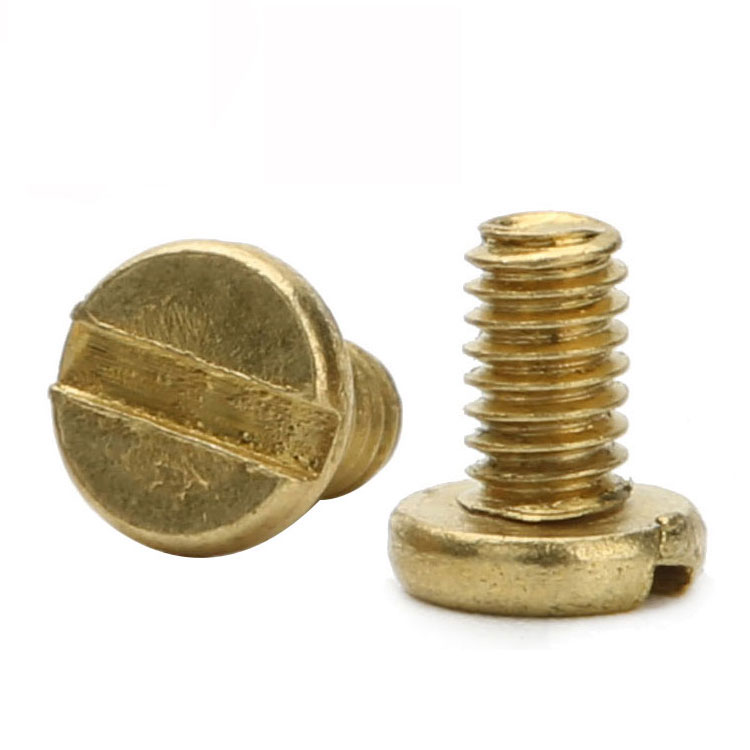
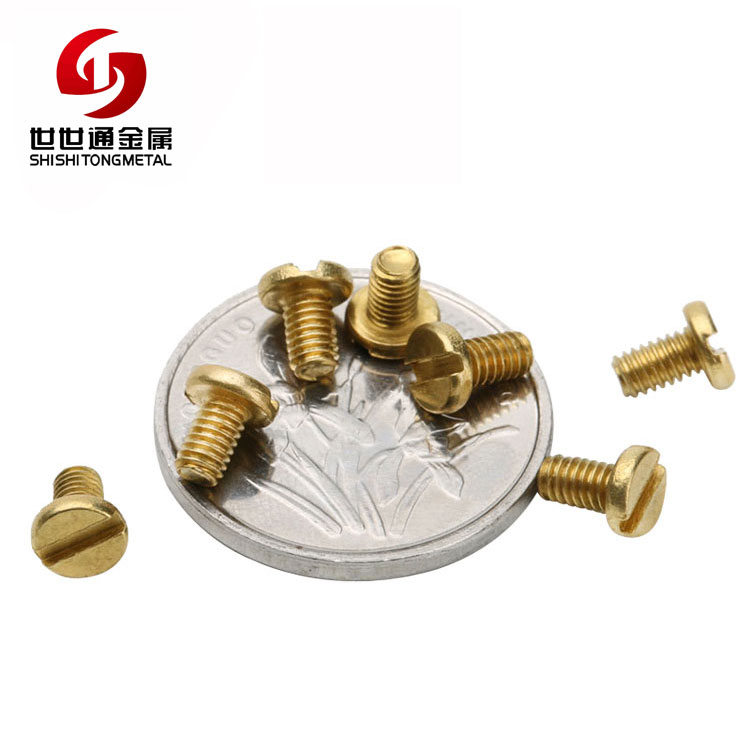
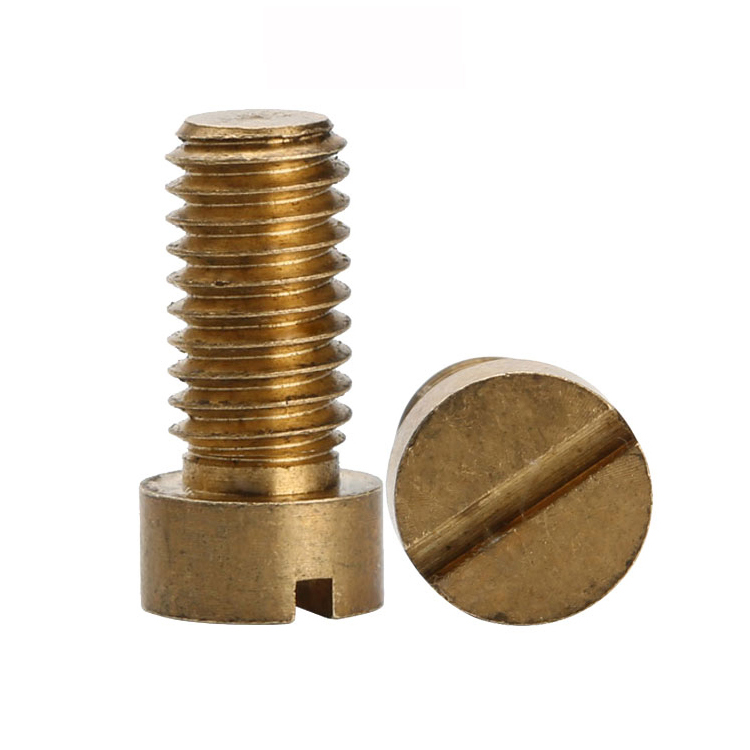
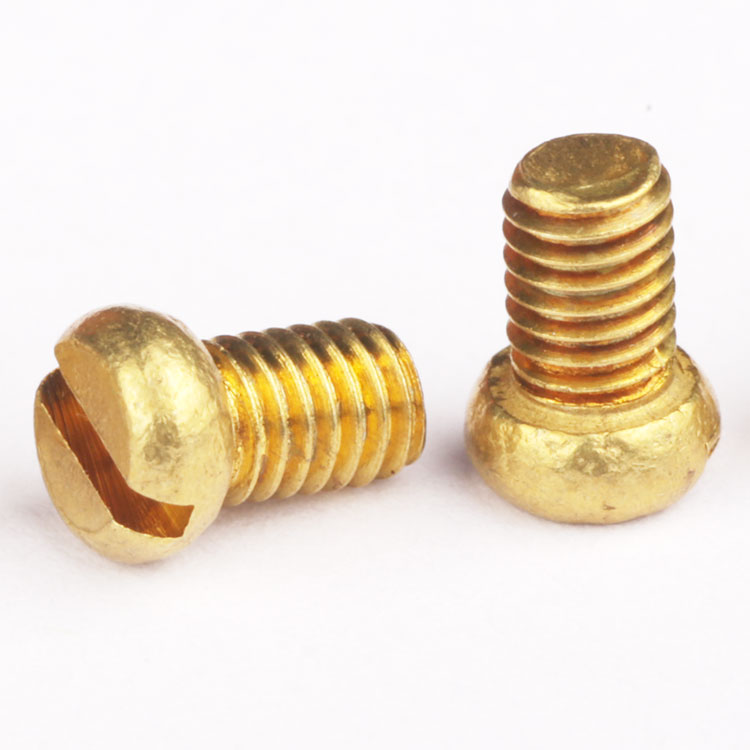
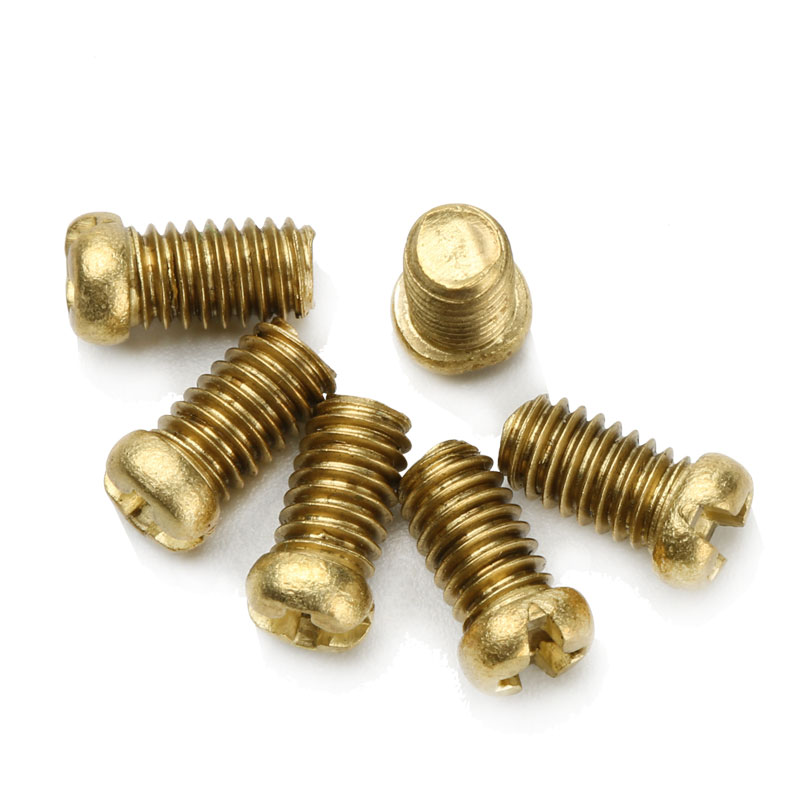
Type:Small Brass Machine Screws
Materials:Brass
Surface treatment:Plain
Head Type:Low profile slotted head
Drive:Single slot (blade)
Thread:Machine thread
Point:Plain, chamfered
Forming:CNC turning; slot milled
Size:M1 M2 M3 M4 M5 M6 M7 M8 M9 M10
We make small brass machine screws with a slotted head in the alloy you specify, quoted from M1 upward with the slot and thread to the drawing. The brass gives conductivity and clean machining, and the slot width is agreed against the blade you assemble with so the head survives the driver.
Watch the factory video·Email sst@szsst88.com
ISO 9001:2015 · Manufacturing since 1998 · 8,678+ customers · 89 countries and regions
Made to order – there is no stock catalogue. Each part is produced to your drawing, and production starts after drawing review and first-article approval.
Small brass machine screws are machine-threaded fasteners in brass, used in small assemblies where conductivity, appearance or non-magnetic behaviour matters. The part recorded here is brass left plain, with a slotted head, quoted from M1 upward and made to the drawing.
Brass. A copper-zinc alloy that conducts, does not spark, and machines cleanly at small sizes.
Slotted head. A single slot across the head, cut to a width that matches a blade driver.
Machine thread. A thread that needs a tapped hole or a nut, not one that forms its own thread.
They are used in electrical terminals, instrument work and decorative fixings, where the material is chosen as much as the screw. The head form on a small brass part is usually chosen to keep enough section under the slot to survive a driver, and to keep the bearing face wide enough to press on a terminal without cutting into it.
Brass is chosen for what it does rather than for what it costs. It conducts, so a brass screw can be part of an electrical path rather than an obstacle to it; it is non-magnetic, so it does not disturb a small sensor or a reed switch; and it machines cleanly, so a slot or a thread can be cut into a part only a millimetre or two across without tearing the surface.
The slot suits that same scale. A cross recess needs depth in two directions and leaves four thin walls in a small head. A single slot needs one pass, can be cut very shallow, and leaves a head with more material around it. On a head that is almost the whole diameter of the screw, that difference is what allows the part to exist at all.
The weakness is the material. Brass is soft compared with steel, and a slotted brass screw is driven by a blade that bears on two narrow edges. A worn or undersized blade rounds those edges quickly, and once the slot is burred the screw cannot be driven properly and the head has to be cut off. The slot width, its depth and the driver that matches it are therefore the functional details of this part, not finishing touches.
There is a second material effect at the joint. Brass against steel or aluminium is a galvanic pair, and in the presence of moisture the less noble metal corrodes preferentially. On a dry indoor assembly that is a slow effect; in a damp enclosure it decides how long the joint lasts, and it is a reason to specify a plated brass screw or a different pairing.
The last point is temperature and current. A brass screw carrying current heats at the contact, and a joint that is not tight enough becomes a hot joint. That is why the slot and the torque belong together on this part: the screw has to be tight enough to carry the current without being turned so hard that the slot deforms.
The part is quoted to the drawing with the head, the slot and the thread stated separately, and with the alloy named. Custom lengths up to 2,000 mm, subject to DFM review after drawing submission. The quotation for small brass machine screws carries the head diameter and height, the slot width and depth, the thread, the alloy and the surface treatment.
| Item | How it is defined | What we control |
|---|---|---|
| Head | Small, low profile | Diameter, height and bearing face |
| Slot | Single slot | Width, depth and edge finish |
| Thread | Machine thread | Size, pitch, length and start |
| Alloy | Brass grade | Machinability and conductivity |
| Surface | Plain or plated | Tarnish and galvanic pairing |
| Hole | In the customer part | Agreed with the thread |
The slot width is the dimension that decides whether the part can be assembled. It is cut to suit a blade of a stated thickness, and a slot that is a little narrow will not take the driver while one that is a little wide lets the blade rock and burr the edges.
The head height is the second, because it sets how much material is left under the slot. On a low profile head the slot can be deep enough to halve the head section, and that section is what carries the clamp load.
The alloy is a specification rather than a note. Two brasses with the same colour can machine differently and tarnish at different rates, and one may be noticeably better for a thread that has to be cut clean at M1.
Four properties decide small brass machine screws, and each one carries a cost:
| Property | What it gives | What it costs |
|---|---|---|
| Brass body | Conducts, non-magnetic, machines well | Soft head and soft slot |
| Single slot | Fits a tiny head | Two narrow bearing edges |
| Plain finish | No coating to interfere | Tarnishes in damp air |
| Machine thread | Repeatable joint | Needs a tapped hole or nut |
The value is a fastener that behaves like part of the circuit and can still be made at small sizes. A steel screw would be stronger; a brass one is conductive, non-magnetic and manageable at M1, and on an instrument or a terminal that is what the joint actually needs.
The cost is that both the head and the thread are soft. The slot deforms before a steel screw would, the thread strips earlier, and the torque has to be matched to the material rather than to the size.
The recorded finish is plain brass. That keeps the electrical contact clean, with no layer between the screw and the terminal, and it keeps the slot at its cut width; a plated screw has the plate inside the slot and on the thread, and both are checked after plating.
| Option | How it protects | Effect on slot and thread | Typical use |
|---|---|---|---|
| Plain brass | No coating; contact metal to metal | Slot and thread as cut | Terminals and instruments |
| Nickel plated | Hard bright barrier | Thin build inside the slot | Decorative fixings |
| Tin plated | Solderable, conductive film | Build on thread; re-gauged | Electrical terminals |
| Clear lacquer | Tarnish barrier | Can bridge a small slot | Visible trim |
| Zinc plated | Not usual on brass | Galvanic risk at the joint | Avoid on brass |
Tin is the finish to consider where the joint carries current and has to stay solderable. It keeps conductivity and adds a layer that does not tarnish, at the cost of a film inside the slot and on the thread, which is why the driver fit is re-checked after plating.
Lacquer is the finish to avoid on a very small slot. It looks well on a visible part, but a lacquer film can bridge a shallow slot and change how the driver fits, and it is not conductive where the screw meets the terminal.
Three assemblies where the material matters as much as the thread:
| Where it sits | The screw clamps a wire or a lug into a terminal block where the joint carries current. |
| When it goes wrong | The joint heats or loosens, and the slot burrs after a few re-tightenings. |
| Why it happens | The screw is soft, the driver is worn, and the torque is not stated. |
| What we control | Slot width and head section checked; torque stated with the material in mind. |
| Where it sits | The screw holds a small component near a magnetic sensor or a movement that must not be disturbed. |
| When it goes wrong | The reading shifts, or the part attracts debris over time. |
| Why it happens | The screw is magnetic, or its plating corrodes in the enclosure. |
| What we control | Alloy and finish agreed; first article assembled near the sensor. |
| Where it sits | The screw holds a visible plate or a bezel where the colour and the surface are part of the design. |
| When it goes wrong | The finish tarnishes, or the slot is damaged by the driver on assembly. |
| Why it happens | The material is soft, and the visible head is handled during fitting. |
| What we control | Alloy and finish checked; first article assembled with the customer driver. |
Four reasons that matter on a part where a soft material has to survive assembly, each tied to something the drawing or the first article proves. All four show in the sample.
|
Slot and alloy asked for
The quotation asks for the slot width, the alloy and the finish, because on a small brass screw those three decide how it survives a driver. Basis: Slot, alloy and finish agreed. |
Cut clean, not torn
The slot and the thread are cut with tooling set for brass, so the edges stay sharp rather than being pushed over. Basis: Clean slot edges. |
|
Driven with your blade
The first article is driven with the blade the customer uses, because the slot is only proved by the driver that will enter it. Basis: Slot proved with the blade. |
Same alloy on repeat runs
Alloy, slot dimensions and finish are recorded with the drawing revision, so a repeat batch tarnishes and drives the same way. Basis: Same alloy across orders. |
These screws are turned from brass bar, with the head formed and faced, the slot milled, and the thread cut; the parts are then cleaned and inspected. The first piece of every run is measured on head diameter and height, slot width and depth, thread and finish.


|

|
Cutting the slot is the operation that decides the part. Brass cuts cleanly with a sharp cutter and tears with a dull one, so the tool is changed on a count rather than when the slot starts to look wrong. A slot with a rolled-over edge looks acceptable under a light and still refuses a driver.
The head is faced before the slot is cut so the slot depth is taken from a finished surface. On a low profile head the remaining section is small, and a slot that is a few hundredths too deep is a head that will bend the first time it is tightened.
The thread is cut rather than rolled on this part, because rolling a small brass thread can smear the crest at the start. Cutting leaves a clean start, which matters when the screw goes into a small terminal block.
What decides whether small brass machine screws pass is the slot, the head section and the thread. The inspection agreement covers those, and the criteria come from the drawing.

Slot and head on the projector |

Thread and start checked |

Material checked |

Salt-spray testing where plated |
The slot is checked for width and depth on the projector and with a blade on a sample from each batch. A slot that measures right but will not hold a blade is usually a burr at the edge rather than a width problem.
The head is measured for diameter and height, and the section under the slot is checked on a sample. The bearing face is checked flat, because a dished face on a soft head embeds into a terminal and loses contact area.
The thread is gauged and the start is checked for burrs. The alloy is confirmed against the material certificate, since brass of the wrong grade machines acceptably and tarnishes badly.
Every batch of small brass machine screws is traceable to the bar it was made from. The alloy, temper and heat number appear on the material certificate supplied with the parts, and the dimensional results are recorded against the drawing revision.

ISO 9001:2015 |

RoHS test report |

Registered trademark |

Patent: security screw and driver |
With each shipment we supply the material certificate, the inspection record for the dimensions on the drawing, including the slot and the head, and the plating report where a finish is applied. The records carry the drawing revision and the batch number, so a repeat order of small brass machine screws matches the first article.
More than 8,678 customers in 89 countries and regions have ordered from Shi Shi Tong; 87% of orders come from repeat customers and 56% through referrals. Most projects follow the same route: drawing review, first-article approval, then batches checked against that sample. On a soft-material part the first article is driven with the customer’s blade, because a burred slot only appears once a driver has been in it. Buyers visit during the process to review samples.
|
8,678+
customers served
|
87%
of orders from repeat customers
|
56%
of orders through referrals
|
89
countries and regions shipped to
|
Buyers and quality engineers visit for sample review, process discussion and supplier audits; the visit is arranged around production so the slot milling and the inspection bench can be seen on the day the parts run.

Customer group visit – sample review |

Customer group visit – process discussion |

Customer group visit – factory tour |

Customer visit – project kick-off |

Danish customer – drawing review |

Industry exhibition – meeting customers |
Brass conducts, is non-magnetic and machines cleanly at small sizes. On a terminal or an instrument, that combination is worth the lower strength.
A single slot can be cut shallow in a tiny head and leaves more material around it. A cross needs depth in two directions.
Yes. Brass is soft and the blade bears on two narrow edges, so a worn or undersized blade burrs the slot quickly.
Brass tarnishes, and against steel or aluminium it forms a galvanic pair. In damp conditions a plated screw or a different pairing is safer.
It can, but the joint has to be tight. A loose brass terminal screw heats at the contact, which is why the torque is stated.
Head diameter and height, slot width and depth, thread size and length, the alloy, the finish and the mating hole or nut.
How a small brass machine screw project runs from drawing to repeat delivery:
|
1
Send the drawing, the alloy and the blade
|
→ |
2
Slot, head and thread agreed
|
→ |
3
First article driven with your blade
|
→ |
4
Batch production and repeat orders
|
Each step is confirmed with you before the next one starts; the drawing revision from the first article is what repeat orders are checked against.
For a quotation, send the drawing with the head diameter and height, slot width and depth, thread size and length, the alloy and the finish, and the mating hole or nut.
|
Head size
|
Slot width
|
Slot depth
|
|
Thread
|
Alloy
|
Finish
|
Sending a drawing? The form below does not take attachments. Email the PDF, DXF or STEP file to sst@szsst88.com with the part name and quantity in the subject line – the drawing is reviewed and a quotation follows.

 +86 13143444311
 sst@szsst88.com