Tel:
+86 13143444311
Email:sst@szsst88.com
Fax:+0086-755-27322278
Address:Building 9, First Industrial Zone, Tantou Industrial City, Songgang Street, Baoan District, Shenzhen 518105, Guangdong, China
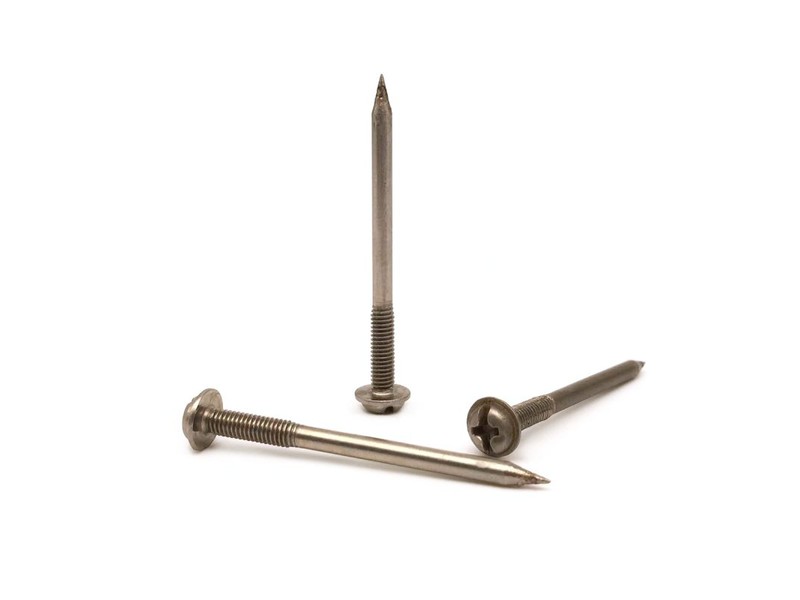
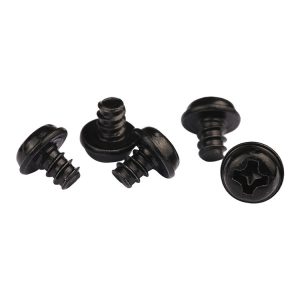
Type:Tiny Brass Screws Pan Head Self Tapping
Materials:Brass
Surface treatment:Plain
Head Type:Pan Head
Drive:Phillips (cross)
Thread:Self-tapping, thread forming
Point:Sharp, tapered
Forming:Single Die Heading
Size:M1 M2 M3 M4 M5 M6 M7 M8 M9 M10 M14
Number:677
We make brass self tapping screws in plain brass, a pan head with a Phillips recess and a sharp thread-forming point, quoting them from M1 to M14. Thread form, point length, head, length and pilot hole come from your drawing, and the first article is driven into your material.
Watch the factory video·Email sst@szsst88.com
ISO 9001:2015 · Manufacturing since 1998 · 8,678+ customers · 89 countries and regions
Made to order – there is no stock catalogue. Each part is produced to your drawing, and production starts after drawing review and first-article approval.
Brass self tapping screws are small pan head screws with a Phillips recess and a sharp, thread-forming point, made here in plain brass and quoted from M1 to M14 with Number 677. They cut or form their own thread in the material they enter, so the joint needs no tapped hole: a pilot hole, the screw, and the thread is made on the way in.
Self-tapping thread. A coarse, sharp-crested thread that cuts or deforms a thread in plastic, wood or thin sheet as it is driven.
Sharp point. A tapered end that starts the hole and carries the first threads into the material.
Pan head. A low dome on a bearing ring, wide enough to hold without a washer.
Plain brass. No coating; the metal is the finish, warm yellow and free of any deposit that would change the thread.
Brass self tapping screws are chosen where a steel screw would be over-strength and a stainless one would be the wrong colour: plastic housings, instrument panels and decorative hardware where the screw is both a fastener and part of the look, and where a non-magnetic body matters to the electronics beside it.
A self-tapping screw and a machine screw are different joints. A machine screw goes into a thread that already exists, so the fit is decided by the tapped hole; a self tapping screw makes its own thread, so the fit is decided by the screw, the pilot hole and the material. That is why brass self tapping screws are specified with a pilot hole size rather than with a thread class.
In plastic, the thread forms by displacing material rather than cutting it. The boss around the pilot hole has to be thick enough to take the displaced volume, or the boss splits; and it has to be soft enough to flow, or the screw shears in the recess before the thread is formed. Brass is a good choice here because it deforms the plastic without tearing it, and because the screw itself does not corrode in a damp enclosure.
In thin sheet, the point has to pierce and the thread has to engage a full turn within the sheet thickness. Brass is softer than steel, so the same size screw needs a thicker sheet or a smaller pilot; a brass self tapping screw driven into a sheet that a steel screw would handle will strip the sheet or twist off at the head.
Softness also decides the failure mode. Brass self tapping screws shear at the recess or the head before the thread strips, because the alloy is weaker than the material around it in most plastic joints. That is a safer failure than a stripped boss, but it means the driving torque has to be set below the screw’s own limit rather than below the joint’s.
And brass is not a coating. Plain brass tarnishes in air over months, going from yellow to a duller brown, and in a damp or sulphurous environment it can leave a green mark on the plastic around it. The tarnish is cosmetic and does not affect the thread; where appearance matters, a lacquered or plated finish is a separate specification.
The recorded range is M1 to M14, with M1.2 to M3 covering the small brass work in electronics and instruments. Custom lengths up to 2,000 mm are subject to DFM review after drawing submission. For brass self tapping screws the quotation carries the thread form, the point length, the head diameter and the pilot hole the customer drills.
| Item | How it is defined | What we control |
|---|---|---|
| Thread | Self-tapping, coarse | Thread form, pitch and crest sharpness |
| Point | Sharp, tapered | Point length and concentricity |
| Head | Pan head | Head diameter and height |
| Recess | Phillips cross | Recess size and depth |
| Length | Under the head | Length tolerance and point length |
| Material | Brass | Alloy and temper on the certificate |
| Finish | Plain | Surface condition and tarnish control |
Pilot hole diameter is the number that decides whether the joint works, and it belongs on the assembly drawing rather than the screw drawing. Too small and the boss splits or the screw shears; too large and the thread never engages enough material to hold.
Point length is often overlooked on small brass screws. A point that is long relative to the sheet thickness leaves fewer full threads in the material, and the joint holds much less than the size suggests.
Three features define the part: the thread-forming shape, the brass body and the pan head. The first removes the need for a tapped hole, the second gives a non-magnetic, corrosion-resistant screw that looks like brass, and the third is the head a plastic or thin-sheet joint usually needs.
| Feature | What it gives | What it costs |
|---|---|---|
| Self-tapping thread | No tapped hole needed | Pilot hole must be right |
| Brass body | Warm colour, no rust, non-magnetic | Soft; shears before the joint strips |
| Pan head | Load spread without a washer | Stands above the surface |
| Plain finish | Thread as made | Tarnishes over time |
| Sharp point | Starts in a drilled pilot | Less thread in a thin sheet |
The missing tapped hole is the practical gain. In a plastic housing, a self tapping screw into a moulded boss is cheaper than an insert and a machine screw, and it can be repeated a few times before the boss gives up.
The softness is the limit. Brass will not take the torque a steel screw of the same size takes, and a driver set for steel will twist the head off a brass screw before the plastic boss knows about it.
The recorded finish is plain brass with no coating. For self tapping screws that is usually right: a coating on the thread would blunt the cutting crest and change the pilot fit, and the brass underneath is already resistant enough for indoor use. What plain brass does not do is stay bright, and that is a specification question rather than a corrosion one.
| Option | How it protects | Effect on thread and head | Typical use |
|---|---|---|---|
| Plain brass | Alloy resists rust; tarnish is cosmetic | Thread and crest as made | Electronics and instruments |
| Lacquered brass | Clear film slows tarnish | Film on the head; thread usually left bare | Visible decorative parts |
| Nickel plated brass | Barrier deposit, bright | Build on thread; re-checked | Where a silver finish is wanted |
| Tin plated brass | Thin barrier deposit | Minimal build | Electronics and audio |
| Stainless alternative | Passive film, harder body | Thread as cut | Where brass is too soft |
Where the part stays visible, lacquer is the usual answer: it slows the colour change for a year or two and wears off at the edges rather than flaking across the head. Where the part is hidden, plain brass is cheaper and the tarnish does not matter.
Where the joint needs more strength than brass gives, the answer is a change of material rather than a change of finish. Stainless self tapping screws take more torque and cut a cleaner thread in harder plastics, at the cost of the brass appearance.
Three assemblies where brass self tapping screws are the fixing:
| Where it sits | The screw closes a moulded housing into a boss, where a tapped insert would add cost and a steel screw would take more torque than the boss can stand. |
| When it goes wrong | A pilot hole that is too small splits the boss, and one that is too large never holds. |
| Why it happens | The boss is plastic, the joint is assembled in volume, and it is opened occasionally. |
| What we control | Pilot hole agreed with the customer, first article driven into a sample boss. |
| Where it sits | The screw fixes a plate or a panel where a non-magnetic screw is required and the warm brass colour is part of the product. |
| When it goes wrong | A steel driver setting twists the head off, and the tarnish on visible screws looks like wear. |
| Why it happens | The joint is small, visible, and the material must not be magnetic. |
| What we control | Driving torque set below the screw limit; lacquer specified for visible parts. |
| Where it sits | The screw joins a thin decorative plate to a wooden or composite body where a thread-forming screw avoids a nut. |
| When it goes wrong | The plate cracks at the pilot hole, or the screw shears and leaves a stub in the wood. |
| Why it happens | The joint is thin, decorative and assembled by hand. |
| What we control | Point length matched to the plate thickness; first article driven by hand. |
Four reasons that matter on a thread-forming brass screw, each tied to what the drawing has to prove:
|
Pilot hole and point agreed
The pilot hole, point length and thread form are settled together, because on brass self tapping screws the joint is made by the screw and the hole. Basis: Pilot hole and point agreed. |
Headed, slotted, threaded in one route
The pan head and cross recess are formed, the self-tapping thread is rolled to a sharp point and the parts are cleaned in one route. Basis: One route from wire to finished screw. |
|
Driven into the customer material
The first article is driven into a sample of the customer boss or sheet, because that is where the thread is actually made. Basis: First article driven in customer material. |
Alloy and temper recorded
The brass alloy and temper are recorded on the certificate, because soft and half-hard brass drive very differently. Basis: Alloy and temper certified. |
Shi Shi Tong forms brass self tapping screws on single-die headers that form the pan head and cut the Phillips recess in one stroke, rolls the self-tapping thread and grinds the point, then cleans the parts. The first part of every run is measured on head, thread and point, and driven into a sample of the customer material before the batch continues.


|

|
The point is where a brass screw earns its keep. A point that is slightly blunt needs more downward force to start, and on a small brass screw that force is often what splits the boss; a point that is off-centre makes the screw walk, and the thread is cut at an angle to the boss axis.
What decides whether brass self tapping screws pass is the thread form, the point, the head and the recess. The inspection agreement covers those, and the criteria come from the drawing.

Thread and point on the projector |

Thread form checked |

Hardness checked on the wire |

Salt-spray testing of the finish |
The thread is checked for form, pitch and crest condition, the point for length and concentricity, and the head and recess for size and depth. The parts are also driven into a sample boss, because a thread that measures to the drawing can still split the plastic it is meant to hold.
The driving test is repeated on a second insertion. A brass self tapping screw that holds on the first drive and strips on the second is common in soft plastic, and the joint design has to know that before it is released.
Every shipment of brass self tapping screws is traceable to the wire it was made from. The alloy and temper are recorded on the material certificate supplied with the parts, and the inspection records follow the criteria agreed on the drawing.

ISO 9001:2015 |

RoHS test report |

Registered trademark |

Patent: security screw and driver |
With each batch we supply the material certificate, the inspection record for the criteria on the drawing and, where it is listed, the third-party report for the alloy. The documents carry the drawing revision and the batch number, so a repeat order is made from the same alloy and the same point geometry that were approved.
More than 8,678 customers in 89 countries and regions have ordered from Shi Shi Tong; 87% of orders come from repeat customers and 56% through referrals. Most projects follow the same route: drawing review, first-article approval, then batches checked against that sample. On a self tapping screw the first article is driven into the customer material, because the thread is made in that material. Buyers visit during the process to review samples and to see how the points are formed.
|
8,678+
customers served
|
87%
of orders from repeat customers
|
56%
of orders through referrals
|
89
countries and regions shipped to
|
Buyers and quality engineers visit for sample review, process discussion and supplier audits; the visit is arranged around production so the headers and the point grinding station can be seen on the day the parts run.

Customer group visit – sample review |

Customer group visit – process discussion |

Customer group visit – factory tour |

Customer visit – project kick-off |

Danish customer – drawing review |

Industry exhibition – meeting customers |
Yes. The screw forms its own thread, but the pilot hole sets the amount of material the thread displaces. Too small splits the boss, too large never holds.
Brass is softer than steel. A driver set for steel will shear the head before the joint is tight, so the torque is set to the screw.
Only in thin sheet. Brass is soft, so the sheet has to be thinner or the screw smaller than the steel equivalent.
No. It tarnishes, which is cosmetic, and in damp air it can leave a green mark on the part around it.
A few. Each insertion cuts or re-forms the thread, and the hold falls with every repeat.
Thread form and pitch, point length, head diameter and height, recess, length, the brass alloy and the pilot hole.
How a brass screw project runs from drawing to repeat delivery:
|
1
Send the drawing and a sample boss or sheet
|
→ |
2
Point, thread and pilot hole agreed
|
→ |
3
First article driven into your material
|
→ |
4
Batch production and repeat orders
|
Each step is confirmed with you before the next one starts; the drawing revision from the first article is what repeat orders are checked against.
For a quotation, send the drawing with the thread form and pitch, point length, head diameter and height, recess, length, the brass alloy and the pilot hole.
|
Thread form
|
Point length
|
Head diameter
|
|
Length
|
Alloy
|
Pilot hole
|
Sending a drawing? The form below does not take attachments. Email the PDF, DXF or STEP file to sst@szsst88.com with the part name and quantity in the subject line – the drawing is reviewed and a quotation follows.

 +86 13143444311
 sst@szsst88.com