Tel:
+86 13143444311
Email:sst@szsst88.com
Fax:+0086-755-27322278
Address:Building 9, First Industrial Zone, Tantou Industrial City, Songgang Street, Baoan District, Shenzhen 518105, Guangdong, China
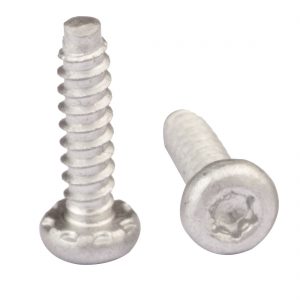
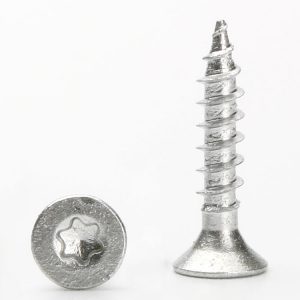
Type:Torx Head Self Tapping Screws
Materials:Stainless Steel
Surface treatment:Plain
Head Type:Pan Head
Drive:Torx Recess
Thread:Self Tapping Thread
Point:Flat Point
Forming:Single Die Heading
Size:M1 M2 M3 M4 M5 M6 M7 M8 M9 M10 M14
Number:836
We make torx head self tapping screws in passivated stainless with a pan head, a six-lobe recess and a flat point, quoting them from M1 to M14. Recess size, thread, point and sheet thickness come from your drawing, and the first article is driven at your specified torque.
Watch the factory video·Email sst@szsst88.com
ISO 9001:2015 · Manufacturing since 1998 · 8,678+ customers · 89 countries and regions
Made to order – there is no stock catalogue. Each part is produced to your drawing, and production starts after drawing review and first-article approval.
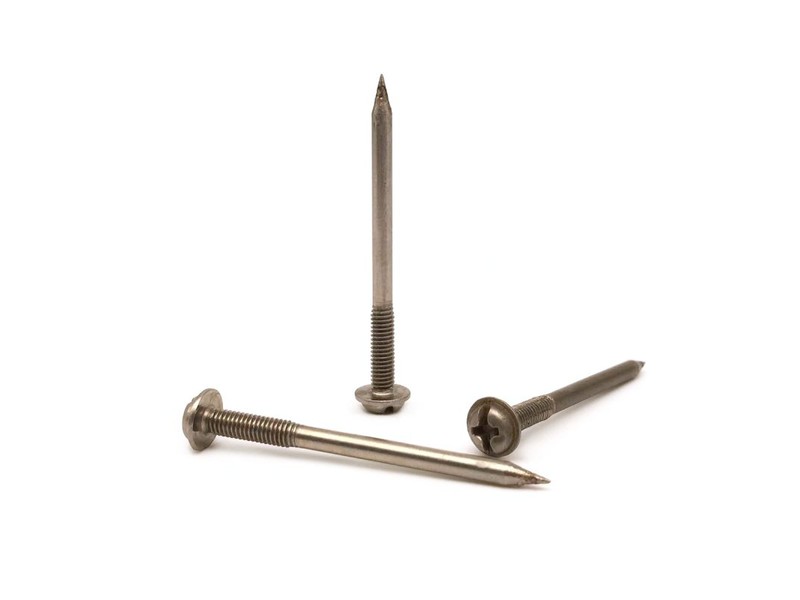
Torx head self tapping screws are self-tapping screws driven through a six-point star recess. The thread cuts its own thread in a pilot hole, the head sits on the panel, and the star drive turns the screw without the driver climbing out. This family is made in stainless with a plain finish, a pan head and a flat, blunt point, quoted from M1 to M14 with Number 836 and filed under the self-tapping group.
Torx recess. Six lobes with near-parallel flanks. The driver contacts the walls rather than the corners, so torque is carried on a large area and the driver does not cam out.
Pan head. A shallow dome with a wide flat bearing face under it.
Self-tapping thread. A coarse thread with a sharp crest that forms its own thread in a pilot hole.
Flat point. A blunt end with a small chamfer, made for a hole that has already been drilled or punched.
Stainless, plain. Passivated and uncoated, so the recess is exactly as cut and the alloy is the whole of the protection.
Most drives are designed with a built-in limit. A Phillips recess cams the driver out when the torque climbs, which protects the joint by making the tool slip before the thread fails. A hexagon socket does something similar through a smaller contact area. A Torx recess gives none of that feedback — it transmits more torque with less slip, which is its advantage and, on a self-tapping screw, the start of its problem.
The reason is geometry. Six lobes with flanks that are close to parallel present a large contact area to the driver at every point of the drive, so the stress per unit area is low and the recess survives torque that would have deformed or slipped a cross. The driver stays seated, the operator keeps turning, and the material around the screw becomes the only thing that can give way.
On a torx head self tapping screw that means the failure moves into the sheet. The thread cuts through or strips the panel, the hole opens, and the screw turns freely with no clamp load. There is nothing wrong with the recess — it did exactly what it was designed to do — but the joint has failed in a place the operator cannot hear or feel as easily as cam-out.
That is why the drive and the joint have to be specified together. A Torx screw needs a torque-controlled driver, or a specified strip torque, or a joint where the material is thick enough that the thread will not open the hole. Where none of those is true, the very quality that makes the recess reliable makes the assembly less forgiving.
The flat point belongs to the same logic. A blunt point does not find its own way into a hole in the way a sharp point does, so the screw has to be presented straight and the hole has to be formed — which suits a jig or a machine, and suits a recess that is meant to be driven at a controlled torque.
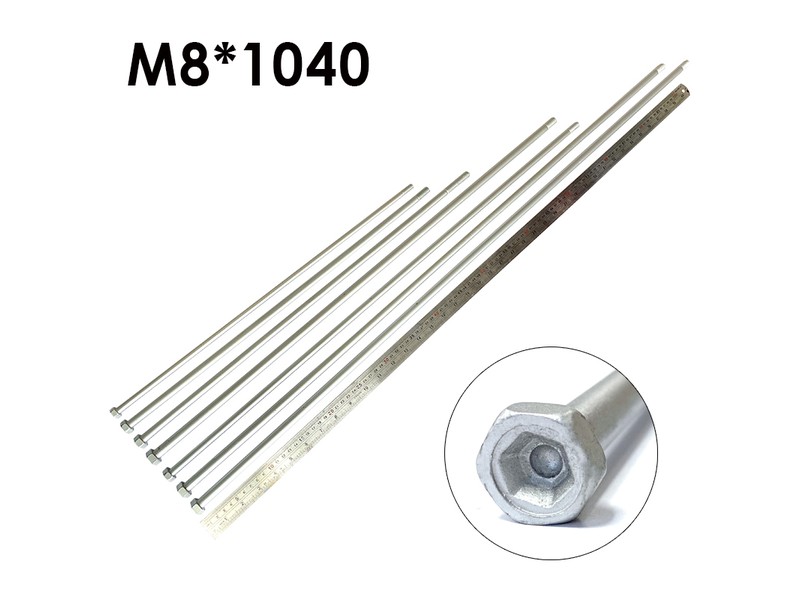
The recorded range is M1 to M14, covering M1, M2, M3, M4, M5, M6, M7, M8, M9, M10 and M14. Custom lengths up to 2,000 mm are subject to DFM review after drawing submission. For a torx head self tapping screw the quotation is thread size, length, recess size and point form, because the recess size decides the driver and the point decides the hole.
| Item | How it is defined | What we control |
|---|---|---|
| Head | Pan head, domed, flat face | Head diameter, height and face flatness |
| Recess | Torx, six-point star | Recess size and depth, driver fit |
| Thread | Self-tapping, coarse pitch | Pitch and major diameter, gauged |
| Point | Flat, blunt with chamfer | Point diameter and chamfer |
| Finish | Plain stainless, passivated | Surface condition and film |
| Length | Under the head to the point | Measured on the shop plate |
Recess size is quoted with the thread, not left to the driver box. A Torx recess that is one size small will not accept the bit, and one size large will rotate without turning the screw — and because the recess is the reason for using the part, a mismatch turns a good screw into a scrap part at the assembly station.
Length is measured from under the head. On a blunt-pointed self-tapping screw, the point adds very little to the working length, so the length on the drawing is close to the depth the screw occupies in the panel — which makes a length error more visible than it is on a sharp-pointed screw.
Three features define this part: the Torx recess, the self-tapping thread and the pan head. Each is a known quantity on its own; what matters is the order in which they fail together.
| Feature | What it gives | What it costs |
|---|---|---|
| Torx recess | High torque, no cam-out | Removes the warning before the sheet strips |
| Six-lobe contact | Long recess life | Bit must be the exact size |
| Coarse self-tapping thread | Holds in thin sheet | Strips if over-driven |
| Flat point | Straight entry into a formed hole | Needs a hole; will not start on its own |
| Plain stainless | No coating in the recess | Galls against stainless |
The recess life is the practical gain in service. A stainless screw with a Torx recess can be removed and refitted more times than the same screw with a cross recess, because the bit is carried on the walls and the lobes do not deform at the point of contact. On equipment that is opened for maintenance, that is a real difference in how long the fasteners last.
The bit is the other half of the deal. Torx sizes are not interchangeable: a T20 bit in a T25 recess will turn the screw at low torque and then round the recess the moment the load rises. Bits wear too, and a worn bit is the most common cause of a damaged Torx recess in the field.
The recorded finish is plain, passivated stainless. On a Torx screw that is worth more than on most heads: the recess is the part that gets used, and a coating would wear off the lobes first, leaving a bare steel area inside a recess where moisture sits and cannot be seen. A passive stainless surface has nothing to wear off.
| Option | How it protects | Effect on recess and thread | Typical use |
|---|---|---|---|
| A2 plain, passivated | Passive chromium oxide film | None; recess as cut | General indoor and outdoor |
| A4 plain, passivated | Passive film with molybdenum | None; recess as cut | Coastal and chemical |
| White zinc on steel | Sacrificial zinc | A few microns; recess re-checked | Indoor panels, cost-driven |
| Black zinc on steel | Sacrificial zinc, dark | A few microns; recess re-checked | Dark equipment and trim |
| Dacromet on steel | Zinc-aluminium flake layer | Film builds; recess re-checked | Outdoor steel structures |
Galling is the stainless behaviour to design around on this part. A stainless self-tapping screw driven into stainless sheet can seize, and a Torx recess will keep taking torque while the thread welds to the hole. A lubricant on the thread, or a different alloy for one of the two parts, removes the problem before it starts.
Three assemblies where a torx head self tapping screw is the fixing:
| Where it sits | The screw closes a cover that is opened repeatedly, where the recess has to survive many cycles and the driver is a controlled tool. |
| When it goes wrong | A damaged recess stops maintenance, and an over-driven screw strips the panel the same day. |
| Why it happens | The joint is cycled, the drive is controlled, and the material is thin. |
| What we control | Recess size and depth checked, first article driven to the specified torque. |
| Where it sits | The screw is driven by a machine that cannot feel cam-out and needs a drive that stays engaged and takes a repeatable torque. |
| When it goes wrong | Without a torque limit the machine strips the sheet rather than slipping the bit. |
| Why it happens | The drive is automated, the torque is set, and the panel is thin. |
| What we control | Recess driven with the production bit, strip torque recorded on the first article. |
| Where it sits | The screw fixes a plate or a fitting where the recess will be used in a wet place and any coating would wear out of the lobes first. |
| When it goes wrong | A coated steel recess rusts from the inside out, and a seized stainless joint takes the recess with it. |
| Why it happens | The joint is wet, the recess is worked, and the part is stainless. |
| What we control | Grade confirmed, recess and thread checked, passivation inspected. |
Four reasons that matter on a star-driven self-tapping screw, each tied to what the drawing has to prove:
|
Recess, torque and sheet reviewed together
The recess size, the drive torque and the sheet thickness are reviewed as one set, because a Torx drive removes the slip that would have protected a thin panel. Basis: Recess, torque and sheet agreed in writing. |
Head, recess and thread made in one route
The pan head and the Torx recess are formed in the heading stroke, the self-tapping thread is rolled, the point is formed and the parts are passivated in the same route. Basis: One route from wire to passivated screw. |
|
Driven with the production bit
The recess is checked for size and depth and then driven with the production bit at the specified torque, because a Torx recess that measures to the drawing can still refuse a worn bit. Basis: First article driven at the specified torque. |
First article fixes the setting
The first article fixes the wire heat, the recess punch and the passivation; repeat orders are compared against that record. Basis: First article signed off before the batch is released. |
Shi Shi Tong forms these torx head self tapping screws from stainless wire on single-die headers that form the pan head and the six-lobe recess in one stroke, rolls the self-tapping thread, forms the flat point and passivates the finished parts. The first part of every run is measured on the head and recess, driven with the production bit and entered into a thread gauge before the batch continues.


|

|
The recess punch is the tool that limits the die. Six lobes with fine geometry demand a punch that stays sharp and stays concentric with the head; a worn punch leaves lobes that are shallow at one side, and a bit driven into that recess bites on two or three lobes instead of six. The result looks like a driver problem and is a tooling one.
What decides whether torx head self tapping screws pass is the recess, the head, the thread and the point. The inspection agreement covers those, and the criteria come from the drawing.

Recess and head on the projector |

Thread gauged per batch |

Hardness checked against the grade |

Salt-spray testing of the grade |
The recess is checked for size and depth on the projector and then driven with the production bit at the specified torque; the lobes are inspected for shape, not only for position. The head is checked for diameter, height and face flatness, the thread is gauged per batch, and the point is checked for diameter and chamfer.
Every torx head self tapping screw is also checked for the way it behaves in the joint: the first article is driven into a sheet of the customer’s thickness and the strip torque is recorded. On a drive that will not slip, that number is the one that predicts whether the assembly will hold, so it goes into the inspection record rather than staying a workshop observation.
Every shipment of torx head self tapping screws is traceable to the wire it was made from and to the passivation batch. The grade and heat number are recorded on the material certificate supplied with the parts, and the inspection records follow the criteria agreed on the drawing.

ISO 9001:2015 |

RoHS test report |

Registered trademark |

Patent: security screw and driver |
With each batch we supply the material certificate, the inspection record for the criteria on the drawing and, where it is listed, the third-party report for the grade or the passivation. The documents carry the drawing revision and the batch number, so the paperwork can be matched to the parts.
More than 8,678 customers in 89 countries and regions have ordered from Shi Shi Tong; 87% of orders come from repeat customers and 56% through referrals. Most projects follow the same route: drawing review, first-article approval, then batches checked against that sample. On a self-tapping part the first article is driven into the customer’s own sheet, because the joint is the function. Buyers visit during the process to review samples and to see how the heads and recesses are formed.
|
8,678+
customers served
|
87%
of orders from repeat customers
|
56%
of orders through referrals
|
89
countries and regions shipped to
|
Buyers and quality engineers visit for sample review, process discussion and supplier audits; the visit is arranged around production so the headers and the passivation line can be seen on the day the parts run.

Customer group visit – sample review |

Customer group visit – process discussion |

Customer group visit – factory tour |

Customer visit – project kick-off |

Danish customer – drawing review |

Industry exhibition – meeting customers |
For torque and recess life. A Torx drive turns the screw without climbing out, so it can be driven harder and survives more cycles — which also means the sheet becomes the limiting part.
On thin sheet, yes. Without a torque limit the drive will not slip, so the thread strips the panel instead. A strip torque on the drawing gives the assembly something to set.
The screw is blunt, so it needs a drilled or punched hole and a straight entry. It is made for jigs and automated assembly rather than for starting on a mark by hand.
The exact Torx size for the recess, matching the bit to the screw. One size small will damage the lobes; one size large will spin without turning the screw.
Yes, with care: stainless on stainless galls, and a Torx drive keeps applying torque while the thread seizes. A lubricant on the thread, or a different alloy for one part, avoids it.
Thread size and length, point form, head diameter and height, Torx recess size and depth, the sheet material and thickness, and the driving torque if it is controlled.
How a torx head self tapping screw project runs from drawing to repeat delivery:
|
1
Send the drawing and the sheet you are fixing
|
→ |
2
Recess size, torque and thread agreed
|
→ |
3
First article driven at the specified torque
|
→ |
4
Batch production and repeat orders
|
Each step is confirmed with you before the next one starts; the drawing revision from the first article is what repeat orders are checked against.
For a quotation, send the drawing with the thread size and length, the point form, the head diameter and height, the Torx recess size and the sheet material and thickness.
|
Thread size
|
Length
|
Point form
|
|
Head diameter
|
Torx size
|
Sheet thickness
|
Sending a drawing? The form below does not take attachments. Email the PDF, DXF or STEP file to sst@szsst88.com with the part name and quantity in the subject line – the drawing is reviewed and a quotation follows.

 +86 13143444311
 sst@szsst88.com