Tel:
+86 13143444311
Email:sst@szsst88.com
Fax:+0086-755-27322278
Address:Building 9, First Industrial Zone, Tantou Industrial City, Songgang Street, Baoan District, Shenzhen 518105, Guangdong, China
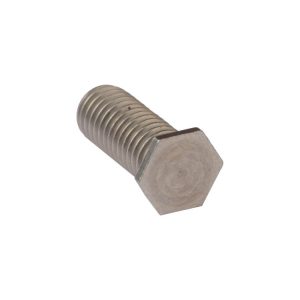
Type:Custom Stainless Steel Hex Head Shoulder Screw with Phillips Cross
Materials:Stainless Steel 303
Surface treatment:Plain (cleaned and passivated)
Head Type:Hex Head
Drive type:Phillips cross recess in the hex face (dual drive)
Shank:Plain shoulder, unthreaded; short machine thread at the end
Process:Turned from bar, cross recess milled, threaded after turning
Size:M1 M2 M3 M4 M5 M6 M7 M8 M9 M10 M14
Thread:Short machine thread below an unthreaded shoulder, rolled; thread start as drawn
Number:12
We manufacture stainless steel hex screws as turned shoulder screws in 303 stainless, with a hex head, a Phillips cross milled into the face, an unthreaded shoulder and a short machine thread, quoted from M1 to M14. Shoulder diameter and length, hex, thread and grade are taken from your drawing.
Watch the factory video·Email sst@szsst88.com
ISO 9001:2015 · Manufacturing since 1998 · 8,678+ customers · 89 countries and regions
Made to order – there is no stock catalogue. Each part is produced to your drawing, and production starts after drawing review and first-article approval.
A stainless steel hex screw is a fastener with a hexagonal head that can be turned with a spanner. The recorded item on this page is a turned shoulder screw: a 303 stainless body with a hex head, a Phillips cross recess milled into the top of that head, an unthreaded shoulder and a short machine thread at the end, quoted from M1 to M14 with Number 12.
Hex head. Six flats for a spanner or socket. The head takes more torque than a recessed head of the same diameter, and it gives the fitter a second way to turn the screw if the drive in the face is damaged.
Cross recess in the face. A Phillips cross milled into the top of the hex. It is a second drive: the screw can be run in with a screwdriver and finally tightened with a spanner, which is what makes the dual drive useful on an assembly line.
Shoulder. A plain, unthreaded diameter between the head and the thread. It locates the component in its bore, so the joint is centred by a machined diameter and the thread only has to clamp.
Turned from bar. This part is machined rather than cold headed, because the hex, the cross in the face and the shoulder cannot all be produced by heading in one pass. Turning gives the concentricity the shoulder needs.
Together these decide the part: the hex gives the torque, the cross gives the speed, the shoulder centres the joint, and the turned 303 body holds the geometry. That is why a stainless steel hex screw of this type is specified by head, drive, shoulder and thread together.
The body of a stainless steel hex screw of this type is 303 stainless bar, with the heat number kept with the batch record. 303 is the free-machining grade: it contains sulphur, which breaks the chip and lets the bar be turned at speed, and that is why it is used for a part with a hex, a cross recess and a shoulder all cut from one blank.
The hex head is turned from the bar, then the cross recess is milled into its top face. The recess is centred on the hex because the milled cross is what the screwdriver engages; an off-centre cross shows as an uneven wall on one side of the flats and unbalances the drive.
The shoulder is turned to the drawing diameter and held to a tight tolerance, because it is the locating feature. A shoulder that is undersize lets the component move, and one that is oversize will not enter the bore at all.
The machine thread is cut or rolled on the end section only, leaving the shoulder plain. The thread length and the shoulder length are separate dimensions on the drawing, and the transition between them is where the component seats.
The parts are cleaned and passivated. On a turned part that matters more than on a headed one: the machining leaves fine turning marks and residual oil, and passivation removes the free iron from those surfaces before the part goes into a stainless assembly.
Stainless steel hex screws of this type are quoted from M1 to M14 for the thread, with the shoulder diameter and length set per drawing; the recorded configuration is a turned shoulder screw with a short thread at the end. Custom lengths up to 2,000 mm are subject to DFM review after drawing submission, because the shoulder and the thread are separate dimensions on a turned part.
| Item | How it is defined | What we control |
|---|---|---|
| Hex across flats | The spanner size on the head | Checked on the projector and with the spanner |
| Cross recess | Bit engagement in the hex face | Checked with the matching bit |
| Shoulder diameter | The locating diameter in the bore | Measured on the first article against the bore |
| Shoulder length | The distance from under the head to the thread start | Measured from the bearing face |
| Thread size and length | The clamping section at the end | Gauged per batch |
| Overall length | Under the head to the tip | Measured on the shop plate |
Each size is quoted against the bore and the panel it works with. The shoulder diameter, the bore it enters and the shoulder length are reviewed together, because the locating fit is what the part is for — the thread is only there to clamp.
Length is stated three times on a shoulder screw: under the head to the tip, shoulder length, and thread length. A drawing that gives only the overall length leaves the machinist to guess where the shoulder ends, and that guess changes the fit.
The dual drive is the feature that makes this screw practical on a line. The cross lets an operator run the screw in quickly with a driver, and the hex lets the same joint be brought to final torque with a spanner — without a second part, and without relying on the cross recess to carry the torque on its own.
| Feature | What it does | What goes wrong without it | What we control |
|---|---|---|---|
| Hex across flats | Takes final torque with a spanner | A recessed head of the same size strips first | Checked on the projector and with the spanner |
| Cross in the face | Fast run-in with a driver | Hand-threading every screw on a line | Checked with the matching bit |
| Shoulder | Centres the component in its bore | Oversize will not enter, undersize lets it move | Measured against the bore |
| Short thread | Clamps without threading the bore | Thread in the bore wears it and blocks adjustment | Thread length measured from the shoulder |
On a stainless steel hex screw the shoulder is what the part is really for. On a plain screw the thread centres the component, and any clearance in the thread becomes play at the joint. On a shoulder screw the unthreaded diameter fills the bore, so the component is located on a machined surface and the thread at the end only has to hold it against the head.
Turning is the right process for this geometry, and it also sets the limits. A turned part holds concentricity between the hex, the cross and the shoulder, which is exactly what the dual drive needs; a headed part would have to have the cross milled afterwards and the shoulder cut, and each operation adds a chance for the axes to drift.
303 machines well but corrodes slightly less readily than 304 in chlorides, because of the sulphur. For indoor fixtures and instrument mounts that is not an issue; for wash-down or coastal service the drawing should call for 316, which is harder to machine but survives the environment.
This stainless steel hex screw is supplied cleaned and passivated, with no coating. On a turned part the passivation step is what removes the free iron left by machining, and because there is no coating the hex flats and the cross recess keep the dimensions they were cut to.
| Finish | How it protects | Effect on hex and cross | Typical use |
|---|---|---|---|
| Plain, passivated 303 | Passive film after machining | No build-up; flats and cross as cut | Fixtures, instruments and indoor assembly |
| Plain, passivated 316 | Molybdenum-bearing passive film | No build-up | Wash-down and coastal work |
| Electropolished | Surface levelled, chromium enriched | A few microns removed; flats re-checked | Visible machined assemblies |
| Black oxide (stainless) | Chemical conversion, thin film | Minimal thickness | Dark fixtures and optical mounts |
| Bead blasted | Uniform matte surface | No dimensional change | Parts where glare matters |
Salt-spray exposure is agreed per project and written on the drawing; plain stainless is tested in the condition it ships in. On a turned shoulder screw the finish question is usually a grade question, because a coating thick enough to matter would change the locating fit on the shoulder.
Packing protects the hex flats and the shoulder of a stainless steel hex screw. The parts are bagged in counted quantities, labelled with the batch, the material heat and the shoulder diameter, and packed so the shoulders cannot rub, because a burred shoulder will not enter the bore.
Three assemblies where a locating shoulder and a second drive both matter:
| Where it sits | The screw locates a fixture plate or a jaw in a bore and clamps it with a short thread at the end, and it is adjusted between jobs. |
| When it goes wrong | A shoulder that is undersize lets the fixture shift under load, and a stripped cross leaves nothing to turn the screw with during a setup change. |
| Why it happens | The fixture is set and reset often, the bore is reamed, and the joint is tightened hard. |
| What we control | Shoulder diameter and length checked against the bore, the hex checked with the spanner, and the thread gauged. |
| Where it sits | The screw holds a mount or a plate where the shoulder centres an optic and the head has to stay clear of the beam path. |
| When it goes wrong | Play on the shoulder moves the optic, and a head that is too tall blocks the path or fouls the cover. |
| Why it happens | The assembly is adjusted, the parts are small, and the joint is set and locked. |
| What we control | Shoulder diameter and head height checked on the projector, and the cross checked with the bit. |
| Where it sits | The screw locates a bracket or a carriage stop in a bore and clamps it, with the joint re-tightened after alignment. |
| When it goes wrong | A shoulder with clearance lets the carriage move off its datum, and an over-driven head distorts the bracket. |
| Why it happens | The assembly is aligned, the joint is re-tightened, and the parts are reused. |
| What we control | Shoulder tolerance checked against the bore, and the hex used to bring the joint to torque on the first article. |
Four reasons that matter on a turned shoulder screw with a dual drive, each tied to what the drawing has to prove:
|
Shoulder and bore reviewed together
The shoulder diameter and length are checked against the bore and the component before the bar is cut, so a screw that will not locate is raised first. Basis: Shoulder and bore reviewed before machining. |
Turned, milled and threaded in one route
The hex, the cross recess and the shoulder are produced from one bar in one route, so the three features stay concentric. Basis: One route from bar to finished screw. |
|
Shoulder, hex and thread checked on the part
The shoulder is measured against the bore, the hex checked with the spanner and the thread gauged, on the first article. Basis: First article checked against the bore. |
First article to repeat production
The first article fixes the drawing revision, material heat and machining programme; repeat orders are compared against that record. Basis: First article signed off before the batch is released. |
Shi Shi Tong turns these stainless steel hex screws from 303 bar: the hex and the shoulder are turned in one setup, the cross recess is milled into the head face, and the thread is cut or rolled on the end section. The parts are then cleaned and passivated. The first part of every run is measured on the shoulder, the hex and the thread, and checked with the spanner and the bit, before the batch continues.


|

|
Because this is a turned part, the setup carries more of the quality than the tooling. The first article is checked for concentricity between the hex, the cross and the shoulder before the run continues, and any change to the programme is proved on a part rather than on the machine display.
What decides whether a stainless steel hex screw passes is the shoulder diameter and length, the hex across flats, the cross recess, the thread class and the surface condition. The inspection agreement covers those, and the criteria come from the drawing.

Hex and shoulder on the projector |

Thread gauged per batch |

Hardness testing where the drawing requires it |

Salt-spray testing of the passivated part |
Each batch is recorded against the drawing revision: shoulder and hex from the first article, the thread gauged per batch, and the grade confirmed on the certificate. If the shoulder measurement or the spanner check fails, the parts back to the last good setting are held and re-checked.
If the material needs an outside report, the drawing calls for it, the paperwork travels with the shipment and the batch number on the label matches the inspection record.
Every shipment of stainless steel hex screws is traceable to the bar it was made from. The grade, heat number and standard are recorded on the material certificate supplied with the parts, and the inspection records follow the criteria agreed on the drawing.

ISO 9001:2015 |

RoHS test report |

Registered trademark |

Patent: security screw and driver |
With each batch we supply the material certificate, the inspection record for the criteria on the drawing and, where it is listed, the third-party report for the material. The documents carry the drawing revision and the batch number, so the paperwork can be matched to the parts.
More than 8,678 customers in 89 countries and regions have ordered from Shi Shi Tong; 87% of orders come from repeat customers and 56% through referrals. Most projects follow the same route: drawing review, first-article approval, then batches checked against that sample. On a shoulder screw the first article is fitted into the customer’s bore, so the locating diameter is signed off in the part it centres. Buyers visit during the process to review samples and to see how the parts are turned.
|
8,678+
customers served
|
87%
of orders from repeat customers
|
56%
of orders through referrals
|
89
countries and regions shipped to
|
Buyers and quality engineers visit for sample review, process discussion and supplier audits; the visit is arranged around production so the turning cell and the inspection room can be seen on the day the parts run.

Customer group visit – sample review |

Customer group visit – process discussion |

Customer group visit – factory tour |

Customer visit – project kick-off |

Danish customer – drawing review |

Industry exhibition – meeting customers |
It is a fastener with a hexagonal head turned with a spanner. This one is a turned shoulder screw in 303 stainless with a Phillips cross milled into the hex face, an unthreaded shoulder and a short machine thread at the end.
So the screw can be run in quickly with a driver and then brought to final torque with a spanner. The cross handles the speed, the hex handles the torque.
It locates the component in its bore. The unthreaded diameter fills the hole, so the joint is centred on a machined surface and the thread only has to clamp.
303 is the free-machining grade, which suits a part with a hex, a cross and a shoulder cut from one bar. For wash-down or coastal service the drawing should call for 316 instead.
It can, but the shoulder gets shorter by the same amount, and the shoulder is the locating feature. Thread and shoulder lengths are set together on the drawing.
Hex across flats, cross recess size, shoulder diameter and length, thread size and length, overall length and datum, material, finish, and the bore the shoulder enters.
How a stainless steel hex screw project runs from drawing to repeat delivery:
|
1
Send the drawing or sample
|
→ |
2
Shoulder, hex and thread review
|
→ |
3
First article in the bore
|
→ |
4
Batch production and repeat orders
|
Each step is confirmed with you before the next one starts; the drawing revision from the first article is what repeat orders are checked against.
For a quotation, send the drawing with the hex across flats, cross recess size, shoulder diameter and length, thread size and length, overall length and its datum, material and grade, finish, and the bore the shoulder enters.
|
Hex across flats
|
Cross recess size
|
Shoulder diameter and length
|
|
Thread size and length
|
Overall length
|
Material and finish
|
Sending a drawing? The form below does not take attachments. Email the PDF, DXF or STEP file to sst@szsst88.com with the part name and quantity in the subject line – the drawing is reviewed and a quotation follows.

 +86 13143444311
 sst@szsst88.com