Tel:
+86 13143444311
Email:sst@szsst88.com
Fax:+0086-755-27322278
Address:Building 9, First Industrial Zone, Tantou Industrial City, Songgang Street, Baoan District, Shenzhen 518105, Guangdong, China
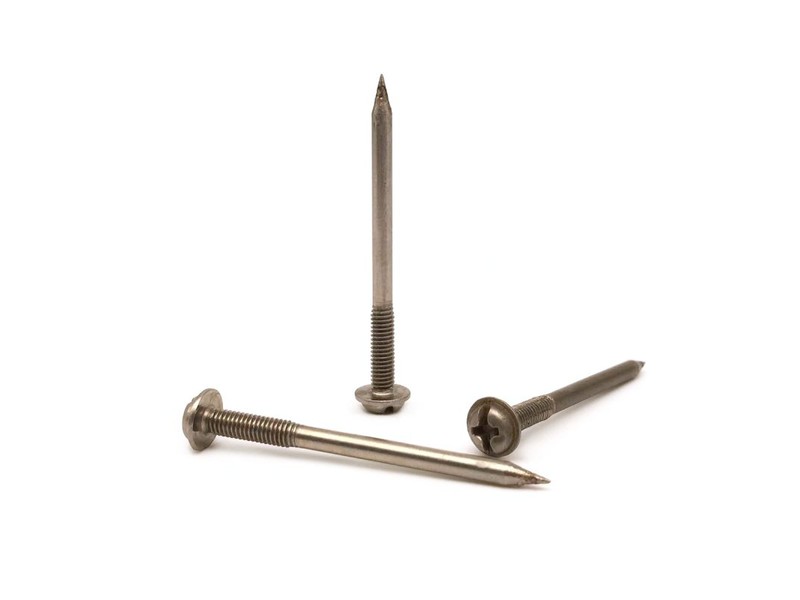
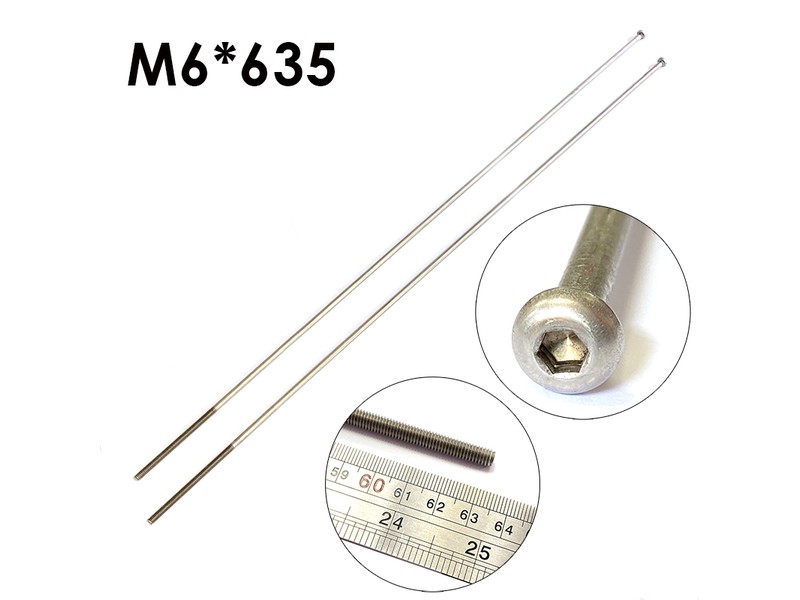
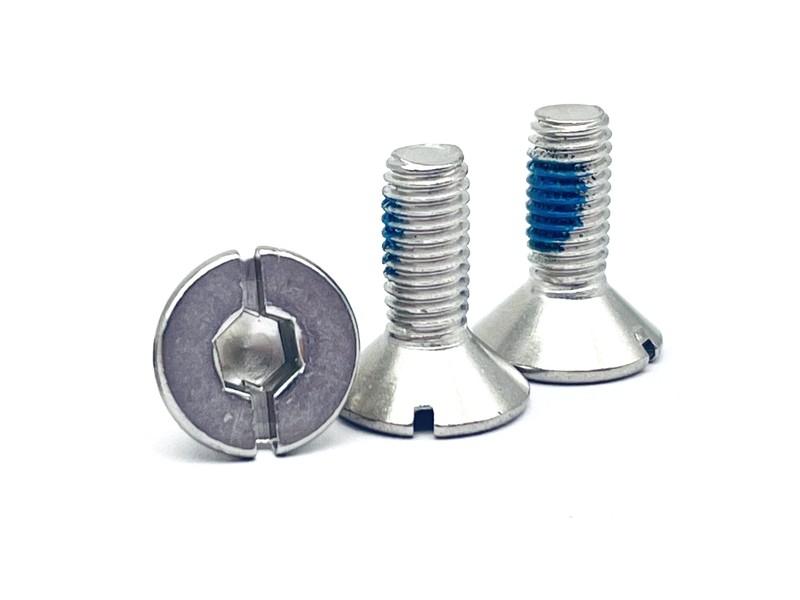
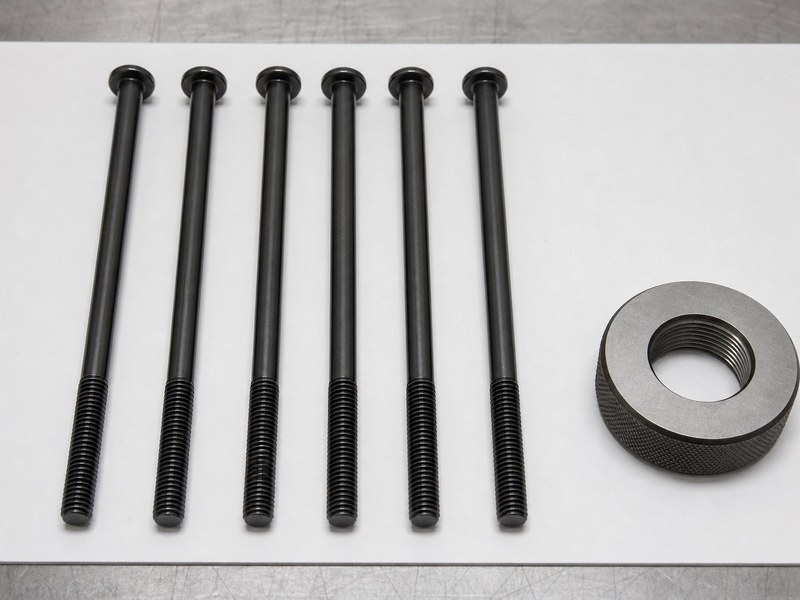
Type:Special Socket Head Cap Screws
Materials:Stainless Steel 316
Surface treatment:Plain
Head Type:Cap Head
Drive:Allen Socket
Thread:Machine Thread
Point:As Drawn
Forming:Turned From Bar
Size:M1 M2 M3 M4 M5 M6 M7 M8 M9 M10 M14
Number:215
We make special socket head cap screws turned from 316 stainless bar, with a cap head, a hexagon socket and a thread to drawing, quoting them from M1 to M14. Every dimension, tolerance, thread specification and grade is reviewed before quoting, and the first article is measured on every feature and fitted.
Watch the factory video·Email sst@szsst88.com
ISO 9001:2015 · Manufacturing since 1998 · 8,678+ customers · 89 countries and regions
Made to order – there is no stock catalogue. Each part is produced to your drawing, and production starts after drawing review and first-article approval.
Special socket head cap screws are hexagon socket cap screws made to a drawing rather than to a catalogue, and on this item they are turned from 316 stainless bar in a plain finish. The head is a standard cap form, the drive is a hexagon, and the shank and thread are whatever the drawing asks for. The family is quoted from M1 to M14 with Number 215.
Cap head. A cylinder with a flat top, a deep hexagon socket and a full flat bearing face.
316 stainless. A molybdenum-bearing grade with better resistance to chlorides than the common 304.
Turned from bar. Machined on a lathe rather than headed from wire, which allows shapes a forming die cannot make.
Special. Any feature without a catalogue equivalent: a stepped shank, an unusual thread length, a custom head or a large diameter.
In use special socket head cap screws are ordered when no catalogue part will fit the assembly, and the drawing carries the whole specification rather than a size code.
Most socket cap screws are headed from wire: the head and the socket are formed in one blow, and the thread is rolled. That is fast and it is strong, because rolling works the grain along the thread rather than cutting across it. A special socket head cap screw that is turned starts as bar stock and has every feature cut, which is slower — but it can make shapes the die cannot.
What turning buys is geometry. A stepped shank with two diameters, an undercut in the middle, a head that is not a standard proportion, a thread that starts at an awkward point, a very long thin section: all of these are ordinary turning work and impossible or expensive in a heading die. That is why special parts are usually turned when the quantity is modest and the drawing is unusual.
What turning costs is the thread. A cut thread is not as strong as a rolled one, because the grain is severed instead of being compressed along the profile, and on a small screw that difference is a larger share of the strength. Where the joint is critical, the thread is still rolled on a turned blank — which is possible, but it is an extra operation and should be expected in the price rather than discovered.
The 316 grade is part of the same trade. It is harder to machine than 304 and it costs more, but it keeps its passivity where chlorides are present, which matters on a part that will spend its life in a washdown line, a coastal plant or a chemical area. Selling 316 where 304 would do is a common way to make a special part unnecessarily expensive.
The socket is the one feature that stays standard. It is cut with a standard tool to a standard size for the thread, so the key that fits a catalogue screw of the same size fits this one. That is worth keeping, because the alternative — a custom socket — turns a special screw into a special screw plus a special tool.
The recorded range is M1 to M14, covering M1, M2, M3, M4, M5, M6, M7, M8, M9, M10 and M14. Custom lengths up to 2,000 mm are subject to DFM review after drawing submission. For special socket head cap screws the quotation is the drawing itself: every dimension, every tolerance and the material grade, because there is no catalogue to fall back on.
| Item | How it is defined | What we control |
|---|---|---|
| Head | Cap head, flat top | Head diameter and height |
| Socket | Internal hexagon | Socket across flats and depth |
| Shank | As drawn, often stepped | Each diameter and its tolerance |
| Thread | Machine thread, cut or rolled | Pitch, length and start position |
| Material | 316 stainless | Grade, condition and passivation |
| Finish | Plain, passivated | Surface condition and cleanliness |
Tolerances are where a special part is won or lost. A turned diameter can be held tightly, but every tight tolerance is a separate operation and a separate inspection, and a drawing that puts tight limits on four dimensions when two would do is a drawing that costs more than it needs to. The useful approach is to mark only the dimensions the joint depends on.
Thread specification deserves the same care. A cut thread and a rolled thread of the same nominal size behave differently under load, so the drawing should say which is required where the joint is loaded. Where it says nothing, the maker chooses, and the choice will be the cheaper of the two.
Three features define this part: the freedom of a turned shape, the 316 grade and the standard socket. The first is why the part is special, the second is where it can live, and the third keeps the assembly simple.
| Feature | What it gives | What it costs |
|---|---|---|
| Turned geometry | Stepped shanks, undercuts, custom heads | Per-part machining time |
| 316 stainless | Chloride resistance | Harder to machine, dearer than 304 |
| Standard hexagon socket | Catalogue keys fit | Limits head height options |
| Cut thread option | Geometry independence | Weaker than a rolled thread |
| Plain passivated | No coating to change the fit | Galls against stainless |
The practical value is that a special part can solve a design problem no catalogue part solves: a shoulder that has to stop at an exact point, a shank that has to pass through one bracket and thread into another, a head that has to clear a casting. Each of those is a few lines on a drawing and a small addition to the machining time, and the alternative is usually a redesign.
The practical risk is that a special part is a single source. It exists because nobody stocks it, which means the customer depends on one drawing and one supplier, and a repeat order is only as good as the record of the first one. That is why the first article and its inspection record matter more on a special screw than on any catalogue item.
The recorded finish is passivation on 316 stainless, with no coating. Passivation removes free iron left by machining and lets the chromium oxide layer rebuild over the fresh surface, which on a turned part matters more than on a formed one because every cut exposes new metal. Nothing is added, so the geometry is exactly what was machined.
| Option | How it protects | Effect on machined features | Typical use |
|---|---|---|---|
| 316 stainless, passivated | Passive film with molybdenum | As machined | Coastal, chemical, washdown |
| 304 stainless, passivated | Passive chromium oxide film | As machined | General outdoor and indoor |
| 303 stainless, passivated | Free-machining, lower chloride resistance | Easiest to machine | Dry indoor mechanisms |
| Steel, black oxide | Conversion film, oiled | No measurable build | Internal machine parts |
| Steel, zinc plated | Sacrificial zinc | A few microns; fits re-checked | Indoor general work |
The choice between 316 and 304 is the first cost decision on a special part, and it is worth making on evidence rather than habit. 316 is the right answer where chlorides are present; 304 is adequate and cheaper for general exposure; 303 machines most easily but gives up resistance in the same environments that justify 316.
Galling is the behaviour to plan for on any stainless socket. A turned 316 screw has a smoother thread than a rolled one, and smooth stainless on stainless is prone to seize, so a dry-film lubricant or a different alloy for the mating part keeps the joint predictable.
Three assemblies where special socket head cap screws are the fixing:
| Where it sits | The screw clamps a fitting or a bracket where the joint is cleaned with water or chemicals and the material has to keep its passivity. |
| When it goes wrong | A 304 part pits in chloride, and a seized stainless thread takes the socket with it when it is opened. |
| Why it happens | The environment is aggressive, the joint is serviced, and the part is stainless. |
| What we control | Grade confirmed on the certificate, socket driven with the production key. |
| Where it sits | The screw passes through one bracket and threads into another, with a shoulder that has to stop at a set depth and a head that has to clear a casting. |
| When it goes wrong | A catalogue part cannot give the shoulder and the clearance, and a modified one loses its thread strength at the step. |
| Why it happens | The geometry is not standard, the parts are few, and the fit is defined. |
| What we control | Every dimension measured on the first article, thread gauged per batch. |
| Where it sits | The screw holds a mount where a precise shoulder and a controlled head height set the alignment. |
| When it goes wrong | A part made to a general tolerance moves the setting, and a socket that is damaged cannot be re-cut. |
| Why it happens | The alignment depends on the part, the quantity is modest, and the material is stainless. |
| What we control | Shank and shoulder measured on the projector, first article fitted to the mount. |
Four reasons that matter on a made-to-drawing socket screw, each tied to what the drawing has to prove:
|
Every dimension and tolerance agreed
Each diameter, shoulder and thread position is confirmed against the drawing, because a special part has no catalogue value to fall back on when one number is left open. Basis: All dimensions and tolerances agreed. |
Turned, threaded and passivated in one route
The bar is turned to the drawn profile, the thread is cut or rolled as specified and the parts are passivated, with each operation recorded. Basis: One route with the drawing as the reference. |
|
Measured and fitted, not just measured
The first article is measured on every drawn feature and fitted to the customer assembly, because the geometry is the function on a special part. Basis: First article measured and fitted. |
First article fixes the setting
The first article and its record fix the bar, the operations and the passivation; repeat orders are compared against that record. Basis: First article signed off before the batch is released. |
Shi Shi Tong machines these special socket head cap screws from 316 stainless bar: the head and the hexagon socket are cut, the shank is turned to the drawn profile, the thread is cut or rolled to the specified length and the finished parts are passivated. The first article of every run is measured on every drawn feature before the batch continues.


|

|
316 is a slower material than the free-machining grades, and that shows up in the tool life and in the finish on turned features. It work-hardens if the tool rubs instead of cutting, so the feeds and speeds are set at the start of the run and held; a change partway through shows as a different surface finish on the shank, which on a visible special part is as much a defect as a dimension.
What decides whether special socket head cap screws pass is the drawn geometry, the socket, the thread and the alloy. The inspection agreement covers those, and the criteria come from the drawing.

Shank and head on the projector |

Thread gauged per batch |

Hardness checked on the bar |

Salt-spray testing of the grade |
Every drawn diameter is measured, and the ones that locate get a concentricity check as well, because a shank that is round and to size but eccentric will bind at one point of rotation. The socket is checked across flats and for depth and driven with the production key; the thread is gauged per batch.
The alloy is confirmed on the mill certificate, and a salt-spray sample is run where the environment asks for it. On a 316 part that is the check that justifies the grade, and on a special part it is worth having on record before the batch is repeated.
Every shipment of special socket head cap screws is traceable to the stainless bar it was machined from. The grade and heat number are recorded on the mill certificate supplied with the parts, and the inspection records follow the drawing.

ISO 9001:2015 |

RoHS test report |

Registered trademark |

Patent: security screw and driver |
With each batch we supply the mill certificate for the bar, the inspection record for every drawn feature and, where it is listed, the third-party report for the grade or the passivation. The documents carry the drawing revision and the batch number, which on a special part is the only thing that makes a repeat order repeatable.
More than 8,678 customers in 89 countries and regions have ordered from Shi Shi Tong; 87% of orders come from repeat customers and 56% through referrals. Most projects follow the same route: drawing review, first-article approval, then batches checked against that sample. On a special part the first article is fitted to the customer assembly, because the geometry is the function. Buyers visit during the process to review samples and to see how the parts are machined.
|
8,678+
customers served
|
87%
of orders from repeat customers
|
56%
of orders through referrals
|
89
countries and regions shipped to
|
Buyers and quality engineers visit for sample review, process discussion and supplier audits; the visit is arranged around production so the turning cells and the passivation line can be seen on the day the parts run.

Customer group visit – sample review |

Customer group visit – process discussion |

Customer group visit – factory tour |

Customer visit – project kick-off |

Danish customer – drawing review |

Industry exhibition – meeting customers |
Any feature with no catalogue equivalent: a stepped shank, an unusual thread length or start, a non-standard head, or a large diameter for the length.
Because turning can make shapes a die cannot — steps, undercuts and custom heads — and it suits modest quantities. Heading is faster and stronger for standard forms.
They can be, but on a turned blank that is an extra operation. Cut threads are weaker than rolled ones, so where the joint is loaded the drawing should say which is required.
Chlorides. 316 keeps its passivity in coastal, marine and chemical environments where 304 would pit. Where those are absent, 304 is cheaper and adequate.
Each tight tolerance is a separate operation and check. Marking only the dimensions the joint depends on keeps the part affordable.
Every feature with its tolerance, the socket size, the thread specification including cut or rolled, the grade and the passivation.
How a special socket head cap screw project runs from drawing to repeat delivery:
|
1
Send the drawing and the assembly it fits
|
→ |
2
Every dimension, tolerance and grade reviewed
|
→ |
3
First article measured and fitted
|
→ |
4
Batch production and repeat orders
|
Each step is confirmed with you before the next one starts; the drawing revision from the first article is what repeat orders are checked against.
For a quotation, send the drawing with every feature and tolerance, the socket size, the thread specification, the material grade and the surface requirement.
|
Drawing
|
Socket size
|
Thread spec
|
|
Grade
|
Tolerance list
|
Passivation
|
Sending a drawing? The form below does not take attachments. Email the PDF, DXF or STEP file to sst@szsst88.com with the part name and quantity in the subject line – the drawing is reviewed and a quotation follows.

 +86 13143444311
 sst@szsst88.com