Tel:
+86 13143444311
Email:sst@szsst88.com
Fax:+0086-755-27322278
Address:Building 9, First Industrial Zone, Tantou Industrial City, Songgang Street, Baoan District, Shenzhen 518105, Guangdong, China
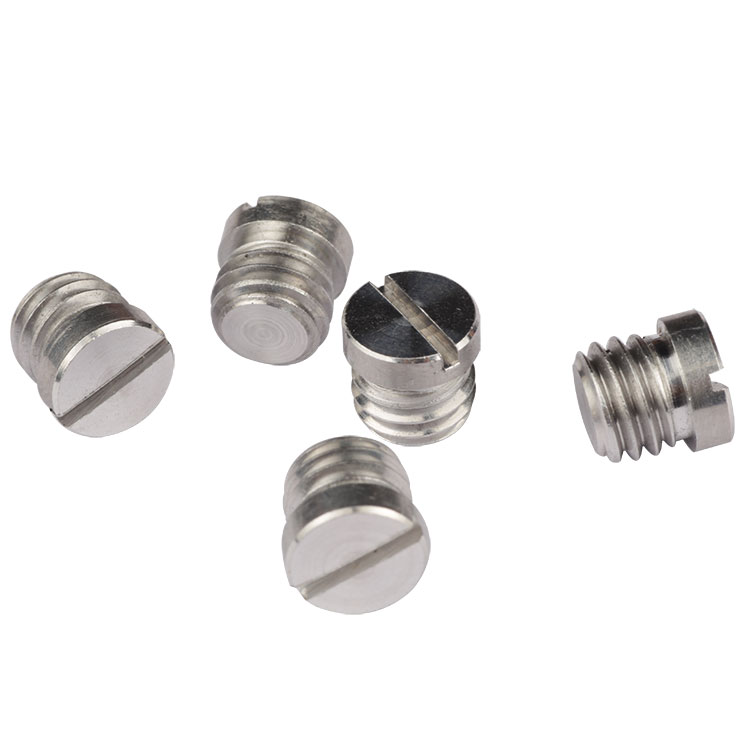
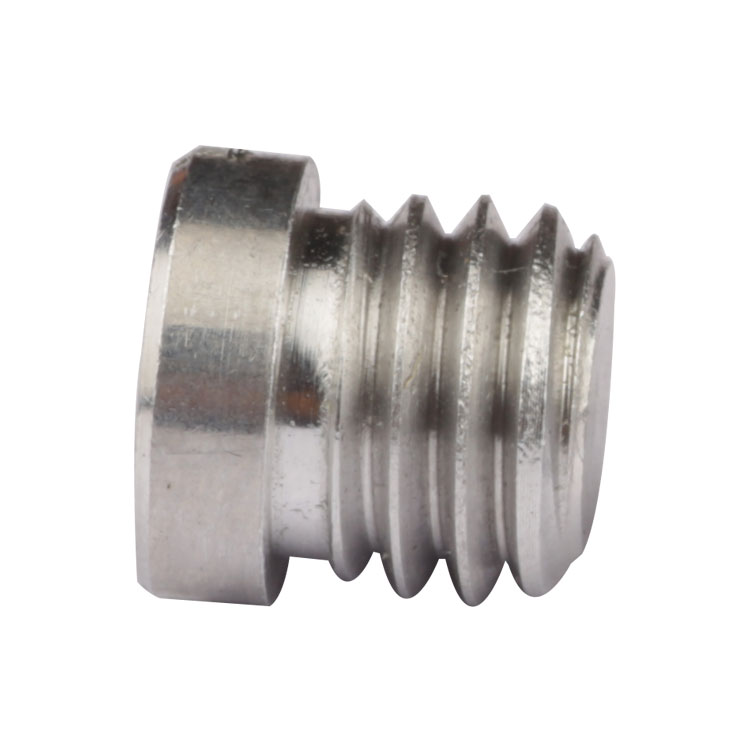
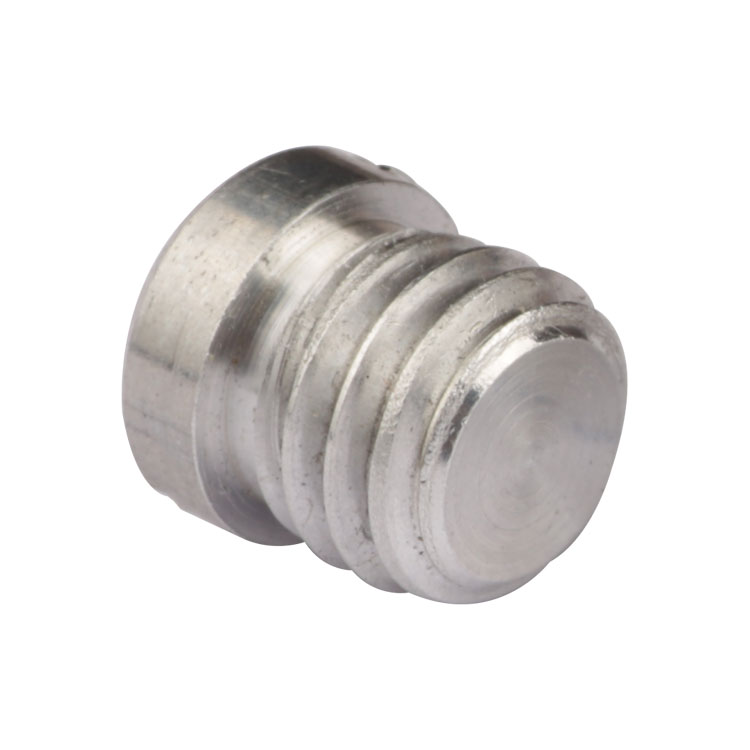
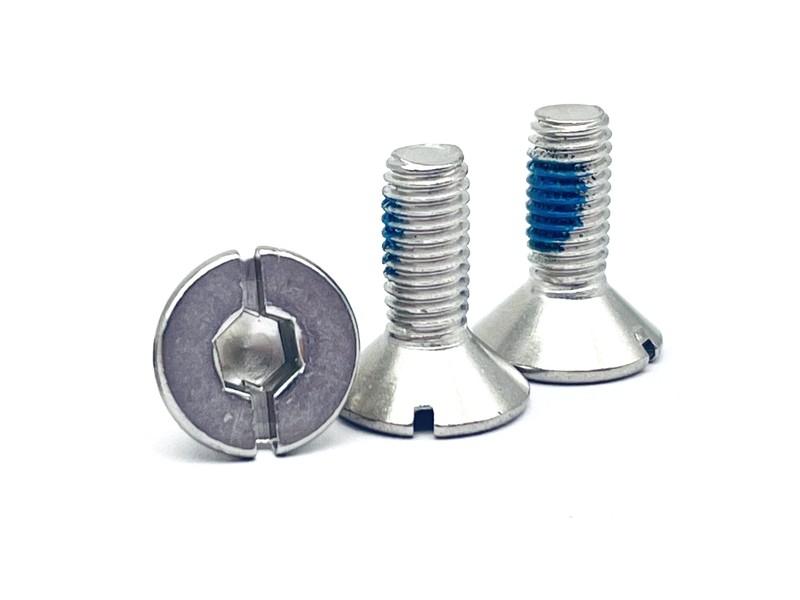
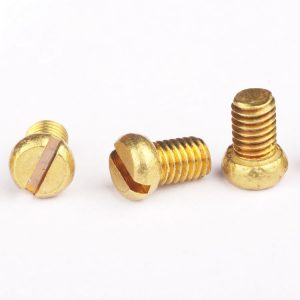
Type:Slotted Cheese Head Machine Screw
Materials:Aluminum
Surface treatment:Plain
Head Type:Cheese Head
Drive:Slotted
Thread:Machine Thread
Point:Blunt
Forming:Turned
Size:M1 M2 M3 M4 M5 M6 M7 M8 M9 M10 M14
Number:365
We turn slotted cheese head machine screws in aluminium with a cylindrical head, a domed top and a single slot, quoting them from M1 to M14. Head height, slot width, thread and alloy are taken from your drawing, and the first article is tried with the blade the joint will use.
Watch the factory video·Email sst@szsst88.com
ISO 9001:2015 · Manufacturing since 1998 · 8,678+ customers · 89 countries and regions
Made to order – there is no stock catalogue. Each part is produced to your drawing, and production starts after drawing review and first-article approval.
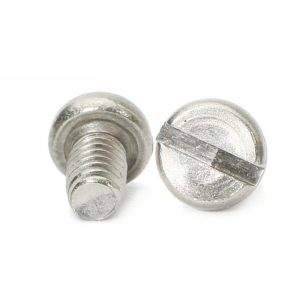
A slotted cheese head machine screw is a machine screw with a cylindrical head that is slightly domed on top and driven by a single straight slot. The recorded item on this page is turned aluminium with a plain finish, a cheese head and a machine thread, quoted from M1 to M14 with Number 365.
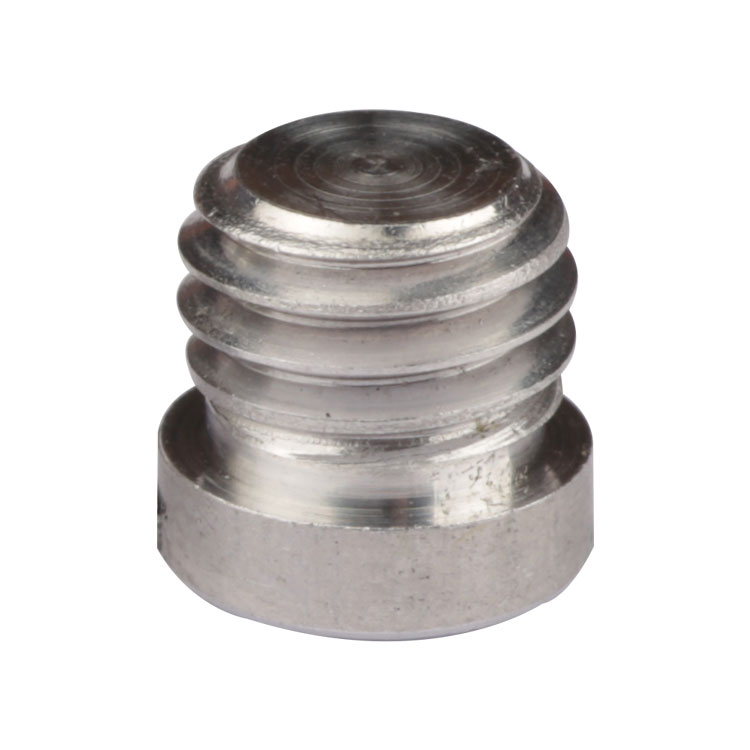
Cheese head. A straight-sided cylinder with a gently domed top, taller in proportion than a pan head. It is the classic instrument head: the sides are vertical, the top curves over to a small flat, and the whole head reads as a plain turned cylinder rather than a pressed dome.
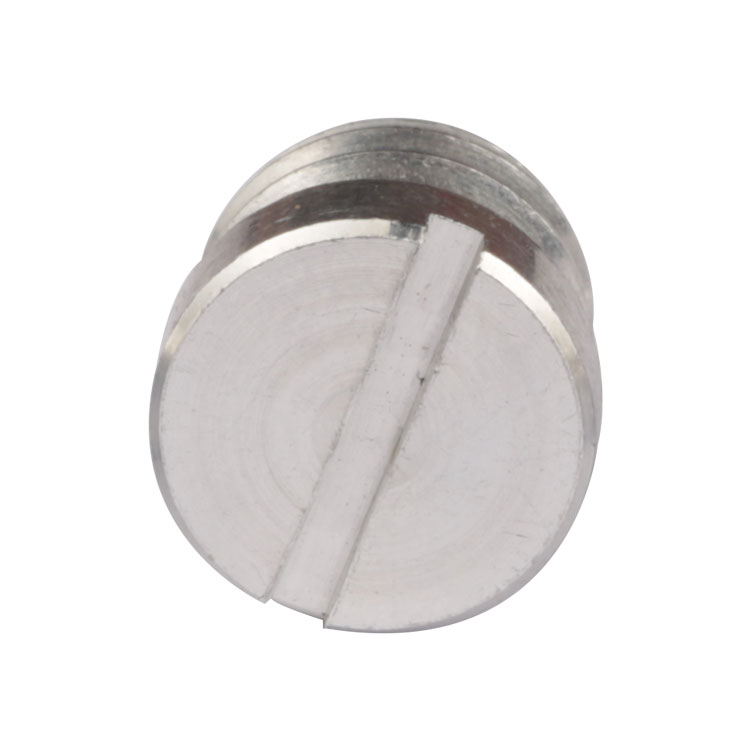
Slotted drive. One straight slot milled across the domed top. The blade engages along the full width of the slot, and the torque the screw will take is set by the slot width and depth rather than by the driver.
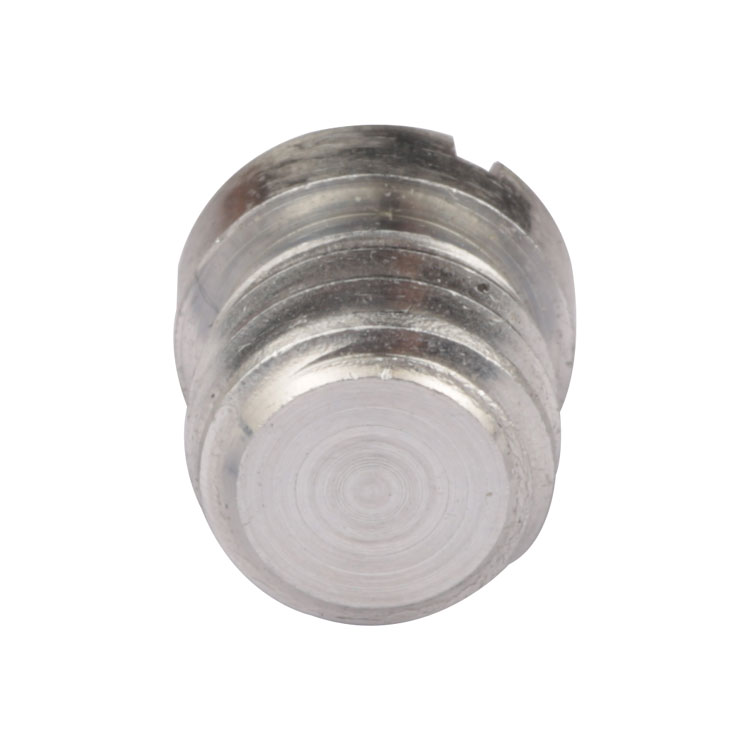
Machine thread. A rolled or cut thread with a blunt end, made for a tapped hole or a nut. It does not form its own thread, so the screw can be taken out and put back without cutting into the part.
Turned from bar. The head is turned, the slot is milled and the thread is cut, rather than the whole part being headed from wire. Turning is what makes a tall cylindrical head with a true side wall practical at small sizes.
Aluminium, plain. Light, non-magnetic and protected by its own oxide film. It is softer than the steel it usually threads into, so the thread engagement and the torque are set around the alloy rather than around the screw.
The cheese head is turned from bar: the outside diameter is turned true, the top is faced and then turned to a shallow dome, and the bearing face is faced square to the shank. That squareness is the whole point of the form — a cheese head is meant to sit flat on a machined surface with its vertical side showing, so a face that is out by a few minutes shows as a line of shadow under one side.
On a slotted cheese head machine screw the slot is milled after the head is turned, across the full diameter, with a cutter that matches the drawing width. The depth is set so the slot floor sits inside the dome without breaking through into the bearing face; on a small cheese head the remaining wall under the slot is thin, and that wall is what decides how much torque the screw will take before the head splits.
The slot has two jobs and they pull against each other. A wide slot takes a wide blade and carries more torque, but it removes more of the head and leaves less material at the rim; a narrow slot leaves the head strong but limits the blade and makes the screw easy to slip. On a turned screw the slot is the only feature that cannot be adjusted later, so its width and depth are agreed on the drawing.
The thread is cut or rolled from under the head to the blunt chamfered end. On an aluminium screw the thread is the softest part of the joint: it will strip before a steel nut does, so the length of engagement is chosen to spread the load over more turns rather than to save a few millimetres of thread.
Aluminium is finished plain. There is no coating to fill the slot, which matters here because a slot that is narrowed by plating will not take the blade at all, and no coating to hide a burr. The deburring after milling is what the customer sees: a folded burr at the slot edge stops the blade entering, and it folds rather than breaks because the alloy is soft.
The family is quoted from M1 to M14, with M1, M2, M3, M4, M5, M6, M7, M8, M9, M10 and M14 in the recorded range. Custom lengths up to 2,000 mm are subject to DFM review after drawing submission; on a slotted cheese head machine screw the length and the thread length are separate dimensions, because the plain shank between the head and the thread is turned in its own pass.
| Item | How it is defined | What we control |
|---|---|---|
| Head | Cheese head, cylindrical with a domed top | Diameter, height and face squareness |
| Slot | Single straight slot | Width, depth and deburring |
| Thread | Metric machine thread | Pitch and length, gauged per batch |
| End | Blunt, chamfered | Chamfer cut, not deburred |
| Finish | Plain aluminium | Deburr and surface condition |
| Length | From under the head to the end | Measured on the shop plate |
Slot width is quoted in the drawing rather than left to a table, because the blade the customer uses is the real specification. A slot that is a few hundredths narrow will not take a worn blade; one that is a few hundredths wide lets the blade rock, and a rocking blade rounds the slot corners long before the screw is at its torque.
Head height is the second dimension worth writing down. A cheese head is taller than a pan head of the same diameter, so it fouls a recess that was drawn for a pan head. Where the head has to sit inside a counterbore, the height is a clearance dimension and the counterbore depth is set from it.
Three features define this part: the cheese head gives a plain cylindrical face, the slot gives a drive that cannot easily be over-torqued, and the turned aluminium body keeps the weight off a small assembly. The slot is the feature that decides how the screw is used.
| Feature | What it gives | What it costs |
|---|---|---|
| Cheese head | A clean cylindrical face on a machined part | Taller than a pan head; needs clearance |
| Single slot | Torque is limited by the blade | Slower to drive, hard to automate |
| Turned body | True side wall and a square bearing face | More costly per part than a headed screw |
| Aluminium | Light, non-magnetic, oxide protected | Soft thread; strips before steel |
| Plain finish | Nothing to fill the slot | No added wear resistance |
The slot’s limit is also its value. A blade that is the right width will turn a screw to a sensible torque and then slip in the slot rather than shear the thread, which on an aluminium screw in a small assembly is a useful warning. The cost is speed: a slotted screw needs the blade aligned with the slot, so it is a hand-assembly or fixture drive rather than a bit that finds its own centre.
The cheese form is chosen for how it looks and how it seats. On a turned aluminium part the vertical side picks up the light as a cylinder, the dome hides the slot ends, and the square bearing face sits on a machined surface without a washer. That combination is why the form survives in instruments and optical hardware even where a cross recess would be faster.
The recorded finish is plain, which on aluminium means the natural oxide film and nothing else. There is no coating thickness, no plating in the slot and no film to chip at the head, so the slot is gauged as milled and the blade meets metal rather than paint. For a small slotted head that is the right default: the slot is the tightest feature on the part and the one a coating would spoil.
| Finish | How it protects | Effect on slot and thread | Typical use |
|---|---|---|---|
| Plain | Natural oxide film | No change; gauged as machined | Dry indoor instrument work |
| Clear anodise | Thicker grown oxide | A few microns; slot re-checked | Visible parts, light handling |
| Black anodise | Grown oxide with dye | A few microns; slot re-checked | Dark visible hardware |
| Chromate conversion | Thin conductive conversion coat | Almost no change | Earthing and bonding joints |
| PTFE coating | Dry film lubricant | Film builds in the thread | Joints taken apart often |
Two things decide whether plain aluminium is enough. The first is wear: anodising hardens the surface and keeps the slot edges from folding after repeated assembly, which matters on a part that is opened for service. The second is galvanic corrosion: an aluminium screw in a stainless or plated part becomes the anode in wet service, and the thread corrodes where it cannot be seen.
Galling is the third thing, and it is the one that surprises people at small sizes. Aluminium against aluminium, or aluminium against stainless, can seize on the first assembly and tear the thread when it is opened. A drop of lubricant or a different mating material solves it, and it is worth writing into the assembly note rather than discovering it on a returned unit.
Three assemblies where a slotted cheese head machine screw is chosen for its form as much as its function:
| Where it sits | The screw fixes a cover, a mount or a bracket on a machined body where the head is visible, sits square on a finished face and has to look like part of the instrument. |
| When it goes wrong | A dome head reads as a pressed part on a machined body, and a head that is not square shows a shadow line along one side. |
| Why it happens | The body is machined, the head is visible, and the joint is adjusted or serviced. |
| What we control | Head squareness and diameter checked, slot deburred and gauged. |
| Where it sits | The screw closes a chassis or fixes a panel where the weight matters, the part must not be magnetic, and the fixing is driven by hand at final assembly. |
| When it goes wrong | A steel screw near a coil or a sensor changes the field, and a heavy head loads a thin panel. |
| Why it happens | The assembly is sensitive to weight and magnetism, and the drive is manual. |
| What we control | Alloy checked against the drawing, slot width held, head face checked flat. |
| Where it sits | The screw holds a linkage, a cover plate or a bearing cap where the joint is adjusted by hand and the slot lets the fitter set it without a torque wrench. |
| When it goes wrong | A cross recess cams out and marks the head, and an over-tightened screw distorts a small bearing cap. |
| Why it happens | The joint is set by feel, the parts are small, and the head is seen. |
| What we control | Slot depth and head height checked, thread gauged, burrs removed before packing. |
Four reasons that matter on a turned slotted head, each tied to what the drawing has to prove:
|
Slot and head reviewed together
The slot width and depth, the head height and the blade the customer uses are reviewed as one set, so a slot that would not take the blade or a head that would foul its recess is raised before the bar is cut. Basis: Slot and head reviewed as one set. |
Turned route from bar to finished screw
Head, bearing face, slot and thread are produced in one turned route, so the side wall is true and the face is square to the shank. Basis: One turning route from bar to screw. |
|
Slot and thread checked on the part
The slot is checked for width and depth and tried with a blade, and the thread is gauged per batch rather than sampled by eye. Basis: Slot tried with a blade on the first article. |
First article fixes the setting
The first article fixes the alloy, the turning programme, the slot cutter and the thread pass; repeat orders are compared against that record. Basis: First article signed off before the batch is released. |
Shi Shi Tong turns these slotted cheese head machine screws from aluminium bar on CNC lathes: the head is turned and domed, the bearing face is faced square, the slot is milled across the head, and the thread is cut to the drawing before the parts are deburred and inspected. The first part of every run is measured on the head and slot, tried with a blade and entered into a thread gauge before the batch continues.


|

|
The slot is where a turned screw shows the hand of the operator. A cutter that is slightly blunt pushes the metal ahead of it instead of cutting, and on aluminium that shows as a raised lip along one edge of the slot; a cutter that is fed too fast leaves a torn floor. Both stop the blade entering even though the slot measures to width, which is why the slot is checked with a blade and not only with a gauge.
What decides whether slotted cheese head machine screws pass is the head, the slot, the thread and the alloy. The inspection agreement covers those, and the criteria come from the drawing.

Head and slot on the projector |

Thread gauged per batch |

Hardness checked against the alloy |

Salt-spray testing where a coating is specified |
The head of a slotted cheese head machine screw is checked on the projector for diameter, height and squareness of the bearing face. Squareness is measured against the shank rather than against the top, because the face is what seats: a head that is square on top and out at the face still rocks on the part.
The slot is checked for width, depth and position, then tried with a blade of the drawing width. The blade is the check that matters, because a slot can be in tolerance and still refuse a blade if the edges are burred, and a burr is the defect that comes back from a customer rather than from a gauge.
The thread is gauged per batch and the engagement is checked against the mating part on the first article. On an aluminium screw the thread strips before the mating steel does, so the drawing should say how many turns of engagement the joint has; if it does not, the first article is where that number gets settled.
Every shipment of slotted cheese head machine screws is traceable to the bar it was turned from. The alloy, temper and heat number are recorded on the material certificate supplied with the parts, and the inspection records follow the criteria agreed on the drawing.

ISO 9001:2015 |

RoHS test report |

Registered trademark |

Patent: security screw and driver |
With each batch we supply the material certificate for the bar, the inspection record for the criteria on the drawing and, where it is listed, the third-party report for the alloy or the coating. The documents carry the drawing revision and the batch number, so the paperwork can be matched to the parts.
More than 8,678 customers in 89 countries and regions have ordered from Shi Shi Tong; 87% of orders come from repeat customers and 56% through referrals. Most projects follow the same route: drawing review, first-article approval, then batches checked against that sample. On a visible turned head the first article is also the finish sample, so a batch that is on size and wrong in surface condition is caught before it ships. Buyers visit during the process to review samples and to see how the heads are turned.
|
8,678+
customers served
|
87%
of orders from repeat customers
|
56%
of orders through referrals
|
89
countries and regions shipped to
|
Buyers and quality engineers visit for sample review, process discussion and supplier audits; the visit is arranged around production so the lathes and the inspection bench can be seen on the day the parts run.

Customer group visit – sample review |

Customer group visit – process discussion |

Customer group visit – factory tour |

Customer visit – project kick-off |

Danish customer – drawing review |

Industry exhibition – meeting customers |
A cylindrical head with a slightly domed top and vertical sides, taller in proportion than a pan head. It is a classic instrument form, turned rather than pressed.
The blade limits the torque, and the head stays clean. The trade is speed: a slot has to be aligned with the blade, so it suits hand assembly or a guided driver.
The one whose width and thickness match the slot on the drawing. A blade that is too thin loads the slot corners; one that is too thick will not enter.
Sooner than a steel one at the same size. The engagement length is chosen on the drawing so the load is spread over enough turns, and the torque is set from the alloy.
Only if the slot edges have to survive repeated assembly or the part is visible in a dark assembly. Plain is fine for a joint that is made once in a dry interior.
Head diameter and height, slot width and depth with its datum, thread size and length, overall length and datum, alloy, and any finish or engagement requirement.
How a slotted cheese head machine screw project runs from drawing to repeat delivery:
|
1
Send the drawing or the mating part
|
→ |
2
Head, slot and thread review
|
→ |
3
First article tried with the blade
|
→ |
4
Batch production and repeat orders
|
Each step is confirmed with you before the next one starts; the drawing revision from the first article is what repeat orders are checked against.
For a quotation, send the drawing with the head diameter and height, the slot width and depth, the thread size and length, the overall length and datum, the alloy and the finish.
|
Head diameter
|
Head height
|
Slot width
|
|
Thread and length
|
Overall length
|
Alloy and finish
|
Sending a drawing? The form below does not take attachments. Email the PDF, DXF or STEP file to sst@szsst88.com with the part name and quantity in the subject line – the drawing is reviewed and a quotation follows.

 +86 13143444311
 sst@szsst88.com