Tel:
+86 13143444311
Email:sst@szsst88.com
Fax:+0086-755-27322278
Address:Building 9, First Industrial Zone, Tantou Industrial City, Songgang Street, Baoan District, Shenzhen 518105, Guangdong, China
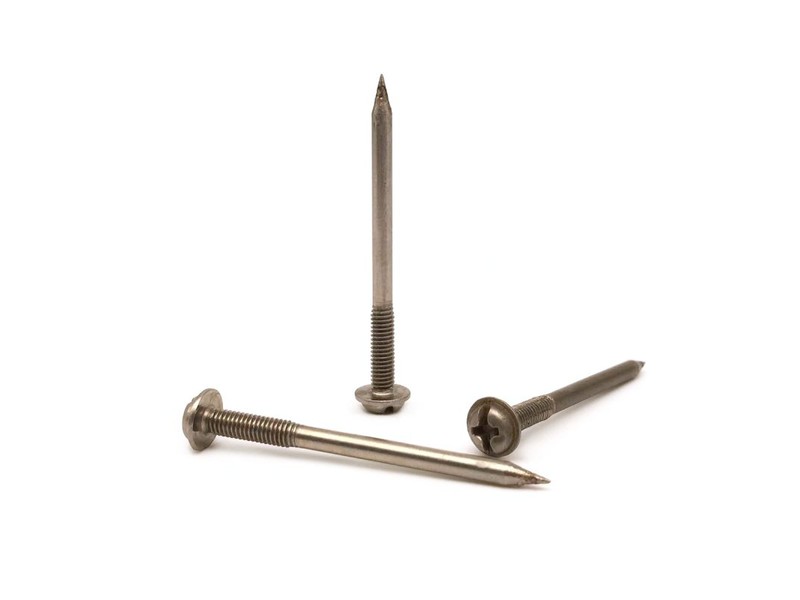
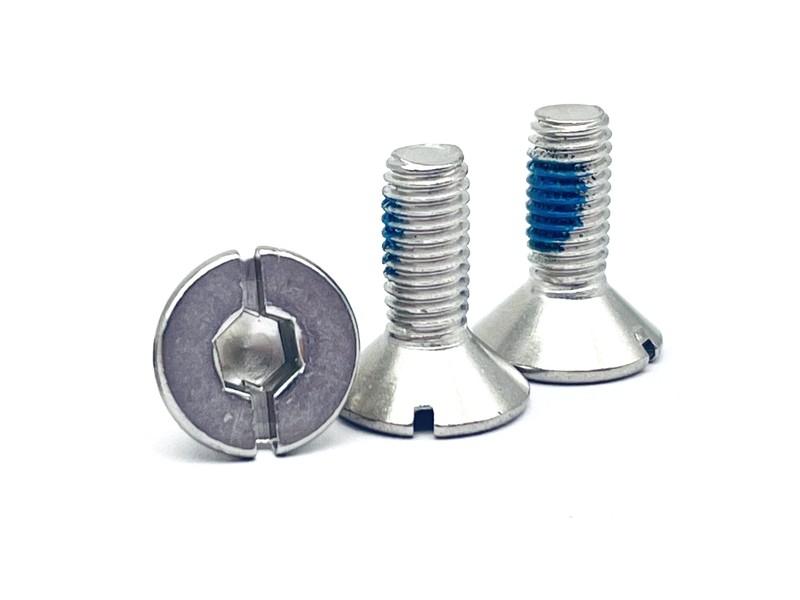
Type:Serrated flange screws with nylon thread-locking patch
Materials:Stainless Steel 304
Surface treatment:Passivated, with a dry blue polyamide (nylon) thread-locking patch
Head Type:External hexagon on an integral serrated flange
Drive:External hexagon only - no slot, no recess; wrench or hex-socket driven
Thread:Machine thread (rolled 60 deg); patch zone on a defined engaged length
Point:Blunt end with a small chamfer; machine thread, no taper, no drill point
Forming:Single-die cold heading, thread rolling, passivation, patch application, sorting
Size:M3 M4 M5 M6 M8 (custom sizes per drawing)
Number:337
We manufacture serrated flange screws with an external hexagon, an integral sawtooth flange and a dry nylon thread patch on a defined engaged length, in stainless 304 passivated. Flange, serration depth, patch zone and thread are taken from your drawing.
Watch the factory video·Email sst@szsst88.com
ISO 9001:2015 · Manufacturing since 1998 · 8,678+ customers · 89 countries and regions
Made to order – there is no stock catalogue. Each part is produced to your drawing, and production starts after drawing review and first-article approval.
Serrated flange screws are hexagon-head machine screws with an integral flange under the head, and the flange underside carries sawtooth serrations. The recorded item on this page combines that mechanical lock with a dry nylon patch on the thread, in stainless steel 304 passivated, quoted from M3 to M8 with Number 337.
Integral serrated flange. The flange is formed with the head, not fitted, and its teeth bite the mating surface as the screw seats. That is a mechanical lock: it resists rotation rather than clamping force.
External hexagon. Six flats and no recess. The head is driven with a wrench or a socket, which means high torque and a positive feel, and it also means the head is not usable in a recessed hole.
Nylon patch. A dry blue polyamide patch is applied to a defined length of the thread. It compresses as the screw is driven and fills the clearance between the threads, giving a friction lock that does not depend on the surface under the head.
Machine thread. A rolled 60-degree thread for a tapped hole or a nut, with a blunt chamfered end. This is not a self-tapping part: the thread is formed before it is driven.
Two locks, two jobs. The serrations stop the head turning against the surface; the patch stops the thread turning inside the hole. Serrated flange screws with a patch are specified where one of those alone has not been enough.
The head and the flange are upset in one heading stroke, and the serrations are formed into the flange underside in the same stroke. Milling the teeth afterwards would leave burrs at each cut and a land between teeth that does not bite; forming them keeps the flange flat and the teeth continuous. That is the difference between serrated flange screws and a plain flange with marks on it.
The hexagon is formed with the head so the flats stay square to the axis. On a flange head that squareness matters: a wrench that is not square to the flange lifts one side as it turns, and a raised edge is the first thing that shows on a painted surface.
The thread is rolled after heading. Rolling work-hardens the stainless flank, which is what gives the thread its wear resistance and its smooth surface — and a smooth surface is what lets the nylon patch work without being cut away as the screw is driven.
The patch is applied after rolling and passivation, over a defined engaged length. That length is a real dimension: the patch has to sit inside the tapped hole or nut when the flange seats, and a patch placed too near the point does nothing. On serrated flange screws the patch zone is checked against a sample joint rather than against the drawing alone.
The part is then sorted without oil, because the patch is a dry film and oil would defeat it. Packing keeps the patches from rubbing against each other, since a patch that has worn before assembly binds less than the drawing assumes.
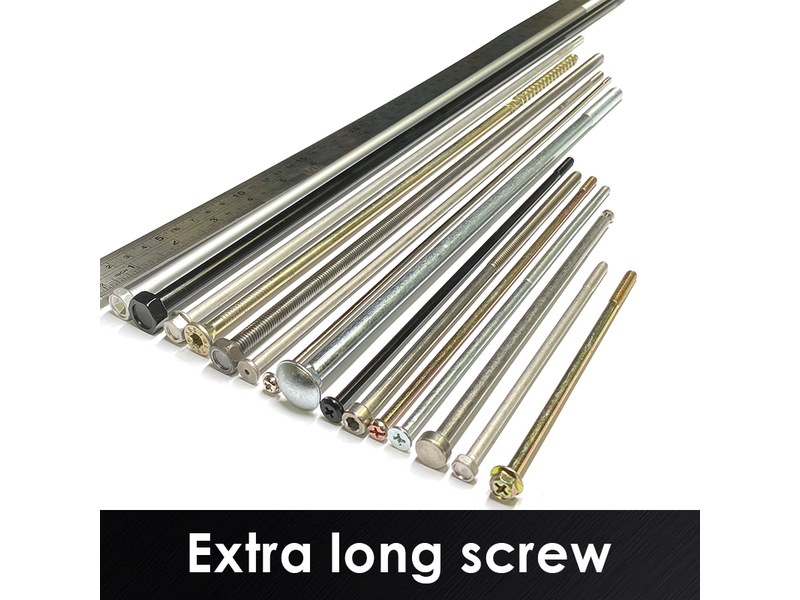
The recorded size line runs M3, M4, M5, M6 and M8, with custom sizes per drawing. Custom lengths up to 2,000 mm are subject to DFM review after drawing submission; serrated flange screws are normally short to medium, because the flange is carrying the load and the thread only has to hold it there.
| Item | How it is defined | What we control |
|---|---|---|
| Hexagon | External hex, straight side walls | Across flats checked with the wrench |
| Flange | Integral, wider than the hexagon | Diameter and flatness on the projector |
| Serrations | Sawtooth teeth on the flange underside | Count, depth and continuity on the first article |
| Thread | Machine thread, rolled 60 degrees | Gauged per batch |
| Patch zone | Engaged length over a defined thread section | Position and length checked per batch |
| Length | From under the flange to the end | Measured on the shop plate |
The patch zone is the dimension that is most often left to the supplier and least often understood. It has to cover the length that will actually be inside the nut or the tapped hole when the flange seats — not the whole thread and not the point. On serrated flange screws the patch is quoted as a position and a length, and it is checked on the first article against a sample joint.
The flange diameter decides both the bearing area and the bite radius. A wider flange spreads load and puts the teeth further from the hole; a narrower one fits tighter spacing. The serration depth then sets how much mark the teeth leave, which on a visible face is a decision as well as a locking choice. Every batch of serrated flange screws is checked on both numbers before it is released.
The reason to combine serrations with a patch is that the two locks work in different places and cover different failures. A screw that has only one of them can still loosen.
| Feature | What it gives | What it costs |
|---|---|---|
| Serrated flange | Mechanical bite against rotation | Marks the surface; needs to be driven home |
| Nylon patch | Friction lock inside the thread | Wears with repeated assembly; not reusable indefinitely |
| External hex | High torque with a positive feel | Needs clearance around the head |
| Integral flange | Bearing area without a washer | Cannot be changed or upgraded |
| Stainless 304 | No coating to chip; wash-down and outdoor | Galls against stainless |
The serrations act when the head seats. If the screw is driven to less than its seating torque the teeth only kiss the surface and the mechanical lock does nothing. The patch acts as soon as the thread engages and keeps acting through vibration, which is why the combination is used on joints that are assembled at a torque the operator controls rather than at a torque the thread can feel.
The patch has a service life. Each assembly compresses and shears the nylon slightly, so a patched screw holds best the first time and less each time after. It is a locking feature for a joint assembled a handful of times, not a reusable fastener; where a joint is opened weekly, a thread insert or a mechanical locking nut is the better answer.
The flange is not a washer, and the serrations are not a cure for a bad surface. On a soft or painted face the teeth cut rather than grip, and on a face that is not flat the flange rocks and the bite is partial. Serrated flange screws assume a flat, reasonably hard surface and should be specified that way. On a soft face, the same joint is better served by a plain flange and a separate washer.
The recorded finish is passivated stainless with a dry blue polyamide patch. There is no oil and no coating on the thread, which is deliberate: the patch is a friction element and oil on the thread would reduce exactly the friction it needs.
| Option | What it does | Effect on thread and patch | Typical use |
|---|---|---|---|
| Passivated, nylon patch | Clean stainless with a dry friction lock | Patch applied after passivation | Vibration joints in stainless |
| Passivated, no patch | Stainless only; serrations lock | No patch; thread free | Joints that are adjusted often |
| Passivated, pre-applied adhesive | Chemical lock, cures in place | Adhesive zone must be kept clean | Joints assembled once |
| Zinc plated steel, patch | Sacrificial finish with the same lock | Patch over the plating | Indoor equipment |
| Black oxide steel, patch | Dark finish with the same lock | Patch over the oxide | Dark assemblies |
The patch is applied after passivation and before packing, and it is checked as a dry film. A patch that has been applied over oil, or a part that has been oiled afterwards, will not lock the way the drawing intends, and the failure shows up as a joint that was tight at assembly and loose after a shift.
Passivation itself does not interfere with the patch — it changes no dimensions and leaves no film. That is why the recorded route is passivate first, patch second: the sequence is part of the specification, not a detail of the shop. Serrated flange screws that are patched before passivation lose the friction the patch depends on.
Three assemblies where a hex head with a locking flange is the right fixing:
| Where it sits | The screw holds a bracket or a plate to a frame where a wrench can reach the head and vibration is continuous. |
| When it goes wrong | A plain flange backs off under vibration, and a patch alone can creep if the surface under the head is not hard. |
| Why it happens | The joint vibrates, the head is accessible, and the stream is in service. |
| What we control | Serration depth and patch zone checked, thread gauged per batch, first article driven and removed. |
| Where it sits | The screw fixes a panel or a guard on stainless equipment that is hosed down, where the flange keeps water out of the hole and the patch keeps the joint tight. |
| When it goes wrong | A plated screw corrodes at the flange edge, and a loose joint lets water sit in the thread. |
| Why it happens | The joint is wet, the flange is against a stainless face, and the fixing is serviced. |
| What we control | Grade and passivation recorded, patch position checked, and the first article assembled wet and dry. |
| Where it sits | The screw fixes a bracket where a socket can reach the head and the joint sees vibration and thermal cycling. |
| When it goes wrong | A single locking method is often not enough on a joint that cycles, and a serrated head driven short leaves the teeth unseated. |
| Why it happens | The joint vibrates and cycles, the head is inside a wheel arch or a frame, and the part is safety-adjacent. |
| What we control | Serrations and patch both checked on the first article, torque recorded with the sample. |
Four reasons that matter on a double-locked screw, each tied to what the drawing has to prove:
|
Serrations and patch reviewed together
The flange, the serration depth and the patch zone are reviewed as one set against the joint, so a patch that sits outside the engaged length is raised before the run. Basis: Serrations and patch reviewed as one set. |
Head, flange and teeth in one stroke
The hexagon, the flange and the sawtooth teeth are formed in one heading stroke, so the flange stays flat and the teeth stay continuous. Basis: Teeth formed with the flange. |
|
Bite and patch checked on the part
The teeth are checked on a driven sample, and the patch position and length are measured against a sample joint on the first article. Basis: First article driven and removed. |
First article to repeat production
The first article fixes the drawing revision, wire heat, die set, thread roll and patch length; repeat orders are compared against that record. Basis: First article signed off before the batch is released. |
Shi Shi Tong forms these serrated flange screws on a single-die header that upsets the external hexagon, the integral flange and the sawtooth serrations in one stroke, then rolls the machine thread and passivates the parts. The nylon patch is applied to a defined thread length afterwards and the parts are sorted dry. The first part of every run is measured on the flange and the patch zone and driven into a sample joint, before the batch continues.


|

|
The patch is the operation that decides how the part performs in service, and it is invisible in the finished screw. It has to sit at the right position, over the right length, and be dry when it is packed; a patch that is placed a millimetre too low does nothing at all, and one that is oiled binds less than the drawing assumes. Every batch of serrated flange screws is packed dry and kept that way until it is used.
What decides whether serrated flange screws pass is the head, the flange, the serrations, the patch zone and the thread. The inspection agreement covers those, and the criteria come from the drawing.

Flange and hexagon on the projector |

Thread gauged per batch |

Hardness testing of the wire |

Salt-spray testing where the service requires it |
The teeth are checked by driving the first article into a sample plate and removing it. An even ring of marks is a pass; a partial ring means the flange is not flat, and a ring that is barely visible means the teeth are worn. Neither shows on a projector.
The patch is checked for position, length and dryness before packing. On serrated flange screws the patch check is recorded with the batch, because it is the one feature that cannot be seen after the screw is fitted and the one that decides whether the joint stays tight.
Every shipment of serrated flange screws is traceable to the wire it was made from. The grade and heat number are recorded on the material certificate supplied with the parts, the patch specification is recorded per batch, and the inspection records follow the criteria agreed on the drawing.

ISO 9001:2015 |

RoHS test report |

Registered trademark |

Patent: security screw and driver |
With each batch we supply the material certificate, the inspection record for the criteria on the drawing and, where it is listed, the third-party report for the material. The documents carry the drawing revision and the batch number, so the paperwork can be matched to the parts.
More than 8,678 customers in 89 countries and regions have ordered from Shi Shi Tong; 87% of orders come from repeat customers and 56% through referrals. Most projects follow the same route: drawing review, first-article approval, then batches checked against that sample. On a double-locked screw the first article is driven and removed, because both the bite and the patch only prove themselves in the joint. Buyers visit during the process to review samples and to see how the flanges are formed.
|
8,678+
customers served
|
87%
of orders from repeat customers
|
56%
of orders through referrals
|
89
countries and regions shipped to
|
Buyers and quality engineers visit for sample review, process discussion and supplier audits; the visit is arranged around production so the header and the finishing line can be seen on the day the parts run.

Customer group visit – sample review |

Customer group visit – process discussion |

Customer group visit – factory tour |

Customer visit – project kick-off |

Danish customer – drawing review |

Industry exhibition – meeting customers |
Two features: sawtooth serrations under the integral flange bite the surface, and a nylon patch on the thread fills the clearance so the thread cannot back out.
Yes. The serrations stop the head rotating on the surface and the patch stops the thread turning in the hole, so one can work where the other cannot.
A limited number of times. The patch compresses and shears slightly at each assembly, so the lock is strongest on the first fit.
The patch is dry, pre-applied and consistent, so nothing has to be dispensed on the line and the torque is repeatable.
Yes, the teeth leave a ring of marks. On a visible or painted face that is permanent, and a plain flange or a washer-head screw is the alternative.
Thread size and pitch, hexagon across flats, flange diameter and thickness, serration depth, patch position and length, overall length and grade.
How a serrated flange screw project runs from drawing to repeat delivery:
|
1
Send the drawing or sample
|
→ |
2
Serrations and patch zone review
|
→ |
3
First article driven and removed
|
→ |
4
Batch production and repeat orders
|
Each step is confirmed with you before the next one starts; the drawing revision from the first article is what repeat orders are checked against.
For a quotation, send the drawing with the thread size and pitch, hexagon across flats, flange diameter and thickness, serration depth, patch position and length, overall length and grade.
|
Thread and pitch
|
Hexagon across flats
|
Flange diameter
|
|
Serration depth
|
Patch zone
|
Overall length
|
Sending a drawing? The form below does not take attachments. Email the PDF, DXF or STEP file to sst@szsst88.com with the part name and quantity in the subject line – the drawing is reviewed and a quotation follows.

 +86 13143444311
 sst@szsst88.com