Tel:
+86 13143444311
Email:sst@szsst88.com
Fax:+0086-755-27322278
Address:Building 9, First Industrial Zone, Tantou Industrial City, Songgang Street, Baoan District, Shenzhen 518105, Guangdong, China
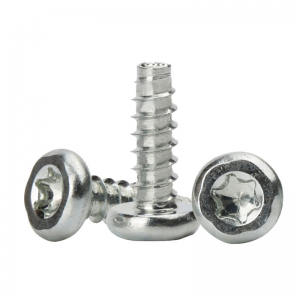
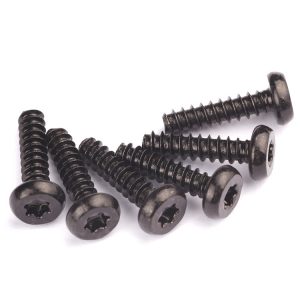
Type:Pan Head Phillips Self-Tapping Screw, Half Thread, Long Plain Shank (Non-Standard)
Materials:Carbon Steel
Surface treatment:White Zinc Plated (blue-white, bright)
Head Type:Pan Head (low dome, plain flat bearing face, small fillet into the shank)
Drive type:Phillips cross recess (four tapered wings, pointed centre)
Shank:Long plain unthreaded shank, about two thirds to three quarters of the length
Thread:Coarse single-lead self-tapping thread on the tip section only (half thread)
Point:Sharp tapered gimlet point; no cutting slot, no drill point
Process:Single-die heading, thread rolling, white zinc plating, sorting
Size:M1 M2 M3 M4 M5 M6 M7 M8 M9 M10 M14
Number:704
We manufacture pan head phillips self tapping screws with a long plain shank and a half thread on the tip section, in carbon steel with a white zinc finish, quoted from M1 to M14. Shank length, thread start, point and head are taken from your drawing.
Watch the factory video·Email sst@szsst88.com
ISO 9001:2015 · Manufacturing since 1998 · 8,678+ customers · 89 countries and regions
Made to order – there is no stock catalogue. Each part is produced to your drawing, and production starts after drawing review and first-article approval.
A pan head phillips self tapping screw is a screw with a low domed head, a cross recess and a thread that forms its own grip in the material it enters. The recorded item on this page is a non-standard version with a long plain shank and the thread on the tip section only — a half thread — in carbon steel with a white zinc finish, quoted from M1 to M14 with Number 704.
Pan head. A low dome with a flat bearing face, wide enough to spread the clamp load on a thin panel and low enough not to catch on whatever sits above it.
Phillips recess. A cross recess driven by a standard bit. On a self-tapping screw the drive has to hold while the thread cuts, so the recess depth is set against the head height rather than copied from a machine screw.
Half thread, long plain shank. Two thirds to three quarters of the length is unthreaded, and the coarse self-tapping thread sits only at the tip. The shank passes through the top layer at clearance, so the thread grips the lower layer and the head pulls the two together.
Gimlet point. Sharp, tapered and on centre, so the screw starts its own hole in timber, board or plastic without wandering. It has no cutting slot and no drill point; those are different point forms for different materials.
Together these decide the joint: the shank clears the top layer, the thread grips the lower one, the head draws the joint up, and the gimlet point starts the hole. That is why a pan head phillips self tapping screw of this type is specified by shank length, thread length, point and head together.
The body of this pan head phillips self tapping screw is carbon steel wire, with the grade and heat number kept with the batch record. The property class is fixed on the drawing, because it sets the driving torque the head can take while the thread is cutting.
The pan head is formed in the heading die with a small fillet into the shank. That fillet matters on a half-thread screw: the shank carries the drive torque into the thread, and a sharp corner there is where a long screw would first bend.
The thread is rolled on the tip section only, leaving a long plain shank behind it. The shank diameter is set to clear the hole in the top layer, and the thread start is where the two layers meet — which is why the drawing states the shank length and the thread length separately.
The gimlet point is formed on centre after the thread is rolled. Its taper is what lets the screw start its own hole; a point that is blunt or off centre wanders on a board and the head ends up off the mark.
The white zinc is applied after forming. It coats the head, the recess, the shank and the point, and because it is thin the thread keeps its form and the point keeps its sharpness.
Pan head phillips self tapping screws of this type are quoted from M1 to M14; the recorded configuration is a carbon steel part with a white zinc finish, a long plain shank and a half thread. Custom lengths up to 2,000 mm are subject to DFM review after drawing submission.
| Item | How it is defined | What we control |
|---|---|---|
| Overall length | Under the head to the point | Measured on the shop plate |
| Plain shank length | The unthreaded section under the head | Measured from under the head |
| Thread length | The threaded section at the tip | Measured from the point |
| Shank diameter | The clearance diameter in the top layer | Measured against the hole on the drawing |
| Thread pitch | The grip in the lower layer | Gauged per batch |
| Point form | Gimlet, on centre | Checked on the first article |
Each size is quoted against the stack it joins. The shank length, the thickness of the top layer and the thread length in the lower layer are reviewed together, because a screw whose thread starts too early grips both layers and stops pulling them together.
Length is stated three times on this part: overall, plain shank and thread. A drawing that gives only the overall length leaves the split undefined, and on a half-thread screw that split is the whole function of the part.
The long plain shank is not a manufacturing convenience — it is the reason the screw exists. Passing through the top layer at clearance lets the two parts be pulled together as the head seats, instead of being threaded apart or held by a second thread.
| Feature | What it does | What goes wrong without it | What we control |
|---|---|---|---|
| Plain shank | Clears the top layer so it can slide | Thread in both layers jacks them apart | Shank diameter and length measured |
| Tip thread | Grips only the lower layer | A short thread gives too little grip | Thread length measured from the point |
| Gimlet point | Starts the hole on centre | Wandering point misplaces the joint | Point checked on the first article |
| Pan head | Draws the stack up without crushing it | A small head pulls into soft material | Head diameter checked on the first article |
The thread start is the dimension that decides whether the joint works. If the thread begins before the two layers meet, it grips the top layer as well, and the joint can never close up; if it begins after the two layers meet, there is not enough thread in the lower layer to hold.
The gimlet point suits timber, board and moulded plastic. In sheet metal a gimlet point wanders and a drill point cuts; the two are different parts, and the drawing should say which material the screw is going into rather than leave it to the default.
White zinc is the finish that matches the volume of this part. It is thin, bright and cheap to apply, it does not fill the cross recess, and it leaves the point sharp enough to start in a board without polishing.
This pan head phillips self tapping screw is supplied white zinc plated. The zinc is sacrificial, so a scratch is protected by the zinc around it, and the blue-white passivation gives a clean, bright appearance rather than a yellow one.
| Finish | How it protects | Effect on thread and point | Typical use |
|---|---|---|---|
| White zinc | Sacrificial zinc, blue-white passivation | A few microns; thread gauged after | Indoor timber, board and panel work |
| Yellow zinc | Sacrificial zinc, yellow passivation | A few microns; gauged after | Indoor parts where a warmer tone is accepted |
| Dacromet | Zinc-aluminium flake layer, cured | Thin film; point and thread re-checked | Outdoor assemblies |
| Zinc nickel | Alloy layer, higher corrosion resistance | Thicker; thread re-checked | Wet industrial service |
| Stainless (equivalent part) | Alloy provides protection | No coating | Wash-down and coastal work |
Salt-spray exposure is agreed per project and written on the drawing. On a self-tapping screw the finish is judged at the point and the thread crests, because those are the surfaces that scrape as the screw enters; a coating that flakes there leaves the steel exposed exactly where it works hardest.
Packing protects the points. The parts are bagged in counted quantities, labelled with the batch, the material heat and the shank length, and packed so the points cannot knock against each other and blunt.
Three joints where a half thread and a long shank do the work:
| Where it sits | The screw passes through a board and grips the frame behind it, with the plain shank clearing the board so the two are pulled together. |
| When it goes wrong | A full-thread screw grips both layers and jacks them apart, and a short thread leaves too little grip in the frame. |
| Why it happens | The material is timber or composite, the top layer is pre-drilled, and the joint is made once. |
| What we control | Shank and thread lengths measured, and the first article driven into a sample of the same board. |
| Where it sits | The screw fixes a panel to a batten with the head on the face and the thread in the batten only. |
| When it goes wrong | A thread that starts too early grips the panel and holds it off the batten, and a gimlet point that wanders misplaces the fixing. |
| Why it happens | The panel is visible, the batten is soft, and the joint is inspected. |
| What we control | Thread start and point checked on the first article. |
| Where it sits | The screw holds a rail or a bracket where the shank passes through one member and the thread bites the second. |
| When it goes wrong | A shank that is too short cannot reach the second member, and a thread that is too long splits the first. |
| Why it happens | The parts are timber or board, the joint is assembled on a bench, and the heads are countersunk or covered. |
| What we control | Shank diameter and length measured against the hole and the stack. |
Four reasons that matter on a half-thread screw, each tied to what the drawing has to prove:
|
Shank and thread split reviewed together
The overall length, the plain shank and the thread length are reviewed against the stack before tooling, so a screw that grips both layers is raised first. Basis: Shank and thread split reviewed before tooling. |
Head, thread and point in one route
The pan head is upset with its fillet, the tip thread is rolled and the gimlet point formed on centre, in one route. Basis: One route from wire to pointed screw. |
|
Point and thread checked on the part
The point and the thread start are measured on the first article, and the thread is gauged per batch. Basis: First article checked on the point. |
First article to repeat production
A repeat order is measured against the first article, where drawing revision, wire heat, die set and thread roll were fixed. Basis: First article signed off before the batch is released. |
Shi Shi Tong forms these pan head phillips self tapping screws on a single-die header that upsets the pan head and the cross recess in one stroke, then rolls the coarse thread on the tip section and forms the gimlet point. The parts are cleaned and white zinc plated. The first part of every run is measured on the head, the shank and the thread start, and driven into a sample of the material, before the batch continues.


|

|
Between runs the die insert is changed to the drawing head and the rolls to the thread length and pitch; the first part goes to the projector and to the gauges. The thread start is set as part of the same roll, so it is checked on the first part rather than adjusted during the run.
What decides whether a pan head phillips self tapping screw passes is the head diameter and height, the plain shank length and diameter, the thread length and start, the point and the coating. The inspection agreement covers those, and the criteria come from the drawing.

Head and shank on the projector |

Thread gauged per batch |

Hardness testing against the property class |

Salt-spray testing of the plated part |
Each batch is recorded against the drawing revision: head, shank and thread start from the first article, the thread gauged per batch, and the plating batch carried on the label. If the thread start or the point check fails, the parts back to the last good setting are held and re-checked.
If the material or finish needs an outside test, the request is set at the drawing stage, and the report ships with the parts under the batch number.
Every shipment of pan head phillips self tapping screws is traceable to the wire it was made from. The grade, heat number and property class are recorded on the material certificate supplied with the parts, and the inspection records follow the criteria agreed on the drawing.

ISO 9001:2015 |

RoHS test report |

Registered trademark |

Patent: security screw and driver |
With each batch we supply the material certificate, the inspection record for the criteria on the drawing and, where it is listed, the third-party report for the material or the finish. The documents carry the drawing revision and the batch number, so the paperwork can be matched to the parts.
More than 8,678 customers in 89 countries and regions have ordered from Shi Shi Tong; 87% of orders come from repeat customers and 56% through referrals. Most projects follow the same route: drawing review, first-article approval, then batches checked against that sample. On a half-thread screw the first article is driven into a sample stack, so the thread start is signed off in the joint rather than on the bench. Buyers visit during the process to review samples and to see how the points are formed.
|
8,678+
customers served
|
87%
of orders from repeat customers
|
56%
of orders through referrals
|
89
countries and regions shipped to
|
Buyers and quality engineers visit for sample review, process discussion and supplier audits; the visit is arranged around production so the header and the plating line can be seen on the day the parts run.

Customer group visit – sample review |

Customer group visit – process discussion |

Customer group visit – factory tour |

Customer visit – project kick-off |

Danish customer – drawing review |

Industry exhibition – meeting customers |
It is a self-tapping screw with a low domed head and a cross recess. This one is non-standard: two thirds to three quarters of its length is a plain shank and the thread is only at the tip.
So it clears the top layer. The thread grips only the lower layer, and the head pulls the two together instead of threading through both.
Whether the joint can close up. If the thread begins before the layers meet, it grips both; if it begins after, there is too little thread in the lower layer.
Timber, board and moulded plastic. For sheet metal a drill point is used instead, which is a different part.
White zinc with a blue-white passivation, which is the standard indoor protection for steel self-tapping screws. For outdoor joints a Dacromet or stainless version is the better choice.
Overall length, plain shank length and diameter, thread length and start, point form, head diameter and height, material and property class, finish, and the thickness of both layers.
How a pan head phillips self tapping screw project runs from drawing to repeat delivery:
|
1
Send the drawing or sample
|
→ |
2
Shank and thread split review
|
→ |
3
First article in the stack
|
→ |
4
Batch production and repeat orders
|
Each step is confirmed with you before the next one starts; the drawing revision from the first article is what repeat orders are checked against.
For a quotation, send the drawing with the overall length, plain shank length and diameter, thread length and start, point form, head diameter and height, material and property class, finish, and the thickness of both layers.
|
Overall length
|
Plain shank length
|
Thread length and start
|
|
Point form
|
Head and drive
|
Material and finish
|
Sending a drawing? The form below does not take attachments. Email the PDF, DXF or STEP file to sst@szsst88.com with the part name and quantity in the subject line – the drawing is reviewed and a quotation follows.

 +86 13143444311
 sst@szsst88.com