Tel:
+86 13143444311
Email:sst@szsst88.com
Fax:+0086-755-27322278
Address:Building 9, First Industrial Zone, Tantou Industrial City, Songgang Street, Baoan District, Shenzhen 518105, Guangdong, China
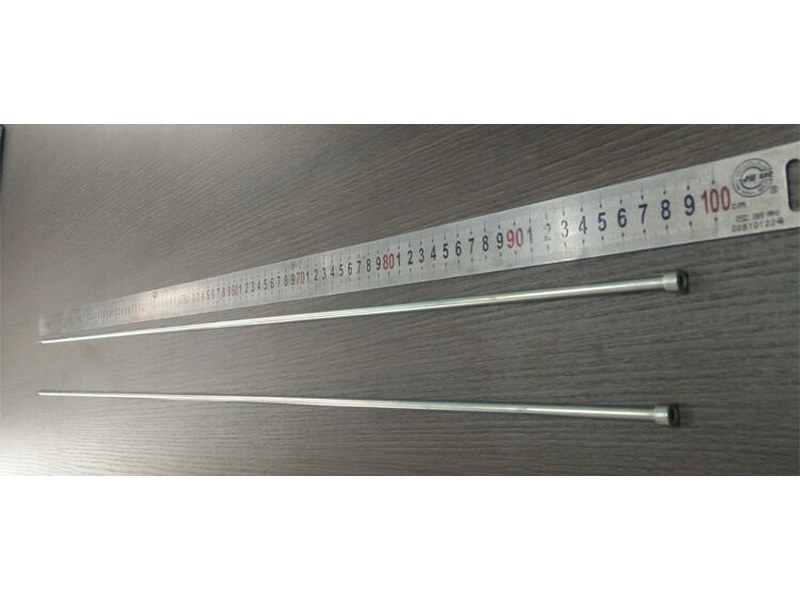
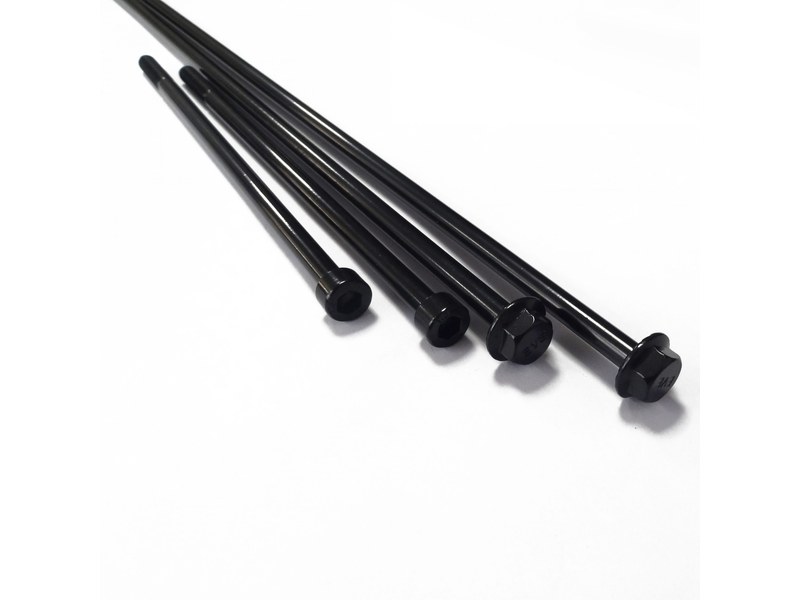
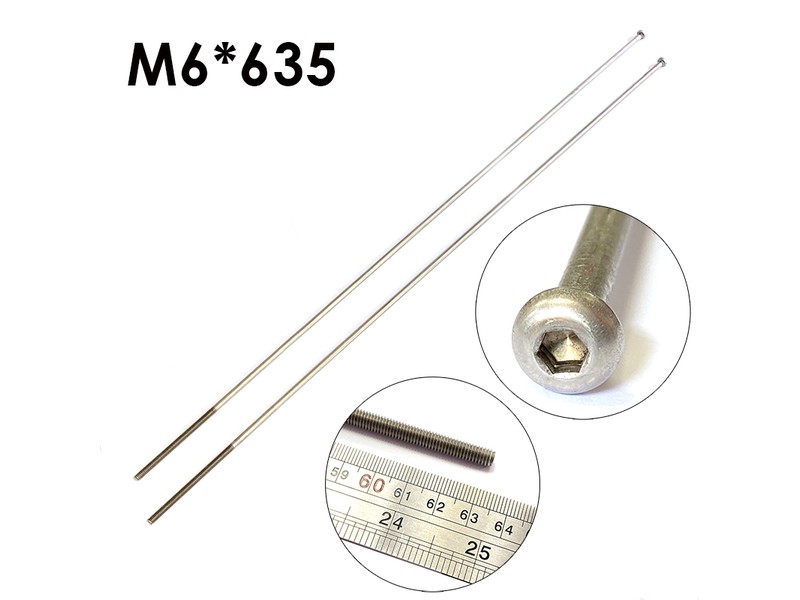
Type:Hexagon Socket Head Cap Screw, Stainless Steel
Materials:SS
Surface treatment:Plain
Head Type:Cap Head
Drive:Allen Socket
Thread:Machine Thread
Point:Blunt
Forming:Single Die Heading
Size:M1 M2 M3 M4 M5 M6 M7 M8 M9 M10 M14
Number:796
We make hexagon socket head cap screws in passivated stainless, a counterbored cap head with a deep hexagon and a machine thread, quoting them from M1 to M14. Head standard, counterbore, socket and grade come from your drawing, and the first article is tightened at your joint torque.
Watch the factory video·Email sst@szsst88.com
ISO 9001:2015 · Manufacturing since 1998 · 8,678+ customers · 89 countries and regions
Made to order – there is no stock catalogue. Each part is produced to your drawing, and production starts after drawing review and first-article approval.
A hexagon socket head cap screw is a socket screw with a tall cylindrical head, a deep internal hexagon and a full flat bearing face, made here in stainless and passivated. It is the standard high-torque fastener of machine building, quoted to ANSI proportions in this item and from M1 to M14 with Number 796.
Cap head. A cylinder with a flat top and a flat bearing face, designed to sit in a counterbore and to be tightened hard.
Hexagon socket. An internal hexagon for a key, deep enough to carry the torque the head allows.
Machine thread. A rolled thread for a tapped hole or a nut, ending in a blunt chamfer.
Stainless, passivated. No coating, so the socket and the bearing face are as cut.
In use a hexagon socket head cap screw is the fastener that clamps a machined component at a set preload, with the head buried in a counterbore so the surface above it can be used.
A hexagon socket head cap screw is usually described by its head, but the joint it makes depends just as much on the seat. The head bears on a flat annulus, and the counterbore provides that annulus; if the seat is not flat or not square to the hole, the head contacts on one side and the preload goes into tilting the screw rather than clamping the joint.
On a hexagon socket head cap screw that matters more than on any other form, because the head is designed for high preload. A pan head that is slightly tilted in a soft panel is absorbed by the material; a cap head tightened to a real torque on a tilted seat bends the shank and puts an eccentric load into the thread. The joint looks fully tightened and is not evenly loaded.
On a hexagon socket head cap screw the counterbore depth is the other number. A cap head that is shallower than the counterbore sits below the surface and there is no room to seat a washer or to see the head; one that is taller leaves a step. Both are drawing errors rather than fastener errors, and both are worth checking against the standard the head is made to, because ANSI and ISO cap heads are not identical in height.
On hexagon socket head cap screws the stainless grade changes where the joint gives way. These screws have no property class, and the common grades are softer than an 8.8 steel screw, so the thread or the female thread usually fails before the head does. A joint that was designed around a steel cap screw and then changed to stainless for corrosion reasons carries the torque figure of a screw it no longer is.
On hexagon socket head cap screws galling completes the picture. A stainless cap screw driven dry into a stainless nut can seize before it seats, and because a hexagon does not slip, the operator cannot tell a tight thread from a seized one. A dry-film lubricant on the thread is the simple answer, and it is what makes a stainless joint reproducible rather than a matter of feel.
The recorded range is M1 to M14, covering M1, M2, M3, M4, M5, M6, M7, M8, M9, M10 and M14. Custom lengths up to 2,000 mm are subject to DFM review after drawing submission. For a hexagon socket head cap screw the quotation carries head diameter and height, socket size and depth, the thread and the standard the head is made to, because the counterbore has to match the head.
| Item | How it is defined | What we control |
|---|---|---|
| Head | Cap head, flat top | Head diameter and height |
| Socket | Internal hexagon | Across flats, depth and corner condition |
| Thread | Machine thread | Pitch and length, gauged per batch |
| End | Blunt, chamfered | Chamfer cut, not deburred |
| Material | A2 stainless | Grade and heat number on the certificate |
| Finish | Passivated | Surface condition and film |
The head standard should be named on the drawing when the counterbore is already cut. ANSI and ISO cap heads of the same thread differ in height, and a counterbore cut to one will leave a step with the other; where the head is buried and the surface is visible, that step is a defect.
Length is measured under the head, so the counterbore depth does not affect the length that engages the thread. Where the joint is a counterbored panel into a tapped plate, the sum of the two matters, and the drawing should state both.
Three features define this part: the deep socket, the flat bearing face and the stainless body. The first delivers torque, the second puts it into the joint, and the third decides how much of it the material will accept before something gives.
| Feature | What it gives | What it costs |
|---|---|---|
| Deep socket | High torque in a compact head | Needs a counterbore to use it |
| Flat bearing face | Full-area seat for preload | Tolerates nothing on an uneven surface |
| Stainless body | No coating to wear at the socket | Softer than 8.8 steel; no property class |
| Passivated finish | Socket as cut | Galls without lubricant |
| Machine thread | Repeatable clamp in a tapped hole | Needs a nut or a tapped insert |
On a hexagon socket head cap screw the combination is why the part is the default in machine building. A single screw, turned with one key, can clamp a component hard enough that it will not move, and it does so in a head that buries itself in a counterbore. Nothing else in the range does that with the same economy.
On hexagon socket head cap screws the stainless limit is what to check when the material is chosen for corrosion rather than strength. A stainless cap screw will take a torque that is useful but lower than the steel screw it replaces, and the female thread is usually the part that fails. Where the joint is critical, the grade and the size are the variables to revisit.
The recorded finish is passivation with no coating. On a cap head that is the only sensible choice: a coating would narrow the hexagon, round the top edge and wear off the bearing face, and the socket is the feature with the least margin. Passivation leaves the geometry as cut and gives the alloy its corrosion resistance.
| Option | How it protects | Effect on socket and head | Typical use |
|---|---|---|---|
| A2 stainless, passivated | Passive chromium oxide film | Socket as cut | General outdoor and indoor |
| A4 stainless, passivated | Passive film with molybdenum | Socket as cut | Coastal and chemical |
| Steel, black oxide | Conversion film, oiled | No measurable build | Internal machine parts |
| Steel, zinc plated | Sacrificial zinc | A few microns; socket re-checked | Indoor general work |
| Steel, nickel plated | Barrier deposit, bright | Decorative; wears at the socket | Visible equipment |
On hexagon socket head cap screws the choice between A2 and A4 follows the environment, and it is worth stating on the drawing rather than leaving it as stainless. The two grades look identical, behave differently in chlorides, and differ in cost; a part specified only as stainless will be made from whichever grade the wire supply offers.
Where the joint is heavy and dry, a steel cap screw with a property class takes more preload than any stainless one, and that is the right part. The stainless version is chosen for corrosion resistance, and the two decisions should not be confused.
Three assemblies where a stainless hexagon socket head cap screw is the fixing:
| Where it sits | The screw clamps a jaw, a stop or a plate at a defined preload where the head sits in a counterbore and the joint is set by measurement. |
| When it goes wrong | A seat that is not square tilts the head, and a stainless thread strips before the joint reaches its figure. |
| Why it happens | The preload is specified, the seat is machined, and the part is stainless. |
| What we control | Seat flatness and socket depth checked, first article tightened to torque. |
| Where it sits | The screw closes a cover or fixes a bracket where the joint is cleaned daily and must not rust. |
| When it goes wrong | A steel socket rusts shut, and a seized stainless thread cannot be freed without damaging the socket. |
| Why it happens | The joint is wet, it is serviced, and the head is recessed. |
| What we control | Grade confirmed, socket driven with the production key, passivation inspected. |
| Where it sits | The screw holds a bracket or a guard where salt is present and the joint has to stay serviceable. |
| When it goes wrong | A2 pits in chlorides, and a socket full of corrosion will not take a key. |
| Why it happens | The joint is exposed, the head is buried, and the part is serviced. |
| What we control | A4 grade confirmed, salt-spray sample where required. |
Four reasons that matter on a cap head in a counterbored joint, each tied to what the drawing has to prove:
|
Head standard and counterbore agreed
The head standard and the counterbore are confirmed together, because ANSI and ISO cap heads differ in height and a counterbore cut to one leaves a step with the other. Basis: Head standard and counterbore agreed. |
Head, socket and thread in one route
The cap head and the hexagon are formed in one stroke, the thread is rolled and the parts are passivated in the same route. Basis: One route from wire to passivated screw. |
|
Socket driven at joint torque
The first article is driven with the production key at the torque the joint will use, because a socket that measures correctly can still refuse a worn key. Basis: First article driven at joint torque. |
First article fixes the setting
The first article fixes the wire, the socket punch and the passivation; repeat orders are compared against that record. Basis: First article signed off before the batch is released. |
Shi Shi Tong forms these hexagon socket head cap screws from stainless wire on single-die headers that form the cap head and cut the hexagon in one stroke, rolls the machine thread to a blunt chamfered end and passivates the finished parts. The first part of every run is measured on the head and socket, driven with the production key and entered into a thread gauge before the batch continues.


|

|
The socket punch is the tool that limits the part. It wears at the corners, and a worn punch leaves a hexagon that measures close to size but has rounded corners where the key bears — the failure that shows as a key that spins at a torque the joint has taken many times before, with nothing visibly wrong with the screw.
What decides whether hexagon socket cap screws pass is the socket, the head, the thread and the grade. The inspection agreement covers those, and the criteria come from the drawing.

Head and socket on the projector |

Thread gauged per batch |

Hardness checked on the wire |

Salt-spray testing of the grade |
On hexagon socket head cap screws the socket is checked across flats and for depth and driven with the production key; the head is checked for diameter, height and face flatness, since that face is what carries the preload into the counterbore. The thread is gauged per batch, and the grade is confirmed on the mill certificate rather than judged by appearance.
A salt-spray sample is run where the environment asks for it. On a socket cap screw the socket is the place that matters, because water sits in it and because a damaged socket cannot be repaired.
Every shipment of hexagon socket cap screws is traceable to the wire it was made from and to the passivation batch. The grade and heat number are recorded on the material certificate supplied with the parts, and the inspection records follow the criteria agreed on the drawing.

ISO 9001:2015 |

RoHS test report |

Registered trademark |

Patent: security screw and driver |
With each batch we supply the material certificate, the inspection record for the criteria on the drawing and, where it is listed, the third-party report for the grade or the passivation. The documents carry the drawing revision and the batch number, so a repeat order is made to the same head geometry that was approved.
More than 8,678 customers in 89 countries and regions have ordered from Shi Shi Tong; 87% of orders come from repeat customers and 56% through referrals. Most projects follow the same route: drawing review, first-article approval, then batches checked against that sample. On a socket screw the first article is driven at the joint torque in the customer’s counterbore, because the seat and the socket are the function. Buyers visit during the process to review samples and to see how the heads are formed.
|
8,678+
customers served
|
87%
of orders from repeat customers
|
56%
of orders through referrals
|
89
countries and regions shipped to
|
Buyers and quality engineers visit for sample review, process discussion and supplier audits; the visit is arranged around production so the headers and the passivation line can be seen on the day the parts run.

Customer group visit – sample review |

Customer group visit – process discussion |

Customer group visit – factory tour |

Customer visit – project kick-off |

Danish customer – drawing review |

Industry exhibition – meeting customers |
Deep enough for the full head height and flat within the seat. A cap head bears on an annulus and cannot conform to an uneven surface.
They differ in height for the same thread. If the counterbore is already cut, the head standard should match it or the head will sit high or low.
Less than an 8.8 steel screw, and the female thread usually fails first. Where the joint is critical, revisit the size and grade rather than the torque.
Stainless on stainless galling. A dry-film lubricant on the thread, or a different alloy for one part, prevents it.
Only where chlorides are present. A2 covers general outdoor exposure and costs less.
Thread size and length, head diameter and height, socket size, the head standard, the grade and the passivation requirement.
How a hexagon socket head cap screw project runs from drawing to repeat delivery:
|
1
Send the drawing and the counterbore
|
→ |
2
Head standard, socket and thread agreed
|
→ |
3
First article tightened in your joint
|
→ |
4
Batch production and repeat orders
|
Each step is confirmed with you before the next one starts; the drawing revision from the first article is what repeat orders are checked against.
For a quotation, send the drawing with the thread size and length, the head diameter and height, the socket size, the head standard and the grade.
|
Thread size
|
Length
|
Head diameter
|
|
Head height
|
Socket size
|
Grade
|
Sending a drawing? The form below does not take attachments. Email the PDF, DXF or STEP file to sst@szsst88.com with the part name and quantity in the subject line – the drawing is reviewed and a quotation follows.

 +86 13143444311
 sst@szsst88.com