Tel:
+86 13143444311
Email:sst@szsst88.com
Fax:+0086-755-27322278
Address:Building 9, First Industrial Zone, Tantou Industrial City, Songgang Street, Baoan District, Shenzhen 518105, Guangdong, China
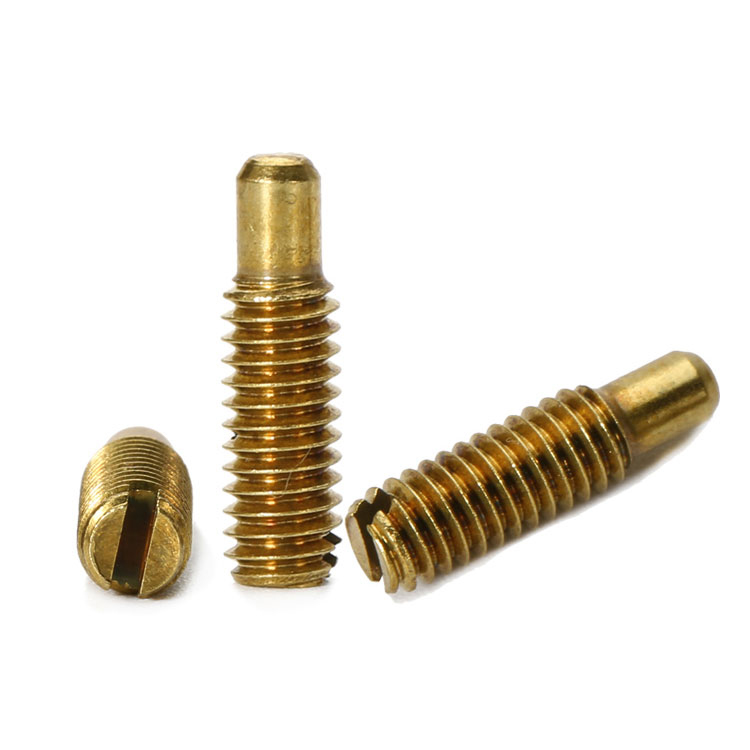
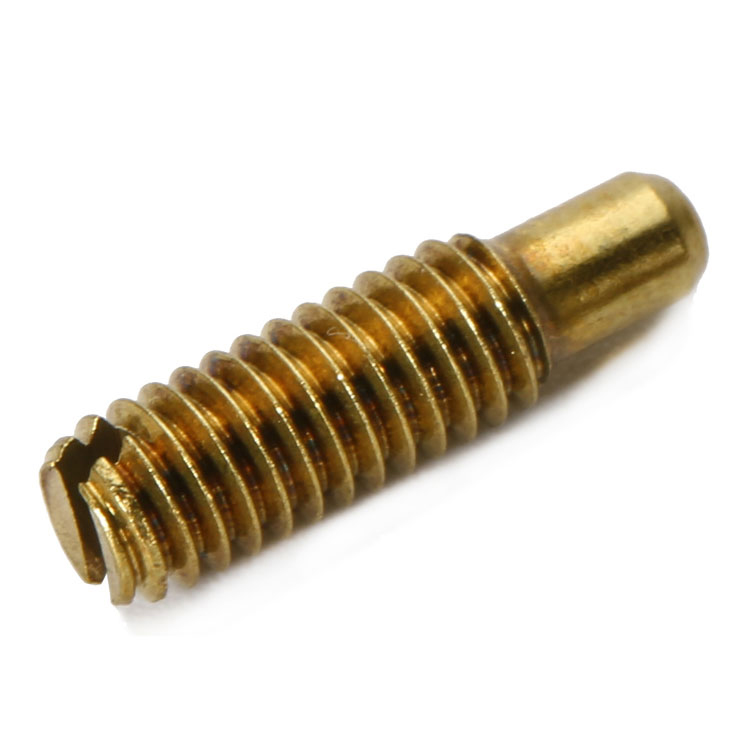
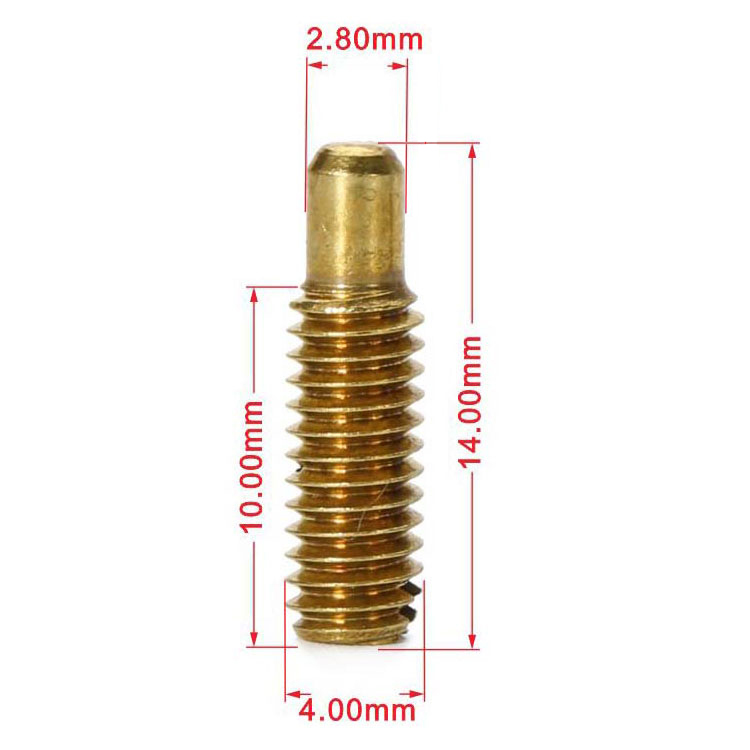
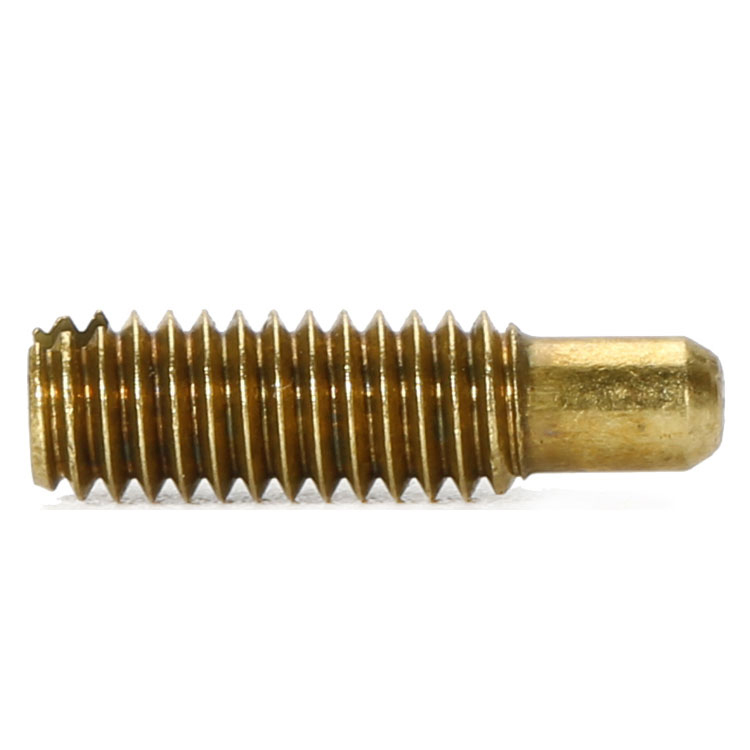
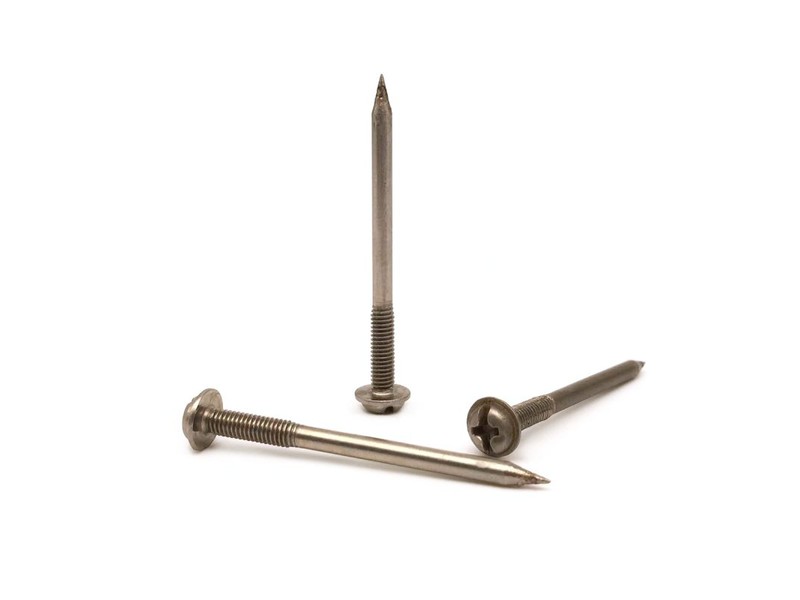
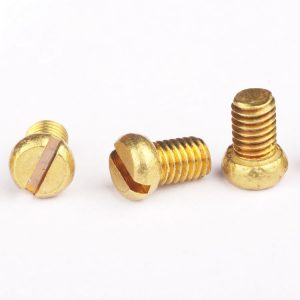
Type:Slotted set screw with an extended pilot tip, full thread (Non-Standard)
Materials:Brass (CuZn); tin bronze on request, grade per drawing
Surface treatment:Plain, cleaned (no plating, no passivation, no oil film)
Head Type:Headless: the end face is the driving face
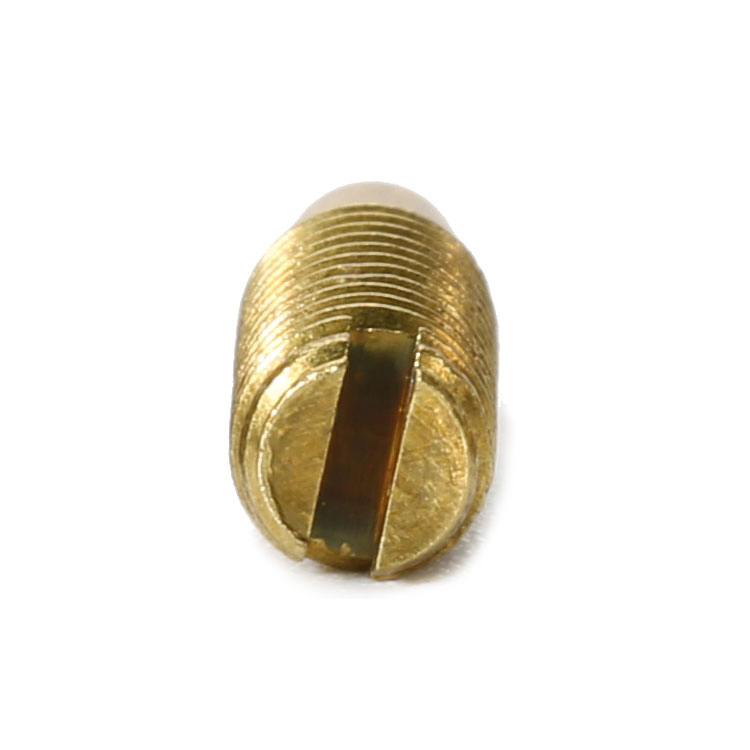
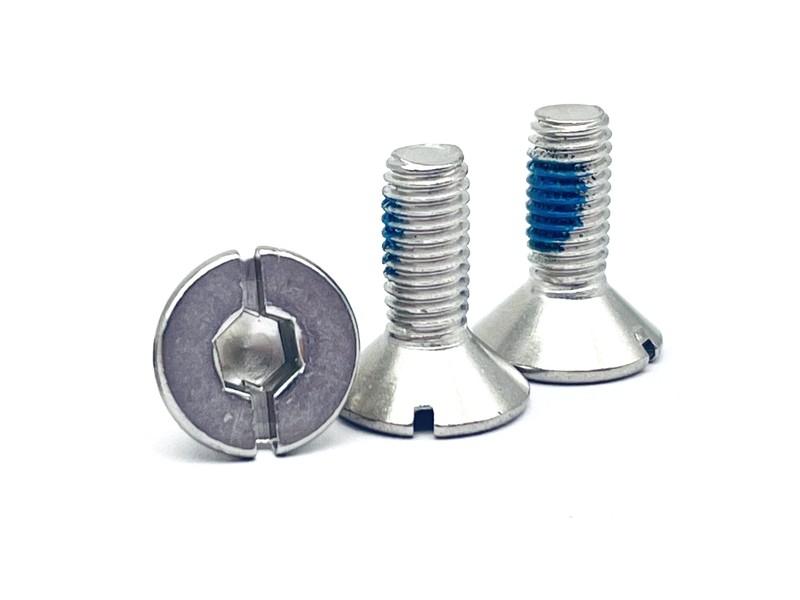
Drive:Single slot across the full end face, parallel walls, flat bottom
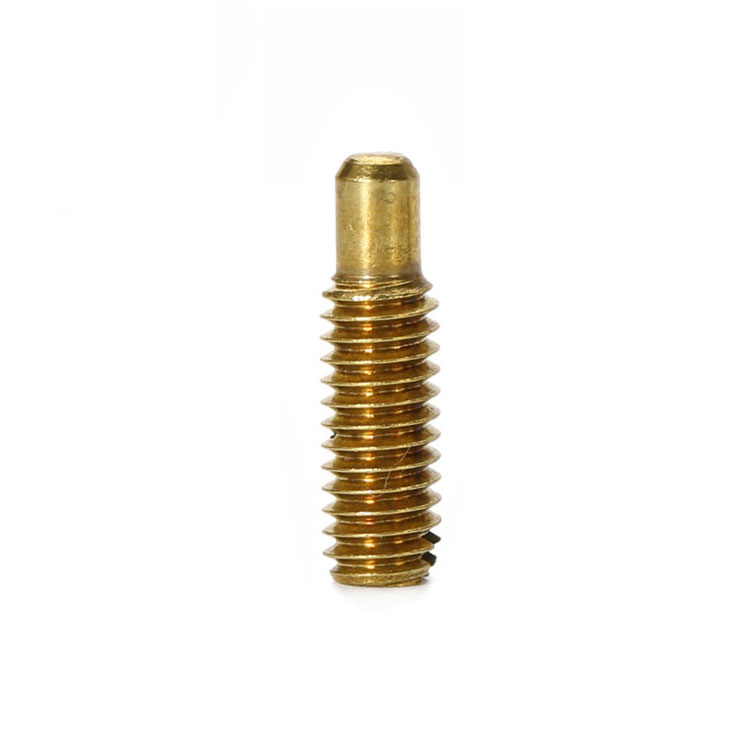
Thread:Machine thread, rolled 60 degrees, full length to the slot face
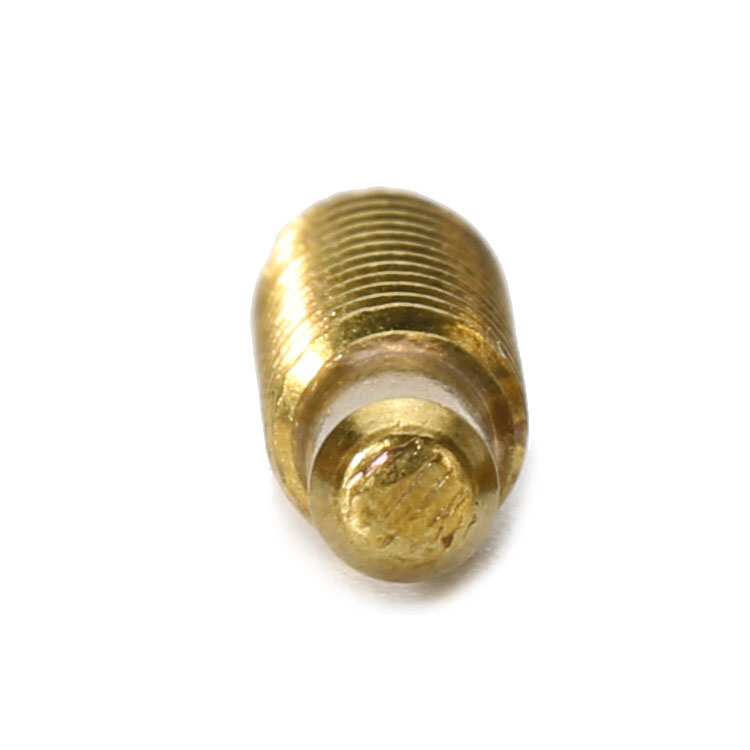
Pilot tip:Turned below the minor diameter, unthreaded, broken end
Forming:Multi-station heading, thread rolling, tip turning, cleaning and sorting
Size:M1 M2 M3 M4 M5 M6 M7 M8 M9 M10 M14
Number:t14
We manufacture bronze machine screws in tin bronze, silicon bronze or phosphor bronze grades, and the recorded part on this page is a headless slotted screw with an extended pilot tip and a full thread, in brass as standard with tin bronze on request. Slot, tip, thread and length are taken from your drawing.
Watch the factory video·Email sst@szsst88.com
ISO 9001:2015 · Manufacturing since 1998 · 8,678+ customers · 89 countries and regions
Made to order – there is no stock catalogue. Each part is produced to your drawing, and production starts after drawing review and first-article approval.
Bronze machine screws are threaded fasteners made in bronze alloys — tin bronze, silicon bronze or phosphor bronze — where the alloy rather than a coating does the work against corrosion and wear. The recorded item on this page is a brass headless slotted screw with an extended pilot tip and a full thread, with tin bronze available on request, quoted from M1 to M14 with Number t14.
Bronze and brass are not the same alloy. Brass is copper and zinc; bronze is copper with tin, silicon or phosphorus. Bronze is harder and more resistant to seawater, brass is easier to machine and cheaper. Both appear on drawings labelled “bronze machine screws”, and the grade on the drawing is what decides which one is made.
Headless. There is no head: the end face is the driving face, with a single slot cut across it. The screw sits entirely inside a threaded hole or a hub, which is what a set screw is for.
Pilot tip. The last section of the shank is turned below the minor diameter and left unthreaded, with a broken end. That tip locates in a dimple or a flat on the shaft it locks, so the screw holds position without burring the shaft threads.
Full thread. The thread runs from the slot face to the pilot tip, so the screw engages its whole length and can sit flush.
Together these define a part that holds something in place from inside: the bronze or brass body resists the environment, the slot drives it without a head to grip, the pilot tip locates, and the full thread delivers the holding force.
The body is brass or bronze wire, with alloy and heat number on the batch record. On a headless part the wire is cut and the slot face formed first, because that end has to be flat and square: the slot is the only place a blade can act, and a face that is off square makes the blade bear on one wall.
The slot is cut straight across the full end face with parallel walls and a flat bottom. Parallel walls are what let a hollow-ground blade drive the screw without wedging; a tapered slot on a soft brass part spreads under load and the blade lifts out. The slot depth is set against the shank diameter, and on the small sizes the remaining wall is only a few tenths of a millimetre.
The thread is rolled over the full length. Rolling on bronze and brass work-hardens the flank, and on a set screw that matters because the screw is turned hard against a shaft and the threads carry the whole holding force.
The pilot tip is turned after the thread is rolled, off the same centre, down to a diameter below the minor thread. Turning it afterwards is deliberate: it removes the thread from the tip cleanly and leaves a short unthreaded nose that can enter a dimple without cutting it. On these parts the tip length is a quoted dimension, not a detail, because it decides how far the screw stands off the shaft. On bronze machine screws of this form the tip is the part that touches the shaft, so it is inspected as a working surface rather than as a detail.
Cleaning comes last, and on bronze machine screws the finish is the alloy itself — no plating, no passivation and no oil film on the recorded configuration. The parts arrive dry and can be soldered or plated later without stripping a coating.
The family is quoted from M1 to M14, with M1, M2, M3, M4, M5, M6, M7, M8, M9, M10 and M14 in the recorded range. Custom lengths up to 2,000 mm are subject to DFM review after drawing submission; on a headless bronze machine screws part the length is measured from the slot face to the end of the pilot tip, which is the dimension that fits the hole.
| Item | How it is defined | What we control |
|---|---|---|
| Thread | Metric machine thread, rolled, full length | Gauged per batch |
| Slot width | Matched to the blade supplied | Checked with the blade on the first article |
| Slot depth | Set against the shank diameter | Checked on the section |
| Pilot tip diameter | Below the minor thread diameter | Measured with a micrometer |
| Pilot tip length | From the thread end to the tip | Measured on the projector |
| Length | From the slot face to the tip | Measured on the shop plate |
| Alloy | Brass as standard; tin bronze on request | Confirmed on the material certificate |
The pilot tip is the dimension that gets left off drawings, and it is the one that decides whether the part works. A tip that is too long leaves too few threads engaged in the hub; one that is too short cannot reach the dimple it is meant to sit in. The tip diameter also matters: if it is close to the minor diameter it will drag in the thread, and if it is much smaller it will not centre. That is the first dimension to confirm when a customer sends a sample of bronze machine screws to match.
Length is measured from the slot face, and because there is no head the whole length is usable thread apart from the tip. That is why a headless screw can sit flush in a shallow boss where a headed screw of the same thread would stand proud.
Three decisions define this part, and each of them has a limit worth stating before a drawing is issued.
| Feature | What it gives | What it costs |
|---|---|---|
| Bronze body | Corrosion resistance in seawater, good wear behaviour | Harder to machine than brass; higher cost |
| Headless form | Sits flush inside a hub or hole | Only the slot face to drive it; less torque than a headed part |
| Single slot | Any flat blade will turn it | Slot walls spread under overload on soft alloy |
| Pilot tip | Locates in a dimple without cutting the shaft | No thread on the tip; tip length must be quoted |
| Full thread | Engagement over the whole body | No shoulder to set a depth |
Bronze is chosen where brass would not last. In seawater, bronze resists the chloride attack that turns brass pink and then porous; silicon bronze is the usual structural choice, tin bronze the bearing and fitting choice, and phosphor bronze where a spring or a wear surface is needed. Where none of those applies, brass does the same job for less.
The headless form changes how the part is specified. A headed screw can be tightened until the head bears; a set screw has nothing to bear on, so the torque goes straight into the thread and the shaft. That is why the pilot tip and the slot are both critical on a bronze machine screws part of this type: the tip takes the load and the slot takes the drive. Bronze machine screws of this form are therefore driven to a torque, not to a feel.
The slot is the weak point on brass or bronze. Both alloys are softer than steel, the blade bears on two narrow walls, and an over-tightened screw spreads them and loses the drive. Where the joint is tightened hard and often, a hexagon socket in the same headless form is the better specification, even though it needs a different tool. Where the drive matters more than the look, that is the specification to make on bronze machine screws.
The recorded finish is plain cleaned alloy: no plating, no passivation and no oil film. On bronze that is normal, because the alloy provides the corrosion resistance and a coating would only be there for appearance.
| Option | What it does | Effect on the part | Typical use |
|---|---|---|---|
| Plain cleaned | Degreased and dried; no film | No dimensional change | Marine and electrical parts |
| Clear lacquer | Slows patina, holds the colour | Can narrow the slot | Visible decorative parts |
| Nickel plated | Silver tone, harder surface | A few microns; thread gauged after | Matching steel hardware |
| Tin plated | Solderable, resists tarnish | Thin; slot re-checked | Electronics and contacts |
| Deliberate patina | Green or brown oxidised surface | Surface only; slot re-checked | Heritage and architectural work |
Patina is the visible behaviour of bronze. The alloy oxidises to a brown film and, in wet or salty air, to a green one; neither is a structural failure, and both are often wanted on architectural work. Where the colour has to stay constant, a clear lacquer is used, and then the slot is checked after coating.
Where an electrical function is involved, the finish has to be chosen for contact rather than for looks. Tin plating keeps a bronze contact solderable and resists tarnish; a lacquer does the opposite and insulates. That is a drawing decision, and on bronze machine screws it is worth writing down rather than leaving to the shop. The finish and the drive are the two lines a buyer should never leave blank on bronze machine screws.
Three environments where bronze rather than brass or steel is the right answer:
| Where it sits | The screw locks a cleat, a hinge pin or a fitting where salt water reaches it and the part is expected to come apart again after long service at sea. |
| When it goes wrong | Brass dezincifies in seawater and turns porous, and a plated steel screw rusts from the first scratch. |
| Why it happens | The joint is wet and salty, the part is structural, and it is serviced afloat. |
| What we control | Alloy grade confirmed on the certificate, tip length measured, and the slot checked with the blade used on board. |
| Where it sits | The screw locks a contact, a spring or a terminal where the body has to conduct, stay non-magnetic and resist tarnish. |
| When it goes wrong | A steel screw disturbs a magnetic movement, and a brass one tarnishes into a resistive film at the contact. |
| Why it happens | The joint carries current, the assembly is delicate, and the setting is adjusted in service. |
| What we control | Alloy and finish agreed, slot checked with the production blade, thread gauged per batch. |
| Where it sits | The screw locks a bearing, a bush or a wear ring in a bronze housing where the same alloy is used throughout for corrosion and wear. |
| When it goes wrong | A dissimilar screw sets up a galvanic pair in a wet housing, and a tip that is too short fails to seat in the dimple and the bush creeps. |
| Why it happens | The housing is wet and warm, the fit is precise, and the screw is set once at assembly. |
| What we control | Pilot tip diameter and length checked on the first article, thread gauged per batch. |
Four reasons that matter on a headless pilot-tip screw, each tied to what the drawing has to prove:
|
Alloy and tip reviewed together
The alloy, the pilot tip diameter and the tip length are reviewed as one set against the hole, so a tip that will not reach its dimple is raised before the run. Basis: Alloy and tip reviewed as one set. |
Thread, slot and tip in one route
The thread is rolled over the full body, the slot is cut across a square face and the tip is turned off the same centre afterwards. Basis: One route from wire to dry bronze screw. |
|
Slot and tip checked on the part
The slot is checked with the production blade, the tip is measured below the minor diameter, and the thread is gauged per batch. Basis: First article driven with the production blade. |
First article to repeat production
Drawing revision, wire heat, die set and thread roll are fixed at the first article and used as the comparison for repeat orders. Basis: First article signed off before the batch is released. |
Shi Shi Tong forms these bronze machine screws on a multi-station header: the body is cut and squared, the machine thread is rolled over the full length, the slot is cut across the end face, and the pilot tip is turned below the minor diameter before cleaning and sorting. The first part of every run is measured on the slot, the thread and the tip, and driven with the production blade, before the batch continues. The route is the same for every size, so a bronze machine screws part in M2 is checked exactly as an M8 is.


|

|
The tip is the operation that separates a good part from a bad one. Turning it after rolling removes the thread cleanly and leaves a nose that will enter a dimple; turning it before rolling lets the roll push thread into the tip and the nose comes out slightly tapered, which is exactly what causes a set screw to walk off its seat. That is why the tip is turned last, and why it is checked on every first article before any bronze machine screws are run.
What decides whether bronze machine screws pass is the alloy, the slot, the pilot tip and the thread. The inspection agreement covers those, and the criteria come from the drawing.

Slot and tip on the projector |

Thread gauged per batch |

Hardness testing of the alloy |

Salt-spray testing of the plain alloy |
The tip is checked with a micrometer below the minor diameter and on the projector for length. A tip that has picked up thread in the roll will drag in the hole and the screw will not reach its dimple; a tip that is too small will not centre. Both failures look the same on a bench and different under the projector.
The slot is checked by driving with the production blade at the specified torque and then inspecting the walls. On brass and bronze the walls spread before anything else fails, so a polish mark on the wall is the early sign that the slot is too shallow or the blade too thick. A sample of bronze machine screws set into the customer hub is the test that settles it.
Every shipment of bronze machine screws is traceable to the wire it was made from. The alloy and heat number are recorded on the material certificate supplied with the parts, and the inspection records follow the criteria agreed on the drawing.

ISO 9001:2015 |

RoHS test report |

Registered trademark |

Patent: security screw and driver |
With each batch we supply the material certificate, the inspection record for the criteria on the drawing and, where it is listed, the third-party report for the alloy. The documents carry the drawing revision and the batch number, so the paperwork can be matched to the parts.
More than 8,678 customers in 89 countries and regions have ordered from Shi Shi Tong; 87% of orders come from repeat customers and 56% through referrals. Most projects follow the same route: drawing review, first-article approval, then batches checked against that sample. On a bronze part the first article confirms the alloy as well as the dimensions, because a substitution shows up much later as a colour change or a seized thread. Buyers visit during the process to review samples and to see how the tips are turned.
|
8,678+
customers served
|
87%
of orders from repeat customers
|
56%
of orders through referrals
|
89
countries and regions shipped to
|
Buyers and quality engineers visit for sample review, process discussion and supplier audits; the visit is arranged around production so the header and the finishing line can be seen on the day the parts run.

Customer group visit – sample review |

Customer group visit – process discussion |

Customer group visit – factory tour |

Customer visit – project kick-off |

Danish customer – drawing review |

Industry exhibition – meeting customers |
The family is bronze, and the recorded part is brass with tin bronze available on request. The alloy that gets made is the one written on the drawing.
Brass is copper and zinc; bronze is copper with tin, silicon or phosphorus. Bronze is harder and resists seawater better; brass machines more easily.
It is a set screw. The whole body sits inside a threaded hole or hub and the end face is the driving face, so the screw can sit flush.
It is an unthreaded nose turned below the minor diameter that locates in a dimple on the shaft. It holds position without cutting the shaft thread.
Because there is no head. The slot face is the top of the part, and the tip is the bottom, so that is the length that has to fit the hole.
Thread size and pitch, length from the slot face, slot width and depth, pilot tip diameter and length, alloy grade, and the finish.
How a bronze machine screw project runs from drawing to repeat delivery:
|
1
Send the drawing or sample
|
→ |
2
Alloy and tip review
|
→ |
3
First article set in your hub
|
→ |
4
Batch production and repeat orders
|
Each step is confirmed with you before the next one starts; the drawing revision from the first article is what repeat orders are checked against.
For a quotation, send the drawing with the thread size and pitch, length from the slot face, slot width and depth, pilot tip diameter and length, alloy grade and finish.
|
Thread and pitch
|
Length from slot face
|
Slot width and depth
|
|
Pilot tip diameter
|
Pilot tip length
|
Alloy and finish
|
Sending a drawing? The form below does not take attachments. Email the PDF, DXF or STEP file to sst@szsst88.com with the part name and quantity in the subject line – the drawing is reviewed and a quotation follows.

 +86 13143444311
 sst@szsst88.com