Tel:
+86 13143444311
Email:sst@szsst88.com
Fax:+0086-755-27322278
Address:Building 9, First Industrial Zone, Tantou Industrial City, Songgang Street, Baoan District, Shenzhen 518105, Guangdong, China
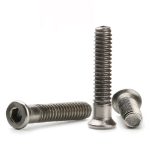
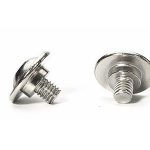
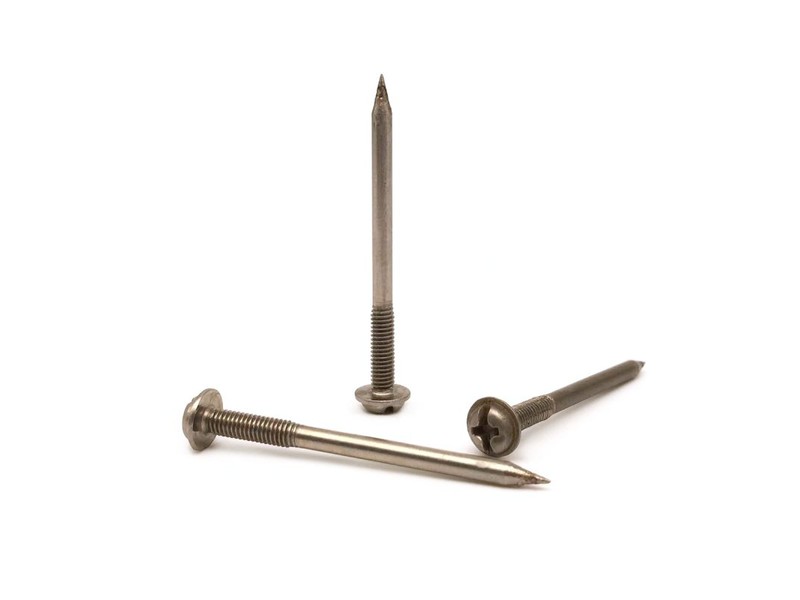
Type:SS Truss Head Screws
Materials:Stainless Steel
Surface treatment:Plain
Head Type:Truss Head
Drive:Phillips Cross + Slot
Thread:Machine Thread
Point:Blunt
Forming:Compound Die Heading
Size:M1 M2 M3 M4 M5 M6 M7 M8 M9 M10 M14
Number:193
We make SS truss head screws in passivated 304 stainless, a wide shallow head with a combined cross-and-slot drive and a machine thread, quoting them from M1 to M14. Head diameter, recess, thread and length come from your drawing, and the first article is fitted into your own panel.
Watch the factory video·Email sst@szsst88.com
ISO 9001:2015 · Manufacturing since 1998 · 8,678+ customers · 89 countries and regions
Made to order – there is no stock catalogue. Each part is produced to your drawing, and production starts after drawing review and first-article approval.
SS truss head screws are stainless machine screws with a wide, low domed head and a drive that combines a cross recess with a straight slot. The head is the largest of the low-profile forms — wider than a pan, much wider than a cheese head — so the clamp load is spread over a broad ring while the head stays shallow. This family is made in 304 stainless with a passivated finish, quoted from M1 to M14 with Number 193 and filed with the long screws.
Truss head. A very wide, shallow dome with a flat bearing face underneath. The face area is the point of the form.
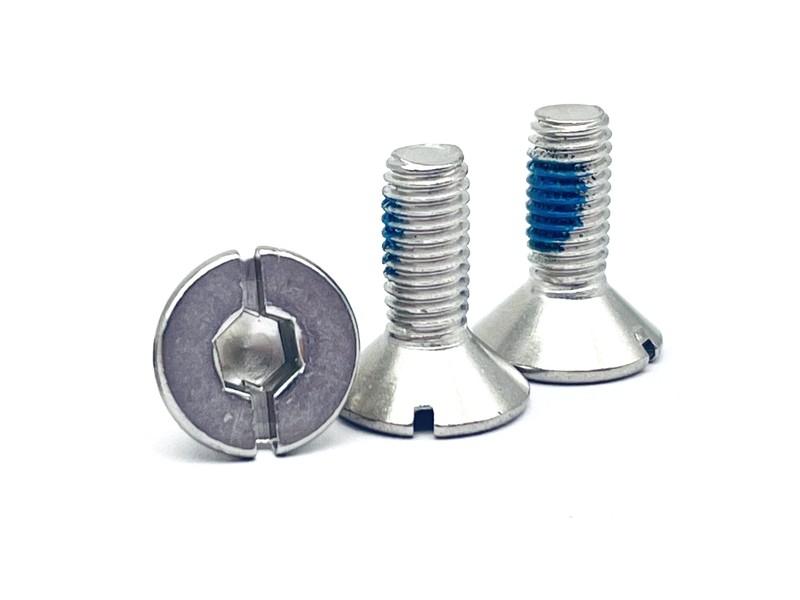
Cross and slot. A Phillips recess with a slot cut across it, so the screw can be driven either way.
Machine thread. A rolled thread for a tapped hole or a nut, ending in a blunt chamfer.
Stainless, passivated. No coating, so the head, the recess and the thread are all as made.
A truss head is best understood as a washer that has been made part of the screw. The dome is shallow, the face under it is broad, and the result is a bearing area close to what a washer would give without a second part in the assembly. On a thin panel, a plastic housing or a soft gasket surface, that is what stops the head from dimpling the material as it is tightened.
The low dome is what makes the form usable where a washer would be too bulky. A truss head spreads the load but adds only a little height, so it fits under a cover or inside a shallow recess where a pan head plus washer would not. That combination — wide bearing face, low overall height — is why SS truss head screws appear on panels that have to stay flat.
The trade is the edge. A very wide, very shallow dome has a thin rim, and that rim is the part that gets caught on a cable, a sleeve or a moving guard. It is also the part that deforms first if the screw is over-driven, and a bent rim reads as a damaged head even when the joint is sound.
The second channel of the design on SS truss head screws is the drive. A Phillips recess with a slot across it looks like a compromise, and it is: neither drive is as strong as it would be alone. What it buys is that a screw which has lost its cross can still be turned with a flat blade, which is exactly the situation a service technician meets on equipment installed years earlier.
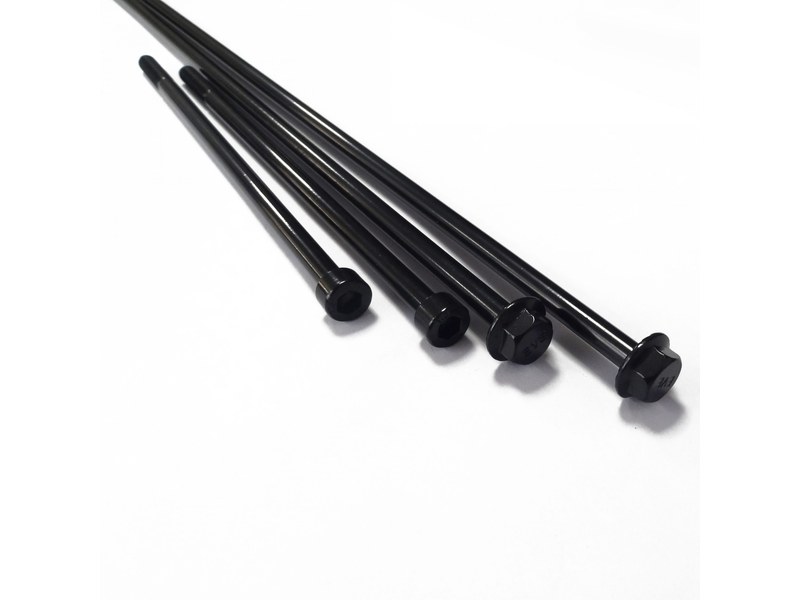
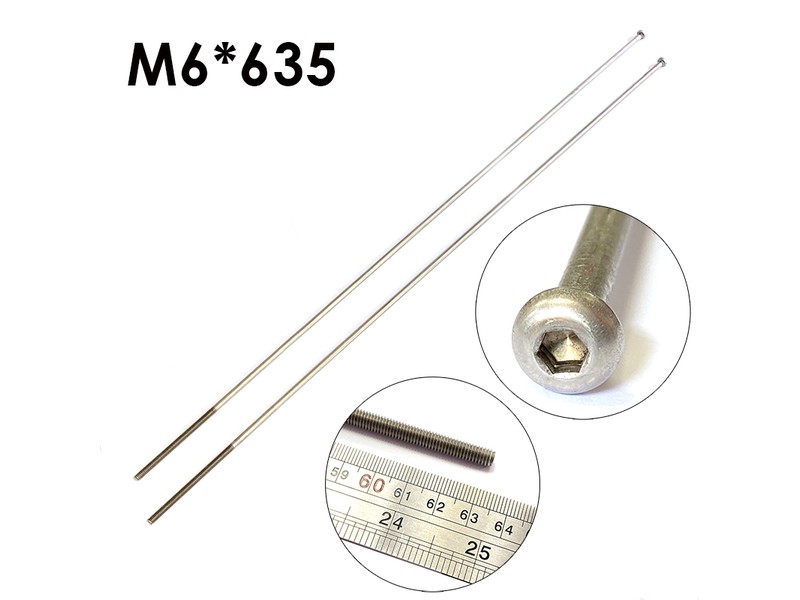
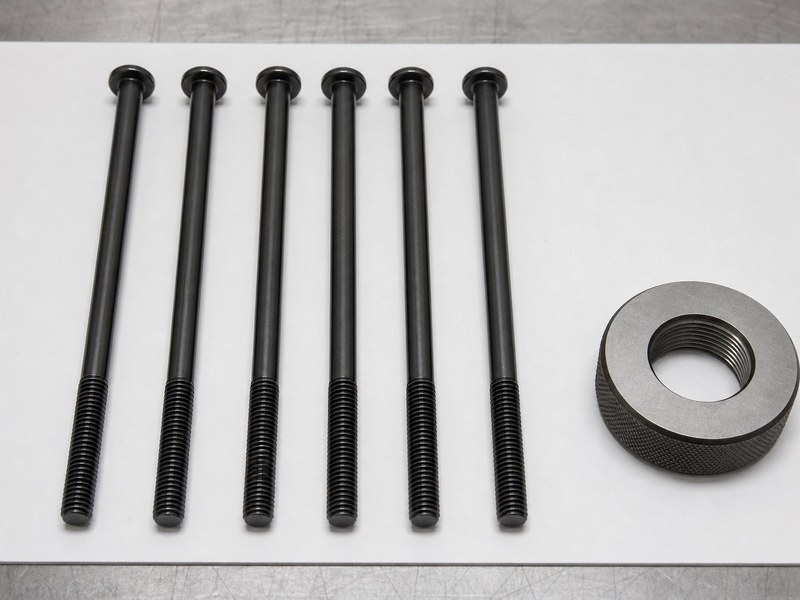
Because the head is wide and the shank is long on the recorded item, the part is made on a different route from a short screw. The head is formed and the shank extended in more than one stroke, and the thread is rolled over a length that has to stay straight enough to start in its hole — which is a handling and tooling question more than a geometric one.
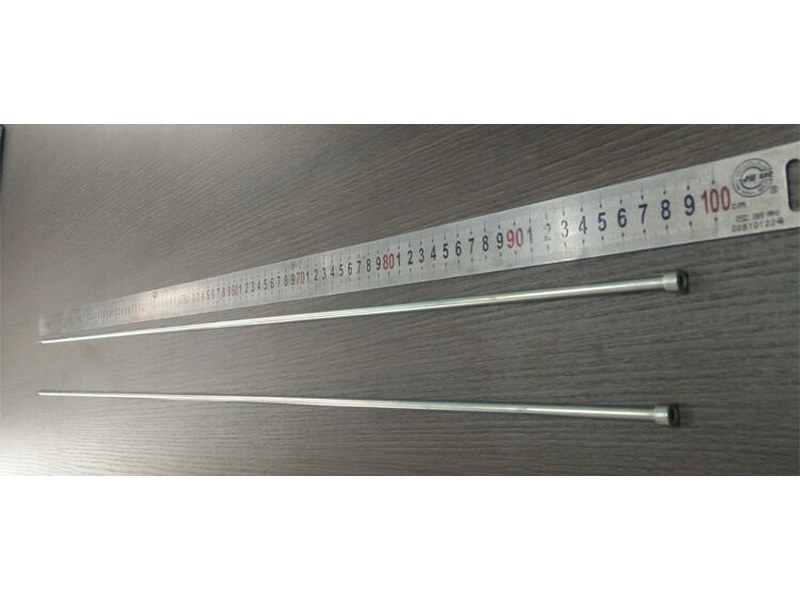
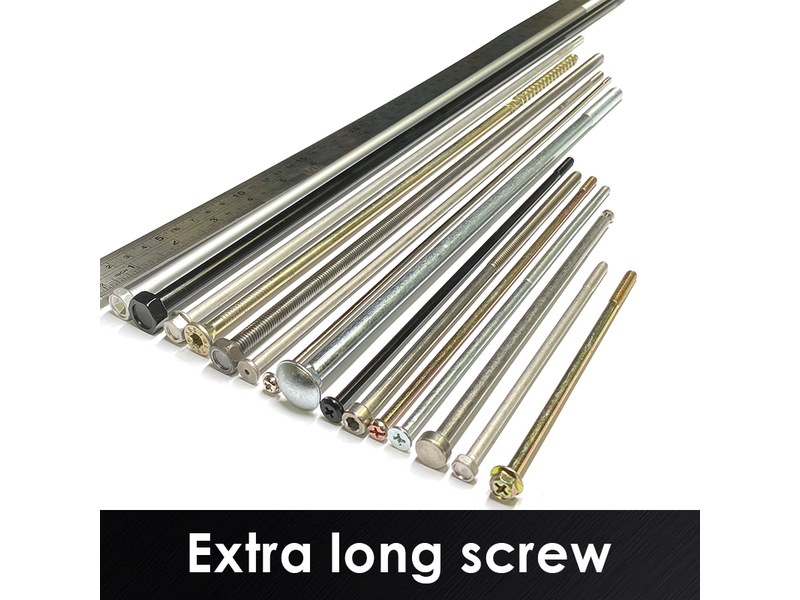
The recorded range is M1 to M14, covering M1, M2, M3, M4, M5, M6, M7, M8, M9, M10 and M14. Custom lengths up to 2,000 mm are subject to DFM review after drawing submission. For SS truss head screws the quotation carries head diameter, head height, recess type, thread and length, because the head is what the part was chosen for and the length is what decides the assembly.
| Item | How it is defined | What we control |
|---|---|---|
| Head | Truss head, wide and shallow | Head diameter, height and face flatness |
| Recess | Phillips cross with a slot | Recess size and depth, slot width |
| Thread | Machine thread | Pitch and length, gauged per batch |
| End | Blunt, chamfered | Chamfer cut, not deburred |
| Finish | Passivated stainless 304 | Surface condition and passivation |
| Length | Under the head | Measured on the shop plate |
Head diameter is the parameter to argue about on this form. A wider head bears better and takes more room; the truss head is already the widest of the common low heads, so the choice is usually between a truss head and a flange head rather than between two truss heads. On a panel with a narrow margin the wide rim can overhang the edge, which looks wrong and does nothing for the joint.
Length is measured from under the head, and on a long screw the thread length is worth writing separately. A long part that is fully threaded behaves differently from one with a plain shank, and the drawing should say which is wanted rather than leaving it to the maker.
Three features define this part: the wide head, the combined drive and the stainless body. The first spreads the load, the second gives a fallback for a damaged cross, and the third means the head can be outdoors without a coating to wear.
| Feature | What it gives | What it costs |
|---|---|---|
| Wide truss head | Washer-like bearing area | Thin rim that can be bent |
| Low dome | Fits under covers | Limited depth for the recess |
| Cross plus slot | Two drivers can turn it | Neither drive is at full strength |
| Stainless 304 | No coating to chip | Galls against stainless |
| Machine thread | Repeatable clamp in a tapped hole | Needs a tapped hole or nut |
The combined drive is the feature people either value or dismiss, and both reactions are reasonable. It is worth specifying where the equipment is installed once and serviced rarely, in places where a technician may have only a flat blade; it is not worth it where the joint is driven to a torque and never touched, because the stronger single drive would do the job better.
On SS truss head screws the wide head is worth its space on soft materials. On a plastic housing a truss head loads the material over a ring that is several times the area of a pan head, so the same clamp force dimples far less. On steel the same head is simply easier to seat, because the tolerance for a slightly uneven panel is absorbed by the width rather than concentrated at the edge.
The recorded finish is passivated 304 stainless, with no coating. Passivation removes free iron from the surface and leaves the alloy’s own oxide in place, so the head and the recess stay as formed and the corrosion resistance is the grade’s own. On a part with a wide face, that means the bearing ring is bare stainless against whatever it clamps.
| Option | How it protects | Effect on head and recess | Typical use |
|---|---|---|---|
| Stainless 304, passivated | Passive chromium oxide film | As made; no build | General indoor and outdoor |
| Stainless 316, passivated | Passive film with molybdenum | As made; no build | Coastal and chemical |
| Steel, zinc plated | Sacrificial zinc | Plate wears at the recess | Indoor panels, cost-driven |
| Steel, black oxide | Conversion film, oiled | No measurable build | Internal machine parts |
| Aluminium, anodised | Thick oxide layer | Recess dulled by the oxide | Lightweight panels |
The choice between 304 and 316 follows the environment rather than the head. 304 is the general-purpose answer and it holds up outdoors; 316 is the answer where chlorides are present, which on a wide-headed screw means a coastal or washdown application where the rim of the head will sit in a film of water.
Where the joint is stainless on stainless, galling is the behaviour to plan for. A wide head encourages an operator to lean on the driver, and a stainless thread that seizes will take the recess with it. A dry-film lubricant on the thread, or a different alloy for one part, avoids the problem before the batch is built.
Three assemblies where SS truss head screws are the fixing:
| Where it sits | The screw fixes a panel or a cover where the material is thin and the head has to spread the load without a washer. |
| When it goes wrong | A narrower head dimples the panel, and a bent truss rim reads as a damaged screw. |
| Why it happens | The material is soft, the face must stay flat, and the joint is visible. |
| What we control | Head diameter and face flatness checked, first article fitted to the panel. |
| Where it sits | The screw closes a cover on equipment that sits outside, where the head is exposed and the material must not rust. |
| When it goes wrong | A plated head loses its coating at the rim and rusts first where water collects. |
| Why it happens | The joint is wet, the head is exposed, and the material is stainless. |
| What we control | Grade confirmed, head and recess checked, passivation inspected. |
| Where it sits | The screw holds a panel or a frame where a wide head reads as a deliberate fixing rather than a small fastener. |
| When it goes wrong | An over-driven screw bends the rim, and a damaged cross leaves only the slot. |
| Why it happens | The fixing is visible, it is of low height, and the panel is thin. |
| What we control | Head form and recess checked, first article reviewed on the finished panel. |
Four reasons that matter on a wide-headed long screw, each tied to what the drawing has to prove:
|
Head and panel reviewed
The head diameter, the face flatness and the panel are reviewed together, because the truss head exists to spread load and that only works if the face is flat and wide enough for the material. Basis: Head diameter and panel agreed in writing. |
Wide head and long shank on one route
The wide head is formed and the shank extended in more than one stroke, the thread is rolled and the parts are passivated as a batch. Basis: One route with passivation last. |
|
Face and both drives checked
The first article is checked for face flatness and driven with both a cross bit and a flat blade, because the second drive is the reason for the part. Basis: First article driven both ways. |
First article fixes the setting
The first article fixes the wire, the head die and the recess punch; repeat orders are compared against that record. Basis: First article signed off before the batch is released. |
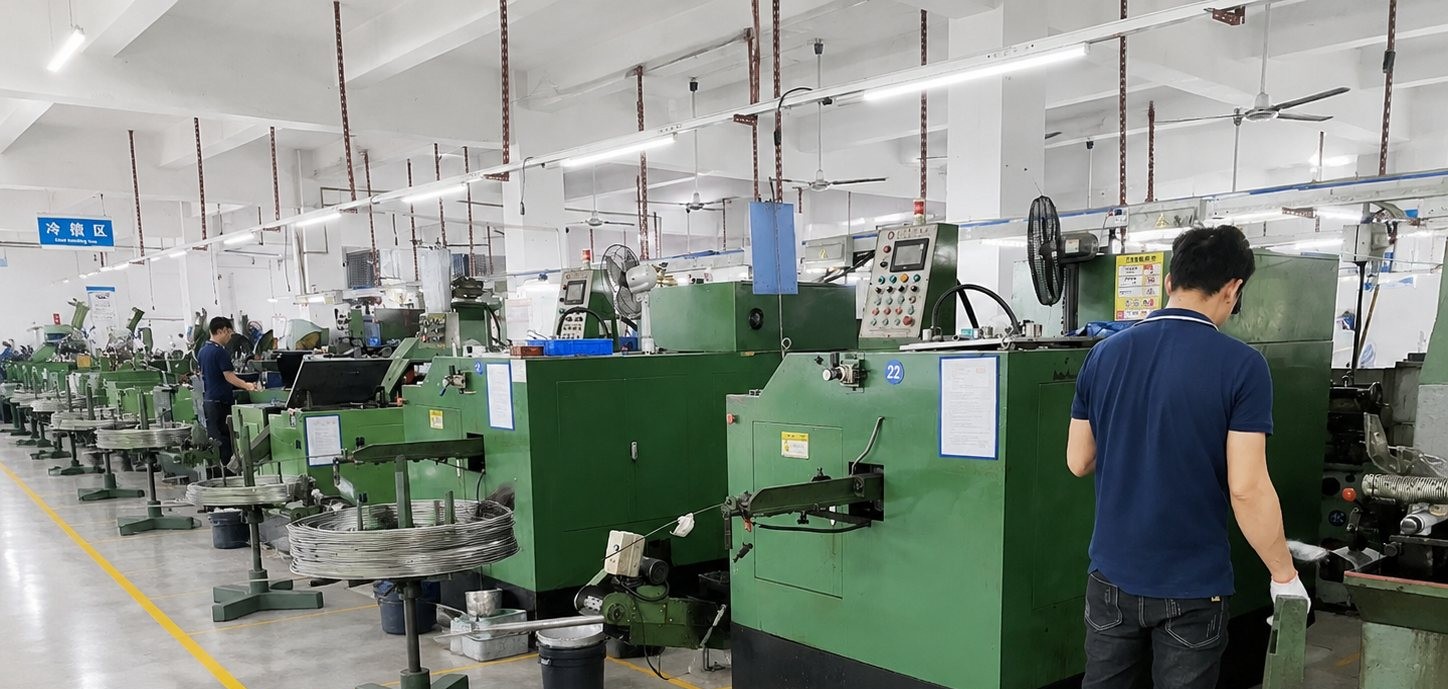
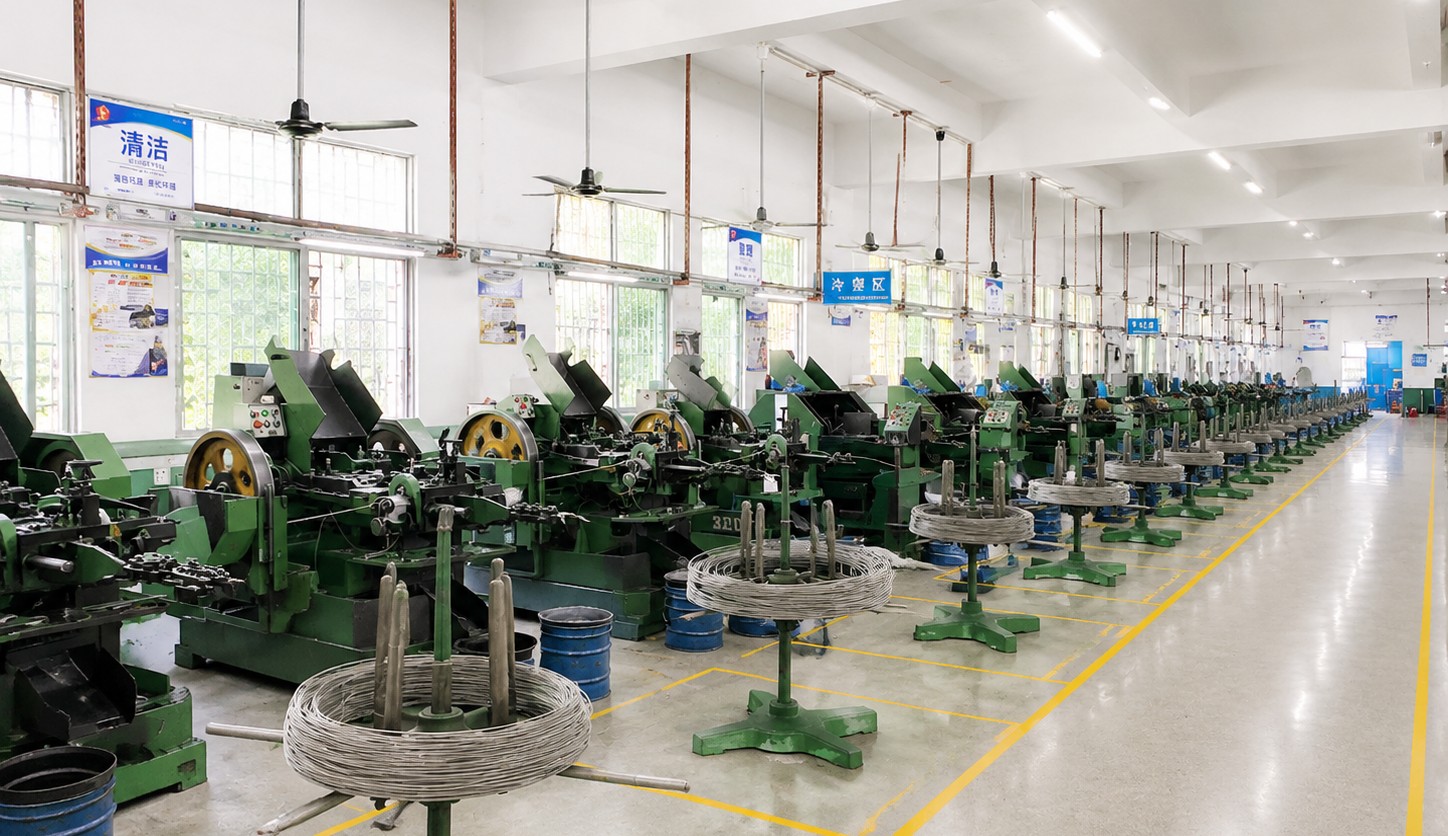
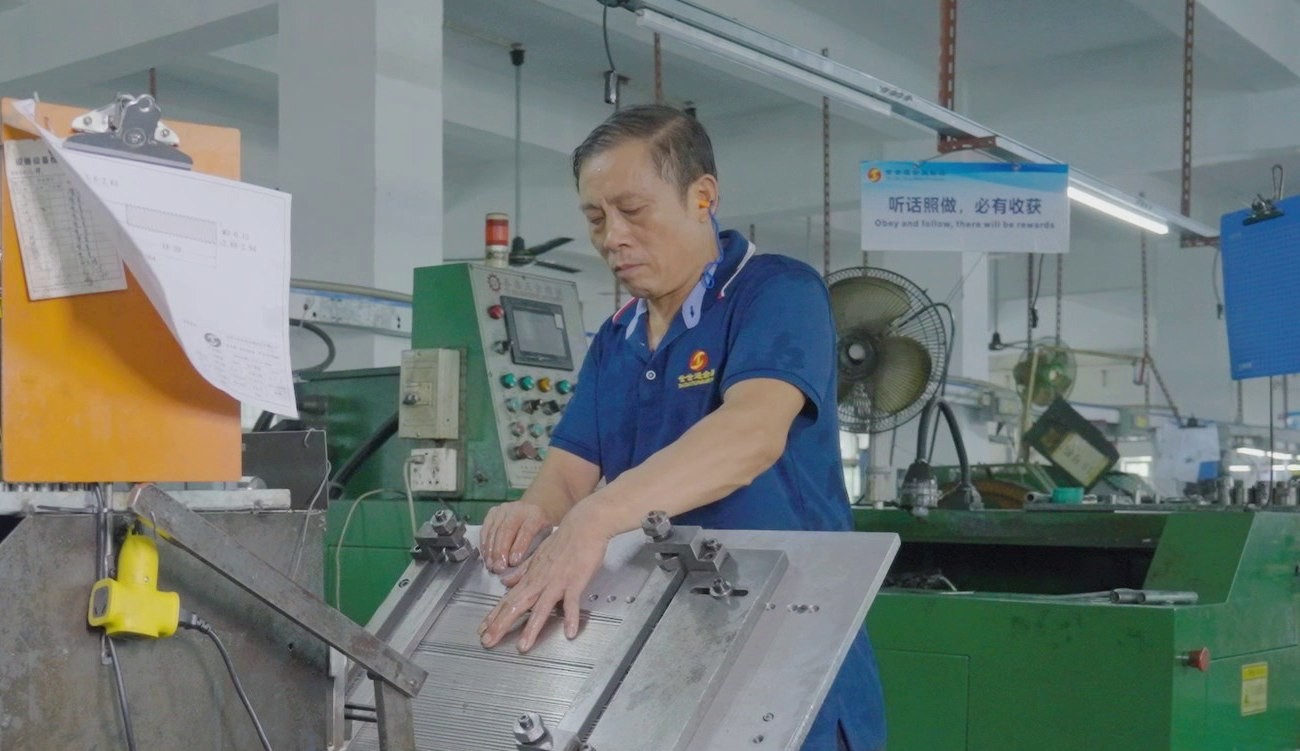
Shi Shi Tong forms these SS truss head screws from 304 stainless wire, forming the wide shallow head and the combined recess in the heading stroke and extending the shank in a second operation suited to long parts, then rolling the machine thread and passivating the finished screws. The first part of every run is measured on the head and recess, driven both ways and entered into a thread gauge before the batch continues.
|
|
Long parts change the rhythm of a run. A short screw is formed and threaded in one flow, while a long one has to be supported between operations, and the support is where marks and bends are introduced if the handling is careless. The head is the only feature that survives all of that untouched, which is why it is checked at the end as well as at the start.
What decides whether SS truss head screws pass is the head, the recess, the thread and the alloy. The inspection agreement covers those, and the criteria come from the drawing.
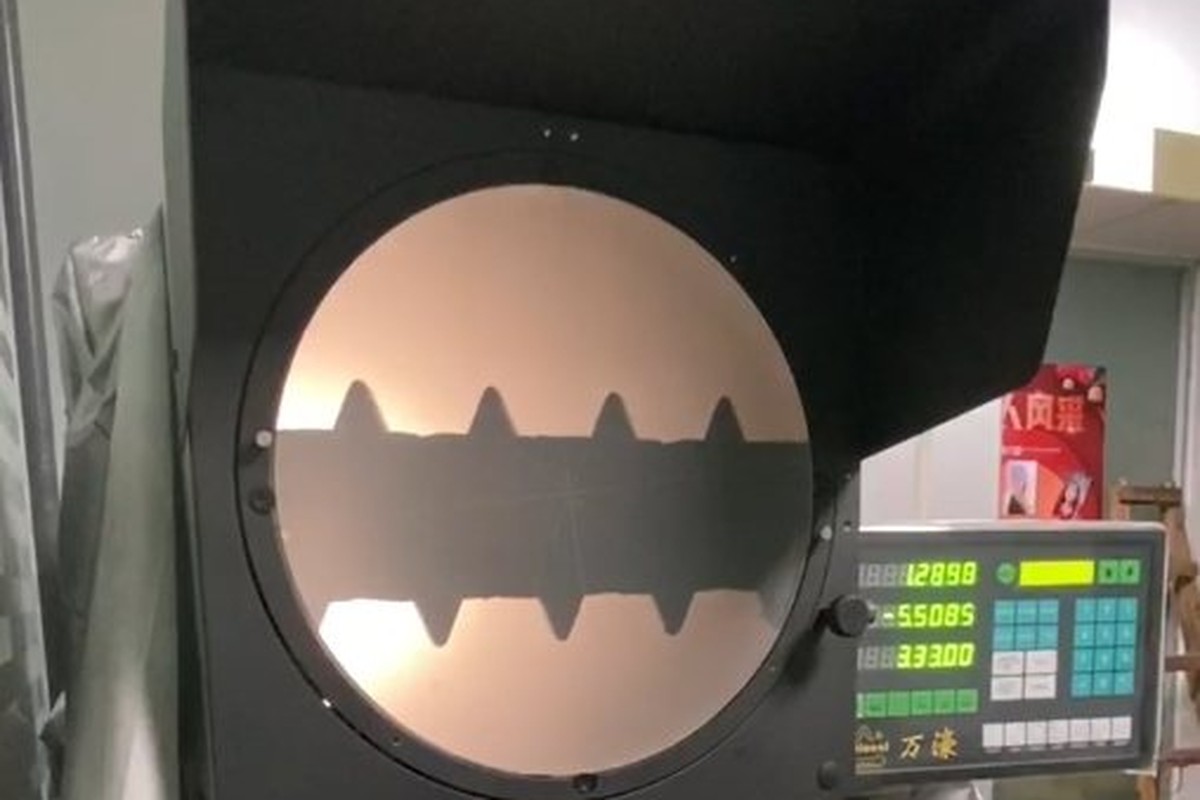
Head and recess on the projector |
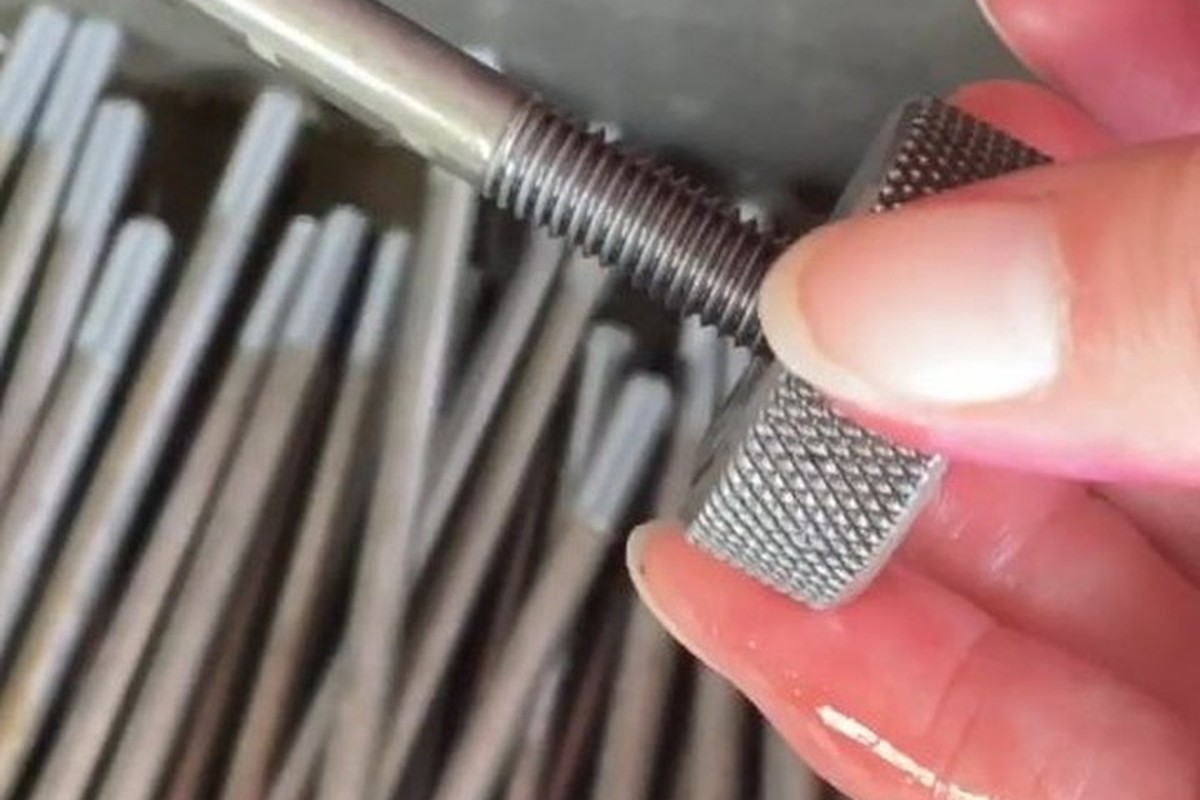
Thread gauged per batch |
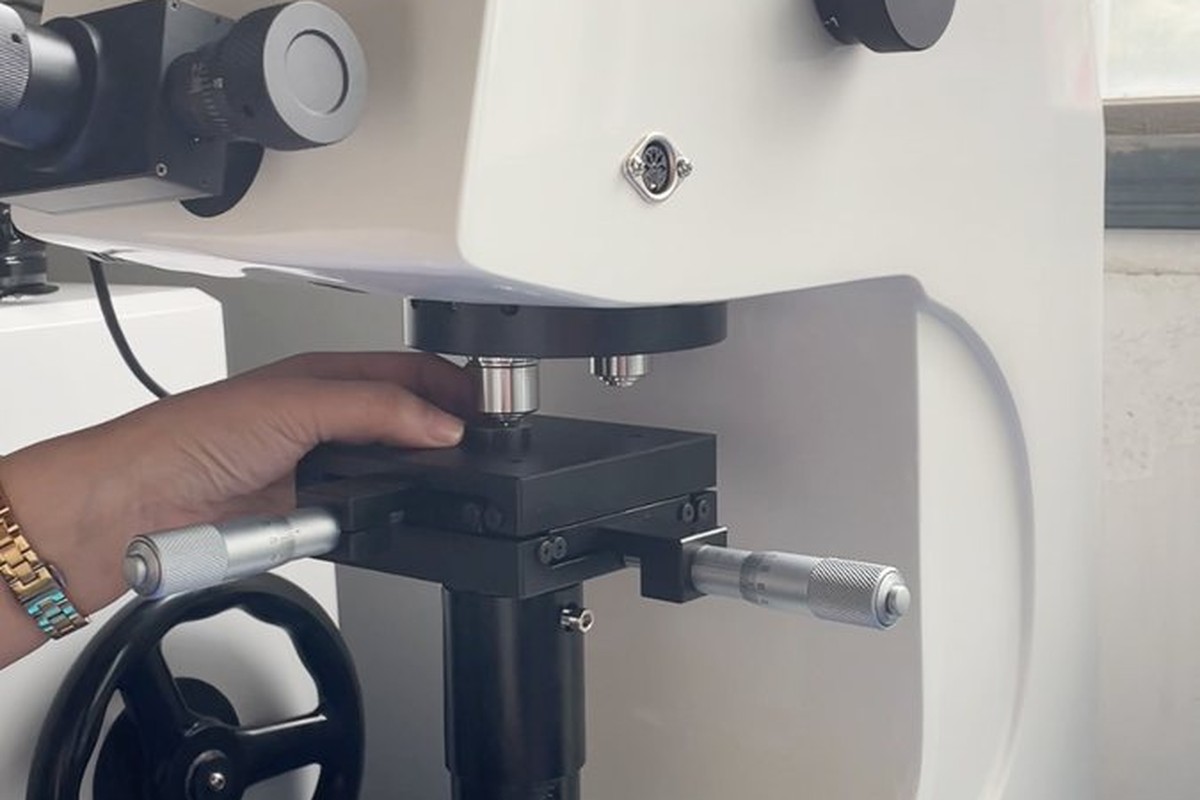
Hardness checked on the wire |
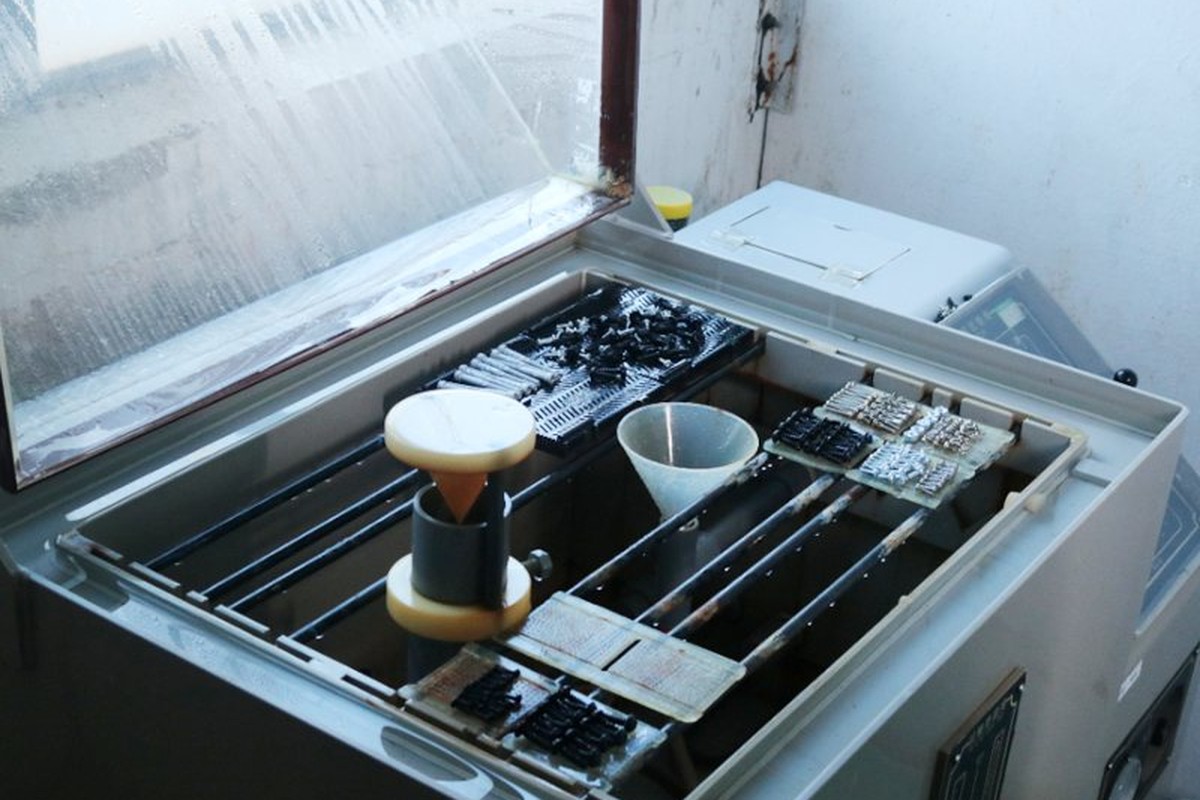
Salt-spray testing of the grade |
On SS truss head screws the head is checked for diameter, height and face flatness on the projector, and the rim is inspected for bends at magnification. The recess is checked for size and depth and driven with a cross bit and with a flat blade, because a slot cut into a cross recess is easy to get slightly off centre.
The thread is gauged per batch and the alloy is confirmed on the certificate. Where the part is long, the first article is also fitted to the customer’s assembly rather than only measured, because the fit of a long screw in a stack of parts is what the customer will judge.
Every shipment of SS truss head screws is traceable to the wire it was made from and to the passivation batch. The grade and heat number are recorded on the material certificate supplied with the parts, and the inspection records follow the criteria agreed on the drawing.
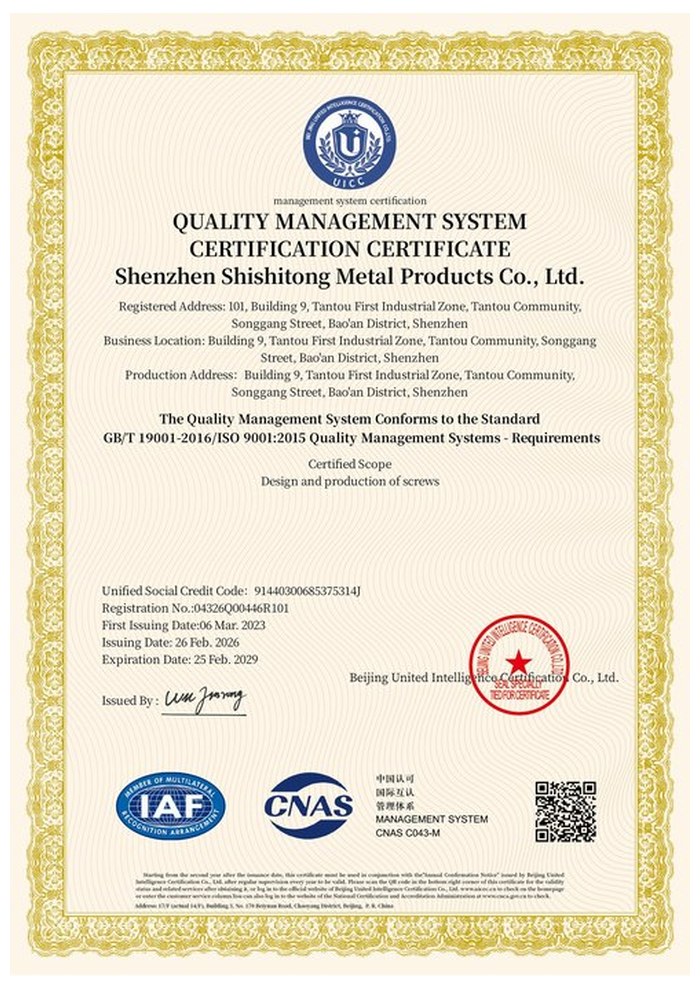
ISO 9001:2015 |
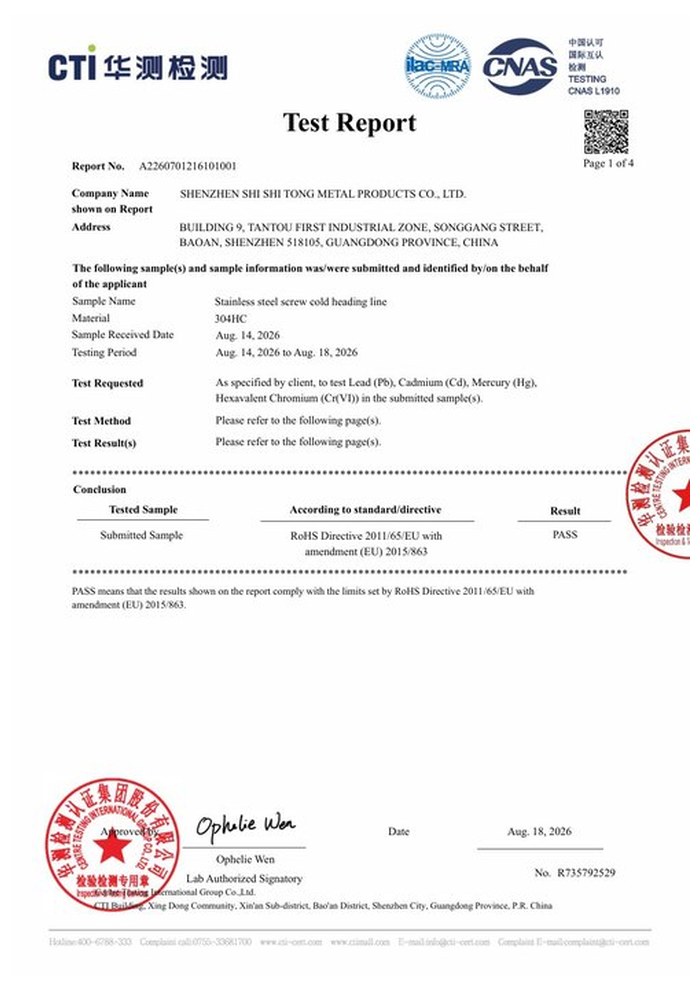
RoHS test report |
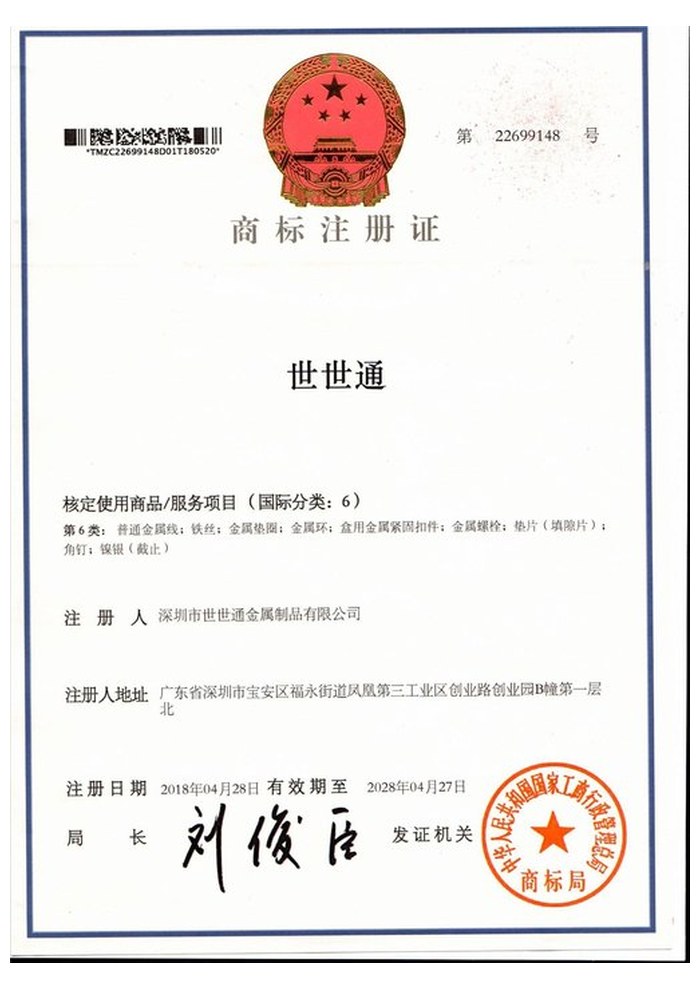
Registered trademark |
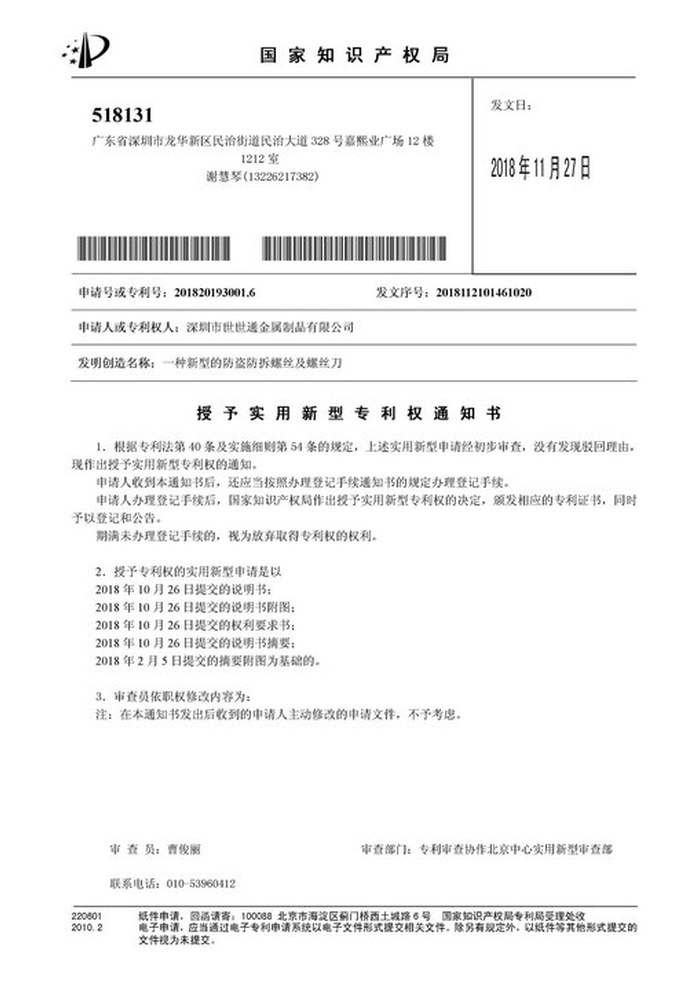
Patent: security screw and driver |
With each batch we supply the material certificate, the inspection record for the criteria on the drawing and, where it is listed, the third-party report for the grade or the passivation. The documents carry the drawing revision and the batch number, so a repeat order is made to the revision that was approved.
More than 8,678 customers in 89 countries and regions have ordered from Shi Shi Tong; 87% of orders come from repeat customers and 56% through referrals. Most projects follow the same route: drawing review, first-article approval, then batches checked against that sample. On a wide-headed part the first article is fitted into the customer’s panel, because the bearing area is the function. Buyers visit during the process to review samples and to see how the heads are formed.
|
8,678+
customers served
|
87%
of orders from repeat customers
|
56%
of orders through referrals
|
89
countries and regions shipped to
|
Buyers and quality engineers visit for sample review, process discussion and supplier audits; the visit is arranged around production so the headers and the passivation line can be seen on the day the parts run.
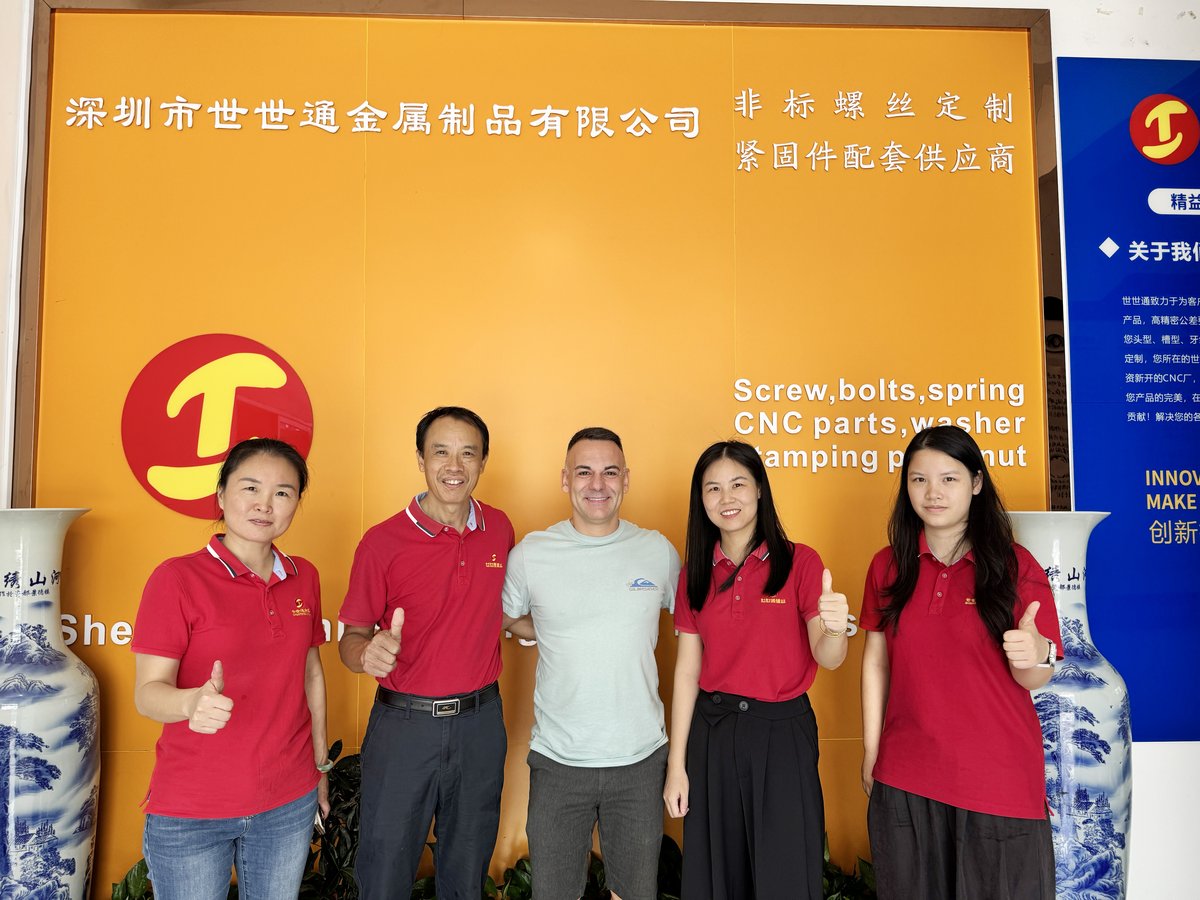
Customer group visit – sample review |

Customer group visit – process discussion |

Customer group visit – factory tour |

Customer visit – project kick-off |
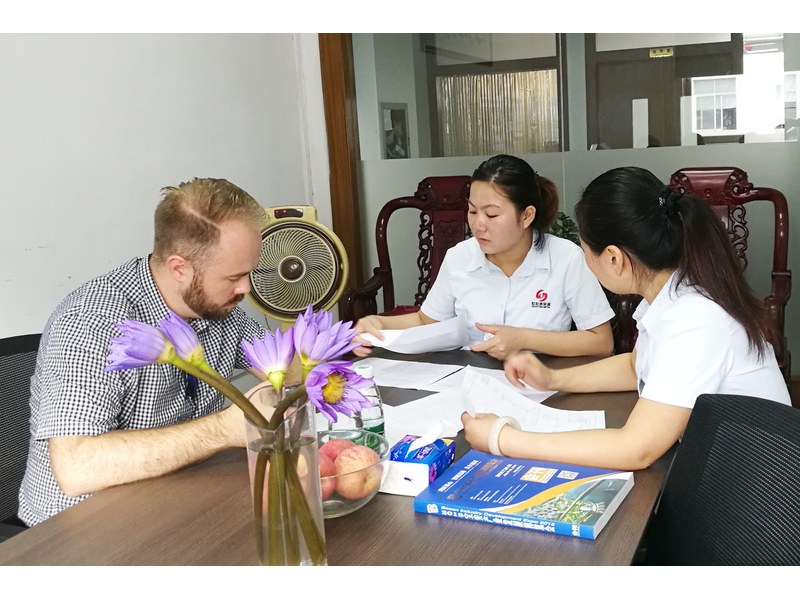
Danish customer – drawing review |
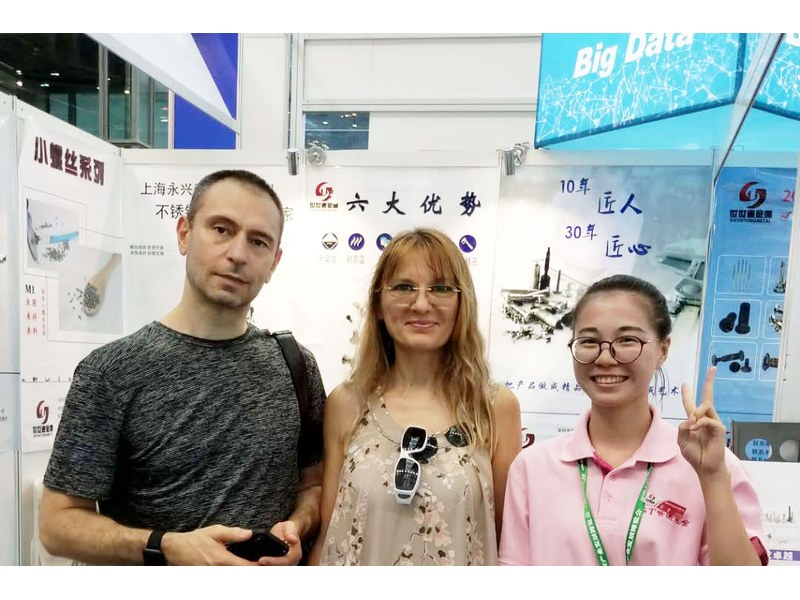
Industry exhibition – meeting customers |
Spreading load on thin or soft material. The head is the widest of the low forms, so it bears like a washer without a second part.
So the screw can still be turned if the cross is damaged or the technician has only a flat blade. Neither drive is as strong as it would be alone.
It can. The truss head is wide by design, so the margin around the hole has to be checked — an overhanging rim looks wrong and adds nothing.
For general exposure, yes. For coastal or chemical conditions, 316 is the grade to specify.
Over-driving or a seating face that is not flat. The rim of a shallow wide head is the first thing to deform, and it cannot be straightened.
Head diameter and height, the combined recess type and size, thread size and length, the thread length if it is partial, and the grade.
How an SS truss head screw project runs from drawing to repeat delivery:
|
1
Send the drawing and the panel it bears on
|
→ |
2
Head diameter, recess and thread agreed
|
→ |
3
First article fitted into your panel
|
→ |
4
Batch production and repeat orders
|
Each step is confirmed with you before the next one starts; the drawing revision from the first article is what repeat orders are checked against.
For a quotation, send the drawing with the head diameter and height, the recess type, the thread size and length, the thread length if it is partial, and the grade.
|
Head diameter
|
Head height
|
Recess type
|
|
Thread size
|
Length
|
Grade
|
Sending a drawing? The form below does not take attachments. Email the PDF, DXF or STEP file to sst@szsst88.com with the part name and quantity in the subject line – the drawing is reviewed and a quotation follows.

 +86 13143444311
 sst@szsst88.com