Tel:
+86 13143444311
Email:sst@szsst88.com
Fax:+0086-755-27322278
Address:Building 9, First Industrial Zone, Tantou Industrial City, Songgang Street, Baoan District, Shenzhen 518105, Guangdong, China
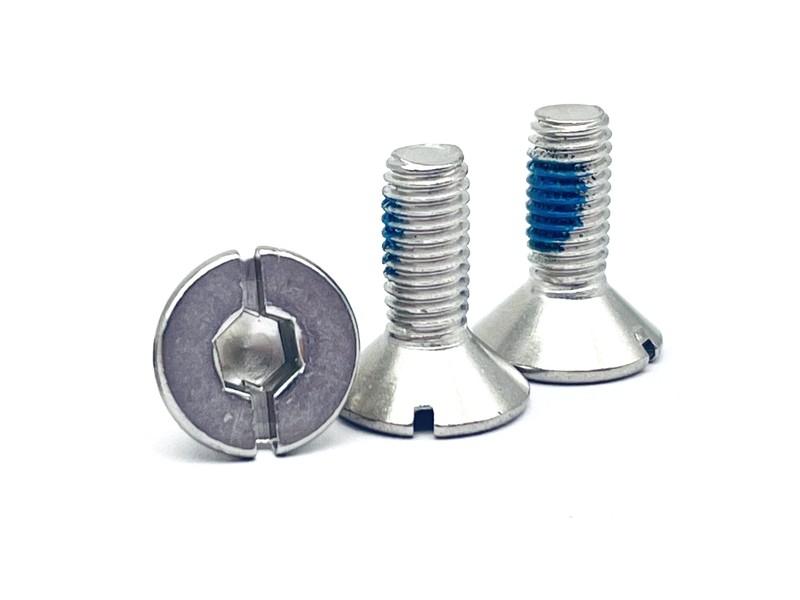
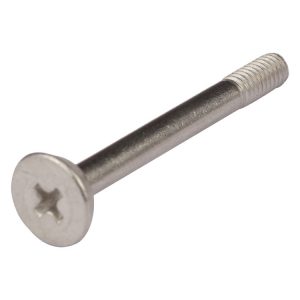
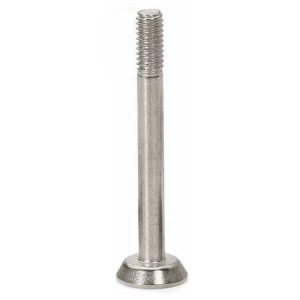
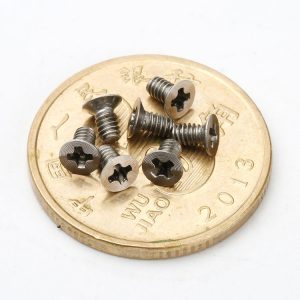
Type:Slotted countersunk self tapping screw (brass)
Materials:Brass
Surface treatment:Plain brass
Head Type:Countersunk (flat) head, 90 degrees
Size:M1 M2 M3 M4 M5 M6 M7 M8 M9 M10 M14
Drive:Slotted (single slot)
Thread:Self tapping thread, right hand, gimlet point
Forming:Cold heading with formed slot; thread rolled
Number:889
We manufacture slotted countersunk screws in brass with a 90 degree head and a self-tapping gimlet point, quoted from M1 to M14 and supplied plain brass. Head angle, slot width, thread pitch and alloy are taken from your drawing.
Watch the factory video·Email sst@szsst88.com
ISO 9001:2015 · Manufacturing since 1998 · 8,678+ customers · 89 countries and regions
Made to order – there is no stock catalogue. Each part is produced to your drawing, and production starts after drawing review and first-article approval.
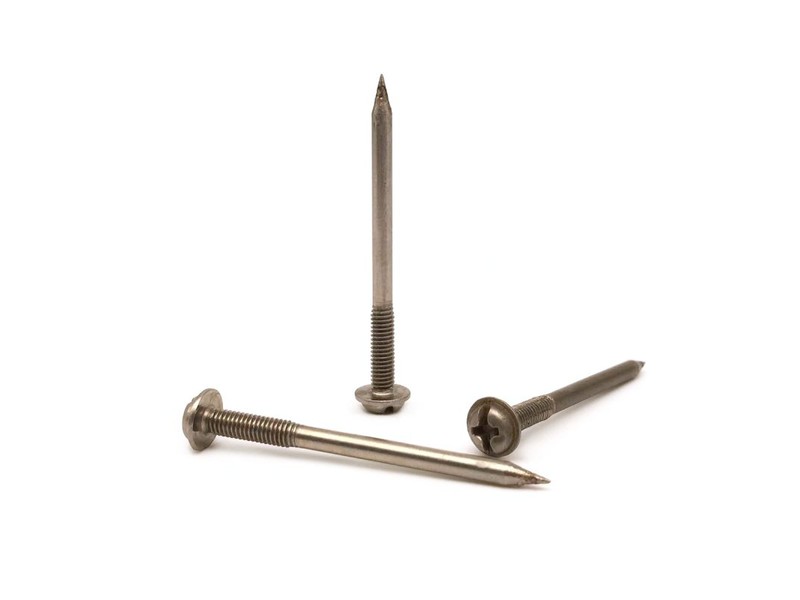
A slotted countersunk screw is a screw with a single straight slot across the head and a 90° conical head that seats flush in a countersunk hole. The recorded item on this page is a brass self-tapping screw with a gimlet point, quoted from M1 to M14, supplied in plain brass.
Single slot. One straight slot takes a flat blade, which is the oldest and simplest drive there is. It has less torque capacity than a cross recess or a socket, and the blade has to sit centred, but it works with any flat screwdriver and it is easy to clean out and to see.
Countersunk head. The cone seats into a matching 90° countersink, so the head finishes level with the surface and centres the screw as it tightens. On a brass fitting the flush head is usually the requirement, not a preference.
Self-tapping point. A gimlet point starts the hole and the thread forms its own grip in wood, board or moulded plastic. There is no nut or tapped insert, which is why the part is used on assemblies where the screw is driven once and left.
Brass. The alloy gives the part its colour and its conductivity, and it machines and rolls easily. On a slotted countersunk screw that matters: the slot is the weakest feature, and a softer alloy needs a cleanly formed slot rather than a cut one that leaves feather edges.
Together these decide the part: the slot takes the drive, the cone seats flush, the self-tapping thread forms its own grip, and the brass gives the colour and the conductivity. That is why a slotted countersunk screw is specified by slot width, head angle, thread and alloy together.
The body of this slotted countersunk screw is brass wire, with the alloy and heat number kept with the batch record. The alloy is fixed on the drawing because brass covers a wide range: a free-cutting grade forms a clean slot and drives without burring, while a softer grade bends at the point where the thread meets the shank.
The countersunk head is formed in one heading operation together with the slot. The cone angle, the head diameter and the slot width come out of the same die, so they are consistent part to part; a slot cut afterwards can wander off centre and leave one side of the head thinner than the other.
The slot is formed, not sawn. A formed slot has a smooth bottom and rounded edges, which is what stops a flat blade from chipping the brass as it turns; a sawn slot leaves burrs that lift under the blade and make the screw harder to drive than it needs to be.
The thread is rolled over the full length with a gimlet point at the tip. Rolling keeps the grain continuous and produces a smooth flank, and the point is formed on centre so the screw starts where it is placed rather than wandering across a marked line.
The finish is plain brass, cleaned. There is no coating to fill the slot or change the thread, so the blade seats to the bottom of the slot and the thread keeps the fit it was rolled to.
Slotted countersunk screws of this type are quoted from M1 to M14; the recorded configuration covers that range in brass with a gimlet point and a plain finish. Custom lengths up to 2,000 mm are subject to DFM review after drawing submission, and on this part the length is usually set by the thickness of the material the screw enters.
| Item | How it is defined | What we control |
|---|---|---|
| Head diameter and angle | The 90° cone that seats flush | Checked on the projector on the first article |
| Slot width and depth | The blade that fits the head | Checked with the matching blade |
| Thread size and pitch | The grip in the material | Gauged per batch |
| Point form | Gimlet point, on centre | Checked on the first article |
| Length | From the top of the head to the point | Measured on the shop plate |
| Alloy | The brass the part is made from | Confirmed against the material certificate |
Each slotted countersunk screw size is quoted against the seat and the material it enters. The countersink angle, the head diameter and the material thickness are reviewed together, because a head that is right for one plate stands proud in a seat cut at a different depth.
Length is measured from the top of the head to the point, and the slot width is checked with the blade that will be used. That last check matters more than it sounds: a blade that is too wide will not enter, and one that is too narrow concentrates the load on the slot edges and peens them over.
The slot is the feature that defines a slotted countersunk screw, and it is the one that limits it. A single slot applies the torque along two narrow edges, so the brass deforms before a cross recess or a socket of the same head size would. That is acceptable where the screw is driven once, by hand, into a soft material, and it is the wrong choice where the joint is torqued hard or reopened often.
| Parameter | Why it matters on this part | What we control |
|---|---|---|
| Slot width | Blade fit and load on the edges | Formed to the drawing; checked with the blade |
| Slot depth | Material left under the slot | Checked on the first article |
| Head angle | Seats flush in the countersink | Checked against the seat angle |
| Point form | Starts on the marked centre | Checked on the first article |
| Thread pitch | Grip in wood or plastic without splitting | Matched to the material on the drawing |
The slot has one practical advantage that is easy to overlook: it can be cleaned. On painted or plated hardware, a cross recess traps paint and cured coating, while a straight slot can be wiped out with a blade. That is part of why slotted screws persist on decorative brass.
The countersunk seat does the centring on every slotted countersunk screw. As the cone meets the seat, the head pulls the shank into line, so a screw with a slightly off-centre point still finishes flush if the seat is cut at the right angle. The seat and the head are specified as a pair for that reason.
Brass is soft, so the drive on a slotted countersunk screw has to be gentle. A slot that is driven with a blade that is too narrow, or with a power driver at speed, peens over at the edges and the screw can no longer be turned. The first article is driven by hand with the blade the customer will use.
This slotted countersunk screw is supplied plain brass, cleaned, with no lacquer and no plating. The brass shows its own colour, it stays conductive in the slot and on the thread, and there is no coating to fill the slot or to chip at the head edge when the blade is used.
| Finish | How it protects | Effect on slot and thread | Typical use |
|---|---|---|---|
| Plain brass | None; the alloy is the surface | Slot and thread as formed | Decorative hardware and electrical work indoors |
| Clear lacquer | Organic film over polished brass | Film fills the slot; blade re-checked | Polished visible brass |
| Nickel plated | Barrier layer | Thin film; slot re-checked | Silver-toned visible fixings |
| Tin plated | Barrier layer, solderable | Thin film; thread re-checked | Electrical contacts |
| Antique / oxidised | Chemical darkening | No dimensional change | Reproduction and heritage hardware |
A slotted countersunk screw in plain brass tarnishes. Indoors it darkens slowly and evenly, which is usually acceptable on decorative work and can be polished back; outdoors, and especially near salt, it can dezincify, losing zinc from the surface until it turns weak and pink. Where the joint is exposed, the drawing should call for a different alloy or a coating.
Packing keeps the heads and the points of a slotted countersunk screw apart. The parts are bagged in counted quantities, labelled with the batch, the alloy and the heat, and packed so the points cannot score the next screw’s head, because a scratched brass head shows on the finished work.
Three assemblies where a flush brass head and a slot drive are the right combination:
| Where it sits | The screw closes a hinge, a latch plate or a trim piece where the head must finish flush and the brass is part of the finished appearance. |
| When it goes wrong | A slot that peens over on a polished plate cannot be re-driven, and a head that stands proud shows on a visible face. |
| Why it happens | The parts are visible, the joint is assembled by hand, and the finish is the point of the product. |
| What we control | Slot width and head angle checked against the blade and the seat, and the first article driven into a sample plate. |
| Where it sits | The screw clamps a wire, a tag or an earth strap where the brass carries current and a flat blade is the tool on the bench. |
| When it goes wrong | A plated screw that loses contact at the slot raises the resistance of the joint, and an over-driven slot cannot be re-tightened. |
| Why it happens | The joint is electrical, the parts are brass or copper, and the screw is checked on a maintenance schedule. |
| What we control | Alloy confirmed on the certificate, slot checked with the blade, and the thread gauged per batch. |
| Where it sits | The screw drives into a wooden frame or a plastic boss where a gimlet point starts its own hole and the head sits flush in a countersink. |
| When it goes wrong | A screw that is too coarse splits the board, and a head driven past the seat crushes the material around it. |
| Why it happens | The material is soft, the screw is driven once, and the head has to be flush for the next layer. |
| What we control | Thread pitch and point form matched to the material, and the head angle checked against the seat. |
Four reasons that matter on a brass screw with a single slot, each tied to what the drawing has to prove:
|
Seat, slot and material reviewed together
The countersink angle, the slot width and the material the screw enters are reviewed before the die is cut, so a head that would stand proud or split the work is raised first. Basis: Seat, slot and material reviewed before tooling. |
Head, slot and point in one route
The cone and the slot are formed in one heading operation and the thread is rolled with the point formed on centre, so the slot stays centred on the head. Basis: One route from wire to pointed screw. |
|
Slot checked with the blade
The slot is checked with the blade the customer uses, the head angle against the seat, and the thread with gauges, on the first article. Basis: First article checked with the blade and the seat. |
First article to repeat production
The first article fixes the drawing revision, alloy heat, die set and thread roll; repeat orders are compared against that record. Basis: First article signed off before the batch is released. |
Shi Shi Tong forms these slotted countersunk screws on a heading machine that upsets the 90° cone and the slot in one operation, then rolls the thread and forms the gimlet point. The first part of every run is measured on the head and the slot, driven with the matching blade and gauged on the thread before the batch continues.


|

|
Brass forms easily, so the die is set once and the first part is checked rather than adjusted during the run. Between runs the insert is changed to the drawing cone and slot width, and the thread rolls to the pitch; the first part goes to the projector, to the blade and to the gauges.
What decides whether a slotted countersunk screw passes is the head diameter and angle, the slot width and depth, the thread form and the point. The inspection agreement covers those, and the criteria come from the drawing and the accepted sample.

Head angle and slot on the projector |

Thread form gauged per batch |

Hardness testing where the drawing requires it |

Salt-spray testing where a finish is specified |
Each batch is recorded against the drawing revision: head, slot and point from the first article, the thread gauged per batch, and the alloy confirmed on the material certificate. If the blade check fails, the parts back to the last good setting are held and re-checked.
Where a third-party report is required for the material or a finish, it is listed on the drawing so the paperwork ships with the parts, and the batch number on the label matches the record used for inspection.
Every shipment of slotted countersunk screws is traceable to the wire it was made from. The alloy, heat number and standard are recorded on the material certificate supplied with the parts, and the inspection records follow the criteria agreed on the drawing.

ISO 9001:2015 |

RoHS test report |

Registered trademark |

Patent: security screw and driver |
With each batch we supply the material certificate, the inspection record for the criteria on the drawing and, where it is listed, the third-party report for the material or the finish. The documents carry the drawing revision and the batch number, so the paperwork can be matched to the parts.
More than 8,678 customers in 89 countries and regions have ordered from Shi Shi Tong; 87% of orders come from repeat customers and 56% through referrals. Most projects follow the same route: drawing review, first-article approval, then batches checked against that sample. On a brass slotted part the first article is driven by hand with the customer’s blade, so the slot and the seat are signed off as a pair. Buyers visit during the process to review samples and to see how the heads and slots are formed.
|
8,678+
customers served
|
87%
of orders from repeat customers
|
56%
of orders through referrals
|
89
countries and regions shipped to
|
Buyers and quality engineers visit for sample review, process discussion and supplier audits; the visit is arranged around production so the header and the inspection room can be seen on the day the parts run.

Customer group visit – sample review |

Customer group visit – process discussion |

Customer group visit – factory tour |

Customer visit – project kick-off |

Danish customer – drawing review |

Industry exhibition – meeting customers |
It is a screw with a single straight slot and a 90° conical head that seats flush. This one is brass with a self-tapping gimlet point, quoted from M1 to M14 in a plain finish.
Because a flat blade is available everywhere, the slot can be cleaned out when the head is painted, and the drive is gentle on soft brass. The trade is a lower torque capacity, so the slot is right for hand-driven joints and wrong for high-torque ones.
This one has a gimlet point and is intended for timber, board and moulded plastic. For sheet metal the point and thread form are different, so that is a separate drawing.
Indoors, plain brass is usually left as it is and allowed to tarnish. Outdoors, especially near salt, brass can dezincify, so a different alloy or a coating should be specified on the drawing.
It cannot be undone on that screw. The slot is formed so that it does not, and the first article is driven with the blade the customer uses; a blade that is too narrow is the usual cause.
Head diameter and angle, slot width and depth, thread size and pitch, point form, length and datum, brass alloy, finish, and the material the screw is driven into.
How a slotted countersunk screw project runs from drawing to repeat delivery:
|
1
Send the drawing or sample
|
→ |
2
Seat, slot and thread review
|
→ |
3
First article driven by hand
|
→ |
4
Batch production and repeat orders
|
Each step is confirmed with you before the next one starts; the drawing revision from the first article is what repeat orders are checked against.
For a quotation, send the drawing with the head diameter and angle, slot width and depth, thread size and pitch, point form, length and its datum, brass alloy, finish, and the material the screw is driven into.
|
Head diameter and angle
|
Slot width and depth
|
Thread size and pitch
|
|
Point form
|
Length and datum
|
Brass alloy and finish
|
Sending a drawing? The form below does not take attachments. Email the PDF, DXF or STEP file to sst@szsst88.com with the part name and quantity in the subject line – the drawing is reviewed and a quotation follows.

 +86 13143444311
 sst@szsst88.com