Tel:
+86 13143444311
Email:sst@szsst88.com
Fax:+0086-755-27322278
Address:Building 9, First Industrial Zone, Tantou Industrial City, Songgang Street, Baoan District, Shenzhen 518105, Guangdong, China
Type:Phillips Pan Head Self Tapping Screw, Thread Forming Screw
Materials: Steel
Surface treatment:White Zinc Plated
Head Type:Pan Head
Drive:Phillips
Thread:Self Tapping
Point:Blunt
Forming:Single Die Heading
Size:M1 M2 M3 M4 M5 M6 M7 M8 M9 M10 M14
Number:787
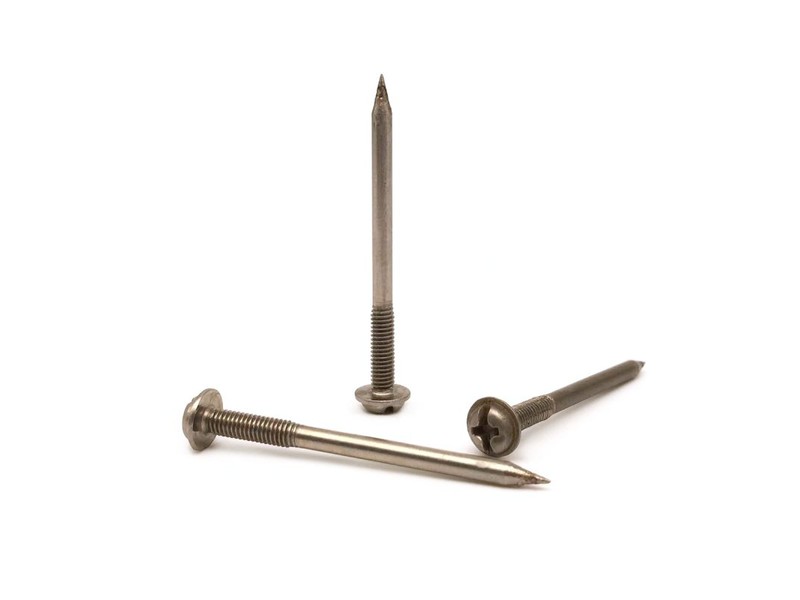
We make phillips pan head self tapping screws in white zinc plated carbon steel, with a blunt point for a drilled or moulded hole and a cross recess driven with the standard bit. Head, recess, thread and plating are taken from your drawing, and the pilot hole is agreed on a sample of your panel.
Watch the factory video·Email sst@szsst88.com
ISO 9001:2015 · Manufacturing since 1998 · 8,678+ customers · 89 countries and regions
Made to order – there is no stock catalogue. Each part is produced to your drawing, and production starts after drawing review and first-article approval.
A phillips pan head self tapping screw is a domed head screw with a cross recess and a coarse thread that forms its own mating thread in a drilled or punched hole. The recorded item on this page is carbon steel with a white zinc plate and a pan head, quoted from M1 to M14 with Number 787.
Pan head. A low dome on a flat bearing face. The dome is generous enough to cover the hole and the face is wide enough to bear on a thin panel, but there is no flange: the head sits inside its own diameter, which is what a row of fixings on a tight pitch needs.
Phillips cross. Four tapered wings and a pointed centre. The bit finds the centre without looking, and the wings cam out of the recess before the head is destroyed. On a white zinc head the cam-out shows as a bright star in the recess, which is the earliest visible sign that a driver is worn.
Self-tapping thread. A coarse thread with a sharp crest, rolled over the full length. It cuts or forms its own thread in the hole, so the joint needs no nut and no pre-tapped thread — only the right hole.
Blunt point. A short taper that ends flat rather than in a gimlet spike. The hole is drilled or punched first, and the first thread starts in that hole; a pointed screw would try to pierce the sheet and split a moulded boss, a blunt one does not.
White zinc. An electroplated zinc layer with a blue-white passivation. It is the volume finish: cheap, bright, and sacrificial, so a scratch at the recess or the point still has zinc at its edges instead of bare steel.
The pan head and the cross recess are formed in one heading stroke from wire, in a single-die header. Doing both together keeps the recess concentric with the shank and keeps the bearing face flat: a head that is re-struck or a recess cut afterwards can sit off centre, and an off-centre cross is a cross that tips the bit as it turns.
The bearing face is the part that matters on a thin panel. It is turned out flat in the die and left wide relative to the dome, so the clamp load lands on the panel around the hole rather than on the rim of the hole itself. A face that is not flat touches on one side, and the joint rocks under load.
The thread is rolled from under the head to the point. Rolling moves metal rather than removing it, so the crest comes out hard and the root comes out in compression — the crest is what cuts or forms the thread in the panel, and a crest that has been cut instead of rolled folds over on the first turn.
The point is a short taper to a flat tip, which is what a blunt self-tapping screw needs. The taper leads the thread into the hole and gives the first turn somewhere to sit; the flat tip stops the screw from acting as a punch. On sheet the hole is drilled or punched to a size that the thread will form against, and on a moulded boss the hole comes out of the tool.
White zinc goes on last, after rolling. It adds a few microns over the head, the recess and the thread, so the thread is gauged in the plated condition and the recess is driven with the production bit in the plated condition. That is the only condition the customer ever sees, and it is the only one worth inspecting.
The family is quoted from M1 to M14, with M1, M2, M3, M4, M5, M6, M7, M8, M9, M10 and M14 in the recorded range. Custom lengths up to 2,000 mm are subject to DFM review after drawing submission; a phillips pan head self tapping screw is normally short, because the thread works through a panel rather than through a stack of plates.
| Item | How it is defined | What we control |
|---|---|---|
| Thread | Coarse single-lead self-tapping, full length | Gauged per batch after plating |
| Point | Short taper to a flat tip | Checked on the first article |
| Head | Pan head, flat bearing face | Diameter and face flatness |
| Recess | Phillips cross | Driven with the production bit |
| Plating | White zinc, blue-white passivation | Thickness range and salt-spray sample |
| Length | From under the head to the point | Measured on the shop plate |
Length is measured from under the head, because that face bears on the panel. On a thin panel the difference between measuring from the face of the dome and from under the head is the head height, and on a screw that is two panel thicknesses long that difference is the whole thread engagement.
The pilot hole is part of the size. A hole that is too large lets the thread strip at the first torque; one that is too small raises the driving torque until the head twists off or the panel distorts. The window narrows as the screw gets smaller, so the hole size is agreed with the drawing and checked with a sample of the customer’s material rather than taken from a table for another material.
Three things define a phillips pan head self tapping screw: the pan head keeps the fixing inside its own diameter, the cross drives it with the bit that is already on the bench, and the white zinc makes it affordable in quantity. The finish is what separates it from the black and plated parts in the same family.
| Feature | What it gives | What it costs |
|---|---|---|
| Pan head | Covers the hole, bears on a thin panel | Less bearing area than a flanged head |
| Phillips recess | Standard bit, cams out before damage | Less torque than a socket of the same size |
| Blunt point | Starts in a drilled or moulded hole | Will not pierce sheet on its own |
| Self-tapping thread | Holds without a nut or tapped hole | Needs the right pilot hole |
| White zinc | Bright, cheap, sacrificial | Thin; chloride service eats it |
The volume angle is the honest one. A white zinc pan head screw is the part that goes into a product by the million, and at that volume what matters is not the finish specification on the drawing but whether batch ten thousand looks and drives like batch one. That comes from the die, the wire and the plating barrel, and from an inspection record that is compared between batches rather than re-judged each time.
The cam-out behaviour of the cross is part of the economics. A worn bit, a recess that has been over-plated or a driver with the wrong tip angle all end in the same place: a bright star in the recess and a screw that will not come out. Standardising the bit and checking it against the plated recess is cheaper than sorting the batch afterwards.
The recorded finish is white zinc with a blue-white passivation, applied after the thread is rolled. It is a sacrificial coating: the zinc corrodes before the steel, so a scratch in the recess or a burr at the point stays protected at its edges for as long as there is zinc around it.
| Finish | How it protects | Effect on recess and thread | Typical use |
|---|---|---|---|
| White zinc | Sacrificial zinc, blue-white passivation | A few microns; gauged after | General indoor assemblies |
| Black zinc | Zinc with black passivation | A few microns; gauged after | Dark panels, damp service |
| Black oxide | Thin conversion film, oiled | Almost no change | Dry indoor, unseen joints |
| Nickel plate | Hard barrier deposit | Thicker; recess re-checked | Visible decorative fixings |
| Dacromet | Zinc-aluminium flake layer, cured | Thin film; thread re-checked | Outdoor and wet assemblies |
Two plating effects decide whether the screw drives. The first is the recess: every micron narrows the cross, and a recess that was right before plating is tight afterwards. The bit sits proud, the wings cam out early, and the driver never reaches the bottom of the recess. That is why the first article is driven with the production bit after plating.
The second is the thread. A self-tapping screw forms its thread against a hole of a fixed size, and a few microns on the crest changes both the driving torque and the strip torque. The thread is gauged after plating and the pilot hole is agreed on plated parts, not on bare ones.
Bright zinc has one more cost that does not show on the drawing: hydrogen. Plating picks up hydrogen at the steel surface, and on a case-hardened screw with a thin section under the head that hydrogen can turn into a delayed crack. Parts that are hardened are baked after plating, and the bake is part of the process route rather than an optional extra.
White corrosion is the failure mode the customer sees first. Zinc oxide builds up as a white powder in a damp bag or a cold store, and it looks like the parts have failed when the steel underneath is still sound. Ventilated packing and a dry store remove most of it; the powder is a warning about the zinc, not about the steel.
Three assemblies where a pan head self tapping screw in white zinc is the right part at the right price:
| Where it sits | The screw closes a cover, fixes a bracket or holds two folded panels where the hole is punched and the panel is too thin to tap. |
| When it goes wrong | A screw that does not cover its hole leaves an open slot, and one that strips in the panel lets the cover rattle. |
| Why it happens | The panel is thin, the hole is punched, and the joint is made on a line. |
| What we control | Head diameter and face flatness checked, thread gauged after plating, pilot hole agreed on the customer’s material. |
| Where it sits | The screw fixes a terminal plate, a lens frame or a cover where the joint is opened for service and the head has to stay inside a narrow border. |
| When it goes wrong | A head that is too wide will not sit in the border, and one that is too small pulls through a soft gasket. |
| Why it happens | The fixing repeats around a frame, the border is narrow, and the part is serviced. |
| What we control | Recess driven with the production bit, plating thickness held to the drawing. |
| Where it sits | The screw fixes a hinge, a bracket or a trim into board or a moulded part where the thread forms in the material rather than in a tapped hole. |
| When it goes wrong | A pointed screw splits the board, and a coarse thread with the wrong pilot hole strips on the second fitting. |
| Why it happens | The material is soft, the joint may be taken apart once or twice, and the fixing is visible. |
| What we control | Point form and thread checked, pilot hole tested on a sample of the board. |
Four reasons that matter on a high-volume plated screw, each tied to what the drawing has to prove:
|
Head and pilot hole reviewed together
The head diameter, the recess size and the pilot hole are reviewed as one set, so a head that will not cover its hole or a thread that will strip in the panel is raised before the die is cut. Basis: Head and pilot hole reviewed as one set. |
Wire to plated screw in one route
The pan head and the cross are formed in one heading stroke, the thread is rolled to a blunt point and the parts are plated and baked in one route. Basis: One route from wire to plated screw. |
|
Recess and thread checked after plating
The recess is driven with the production bit in the plated condition, and the thread is gauged after plating rather than before. Basis: First article checked after plating. |
Batch records compared, not re-judged
The first article fixes the wire heat, die set, thread roll and plating barrel; later batches are compared against that record so a high-volume part stays interchangeable. Basis: First article signed off before the batch is released. |
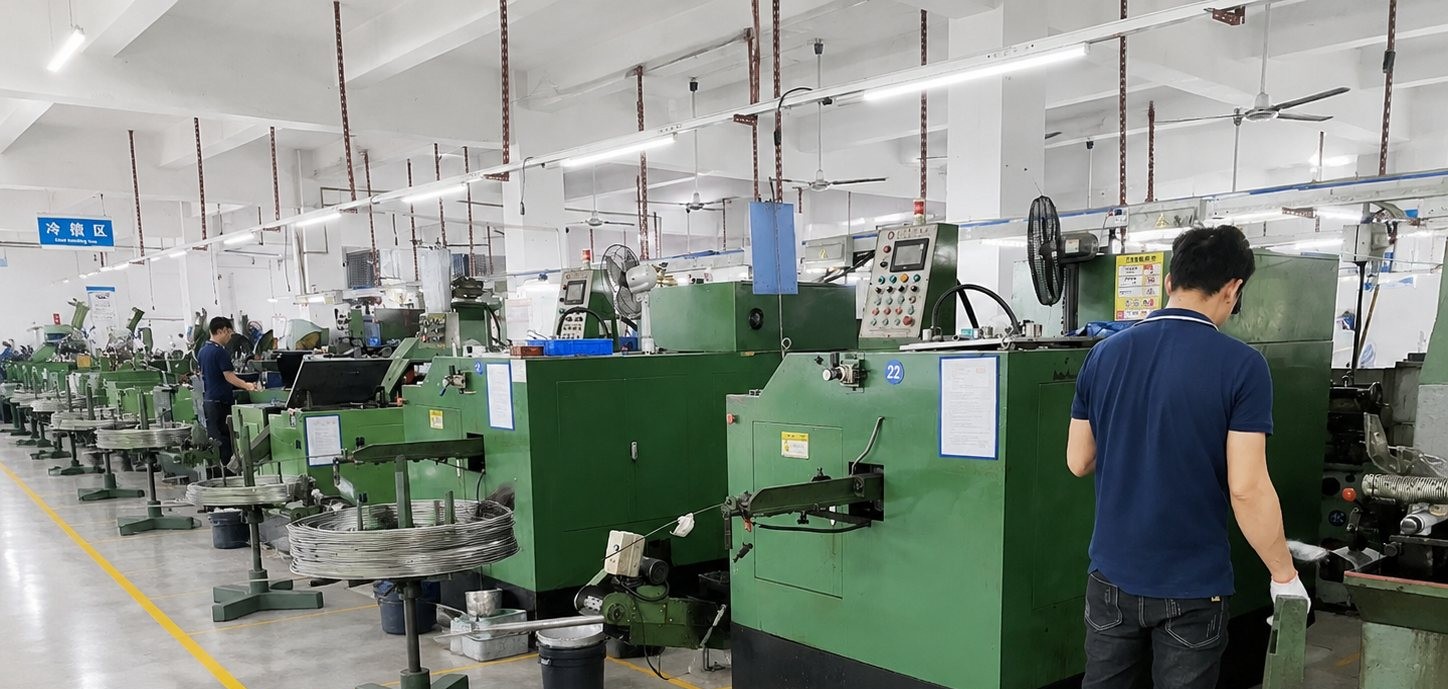
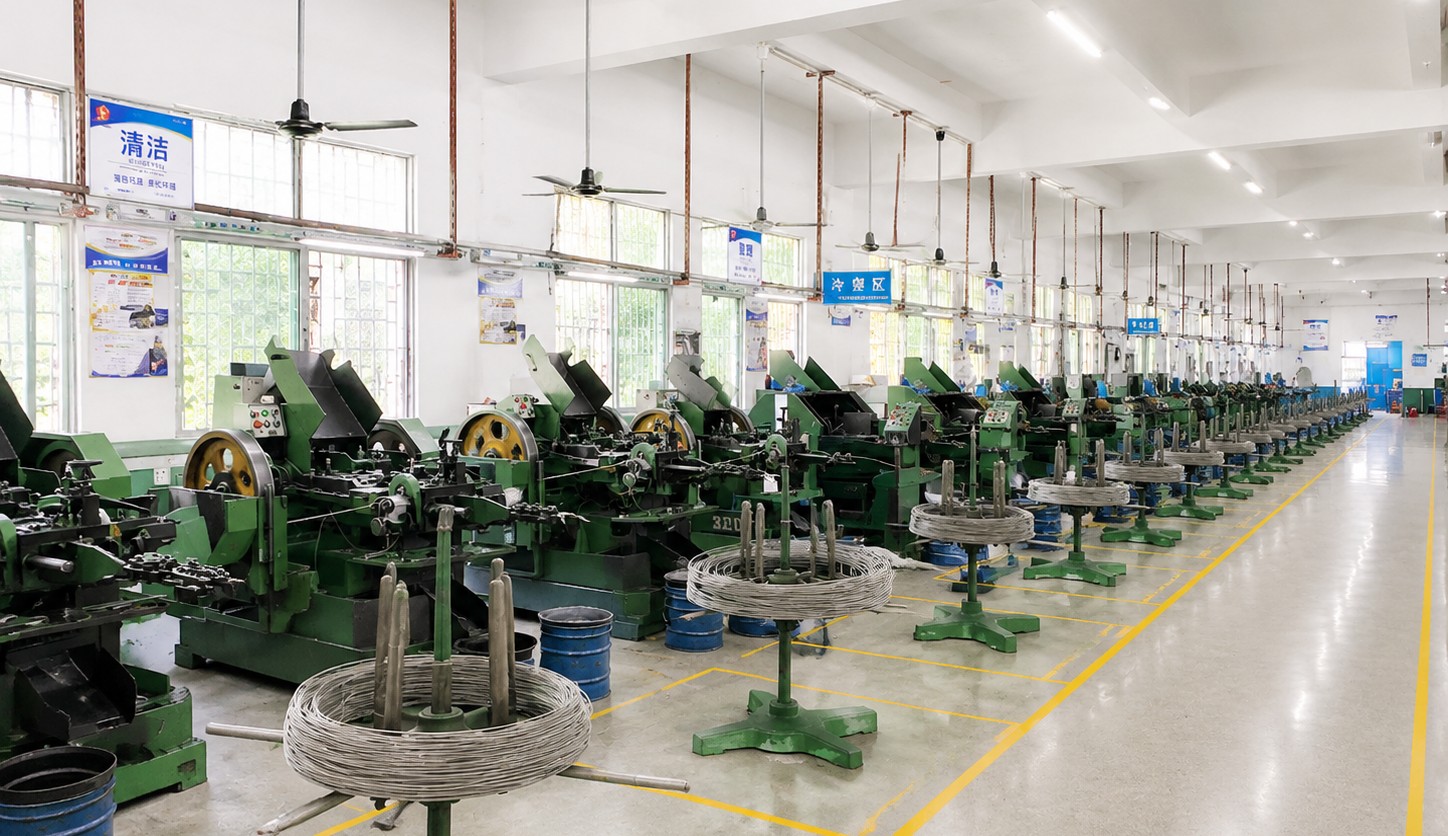
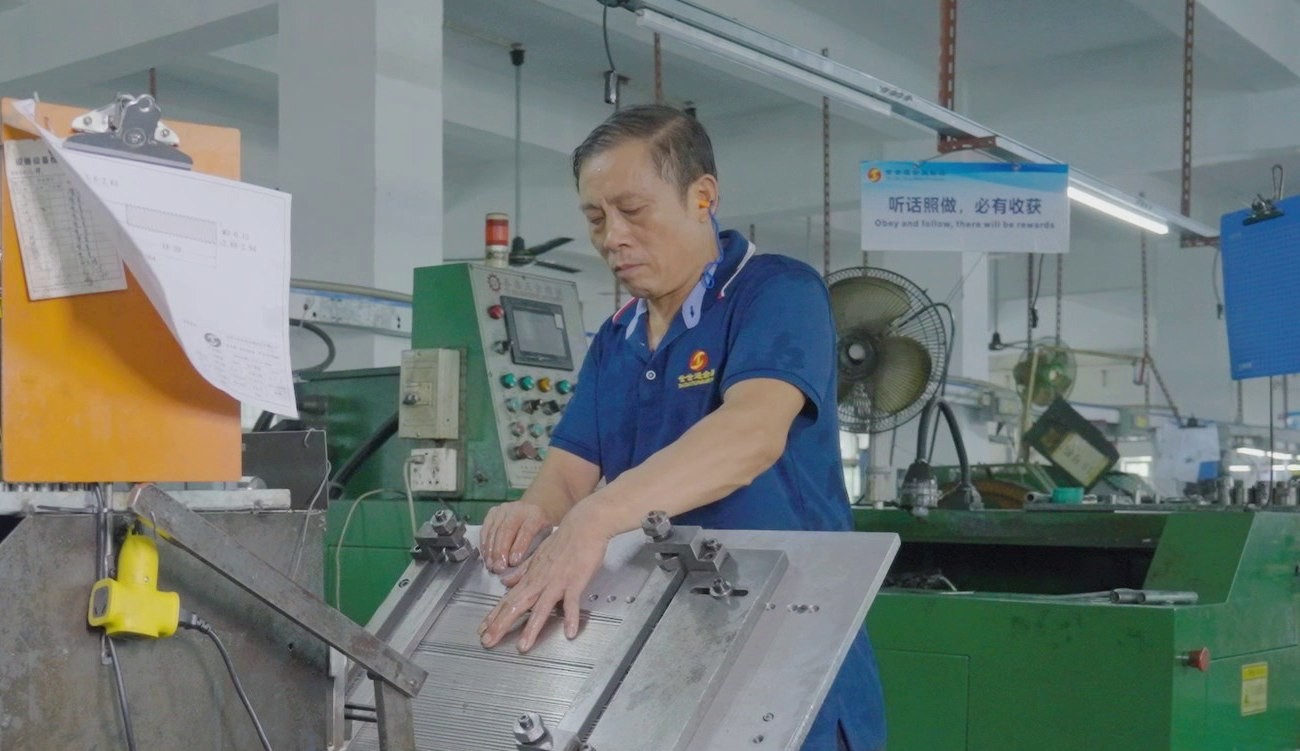
Shi Shi Tong forms these phillips pan head self tapping screws on single-die headers that upset the pan head and form the cross recess in the same stroke, then rolls the coarse thread to a blunt point with a flat tip. The parts are white zinc plated and baked before they leave the cell. The first part of every run is measured on the head, driven with the production bit and driven into a sample of the customer’s panel before the batch continues.
|
|
The recess is where a heading die shows its age. A worn punch leaves a cross that is shallow at the wings, and a shallow cross cams out early no matter how good the bit is. The recess is checked on the first article with the production bit and sampled through the run, because the wear is gradual and it is the only feature that fails without the screw changing shape.
What decides whether phillips pan head self tapping screws pass is the head, the recess, the thread, the point and the plating. The inspection agreement covers those, and the criteria come from the drawing.

Head and recess on the projector |

Thread gauged after plating |

Hardness testing against the property class |

Salt-spray testing of the zinc plate |
The head is checked on the projector for diameter, height and face flatness, and the recess for depth and width across the wings. Flatness is the one that gets missed: a face that is flat on the bench can dish under the driver, and a dished face leaves a ring of contact instead of a full bearing area.
The thread of a phillips pan head self tapping screw is gauged in the plated condition, and the driving torque is measured by driving a sample into the customer’s panel. Driving torque and strip torque are read together: a screw that drives easily and strips early is a screw with too little thread engagement, not one with a good finish.
Hardness is checked against the drawing, and on a self-tapping screw the case depth matters as much as the surface value. Too shallow and the point folds on the first panel; too deep and the screw snaps at the head instead of forming its thread. The two are read on a section, not on the surface alone.
Every shipment of phillips pan head self tapping screws is traceable to the wire it was made from and to the plating batch. The grade and heat number are recorded on the material certificate supplied with the parts, and the inspection records follow the criteria agreed on the drawing.

ISO 9001:2015 |

RoHS test report |

Registered trademark |

Patent: security screw and driver |
With each batch we supply the material certificate, the inspection record for the criteria on the drawing and, where it is listed, the third-party report for the material or the plating. The documents carry the drawing revision and the batch number, so the paperwork can be matched to the parts.
More than 8,678 customers in 89 countries and regions have ordered from Shi Shi Tong; 87% of orders come from repeat customers and 56% through referrals. Most projects follow the same route: drawing review, first-article approval, then batches checked against that sample. On a high-volume plated screw the first article is also the reference for the panel it drives into, so the pilot hole is agreed on the sample rather than on the drawing alone. Buyers visit during the process to review samples and to see how the heads and threads are formed.
|
8,678+
customers served
|
87%
of orders from repeat customers
|
56%
of orders through referrals
|
89
countries and regions shipped to
|
Buyers and quality engineers visit for sample review, process discussion and supplier audits; the visit is arranged around production so the headers and the plating line can be seen on the day the parts run.

Customer group visit – sample review |

Customer group visit – process discussion |

Customer group visit – factory tour |

Customer visit – project kick-off |

Danish customer – drawing review |

Industry exhibition – meeting customers |
It starts in a hole that is already there. The hole is drilled or punched, or it comes out of a mould, and the thread forms against it. A pointed screw would try to pierce the sheet or split a boss.
White zinc is the volume finish: bright, cheap and sacrificial. Black finishes are chosen for looks or for damp service; they are not better at protecting the steel.
It depends on the screw size and on the material it goes into. It is agreed on a sample of the actual panel, because the window between stripping and twisting the head off narrows as the screw gets smaller.
It narrows it. A few microns across the cross is enough for the bit to sit proud and cam out early, which is why the first article is driven with the production bit after plating.
Once or twice in the same hole, if the thread has not been stripped. Each re-entry cuts a little more material, and the strip torque drops each time.
Thread size and type, point form, head diameter and height, recess size, length and datum, material, plating thickness and the panel or pilot-hole reference.
How a phillips pan head self tapping screw project runs from drawing to repeat delivery:
|
1
Send the drawing or a sample panel
|
→ |
2
Head, recess and pilot hole review
|
→ |
3
First article driven and matched
|
→ |
4
Batch production and repeat orders
|
Each step is confirmed with you before the next one starts; the drawing revision from the first article is what repeat orders are checked against.
For a quotation, send the drawing with the thread size and type, point form, head diameter and height, recess size, length and datum, material and plating.
|
Thread and type
|
Point form
|
Head diameter
|
|
Recess size
|
Length and datum
|
Material and plating
|
Sending a drawing? The form below does not take attachments. Email the PDF, DXF or STEP file to sst@szsst88.com with the part name and quantity in the subject line – the drawing is reviewed and a quotation follows.

 +86 13143444311
 sst@szsst88.com