Tel:
+86 13143444311
Email:sst@szsst88.com
Fax:+0086-755-27322278
Address:Building 9, First Industrial Zone, Tantou Industrial City, Songgang Street, Baoan District, Shenzhen 518105, Guangdong, China
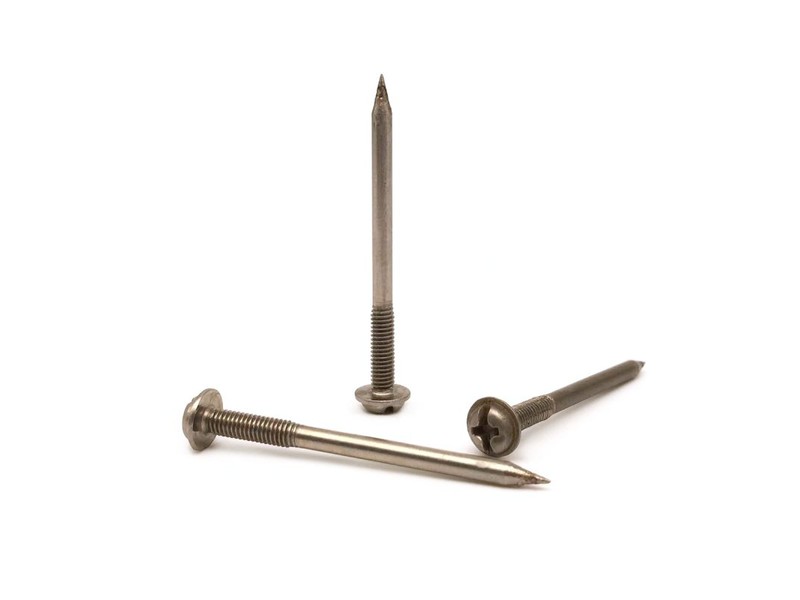
Type:Long Self Tapping Screws Pan Head Phillips
Materials:Steel
Surface treatment:Eco White Zinc Plated
Head Type:Pan Head
Drive:Phillips (cross)
Thread:Self-tapping, half thread
Point:Flat, blunt
Forming:Single Die Heading
Size:M1 M2 M3 M4 M5 M6 M7 M8 M9 M10 M14
Number:197
We make long self tapping screws in white zinc plated steel with a pan head, a Phillips recess, a half thread and a flat point, quoting them from M1 to M14. Point type, threaded length, shank diameter and pilot hole come from your drawing, and the first article is driven with recorded torque.
Watch the factory video·Email sst@szsst88.com
ISO 9001:2015 · Manufacturing since 1998 · 8,678+ customers · 89 countries and regions
Made to order – there is no stock catalogue. Each part is produced to your drawing, and production starts after drawing review and first-article approval.
Long self tapping screws are slender screws that form their own thread and are long enough to reach through a spacer, a panel or a deep pocket before the thread engages. This one has a pan head, a Phillips recess, a half thread and a flat point, in white zinc plated steel, quoted from M1 to M14 with Number 197.
Self-tapping thread. A thread that forms its own thread in the material it enters, so no tapped hole is needed at the far end.
Half thread. The plain shank runs through the front part and only the last section forms a thread.
Flat point. A blunt, thread-forming end that starts in a drilled pilot rather than piercing.
White zinc. A bright sacrificial zinc deposit over carbon steel, the general indoor finish.
Long self tapping screws are used where the joint is deep and the far part cannot be tapped: a panel on a spacer, a plastic boss behind a wall, a plate on a soft composite. The length is the reason for the part, and the forming thread is what removes the tapped hole.
Long self tapping screws combine two difficulties that are easier apart. A forming thread needs torque at the point, and a long shank absorbs torque before it gets there; so the screw has to be driven steadily, into a pilot hole that is right, with a thread that starts cleanly. A driver with more power does not solve it, because the shank simply twists more.
The flat point is part of that design. A sharp point pierces thin material, but it also concentrates force at the tip and can split a small boss; a flat point starts in a drilled pilot and forms the thread without piercing, which on a long screw is the difference between the thread forming and the screw stalling part way in.
The half thread keeps the front of the joint clean. The plain shank passes the clearance hole and only the last section forms a thread in the far part, so the panel or sleeve is not threaded on the way through. On a long screw the plain section is most of the length, and its diameter decides whether the screw slides or binds.
The pan head completes the joint. It has a low dome and a bearing ring, so the clamp is spread on a thin panel without a washer, and the Phillips recess is a common drive that any assembly station already has. On a long screw the head is small relative to the length, so the drive is the limit rather than the bearing face.
White zinc suits the economics. It is bright, thin and sacrificial, it keeps the thread usable, and it protects the steel indoors; on a long screw the shank is the surface that wears it away as the screw passes through holes, which is cosmetic indoors and a problem outdoors.
The recorded range is M1 to M14, with long lengths made to the drawing. Custom lengths up to 2,000 mm are subject to DFM review after drawing submission. For long self tapping screws the quotation carries overall length, threaded length, shank diameter, head diameter and height, point type and the pilot hole.
| Item | How it is defined | What we control |
|---|---|---|
| Head | Pan head, Phillips | Head diameter, height and recess depth |
| Shank | Plain section through the front part | Diameter and length |
| Thread | Self-tapping, half thread | Thread form, length and crest condition |
| Point | Flat, blunt | Point diameter and squareness |
| Material | Carbon steel | Grade and heat number on the certificate |
| Finish | White zinc plated | Thickness and gauging after plating |
| Pilot hole | In the far part | Diameter advised per material |
Threaded length is quoted from the point and plain length from the head. On a long self tapping screw the division is the joint, and the pilot hole is the other half of it: the screw cannot compensate for a hole that is too large or too small.
Point type should be stated rather than assumed. A flat point needs a drilled pilot and forms a thread; a sharp point can pierce thin sheet but concentrates force at the tip, which on a long screw is where the drive stalls.
Three features define the part: the long shank, the forming thread and the pan head. The first gives reach, the second removes the tapped hole, and the third spreads the clamp.
| Feature | What it gives | What it costs |
|---|---|---|
| Long shank | Reaches through a deep joint | Absorbs torque before the thread |
| Self-tapping thread | No tapped hole at the far end | Pilot hole must be right |
| Half thread | Front part stays unthreaded | Both lengths must be specified |
| Flat point | Starts in a pilot without piercing | Slower to start than a sharp point |
| White zinc | Bright sacrificial protection | Wears at the shank indoors, stains outdoors |
The missing tapped hole is the practical gain. A long joint with a soft or thin far part that cannot be tapped can still be fastened, and the screw does the threading as it goes in.
The cost is that the joint cannot be used to pull parts together. A long forming screw driven into a gap that is not aligned will bind, and the shank that was meant to slide through the panel twists instead.
The recorded finish is white zinc plating over carbon steel. It is a thin sacrificial deposit, which is what a forming thread needs: a thick coating would blunt the point and change the thread the screw is supposed to cut, and on a long screw a blunted point means the drive stalls.
| Option | How it protects | Effect on thread and point | Typical use |
|---|---|---|---|
| White zinc plated | Sacrificial zinc, bright | Thin build; point still sharp | General indoor work |
| Black zinc plated | Sacrificial zinc, dark | Thin build; wear visible | Dark housings |
| Black oxide | Conversion film, oiled | No measurable build | Internal mechanisms |
| Dacromet | Inorganic zinc-aluminium layer | Thick; can blunt the point | Wet outdoor assemblies |
| Stainless alternative | Passive film, no build | Thread as made; harder to form | Wet and food service |
Where the joint is wet, the plating is the wrong lever: a long screw corrodes at the shank first, and a stainless body is what removes the question. The trade is that a stainless self-tapping screw needs more torque to form its thread, which on a long shank is felt at the driver.
Where the far material is hard, a heavy coating works against the screw. Dacromet is a thick layer and can round the point; on a small forming screw a thin zinc or a bare stainless body forms a cleaner thread.
Three assemblies where long self tapping screws are the fixing:
| Where it sits | The screw passes through a panel and a spacer and forms its own thread in a far part that could not be tapped. |
| When it goes wrong | The shank binds in the spacer, and the point never reaches the far part. |
| Why it happens | The joint is long, the far part is soft, and the front hole is a clearance. |
| What we control | Pilot hole agreed; first article driven into a sample. |
| Where it sits | The screw reaches through a wall into a moulded boss at the back, where a tapped insert would add cost. |
| When it goes wrong | A pilot hole that is too small splits the boss, and one that is too large never holds. |
| Why it happens | The joint is plastic, it is deep, and the thread is formed in the boss. |
| What we control | Pilot hole and thread length checked; first article driven. |
| Where it sits | The screw joins a thin plate to a wooden or composite member at a depth where no nut can be reached. |
| When it goes wrong | The screw is used to pull misaligned parts, and the shank twists or the head strips. |
| Why it happens | The joint is deep, the far material is soft, and the assembly is by hand. |
| What we control | Thread length and pilot checked; first article assembled. |
Four reasons that matter on a long forming screw, each tied to what the drawing has to prove:
|
Point and lengths agreed
Point type, threaded length, plain length, shank diameter and pilot hole are agreed as a set, because on long self tapping screws the drive depends on all of them. Basis: Point and lengths agreed. |
Headed, threaded, plated in one route
The pan head is formed, the half self-tapping thread rolled and the flat point cut before the parts are plated within one route. Basis: One route from wire to plated screw. |
|
Point and thread checked
The point is checked for diameter and concentricity and the thread for form, because a point that runs out pushes the long shank sideways. Basis: Point and thread checked. |
Driving torque recorded
The driving torque into the customer material is recorded from the first article, so a repeat order does not stall at assembly. Basis: Driving torque recorded. |
Shi Shi Tong forms long self tapping screws on single-die headers that form the pan head and cut the Phillips recess, draws the long shank, rolls the half self-tapping thread and cuts the flat point before white zinc plating. The first part of every run is measured on head, shank diameter, overall length, threaded length and point before the batch continues.


|

|
The point is where a long forming screw is decided. It has to be concentric with the shank and cut square, because it starts the thread at the far end of a long lever; a point that runs out by a few hundredths leads the thread in at an angle, and the shank then presses against the clearance hole instead of sliding through it.
What decides whether long self tapping screws pass is the point, the thread, the shank and the head. The inspection agreement covers those, and the criteria come from the drawing.

Point and thread on the projector |

Thread form checked |

Hardness checked on the wire |

Coating proved by salt spray |
The point is checked for diameter and concentricity, the thread for form and length, and the shank for diameter along its length. The head is measured for diameter, height and recess depth, and the coating for thickness.
The first article is driven into the customer material with the driving torque recorded. A long forming screw that needs more than the assembly station can give will stall in production, and only the drive test shows it.
Every shipment of long self tapping screws is traceable to the wire it was made from and to the plating batch. The grade and heat number are recorded on the material certificate supplied with the parts, and the inspection records follow the criteria agreed on the drawing.

ISO 9001:2015 |

RoHS test report |

Registered trademark |

Patent: security screw and driver |
With each batch we supply the material certificate, the inspection record for the criteria on the drawing and, where it is listed, the third-party report for the coating. The documents carry the drawing revision and the batch number, so a repeat order keeps the same point and thread length.
More than 8,678 customers in 89 countries and regions have ordered from Shi Shi Tong; 87% of orders come from repeat customers and 56% through referrals. Most projects follow the same route: drawing review, first-article approval, then batches checked against that sample. On long self tapping screws the first article is driven into the customer material, because the thread is formed there and nowhere else. Buyers visit during the process to review samples.
|
8,678+
customers served
|
87%
of orders from repeat customers
|
56%
of orders through referrals
|
89
countries and regions shipped to
|
Buyers and quality engineers visit for sample review, process discussion and supplier audits; the visit is arranged around production so the headers and the point grinding station can be seen on the day the parts run.

Customer group visit – sample review |

Customer group visit – process discussion |

Customer group visit – factory tour |

Customer visit – project kick-off |

Danish customer – drawing review |

Industry exhibition – meeting customers |
Yes. A flat point starts in a drilled pilot and forms a thread; without one it will not start, and forcing it splits soft material.
The plain shank passes the front part and the thread forms only at the far end, so the front hole is not threaded.
The shank absorbs torque before it reaches the point. A correct pilot hole and a steady driver matter more than power.
No. A forming screw driven into a misaligned joint binds; the parts should be aligned before the screw is driven.
A thin coating leaves it sharp. A heavy one can blunt it, and then the screw stalls before the thread forms.
Overall length, threaded length, shank diameter, head diameter and height, point type, the grade and the finish.
How a long self tapping screw project runs from drawing to repeat delivery:
|
1
Send the drawing and the material it enters
|
→ |
2
Point, lengths and pilot hole agreed
|
→ |
3
First article driven with recorded torque
|
→ |
4
Batch production and repeat orders
|
Each step is confirmed with you before the next one starts; the drawing revision from the first article is what repeat orders are checked against.
For a quotation, send the drawing with the overall length, threaded length, shank diameter, head diameter and height, point type, the grade and the finish.
|
Overall length
|
Threaded length
|
Shank diameter
|
|
Head height
|
Point type
|
Pilot hole
|
Sending a drawing? The form below does not take attachments. Email the PDF, DXF or STEP file to sst@szsst88.com with the part name and quantity in the subject line – the drawing is reviewed and a quotation follows.

 +86 13143444311
 sst@szsst88.com