Tel:
+86 13143444311
Email:sst@szsst88.com
Fax:+0086-755-27322278
Address:Building 9, First Industrial Zone, Tantou Industrial City, Songgang Street, Baoan District, Shenzhen 518105, Guangdong, China
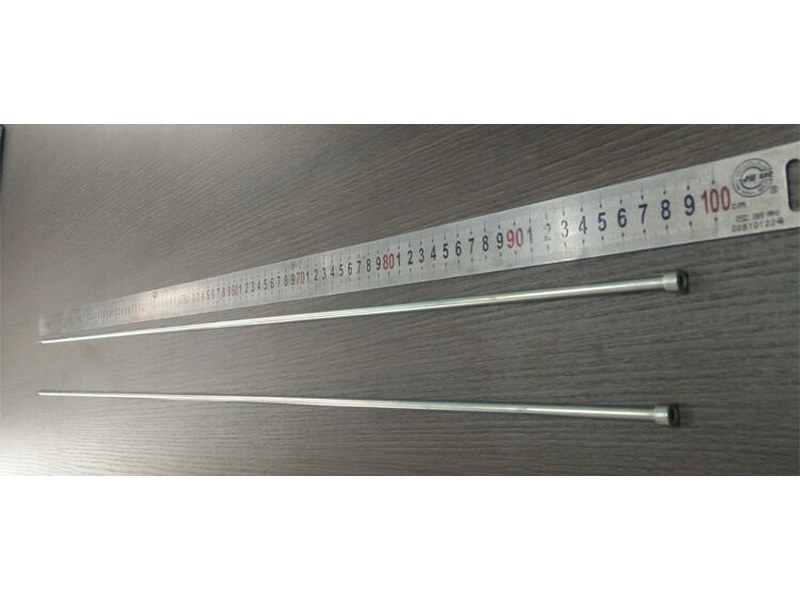
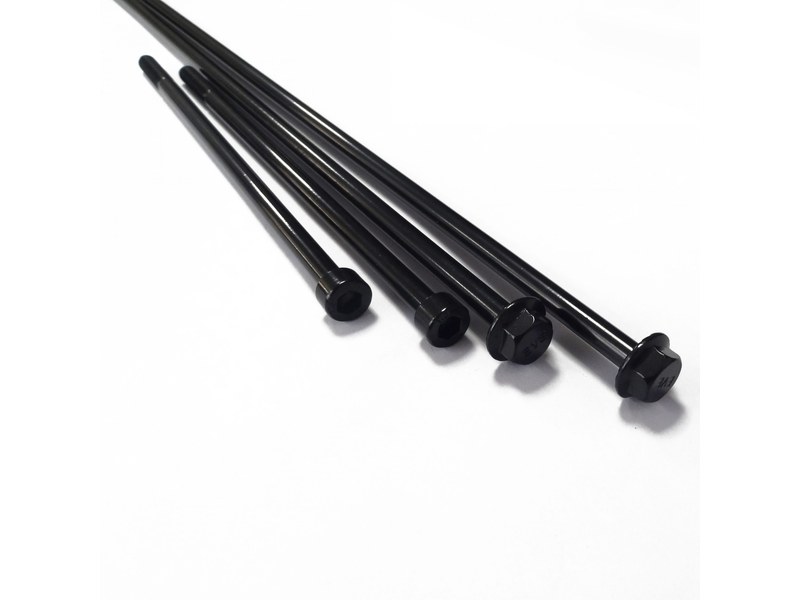
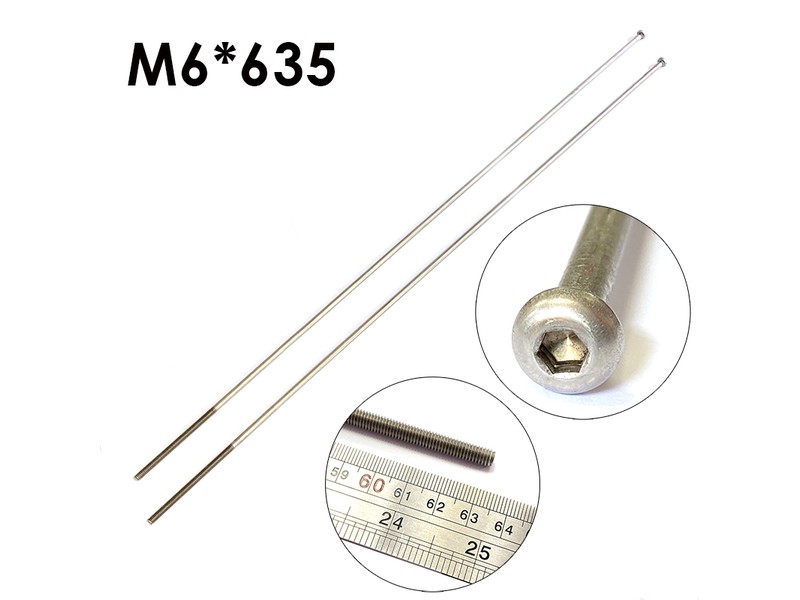
Type:Left hand thread machine screw (double end, hex socket)
Materials:Stainless steel 316
Surface treatment:Plain, cleaned
Head Type:No head (hex socket end)
Size:M1 M2 M3 M4 M5 M6 M7 M8 M9 M10 M14
Drive:Hex socket (Allen)
Thread:Machine thread, left hand (or left and right on the two ends)
Forming:Multi-station cold heading; threads rolled at both ends
Number:804
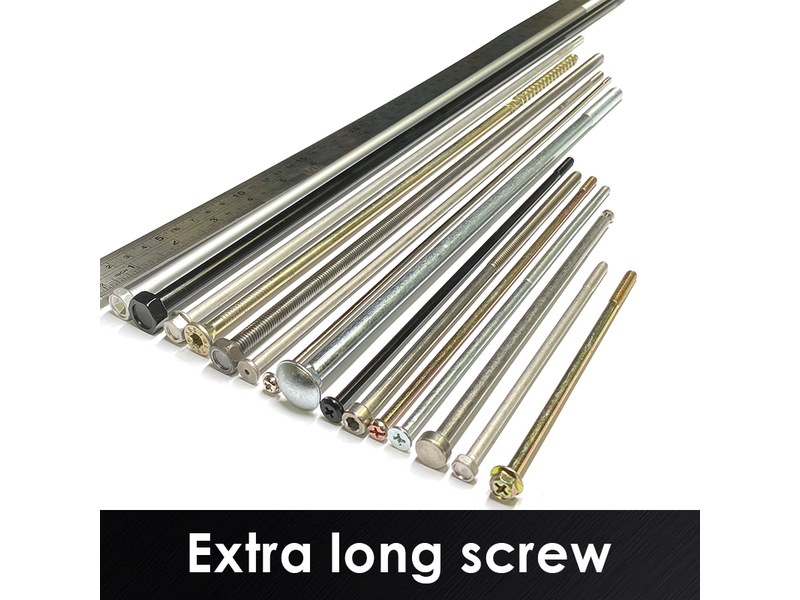
We manufacture left hand thread machine screws as headless double-end studs in 316 stainless, with a hex socket in one end and a machine thread at each end, quoted from M1 to M14. The hand of each thread, the thread lengths and the socket are settled from your drawing.
Watch the factory video·Email sst@szsst88.com
ISO 9001:2015 · Manufacturing since 1998 · 8,678+ customers · 89 countries and regions
Made to order – there is no stock catalogue. Each part is produced to your drawing, and production starts after drawing review and first-article approval.
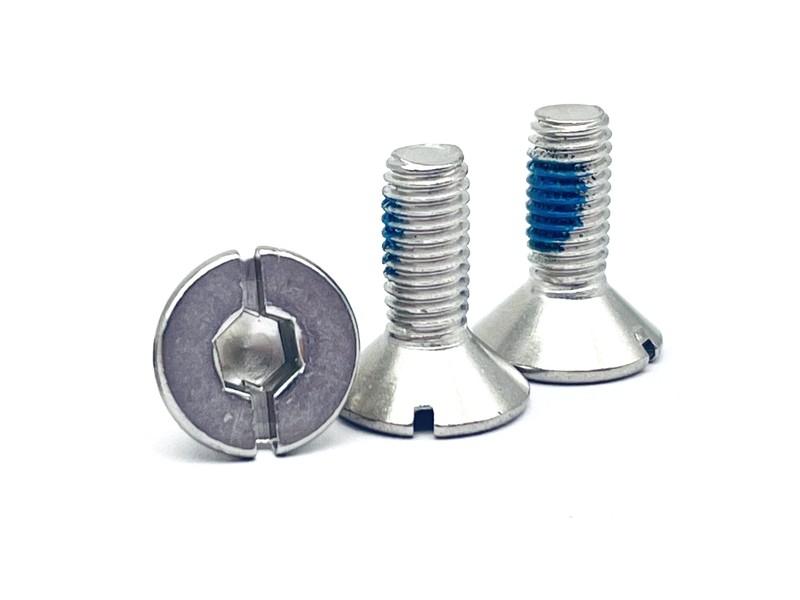
A left hand thread machine screw is a screw whose thread advances when it is turned anticlockwise, the mirror image of a normal right hand thread. The part on this page is a headless double-end stud: both ends carry a machine thread with a plain band between them, and one end has a hex socket so the stud can be driven without a head to grip.
Left hand thread. Turned anticlockwise, it goes in; turned clockwise, it comes out. That is used either where the assembly rotates in the direction that would loosen a right hand thread, or where a pair of studs has to tension against each other.
No head, hex socket. There is nothing above the thread to grip, so the stud is turned by a key in the socket at the end. That lets it sit inside a bore or a counterbore where a headed screw would not fit.
Double end. The thread runs at both ends with a plain band between. One end installs into the fixed part, the other carries the nut or the moving component, and the plain band marks the transition so the two threads do not run into each other.
Stainless 316. The recorded material is 316 stainless, supplied plain and cleaned. The grade is fixed on the drawing because a left hand thread machine screw is often used in wet, hydraulic or marine assemblies where 316 is chosen for the chlorides it has to survive.
Together these decide the part: the hand of the thread sets which way it tightens, the socket gives the drive, the double end lets it be installed and adjusted, and the alloy decides where it can live. That is why a left hand thread machine screw is specified by hand, socket, thread length at each end and material together.
The body of this left hand thread machine screw is 316 stainless wire, with the heat number kept with the batch record. 316 is the recorded grade, and it is the usual choice where the stud sits in a hydraulic block, a wash-down frame or a marine fitting, because the molybdenum in the alloy resists chlorides better than 304.
Both ends are threaded, with a plain band left between them. That band is not decoration: it is the stop that tells the fitter the stud is fully in, and it keeps the two threads from meeting in the middle where the drive torque would have nowhere to go.
The hex socket is formed in one end. Its depth is set so the key engages fully without breaking into the first thread, which on a small stud is a short distance. The socket is the only drive on the part, so it is checked with the matching key before the batch runs.
The threads are rolled on both ends. Rolling keeps the grain continuous and gives a smooth flank, and it lets the hand of the thread be changed at the roll rather than in a second operation. The thread lengths at each end are set separately on the drawing, because a stud that is threaded too far will not leave the plain band it needs.
The finish is plain and cleaned, with no coating. On a thread that has to be turned repeatedly, a coating would change the fit and wear through at the flanks; plain 316 keeps the class the drawing asks for.
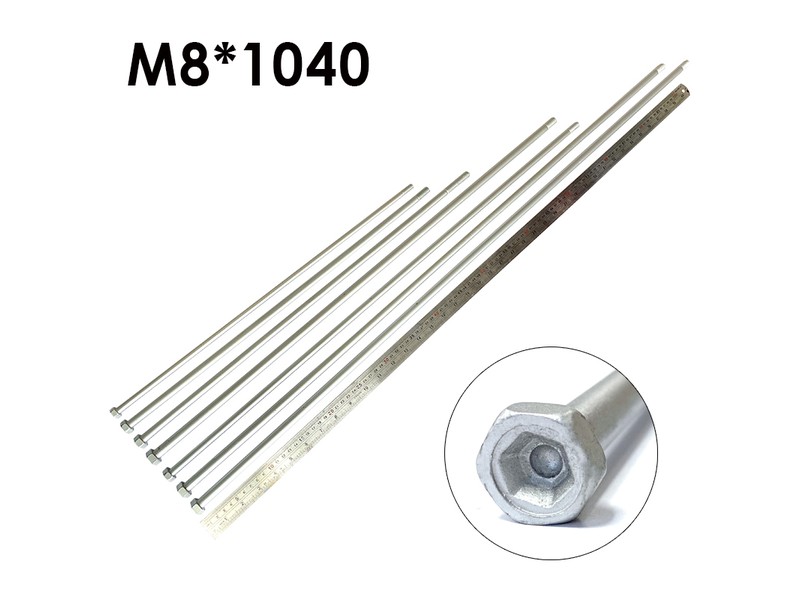
Left hand thread machine screws of this type are quoted from M1 to M14, with the recorded configuration covering M1 to M10 and M14 in 316 stainless. Custom lengths up to 2,000 mm are subject to DFM review after drawing submission, because the thread length at each end and the plain band between them both have to be set before the roll is made.
| Item | How it is defined | What we control |
|---|---|---|
| Thread hand | Left hand, or left and right on the two ends | Confirmed at the thread roll and checked on the first article |
| Thread length, each end | How far each end is threaded | Measured on the first article; gauged per batch |
| Plain band | The unthreaded section between the ends | Measured from the end faces |
| Socket size and depth | Hex key engagement in the end | Checked with the matching key |
| Total length | End to end | Datum stated on the drawing; measured on the shop plate |
| Thread class | Fit in the mating part | GO/NO-GO gauges, left hand gauges for left hand threads |
Each size is quoted against the assembly it goes into. The thread length at the installed end, the depth of the tapped hole and the length of the free end are reviewed together, because a stud that is threaded too far bottoms out in the hole before the plain band seats.
Left hand threads are gauged with left hand gauges. That sounds obvious and is the most common mistake in this part: a right hand gauge will start on a left hand thread and give a false reading, so the inspection kit for these parts is kept separate and marked.
The hand of the thread is the feature that defines the part. A left hand thread machine screw advances anticlockwise, so it is used where the assembly turns in the direction that would unscrew a normal thread, or where two studs have to pull against each other to tension a frame.
| Parameter | Why it matters on this part | What we control |
|---|---|---|
| Thread hand | Which way the part tightens | Set at the roll; checked with left hand gauges |
| Socket size and depth | The only drive on a headless part | Checked with the matching key |
| Thread length, installed end | Engagement in the fixed part | Measured on the first article |
| Thread length, free end | Room for the nut or component | Measured on the first article |
| Plain band length | Acts as the seating stop | Measured from the end faces |
The socket is the whole drive. With no head, there is nothing to grip with a wrench, so a socket that is shallow or worn will round off and leave the stud stuck in the block. The socket is formed in the die and checked with the key the customer uses, not only with a pin gauge.
The two ends do different jobs. The installed end goes into the fixed part and is turned until the plain band seats; the free end carries the nut or the moving component and is adjusted from there. Where the assembly needs to tension in both directions, the two ends are made with opposite hands, so turning the stud draws both parts together at once.
The plain band between the threads is the datum the fitter feels. It also protects the thread at the seat: a stud that is threaded all the way through has no shoulder to stop against, and it will keep turning until it bottoms out or strips.
This left hand thread machine screw is supplied plain and cleaned. On a part with a socket and two threads, a coating would change three fits at once: the key in the socket, the thread in the tapped hole and the thread under the nut. Plain 316 leaves all three as they were gauged.
| Finish | How it protects | Effect on socket and thread | Typical use |
|---|---|---|---|
| Plain, cleaned 316 | Passive film rich in molybdenum | No build-up; socket and threads as rolled | Hydraulic, wash-down and marine assemblies |
| Passivated 316 | Free iron removed, film restored | No dimensional change | Where a cleaner surface is specified |
| Electropolished | Surface levelled, chromium enriched | A few microns removed; socket key re-checked | Visible stainless fittings |
| Dacromet (steel equivalent) | Zinc-aluminium flake layer | Thin film; threads checked over it | Carbon steel studs outdoors |
| Zinc nickel (steel equivalent) | Electroplated barrier | Build-up on thread; gauged after | Steel studs in wet service |
Salt-spray exposure is agreed per project and written on the drawing; plain 316 is tested in the condition it ships in. Where the stud sits in a hydraulic block or a marine fitting, the grade is doing the work and the finish question is really a grade question.
Packing keeps the sockets clean and the threads apart. The parts are bagged in counted quantities, and the bags are labelled with the batch, the material heat and the thread hand, because a left hand stud that is picked up as a right hand one will be driven the wrong way and jam.
Three assemblies where a left hand thread is chosen on purpose, not by accident:
Hydraulic power units and tie-rod frames
|
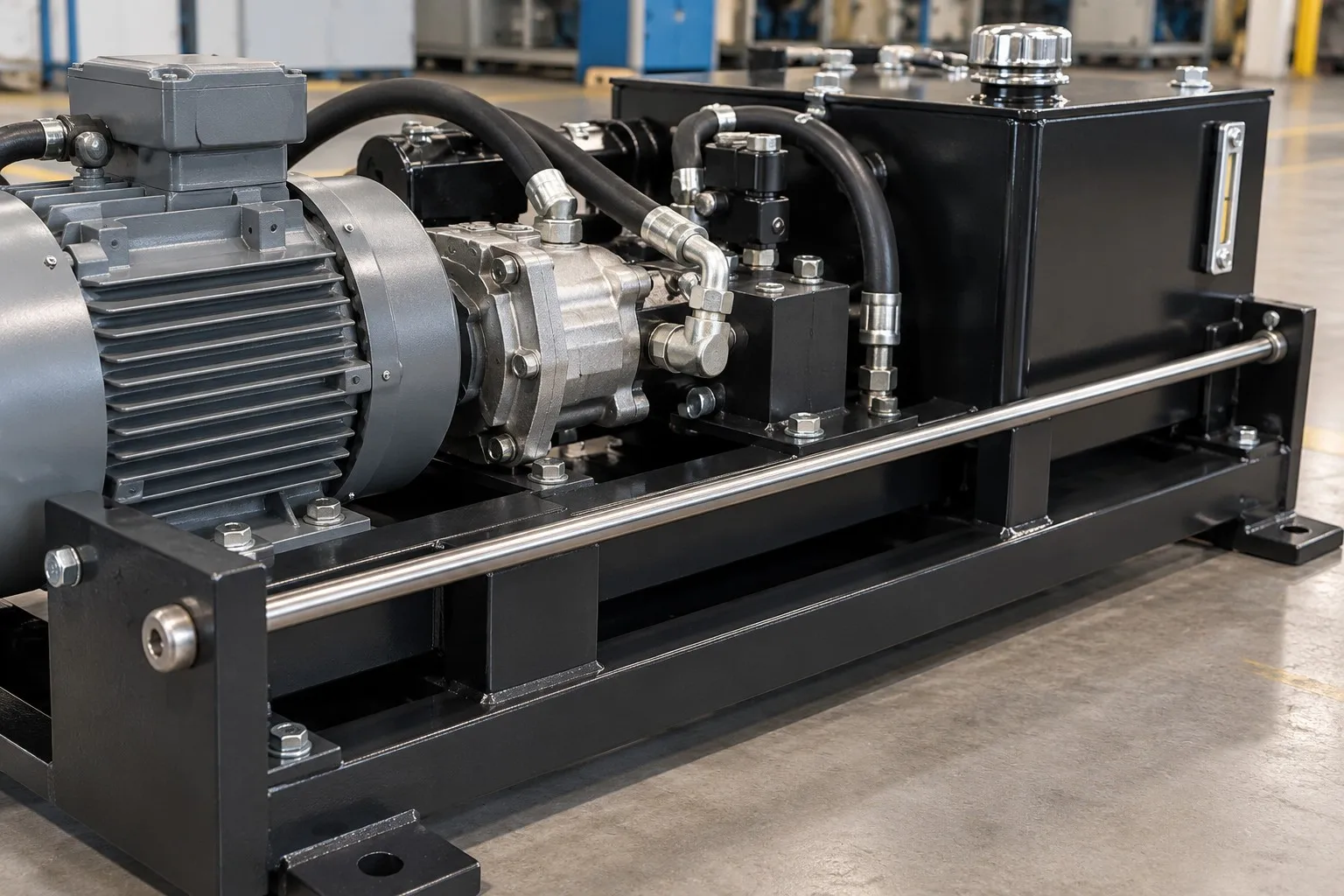
Long studs tensioning a hydraulic power unit frame |
Motor and drive assemblies
|
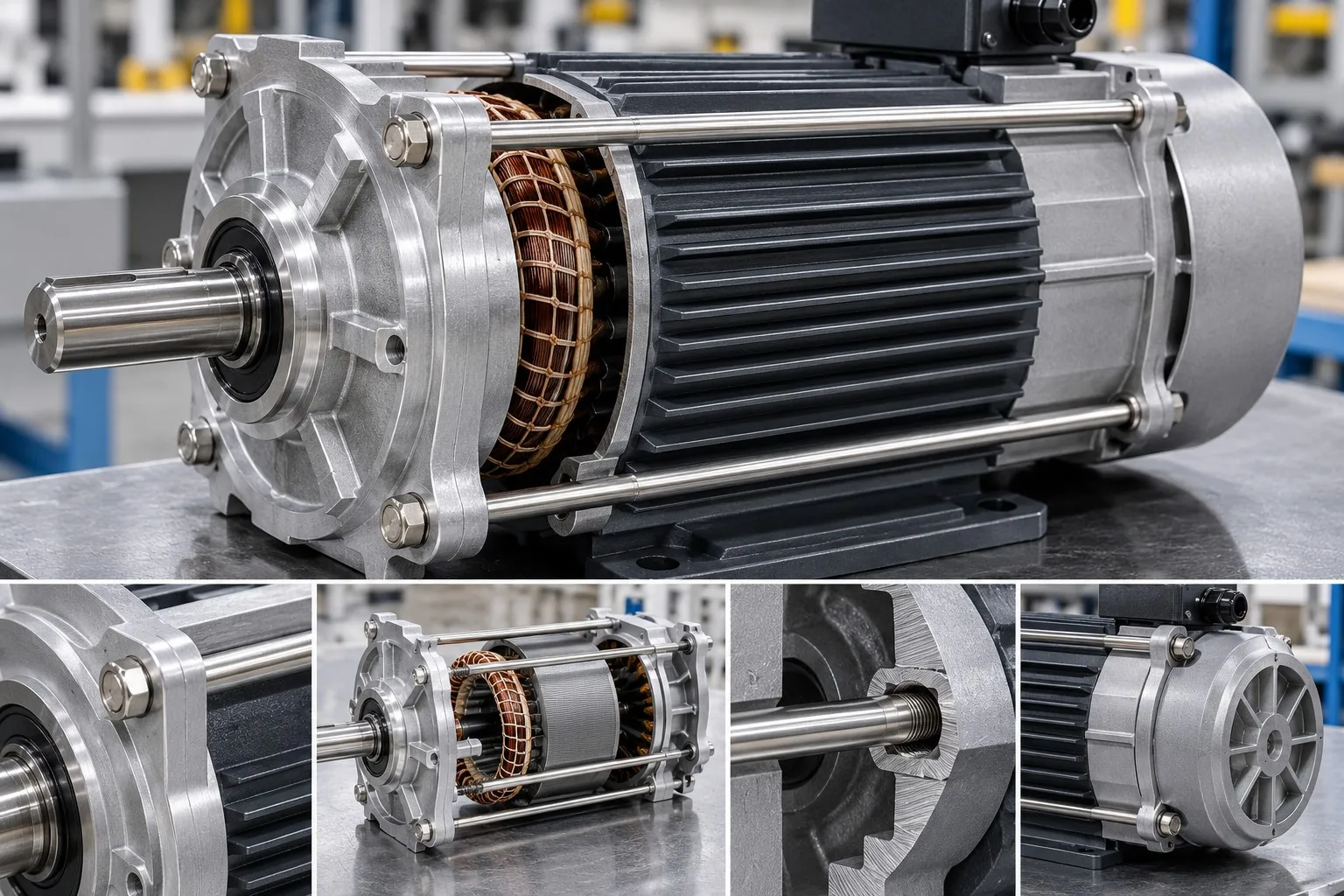
Studs in a motor and drive assembly |
| Where it sits | The stud or screw closes a fitting where a left hand thread is specified so that a connection in the wrong gas service cannot be made by mistake. |
| When it goes wrong | A right hand thread in a left hand fitting lets two incompatible lines be joined, and a stud that is threaded too far will not seal at the shoulder. |
| Why it happens | The fitting is part of a coded gas system, the thread is the safeguard, and the joint is pressure tested. |
| What we control | Hand confirmed on the drawing and on the first article, thread lengths measured, and the thread class gauged with left hand gauges. |
Four reasons that matter on a headless stud with a left hand thread, each tied to what the drawing has to prove:
|
Hand and thread lengths reviewed first
The hand of each end, the thread lengths and the plain band are reviewed before the roll is made, so a stud that bottoms out or turns the wrong way is raised first. Basis: Thread hand and lengths reviewed before tooling. |
Headed and rolled in one route
The socket end is formed in the die and both threads are rolled in one route, so the hand and the lengths come from the same setting. Basis: One route from wire to double-end stud. |
|
Left hand gauged with left hand gauges
The threads are checked with left hand GO/NO-GO gauges and the socket is driven with the matching key, on the first article. Basis: Left hand gauges and the matching key on the first article. |
First article to repeat production
Drawing revision, wire heat, die set and thread roll are fixed at the first article and used as the comparison for repeat orders. Basis: First article signed off before the batch is released. |
Shi Shi Tong forms these left hand thread machine screws on a multi-station header that upsets the end and forms the hex socket, then rolls the thread at each end with the hand set on the roll. The first part of every run is measured on the socket, the thread lengths and the plain band, and gauged with left hand gauges, before the batch continues.


|

|
The hand of the thread is a setting, not a property of the material, so the roll is checked on the first part and the setting is recorded against the batch. Between runs the dies are changed to the drawing thread lengths and the socket size, and the inspected first part is what the rest of the run is compared against.
What decides whether a left hand thread machine screw passes is the hand of each thread, the socket size and depth, the thread lengths at both ends and the plain band between them. The inspection agreement covers those, and the criteria come from the drawing.

Threads gauged with left hand gauges |

Socket and plain band on the projector |

Hardness testing where the drawing requires it |

Salt-spray testing where a finish is specified |
Each batch is recorded against the drawing revision: hand and socket from the first article, the thread lengths measured at both ends and the threads gauged per batch. If a gauge or the socket check fails, the parts back to the last good setting are held and re-checked.
Where the drawing asks for a third-party report, it is ordered alongside the batch and filed with the inspection record under one batch number.
Every shipment of left hand thread machine screws is traceable to the wire it was made from. The grade, heat number and standard are recorded on the material certificate supplied with the parts, and the inspection records follow the criteria agreed on the drawing.

ISO 9001:2015 |

RoHS test report |

Registered trademark |

Patent: security screw and driver |
With each batch we supply the material certificate, the inspection record for the criteria on the drawing and, where it is listed, the third-party report for the material or the finish. The documents carry the drawing revision and the batch number, so the paperwork can be matched to the parts.
More than 8,678 customers in 89 countries and regions have ordered from Shi Shi Tong; 87% of orders come from repeat customers and 56% through referrals. Most projects follow the same route: drawing review, first-article approval, then batches checked against that sample. On a left hand thread machine screw the first article is checked on the hand before anything else, so a thread that would tighten the wrong way is caught before the batch exists. Buyers visit during the process to review samples and to see how the sockets and the threads are formed.
|
8,678+
customers served
|
87%
of orders from repeat customers
|
56%
of orders through referrals
|
89
countries and regions shipped to
|
Buyers and quality engineers visit for sample review, process discussion and supplier audits; the visit is arranged around production so the header and the thread line can be seen on the day the parts run.

Customer group visit – sample review |

Customer group visit – process discussion |

Customer group visit – factory tour |

Customer visit – project kick-off |

Danish customer – drawing review |

Industry exhibition – meeting customers |
It is a screw whose thread advances when turned anticlockwise. The part on this page is a headless double-end stud in 316 stainless, with a hex socket in one end and a machine thread at each end.
Either because the assembly rotates in the direction that would loosen a right hand thread, or because two threads have to pull against each other to tension a frame. It is also used in coded gas fittings so an incompatible connection cannot be made.
Turn it anticlockwise: a left hand thread goes in. On the drawing the hand is stated next to the thread callout, and on our inspection records it is checked with left hand gauges, because a right hand gauge will start on a left hand thread and give a false reading.
So the stud can sit inside a bore or a counterbore where a head would not fit. It is driven by a key in the hex socket at the end, which is why the socket depth and size are checked with the matching key.
One end installs into the fixed part, the other carries the nut or the moving component. The plain band between them is the stop that seats the stud and keeps the two threads from meeting in the middle.
The hand of each thread, thread size and pitch, thread length at each end, the plain band length, socket size and depth, total length and datum, material and grade, and the mating parts at each end.
How a left hand thread machine screw project runs from drawing to repeat delivery:
|
1
Send the drawing or sample
|
→ |
2
Thread hand and lengths review
|
→ |
3
First article approval
|
→ |
4
Batch production and repeat orders
|
Each step is confirmed with you before the next one starts; the drawing revision from the first article is what repeat orders are checked against.
For a quotation, send the drawing with the hand of each thread, thread size and pitch, thread length at each end, the plain band length, socket size and depth, total length and its datum, material and grade, and the mating parts at each end.
|
Thread hand, each end
|
Thread size and pitch
|
Thread length, each end
|
|
Socket size and depth
|
Total length and datum
|
Material and grade
|
Sending a drawing? The form below does not take attachments. Email the PDF, DXF or STEP file to sst@szsst88.com with the part name and quantity in the subject line – the drawing is reviewed and a quotation follows.

 +86 13143444311
 sst@szsst88.com