Tel:
+86 13143444311
Email:sst@szsst88.com
Fax:+0086-755-27322278
Address:Building 9, First Industrial Zone, Tantou Industrial City, Songgang Street, Baoan District, Shenzhen 518105, Guangdong, China
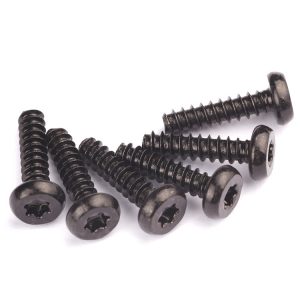
Type:Hexalobular Socket Pan Head Screws
Materials:Stainless Steel
Surface treatment:Plain
Head Type:Pan Head
Drive:Hexalobular Socket
Thread:Half Thread Self Tapping
Point:Sharp
Forming:Single Die Heading
Size:M1 M2 M3 M4 M5 M6 M7 M8 M9 M10 M14
Number:132
We head hexalobular socket pan head screws in stainless steel with a half thread and a sharp point, quoting them from M1 to M14 and passing them cleanly through a top member into the boss below. Socket size, head, thread length, point and alloy are taken from your drawing, and the pilot hole is agreed on a sample of your own part.
Watch the factory video·Email sst@szsst88.com
ISO 9001:2015 · Manufacturing since 1998 · 8,678+ customers · 89 countries and regions
Made to order – there is no stock catalogue. Each part is produced to your drawing, and production starts after drawing review and first-article approval.
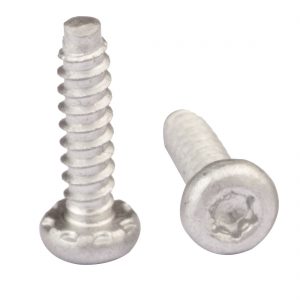
Hexalobular socket pan head screws are small pan head screws driven through a six-lobe star socket, with a thread that forms its own way into the material and a plain length under the head. The recorded item on this page is stainless steel with a plain finish, a pan head and half thread with a sharp point, quoted from M1 to M14 with Number 132.
Pan head. A low dome on a flat bearing face. At the small end of this family the head is only a few millimetres across, so the dome is what keeps the head from pulling into soft material and the flat face is what stops it from sitting on the edge of the hole.
Hexalobular socket. Six curved lobes instead of a hexagon. On a miniature head the socket is the part that decides whether the screw can be driven at all: the driver is tiny, the torque is small, and a hexagon at this size rounds off almost as soon as it slips.
Half thread. The thread runs from the point to a defined position and the length under the head is plain. That plain length passes through the top member of a stack without cutting into it, while the threaded length forms its thread in the member underneath.
Sharp point. A taper that ends in a point rather than a flat tip. It finds its own start in sheet, board or a moulded boss, so the joint does not need a separate drilling step for every fixing.
Stainless, plain. No coating at all. The protection is the alloy and the passive oxide film that passivation restores after heading and rolling, which is what a small visible fixing in a damp or washed assembly needs.
The pan head and the six-lobe socket are formed in one heading stroke. At M1.5 the head is about three millimetres across, so the punch that forms the socket is nearly as large as the head: the wall left around the lobes is a matter of tenths, and a die that is slightly off centre leaves one side of the head thin and the socket off the axis.
The drive of a hexalobular socket pan head screw is shallow and wide relative to its depth. That is deliberate: a miniature bit cannot reach far into a recess, so the drive has to be achieved in the depth available, which is why the lobes are generous and the bottom of the socket is flat rather than pointed. A pointed bottom lets the bit sit on the point and rock instead of seating on the lobes.
The thread is rolled from the point to a defined position, and the plain length is formed at the shank diameter. On a screw this small the transition from thread to plain shank is a single turn of the roll, so it is the feature most sensitive to setup: a transition that is one turn too far up the shank turns a half-thread screw into a fully threaded one that binds in the top member.
The point is ground or formed after rolling, and it is sharp. A sharp point on a self-tapping screw does two jobs: it starts in a pilot hole that is smaller than the thread, and it keeps the first thread from skating across the surface. On soft sheet the point displaces rather than cuts, and on a moulded boss it leads the thread into the core.
Stainless is formed, rolled, then passivated. Passivation is not a coating: it removes free iron left on the surface by the tools and lets the chromium oxide film rebuild. Without it a stainless screw can show rust spots from the tooling rather than from the alloy, which on a small visible part reads as a material failure.
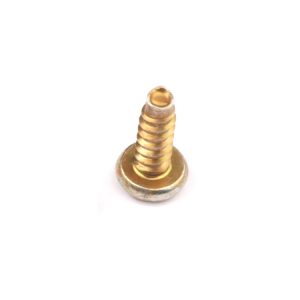
The family is quoted from M1 to M14, with M1, M2, M3, M4, M5, M6, M7, M8, M9, M10 and M14 in the recorded range; the photographed parts of this hexalobular socket pan head screw sit at the M1.5 end of it, where the head is a few millimetres across and the driver is a watchmaker’s size. Custom lengths up to 2,000 mm are subject to DFM review after drawing submission.
| Item | How it is defined | What we control |
|---|---|---|
| Socket | Hexalobular, six lobes | Lobe width and depth, bit tried on the part |
| Head | Pan head, flat bearing face | Diameter, height and face flatness |
| Thread | Self-tapping, half length, from the point | Thread length and position from the end |
| Point | Sharp, tapered | Point angle and concentricity |
| Shank | Plain, under the head | Diameter and length |
| Length | From under the head to the point | Measured on the projector at this size |
At this size the length is measured on the optical projector rather than with a rule, because the head height and the point taper are the same order as the measurement error. The length is quoted from under the head to the point, and on a half-thread screw the thread length is quoted from the point independently, so a short thread with a long shank cannot be mistaken for a long thread with a short shank.
The pilot hole matters more here than on any larger screw. At M1.5 the difference between a hole that strips and a hole that will not take the screw is a few hundredths of a millimetre, and it moves with the material: the same screw needs a different hole in ABS, in polycarbonate and in a brass insert. The hole is agreed on a sample of the customer’s part rather than taken from a table.
Three features carry this part: the pan head spreads the load on a small face, the lobe socket makes a miniature drive possible, and the half thread with a sharp point works in a stack rather than in a single plate. The last is what makes it different from a fully threaded pan head screw.
| Feature | What it gives | What it costs |
|---|---|---|
| Lobe socket | A miniature drive that does not round off | Needs the matching star bit |
| Pan head | Load spread without a flange | Less bearing area than a wide head |
| Half thread | Plain shank passes the top member | Thread length has to be specified |
| Sharp point | Finds its own start, no separate drill | Not for hard sheet without a pilot |
| Stainless, plain | No coating to chip or narrow the socket | Galls against stainless, no barrier in chloride |
The stack is the real use. Two thin members, a clearance hole in the top one and a hole or a boss in the bottom: a fully threaded screw cuts into the clearance hole, lifts the top member as the thread bites it and leaves the joint standing off its face. A half-thread screw with a sharp point passes the top member cleanly and starts in the bottom one, which is why these screws appear in small instrument housings and in moulded assemblies where the boss is underneath.
The sharp point has a limit that is worth saying plainly. It starts in a hole; it does not drill one. In thin stainless or in a hard filled plastic, a pointed screw with no pilot will skate, mark the surface and then split the boss. The drawing should say whether the joint is piloted or not, because the same screw is right for one and wrong for the other.
On a hexalobular socket pan head screw the recorded finish is plain, which on stainless means passivated and nothing else. There is no coating thickness to argue about, no plating in the socket and no film to chip at the head: the socket is gauged as formed, and the driver meets steel rather than paint. For a miniature fixing that is a real advantage, because a few microns of coating in a socket this small is enough to stop the bit seating.
| Option | How it protects | Effect on socket and thread | Typical use |
|---|---|---|---|
| Stainless 304, plain | Passive chromium oxide film | None; socket gauged as formed | General instrument and appliance work |
| Stainless 316, plain | Passive film, molybdenum added | None; socket gauged as formed | Chloride, marine and washdown |
| Stainless 410, plain | Passive film on a martensitic grade | Harder point; less corrosion resistance | Where the point has to cut harder sheet |
| Zinc plated steel | Sacrificial zinc | A few microns; socket re-checked | Dry indoor, cost-driven work |
| Nickel plated steel | Hard barrier deposit | Thicker; socket re-checked | Visible decorative fixings |
Two things about stainless surprise people at this size. The first is galling: stainless on stainless can seize on the first assembly, and a seized M1.5 screw in a soft boss will turn the boss instead of coming out. A different grade for the mating part, or a dry-film lubricant, is the usual answer.
The second is magnetism. An annealed 304 screw is essentially non-magnetic, but heading and thread rolling cold-work the material and can transform a little of the austenite, so a formed screw may respond to a magnet even though it is the same grade as the sheet it goes into. That is not a material substitution; it is the effect of forming, and it is worth knowing before a magnetic sensor in the assembly objects.
Three assemblies where a small hexalobular pan head screw with half thread is the right fixing:
| Where it sits | The screw closes a two-part housing where a clearance hole in the top shell sits over a boss in the bottom shell and the fixing is visible. |
| When it goes wrong | A fully threaded screw lifts the shell off its joint line, and a damaged head cannot be recovered on a moulded boss. |
| Why it happens | The stack is thin, the boss is moulded, and the fixing repeats around a seam. |
| What we control | Thread length and point checked, socket driven with the production bit before the batch. |
| Where it sits | The screw holds a cover, a mount or a stage part where the joint is opened for alignment and the head has to stay inside a small outline. |
| When it goes wrong | A head that is too wide fouls the mount, and a socket that cams out leaves the module unserviceable. |
| Why it happens | The outline is tight, the joint is adjusted, and the part is cleaned between builds. |
| What we control | Head diameter and socket depth checked, passivation confirmed on the certificate. |
| Where it sits | The screw closes a handpiece, a housing or a bracket where the part is washed or wiped and a plated screw would lose its coating at the head. |
| When it goes wrong | A chipped coating on a visible fixing is a reject, and a rust spot on a stainless screw is a material query. |
| Why it happens | The part is cleaned often, the fixing is small, and the finish is the alloy. |
| What we control | Grade checked against the drawing, passivation and corrosion tested on the sample. |
Four reasons that matter on a miniature stainless screw, each tied to what the drawing has to prove:
|
Head, socket and stack reviewed together
The head diameter, the socket size and the thread length are reviewed with the stack they go into, so a head that fouls a seam or a thread that lifts the top member is raised before the die is cut. Basis: Head, socket and stack reviewed as one set. |
Heading, rolling and passivation in one route
The pan head and the lobes are formed in one stroke, the half thread is rolled to a sharp point and the parts are passivated in the same route. Basis: One route from wire to passivated screw. |
|
Checked at the size it is used
The head, socket and point are measured on the optical projector, and the socket is driven with the production bit on the part rather than on a sample of another size. Basis: First article checked on the projector and with the bit. |
First article fixes the setting
The first article fixes the wire heat, die set, roll and passivation; repeat orders are compared against that record rather than re-read from a drawing that has no room for interpretation. Basis: First article signed off before the batch is released. |
Shi Shi Tong heads these hexalobular socket pan head screws from stainless wire on single-die headers that form the pan head and the six-lobe socket in one stroke, rolls the half thread to a sharp point and leaves the plain shank under the head. The parts are passivated and inspected before they leave the cell. The first part of every run is measured on the projector, driven with the production bit and started in a sample of the customer’s material before the batch continues.


|

|
At this size the handling is half the process. A thousand M1.5 screws weigh less than a newspaper, they nest in the thread of the next one, and a single burr at the point is enough to stop a feeder. The parts are washed, tumbled and checked for burrs before packing, and the packing is specified so that the screws do not arrive as a matted lump that the customer’s feeder cannot separate.
What decides whether hexalobular socket pan head screws pass is the head, the socket, the thread, the point and the alloy. The inspection agreement covers those, and the criteria come from the drawing.

Head and socket on the projector |

Thread checked with GO/NO-GO gauges |

Hardness checked on the formed head |

Salt-spray testing of the stainless grade |
The socket is checked for depth and lobe width and then driven with the production bit. On a hexalobular socket pan head screw the bit is the only reliable judge at this size: a socket that measures in tolerance but rocks on the bit will fail in the customer’s driver, and the failure looks like a stripped screw rather than a shallow socket.
The point is checked on the projector for angle and concentricity. A point that is off centre starts the screw at an angle, and at M1.5 a screw that starts at an angle does not straighten in the hole — it either cross-threads the boss or tears out the side of it. The first article is started in a sample of the customer’s material and inspected for the mark it leaves.
The alloy is confirmed on the certificate and, where the drawing calls for it, by a corrosion test. Passivation is checked by the salt-spray sample rather than by looking at the surface: a passivated part and an un-passivated one look the same until they are wet.
Every shipment of hexalobular socket pan head screws is traceable to the wire it was made from and to the passivation batch. The grade and heat number are recorded on the material certificate supplied with the parts, and the inspection records follow the criteria agreed on the drawing.

ISO 9001:2015 |

RoHS test report |

Registered trademark |

Patent: security screw and driver |
With each batch we supply the material certificate for the wire, the inspection record for the criteria on the drawing and, where it is listed, the third-party report for the grade or the passivation. The documents carry the drawing revision and the batch number, so the paperwork can be matched to the parts.
More than 8,678 customers in 89 countries and regions have ordered from Shi Shi Tong; 87% of orders come from repeat customers and 56% through referrals. Most projects follow the same route: drawing review, first-article approval, then batches checked against that sample. On a miniature screw the first article is also where the pilot hole is agreed on the customer’s own part, because at this size the hole is the joint. Buyers visit during the process to review samples and to see how the heads and points are formed.
|
8,678+
customers served
|
87%
of orders from repeat customers
|
56%
of orders through referrals
|
89
countries and regions shipped to
|
Buyers and quality engineers visit for sample review, process discussion and supplier audits; the visit is arranged around production so the headers and the passivation line can be seen on the day the parts run.

Customer group visit – sample review |

Customer group visit – process discussion |

Customer group visit – factory tour |

Customer visit – project kick-off |

Danish customer – drawing review |

Industry exhibition – meeting customers |
So the plain length passes the top member of a stack without cutting into it, while the thread forms in the member underneath. A full thread lifts the top member off its joint line.
It starts in a hole and leads the thread in. In a hard or thin material it still needs a pilot; without one it skates and marks the surface, and in a moulded boss it can split the wall.
It depends on the material and on the screw size, and at M1.5 it moves by a few hundredths. It is agreed on a sample of your part rather than taken from a table.
There is nothing to chip and nothing to narrow the socket. Passivation restores the oxide film, and for a small visible fixing in a damp or washed assembly the alloy is a better answer than a film.
Annealed 304 is essentially non-magnetic, but heading and rolling cold-work it and can make a formed screw respond to a magnet. If a sensor in the assembly is sensitive, say so and the grade is chosen for it.
Socket size, head diameter and height, thread size with the thread length and its datum, point form, plain shank diameter and length, overall length, alloy and the pilot-hole reference.
How a hexalobular socket pan head screw project runs from drawing to repeat delivery:
|
1
Send the drawing or the boss sample
|
→ |
2
Head, socket and thread review
|
→ |
3
First article started in your material
|
→ |
4
Batch production and repeat orders
|
Each step is confirmed with you before the next one starts; the drawing revision from the first article is what repeat orders are checked against.
For a quotation, send the drawing with the socket size, head diameter and height, thread size and length with the datum, point form, plain shank and overall length, alloy and the pilot-hole reference.
|
Socket size
|
Head dimensions
|
Thread and length
|
|
Point form
|
Shank and length
|
Alloy
|
Sending a drawing? The form below does not take attachments. Email the PDF, DXF or STEP file to sst@szsst88.com with the part name and quantity in the subject line – the drawing is reviewed and a quotation follows.

 +86 13143444311
 sst@szsst88.com