Tel:
+86 13143444311
Email:sst@szsst88.com
Fax:+0086-755-27322278
Address:Building 9, First Industrial Zone, Tantou Industrial City, Songgang Street, Baoan District, Shenzhen 518105, Guangdong, China
Type:Hexalobular Socket Head Cap Screws
Materials: Steel
Surface treatment:White Zinc Plated
Head Type:Cap Head
Drive:Hexalobular Socket
Thread:Partial Machine Thread
Point:Blunt
Forming:Single Die Heading
Size:M1 M2 M3 M4 M5 M6 M7 M8 M9 M10 M14
Number:532
We head hexalobular socket head cap screws from 10B21 carbon steel with a cap head, a six-lobe socket and a partial thread, white zinc plated to the property class on the drawing. Socket size, shank tolerance, thread length and finish are taken from your drawing, and the shank is matched to the bore on the first article.
Watch the factory video·Email sst@szsst88.com
ISO 9001:2015 · Manufacturing since 1998 · 8,678+ customers · 89 countries and regions
Made to order – there is no stock catalogue. Each part is produced to your drawing, and production starts after drawing review and first-article approval.
Hexalobular socket head cap screws are cap head machine screws driven through a six-lobe star socket, the drive form the ISO standards call hexalobular. The recorded item on this page is a carbon steel screw in 10B21 with a white zinc plate, a cap head and a partial thread, quoted from M1 to M14 with Number 532.
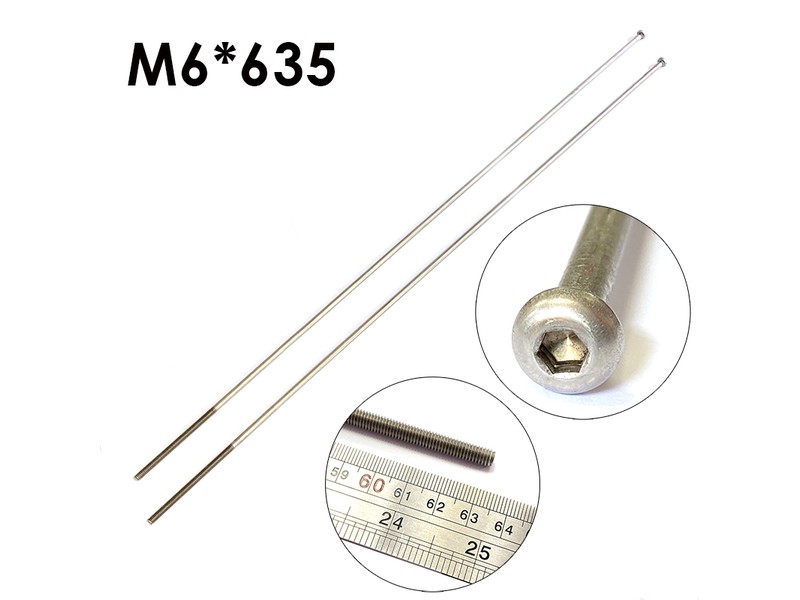
Hexalobular socket. Six curved lobes cut into the head instead of a hexagon. The drive has no sharp internal corners, so the bit contacts the flanks over a large area and the socket does not round off at the corners the way a hexagon does under load.
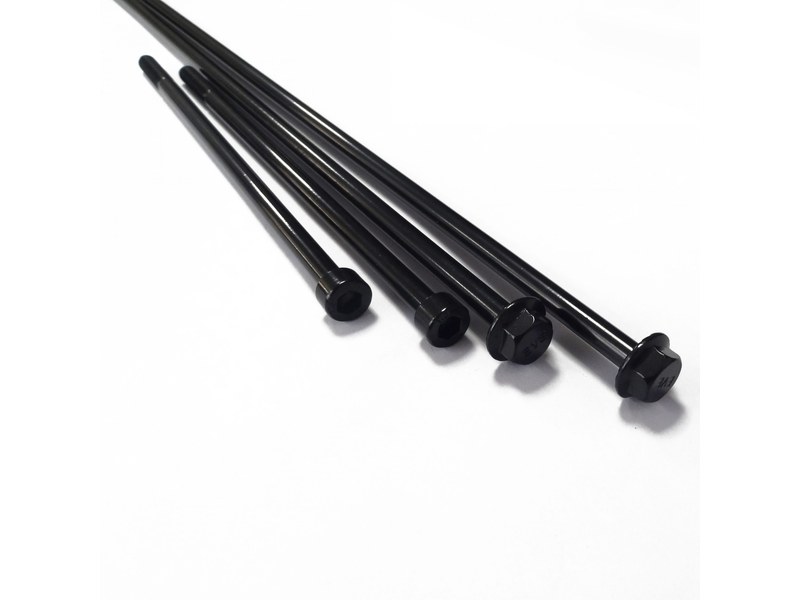
Cap head. A cylinder with a flat top, a chamfered edge and a full flat bearing face. It seats in a counterbore, spreads the clamp load across the full head diameter and leaves a clean circular outline on a machined surface.
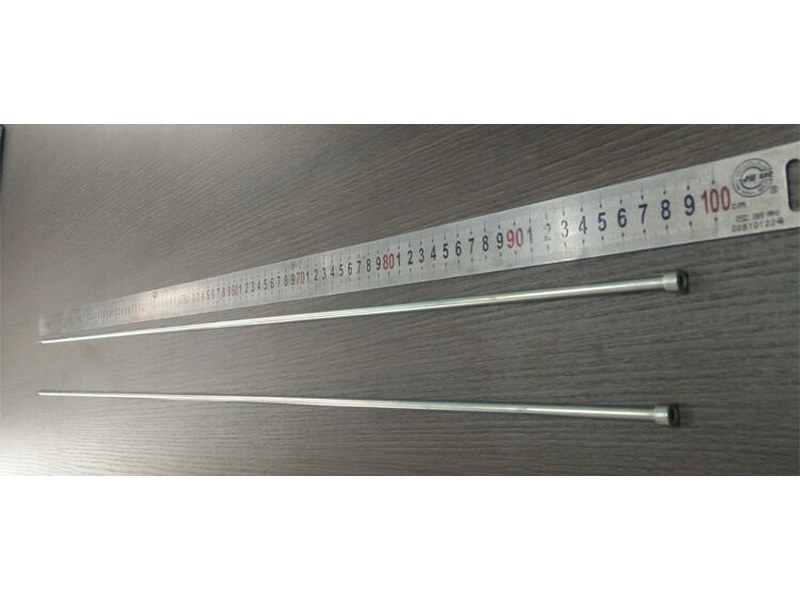
Partial thread. The thread runs from the point to a defined position and the rest of the shank is plain, turned or formed at the shank diameter. That plain length is the difference between this screw and the fully threaded one: it can pass through a clearance hole without the thread cutting into the bore.
10B21. A boron micro-alloyed carbon steel made for cold heading and for quenching and tempering. It heads without cracking and then takes the property class on the drawing, which is what a cap head screw needs because the head is where the torque arrives.
White zinc. An electroplated zinc layer with a trivalent, RoHS-compliant passivation. It is bright, sacrificial and thin, so the socket is gauged and the bit is tried in the plated condition rather than in the bare one.
The cap head and the lobe socket are formed in one heading stroke in a single-die header, so the socket comes out concentric with the shank and the bearing face comes out flat. Both matter on a hexalobular socket head cap screw: an off-centre socket makes the bit lean, and a leaning bit loads one side of the lobes, which is exactly the wear the star profile is supposed to avoid.
The socket depth is set from the head height. Too shallow and the bit bottoms out before it seats, so the lobes carry load on a partial engagement; too deep and the head loses the material that resists the hoop stress under torque. The depth is a drawing dimension, not a shop preference.
The thread is rolled, and the plain shank is formed at the shank diameter. On a partial-thread screw the transition from plain shank to thread is the feature that decides how the part behaves: the plain length has to clear the hole it passes through and stop short of the thread that engages, so both the thread length and its position are quoted from the end rather than from the head.
The point is blunt. A machine screw enters a tapped hole or a nut, and the chamfer is there to guide the first turn rather than to cut. A pointed end on a machine screw is a sign that the drawing was copied from a self-tapping part.
White zinc goes on after the thread is rolled. It builds a few microns in the socket, on the lobes and on the thread, so the socket is checked with the production bit in the plated condition. The passivation is trivalent rather than hexavalent, which is what the RoHS report covers and also what makes the coating thickness worth controlling: a thin trivalent film will not carry the corrosion resistance of the old hexavalent one at the same thickness.
The family is quoted from M1 to M14, with M1, M2, M3, M4, M5, M6, M7, M8, M9, M10 and M14 in the recorded range. Custom lengths up to 2,000 mm are subject to DFM review after drawing submission; on a hexalobular socket head cap screw the thread length and its position are quoted with the length, because the plain shank is what the customer is buying.
| Item | How it is defined | What we control |
|---|---|---|
| Socket | Hexalobular, six lobes | Depth and lobe width, bit tried after plating |
| Head | Cap head, flat bearing face | Diameter, height and face flatness |
| Shank | Plain, at the shank diameter | Diameter and tolerance on the drawing |
| Thread | Partial, rolled, from the point | Thread length and position from the end |
| Point | Blunt, chamfered | Chamfer cut, not deburred |
| Length | From under the head to the point | Measured on the shop plate |
Thread length is quoted from the end, not from under the head. That is the dimension that decides whether the plain shank clears a clearance hole and whether the thread engages the full depth of a nut; quoting it from the head instead leaves the shop guessing which end the tolerance applies to, and on a short screw the two readings differ by the thread length itself.
The plain shank diameter is where a partial-thread screw can do a second job. Quoted with a tolerance that suits a reamed hole, the shank locates the joint as well as clamping it, which is why these screws turn up in linkages and pivot points rather than only in clamped stacks. Where that is the intent, the shank tolerance is a functional dimension and is called out on the drawing.
Three features carry this part: the lobe socket takes the torque, the cap head spreads the clamp load, and the partial thread leaves a plain shank that can pass through a bore. The third is the one that separates it from the fully threaded screws in the same head form.
| Feature | What it gives | What it costs |
|---|---|---|
| Hexalobular socket | High torque without rounding the drive | Needs the matching star bit |
| Cap head | Full bearing face in a counterbore | Needs a counterbore, not just a hole |
| Plain shank | Passes a clearance hole, can locate | Thread length has to be specified |
| Partial thread | Thread where it engages, shank where it fits | Not for thin stacks: less thread to use |
| White zinc | Bright, cheap, sacrificial | Thin film; not for chloride service |
The torque story is the reason the star profile exists. A hexagon socket has six sharp internal corners, and those corners are where the key first rounds the head; the lobes of a hexalobular socket are curved, so the contact patch is spread along the flank and the same head size carries more torque before anything deforms. On a cap head, where the head is already the widest part of the screw, that difference is what allows a smaller head for the same clamp load.
The plain shank story is the reason for the partial thread. In a stack that has a clearance hole at the top and a tapped hole at the bottom, a fully threaded screw cuts into the clearance bore and can bind before the head seats; a partial thread leaves that bore alone. The cost is that the thread only engages over a defined length, so a thin stack gets very little engagement and the drawing has to show it.
The recorded finish is white zinc with a trivalent passivation. It is a sacrificial coating on a hardened carbon steel part: the zinc goes first, so a scratch on the head or a burr at the point still has zinc at its edges. On a cap head the socket is the feature that plating changes most, because every micron narrows the lobes.
| Finish | How it protects | Effect on socket and thread | Typical use |
|---|---|---|---|
| White zinc (trivalent) | Sacrificial zinc, RoHS passivation | A few microns; bit tried after plating | General machinery and indoor assemblies |
| Black oxide | Thin conversion film, oiled | Almost no change | Dry indoor, tool-room work |
| Black zinc | Zinc with black passivation | A few microns; re-checked | Dark visible assemblies |
| Dacromet | Zinc-aluminium flake layer, cured | Thin film; socket re-checked | Outdoor and wet assemblies |
| Zinc-nickel | Alloy deposit, higher corrosion resistance | Thicker; socket and thread re-checked | Automotive and damp service |
Plating in a star socket has a specific failure: the bit goes in, feels engaged, and then rocks. That is a socket that has been narrowed at the lobes by the coating, so the bit sits on the coating rather than on the steel. The check is simple and it is done on the first article — drive the part with the bit that will be used on the line, in the plated condition.
The property class is the other half of the finish question. A 10B21 cap screw is quenched and tempered to the class on the drawing, and plating a hardened part introduces hydrogen at the surface. The parts are baked after plating, and the bake is written into the route rather than left to the plating shop, because a delayed crack under a loaded head is the failure that no visual inspection catches.
Where the joint is outdoors, white zinc is the wrong answer however well it looks on the drawing. A thin trivalent film does not carry the corrosion resistance that the old hexavalent passivation did, so a damp or chloride service needs a thicker finish or a different base metal rather than a thicker coat of the same thing.
Three assemblies where a hexalobular cap head with a partial thread earns its place:
| Where it sits | The screw clamps a plate or a jaw in a counterbore where the head has to sit flush and the plain shank has to pass a clearance bore without cutting it. |
| When it goes wrong | A fully threaded screw binds in the clearance bore, the plate sits off its face and the fixture loses its square. |
| Why it happens | The stack has a clearance bore above a tapped hole, and the head is counterbored. |
| What we control | Shank diameter and thread position checked, socket driven with the production bit after plating. |
| Where it sits | The screw fixes a bracket, a guide or a motor mount where access is from one side and the star socket takes the torque of a powered driver. |
| When it goes wrong | A hexagon socket rounds off under a torque-controlled driver and the joint cannot be re-torqued. |
| Why it happens | The driver is powered, the torque is set, and the head is small for its load. |
| What we control | Socket depth and lobe width checked, torque verified on a sample joint. |
| Where it sits | The screw holds a flange, a coupling or a cover where the plain shank locates the part and the thread only has to clamp. |
| When it goes wrong | A thread that runs into the locating bore scores it, and the part loses its concentricity. |
| Why it happens | The joint locates on the shank and clamps on the thread. |
| What we control | Shank tolerance and thread length checked on the first article, plating thickness held. |
Four reasons that matter on a plated star-socket cap screw, each tied to what the drawing has to prove:
|
Socket, shank and class reviewed together
The socket size, the plain shank tolerance and the property class are reviewed as one set, so a socket that would tighten after plating or a shank that would not clear the bore is raised before the die is cut. Basis: Socket, shank and class reviewed as one set. |
Heading, rolling and plating in one route
The cap head and the lobes are formed in one stroke, the partial thread is rolled, and the parts are quenched, tempered, plated and baked in one route. Basis: One route from wire to plated screw. |
|
Socket driven after plating
The socket is driven with the production bit in the plated condition, and the thread is gauged after plating, so the part is judged in the state the customer receives. Basis: First article checked after plating. |
First article fixes the setting
The first article fixes the wire heat, die set, thread roll, heat treatment and plating barrel; repeat orders are compared against that record rather than re-read from the drawing. Basis: First article signed off before the batch is released. |
Shi Shi Tong heads these hexalobular socket head cap screws from 10B21 wire on single-die headers that form the cap head and the six-lobe socket in one stroke, rolls the partial thread to a blunt point and leaves the plain shank at the drawing diameter. The parts are quenched, tempered to the property class, white zinc plated and baked. The first part of every run is measured on the head and shank, driven with the production bit and entered into a thread gauge before the batch continues.


|

|
The socket punch is the tool that sets the life of the die. It wears at the lobe tips first, and a worn punch leaves lobes that are slightly wider at the mouth than at the bottom, which the bit feels as rock rather than as a loose fit. The socket is checked on the first article with the production bit and sampled through the run, because that wear is the one that changes how the screw drives without changing how it looks.
What decides whether hexalobular socket head cap screws pass is the socket, the head, the plain shank, the thread and the property class. The inspection agreement covers those, and the criteria come from the drawing.

Head and socket on the projector |

Thread gauged after plating |

Hardness checked against the property class |

Salt-spray testing of the zinc plate |
The socket is checked for depth and for width across the lobes, then driven with the production bit. The two checks answer different questions: the dimensions say whether the socket is in tolerance, and the bit says whether it will drive. A socket that passes the first and rocks on the second is a socket that the coating has narrowed.
The plain shank of a hexalobular socket head cap screw is checked with a micrometer at two positions and, where the drawing calls it functional, against the bore it has to pass. A shank that is round, on size and still binds is a shank with the thread running too far, and that shows up as a mark on the bore rather than on the screw.
Hardness is checked on the section as well as the surface, because a quenched and tempered cap screw gets its torque capacity from the core. A part that is hard at the surface and soft underneath takes the driver without deforming and then stretches under clamp load — a failure that appears as a loose joint, not as a broken screw.
Every shipment of hexalobular socket head cap screws is traceable to the wire it was made from, to the heat treatment batch and to the plating batch. The grade and heat number are recorded on the material certificate supplied with the parts, and the inspection records follow the criteria agreed on the drawing.

ISO 9001:2015 |

RoHS test report |

Registered trademark |

Patent: security screw and driver |
With each batch we supply the material certificate, the inspection record for the criteria on the drawing and, where it is listed, the third-party report for the material or the plating. The documents carry the drawing revision and the batch number, so the paperwork can be matched to the parts.
More than 8,678 customers in 89 countries and regions have ordered from Shi Shi Tong; 87% of orders come from repeat customers and 56% through referrals. Most projects follow the same route: drawing review, first-article approval, then batches checked against that sample. On a hexalobular socket head cap screw with a partial thread the first article is also where the shank and the mating bore are matched, so it is approved as a toleranced pair rather than as a screw on its own. Buyers visit during the process to review samples and to see how the sockets are headed and the threads rolled.
|
8,678+
customers served
|
87%
of orders from repeat customers
|
56%
of orders through referrals
|
89
countries and regions shipped to
|
Buyers and quality engineers visit for sample review, process discussion and supplier audits; the visit is arranged around production so the headers and the heat treatment line can be seen on the day the parts run.

Customer group visit – sample review |

Customer group visit – process discussion |

Customer group visit – factory tour |

Customer visit – project kick-off |

Danish customer – drawing review |

Industry exhibition – meeting customers |
Hexalobular is the form named in the ISO standards; Torx is a trade name for the same six-lobe drive. The bit has to match the size, not the name.
So the plain shank passes a clearance bore without the thread cutting into it, and so the shank can locate the joint. The thread then only has to clamp.
From the end of the screw, with the position tolerance on the same datum. Measuring it from under the head leaves the shop guessing which end applies.
The torque the screw carries and the core hardness behind the head. On a cap screw the clamp load comes from the core, so the class is a functional callout, not a label.
It narrows the lobes by a few microns. That is enough for the bit to sit on the coating instead of the steel, which is why the first article is driven with the production bit after plating.
Socket size, head diameter and height, shank diameter and tolerance, thread size and length with the datum, point form, property class and finish.
How a hexalobular socket head cap screw project runs from drawing to repeat delivery:
|
1
Send the drawing or the mating bore
|
→ |
2
Socket, shank and class review
|
→ |
3
First article driven and gauged
|
→ |
4
Batch production and repeat orders
|
Each step is confirmed with you before the next one starts; the drawing revision from the first article is what repeat orders are checked against.
For a quotation, send the drawing with the socket size, head diameter and height, shank diameter and tolerance, thread size and length with the datum, point form, property class and finish.
|
Socket size
|
Head dimensions
|
Shank tolerance
|
|
Thread and length
|
Property class
|
Finish
|
Sending a drawing? The form below does not take attachments. Email the PDF, DXF or STEP file to sst@szsst88.com with the part name and quantity in the subject line – the drawing is reviewed and a quotation follows.

 +86 13143444311
 sst@szsst88.com