Tel:
+86 13143444311
Email:sst@szsst88.com
Fax:+0086-755-27322278
Address:Building 9, First Industrial Zone, Tantou Industrial City, Songgang Street, Baoan District, Shenzhen 518105, Guangdong, China
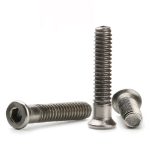
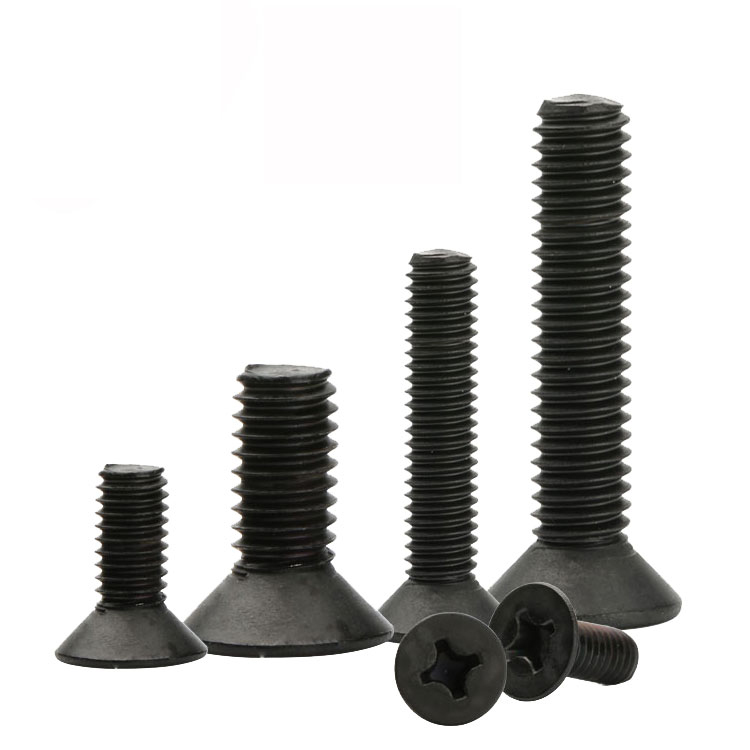
Type:Black countersunk machine screw (titanium, anodised)
Materials:Titanium
Surface treatment:Anodised black, sealed
Head Type:Flat head, 90 degrees
Size:M1 M2 M3 M4 M5 M6 M7 M8 M9 M10 M14
Drive:Phillips cross recess
Thread:Machine thread, right hand
Forming:Cold heading; thread rolled, then black anodised
Number:366
We manufacture black countersunk screws in titanium with a black anodised finish, a 90 degree head and a Phillips recess, quoted from M1 to M14 with a machine thread. Head angle, recess depth, thread fit and anodised colour are taken from your drawing.
Watch the factory video·Email sst@szsst88.com
ISO 9001:2015 · Manufacturing since 1998 · 8,678+ customers · 89 countries and regions
Made to order – there is no stock catalogue. Each part is produced to your drawing, and production starts after drawing review and first-article approval.
A black countersunk screw is a machine screw with a 90° conical head that seats flush and a black surface that is part of the metal rather than a coating on top of it. The recorded item on this page is a titanium screw with a Phillips recess and a black anodised finish, quoted from M1 to M14, with a machine thread.
Black from anodising. The colour is produced by growing an oxide film on the titanium and dyeing that film, not by painting or plating the part. The film is part of the surface, so it does not chip off at the head edge or fill the recess the way a coating would.
Countersunk head. The cone drops into a matching seat so the head finishes level with the surface. On optical and instrument work that is a functional requirement: anything standing above the face catches light or fouls the next component.
Titanium body. Light, corrosion resistant and non-magnetic. On a black part that matters because the black is cosmetic while the alloy is doing the structural and environmental work.
Machine thread. The thread engages a tapped hole or a nut, so the joint is designed around the mating thread rather than formed by the screw itself.
Together these decide the part: the cone seats flush, the anodised black absorbs light on a visible face, the titanium keeps the weight and the corrosion performance, and the machine thread holds the joint. That is why a black countersunk screw is specified by head angle, alloy, anodising and thread together.
The body of a black countersunk screw of this type is titanium, with the grade and heat number kept with the batch record. The grade is on the drawing because it decides both the strength of the part and how the anodised colour comes out: the two common titanium grades oxidise to slightly different tones under the same bath.
The 90° cone and the Phillips recess are formed in one heading operation. The cone angle and the recess depth come out of the same die, which matters on a countersunk part because the recess sits in the thinnest section of the head.
The machine thread is rolled over the full length. Rolling keeps the grain continuous and leaves a smooth flank, and on titanium it avoids the burr that a cut thread leaves at the end — a burr that would have to be removed before anodising, because the film grows over it and locks it in place.
The black is produced by anodising: the parts are cleaned, the oxide is grown in an electrolyte, dye is absorbed into the porous film and the film is sealed. The result is a thin, hard, electrically insulating surface that is part of the metal, not a layer sitting on it.
The anodised film adds a few microns to every surface. That is small, but on a countersunk head it sits on the cone and in the recess, so the seat and the driver are checked on the finished part rather than on the bare one.
Black countersunk screws of this type are quoted from M1 to M14; the recorded configuration covers that range in titanium with a black anodised finish and a machine thread. Custom lengths up to 2,000 mm are subject to DFM review after drawing submission, because the thread and the anodising both change with length.
| Item | How it is defined | What we control |
|---|---|---|
| Head diameter and angle | The 90° cone that seats flush | Checked on the projector on the first article |
| Phillips recess size | Which PH bit the head takes | Checked with the matching bit |
| Recess depth | Material left under the cone | Checked on the first article |
| Thread size and pitch | The fit in the tapped hole | Gauged after anodising |
| Length | From the top of the head to the tip | Datum stated on the drawing; measured on the shop plate |
| Colour and film | The shade and thickness of the black | Checked against the approved sample |
Each size is quoted against the seat it goes into. The countersink angle, the head diameter and the panel thickness are reviewed together, because the anodised head has to seat in the same seat as a bare one and stand no prouder.
Length on a black countersunk screw is measured from the top of the head to the tip. On a countersunk part that datum is the top of the cone, and the film adds to it, so the drawing states whether the length is to be met before or after anodising — on most parts the difference is inside the tolerance, but the drawing should not leave it to chance.
The black anodised finish is the feature that separates this part from a plain titanium screw. Anodising grows the oxide that titanium would form in air anyway, thickens it under controlled current, and lets dye into the porous structure before the film is sealed. The colour therefore sits inside the surface rather than on it.
| Parameter | Why it matters on this part | What we control |
|---|---|---|
| Head angle | Flush seating in a countersink | Checked against the seat angle on the projector |
| Recess depth | Drive engagement after anodising | Checked with the bit on the coated part |
| Film thickness | Colour depth without changing the seat | Checked on the sample and on the parts |
| Colour match | Consistency across a visible assembly | Compared with the approved sample under fixed light |
| Thread fit | Assembly after anodising | Gauged in the finished condition |
Black is the most demanding anodised colour to keep consistent. The shade depends on the alloy, the film thickness and the dye bath, and it reads differently under warm and cool light. Where a set of screws sits on one visible face, the batch is matched against an approved sample rather than against a colour number alone.
Anodising is electrically insulating. On a black countersunk screw that is usually irrelevant, but it matters if the screw is expected to bond a panel to earth: an anodised thread and head interrupt the path, and the drawing has to say whether electrical contact is part of the joint.
On a black countersunk screw the Phillips recess still has to take the drive after anodising. The film grows into the corners of the cross, so the recess is formed deep enough that the bit seats on the finished part, and the first article is driven with the bit rather than checked with a gauge alone.
This black countersunk screw is supplied with a sealed black anodised finish. The oxide is hard, it is part of the metal, and it does not flake at the head edge — which is exactly what a black decorative finish has to do on a part that is driven with a tool.
| Finish | How it protects | Effect on cone and recess | Typical use |
|---|---|---|---|
| Black anodised titanium | Thickened oxide with dye, sealed | A few microns; seat and recess re-checked | Optical, instrument and visible black hardware |
| Plain titanium | Native oxide film | No build-up | Marine and chemical assemblies |
| Black oxide (stainless) | Chemical conversion, thin film | Minimal thickness | Dark stainless parts indoors |
| Black zinc (steel equivalent) | Plated layer with black passivation | Thicker film; thread re-checked | Steel screws where cost matters |
| Black PVD (titanium or stainless) | Hard vacuum deposited film | Very thin, hard; recess unchanged | Wear faces where colour must not rub |
On a black countersunk screw the sealed film is what keeps the colour from marking. An unsealed anodised surface can transfer dye to a white glove or a light panel, and on an optical assembly that is a defect in its own right. Sealing also closes the pores, which is what makes the film resistant to handling.
Packing protects the black faces of a black countersunk screw. The parts are bagged in counted quantities, labelled with the batch, the alloy heat and the anodising batch, and packed so the cones and heads cannot rub, because a scuffed anodised head shows a lighter mark that no amount of cleaning removes.
Three assemblies where a black, flush head does a job that a bright one cannot:
| Where it sits | The screw closes a lens mount, a baffle or a cover inside an optical path where the head must sit flush and must not reflect light. |
| When it goes wrong | A bright head inside a lens barrel scatters light into the image, and a head above the surface fouls the next element in the stack. |
| Why it happens | The assembly is black inside, the parts are small, and the joint is opened for alignment. |
| What we control | Head angle and recess checked on the anodised part, and the colour matched against the approved sample. |
| Where it sits | The screw holds a housing or a bracket on an instrument that is cleaned repeatedly and must stay non-magnetic. |
| When it goes wrong | A corroding or magnetic fastener interferes with the instrument or with the imaging around it, and a chipped finish traps residue. |
| Why it happens | The part is cleaned with chemicals, the assembly is small, and the surface has to stay intact. |
| What we control | Alloy confirmed on the certificate, anodised film checked for coverage, and the thread gauged after finishing. |
| Where it sits | The screw fixes panels, brackets and trim where the head has to finish flush and the fastener has to be light and corrosion resistant. |
| When it goes wrong | A steel screw adds weight and corrodes, and a coated one loses its colour at the first tool mark on a visible panel. |
| Why it happens | The assembly is weight sensitive, the panels are visible, and the joint is serviced. |
| What we control | Grade and film checked, thread gauged after anodising, and the first article assembled in a panel sample. |
Four reasons that matter on a black anodised part, each tied to what the drawing has to prove:
|
Seat, colour and thread reviewed together
The countersink angle, the film thickness and the thread fit are reviewed before the die is cut, so a screw that would stand proud or lose its colour is raised first. Basis: Seat, film and thread reviewed before tooling. |
Headed, rolled and anodised in one route
The cone and the recess are formed in the heading die, the thread is rolled, and the anodising is applied in house after both. Basis: One route from wire to anodised screw. |
|
Recess driven and thread gauged after anodising
The recess is driven with the bit and the thread is gauged in the finished condition, on the first article. Basis: First article checked after anodising. |
First article to repeat production
The first article fixes the drawing revision, alloy heat, die set, thread roll and anodising batch; repeat orders are compared against that record. Basis: First article signed off before the batch is released. |
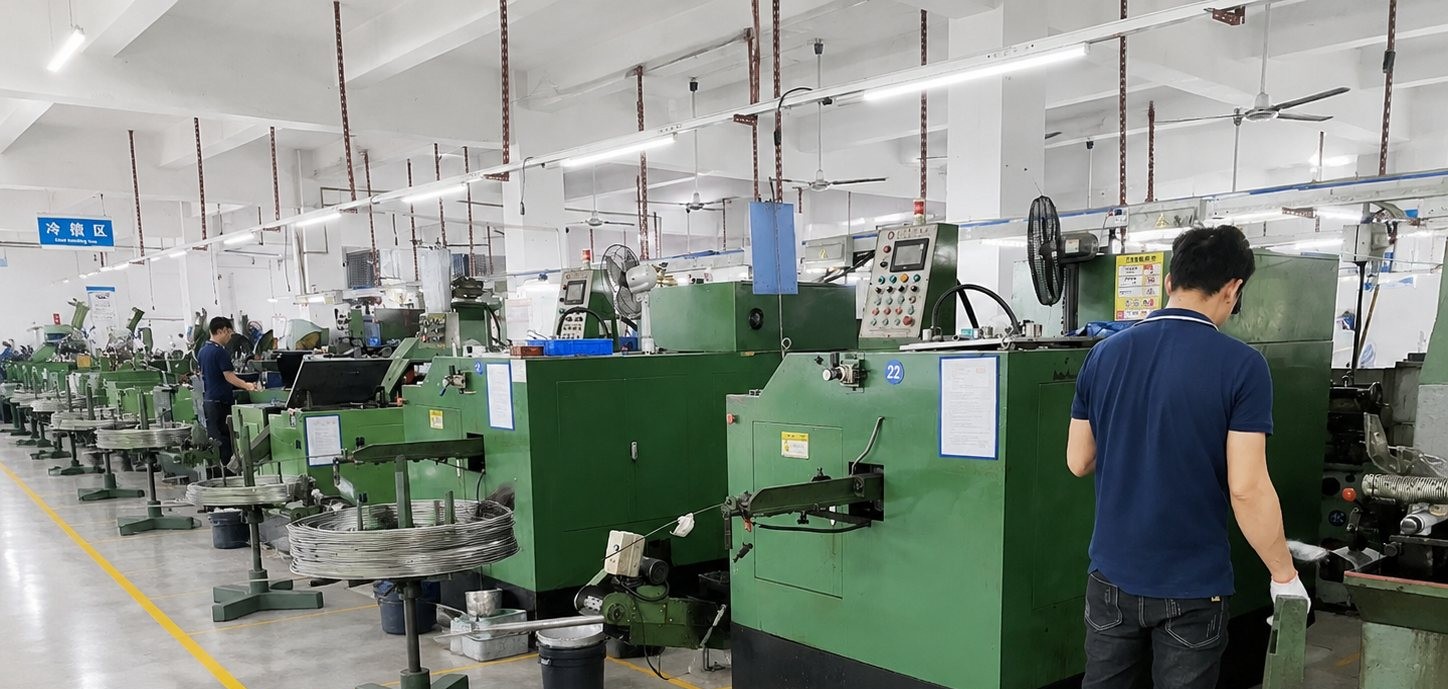
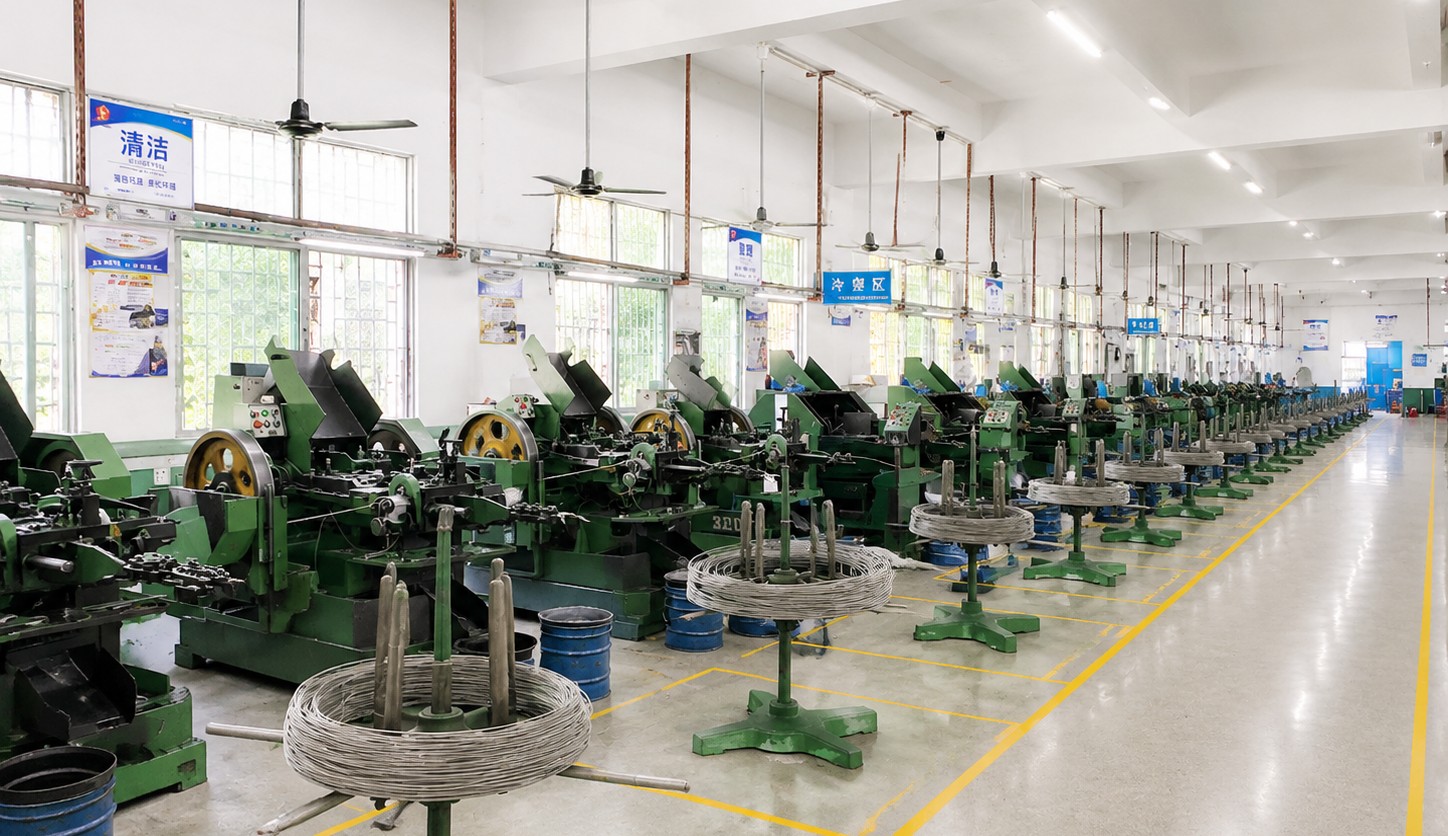
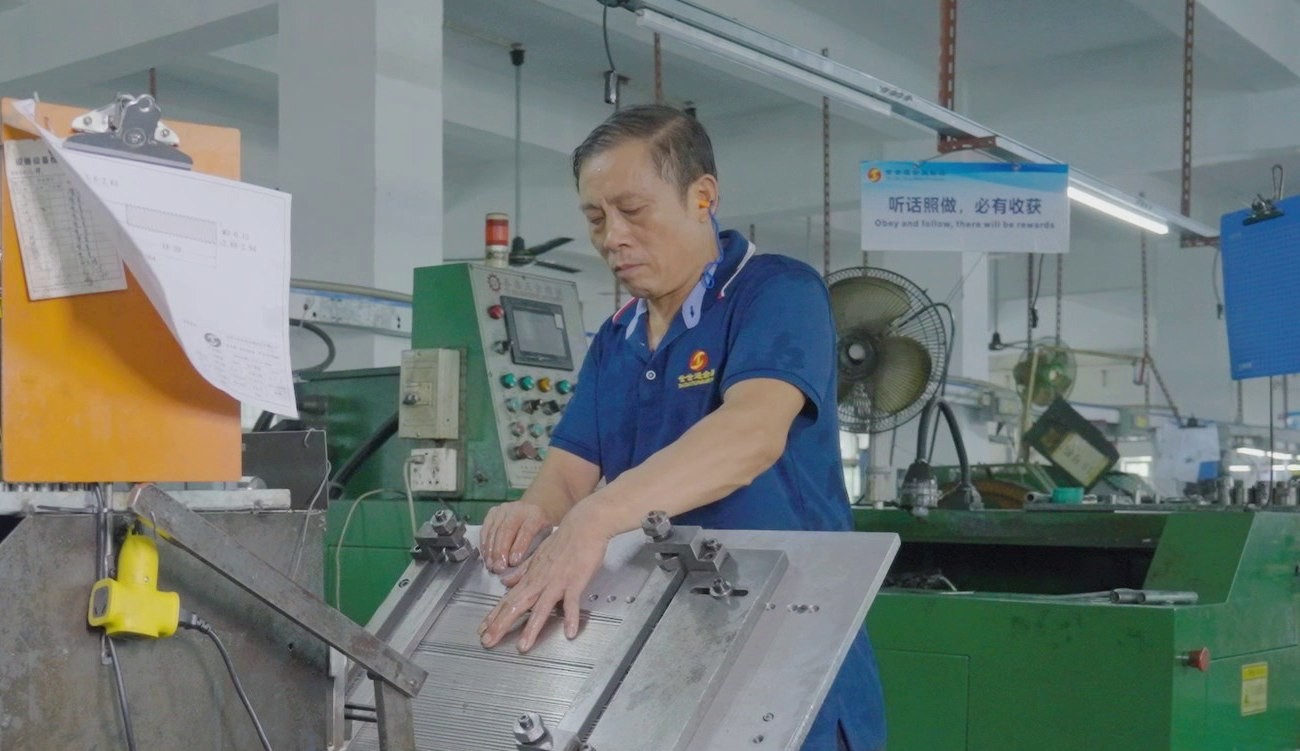
Shi Shi Tong forms these black countersunk screws on a heading machine that upsets the 90° cone and the Phillips recess in one operation, then rolls the machine thread and anodises the parts black. The first part of every run is measured on the head and the recess, anodised, and then checked again with the bit and the thread gauge before the batch continues.
|
|
The anodising is a batch process, so the colour is controlled by the bath and the film thickness rather than adjusted part by part. Between runs the die insert is changed to the drawing cone and recess and the thread rolls to the size; the first part goes to the projector, then through anodising, then back to the bit and the gauges.
What decides whether a black countersunk screw passes is the head diameter and angle, the recess size and depth, the thread class after anodising and the colour of the finish. The inspection agreement covers those, and the criteria come from the drawing and the approved sample.
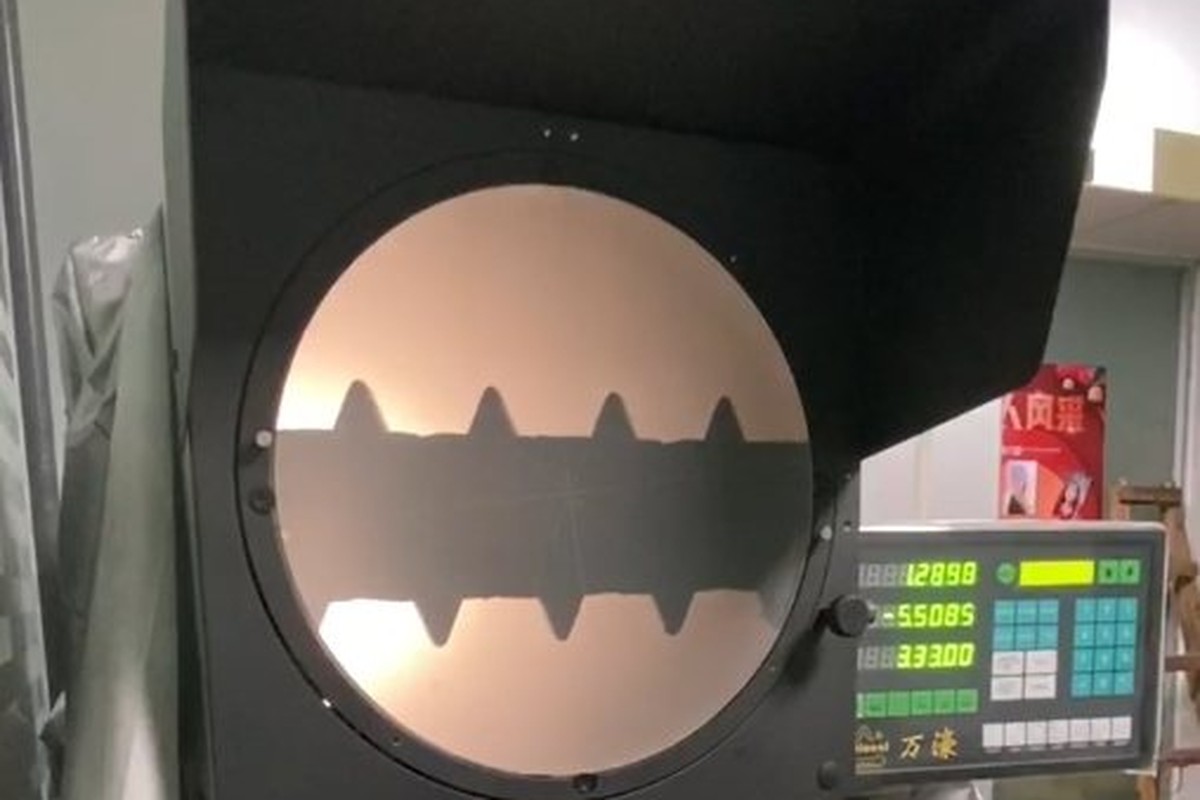
Head angle and recess on the projector |
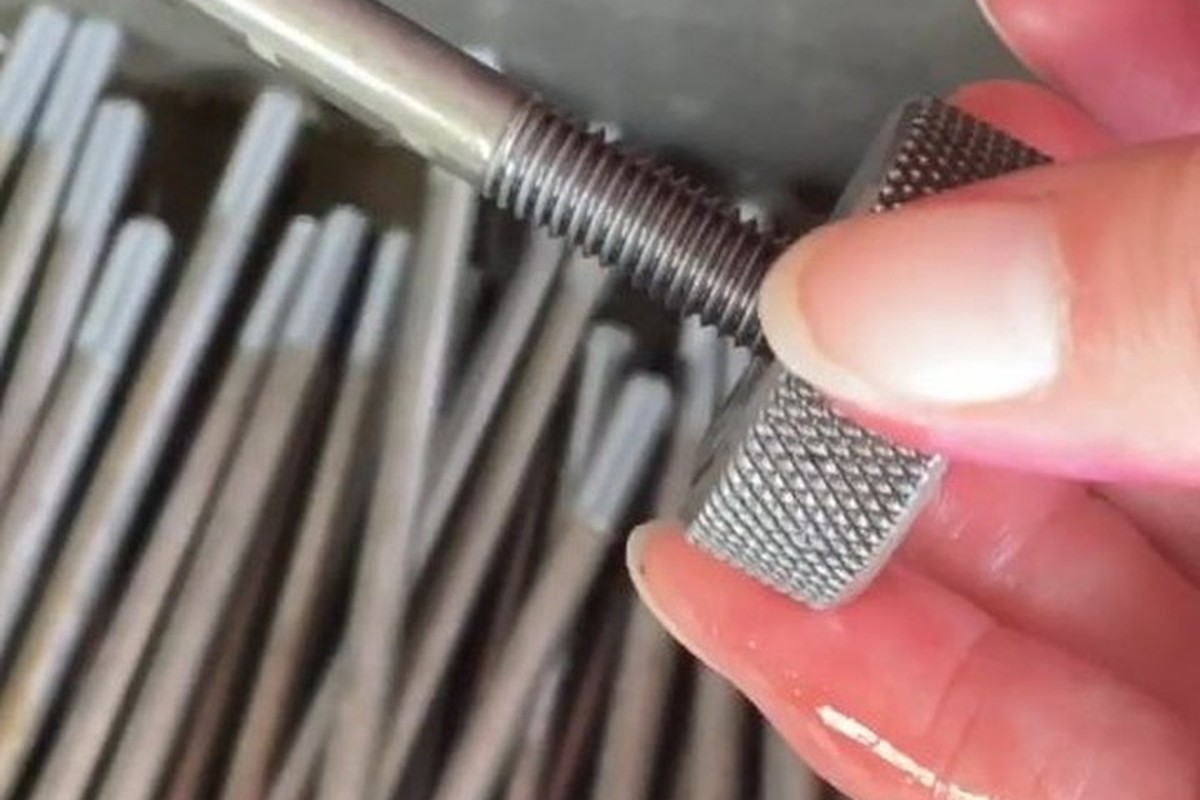
Thread gauged after anodising |
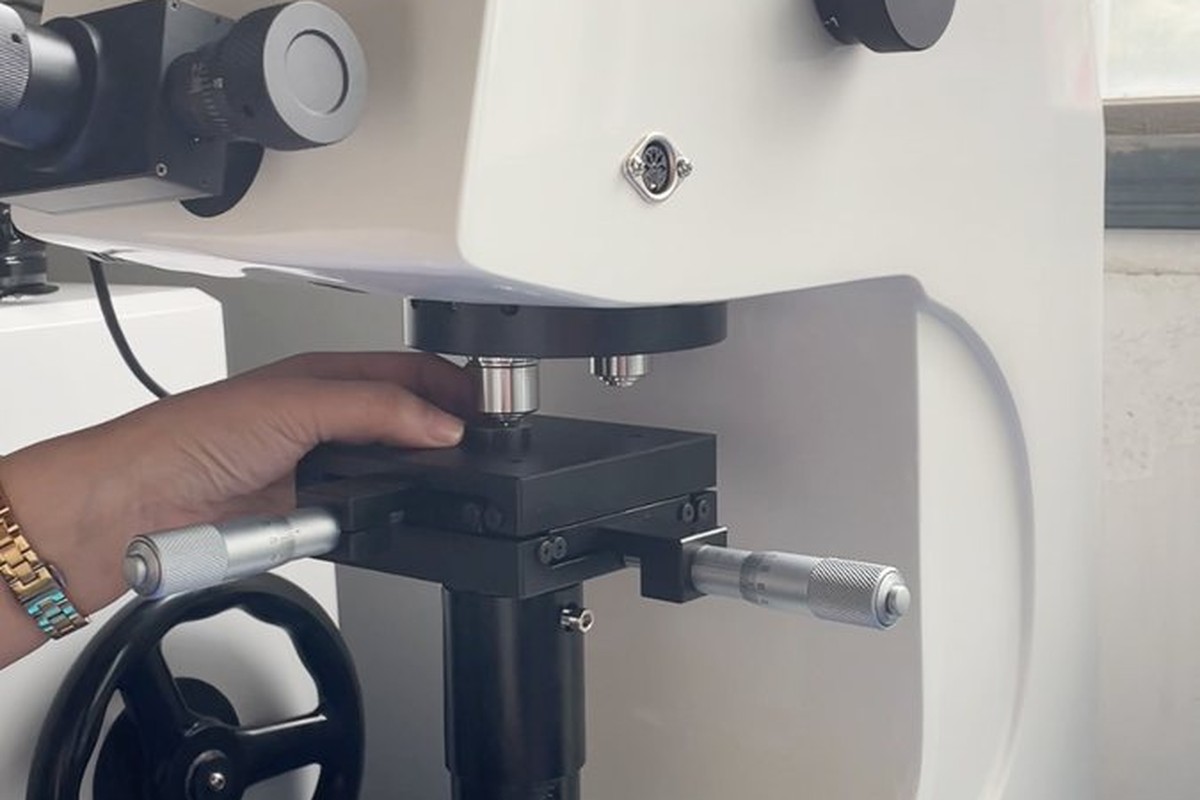
Hardness testing where the drawing requires it |
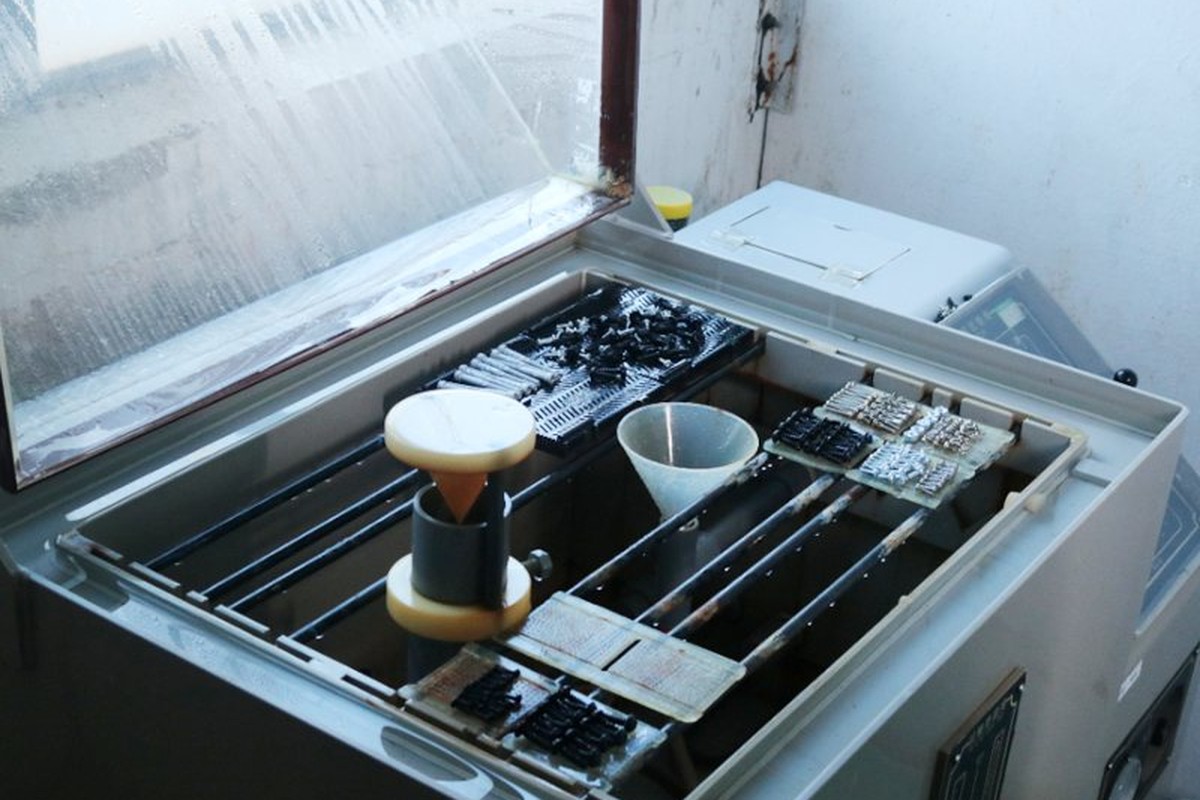
Salt-spray testing of the finished part |
Each batch is recorded against the drawing revision: head and recess from the first article, the thread gauged after anodising, and the anodising batch carried on the label so a colour query can be traced to the bath it came from. If the seat check or the colour match fails, the parts are held and re-checked.
A third-party test report, where the drawing calls for one, travels with the shipment and is filed under the same batch number as the inspection record.
Every shipment of black countersunk screws is traceable to the titanium it was made from. The grade, heat number and standard are recorded on the material certificate supplied with the parts, and the inspection records follow the criteria agreed on the drawing.
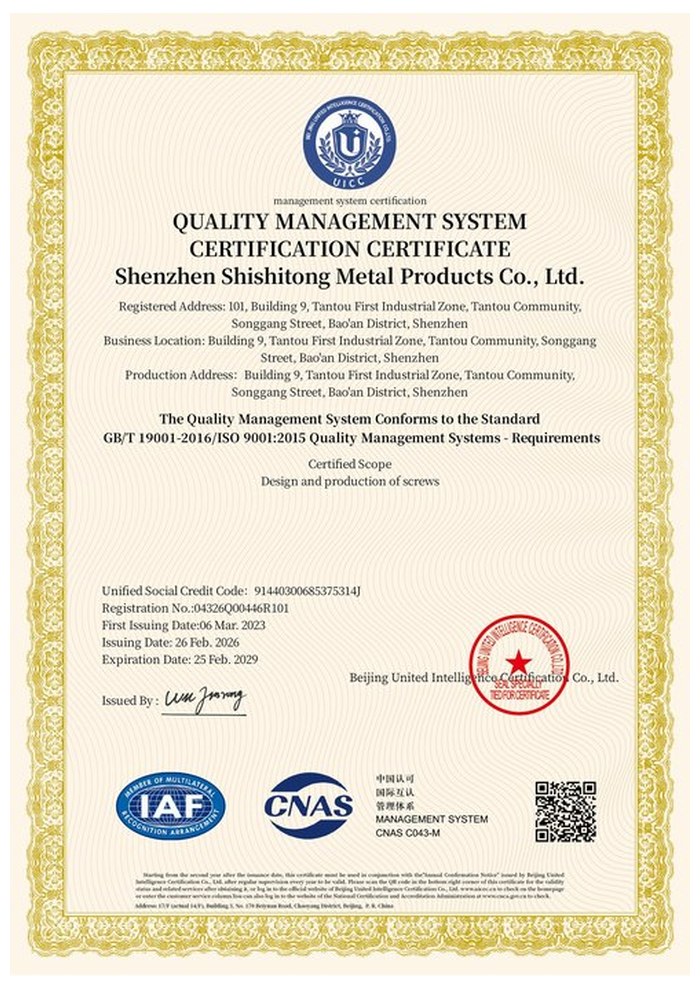
ISO 9001:2015 |
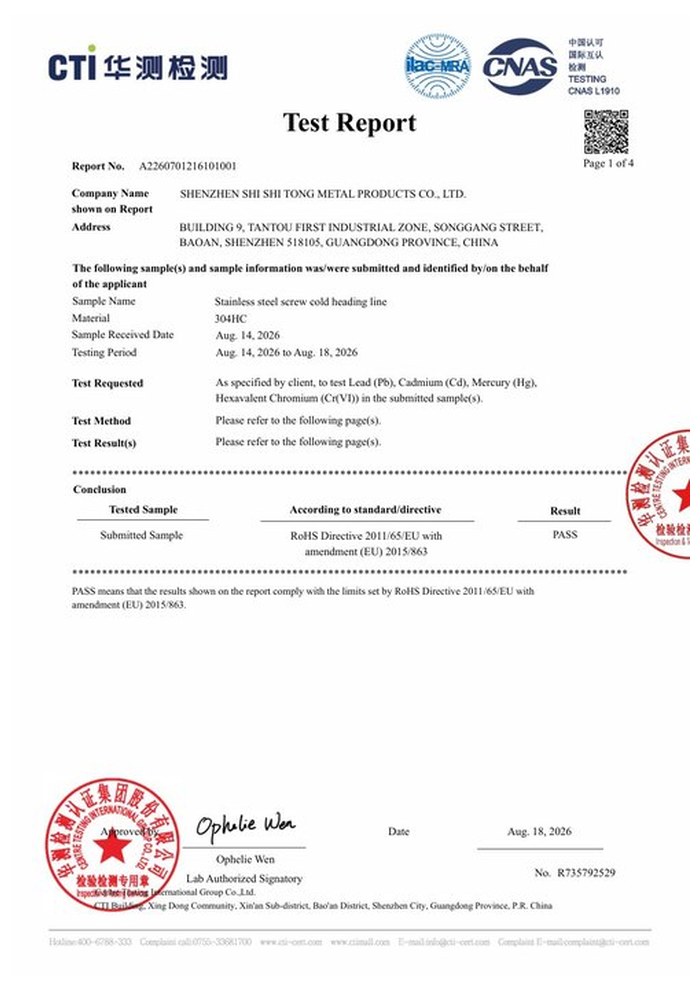
RoHS test report |
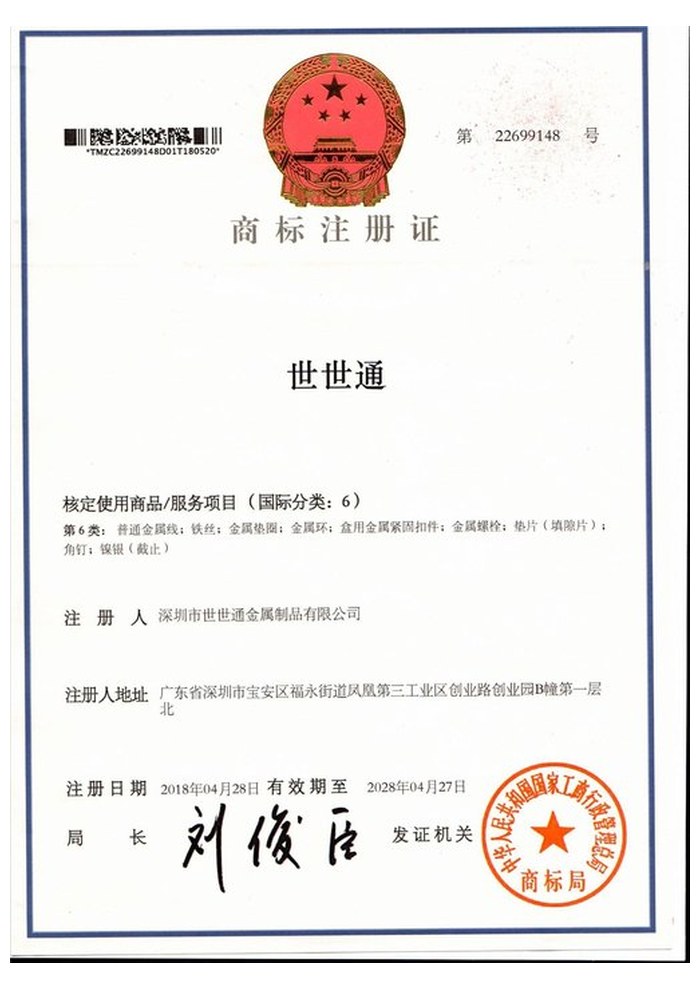
Registered trademark |
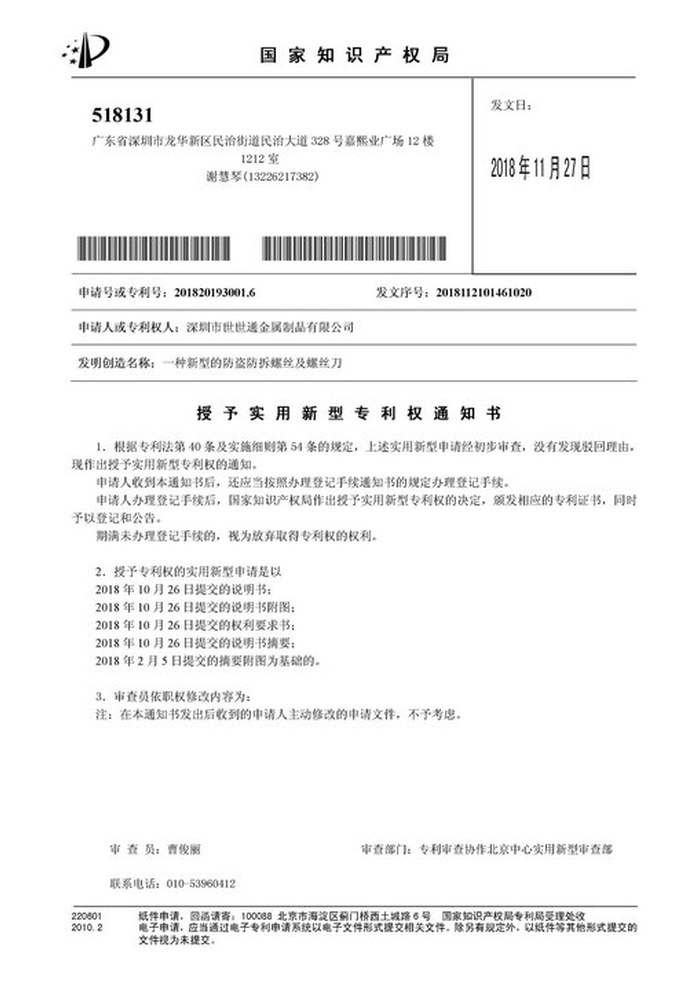
Patent: security screw and driver |
With each batch we supply the material certificate, the inspection record for the criteria on the drawing and, where it is listed, the third-party report for the material or the finish. The documents carry the drawing revision and the batch number, so the paperwork can be matched to the parts.
More than 8,678 customers in 89 countries and regions have ordered from Shi Shi Tong; 87% of orders come from repeat customers and 56% through referrals. Most projects follow the same route: drawing review, first-article approval, then batches checked against that sample. On an anodised part the first article is approved in colour as well as in dimension, under the light the customer will see it in, so the shade is signed off before the batch runs. Buyers visit during the process to review samples and to see how the heads are formed.
|
8,678+
customers served
|
87%
of orders from repeat customers
|
56%
of orders through referrals
|
89
countries and regions shipped to
|
Buyers and quality engineers visit for sample review, process discussion and supplier audits; the visit is arranged around production so the header and the anodising line can be seen on the day the parts run.
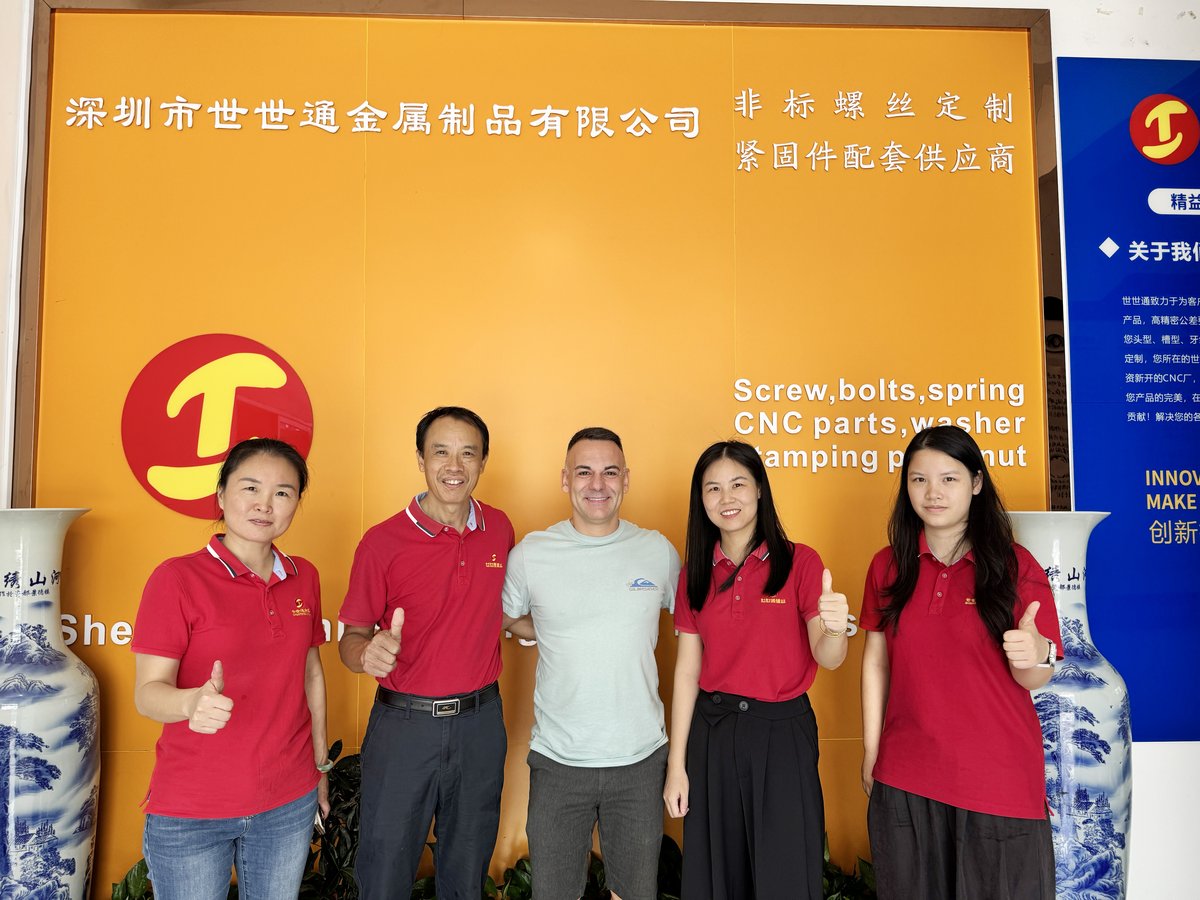
Customer group visit – sample review |

Customer group visit – process discussion |

Customer group visit – factory tour |

Customer visit – project kick-off |

Danish customer – drawing review |
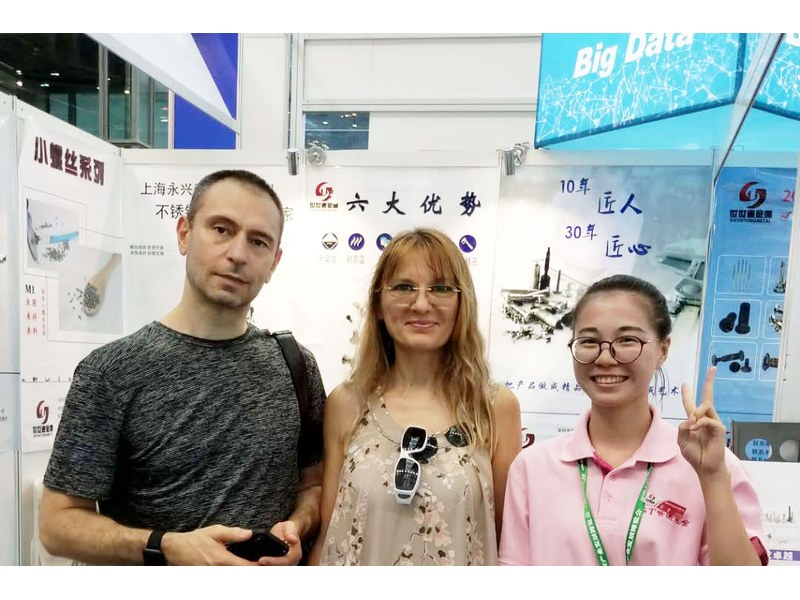
Industry exhibition – meeting customers |
It is a machine screw with a 90° conical head that finishes flush, supplied with a black surface. This one is titanium with a black anodised finish and a Phillips recess, quoted from M1 to M14.
Part of the metal. Anodising grows a thicker oxide on the titanium and dyes that oxide before sealing it, so the colour sits inside the surface and does not chip off at the head edge.
Because it does not add a layer that can flake, it does not fill the recess, and on titanium it comes with a hard surface that suits a part driven by a tool. A painted head on a visible panel shows a chip after the first assembly.
It adds a few microns, so the thread is gauged after anodising. The same applies to the recess: it is formed deep enough that the bit seats on the finished part.
No. The anodised film is electrically insulating, so it interrupts the path. If the joint has to make electrical contact, that has to be stated on the drawing and the finish chosen accordingly.
Head diameter and angle, recess size and depth, thread size and pitch, length and datum, titanium grade, anodising colour and film thickness, and the seat and light conditions the colour is judged in.
How a black countersunk screw project runs from drawing to repeat delivery:
|
1
Send the drawing or sample
|
→ |
2
Seat, colour and thread review
|
→ |
3
First article in colour and dimension
|
→ |
4
Batch production and repeat orders
|
Each step is confirmed with you before the next one starts; the drawing revision from the first article is what repeat orders are checked against.
For a quotation, send the drawing with the head diameter and angle, recess size and depth, thread size and pitch, length and its datum, titanium grade, anodising colour and film thickness, and the seat the head sits in.
|
Head diameter and angle
|
Recess size and depth
|
Thread size and pitch
|
|
Length and datum
|
Titanium grade
|
Anodising colour
|
Sending a drawing? The form below does not take attachments. Email the PDF, DXF or STEP file to sst@szsst88.com with the part name and quantity in the subject line – the drawing is reviewed and a quotation follows.

 +86 13143444311
 sst@szsst88.com