Tel:
+86 13143444311
Email:sst@szsst88.com
Fax:+0086-755-27322278
Address:Building 9, First Industrial Zone, Tantou Industrial City, Songgang Street, Baoan District, Shenzhen 518105, Guangdong, China
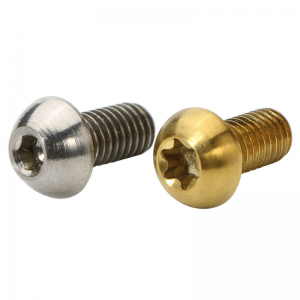
Type:Torx Pan Head Machine Screws
Materials:Steel
Surface treatment:Black Nickel Plated
Head Type:Pan Head
Drive:Torx Recess
Thread:Machine Thread
Point:Blunt
Forming:Single Die Heading
Size:M1 M2 M3 M4 M5 M6 M7 M8 M9 M10 M14
Number:839
We make Torx pan head machine screws in black nickel plated steel, a pan head with a six-lobe recess and a machine thread, quoting them from M1 to M14. Finish colour, recess size, thread and torque come from your drawing and sample, and the first article is compared under your lighting.
Watch the factory video·Email sst@szsst88.com
ISO 9001:2015 · Manufacturing since 1998 · 8,678+ customers · 89 countries and regions
Made to order – there is no stock catalogue. Each part is produced to your drawing, and production starts after drawing review and first-article approval.
Torx pan head machine screws are machine screws with a low domed head, a six-lobe star recess and a machine thread, supplied here in black nickel plated steel. The head spreads the load, the star drive turns the screw without climbing out, and the black nickel is there to make the fixing disappear on a dark panel. This family is quoted from M1 to M14 with Number 839.
Pan head. A low dome with a wide flat bearing face, the general-purpose head for machine screws.
Torx recess. Six lobes with near-parallel flanks, so the bit stays seated and the finish is not damaged by cam-out.
Machine thread. A rolled thread for a tapped hole or a nut, ending in a blunt chamfer.
Black nickel. A dark decorative deposit, usually over a nickel underlayer, with a low, almost matte reflectance.
In use Torx pan head machine screws with this finish are bought for a row of visible fasteners on a dark panel, where a bright head would be the only thing the eye catches.
Black nickel is chosen for how it looks, not for what it resists. It is a thin decorative deposit: dark, low in reflectance, and consistent enough that a row of fixings on a black panel reads as one surface rather than as a row of bright dots. What it does not have is the thickness or the sacrificial behaviour of a zinc coating, so the moment the layer is broken the steel underneath is exposed.
That shapes where the finish wears. The first place is the recess, where the bit presses and turns; the second is the bearing ring, where the head meets the panel; the third is the rim of the head, which catches whatever passes. On a joint that is assembled once, none of that matters. On one that is opened repeatedly, the black wears through at the recess and the screw becomes a bright patch on a dark panel, which is exactly what it was bought to avoid.
Torx is the drive that protects the finish best. A star recess holds the bit on the walls, so the lobes are not scraped by a driver sliding across them; a cross recess that cams out takes a scratch of black nickel with it every time. On this part the drive is not only a torque choice, it is a cosmetic one.
The pan head suits the finish in a different way. Its dome has no sharp edge to wear bright, and its wide face spreads the clamp load so the bearing ring is not loaded to the point of cutting the coating. A countersunk head on the same screw would put the wear line exactly where the cone meets the panel, which on a black finish shows immediately.
The material underneath is ordinary carbon steel, and that is the honest way to read the part: a steel machine screw with a dark decorative coat. Where the joint is wet, or where the panel will be washed, the same geometry in stainless is the correct choice, and a black passivated or a dark flake coating replaces the black nickel without the same risk of a bright worn patch.
The recorded range is M1 to M14, covering M1, M2, M3, M4, M5, M6, M7, M8, M9, M10 and M14. Custom lengths up to 2,000 mm are subject to DFM review after drawing submission. For Torx pan head machine screws the quotation carries head diameter and height, recess size and depth, the thread, and the finish specification with its thickness, because the finish is the reason for the part.
| Item | How it is defined | What we control |
|---|---|---|
| Head | Pan head, flat face | Head diameter and height |
| Recess | Torx, six-lobe star | Recess size and depth |
| Thread | Machine thread | Pitch and length, gauged per batch |
| End | Blunt, chamfered | Chamfer cut, not deburred |
| Finish | Black nickel over nickel | Deposit thickness, colour and adhesion |
| Length | Under the head | Measured on the shop plate |
Finish colour is worth matching to a sample rather than a name. Two suppliers’ black nickel can differ by a shade, and on a visible panel a batch that is slightly lighter or browner than the one before is a complaint rather than a measurement. A signed sample is the practical way to hold a decorative finish.
Recess size follows the thread, and on this part it is worth confirming because the recess is where the finish wears first. A recess that is a little tight means the bit has to be forced the first time, and forcing it is what breaks the layer.
Three features define this part: the black nickel, the star recess and the pan head. The first is the reason for choosing it, the second is what keeps the first intact, and the third is a seat that does not cut through it.
| Feature | What it gives | What it costs |
|---|---|---|
| Black nickel | Reads as dark hardware | Decorative only; bright where worn |
| Low reflectance | No glare on a dark panel | Shows fingerprints |
| Torx recess | Drive without scraping the lobes | Exact bit required |
| Pan head | Rounded edge, wide seat | Stands above the surface |
| Machine thread | Repeatable clamp in a tapped hole | Needs a nut or a tapped hole |
The value is entirely visual, and that is a legitimate specification. On audio equipment, instrument faces and dark enclosures, a row of bright zinc screws is the wrong detail and a dark one is the right detail. The buyer is paying for consistency of appearance, and the supplier’s job is to hold that consistency from batch to batch.
The cost is that the finish has no depth to lose. A zinc coating protects sacrificially and stays present even when scratched; black nickel is a surface film, and once it is broken there is nothing behind it. That is acceptable on a decorative part and unacceptable on one that has to survive weather, which is the line to draw when specifying it.
The recorded finish is black nickel over steel, applied as a decorative deposit. It gives a dark, low-reflectance surface that suits dark panels, and it is thin enough not to change the head dimensions measurably. What it does not do is protect the steel the way zinc does, so the finish should be specified as cosmetic and the environment decided separately.
| Option | How it protects | Effect on head and recess | Typical use |
|---|---|---|---|
| Black nickel | Decorative dark deposit | Thin; shows bright wear | Dark panels, indoor |
| Black zinc | Sacrificial zinc, dark | Thin; protects beside a scratch | Dark equipment, damp |
| Black oxide | Conversion film, oiled | No measurable build | Internal mechanisms |
| Nickel plated | Barrier deposit, bright | Decorative and bright | Visible silver hardware |
| Stainless, plain | Passive chromium oxide film | As machined | Damp and outdoor |
The choice between black nickel and black zinc is the interesting one. Both are dark; black zinc protects sacrificially and shows a chalky wear pattern, black nickel looks deeper and shows a bright scratch. Where the joint is a display surface, black nickel wins on appearance; where it is a working surface that may get damp, black zinc is the better engineering.
Where the joint is outdoors, neither is enough and the stainless version is the right part. The head, the drive and the thread do not change; only the way the part fails once the surface is compromised does.
Three assemblies where Torx pan head machine screws are the fixing:
| Where it sits | The screw fixes a plate or a panel where the head is visible and a bright fixing would break the dark finish of the product. |
| When it goes wrong | Black nickel wears bright at the recess, and a cam-out leaves a scratch on the face. |
| Why it happens | The fixing is visible, the panel is dark, and the joint is serviced occasionally. |
| What we control | Colour compared with the signed sample, recess driven with the production bit. |
| Where it sits | The screw closes a panel where the fasteners are part of the design and the row has to look consistent. |
| When it goes wrong | A lighter or browner batch shows against the rest, and a worn rim reads as damage. |
| Why it happens | The fasteners are in a row, the panel is dark, and the part is indoors. |
| What we control | Plating thickness and colour checked, sample kept for comparison. |
| Where it sits | The screw fixes a component where stray reflections matter and the fixing must not glare into the assembly. |
| When it goes wrong | A bright head catches light, and a worn spot becomes the brightest thing in the assembly. |
| Why it happens | The joint is light-tight, the panel is dark, and the fixing is hidden from the user. |
| What we control | Low-reflectance finish confirmed on the sample, recess and head checked. |
Four reasons that matter on a decorative dark fastener, each tied to what the drawing has to prove:
|
Colour matched to a sample
The finish colour and thickness are matched to a signed sample, because black nickel varies between suppliers and a shade difference is the defect that shows on a panel. Basis: Colour and thickness sample signed. |
Head, recess and finish in one route
The pan head and the star recess are formed in the heading stroke, the thread is rolled and the black nickel is applied as the last step. Basis: One route with the decorative finish last. |
|
Recess driven on the finished part
The first article is driven with the production bit on the plated screw, because the finish narrows the recess and a forced bit is what breaks the layer. Basis: First article driven after plating. |
First article fixes the setting
The first article fixes the wire, the recess punch and the plating bath; repeat orders are compared against that record. Basis: First article signed off before the batch is released. |
Shi Shi Tong forms these Torx pan head machine screws from carbon steel wire on single-die headers that form the pan head and cut the six-lobe recess in one stroke, rolls the machine thread to a blunt chamfered end and applies the black nickel finish over a nickel underlayer. The first part of every run is measured on the head and recess, driven with the production bit and compared with the colour sample before the batch continues.


|

|
A decorative finish is judged against a sample, and that is the part of the process that needs the most discipline. Bath chemistry, current density and time all move the shade, and a batch that is a fraction darker than the last is invisible in a tray and obvious in a row on a panel. The colour comparison is made under the lighting the customer uses, not under the inspection lamp.
What decides whether Torx pan head machine screws pass is the finish, the recess, the head and the thread. The inspection agreement covers those, and the criteria come from the drawing and the signed sample.

Head and recess on the projector |

Thread gauged per batch |

Hardness checked on the wire |

Humidity testing of the finish |
The finish is checked for colour against the sample, for thickness and for adhesion, with attention to the recess and the bearing ring — the two places it wears first. The recess is measured and driven with the production bit, and the head is checked for diameter, height and face flatness.
The thread is gauged per batch. Where the part is used in a damp environment, a humidity or salt-spray sample shows quickly that a decorative deposit is not a protective one, and that result is worth having on record before the customer discovers it.
Every shipment of Torx pan head machine screws is traceable to the wire it was made from and to the plating batch. The grade and heat number are recorded on the material certificate supplied with the parts, and the plating record, including the colour sample reference, is kept with the inspection file.

ISO 9001:2015 |

RoHS test report |

Registered trademark |

Patent: security screw and driver |
With each batch we supply the material certificate, the inspection record for the criteria on the drawing and, where it is listed, the third-party report for the plating. Because the finish is judged by eye, the colour sample reference is part of the record, so a repeat order can be compared with the batch that was approved.
More than 8,678 customers in 89 countries and regions have ordered from Shi Shi Tong; 87% of orders come from repeat customers and 56% through referrals. Most projects follow the same route: drawing review, first-article approval, then batches checked against that sample. On a decorative finish the first article is compared under the customer’s lighting, because a shade that looks right in the gauge room can look wrong on the panel. Buyers visit during the process to review samples and to see how the parts are finished.
|
8,678+
customers served
|
87%
of orders from repeat customers
|
56%
of orders through referrals
|
89
countries and regions shipped to
|
Buyers and quality engineers visit for sample review, process discussion and supplier audits; the visit is arranged around production so the headers and the plating line can be seen on the day the parts run.

Customer group visit – sample review |

Customer group visit – process discussion |

Customer group visit – factory tour |

Customer visit – project kick-off |

Danish customer – drawing review |

Industry exhibition – meeting customers |
A dark decorative electroplated deposit, usually over a nickel underlayer. It looks deep and low-reflectance but protects the steel very little.
Yes, at the recess and on the bearing ring. It wears bright, which on a dark panel is exactly the effect the finish was chosen to avoid.
Because a star drive does not cam out and scrape the lobes. A cross recess would take a scratch of the finish with it every time a bit slipped.
No. It is a decorative finish on steel. For damp or outdoor joints use the stainless version of the same screw.
Nickel looks deeper; zinc protects sacrificially. For a display surface nickel wins on appearance, for a working joint zinc is the safer finish.
Thread size and length, head diameter and height, Torx recess size, and the finish with its thickness and a colour sample.
How a Torx pan head machine screw project runs from drawing to repeat delivery:
|
1
Send the drawing and the colour reference
|
→ |
2
Finish, recess and thread agreed
|
→ |
3
First article compared under your lighting
|
→ |
4
Batch production and repeat orders
|
Each step is confirmed with you before the next one starts; the sample and drawing revision from the first article are what repeat orders are checked against.
For a quotation, send the drawing with the thread size and length, the head diameter and height, the Torx recess size and the finish specification, plus a colour reference if the part is visible.
|
Thread size
|
Length
|
Head diameter
|
|
Torx size
|
Finish
|
Colour reference
|
Sending a drawing? The form below does not take attachments. Email the PDF, DXF or STEP file to sst@szsst88.com with the part name and quantity in the subject line – the drawing is reviewed and a quotation follows.

 +86 13143444311
 sst@szsst88.com