Tel:
+86 13143444311
Email:sst@szsst88.com
Fax:+0086-755-27322278
Address:Building 9, First Industrial Zone, Tantou Industrial City, Songgang Street, Baoan District, Shenzhen 518105, Guangdong, China
Type:Male And Female Screws
Materials:Stainless Steel
Surface treatment:Plain
Head Type:Low Profile Head
Drive:Phillips Cross
Thread:Machine Thread
Point:Blunt
Forming:Single Die Heading + Internal Thread
Size:M1 M2 M3 M4 M5 M6 M7 M8 M9 M10 M14
Number:192
We make male and female screws in passivated stainless as matched pairs, a headed screw threading into a headed barrel, with low profile heads and a Phillips drive, quoted from M1 to M14. Grip, barrel depth and head dimensions come from your drawing, and the first article is assembled on your own stack.
Watch the factory video·Email sst@szsst88.com
ISO 9001:2015 · Manufacturing since 1998 · 8,678+ customers · 89 countries and regions
Made to order – there is no stock catalogue. Each part is produced to your drawing, and production starts after drawing review and first-article approval.
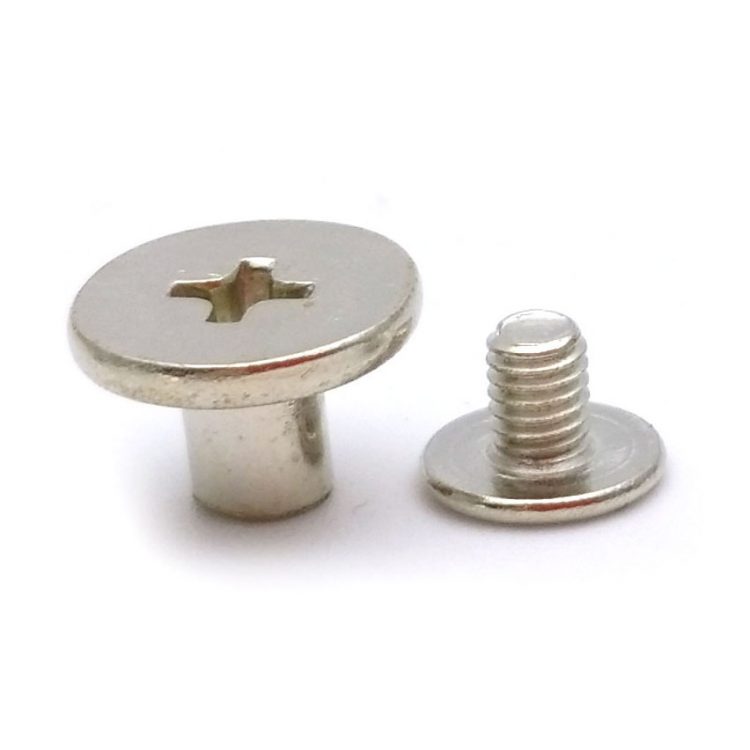
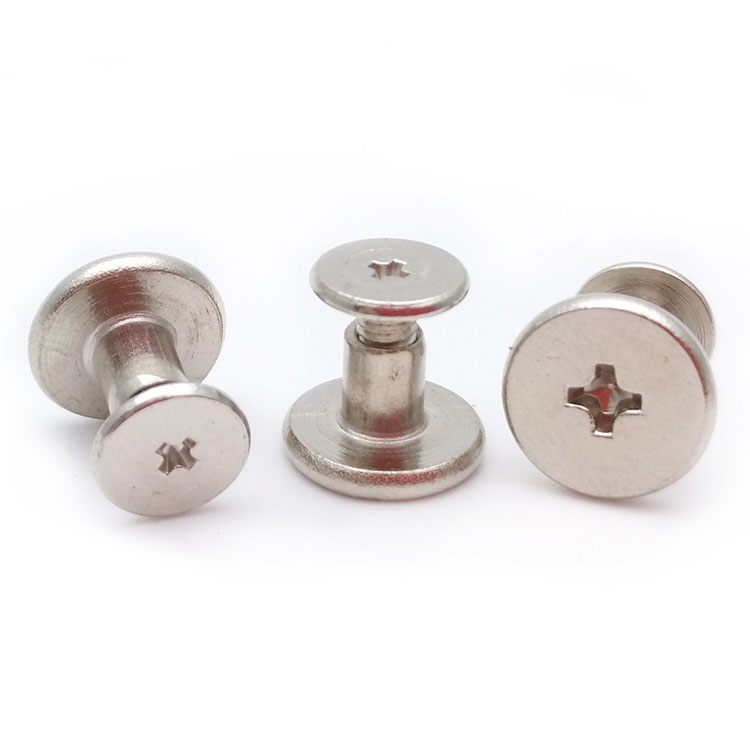
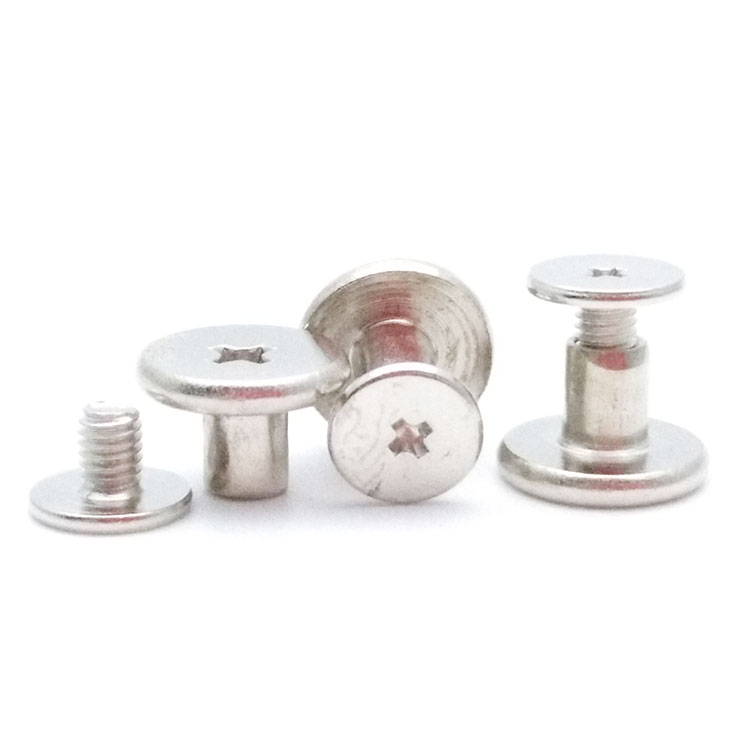
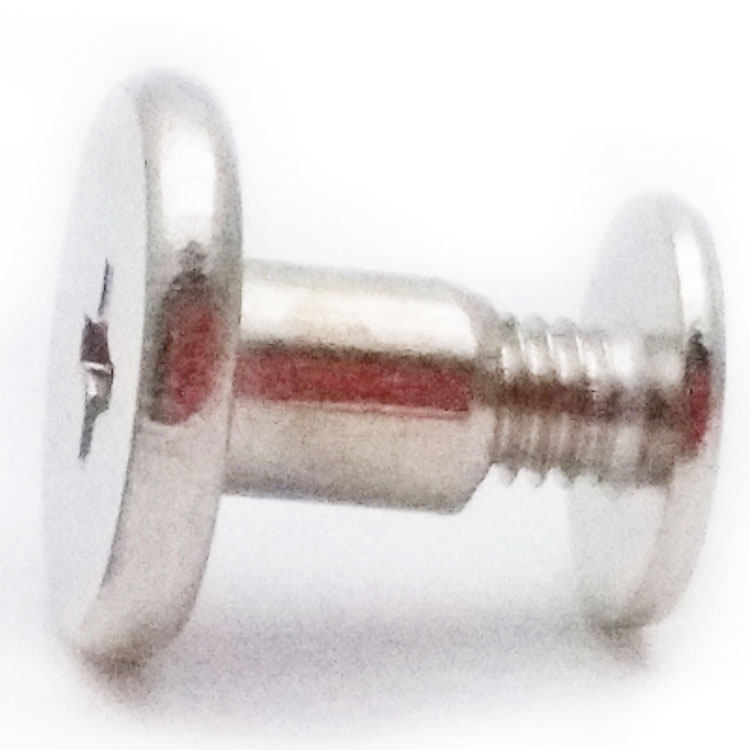
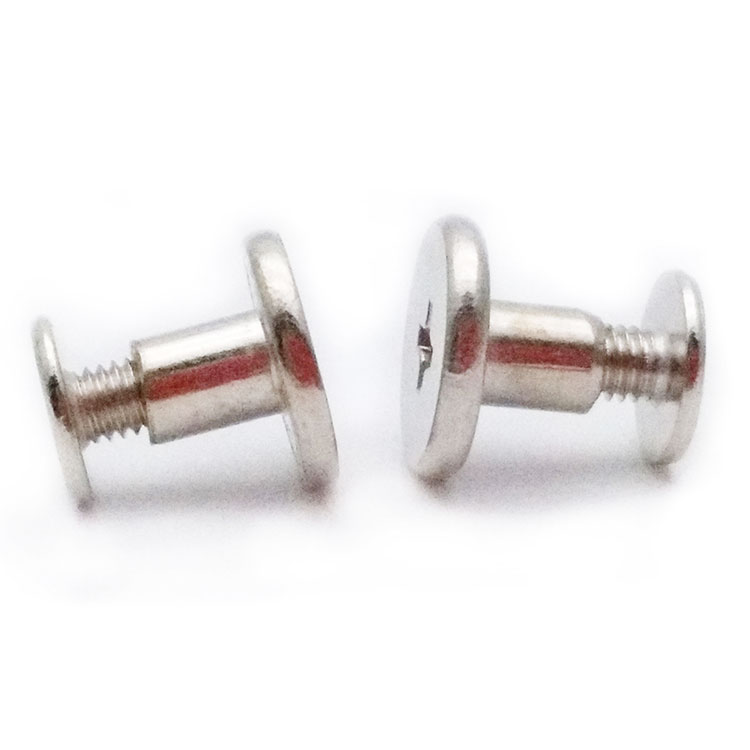
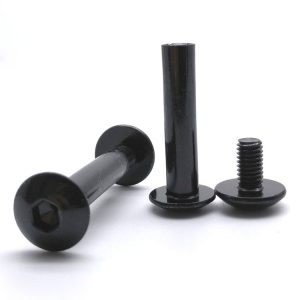
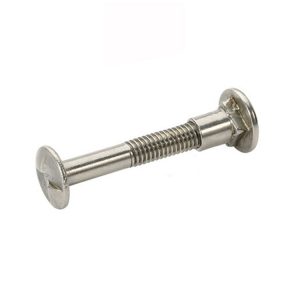
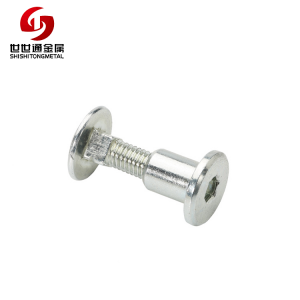
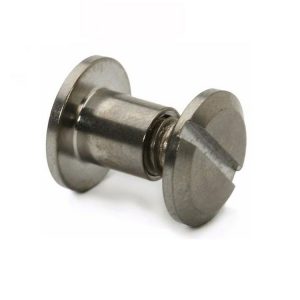
Male and female screws are a two-part fastener: a screw with a head and an external thread, and a barrel with a head and an internal thread, also called a Chicago screw or a binding post. The screw goes through the work, threads into the barrel and the pair clamps the material between the two heads. This family is made in stainless with a plain finish, a low profile head and a Phillips drive, quoted from M1 to M14 with Number 192.
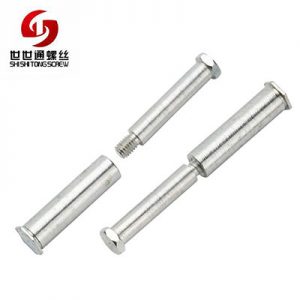
Male half. A headed screw with an external machine thread and a blunt end that stops inside the barrel.
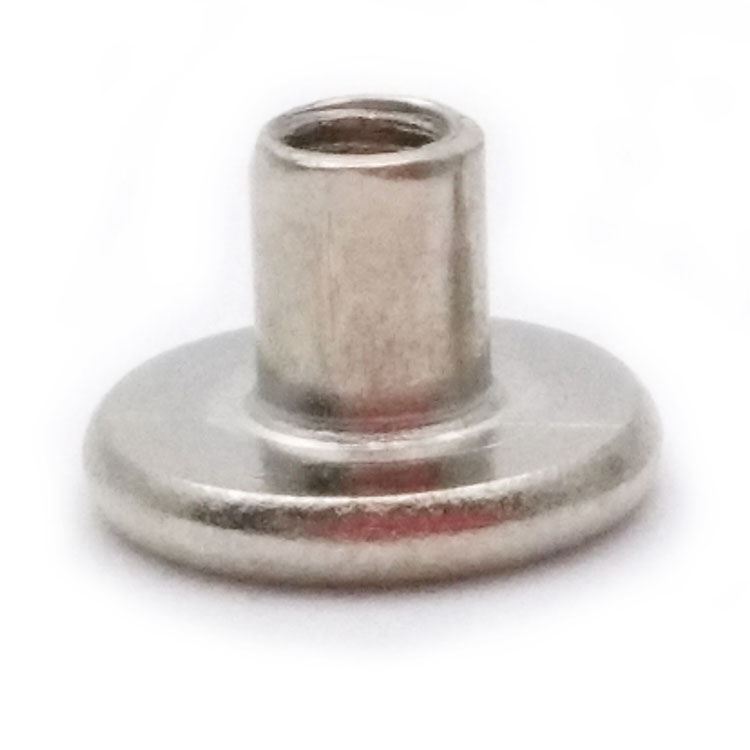
Female half. A headed barrel with a blind internal thread. It acts as the nut, and its head closes the other side of the joint.
Low profile heads. Both halves finish close to the surface, so the fastener reads as a stud rather than as hardware.
Phillips drive. A cross recess in the male head; the female half is usually held by hand or by its own slot during assembly.
A male and female screw pair does the work of a screw and a nut without a nut visible on either side. That is what makes it useful: in a folder, a sample book, a leather strap or a two-sided panel, there is no access to a nut, and there is no room for a projecting bolt and cap. Both halves carry a head, both heads sit flat against the work, and the thread does its work inside the joint.
The consequence is that the pair has to be chosen against a thickness. The male thread engages only as far as the barrel’s blind thread allows, so the joint is specified by thread size and by the grip — the total thickness of material the pair is designed to clamp. A pair bought for a 5 mm stack used on a 7 mm stack has two millimetres less engagement; one used on a 3 mm stack bottoms out before the heads touch.
The second consequence is that the engagement is fixed. A screw and nut tighten as far as the material compresses; a binding post stops when the male end reaches the bottom of the female thread. That is a firm, repeatable stop, which suits a folder that is opened and closed, and it is why the pair is used on things that pivot or hinge rather than on things that must be clamped hard.
The heads are the practical limit on the look of the part. A low profile head on both sides keeps the fastener out of the way and stops a page or a sheet catching on it, but a low head carries a shallow recess, so the drive has less to bite on. On a stainless pair that means the recess is worth protecting at assembly, because there is no coating to hide a cam-out.
For a joint that is opened to change contents — pages, samples, tags — the pair is also a service feature. It can be unscrewed and re-used, and the barrel stays in the material while the screw is removed, so the pages are changed without the hardware falling apart on the bench. That is a small thing until it is done fifty times in a day.
The recorded range is M1 to M14, covering M1, M2, M3, M4, M5, M6, M7, M8, M9, M10 and M14. Custom lengths up to 2,000 mm are subject to DFM review after drawing submission. For male and female screws the quotation has to state thread size, grip length, barrel length, head diameter and head height, because the grip is what the pair is bought for.
| Item | How it is defined | What we control |
|---|---|---|
| Male half | Headed screw, external thread | Head diameter, height, thread length |
| Female half | Headed barrel, blind internal thread | Barrel length, bore depth, head height |
| Grip | Thickness the pair clamps | Mate the two halves to the specified stack |
| Heads | Low profile, both sides | Head diameter and height, face flatness |
| Recess | Phillips cross in the male head | Recess size and depth |
| Finish | Plain stainless, passivated | Surface condition and film |
Grip is the dimension that is usually missing from a customer’s first request, and it is the one that decides whether the part works. It is the sum of the material thickness, any washer or insert, and the small clearance the heads need to sit flat; a pair quoted for a nominal thickness without that stack tends to arrive either loose or short.
Barrel length is separate from grip on a binding post, because the barrel may be longer than the material it passes through — the extra length holds the pages or the tag between the two heads. Where the barrel projects, the pair is doing a locating job as well as a clamping one, and the barrel diameter matters to the fit.
Three features define this part: the two heads, the blind thread in the barrel and the stainless body. The first closes both sides, the second sets the grip, and the third is why the pair can go on a sample book that is handled every day.
| Feature | What it gives | What it costs |
|---|---|---|
| Two heads | No nut, no projection | Requires a thickness-matched pair |
| Blind barrel thread | Fixed, repeatable stop | Grip range is limited |
| Low profile heads | Nothing to catch | Shallow recess for the drive |
| Re-usable pair | Contents can be changed | Thread takes wear each cycle |
| Plain stainless | No rust, no plating to wear | Galls against stainless |
The fixed stop is the feature that decides what the pair is good for. It will not creep, because there is nothing to compress further, and it will not crush a soft material the way a screw and nut can. On the other hand it will not clamp a joint tighter as the material settles, so a soft filler that compresses over time leaves the pair loose.
The re-usability is worth stating plainly. A stainless pair can be opened and closed many times, and the thread on both halves wears slowly; a plated or aluminium pair wears faster and starts to feel loose after a few dozen cycles. In a product that is refilled, that difference is the difference between a fastener and a consumable.
The recorded finish is plain, passivated stainless. On a pair that is handled and re-opened, that is the right choice: the thread is the working surface, it is as cut, and it does not wear through a plate into a galvanic couple. The alloy carries the protection and the look together.
| Option | How it protects | Effect on thread and head | Typical use |
|---|---|---|---|
| Stainless A2, passivated | Passive chromium oxide film | Thread and recess as cut | Folders, sample books, panels |
| Stainless A4, passivated | Passive film with molybdenum | Thread and recess as cut | Marine and chemical |
| Steel, nickel plated | Barrier deposit | Plate wears at the thread | Decorative low-cost work |
| Brass, plain | Alloy resists corrosion | Turns smoothly, wears faster | Leather and bookbinding |
| Aluminium, anodised | Thick oxide layer | Thread picks up and galls easily | Lightweight panel joins |
Galling is the one behaviour to design around. A stainless male thread into a stainless female barrel can seize on the first assembly, and a binding post that seizes is worse than a screw that seizes, because the barrel spins in the material and there is nothing to hold. A dry-film lubricant or a different alloy for the two halves removes the problem.
Where the pair is used on leather or on a display sample, the visible finish matters as much as the thread. Plain stainless reads as dull metal; polished stainless reads as hardware; brass tones with handling. All three behave the same in the joint, so the choice is about the object rather than about corrosion.
Three assemblies where male and female screws are the fixing:
| Where it sits | The pair holds the pages or the swatch cards between two heads, where the contents are changed and no nut can be accessed. |
| When it goes wrong | A pair bought to the wrong grip is either loose or cannot close, and a seized pair cannot be opened at all. |
| Why it happens | The stack thickness is fixed, the contents change, and both faces are visible. |
| What we control | Grip and barrel depth matched to the stack, thread and recess checked. |
| Where it sits | The pair fixes a strap, a closure or a decorative panel where the material cannot take a nut and both faces are finished. |
| When it goes wrong | A barrel that is too short leaves the strap loose, and a soft material creeps away from the heads. |
| Why it happens | The material is soft, the joint is flexed, and the heads show. |
| What we control | Grip verified on the material, heads checked for face flatness. |
| Where it sits | The pair joins two panels where both faces are visible and the fixing has to read as a small stud rather than as a bolt. |
| When it goes wrong | A pair that does not sit flush leaves a shadow line, and a shallow recess strips at assembly. |
| Why it happens | Both faces are visible, the panels are thin, and the joint is assembled by hand. |
| What we control | Head diameter and height checked, first article fitted to the panels. |
Four reasons that matter on a two-part fastener, each tied to what the drawing has to prove:
|
Grip and stack confirmed first
The grip, the barrel depth and the material stack are confirmed before quoting, because a male and female screw pair is bought against a thickness and not against a length. Basis: Grip and stack agreed in writing. |
Both halves made as one set
The male screw and the female barrel are made and plated as one set, so the pair that is packed is the pair that was tested together. Basis: Halves matched and packed together. |
|
Screwed together, not just measured
Each first article is assembled to the specified grip and checked for the stop, the head gap and the effort to turn, because the joint is the two halves working together. Basis: First article assembled on the stack. |
First article fixes the setting
The first article fixes the wire, the thread and the passivation for both halves; repeat orders are compared against that record. Basis: First article signed off before the batch is released. |
Shi Shi Tong makes these male and female screws from stainless wire on single-die headers, forming the low profile head and the Phillips recess on the male half and the head of the barrel on the female half, rolling the external thread and cutting the internal thread and bore to the specified depth, then passivating both parts as a set. The first article of every run is assembled to the specified grip before the batch continues.


|

|
The bore depth in the female half is the tooling that decides the grip, and it is the part most easily got wrong. A bore that is a little shallow turns a pair meant to close on a thick stack into one that stops early; a bore that is too deep leaves the male end free in the barrel and the joint with movement. It is checked at the first part and then at intervals, because a worn tap changes it quietly.
What decides whether male and female screws pass is the grip, the thread, the heads and the recess. The inspection agreement covers those, and the criteria come from the drawing.

Heads and barrel on the projector |

Threads gauged per batch |

Hardness checked on the wire |

Salt-spray testing of the grade |
The pair is checked assembled. That is the only check that proves the grip: the two halves are turned together on the specified stack and the result is judged for the stop, for the gap between the heads and for the effort needed to turn — a pair that closes but takes a wrench has a thread problem that no single-part measurement would show.
The male thread and the female thread are gauged separately per batch, the heads are measured for diameter, height and face flatness, and the recess is driven with the production bit. The alloy is confirmed on the certificate, and the salt-spray sample is run where the customer’s environment asks for it.
Every shipment of male and female screws is traceable to the stainless wire it was made from and to the passivation batch. The grade and heat number are recorded on the material certificate supplied with the parts, and the inspection records follow the criteria agreed on the drawing.

ISO 9001:2015 |

RoHS test report |

Registered trademark |

Patent: security screw and driver |
With each batch we supply the material certificate, the inspection record for the criteria on the drawing and, where it is listed, the third-party report for the grade or the passivation. The documents carry the drawing revision and the batch number, and the male and female halves are packed as matched sets so the record covers the pair.
More than 8,678 customers in 89 countries and regions have ordered from Shi Shi Tong; 87% of orders come from repeat customers and 56% through referrals. Most projects follow the same route: drawing review, first-article approval, then batches checked against that sample. On a two-part fastener the first article is assembled on the customer’s own stack, because the grip is the function. Buyers visit during the process to review samples and to see how the parts are formed and threaded.
|
8,678+
customers served
|
87%
of orders from repeat customers
|
56%
of orders through referrals
|
89
countries and regions shipped to
|
Buyers and quality engineers visit for sample review, process discussion and supplier audits; the visit is arranged around production so the headers and the threading cells can be seen on the day the parts run.

Customer group visit – sample review |

Customer group visit – process discussion |

Customer group visit – factory tour |

Customer visit – project kick-off |

Danish customer – drawing review |

Industry exhibition – meeting customers |
A Chicago screw or binding post: a headed screw that threads into a headed barrel, clamping the work between the two heads. The barrel acts as the nut.
Measure the total stack — material, inserts, washers — and specify it. The pair has a fixed stop, so it either closes on that stack or it does not.
Yes, many times in stainless. The barrel stays in the material while the screw is removed, so contents can be changed without the hardware separating.
Either the grip is too great for the stack, or the material has compressed. A binding post cannot take up clearance the way a screw and nut can.
Stainless on stainless can gall. A dry-film lubricant on the thread, or a different alloy for one half, prevents it.
Thread size, grip, barrel length and bore depth, head diameters and heights on both halves, the recess type, and the alloy.
How a male and female screw project runs from drawing to repeat delivery:
|
1
Send the drawing and the stack it clamps
|
→ |
2
Grip, barrel depth and heads agreed
|
→ |
3
First article assembled on your stack
|
→ |
4
Batch production and repeat orders
|
Each step is confirmed with you before the next one starts; the drawing revision from the first article is what repeat orders are checked against.
For a quotation, send the drawing with the thread size, the grip, the barrel length and bore depth, the head diameters and heights, the recess type and the alloy.
|
Thread size
|
Grip
|
Barrel length
|
|
Head diameter
|
Head height
|
Alloy
|
Sending a drawing? The form below does not take attachments. Email the PDF, DXF or STEP file to sst@szsst88.com with the part name and quantity in the subject line – the drawing is reviewed and a quotation follows.

 +86 13143444311
 sst@szsst88.com