Tel:
+86 13143444311
Email:sst@szsst88.com
Fax:+0086-755-27322278
Address:Building 9, First Industrial Zone, Tantou Industrial City, Songgang Street, Baoan District, Shenzhen 518105, Guangdong, China
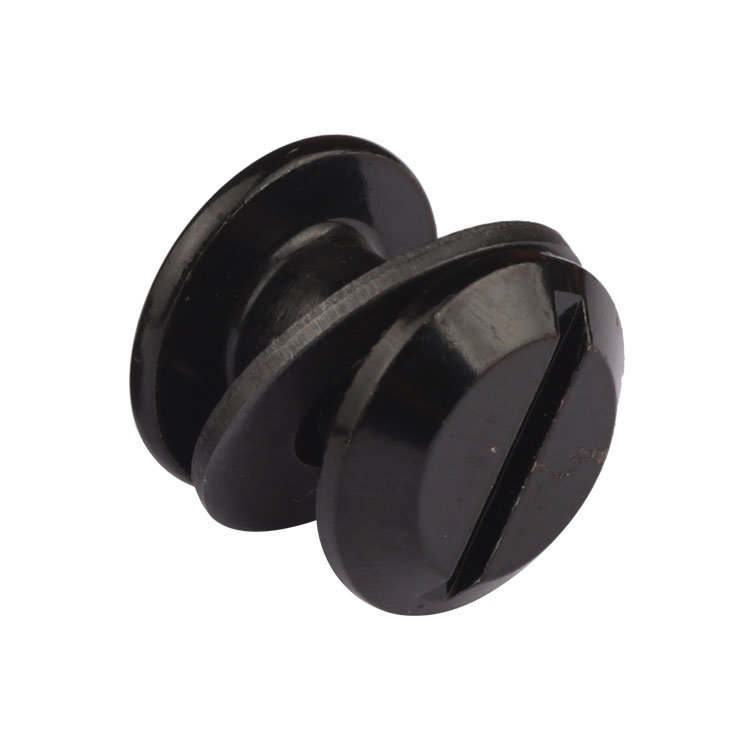
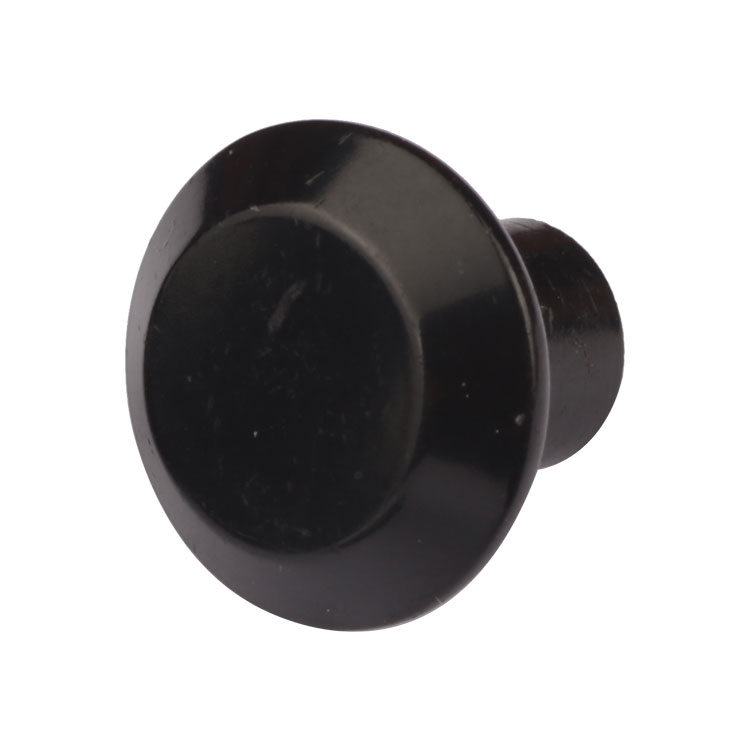
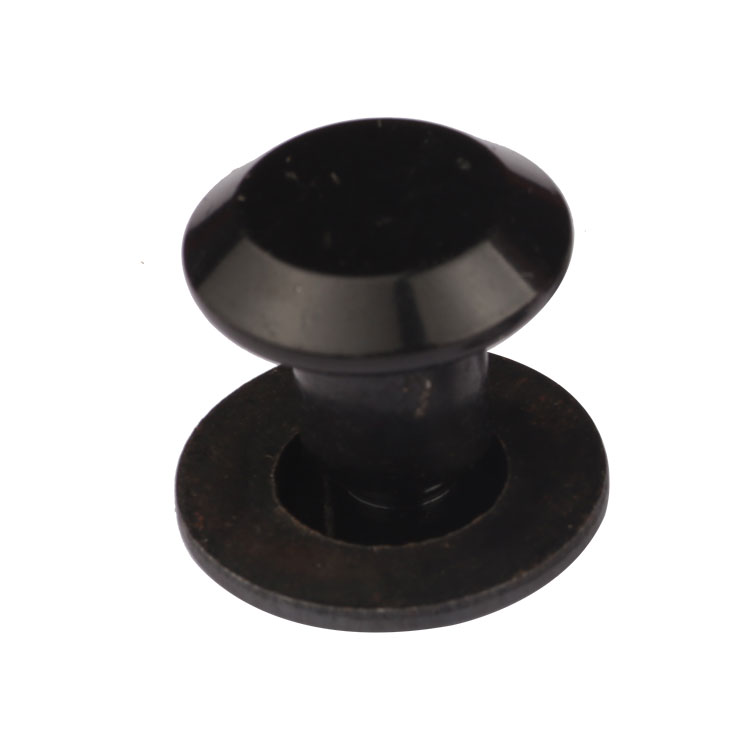
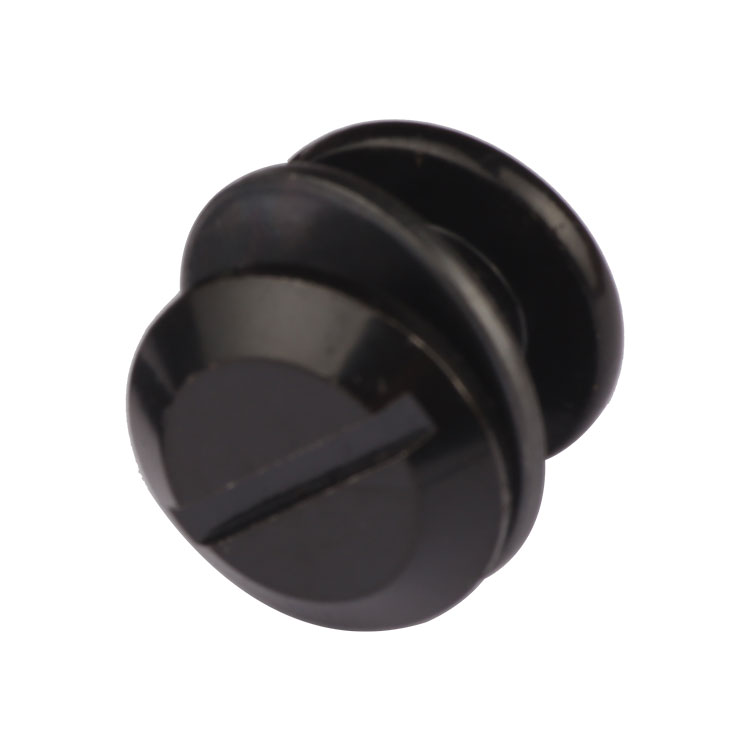
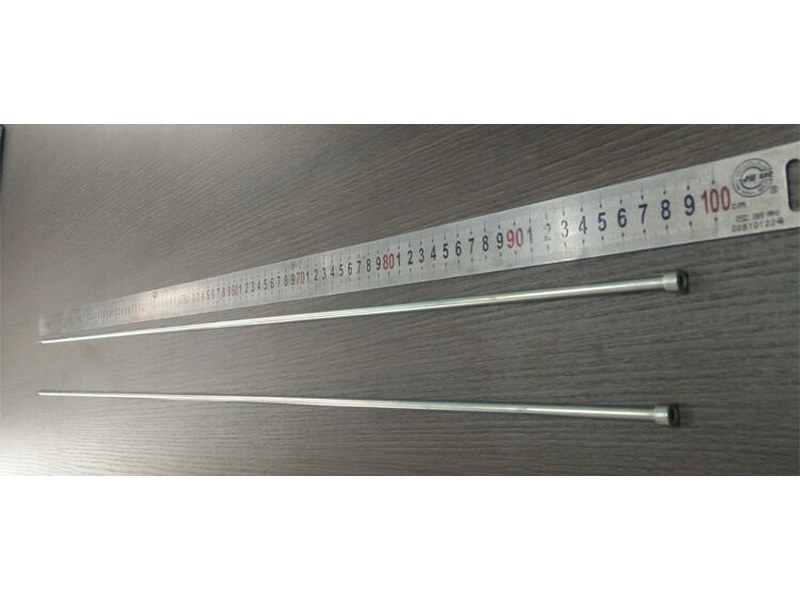
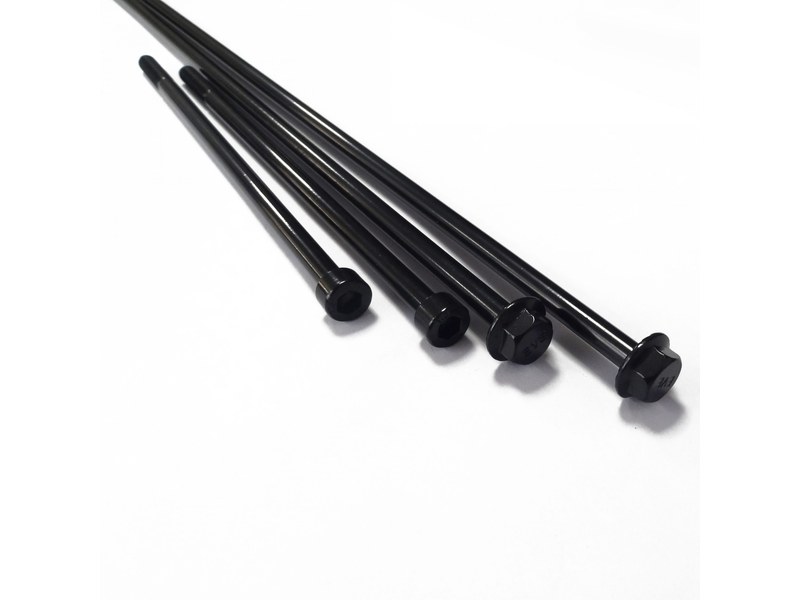
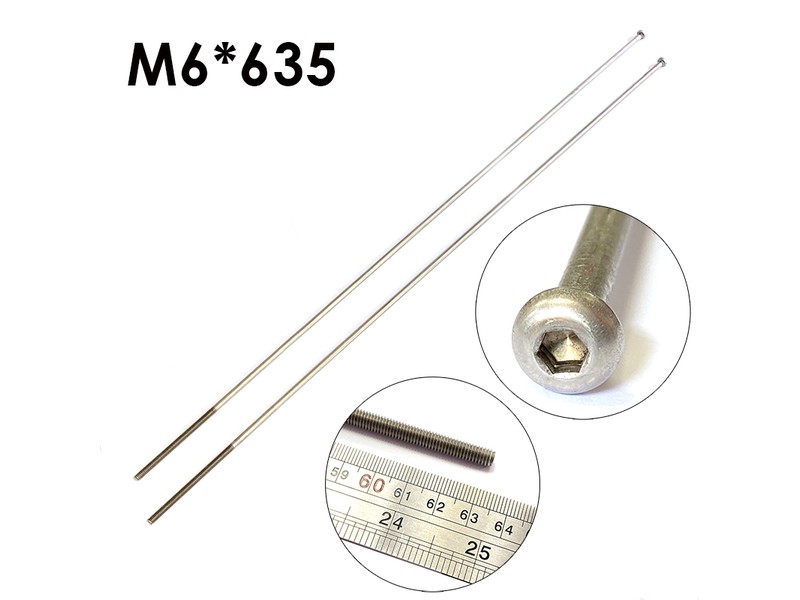
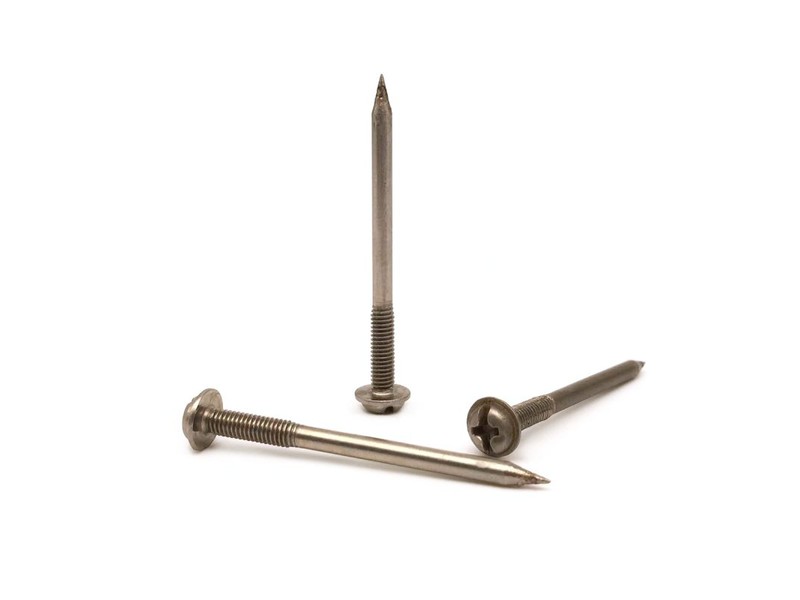
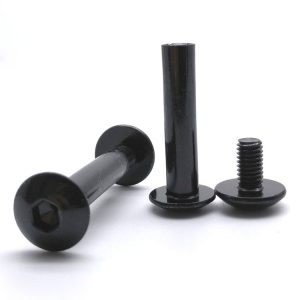
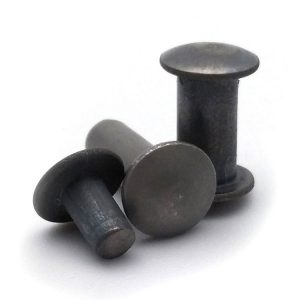
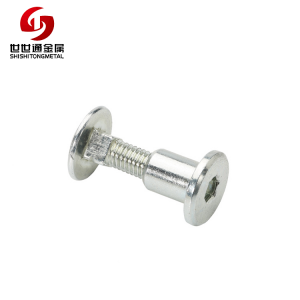
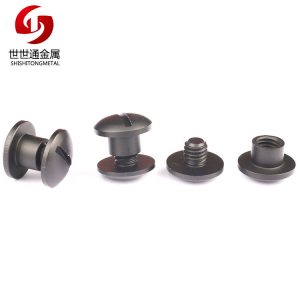
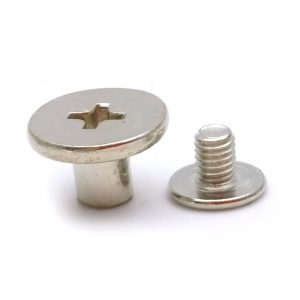
Type:Male And Female Screw Fasteners (binding post, male + female barrel)
Materials:Carbon Steel
Surface treatment:Black Oxide (oiled)
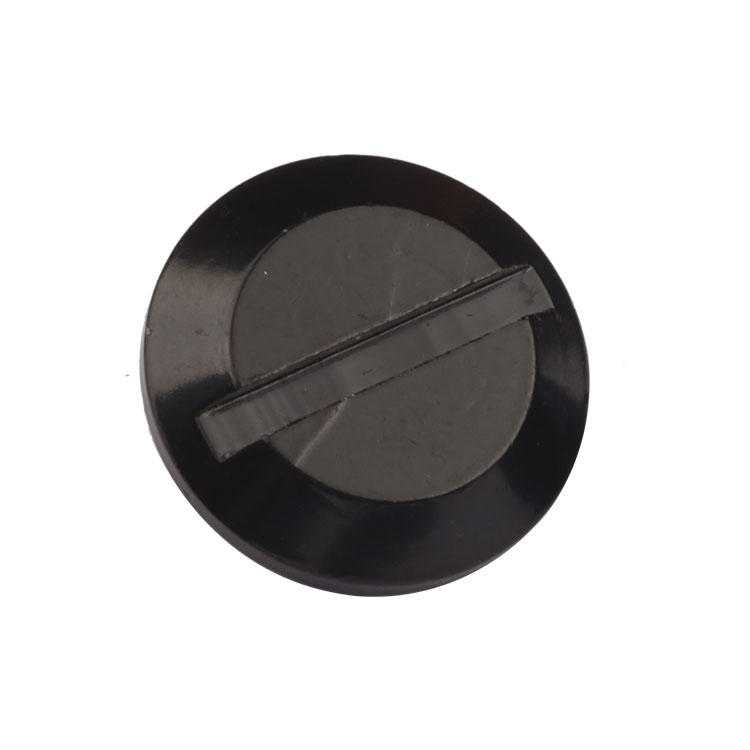
Head Type:Flanged Pan Head (PF), slotted
Drive:Single slot
Thread:Machine thread, rolled; female barrel threaded before assembly
Point:Flat end (machine screw, not self-tapping)
Size:M1 - M14 (per drawing)
Forming:Single-die cold heading, thread rolled, black oxide after rolling
Number:389
We manufacture male and female screw fasteners: a slotted flanged pan head male screw and a threaded female barrel that close onto a stack from both faces, in carbon steel with a black oxide finish. Both lengths, the grip range, head and barrel diameters are taken from your drawing.
Watch the factory video·Email sst@szsst88.com
ISO 9001:2015 · Manufacturing since 1998 · 8,678+ customers · 89 countries and regions
Made to order – there is no stock catalogue. Each part is produced to your drawing, and production starts after drawing review and first-article approval.
Male and female screw fasteners are two-part fasteners: a male screw and a female barrel that thread into each other, clamping a stack from both faces. The recorded item on this page is carbon steel with a black oxide finish, a flanged pan head with a single slot on the male screw, a machine thread and a flat end, quoted from M1 per drawing with Number 389.
Two halves, one fixing. The male screw passes through the stack and threads into the female barrel, which is closed at its own end. Nothing appears on the far side except the barrel face, so the joint can be finished on both sides of a panel.
Flanged pan head. The male half carries a low pan head with a flange, which spreads the load on the face it clamps and gives the slot a flat crown to sit in.
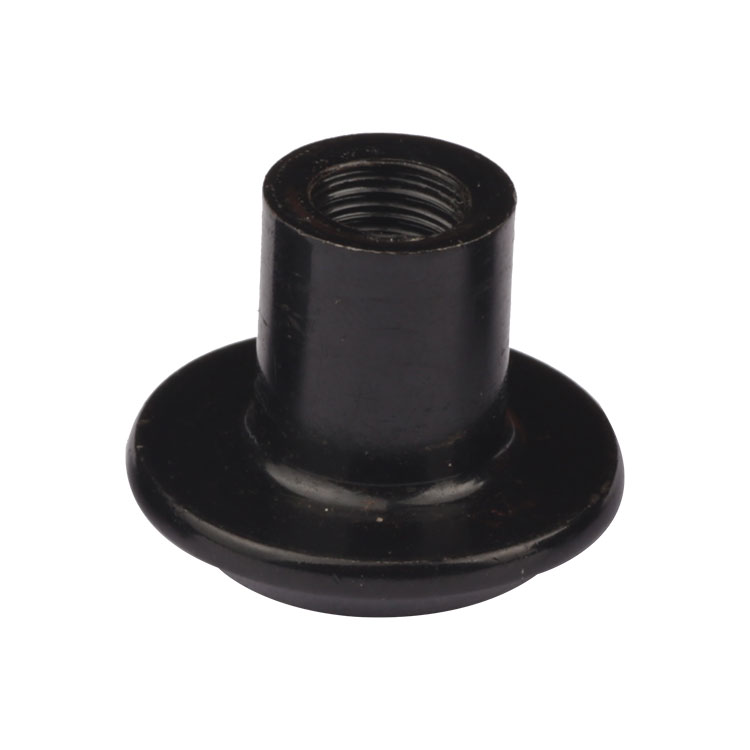
Machine thread. Both halves are threaded; the female barrel is tapped before assembly. There is no self-tapping action, so the stack carries a clearance hole and the clamping comes from the two halves pulling together.
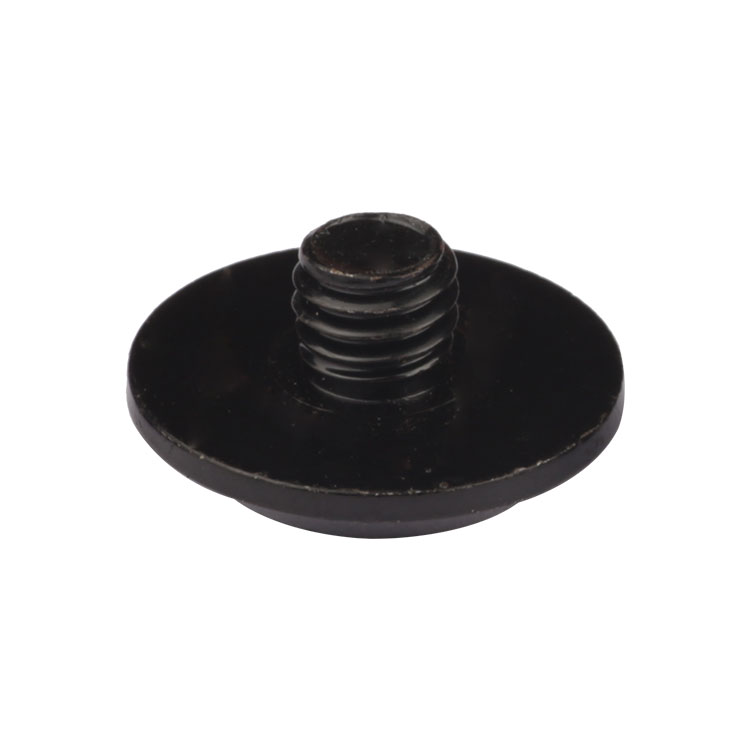
Flat end. The male screw ends flat rather than in a point, because it is going into the barrel and not into the material. That flat end also sets the maximum engagement, and therefore the grip range.
Black oxide. A thin conversion finish that darkens the steel and leaves the thread and the slot at their formed dimensions, which matters when the two halves have to run together freely.
The male half is headed and rolled in the usual way: the flanged pan head and the slot are formed at one end, and the machine thread is rolled along the shank to a flat end. The head is what the driver acts on, and on a binding post the slot is cut wide enough to take a blade across the full crown.
The female barrel is a separate part. It is turned or headed with its own closed end, drilled and then tapped through from the open face. Because the thread is cut into the barrel before the two halves are paired, the fit between them is set at that stage and not adjusted later by force.
The assembly is a screw pair. The male thread engages the barrel thread, and the two faces — the flange on one side and the barrel face on the other — close onto the stack. Where both halves carry a slot, the joint can be held from either side and tightened from the other, which is how male and female screw fasteners are used on a panel that cannot be reached from behind.
The grip range is the dimension that defines the pair. It is the total thickness the two halves can clamp: the male length plus the barrel length minus the thread engagement at full closure, and it is quoted as a range rather than a single figure because the same halves close over a span.
Black oxide and oil come last, and the thread is gauged after the finish. Both halves are gauged as a pair where the fit is critical, because a coating that is heavy on one half and light on the other changes how freely the pair runs.
The family is quoted from M1 up, per drawing, with the recorded part in carbon steel and black oxide. Custom lengths up to 2,000 mm are subject to DFM review after drawing submission; on male and female screw fasteners the practical range is wide, because the two halves can be made in different lengths to cover a grip range rather than one thickness.
| Item | How it is defined | What we control |
|---|---|---|
| Male thread | Metric machine thread, rolled | Gauged per batch; paired where critical |
| Female thread | Tapped through the barrel before assembly | Gauged with the matching male thread |
| Head | Flanged pan head with a single slot | Diameter and height on the projector |
| Barrel diameter | Outside diameter of the female half | Measured on the first article |
| Male length | From under the head to the flat end | Measured on the shop plate |
| Barrel length | From its face to the closed end | Measured on the shop plate |
| Grip range | Total thickness the pair clamps | Calculated from both lengths and engagement |
Grip range is the number the customer actually needs, and it is the one most often left off a drawing. A pair that is too short will not close on the stack; one that is too long leaves the male thread standing in the barrel without reaching the end, and the joint rocks. Both halves are quoted with their lengths and the engagement so that the range can be calculated.
The barrel diameter is the second number. It has to pass the clearance hole in the stack, and it sets how much material is left around the tapped thread. In a thin panel the barrel may be the part that is visible, so its face is finished like the head.
The reason to use male and female screw fasteners rather than a screw and a nut is control of both faces. A screw and a nut can only be finished on the screw side; a screw pair can be finished on both.
| Feature | What it gives | What it costs |
|---|---|---|
| Female barrel instead of a nut | A finished face on the far side | Two parts to keep together as a set |
| Grip range | One pair covers a span of thicknesses | The range has to be quoted, not assumed |
| Slotted flanged head | Tool drive with a wide bearing face | Slot is the wear point on a soft finish |
| Machine thread both halves | Free running, fully adjustable | No locking action of its own |
| Black oxide | Dark tone, no dimensional change | Thin protection; not for wet service |
A screw pair is also easier to handle in assembly than a screw and a loose nut. The barrel stays on the visible face while the male screw is driven from the other, and on a bound stack — leather, board, a display panel — that is the difference between a neat face and a crushed one.
The absence of a locking feature matters on a joint that is opened and closed. A pair with a plain machine thread will back off under vibration unless something else holds it, and on male and female screw fasteners the usual answers are a nylon patch on the male thread or a light thread lock at assembly. That is a drawing decision, not something the shop can add later.
The slot is the wear point. On a black oxide part the slot edges show bright metal after a few assemblies, and on a soft steel pair the slot can spread if the driver is a poor fit. The slot is checked with the production blade, and where the joint is opened often a socket drive version is the better specification.
The recorded finish is black oxide with oil, applied to both halves. It leaves the thread and the slot at their formed sizes, which is what a pair needs: the two threads have to run together without binding, and a finish that adds thickness to one half and not the other changes the fit.
| Finish | How it protects | Effect on the pair | Typical use |
|---|---|---|---|
| Black oxide, oiled | Thin conversion film plus oil | No dimensional change | Dark indoor assemblies |
| Black zinc | Zinc layer with black passivation | A few microns on both halves; re-paired | Dark parts exposed to moisture |
| Nickel | Hard metallic deposit | Threads gauged as a pair after plating | Visible hardware |
| Brass or bronze (alloy) | Alloy provides protection | No coating | Leather, craft and heritage work |
| Stainless (equivalent part) | Alloy provides protection | No coating | Wash-down and coastal use |
Where a coating is used, the pair is gauged together after plating rather than separately. Two halves that each pass their own gauge can still bind as a pair if the deposit is uneven, and on male and female screw fasteners a binding pair is scrap — there is no way to open up a barrel thread without removing the coating that was just applied.
Black oxide also shows handling marks more than a bright finish does. The flange face, which is the part pressed against the stack, is where the marks appear, and on a visible joint that face is part of the product. A light oil film hides most of it, and the packing keeps the parts from rubbing in the bag.
Three applications where a finished face on both sides of the stack is the reason for the pair:
| Where it sits | The pair binds layers of leather, board or heavy fabric, with one face on the outside and the barrel closing the other. |
| When it goes wrong | A screw and a nut leaves a nut on the visible face, and a pair that is too short will not close the stack. |
| Why it happens | The material is thick and soft, both faces are seen, and the joint is opened occasionally. |
| What we control | Grip range, barrel diameter and head finish checked on the first article. |
| Where it sits | The pair holds a panel to a frame or a standoff, where the barrel provides a finished face on the front and the screw is driven from the back. |
| When it goes wrong | A nut on the front face reads as unfinished, and a slotted head that is too small cannot be tightened against a compressible panel. |
| Why it happens | The front face is visible, the panel is soft, and the fixing is part of the design. |
| What we control | Flange diameter, slot and barrel face checked, finish agreed on a sample. |
| Where it sits | The pair fixes a faceplate or a standoff where the front has to stay clean and the rear is inaccessible or crowded. |
| When it goes wrong | A screw from the front leaves a head on the display face, and a barrel that is too long bottoms before the faceplate seats. |
| Why it happens | The faceplate is thin, the rear is crowded, and the front is seen. |
| What we control | Grip range calculated from both lengths, threads paired and gauged, slot driven with the production blade. |
Four reasons that matter on a two-part fastener, each tied to what the drawing has to prove:
|
Grip range calculated with the pair
Both halves are reviewed together with the engagement, so the grip range is quoted as a range against the stack rather than left to be discovered at assembly. Basis: Grip range quoted from both halves. |
Both halves made and paired
The male screw is headed and rolled, the barrel is tapped before pairing, and the threads are gauged as a pair where the fit is critical. Basis: Threads gauged as a pair. |
|
Grip and slip checked on the part
The pair is assembled onto a sample stack on the first article, and the slot is driven with the production blade at the joint torque. Basis: First article assembled on a sample stack. |
First article to repeat production
The first article fixes the drawing revision, wire heat, die set, tap and finish; repeat orders are compared against that record. Basis: First article signed off before the batch is released. |
Shi Shi Tong forms the male halves on a single-die header — flanged pan head and slot in one stroke, machine thread rolled to a flat end — and makes the female barrels by turning or heading, drilling and tapping the thread before pairing. Both halves are black oxide finished and oiled. The first pair of every run is assembled onto a sample stack and driven with the production blade, before the batch continues.


|

|
Pairing is the operation that decides whether the fastener works. A male thread and a barrel thread that were each made to their own tolerance can still run tight as a pair, and because both are then finished, the fit cannot be corrected afterwards. That is why the two halves are gauged together on the first article and why the pairing is recorded.
What decides whether male and female screw fasteners pass is the thread fit as a pair, the grip range, the head and barrel faces, and the finish. The inspection agreement covers those, and the criteria come from the drawing.

Head and flange on the projector |

Threads gauged as a pair |

Hardness testing against the property class |

Salt-spray testing where a coating is specified |
The assembly test is the one that matters. The first pair is run onto a sample stack of the drawing thickness and tightened with the production blade; a pair that reaches closure and holds the stack is a pass, and one that stops short or rocks has the wrong grip range, whatever the individual dimensions say.
The barrel face is checked for flatness at the same time. On a screw pair that face carries half the load, and a face that is not square makes the joint stand off on one side even when both lengths are correct.
Every shipment of male and female screw fasteners is traceable to the wire and bar they were made from. The grade and heat number are recorded on the material certificate supplied with the parts, and the inspection records follow the criteria agreed on the drawing.

ISO 9001:2015 |

RoHS test report |

Registered trademark |

Patent: security screw and driver |
With each batch we supply the material certificate, the inspection record for the criteria on the drawing and, where it is listed, the third-party report for the material or the finish. The documents carry the drawing revision and the batch number, so the paperwork can be matched to the parts.
More than 8,678 customers in 89 countries and regions have ordered from Shi Shi Tong; 87% of orders come from repeat customers and 56% through referrals. Most projects follow the same route: drawing review, first-article approval, then batches checked against that sample. On a two-part fastener the first article is assembled onto a stack of the drawing thickness, because the grip range is the dimension that decides the joint. Buyers visit during the process to review samples and to see how the heads are formed.
|
8,678+
customers served
|
87%
of orders from repeat customers
|
56%
of orders through referrals
|
89
countries and regions shipped to
|
Buyers and quality engineers visit for sample review, process discussion and supplier audits; the visit is arranged around production so the header and the finishing line can be seen on the day the parts run.

Customer group visit – sample review |

Customer group visit – process discussion |

Customer group visit – factory tour |

Customer visit – project kick-off |

Danish customer – drawing review |

Industry exhibition – meeting customers |
A two-part fastener: a male screw and a female barrel that thread together, so a stack is clamped with a finished face on both sides.
Quote both halves and the grip range, which is the total thickness the pair clamps. A single length is not enough, because the pair closes over a span.
It is the same idea. A Chicago screw is usually a post and a screw with a coarse joint; this page’s part is a machine-threaded pair with a flanged slotted head.
Not by itself. A plain machine thread will back off under vibration, so a nylon patch or a thread lock is specified where the joint is opened and closed.
Black oxide with oil, on both halves. Where the joint is wet, a black zinc or stainless version is the right choice.
Thread size and pitch, male length, barrel length, grip range, head and barrel diameters, slot width, material and finish.
How a male and female screw fastener project runs from drawing to repeat delivery:
|
1
Send the drawing and the stack thickness
|
→ |
2
Grip range review
|
→ |
3
First pair assembled on a sample stack
|
→ |
4
Batch production and repeat orders
|
Each step is confirmed with you before the next one starts; the drawing revision from the first article is what repeat orders are checked against.
For a quotation, send the drawing with the thread size and pitch, male length, barrel length, the stack thickness the pair has to clamp, head and barrel diameters, slot width, material and finish.
|
Thread and pitch
|
Male length
|
Barrel length
|
|
Grip range
|
Head and barrel diameter
|
Material and finish
|
Sending a drawing? The form below does not take attachments. Email the PDF, DXF or STEP file to sst@szsst88.com with the part name and quantity in the subject line – the drawing is reviewed and a quotation follows.

 +86 13143444311
 sst@szsst88.com