Tel:
+86 13143444311
Email:sst@szsst88.com
Fax:+0086-755-27322278
Address:Building 9, First Industrial Zone, Tantou Industrial City, Songgang Street, Baoan District, Shenzhen 518105, Guangdong, China
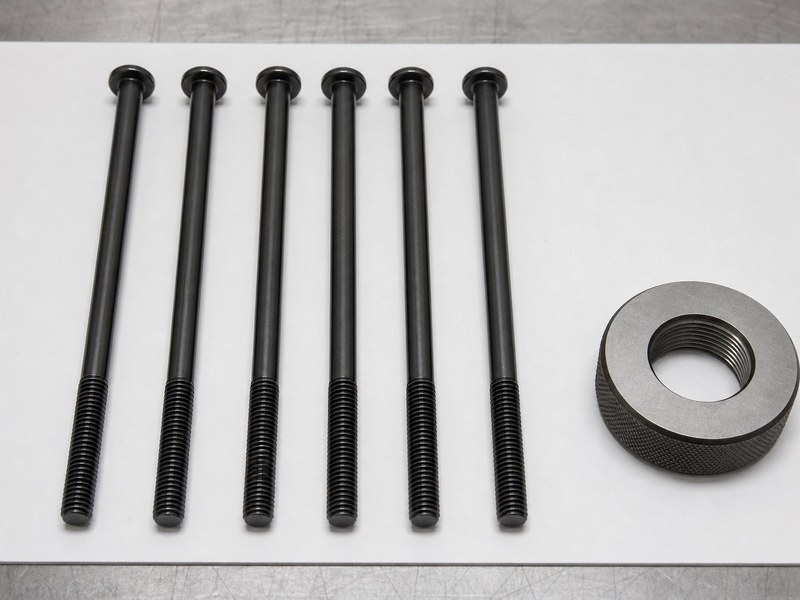
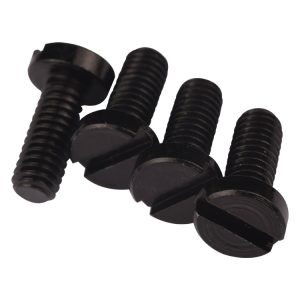
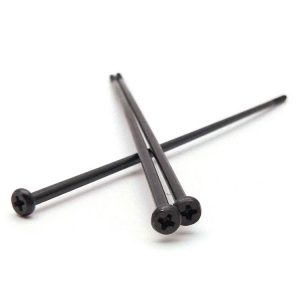
Type:Black Oxide Machine Screws
Materials:Carbon Steel
Surface treatment:Black Oxide Plated
Head Type:Cap Head
Drive:Torx
Thread:Machine Thread
Point:Blunt
Forming:Single Die Heading
Size:M1 M2 M3 M4 M5 M6 M7 M8 M9 M10 M14
Number:521-1
We make black oxide machine screws from carbon steel with a cap head, a six-lobe socket and a machine thread, finished black and oiled so the socket and thread ship exactly as formed. Head, socket, thread and packing come from your drawing, and the first article is turned with your own bit.
Watch the factory video·Email sst@szsst88.com
ISO 9001:2015 · Manufacturing since 1998 · 8,678+ customers · 89 countries and regions
Made to order – there is no stock catalogue. Each part is produced to your drawing, and production starts after drawing review and first-article approval.
Black oxide machine screws are steel screws finished in a black conversion coating that adds no measurable thickness, which is why they are chosen where a socket or a thread has to stay exactly as machined. The recorded item on this page is carbon steel with a cap head, a six-lobe socket and a machine thread, quoted from M1 to M14 with Number 521-1.
Black oxide. A conversion coating: the surface of the steel is turned into a dark oxide rather than covered by a deposit. It is a fraction of a micron thick, it does not change any dimension, and the oil applied after it is what actually keeps the rust off.
Cap head. A cylinder with a flat top and a full flat bearing face. It seats in a counterbore, spreads the clamp load and leaves a clean circular outline on a machined surface.
Six-lobe socket. A Torx recess driven with a matching star bit. The drive has no sharp internal corners, so it carries more torque than a hexagon of the same size without rounding the socket.
Machine thread. A rolled thread with a blunt chamfered end, made to run into a tapped hole or a nut rather than to form its own thread.
On black oxide machine screws the socket is the most dimension-sensitive feature. Its lobes are measured in tenths of a millimetre, the bit has to seat to a defined depth, and anything that builds inside it changes how the drive feels. That is why black oxide machine screws are often socket-drive parts: the finish adds nothing, so the socket the die formed is the socket the customer’s bit meets.
The alternative finishes build. Zinc, nickel and flake coatings all add a few microns, and inside a star socket a few microns is a large fraction of the clearance. The result is a socket that takes the bit but lets it rock, and a bit that rocks rounds the lobes rather than turning the screw.
The cap head and the socket are formed in one heading stroke, which keeps the socket concentric with the shank and the bearing face flat. Both matter here: an off-centre socket makes the bit lean, and the lean is what starts the wear on one pair of lobes.
The thread is rolled and the coating follows it exactly, because a conversion coating grows into the surface rather than sitting on it. That is also why a black oxide thread does not have to be re-gauged for a coating allowance: the thread that left the roll is the thread that ships.
The oil is part of the finish, not a packing convenience. A black oxide part that has been degreased is bare steel in a black oxide skin, and it will rust at a fingerprint within days. Parts are oiled after the process and handled with gloves, and the drawing says so when the customer intends to degrease before assembly.
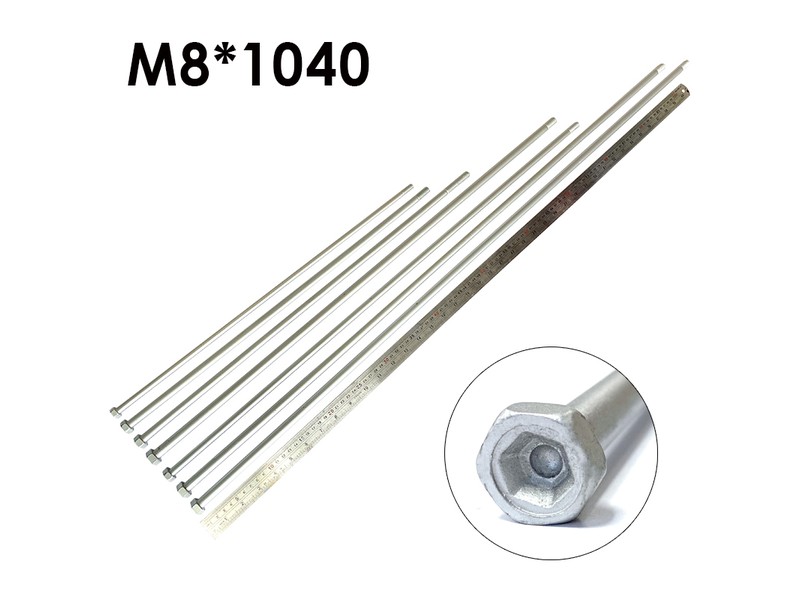
The family is quoted from M1 to M14, with M1, M2, M3, M4, M5, M6, M7, M8, M9, M10 and M14 in the recorded range. Custom lengths up to 2,000 mm are subject to DFM review after drawing submission; on black oxide machine screws the socket size and the head height are quoted with the thread, because the socket depth is fixed by the head.
| Item | How it is defined | What we control |
|---|---|---|
| Head | Cap head, flat face | Diameter, height and face flatness |
| Socket | Torx, six lobes | Lobe width and depth, bit tried on the part |
| Thread | Metric machine thread | Pitch and length, gauged per batch |
| Finish | Black oxide, oiled | Conversion depth and oil film |
| End | Blunt, chamfered | Chamfer cut, not deburred |
| Length | From under the head to the end | Measured on the shop plate |
Socket size is chosen with the screw size rather than for it. A socket that is small for the thread limits the torque the joint can take; one that is large for the head height leaves too little material at the lobes. The pair is settled on the drawing and proved with the production bit.
Length is measured from under the head, because that face bears on the part. On a cap head the head height adds to the overall length, so a screw quoted into a blind counterbore has to allow for it or it will bottom before the face touches.
Three features define this part: the cap head, the six-lobe socket and the black oxide finish. The first two are geometry and drive; the third is the reason the pair works without a re-check of the socket after finishing.
| Feature | What it gives | What it costs |
|---|---|---|
| Cap head | Full bearing face in a counterbore | Needs a counterbore, not just a hole |
| Torx socket | High torque without rounding | Needs the matching star bit |
| Black oxide | No build; socket and thread unchanged | Protection depends on the oil film |
| Oiled surface | Retains lubricant at the joint | Rusts quickly once degreased |
| Matte black | Non-reflective, industrial look | Not a decorative finish |
The socket is where the no-build property pays. On a zinc or nickel plated screw the socket is re-checked after plating and the bit is tried again; on a black oxide screw there is nothing to re-check, because the finish is inside the metal. That removes a process step and, more importantly, removes a failure mode: batches that drive well at one end of the plating barrel and badly at the other.
The oil is where the property costs. Black oxide retains oil well — the conversion layer is porous and holds a film — and that film is the corrosion protection. A part that is wiped clean before assembly, or stored in a warm dry room where the oil drains, loses the protection without losing the black colour, which is why the failure looks like a mystery.
Black oxide machine screws are neither plated nor painted in the usual sense. The steel is cleaned, the surface is converted to a dark oxide in a hot bath and then sealed with oil; the coating is measured in tenths of a micron and it is part of the metal rather than on top of it.
| Finish | Build | How it protects | Where it fits |
|---|---|---|---|
| Black oxide | None measurable | Oil film over a porous conversion layer | Precision sockets, tooling, dry interiors |
| Black zinc | A few microns | Sacrificial zinc with a dark passivation | Dark panels that see damp |
| Black nickel | A few microns | Hard barrier deposit | Visible handled parts |
| Black phosphate | A few microns | Porous conversion layer, oiled | Threaded parts that need oil retention |
| Dacromet | Thin flake layer | Zinc-aluminium barrier | Outdoor and wet assemblies |
The comparison with black zinc is the one customers make. Black zinc is a sacrificial coating: it corrodes in place of the steel and protects even where the oil has gone. Black oxide is not sacrificial; it protects only as long as the oil film is intact. In a dry interior the two are close; in a damp joint black zinc wins and black oxide loses.
One more property is worth knowing on hardened parts. Because black oxide is a conversion rather than an electroplated deposit, it does not put hydrogen into the steel the way a plating bath does, so it does not carry the same delayed-cracking risk on high-strength screws. That is a reason a toolmaker or a machine builder specifies it on a hardened cap screw rather than a bright plating.
Three assemblies where black oxide machine screws with a socket are the right fixing:
| Where it sits | The screw clamps a jaw, a plate or a stop in a counterbore where the head must sit flush and the socket is driven repeatedly during setup. |
| When it goes wrong | A coating that builds in the socket lets the bit rock, and a rocking bit rounds the lobes after a few hundred setups. |
| Why it happens | The fixture is re-set often, the head is counterbored, and the socket is the wear surface. |
| What we control | Socket checked with the production bit, depth and lobes measured, parts oiled before packing. |
| Where it sits | The screw fixes a bracket, a cover or a component where a matte black finish is wanted and the part may be hardened. |
| When it goes wrong | A bright plated head is visible on a black assembly, and a plated high-strength screw carries a hydrogen risk a conversion finish avoids. |
| Why it happens | The finish is matte black, the part is seen, and the screw may be heat treated. |
| What we control | Finish confirmed as black oxide, oil film checked, socket and thread gauged. |
| Where it sits | The screw holds a mount or a stage where the thread and the socket have to be exact and a build-free finish keeps the fit repeatable. |
| When it goes wrong | Plating narrows the socket, and a plated thread changes the fit of a precision joint. |
| Why it happens | The joint is precise, the head is small, and the part is adjusted often. |
| What we control | Thread gauged as formed, socket tried with the bit, no re-plating allowance needed. |
Four reasons that matter on a socket-drive part with a conversion finish, each tied to what the drawing has to prove:
|
Socket and finish reviewed together
The socket size, the head height and the finish are reviewed as one set, so a socket that would be narrowed by a coating or a head too low for its bit is raised before the die is cut. Basis: Socket and finish reviewed as one set. |
Heading, rolling and black oxiding in one route
The cap head and the socket are formed in one stroke, the thread is rolled and the parts are black oxided and oiled in the same route. Basis: One route from wire to oiled screw. |
|
Socket tried with the bit
The socket is checked for lobe depth and width and then turned with the production bit, because a socket that measures in tolerance can still rock. Basis: First article turned with the production bit. |
First article fixes the setting
The first article fixes the wire heat, die set, thread roll and the oxide bath; repeat orders are compared against that record. Basis: First article signed off before the batch is released. |
Shi Shi Tong forms these black oxide machine screws from carbon steel wire on single-die headers that form the cap head and the six-lobe socket in one stroke, rolls the machine thread to a blunt chamfered end, and black oxides and oils the parts before packing. The first part of every run is measured on the head, turned with the production bit and entered into a thread gauge before the batch continues.


|

|
The socket punch is the tool that limits the die. It wears at the lobe tips, and a worn punch leaves lobes that are wider at the mouth than at the bottom — a socket that takes the bit and lets it drop too deep, so the load goes to the tips instead of the flanks. The socket is checked with the bit on the first article and sampled through the run, because that wear changes how the screw drives without changing how it looks.
What decides whether black oxide machine screws pass is the socket, the head, the thread and the oil film. The inspection agreement covers those, and the criteria come from the drawing.

Socket and head on the projector |

Thread gauged as formed |

Hardness tested against the property class |

Salt-spray testing of the oiled oxide finish |
The socket is checked for lobe width and depth on the projector and then turned with the production bit. On a black oxide part the socket is judged as formed, which is the whole point of the finish: there is no plating allowance to argue about, and a socket that fails is a punch problem rather than a coating problem.
The head of a black oxide machine screw is checked for diameter, height and face flatness, and the thread is gauged per batch. Because the finish adds nothing, the thread does not need a second gauge pass after finishing; what it does need is to stay oiled, and the film is checked at packing.
The oil film is judged on a sample by look and touch and confirmed with the salt-spray sample. A batch that is dry is a batch that will spot in the bag, and no dimensional check catches it.
Every shipment of black oxide machine screws is traceable to the wire it was made from and to the oxide batch. The grade and heat number are recorded on the material certificate supplied with the parts, and the inspection records follow the criteria agreed on the drawing.

ISO 9001:2015 |

RoHS test report |

Registered trademark |

Patent: security screw and driver |
With each batch we supply the material certificate, the inspection record for the criteria on the drawing and, where it is listed, the third-party report for the material or the finish. The documents carry the drawing revision and the batch number, so the paperwork can be matched to the parts.
More than 8,678 customers in 89 countries and regions have ordered from Shi Shi Tong; 87% of orders come from repeat customers and 56% through referrals. Most projects follow the same route: drawing review, first-article approval, then batches checked against that sample. On a socket-drive screw the first article is also turned with the customer’s bit, so the drive is agreed before the batch runs. Buyers visit during the process to review samples and to see how the heads and sockets are formed.
|
8,678+
customers served
|
87%
of orders from repeat customers
|
56%
of orders through referrals
|
89
countries and regions shipped to
|
Buyers and quality engineers visit for sample review, process discussion and supplier audits; the visit is arranged around production so the headers and the finishing line can be seen on the day the parts run.

Customer group visit – sample review |

Customer group visit – process discussion |

Customer group visit – factory tour |

Customer visit – project kick-off |

Danish customer – drawing review |

Industry exhibition – meeting customers |
No. It converts the surface of the steel into a dark oxide. It adds no measurable thickness, which is why it suits a precision socket.
Protection depends on the oil film. Once the oil is washed off or the part is degreased, the steel is exposed and rusts, even though it still looks black.
Only where the finish must not build and the joint stays dry. Black zinc is sacrificial and protects far better in damp service.
No measurable change, which is the point. The thread and the socket ship as formed and are judged that way.
Yes, and it is often preferred, because a conversion finish does not introduce hydrogen into the steel the way an electroplated deposit can.
Head diameter and height, socket size and depth, thread size and length with the datum, material, and whether the parts must arrive oiled.
How a black oxide machine screw project runs from drawing to repeat delivery:
|
1
Send the drawing and the bit you drive with
|
→ |
2
Socket, head and finish review
|
→ |
3
First article turned with the bit
|
→ |
4
Batch production and repeat orders
|
Each step is confirmed with you before the next one starts; the drawing revision from the first article is what repeat orders are checked against.
For a quotation, send the drawing with the head diameter and height, the socket size and depth, the thread size and length with the datum, the material, and the oiling or packing requirement.
|
Head diameter
|
Head height
|
Socket size
|
|
Thread and length
|
Material
|
Finish and packing
|
Sending a drawing? The form below does not take attachments. Email the PDF, DXF or STEP file to sst@szsst88.com with the part name and quantity in the subject line – the drawing is reviewed and a quotation follows.

 +86 13143444311
 sst@szsst88.com