Tel:
+86 13143444311
Email:sst@szsst88.com
Fax:+0086-755-27322278
Address:Building 9, First Industrial Zone, Tantou Industrial City, Songgang Street, Baoan District, Shenzhen 518105, Guangdong, China
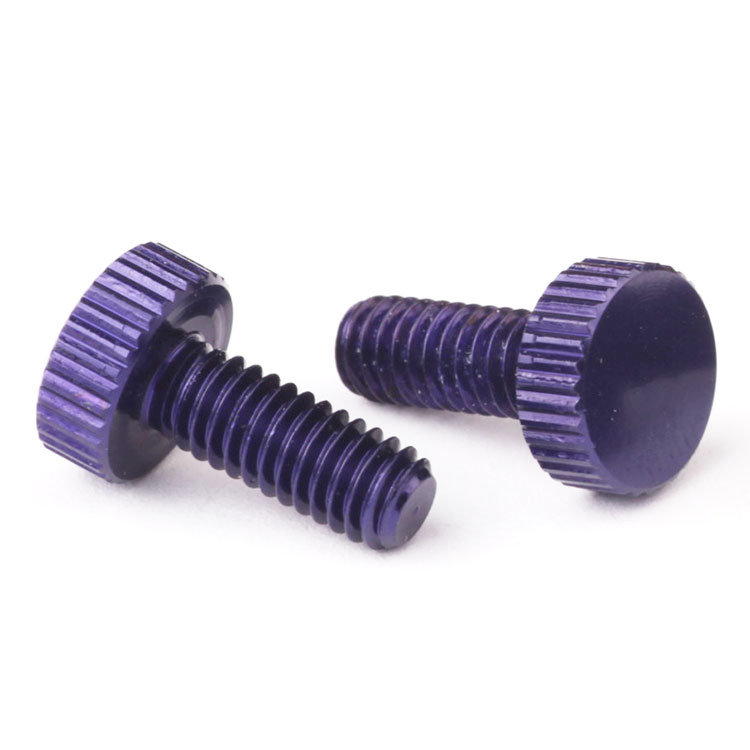
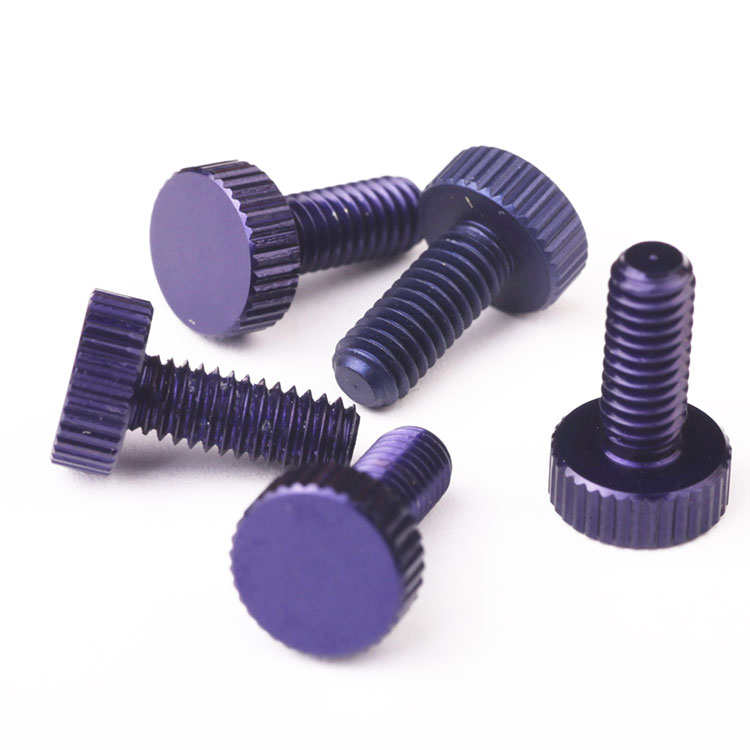
Type:Anodized Aluminum Screws
Materials:Aluminum
Surface treatment:Anodized
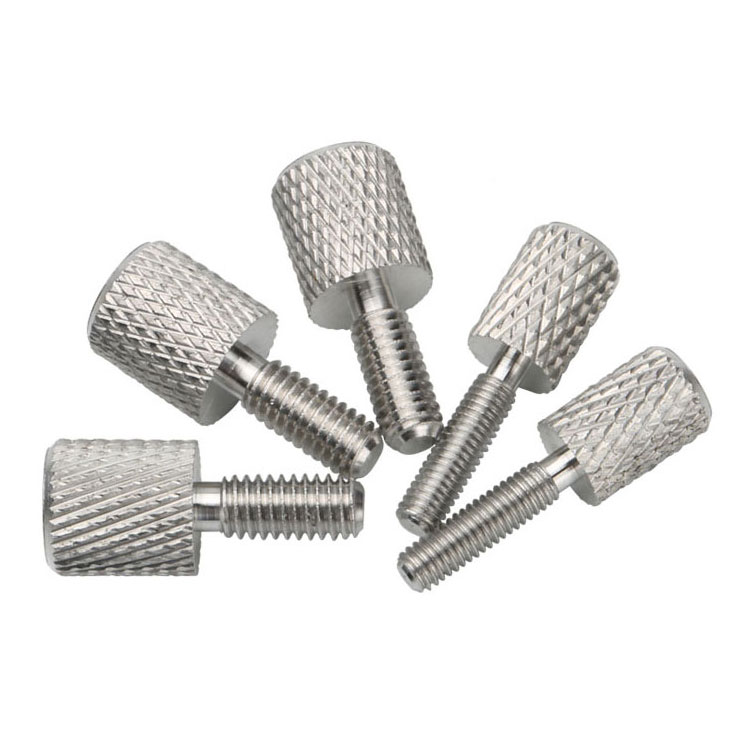
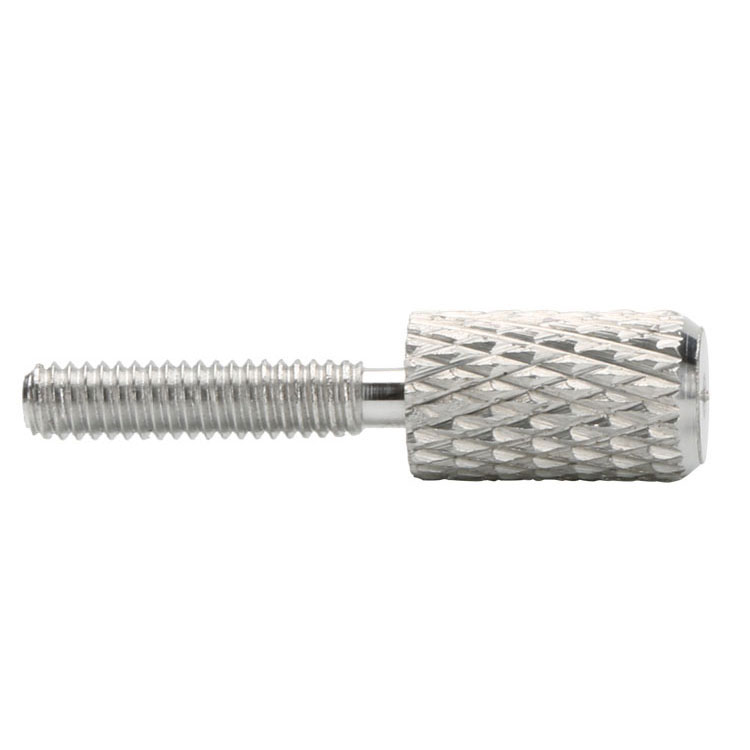
Head Type:Knurled cap head
Drive:None (finger driven)
Thread:Machine thread
Point:Plain, chamfered
Forming:CNC turning; anodised
Size:M1 M2 M3 M4 M5 M6 M7 M8 M9 M10
We make anodized aluminum screws in the knurled cap head form, dyed and sealed, quoting them from M1 to M10 with lengths made to the drawing. The colour is matched to a retained sample, the thread is gauged after anodising, and the first article is screwed into your insert.
Watch the factory video·Email sst@szsst88.com
ISO 9001:2015 · Manufacturing since 1998 · 8,678+ customers · 89 countries and regions
Made to order – there is no stock catalogue. Each part is produced to your drawing, and production starts after drawing review and first-article approval.
Anodized aluminum screws are aluminium fasteners whose surface has been converted to an oxide layer and coloured in the process. The part recorded here is a knurled cap head thumb screw in violet, quoted from M1 to M10 with lengths made to the drawing.
Anodised surface. An oxide grown out of the aluminium itself, then dyed and sealed, so the colour is in the metal rather than on it.
Aluminium body. Light, non-magnetic, and protected by the same oxide that carries the colour.
Knurled cap head. A cylindrical head with a straight knurl, turned by hand, with no drive recess.
Machine thread. A uniform thread for a tapped hole or a nut, with the length measured over the head.
They are used where the fixing is part of the appearance: coloured instrument cases, bicycle and sports hardware, audio equipment, display frames and any assembly where the fasteners are meant to match a colour scheme rather than disappear into it.
On most fasteners the finish is a protective afterthought. On anodized aluminum screws it is the reason the part exists: the colour is specified, matched and inspected, and the protective value is a by-product of the same layer. That changes what the drawing for anodized aluminum screws has to control.
Anodising grows the oxide rather than depositing a film on it, so the colour sits in the surface of the metal. The layer is a few micrometres to a few tens of micrometres thick depending on the process, and it grows both outward and inward, which means the part gets slightly larger and slightly harder at the same time.
The growth of the film on anodized aluminum screws matters on two features. The knurl gets marginally fuller, which improves grip but can round the pattern slightly at the crest; and the thread gets marginally tighter, which on a small screw changes the fit in a tapped hole. Neither is large, and both are the reason the thread is gauged after anodising rather than before.
The colour on anodized aluminum screws comes from dye absorbed into the porous oxide and then sealed. Two consequences follow: the colour can vary with the anodising bath and the dye concentration, so a batch is matched to a retained sample rather than to a name; and the dye is not immune to ultraviolet, so a coloured part kept in sunlight fades over years while the oxide underneath is unchanged.
The anodic layer on anodized aluminum screws is also electrically insulating. Anodised aluminium does not conduct through its surface, which is an advantage on a decorative cover and a problem where the screw is part of a grounding path. Where conductivity matters, a chromate conversion coating is the finish to specify instead.
The recorded range is M1 to M10, with lengths made to the drawing. Custom lengths up to 2,000 mm are subject to the drawing submission and DFM review. The quotation for anodized aluminum screws carries the head diameter and height, the knurl type and pitch, the thread size and length, the anodising colour and thickness, and the overall length.
| Item | How it is defined | What we control |
|---|---|---|
| Head | Knurled cap head | Diameter, height and knurl form |
| Knurl | Straight or diamond | Pitch, depth and grip |
| Thread | Machine thread in aluminium | Size, pitch and gauging after anodising |
| Colour | Match to a retained sample | Dye lot and bath condition |
| Layer | Anodic film thickness | Thickness and sealing |
| Length | Overall, head included | Length tolerance and thread start |
The colour line is the one most often written as a word and read as a range. A named colour in an anodising shop covers a band of hues, and two batches can both be correct and visibly different when they sit side by side on the same panel.
Layer thickness belongs next to the colour, because the two are set in the same bath time. A thicker layer gives deeper colour and better wear, and also closes the thread and knurl a little more, which is why the fit is re-checked on a thicker specification.
Length is measured over the head. On a hand-driven cover screw the engagement is the length minus the cover, and the anodised thread has to seat in that engagement without galls.
Four properties decide anodized aluminum screws, and each one carries a cost:
| Property | What it gives | What it costs |
|---|---|---|
| Anodic colour | Colour in the metal, not a paint | Batch-to-batch shade variation |
| Hard oxide layer | Better wear on knurl and thread | Slightly closes clearances |
| Insulating surface | No conductivity through the screw | Not usable as a grounding fastener |
| Aluminium body | Light and non-magnetic | Soft core under a hard skin |
The value of anodized aluminum screws is a fastener that reads as part of the design. Where a mechanism is visible and has a colour scheme, a coloured aluminium screw is often the only way to keep the fixings consistent without painting them.
The cost is that the colour is a process result rather than a coating, so it has to be matched and re-matched, and it fades in direct sun over years.
The trade is a colour layer that has to survive the drive without cracking at the edges.
The recorded finish is anodised, dyed and sealed. The table below is the set of finishes that actually appear on aluminium fasteners, because the choice between them is usually about what the part must do rather than what it should look like.
| Option | How it protects | Effect on thread and knurl | Typical use |
|---|---|---|---|
| Anodised, dyed | Grown oxide, coloured, sealed | Slight growth; thread re-gauged | Visible coloured hardware |
| Anodised, clear | Grown oxide, undyed | Same; metal tone retained | Where a natural finish is wanted |
| Hard anodised | Thicker, harder oxide | More growth; fit changes | Wear-facing parts |
| Chromate conversion | Thin conductive film | Minimal build; stays conductive | Grounding and electrical joints |
| Plain, as machined | Native oxide only | No build | Indoor, non-visible joints |
Hard anodising is the variant to consider where the screw is turned by hand many times: the layer is thicker and harder, so the knurl keeps its grip for longer. It also grows more, so a hard-anodised thread is a different fit from a decorative-anodised one and the drawing has to say which.
Where the part must conduct, anodising is the wrong finish regardless of colour. A chromate conversion gives a thin protective film that still conducts, and it is what an electrical joint needs.
Three settings where the fastener is part of the colour scheme:
| Where it sits | The screw holds a component where the colour has to match the frame or the accessory anodising. |
| When it goes wrong | A batch arrives a shade off and the fixings look like a different product. |
| Why it happens | The part is visible, the anodising is the design, and the fixings are numerous. |
| What we control | Colour sample per lot; first article fitted on the finished component. |
| Where it sits | The screw fixes a knob, a plate or a cover where the colour is part of the front-panel design. |
| When it goes wrong | The anodised layer on the thread makes the screw bind in its insert. |
| Why it happens | The joint is hand-driven, the panel is anodised, and the appearance is judged. |
| What we control | Thread gauged after anodising; first article screwed in and out. |
| Where it sits | The screw closes a frame where the fixings are visible and coloured to match. |
| When it goes wrong | Ultraviolet exposure fades part of an installation and not the rest. |
| Why it happens | The frames are exposed to daylight, the fixings are visible, and repair is costly. |
| What we control | Dye lot recorded; first article compared with the installed sample. |
Four reasons that matter on a part whose finish is a process result, each tied to something the drawing or the first article has to prove:
|
Colour by reference, layer by thickness
The colour is agreed against a retained sample and the layer as a thickness, because a colour name covers a band and the layer changes both the shade and the fit. Basis: Colour by sample, layer by thickness. |
Turned, knurled, threaded and anodised
The head and knurl are formed in one setup, the thread cut, and the batch anodised and sealed before the thread is gauged again. Basis: Gauged after anodising. |
|
Thread proved in your insert
The thread is proved by screwing into the customer insert after anodising, because that is the fit the film has changed. Basis: Screwed into your insert. |
Same colour across orders
The anodising lot and the dye reference are recorded with the drawing revision, so a repeat order matches the installed hardware. Basis: Same colour across orders. |
These screws are turned from aluminium bar, with the head and straight knurl formed in one setup and the thread cut behind it; the parts are then anodised, dyed and sealed. The first piece of every run is measured on head diameter and height, knurl pitch, thread and overall length, and the thread is gauged again after anodising.


|

|
The knurl is cut before anodising and is affected by it: the oxide grows at the crest as well as in the valleys, so the pattern loses a little sharpness while the part gains wear resistance. A knurl that is cut slightly too fine comes out of the bath looking smooth, which is a finishing problem that starts as a tooling decision.
Anodising and dyeing are controlled together. Bath temperature, current density and dwell set the layer thickness; the dye concentration and immersion set the shade. The batch is compared with the retained sample under the same light, and the thickness is checked on a sample part rather than assumed from the process sheet.
Sealing closes the porous oxide. An unsealed layer holds dye poorly and stains from handling, and on a fastener that will be touched, handleability is the visible sign of whether the seal was done. The parts are handled with gloves after sealing so the surface is not marked before packing.
What decides whether anodized aluminum screws pass is the colour, the layer, the head and the thread. The inspection agreement covers those, and the criteria come from the drawing and the retained sample.

Head and thread after anodising |

Thread re-checked after the film |

Core hardness against the alloy |

Salt-spray testing of the sealed layer |
Colour is checked against the retained sample under the same light on a flat area of the head, because an anodised surface shifts with angle and a spot check in a different room proves nothing. Layer thickness is measured on a sample from each lot, and the seal is judged by handling and by a stain test.
The thread is gauged after anodising, which is the only gauging that describes the fit the customer meets, and it is then screwed into the customer insert on a sample part. The knurl is inspected for rounded crests and the head for dye streaks.
Where the part is a thumb screw the functional check is by hand: a sample is screwed in and out several times, and the grip and the thread are both judged in that cycle.
Every batch is traceable to the aluminium bar it was made from and to the anodising lot that coloured it. The alloy and heat number appear on the material certificate supplied with the parts, and the anodising lot is recorded against the retained colour sample.

ISO 9001:2015 |

RoHS test report |

Registered trademark |

Patent: security screw and driver |
With each shipment we supply the material certificate, the inspection record for the dimensions on the drawing including the post-anodising thread, and the finish record with the colour sample reference. The documents carry the drawing revision and the batch number, so a repeat order of anodized aluminum screws matches the installed hardware.
More than 8,678 customers in 89 countries and regions have ordered from Shi Shi Tong; 87% of orders come from repeat customers and 56% through referrals. Most projects follow the same route: drawing review, first-article approval, then batches checked against that sample. On an anodised part the first article is compared with the customer sample under a known light and screwed into their insert. Buyers visit during the process to review samples.
|
8,678+
customers served
|
87%
of orders from repeat customers
|
56%
of orders through referrals
|
89
countries and regions shipped to
|
Buyers and quality engineers visit for sample review, process discussion and supplier audits; the visit is arranged around production so the turning cell and the anodising line can be seen on the day the parts run.

Customer group visit – sample review |

Customer group visit – process discussion |

Customer group visit – factory tour |

Customer visit – project kick-off |

Danish customer – drawing review |

Industry exhibition – meeting customers |
The colour comes from dye absorbed into the oxide, and bath and dye conditions vary. A retained sample per lot is the only practical control.
Slightly, and more with a thicker layer. That is why the thread is gauged after anodising rather than before.
In direct sunlight it fades over years while the oxide remains. Display hardware and outdoor installations are where this shows.
No, the layer insulates. Where the screw is part of a grounding path, a chromate conversion coating is the right finish.
More wear resistance on the knurl and thread, at the cost of a thicker layer and a changed fit.
Head diameter and height, knurl type, thread size and length, anodising colour reference and layer thickness, and the overall length.
How a coloured aluminium screw project runs from drawing to repeat delivery:
|
1
Send the drawing and the colour sample
|
→ |
2
Colour and layer agreed
|
→ |
3
First article compared and screwed in
|
→ |
4
Batch production and repeat orders
|
Each step is confirmed with you before the next one starts; the drawing revision from the first article is what repeat orders are checked against.
For a quotation, send the drawing with the head diameter and height, knurl type, thread size and length, anodising colour reference, layer thickness and overall length.
|
Head diameter
|
Knurl type
|
Thread size
|
|
Colour reference
|
Layer thickness
|
Length
|
Sending a drawing? The form below does not take attachments. Email the PDF, DXF or STEP file to sst@szsst88.com with the part name and quantity in the subject line – the drawing is reviewed and a quotation follows.

 +86 13143444311
 sst@szsst88.com