Tel:
+86 13143444311
Email:sst@szsst88.com
Fax:+0086-755-27322278
Address:Building 9, First Industrial Zone, Tantou Industrial City, Songgang Street, Baoan District, Shenzhen 518105, Guangdong, China
Type:Aluminum Machine Screws
Materials:Aluminum
Surface treatment:Plain
Head Type:Knurled thumb head
Drive:None (finger driven)
Thread:Machine thread
Point:Plain, chamfered
Forming:CNC turning; knurled and threaded
Size:M1 M2 M3 M4 M5 M6 M7 M8 M9 M10
We make aluminum machine screws in the knurled thumb screw form, plain or anodised, quoting them from M1 to M10 with lengths made to the drawing. The knurl and the thread are agreed as a pair, and the first article is opened and closed by hand in your enclosure.
Watch the factory video·Email sst@szsst88.com
ISO 9001:2015 · Manufacturing since 1998 · 8,678+ customers · 89 countries and regions
Made to order – there is no stock catalogue. Each part is produced to your drawing, and production starts after drawing review and first-article approval.
Aluminum machine screws are machine screws cut or headed in aluminium, with a thread for a tapped hole or a nut. The part recorded here is a knurled thumb screw in plain aluminium, quoted from M1 to M10 with lengths made to the drawing.
Aluminium body. About a third of the weight of steel, non-magnetic, and protected by its own oxide film.
Knurled head. A diamond or straight knurl on a cylindrical head, gripped between finger and thumb.
No drive recess. There is no slot and no socket: the head is turned by hand, and the torque is whatever a hand can apply.
Machine thread. A uniform thread for a tapped hole or a nut, with the length measured over the head.
They are used on panels and covers that are opened by hand: instrument enclosures, access covers, camera and lighting brackets, electronics cases and any assembly where a tool should not be needed to get inside.
A thumb screw has no drive to transmit torque, so the head has to be gripped, and that single fact shapes the whole part. The knurl provides grip, the head diameter provides leverage, and the thread has to be sized to what those two can deliver. In aluminium, that chain has less margin than in any other common material.
The first consequence on aluminum machine screws of this form is that the thread is rarely the limit in tension but often the limit in wear. A hand-driven screw is removed and refitted many times in the life of an enclosure, and each cycle works the thread against the tapped hole. Aluminium on aluminium galls and wears; aluminium into a harder insert wears the screw, which is the cheaper of the two to replace.
The second consequence is the knurl. A diamond knurl grips well when it is fresh and becomes polished with handling, and once it is polished the same hand can no longer apply the same torque. That matters because the joint was probably designed around the torque the operator could apply, so a worn knurl means a joint that slowly stops closing.
The third on aluminum machine screws is the head size. A thumb screw with a larger head is easier to turn and therefore applies more torque, which on a soft thread is not always an improvement. Head diameter and thread size are paired for that reason, and a drawing that enlarges one without the other produces a part that strips its thread instead of seating.
What aluminum machine screws give in exchange is weight and cleanliness. It is light enough that an over-centre feel is not needed for a cover, it does not attract a magnet, and its oxide does not stain the panel it touches. On a small enclosure that is often the whole reason it was chosen over a steel thumb screw.
The recorded range is M1 to M10, with lengths made to the drawing. Custom lengths up to 2,000 mm are subject to the drawing submission and DFM review. The quotation for aluminum machine screws in this form carries the head diameter and height, the knurl type and pitch, the thread size and length, and the overall length.
| Item | How it is defined | What we control |
|---|---|---|
| Head | Knurled cylindrical head | Diameter, height and knurl form |
| Knurl | Diamond or straight | Pitch, depth and grip |
| Thread | Machine thread in aluminium | Size, pitch and length |
| Length | Overall, head included | Length tolerance and thread start |
| Finish | Plain or anodised | Surface and wear resistance |
| Drive | None, hand driven | Head grip for the torque required |
Knurl pitch is the dimension that decides the feel: a coarse knurl grips harder and is more comfortable, a fine knurl looks cleaner and wears faster. It is quoted as a pitch and a depth rather than as a style, because two suppliers calling a knurl “diamond” can produce different grips.
Thread size is paired with head diameter, as described above. On the smaller sizes the pairing is tight, and a customer who wants a bigger head for easier turning is really asking for a different thread.
Length is measured over the head. On a cover screw the usable engagement is the length minus the cover thickness, and on a hand-driven screw that engagement is what keeps the cover seated between openings.
Four properties decide aluminum machine screws of this form, and each one carries a cost:
| Property | What it gives | What it costs |
|---|---|---|
| Aluminium body | Light, non-magnetic, oxide protected | Soft; thread wears and galls |
| Knurled head | Tool-free operation | Grip polishes away with handling |
| No recess | Nothing to clog or strip | No way to apply more torque |
| Plain or anodised | Clean appearance, no rust | Anodising changes the fit slightly |
The value of aluminum machine screws in this form is access without a tool. On an enclosure that is opened for adjustment, that is a genuine function, and a thumb screw is faster and less likely to damage a finish than a driver.
The cost is that every opening wears something: the knurl, the thread, or both. A thumb screw is a consumable in a way that a socket screw is not.
The trade is weight and corrosion against a thread that is softer than steel.
The recorded finish is plain. The oxide that forms on aluminium is thin, self-limiting and re-forms after a scratch, so a plain part does not rust and does not stain the panel it presses on.
| Option | How it protects | Effect on head and thread | Typical use |
|---|---|---|---|
| Plain, as machined | Native oxide film | No build; knurl as cut | Indoor enclosures |
| Anodised, clear | Grown oxide layer | Micrometres; knurl harder | Handled covers |
| Anodised, coloured | Grown oxide, dyed | Micrometres; colour in knurl | Visible instrument cases |
| Bead blasted | Matte surface | Softer feel on the knurl | Equipment enclosures |
| Chromate conversion | Thin conductive film | Very little build | Where conductivity matters |
Anodising is the finish that makes sense on a knurled thumb screw, because it hardens the surface the hand grips without adding a film that closes the knurl. The colour is a by-product and it can be matched to the enclosure.
Where the part is also used as an electrical connection, a chromate conversion coating is preferred to anodising, because an anodised layer is an insulator and a conversion coating is not.
Three settings where tool-free access is the requirement:
| Where it sits | The screw holds a cover that is opened for adjustment or for card access, and the panel is aluminium. |
| When it goes wrong | A steel fastener rusts against the aluminium and leaves a stain at the hole. |
| Why it happens | The enclosure is opened often, the panel is thin, and the fixing is visible. |
| What we control | Knurl grip and thread size checked; first article opened and closed repeatedly. |
| Where it sits | The screw fixes a bracket that is adjusted on site without tools. |
| When it goes wrong | The knurl has polished smooth and the bracket can no longer be tightened by hand. |
| Why it happens | The part is adjusted outdoors, the fixing is small, and the joint is opened. |
| What we control | Anodising for wear; first article adjusted and held in position. |
| Where it sits | The screw closes a panel that is assembled and stripped many times in a season. |
| When it goes wrong | The thread wears out in the tapped insert before the finish does. |
| Why it happens | The assembly is repeated, the joint is hand-driven, and the inserts are replaceable. |
| What we control | Thread length and insert material agreed; first article cycled. |
Four reasons that matter on a part whose torque comes from a hand, each tied to something the drawing or the first article has to prove:
|
Knurl and thread paired
The knurl and the thread are agreed together, because the grip decides the torque and the thread has to survive that torque in aluminium. Basis: Knurl and thread paired. |
Turned, knurled and threaded
The head is turned and knurled in one setup, the thread cut behind it, and the part anodised where wear resistance is needed. Basis: One setup, one axis. |
|
Grip and thread proved by hand
The knurl is proved by hand at the torque the joint needs, and the thread by assembly into the customer insert, because the joint is a hand joint. Basis: Proved by hand in your insert. |
Same grip across orders
The knurling tool and the thread die are recorded with the drawing revision, so a repeat order feels the same in the hand. Basis: Same grip across orders. |
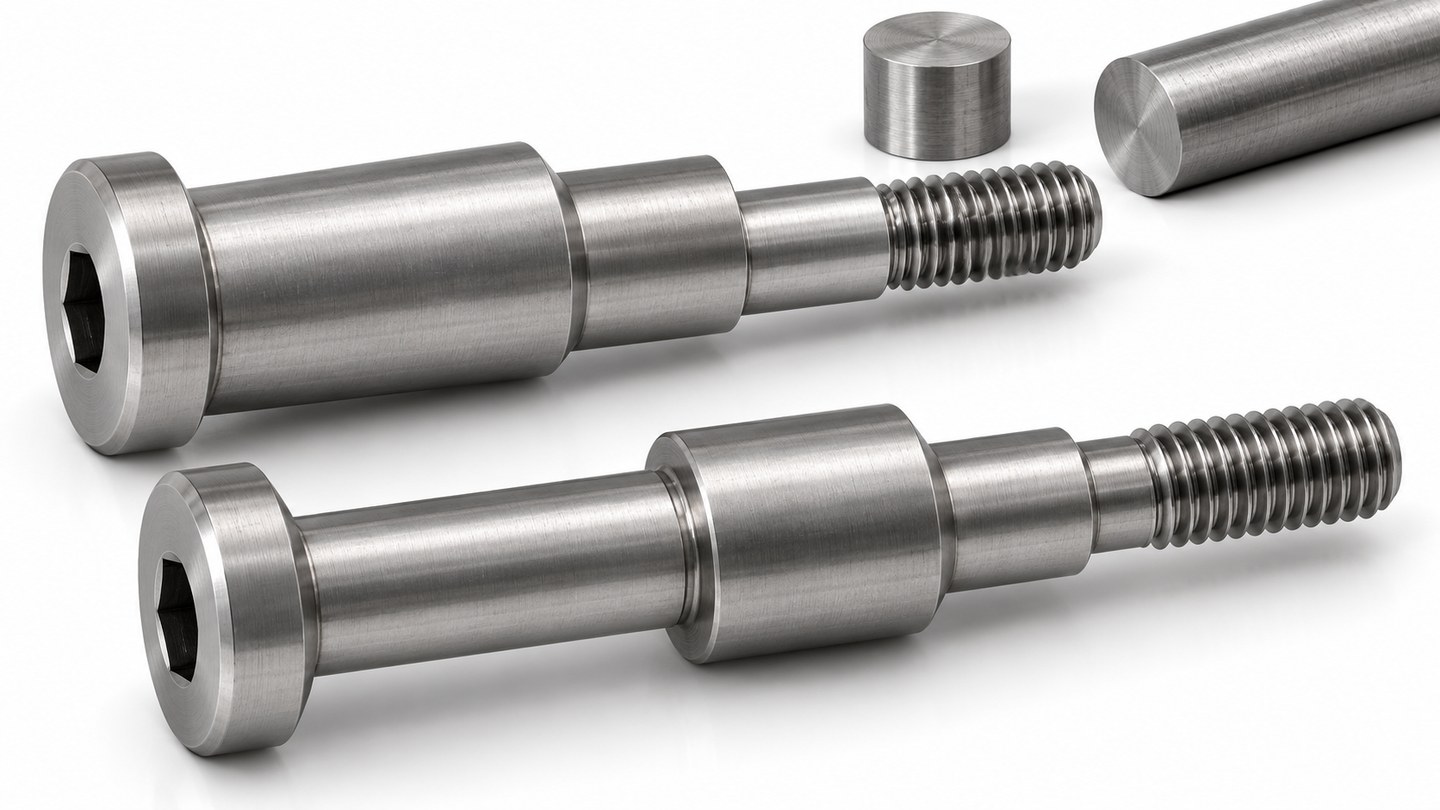
These screws are turned from aluminium bar, with the head knurled in the same setup and the thread cut behind it; the parts are then left plain or anodised. The first piece of every run is measured on head diameter and height, knurl pitch and depth, thread and overall length.


|

|
Knurling the head of an aluminum machine screw is easier than knurling steel and less forgiving of a dull tool. The metal flows readily, so the pattern comes up clean, but a worn knurl wheel leaves the diamonds rounded at the crest, and the grip that the joint was designed around disappears without any change in the visible pattern.
Threading aluminium has its own problem. The metal is soft enough that a cut thread can tear rather than shear, and a thread that looks complete can have a torn flank that galling will finish off in service. The tool condition and the cutting parameters are recorded with the job rather than adjusted at the machine.
Anodising, where specified, grows the oxide rather than adding a film, so the thread and the knurl keep their dimensions and the surface becomes harder. That is why anodised aluminium thumb screws last longer in the hand than plain ones.
What decides whether aluminum machine screws pass is the knurl, the head, the thread and the surface. The inspection agreement covers those, and the criteria come from the drawing.

Head and thread on the projector |

Thread and start checked |

Hardness against the aluminium grade |

Salt-spray testing of the plain surface |
Head diameter and height are measured with the knurl pitch and depth, and the pattern is inspected for rounded crests that a dimension check would miss. The thread is gauged with go and no-go rings, and the length is measured over the head.
The functional check is a hand test. A sample from every batch is gripped and turned into the customer insert at the torque the joint needs, then removed and refitted several times; that cycle shows a knurl that grips, a thread that seats, and whether the pair works together.
Where an anodised finish is specified, the colour and the hardness are checked against the sample, and the thread is re-gauged since the oxide growth can change the fit slightly on small sizes.
Every batch is traceable to the aluminium bar it was made from. The alloy and heat number appear on the material certificate supplied with the parts, and the anodising lot is recorded where a finish is specified.

ISO 9001:2015 |

RoHS test report |

Registered trademark |

Patent: security screw and driver |
With each shipment we supply the material certificate, the inspection record for the dimensions on the drawing including the knurl and thread, and the surface records for the batch. The documents carry the drawing revision and the batch number, so a repeat order of aluminum machine screws feels the same in the hand.
More than 8,678 customers in 89 countries and regions have ordered from Shi Shi Tong; 87% of orders come from repeat customers and 56% through referrals. Most projects follow the same route: drawing review, first-article approval, then batches checked against that sample. On a thumb screw the first article is opened and closed by hand in the customer enclosure, because grip and thread wear only show in that cycle. Buyers visit during the process to review samples.
|
8,678+
customers served
|
87%
of orders from repeat customers
|
56%
of orders through referrals
|
89
countries and regions shipped to
|
Buyers and quality engineers visit for sample review, process discussion and supplier audits; the visit is arranged around production so the turning cell and the knurling setup can be seen on the day the parts run.

Customer group visit – sample review |

Customer group visit – process discussion |

Customer group visit – factory tour |

Customer visit – project kick-off |

Danish customer – drawing review |

Industry exhibition – meeting customers |
What a hand can apply through the knurl, which is modest. The thread is sized for that rather than for a driver.
Handling polishes the crests. Anodising the head slows that, and a coarser knurl pitches the grip higher to begin with.
Sooner than a steel one of the same size. In a soft insert it is usually the insert that wears, which is the cheaper part.
The oxide film limits it indoors. Against steel in a wet joint, the aluminium becomes the anode, so the material pair matters.
Yes. The oxide grows in place, so the knurl and thread keep their dimensions while the part takes a colour.
Head diameter and height, knurl type and pitch, thread size and length, overall length and the finish.
How an aluminium thumb screw project runs from drawing to repeat delivery:
|
1
Send the drawing and the insert material
|
→ |
2
Knurl and thread paired
|
→ |
3
First article opened by hand
|
→ |
4
Batch production and repeat orders
|
Each step is confirmed with you before the next one starts; the drawing revision from the first article is what repeat orders are checked against.
For a quotation, send the drawing with the head diameter and height, knurl type and pitch, thread size and length, overall length and finish.
|
Head diameter
|
Head height
|
Knurl pitch
|
|
Thread size
|
Thread length
|
Finish
|
Sending a drawing? The form below does not take attachments. Email the PDF, DXF or STEP file to sst@szsst88.com with the part name and quantity in the subject line – the drawing is reviewed and a quotation follows.

 +86 13143444311
 sst@szsst88.com