Tel:
+86 13143444311
Email:sst@szsst88.com
Fax:+0086-755-27322278
Address:Building 9, First Industrial Zone, Tantou Industrial City, Songgang Street, Baoan District, Shenzhen 518105, Guangdong, China
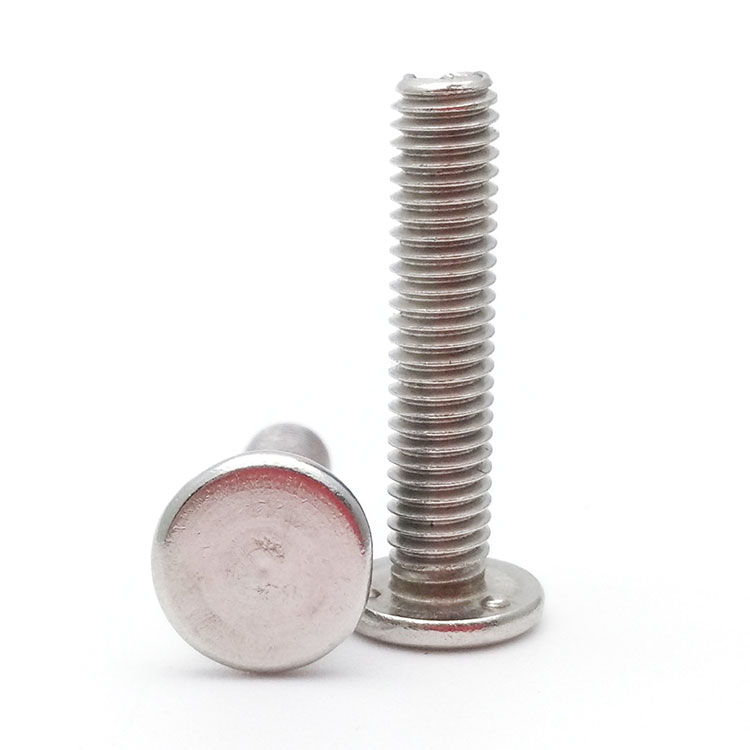
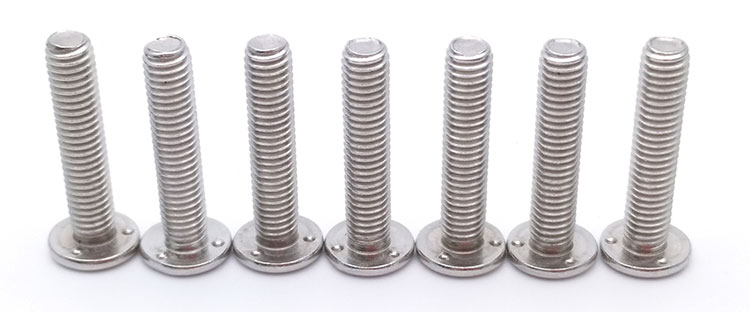
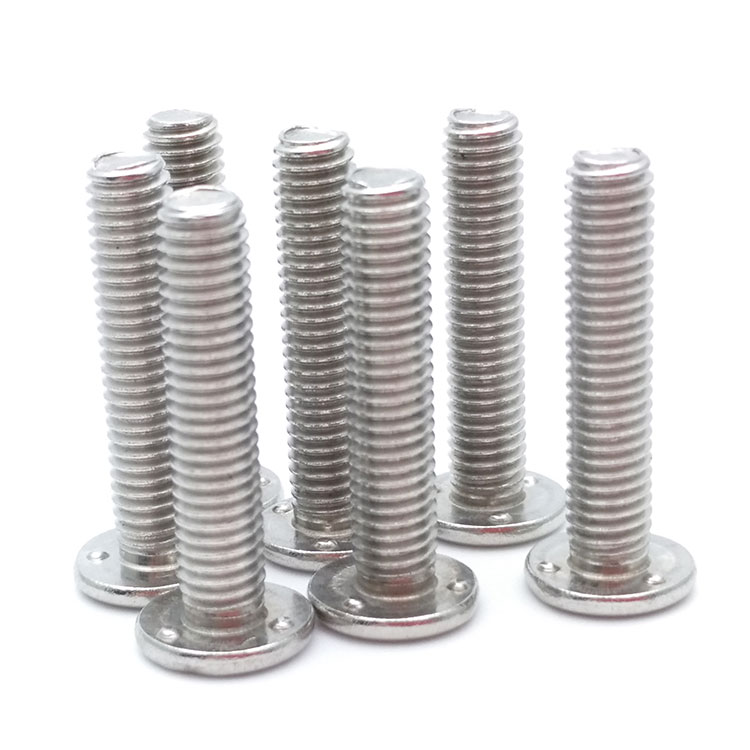
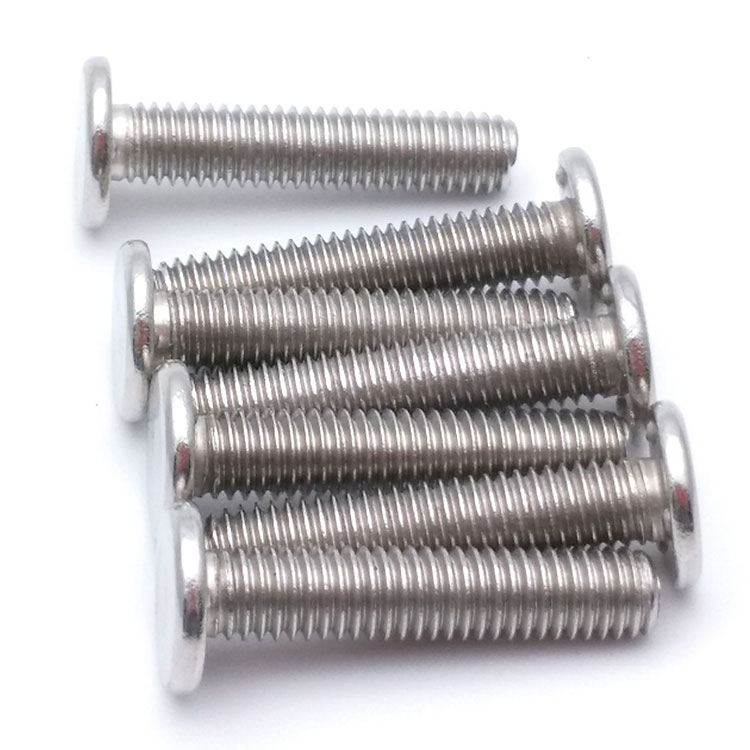
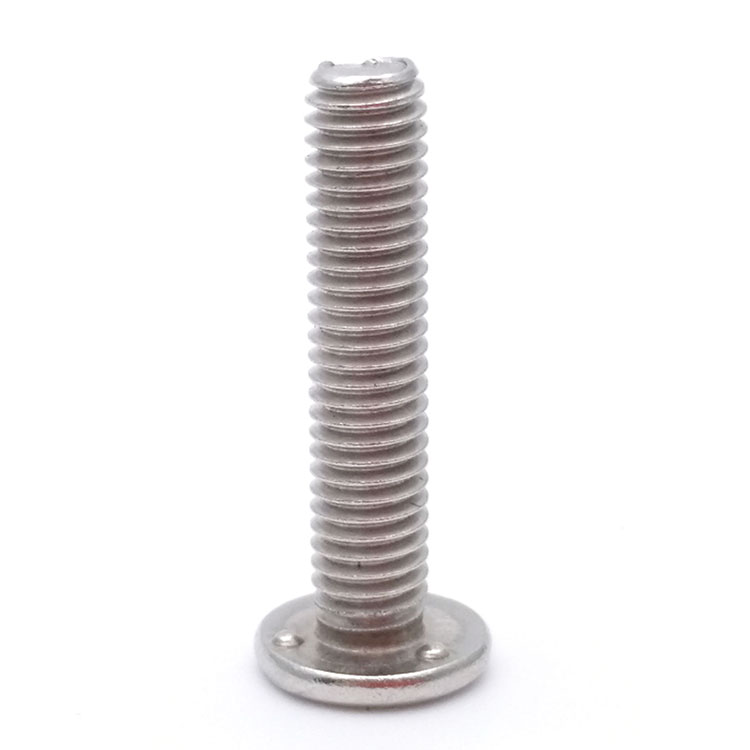
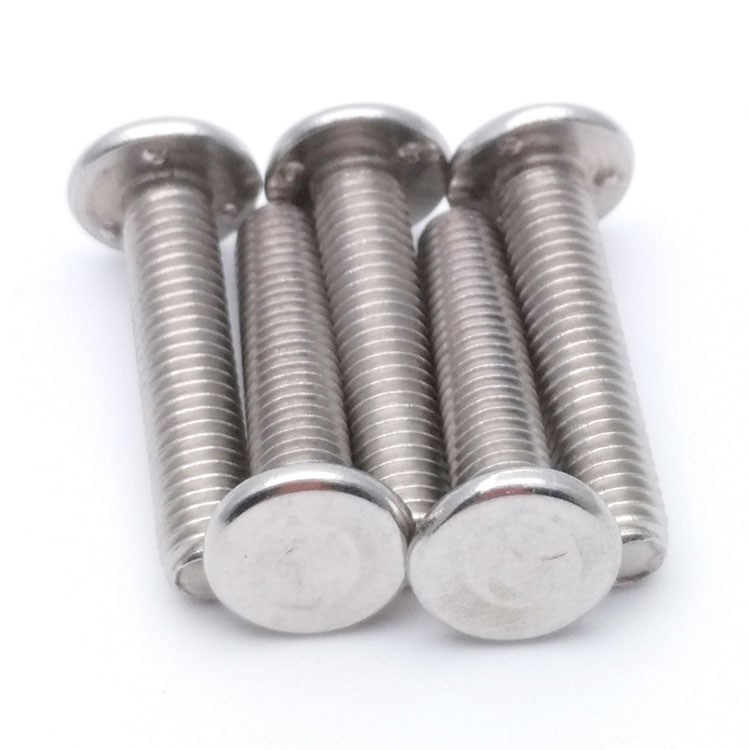
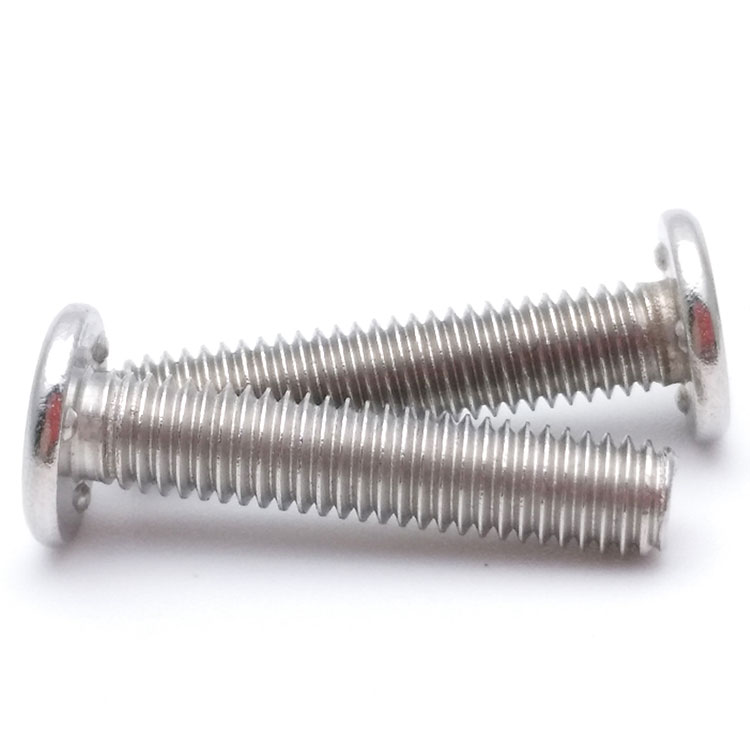
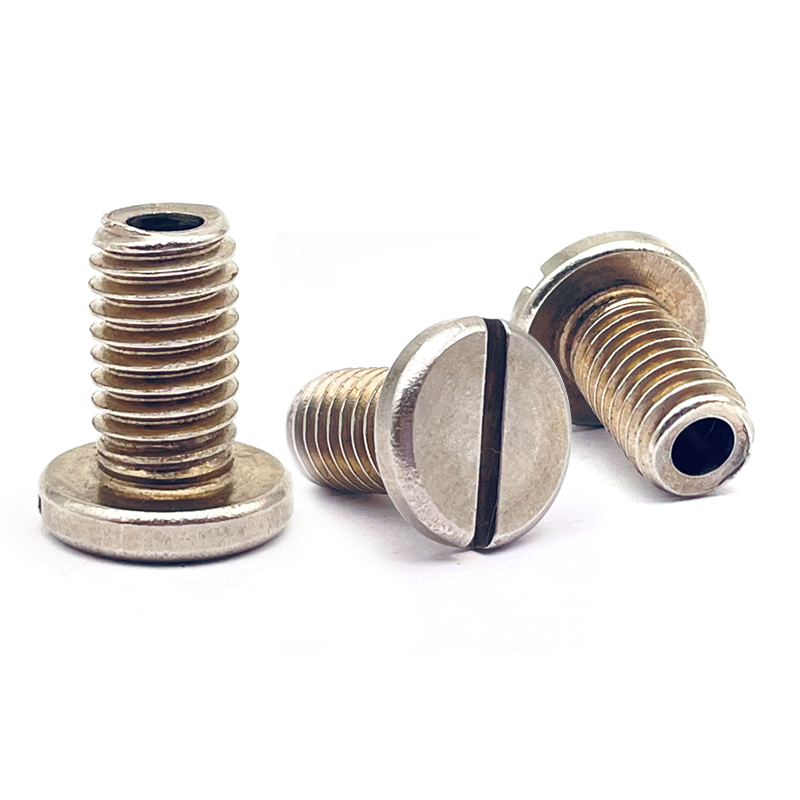
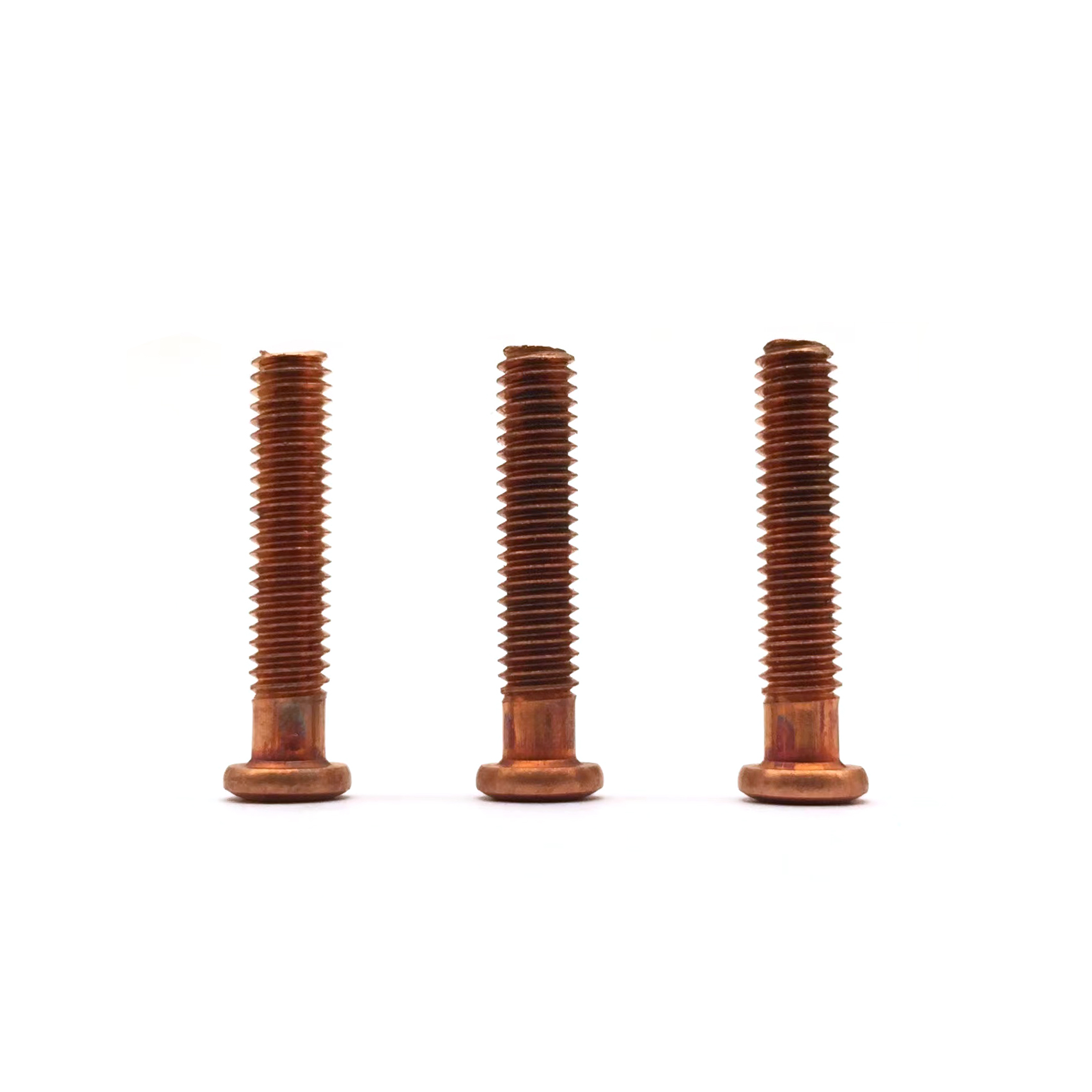
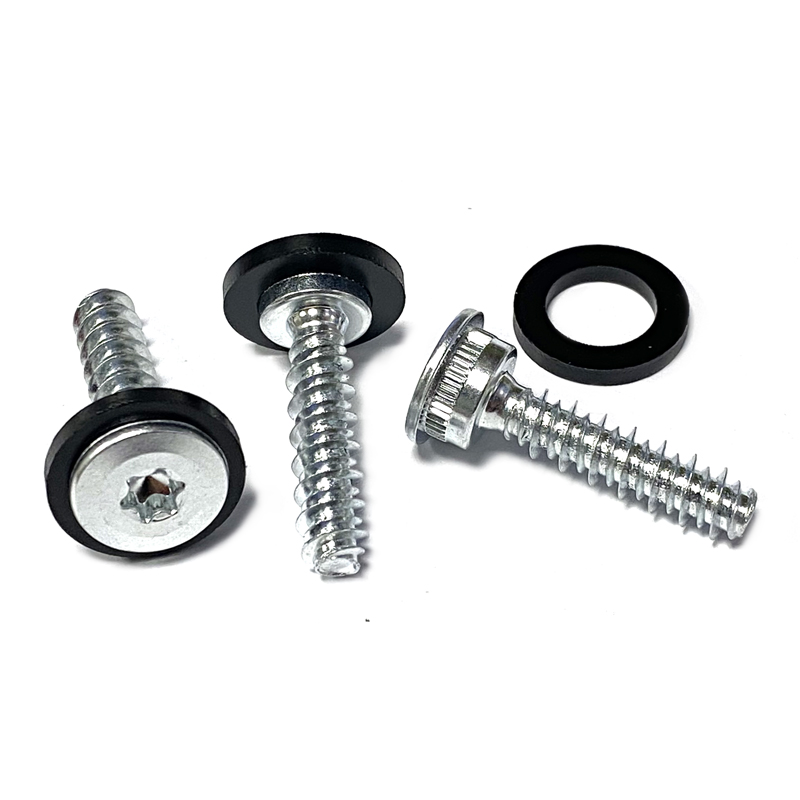
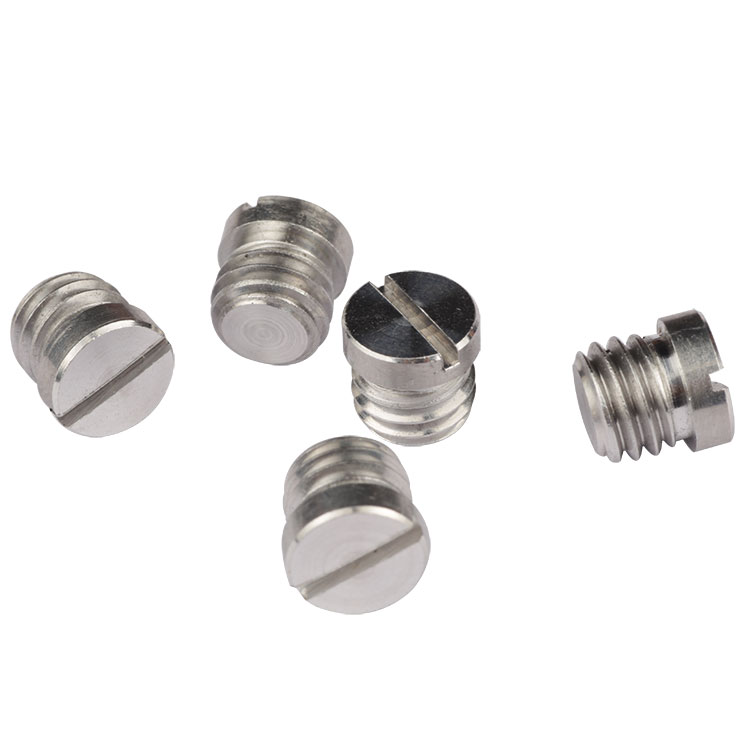
Type:Weld Screw, Stainless Steel Machine Screw
Materials:Stainless Steel
Surface treatment:Plain
Head Type:Ultra Low Head
Drive:None; welded (no recess)
Thread:Metric machine thread
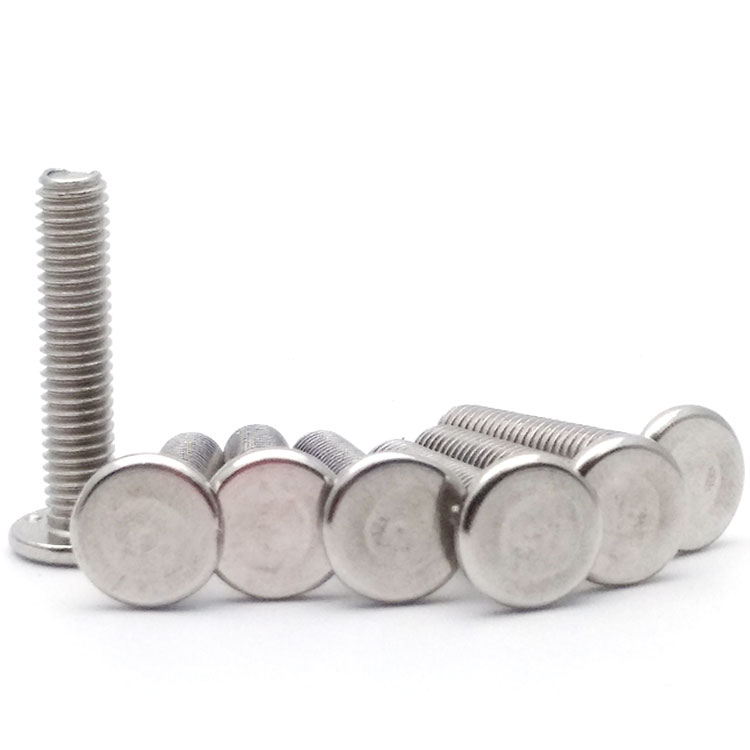
Point:Flat weld face
Forming:Single Die Heading
Size:M1 M2 M3 M4 M5 M6 M7 M8 M9 M10
Number:200
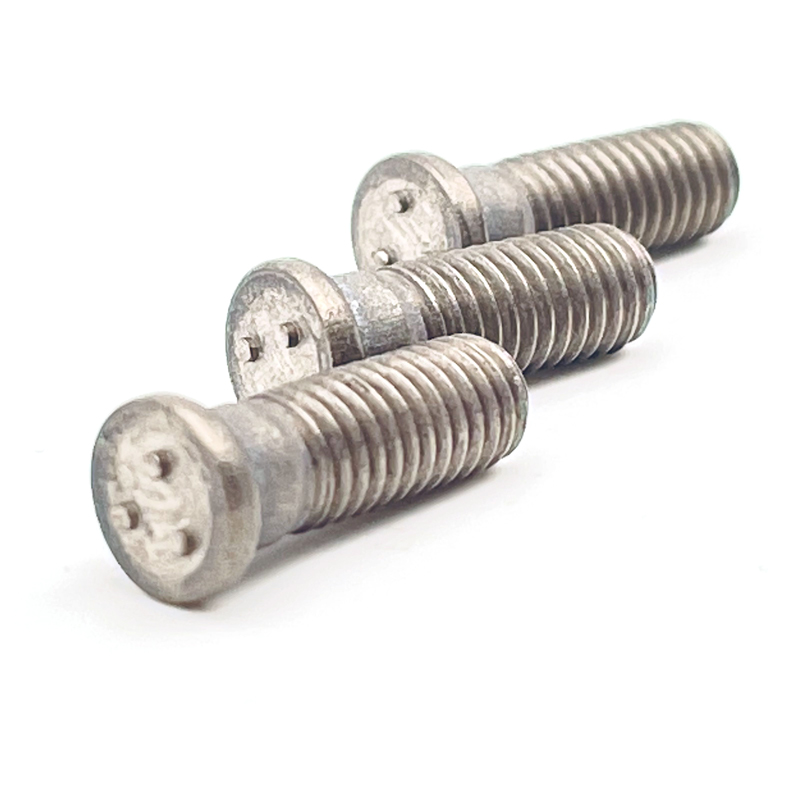
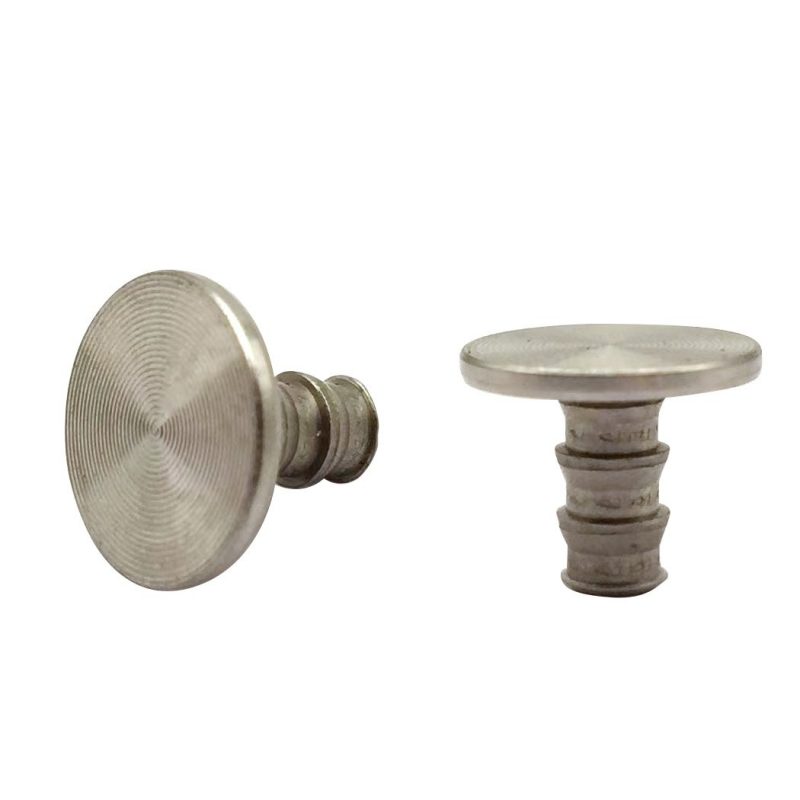
We make stainless steel weld screws with a flat, low head and no drive, threaded for a nut and quoted from M1 to M10. Head thickness, weld face flatness, thread and length from the face come from your drawing, and the first article is welded on your own sheet.
Watch the factory video·Email sst@szsst88.com
ISO 9001:2015 · Manufacturing since 1998 · 8,678+ customers · 89 countries and regions
Made to order – there is no stock catalogue. Each part is produced to your drawing, and production starts after drawing review and first-article approval.
Stainless steel weld screws are machine screws with a flat, low head and no drive recess, welded to a plate and clamped afterwards by a nut on the thread, quoted from M1 to M10 in plain passivated A2 stainless with Number 200. There is nothing to turn: the part is located and welded, and the joint is closed from the thread side.
Flat low head. A thin head with a flat top and a clean underside, so the welding electrode bears evenly and the part sits down on the sheet.
No recess. There is no slot and no socket, because the screw is never driven; it is welded.
Machine thread. A uniform thread that takes a nut, a bracket or a cable lug.
Plain stainless. A2 grade, passivated, with the weld face bare and unpainted.
Stainless steel weld screws are used where a threaded stud has to stand out of a panel: cabinet frames, distribution boards, busbar supports, filters and covers that are fixed from the inside. They replace a tapped hole or a loose bolt held with a second pair of hands, and they leave one clean thread where the assembly needs it.
A weld screw is the only screw on this site that has no drive at all. The head is not shaped for a key, and the thread is not shaped for a screwdriver; the part is placed on the sheet and joined by welding, and every later load passes through that weld and through the nut on the thread.
That is what moves the critical features of stainless steel weld screws away from the recess and onto the head. The underside has to sit flat on the sheet, because the welding current has to pass through a defined contact area rather than through the high points. A head with a slight dome, a burr at the rim or a mark from the forming die lifts the electrode, concentrates the current at one spot and leaves a weld that looks complete and holds nothing.
The head thickness matters in the same way. A thin head heats through quickly, distorts and pulls away from the sheet as it cools, which changes the height of the stud afterwards. The low profile is chosen so the welded head does not stand above the sheet, not because a thinner head welds better; on the contrary, there is a minimum practical thickness below which the head becomes the weak link.
Stainless changes the welding schedule rather than the geometry. Its electrical resistance and thermal conductivity differ from mild steel, so the current, time and electrode force are set for it, and a schedule carried over from steel produces spatter, a hot spot or an incomplete ring. The heat also stays closer to the head, which is good for the thread at the far end and bad for the flat face right under the electrode.
Finally, the thread has to be protected while all of that happens. Spatter on a thread is a rework job, and heat drawn into the first threads changes their fit. In practice, with stainless steel weld screws, the weld is placed at the head, the stud is long enough to keep the working thread away from the heat, and every batch is proved by welding a sample and gauging the thread afterwards.
The recorded range is M1 to M10, with lengths made to the drawing. Custom lengths up to 2,000 mm are subject to DFM review after drawing submission. For a weld screw the quotation carries head diameter and thickness, the weld face diameter, thread and length, and the length measured from the weld face.
| Item | How it is defined | What we control |
|---|---|---|
| Head | Flat, low, no drive | Diameter, thickness and weld face flatness |
| Weld face | The underside that meets the sheet | Flatness, cleanliness and edge condition |
| Thread | Machine thread | Pitch, length and run to the head |
| Length | From the weld face | Length tolerance before welding |
| Material | A2 stainless | Grade and heat number on the certificate |
| Finish | Passivated, plain | Weld face free of oil and free iron |
Length is measured from the weld face, not from the top of the head. On a welded part that distinction matters twice: the drawing dimension is what the nut sees, and welding draws the stud down slightly, so the finished height is set by the starting length plus the weld shrinkage.
On stainless steel weld screws head diameter is quoted with the weld face diameter. A head that is wide but whose flat contact area is small behaves like a small head under the electrode, and the weld ring is then smaller than the drawing suggests.
Four features define stainless steel weld screws, and each one has a consequence at the machine or at the joint:
| Feature | What it gives | What it costs |
|---|---|---|
| Flat low head | Sits on the sheet without standing proud | Thin head distorts under weld heat |
| No drive | Nothing to turn; no tool access needed | Cannot be adjusted after welding |
| Machine thread | A nut closes the joint | Needs a nut and the right stud length |
| A2 stainless | No coating to burn at the weld | Dissimilar weld to steel corrodes first |
| Weld face | Direct metal-to-metal contact | Must be clean; oil and free iron ruin it |
For stainless steel weld screws, the value is positioning. A tapped hole needs access from both sides, and a loose bolt needs a hand on each face; a weld screw needs neither. It is placed, welded and forgotten, and the assembly is closed by a nut from one side.
The cost, on stainless steel weld screws, is that nothing can be adjusted afterwards. If the stud is bent, cross-threaded or too short, the correction is cutting it off and welding a new one, which is the expensive kind of rework that a weld screw is supposed to avoid.
The recorded finish is passivation on A2 stainless with nothing plated on top. On a weld screw that is not a preference: the weld face has to be bare metal, because a coating between the electrode and the sheet becomes a high-resistance layer and the weld either fails or spatters. Passivation leaves the face clean without adding anything to it.
| Option | How it protects | Effect on the weld face | Typical use |
|---|---|---|---|
| A2 stainless, passivated | Passive chromium oxide film | Face bare; welds on stainless sheet | Cabinets and boards |
| A4 stainless, passivated | Passive film with molybdenum | Face bare; welds on stainless sheet | Marine and chemical |
| Steel, uncoated for welding | Nothing; welded first, coated later | Face bare; ideal for projection welding | Coated panels after weld |
| Steel, zinc plated | Sacrificial zinc | Zinc burns at the weld; face re-cleaned | Light-gauge frames |
| Stainless with a thread plug | Passive film; thread protected | Face bare; plug removed after weld | Visible threads |
Where a plated steel weld screw is used, the coating is destroyed at the weld and has to be repaired with a zinc-rich paint or a cold galvanising compound. That repair is part of the process, not an optional touch-up, because the weld ring is the one place that will be wet and unprotected.
Where the stud is welded to a painted or galvanised panel, the paint or the zinc is burned back around the weld by definition. A stainless stud on a galvanised sheet leaves a small galvanic couple at that ring, and in a damp location that is where the corrosion starts, ahead of the sheet itself.
Three assemblies where a welded stud is the practical way to get a thread onto a panel:
| Where it sits | The stud stands out of a back plate so a busbar, a bracket or a cover can be fixed from the inside with a nut. |
| When it goes wrong | The weld ring is incomplete and the stud turns or breaks off when the nut is tightened. |
| Why it happens | The panel is thin, access behind it is impossible, and the stud has to hold torque. |
| What we control | Weld face flatness checked; sample welded and the thread gauged after welding. |
| Where it sits | The stud locates a cover that is fitted from one side, where a tapped hole would need access behind the panel. |
| When it goes wrong | The stud is welded slightly out of square and the cover will not seat. |
| Why it happens | The cover is fitted blind, the panel is thin, and the stud is the only fixing point. |
| What we control | Head thickness and squareness checked; sample welded and fitted with a cover. |
| Where it sits | The stud carries an earth strap or a lug where a bolted joint is made on site. |
| When it goes wrong | Spatter from the weld lands on the thread and the nut will not run on. |
| Why it happens | The joint is electrical, the thread is exposed, and the weld is close to the working length. |
| What we control | Spatter protection and thread gauging after weld; first sample welded and assembled. |
Four reasons that matter on a part that is joined by welding rather than by torque, each tied to something the drawing has to prove:
|
Weld face and length agreed
Weld face flatness, head thickness and the length from the weld face are agreed as a set, because those three decide how the part behaves at the electrode. Basis: Weld face and length agreed. |
Formed flat, threaded and passivated
The flat head is formed without a recess, the thread is rolled clear of the head, and the parts are passivated with the weld face left bare. Basis: One route from wire to passivated stud. |
|
Thread gauged after a weld sample
A sample from every batch is welded and the thread is gauged afterwards, because heat and spatter are what actually threaten the joint. Basis: Sample welded, thread gauged after. |
First article welded on your sheet
The first article is welded on the customer sheet with the customer equipment, because the weld ring is a property of the pair. Basis: First article welded on your sheet. |
Stainless steel weld screws are headed on single-die machines that form the flat, low head with no recess, rolled with the machine thread and passivated as a batch with the weld face kept bare. The first part of every run is measured on head diameter and thickness, weld face flatness, thread and length from the face.


|

|
The flat head is formed in one stroke and then the weld face is what the whole part depends on. A die that is slightly worn leaves a face that is flat to the eye and a few hundredths out across its diameter; under an electrode that difference decides whether the current passes as a ring or as a single point, and the difference is invisible on the finished part.
Keeping the thread clear of the head is the second control. The thread run stops before the head so that the first engaged thread is a full thread and there is a short plain section at the weld. That plain section is what protects the thread from the heat, and it is also what allows the electrode to sit without touching the thread.
What decides whether stainless steel weld screws pass is the weld face, the head, the thread and the material. The inspection agreement covers those, and the criteria come from the drawing.

Head and weld face on the projector |

Thread gauged after welding |

Core hardness checked |

Salt-spray testing of the grade |
The weld face is checked for flatness across its full diameter, and the head is checked for thickness and for the absence of a burr at the rim, because a burr is a high point that lifts the electrode. Length is measured from the weld face and not from the top of the head, since that is the dimension the nut sees.
A sample from every batch is welded to a sheet of the customer’s material with the customer’s schedule, then twisted and gauged. The twist is the practical test of the ring: a stud that holds a nut but turns under a wrench has a weld that passed inspection and failed its job.
Every batch is traceable to the wire it was made from and to the passivation batch that finished it. The grade and heat number appear on the material certificate supplied with the parts, and the inspection records follow the criteria agreed on the drawing.

ISO 9001:2015 |

RoHS test report |

Registered trademark |

Patent: security screw and driver |
With each shipment we supply the material certificate, the inspection record for the dimensions on the drawing and, where the grade is listed, the third-party report that covers it. The documents carry the drawing revision and the batch number, so a repeat order keeps the same weld face and the same length.
More than 8,678 customers in 89 countries and regions have ordered from Shi Shi Tong; 87% of orders come from repeat customers and 56% through referrals. Most projects follow the same route: drawing review, first-article approval, then batches checked against that sample. On stainless steel weld screws the first article is welded on the customer’s sheet with the customer’s equipment, because the weld ring is a property of the pair. Buyers visit during the process to review samples.
|
8,678+
customers served
|
87%
of orders from repeat customers
|
56%
of orders through referrals
|
89
countries and regions shipped to
|
Buyers and quality engineers visit for sample review, process discussion and supplier audits; the visit is arranged around production so the headers and the passivation line can be seen on the day the parts run.

Customer group visit – sample review |

Customer group visit – process discussion |

Customer group visit – factory tour |

Customer visit – project kick-off |

Danish customer – drawing review |

Industry exhibition – meeting customers |
The part is welded, not turned. The joint is closed by a nut on the thread, so a recess would only add cost and reduce the head thickness.
Resistance welding through the flat head, with a schedule set for stainless rather than for steel. Current, time and force are agreed with the welding equipment.
The current passes through the contact face. A domed or burred face lifts the electrode and concentrates the current at one point.
The zinc burns back around the weld. That ring is the first place to corrode, so the joint is repaired with a zinc-rich coating after welding.
The thread run stops short of the head, so the heat stays in the head. A sample from every batch is welded and the thread gauged afterwards.
Head diameter and thickness, weld face diameter, thread pitch, and the length measured from the weld face.
How a weld screw project runs from drawing to repeat delivery:
|
1
Send the drawing and the sheet
|
→ |
2
Weld face, head and length agreed
|
→ |
3
First article welded on your sheet
|
→ |
4
Batch production and repeat orders
|
Each step is confirmed with you before the next one starts; the drawing revision from the first article is what repeat orders are checked against.
For a quotation, send the drawing with the head diameter and thickness, weld face diameter, thread pitch, length from the weld face and the sheet material.
|
Head diameter
|
Head thickness
|
Weld face
|
|
Thread
|
Length
|
Sheet grade
|
Sending a drawing? The form below does not take attachments. Email the PDF, DXF or STEP file to sst@szsst88.com with the part name and quantity in the subject line – the drawing is reviewed and a quotation follows.

 +86 13143444311
 sst@szsst88.com