Tel:
+86 13143444311
Email:sst@szsst88.com
Fax:+0086-755-27322278
Address:Building 9, First Industrial Zone, Tantou Industrial City, Songgang Street, Baoan District, Shenzhen 518105, Guangdong, China
Type:Titanium screws
Materials:Titanium
Surface treatment:Oxidation
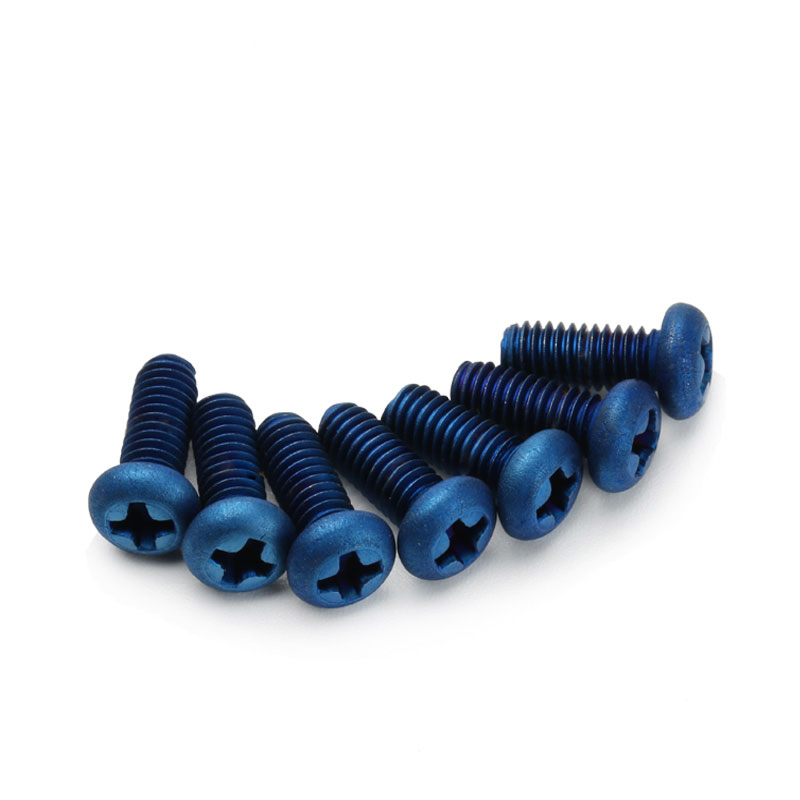
Head Type:Pan head
Drive:Phillips cross recess
Thread:Machine thread
Point:Plain, chamfered
Forming:Turned or headed; oxidised in air
Size: M1 M2 M3 M4 M5 M6 M7 M8 M9 M10 M11 M12 M13 M14 M15
We make oxidation titanium pan head screws in TA2 commercially pure titanium with a Phillips cross, coloured by heating in air and quoted from M1 upward to the drawing. The colour is an oxide thickness, and the same heat that sets it also diffuses oxygen below the surface, so the process is run to a record rather than to a shade card.
Watch the factory video·Email sst@szsst88.com
ISO 9001:2015 · Manufacturing since 1998 · 8,678+ customers · 89 countries and regions
Made to order – there is no stock catalogue. Each part is produced to your drawing, and production starts after drawing review and first-article approval.
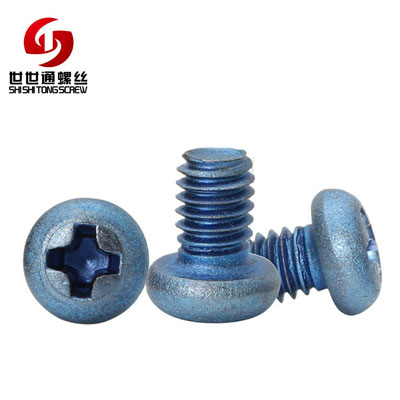
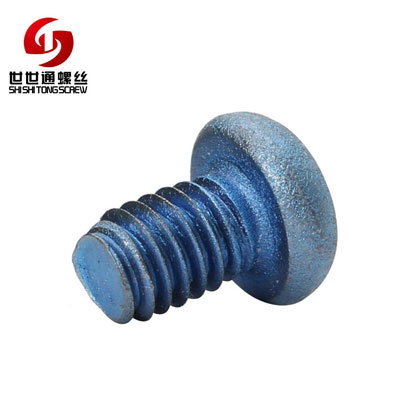
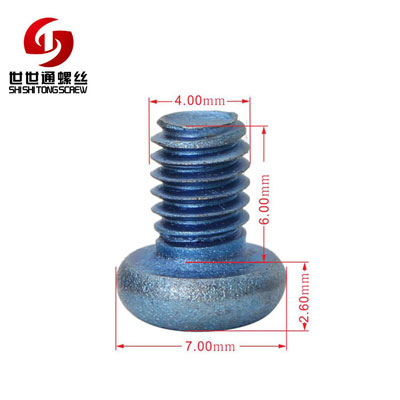
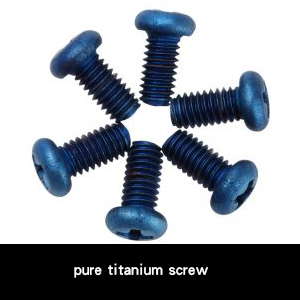
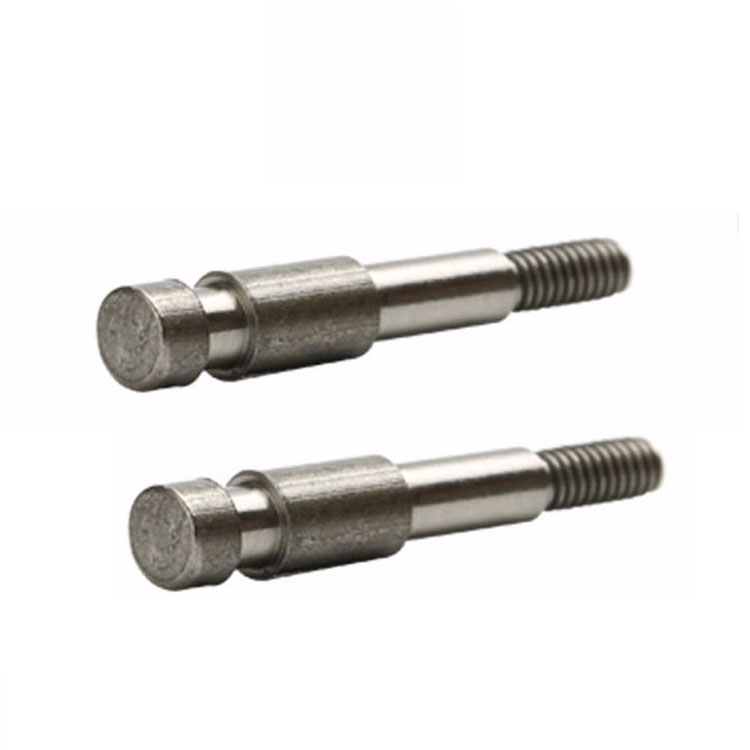
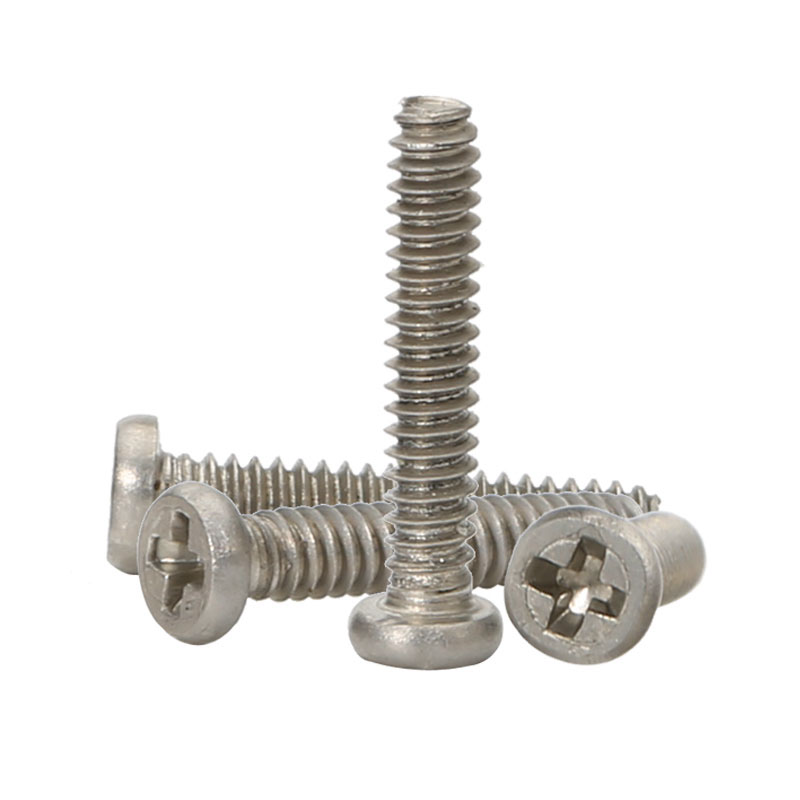
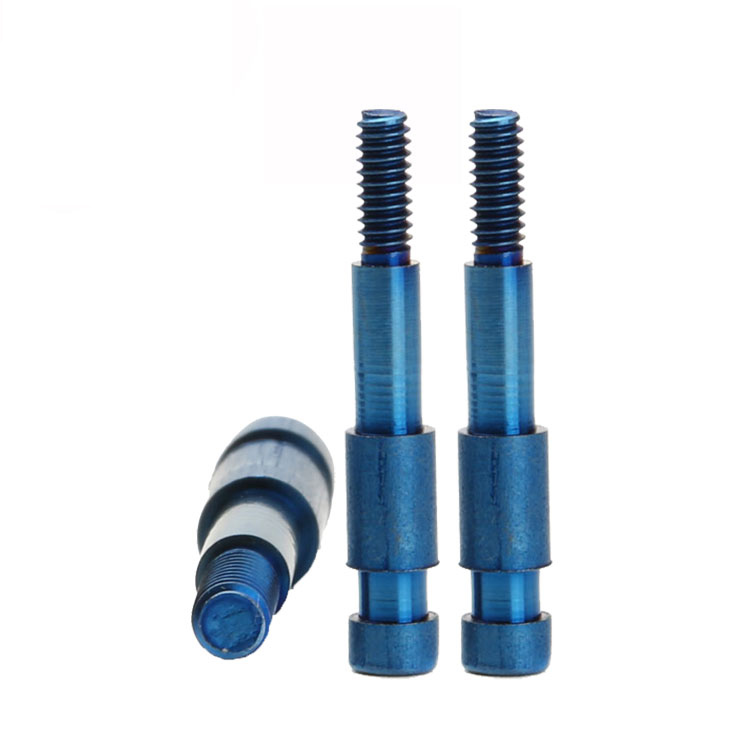
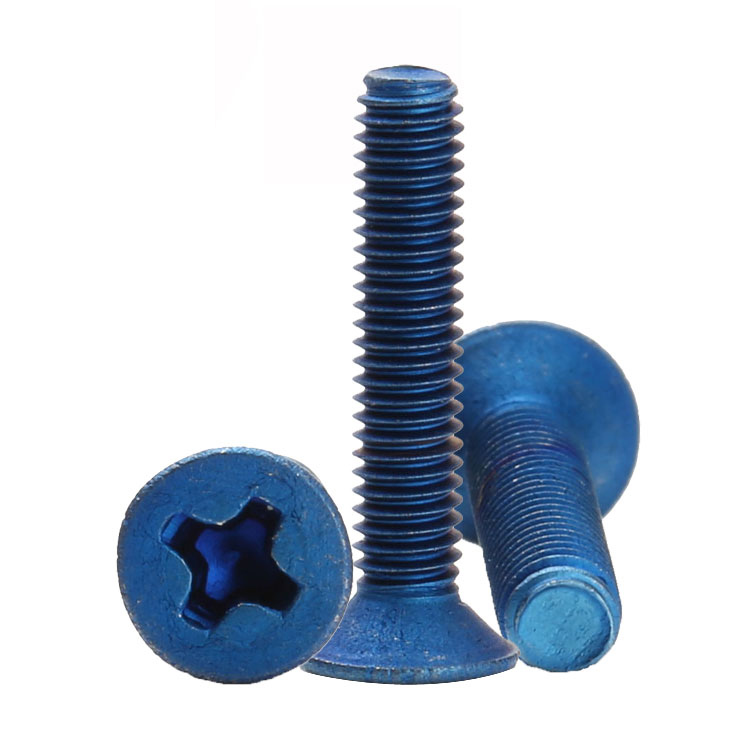
Oxidation titanium pan head screws are titanium machine screws coloured by heating rather than by coating. This part is TA2 commercially pure titanium with a pan head, a Phillips cross and an oxidised finish in the blue to purple range, and is quoted from M1 upward with the length made to the drawing.
TA2 titanium. Commercially pure grade, chosen for corrosion resistance rather than for strength.
Pan head. A shallow dome with a flat bearing ring, and enough height for a full cross.
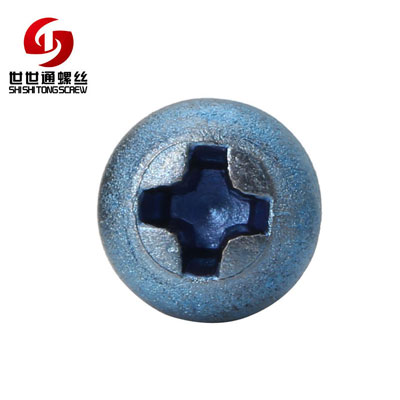
Phillips cross. A standard recess, driven with the bit the line already has.
Oxidised surface. An oxide grown by heating in air, whose thickness sets the colour.
They are used where a titanium fixing has to be coloured without a coating: sunglasses and eyewear, watch hardware, small instruments and consumer products where the finish has to survive handling rather than chemicals, and where the part is small enough that a shade difference between two screws would be noticed at arm’s length.
Oxidation colouring is a heat treatment. The part is held in air at a controlled temperature, oxygen diffuses into the surface and an oxide film grows; when the film is a few tens of nanometres thick it produces an interference colour, and the colour moves from straw through blue and purple to grey as the film thickens. There is no pigment and no coating — the colour is a thickness, and the thickness is time and temperature.
The same diffusion does something else. Oxygen that is not consumed by the oxide layer continues below it and dissolves into the metal, forming a hard, brittle, oxygen-rich zone usually called alpha case. On a small screw with fine threads, that zone is a significant fraction of the thread depth, and it is the reason an oxidised part can feel harder at the surface and crack sooner at the crest than a plain one.
So the process is a balance rather than a setting. Enough heat and time for the colour the customer wants; not so much that the alpha case reaches through the thread or into the fillet under the head. That balance is why oxidation is specified with a temperature, a time and an accepted colour range, and why a colour matched exactly to a swatch is a poor requirement for a titanium pan head screw.
Batch repeatability follows from the same physics. Colour depends on film thickness, film thickness depends on furnace position, gas flow and part mass, so two lots in the same furnace can differ by a shade. A range is realistic; an exact match is not, unless the parts are processed one lot at a time to the same record.
The pan head is well suited to the process and to the risk. It is thick enough that the alpha case stays in the dome rather than through the bearing ring, and its flat underside seats on the panel, so the coloured surface is the one that is seen while the bearing face stays functional.
Where the colour has to be exact and repeatable, anodising is the alternative: the film is grown electrolytically rather than by diffusion, the colour is set by voltage, and the process can be run to a target rather than to a range.
Oxidation titanium pan head screws are quoted by thread size, length, head diameter and height, recess, grade, the oxidation temperature and time, and the accepted colour range. Custom lengths up to 2,000 mm, subject to DFM review after drawing submission. The quotation carries the grade, the head, the recess, the thread and the oxidation record.
| Item | How it is defined | What we control |
|---|---|---|
| Grade | TA2 commercially pure | Chemistry and mechanical properties |
| Head | Pan head | Diameter, height and bearing ring |
| Recess | Phillips | Depth and width |
| Thread | Machine thread | Size, pitch and length |
| Oxidation | Temperature and time | Colour range and alpha case limit |
| Colour | Accepted range | Shade agreed against a sample |
The colour is written as a range with a sample, not as a code. Two parts of the same range can look slightly different and both be correct, which is the honest way to specify a diffusion colour.
The temperature and time are written because they are the process, and because they are what keeps the alpha case within limits. A colour request without them leaves the furnace to decide both the shade and the metallurgy.
The recess is checked after oxidation. The film grows on the cross as well as on the dome, and a cross that was cut to the drawing takes the bit with a little less clearance once the oxide is on.
Four properties decide this part, and each carries a cost:
| Property | What it gives | What it costs |
|---|---|---|
| TA2 titanium | No rust, no magnetism, light | Low strength compared with alloy grades |
| Oxidised colour | Colour in the metal, nothing to flake | Shade varies within a range |
| Pan head | A bearing ring and a full cross | Stands above the surface |
| Heat treatment | A harder surface than plain | An alpha case that must stay in limits |
The value is colour that is part of the metal: it does not chip off at the cross, it does not add thickness to the thread, and it survives cleaning that would strip a coating.
The cost is that the colour comes from a heat treatment with a metallurgical side effect, so the part has to be processed to a record rather than to a shade card.
The recorded finish is thermal oxidation in air. It is a surface conversion: an oxide whose thickness sets the colour, on a metal whose surface has also absorbed oxygen below the film. Both effects scale with the same heat, which is why the finish is specified as a process and not as a colour.
| Option | How it protects | Colour control | Typical use |
|---|---|---|---|
| Thermal oxidation | Grown oxide, diffusion | Range; depends on furnace | Coloured small screws |
| Anodising | Grown oxide, electrolytic | Set by voltage; repeatable | Exact colour needed |
| Plain | Natural oxide | None; grey metal | Mechanical parts |
| Passivation | Cleaned oxide | None; uniform grey | Medical and food |
| Dry film lubricant | Low-friction film | None; functional only | Joints opened often |
Anodising is the finish to choose when the colour has to match a panel exactly and be the same in six months, because the voltage sets the thickness directly and the process is repeatable.
Thermal oxidation is chosen when the colour is a design accent on a small part and a slight variation between lots is acceptable, or even wanted.
Three products where coloured titanium is the point:
| Where it sits | The screw closes a hinge or a lens mount where the fixing is tiny and is seen at close range. |
| When it goes wrong | The colour does not match between the screws in one pair, or the cross rounds. |
| Why it happens | Two oxidation lots were mixed, and the recess takes the bit with less clearance. |
| What we control | Colour compared as a lot; gap between lots widened by loading one charge at a time. |
| Where it sits | The screw holds a case back or a strap bar where the part is handled daily. |
| When it goes wrong | The colour wears at the edges, or the thread galls when the case is opened. |
| Why it happens | The oxide is thin at an edge, and titanium runs on titanium without a lubricant. |
| What we control | Oxidation record and lubricant agreed; sample exposed and dismantled. |
| Where it sits | The screw is a visible detail on a product where the finish is part of the design. |
| When it goes wrong | The shade differs between batches, or the head marks the body. |
| Why it happens | The oxidation record was not held, and the head is not flat on its bearing ring. |
| What we control | Process record kept per charge; head flatness and colour checked as fitted. |
Four points that decide whether an oxidised titanium screw is both the right colour and sound in the thread:
|
Colour as a range with a sample
The drawing carries a colour range and a reference sample, because a diffusion colour cannot be matched exactly lot to lot. Basis: Colour agreed, not argued. |
Heat recorded per lot
Temperature and time are recorded for every lot, so the shade and the alpha case both come from a known process. Basis: Process on record. |
|
Cross checked after oxidation
The Phillips cross is checked with the bit after the oxide is on, because the film grows inside it as well. Basis: Bit fits the finished part. |
Same grade every lot
Grade and heat treatment are recorded with the drawing revision, so a repeat lot colours and behaves the same. Basis: Same finish across lots. |
A coloured titanium part is bought for how it looks and judged by whether it still drives. These four points are what keeps the appearance and the thread from being decided by two different processes.
These screws are turned or headed in TA2 titanium, with the pan head formed, the Phillips cross cut and the thread rolled or cut, then heated in air to the temperature and time on the record and cooled. The first piece of every run is measured on head, cross, thread and length, and checked against the colour sample.


|

|
The furnace is where the part is finished and where the risk sits. Parts are loaded so that each one sees the same air and heat, because a screw at the back of a charge can come out a shade behind one at the front, and mixing them in a bag produces a customer complaint about colour that is really a complaint about loading.
The oxidation is logged with temperature, time and charge. That record is what makes the colour defensible and what allows a metallurgical check on the alpha case if a customer asks for one.
Nothing is applied after the furnace. The part is packed as it comes out, which is why handling marks show on an oxidised screw and why the parts are not tumbled at the end of the route.
What decides whether a batch of oxidation titanium pan head screws passes is the cross that takes the bit, the colour against the sample and the surface layer that the heat produced. The inspection agreement covers all three.

Head and cross on the projector |

Thread checked with gauges |

Material checked |

Salt-spray testing where required |
The head is measured for diameter and height and the cross for depth and width, and the sample is driven with the bit. On an oxidised part the cross is checked after the furnace, because the film inside it changes the fit.
The colour is compared with the reference sample under the same light, and the lot is accepted as a lot rather than screw by screw. Mixed shades in one delivery are the defect that customers see first, and they come from loading rather than from the furnace setting.
The surface layer is checked where the drawing asks for it, by a section or a hardness traverse. That check is what proves the heat treatment did not run past the point where the thread becomes brittle, and it is the reason the temperature and time are on the record.
Every batch of oxidation titanium pan head screws is traceable to the bar and to the oxidation charge. The material certificate states the grade, the heat number and the mechanical properties, and the oxidation record carries the temperature, the time and the charge number.

ISO 9001:2015 |

RoHS test report |

Registered trademark |

Patent: security screw and driver |
With each shipment we supply the material certificate, the inspection record for the head, cross and thread, and the oxidation record. The records carry the charge number, so a repeat order can be compared with the first on the two things that matter for this finish: the colour range and the heat that produced it.
More than 8,678 customers in 89 countries and regions have ordered from Shi Shi Tong; 87% of orders come from repeat customers and 56% through referrals. Most projects follow the same route: drawing review, first-article approval, then batches checked against that sample. On an oxidised part the first article is also a colour reference, held against the delivered lots so that a shade shift is caught before the customer sees it. Buyers visit during the process to review samples.
|
8,678+
customers served
|
87%
of orders from repeat customers
|
56%
of orders through referrals
|
89
countries and regions shipped to
|
Buyers and quality engineers visit for sample review, process discussion and supplier audits; the visit is arranged around production so the turning cell and the furnace charge can be seen on the day the parts run.

Customer group visit – sample review |

Customer group visit – process discussion |

Customer group visit – factory tour |

Customer visit – project kick-off |

Danish customer – drawing review |

Industry exhibition – meeting customers |
No. It is an oxide grown by heating; there is nothing to chip, and it adds no measurable thickness to the thread.
The colour is set by the film thickness, which depends on furnace position and part mass. A range is the honest specification.
Within a lot, yes. Between lots it is a range unless the parts are anodised, where voltage sets the thickness.
Yes. Oxygen diffuses below the film and forms a hard, brittle surface layer, which is why temperature and time are controlled.
It is checked after oxidation, because the film grows inside the cross as well as on the dome.
Grade, thread and length, head and recess, oxidation temperature and time, and the accepted colour range.
How an oxidised titanium screw project runs from drawing to repeat delivery:
|
1
Send the drawing and the colour sample
|
→ |
2
Grade, head and oxidation record agreed
|
→ |
3
First article driven and colour-checked
|
→ |
4
Batch production and repeat orders
|
Each step is confirmed with you before the next one starts; the drawing revision used for the first article is what repeat orders are checked against.
For a quotation, send the drawing with the grade, thread and length, head diameter and height, the recess, the oxidation temperature and time, and the colour range you will accept.
|
Grade
|
Head
|
Recess
|
|
Thread
|
Oxidation
|
Colour
|
Sending a drawing? The form below does not take attachments. Email the PDF, DXF or STEP file to sst@szsst88.com with the part name and quantity in the subject line – the drawing is reviewed and a quotation follows.

 +86 13143444311
 sst@szsst88.com