Tel:
+86 13143444311
Email:sst@szsst88.com
Fax:+0086-755-27322278
Address:Building 9, First Industrial Zone, Tantou Industrial City, Songgang Street, Baoan District, Shenzhen 518105, Guangdong, China
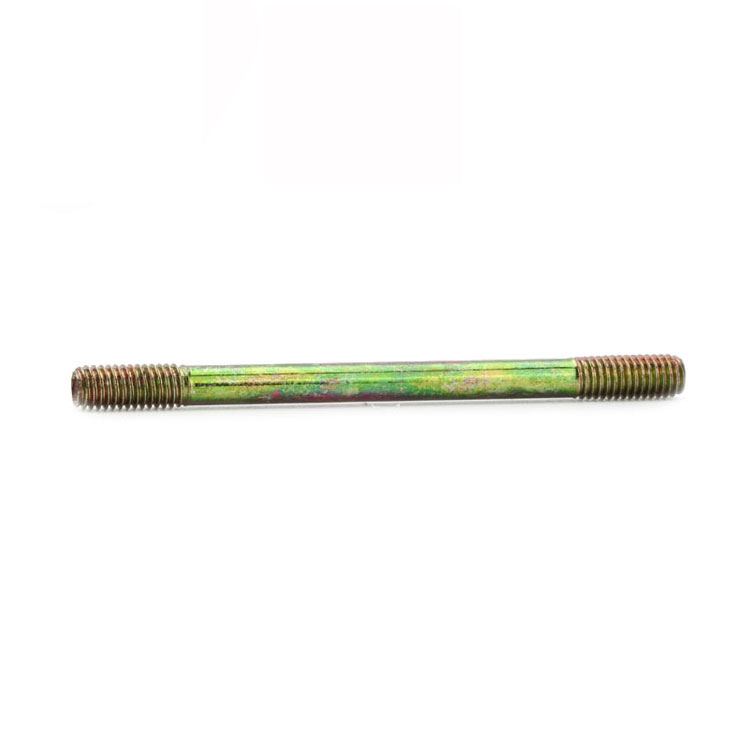
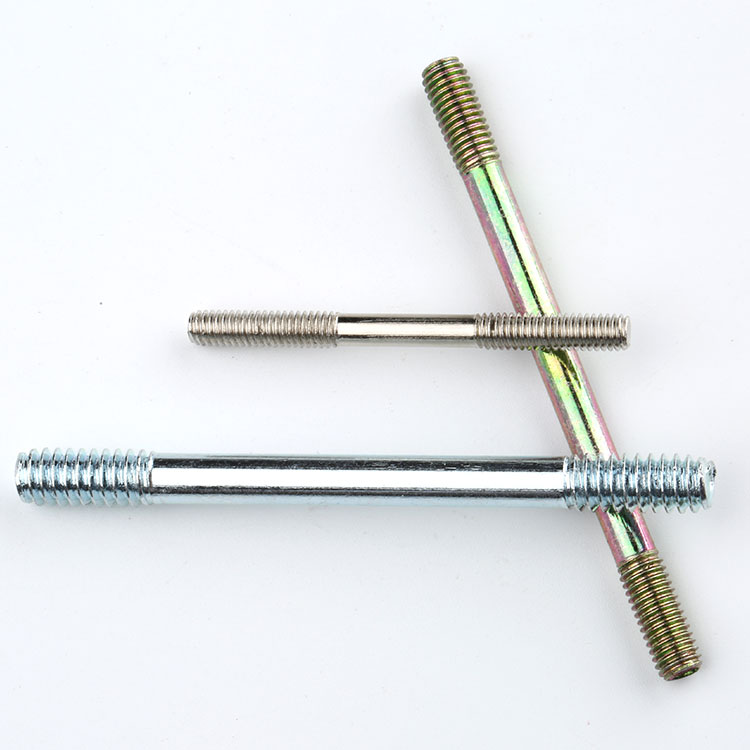
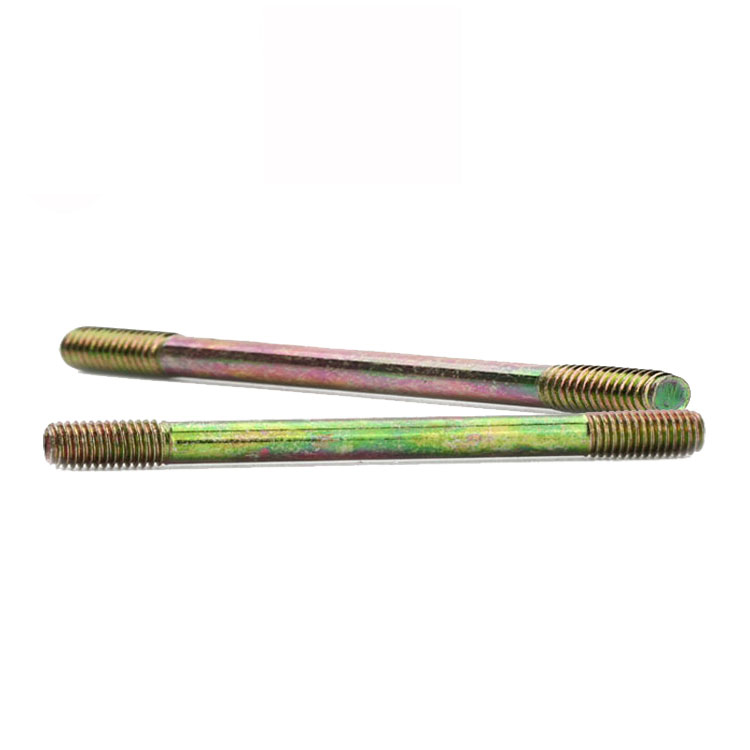
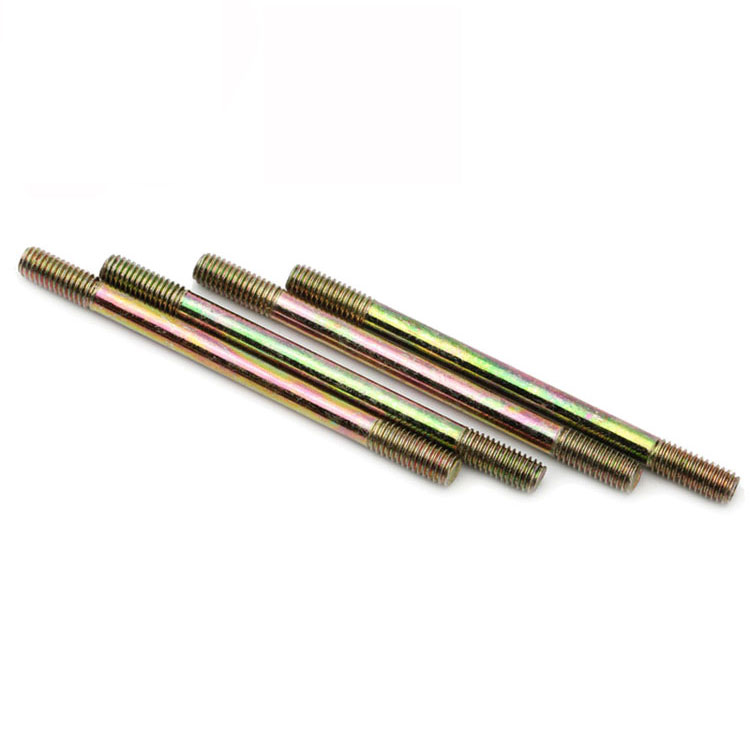
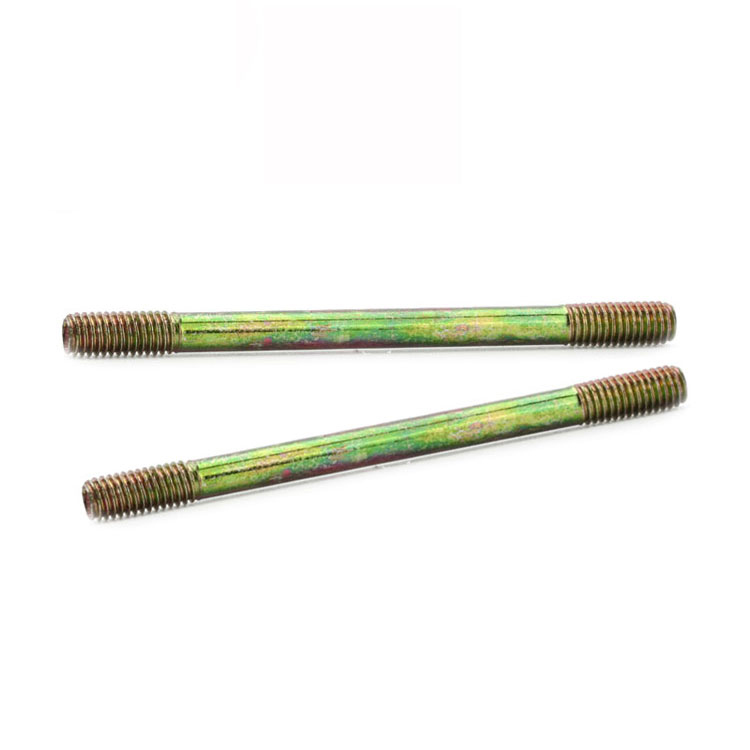
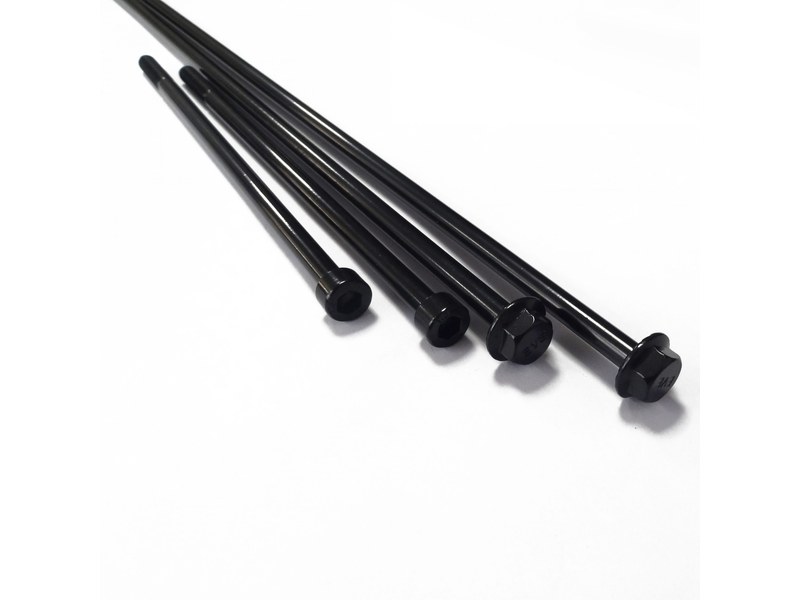
Type:Stud Screw Fastener Long Carbon Steel
Materials:Steel
Surface treatment:Color Zinc Plated
Head Type:Stud Head
Drive:None (double end stud)
Thread:Machine thread, both ends
Point:Chamfered both ends
Forming:Thread rolled on bar
Size:M1 M2 M3 M4 M5 M6 M7 M8 M9 M10 M14
Number:843
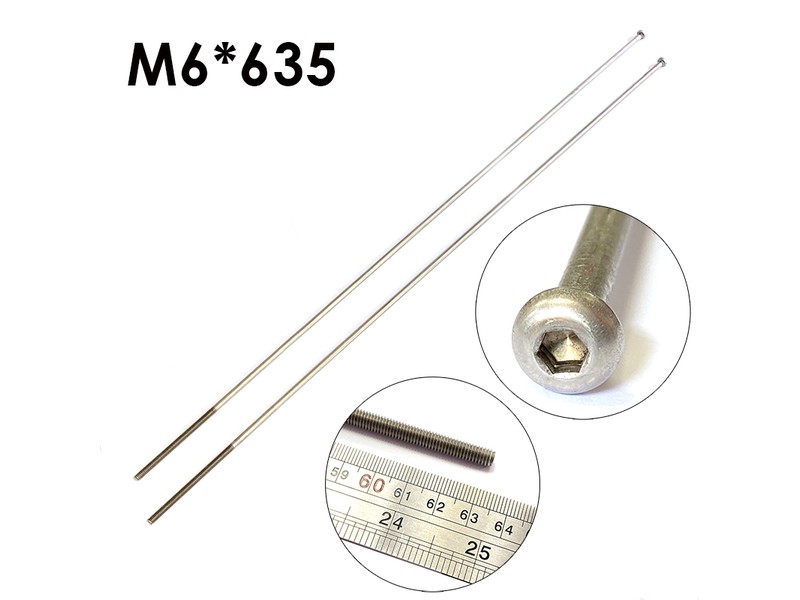
We make long carbon steel stud screws in colour zinc plated steel, threaded at both ends with a long plain middle, quoting them from M1 to M14. Middle diameter, both thread lengths, thread class and coating come from your drawing, and the first article is fitted through your assembly.
Watch the factory video·Email sst@szsst88.com
ISO 9001:2015 · Manufacturing since 1998 · 8,678+ customers · 89 countries and regions
Made to order – there is no stock catalogue. Each part is produced to your drawing, and production starts after drawing review and first-article approval.
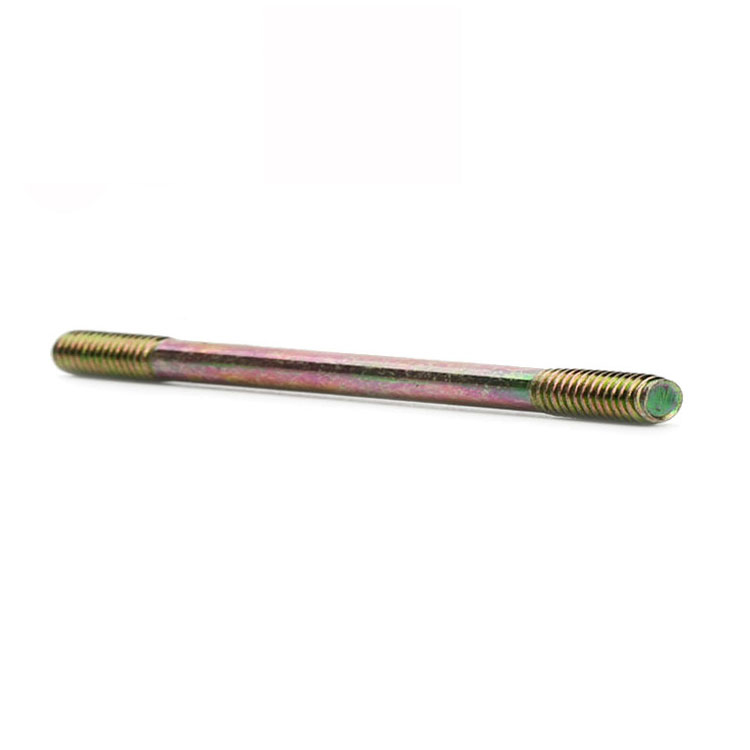
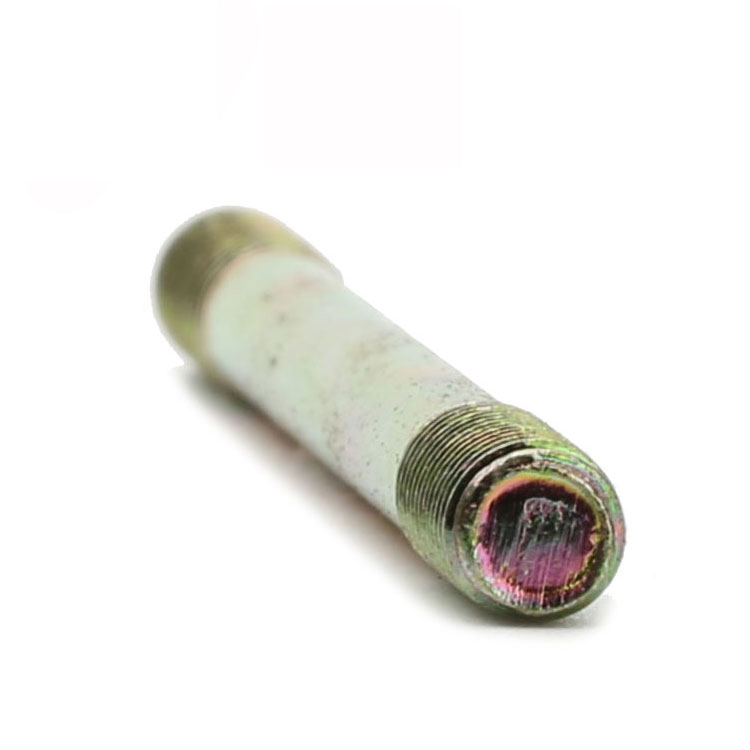
Long carbon steel stud screws are headless bars threaded at both ends with a long plain section between them, made here in carbon steel with a colour zinc finish and quoted from M1 to M14 with Number 843. The plain middle is most of the part, so the job is as much about a long shaft as about two threads.
Long plain middle. Most of the length is unthreaded, and that section is what passes through two separated holes and keeps them in line.
Two threaded ends. Short threads at each end, dimensioned separately: one sets into the parent part, the other takes a nut.
Colour zinc finish. A yellow-olive chromate over zinc, which reads warmer than white zinc and gives slightly longer protection in damp air.
No head. Installed with a stud driver or two locked nuts; nothing on the part to turn.
The part is supplied true enough to pass through two bores that may be far apart, and the plain middle is dimensioned for that fit rather than as a plain spacer. That is the difference between a long stud that assembles by hand and one that has to be levered into place.
On a short stud the plain section is a spacer. On carbon steel stud screws that are long, the plain section is the part: it is the length that has to pass through two holes that may be a hand’s width apart, and its condition over that length decides whether the assembly goes together without force. Two threads at the ends are almost the easy half.
A long shaft bends where a short one does not. It bends in the bin, in the box, and in the hand of the person fitting it, and a small bow that would be invisible on a screw becomes a shaft that will not enter the second hole. That is why the plain middle is specified with a diameter tolerance and why the parts are packed in a way that keeps them supported over their length rather than letting them sag at the ends.
The two ends then have to be concentric with that middle, because they are the parts that screw into the two components. If one end is off the centre line by a few hundredths, the stud sets into the parent part and the far end sits proud of the second hole; the nut goes on, but the cover is pulled sideways and the joint is loaded in a way the drawing never intended.
Colour zinc is a practical finish for this. It plates evenly over a long part, it reads as a warm yellow rather than a cold white, and it gives more protection than white zinc in damp air. What it does not do is hide a rough surface: the chromate is thin, and any tool mark on the plain middle shows through it as a change in colour.
Handling sets the practical limit on length. Above a certain length a carbon steel stud screws is a part that has to be lifted, supported and stored as a shaft, and the packing becomes part of the specification. Cut it in a way that leaves the ends square and support it in transit, and it arrives usable; pack it loose and the first inspection rejects it for a bow.
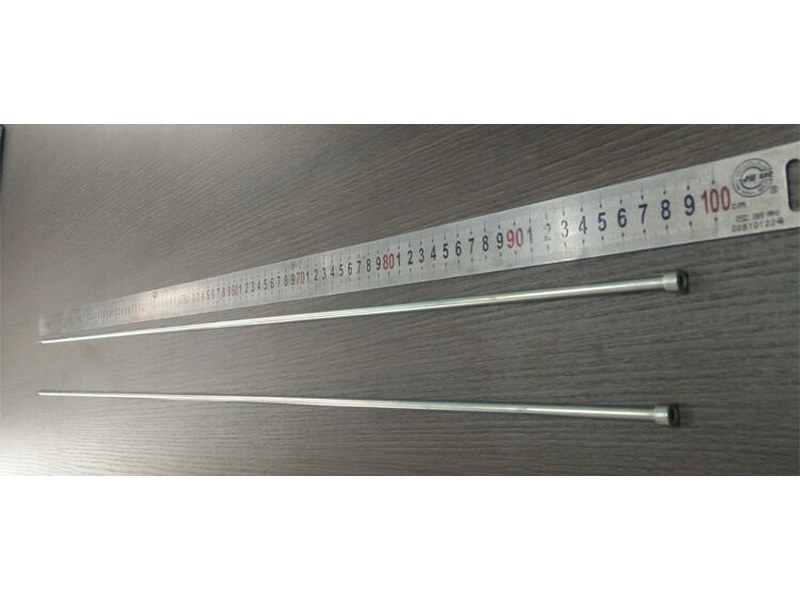
The recorded range is M1 to M14 covering M1, M2, M3, M4, M5, M6, M7, M8, M9, M10 and M14, with the longer lengths quoted case by case. Custom lengths up to 2,000 mm are subject to DFM review after drawing submission. For carbon steel stud screws the quotation carries the overall length, both thread lengths, the middle diameter and the length of the plain section, because on a long part the middle is what the assembly feels.
| Item | How it is defined | What we control |
|---|---|---|
| Head | None, double end | End chamfers and squareness |
| Setting end | Short thread into the parent part | Thread length and end chamfer |
| Nut end | Short thread for the nut | Thread length and thread stop |
| Middle | Long plain shaft | Diameter, length and how true it runs |
| Thread | Machine thread, both ends | Pitch, class and gauging after plating |
| Material | Carbon steel | Grade and heat number on the certificate |
| Finish | Colour zinc plated | Coating thickness, colour and coverage |
Middle diameter is the number to tolerance, not the overall length. A long part that is two millimetres over will still go in a slot that is generous, but a plain section that is a few hundredths over will not enter a bored hole at all.
Thread lengths should be given from each end and kept short. On a long stud there is no reason to thread more than the nut needs; every extra millimetre of thread at the setting end is a millimetre of plain section lost to the alignment.
Three features define the part: the long plain middle, the two short threads and the colour zinc finish. The first is the geometry that makes it a shaft, the second is where it connects, and the third is the surface that has to survive handling over all of that length.
| Feature | What it gives | What it costs |
|---|---|---|
| Long plain middle | Spans a gap and holds alignment | Bends and marks over its length |
| Two short threads | Enough engagement at both ends | Exact lengths matter at each end |
| Colour zinc | Warm tone, better damp-air life | Cosmetic variation between batches |
| No head | Nothing protruding at either end | Installed with nuts or a stud driver |
| Carbon steel body | Strength at low cost | Needs the coating for corrosion |
The long span is the reason the part is used: a housing and its cover can be held at a fixed distance and lined up by the studs themselves, with the nuts doing the clamping. That is a cheaper and more accurate answer than a spacer and a bolt on each corner.
The cost is the handling. A long carbon steel stud screw has to be packed in a straight pack, lifted in the middle and fitted without levering on the free end, and every one of those is a habit rather than a specification.
The recorded finish is colour zinc plating, a zinc deposit with a yellow-olive chromate conversion layer on top. On a long part that finish buys two things: a sacrificial layer that is thin enough to keep the threads usable, and a colour that is warmer than white zinc and consistent along the whole length, which matters when several studs stand side by side in a visible assembly.
| Option | How it protects | Effect on threads and shaft | Typical use |
|---|---|---|---|
| Colour zinc plated | Zinc plus yellow chromate | Thin build; threads re-gauged | General machinery, visible joints |
| White zinc plated | Zinc plus clear chromate | Thin build; threads re-gauged | Indoor assemblies |
| Black oxide | Conversion film, oiled | No measurable build | Internal mechanisms |
| Dacromet | Inorganic zinc-aluminium layer | Build allowed at the thread | Wet and outdoor hardware |
| Stainless, passivated | Passive film | None; threads as cut | Food, marine and chemical |
Colour zinc is a good general answer and a weak one in continuous wet service. Where the stud stands in damp air for years, the chromate is the first thing to go, and the zinc under it follows at the threads, which is exactly where the joint needs it.
The plating also has to be controlled at the ends, because long parts can be plated with a heavier deposit near the contact points. Both threads are gauged after plating, and the ends are checked for the roughness that a heavy deposit leaves where the part was hung.
Three assemblies where long carbon steel stud screws are the fixing:
| Where it sits | The stud spans the gap between a frame and a guard panel, holding the panel at a fixed distance and lining it up with the frame. |
| When it goes wrong | A long stud that has picked up a bow will not pass through the guard hole, and the panel is forced into place with a lever. |
| Why it happens | The joint spans a gap, the panel is fitted by hand, and alignment is visible. |
| What we control | Middle diameter toleranced, packing specified to support the length. |
| Where it sits | The stud carries a mounting plate or a busbar support at a set distance from the back panel, with a nut on the free end. |
| When it goes wrong | A plated thread at the setting end binds in a thin panel thread, and the stud spins instead of tightening. |
| Why it happens | The joint is assembled on a bench, it is plated steel, and the thread is in a thin panel. |
| What we control | Thread lengths kept short, both threads gauged after plating. |
| Where it sits | The stud holds a cover at a defined stand-off so a moving part clears it, with the nut at the outside face. |
| When it goes wrong | A bent middle pulls the cover out of square, and the clearance is lost on one side. |
| Why it happens | The joint sets a distance, the cover is sheet metal, and the clearance is functional. |
| What we control | Plain section checked along its length, ends square to the middle. |
Four reasons that matter on a long stud, each tied to what the drawing has to prove:
|
Middle and both ends agreed
The middle diameter and both thread lengths are agreed before cutting, because on carbon steel stud screws the plain section is the alignment surface. Basis: Middle and ends agreed. |
Cut, rolled, plated in one route
The bar is cut to length, both threads are rolled, the ends are chamfered and the parts are plated and re-gauged in one route. Basis: One route from bar to plated stud. |
|
Middle measured along the part
The plain section is measured along its length, because a stud can pass at each end and still be unfit to span a gap. Basis: Middle measured along the length. |
Packing fixed with the first article
The packing is agreed with the first article, because on a long part the transit is part of the process. Basis: Packing agreed at first article. |
Shi Shi Tong makes long carbon steel stud screws from bar, cutting blanks to length, rolling a short thread at each end, chamfering the ends and colour zinc plating the finished parts. The long middle is left unthreaded at the drawing diameter, and both threads are gauged after plating before the batch continues. Long parts are handled and packed in a way that supports them over their length.


|

|
The difficulty on these parts is not the thread, it is the length. A long blank is easy to bow before the thread is rolled, and a bow that is pressed straight afterwards leaves a slight kink where it was bent; the middle then measures inside tolerance at each measured point and still will not pass a close hole.
What decides whether carbon steel stud screws pass is the middle over its length, the two thread lengths, the thread class and the coating. The inspection agreement covers those, and the criteria come from the drawing.

Ends and middle on the projector |

Both threads gauged |

Hardness checked on the bar |

Coating proved by salt spray |
The middle is checked at several points along its length and the part is rolled to see whether it runs true, which is a simpler and more useful check than a single diameter reading. Both threads are gauged after plating, and the coating is checked for thickness and colour against the approved sample.
Where the stud spans two bores, the first article is fitted through both in the customer assembly. That check is the one that decides acceptance on a long part, because it tests the whole length rather than a few points.
Every shipment of carbon steel stud screws is traceable to the bar it was made from and to the plating batch. The grade and heat number are recorded on the material certificate supplied with the parts, and the inspection records follow the criteria agreed on the drawing.

ISO 9001:2015 |

RoHS test report |

Registered trademark |

Patent: security screw and driver |
With each batch we supply the material certificate, the inspection record for the criteria on the drawing and, where it is listed, the third-party report for the coating. The documents carry the drawing revision and the batch number, so a repeat order is made to the same middle diameter that was approved.
More than 8,678 customers in 89 countries and regions have ordered from Shi Shi Tong; 87% of orders come from repeat customers and 56% through referrals. Most projects follow the same route: drawing review, first-article approval, then batches checked against that sample. On a long stud the first article is fitted through the customer assembly, because the whole length is the feature. Buyers visit during the process to review samples and to see how the parts are cut and threaded.
|
8,678+
customers served
|
87%
of orders from repeat customers
|
56%
of orders through referrals
|
89
countries and regions shipped to
|
Buyers and quality engineers visit for sample review, process discussion and supplier audits; the visit is arranged around production so the thread rolls and the plating line can be seen on the day the parts run.

Customer group visit – sample review |

Customer group visit – process discussion |

Customer group visit – factory tour |

Customer visit – project kick-off |

Danish customer – drawing review |

Industry exhibition – meeting customers |
The plain middle spans a gap and has to be true over its whole length. A long part bends where a short one does not, and a bow stops it entering the second hole.
Each end only needs enough for its job. Extra thread takes plain section away from the alignment, which is the part that the assembly actually uses.
Zinc plating with a yellow-olive chromate on top. It gives a warmer tone and slightly longer protection than white zinc in damp air.
It adds a few microns, so both ends are gauged after plating rather than before.
With a stud driver on the middle, or two nuts locked at one end. Long parts are fitted by hand into both holes before the nut is tightened.
Overall length, both thread lengths, middle diameter and tolerance, thread class, the material and the coating.
How a long stud project runs from drawing to repeat delivery:
|
1
Send the drawing and the holes it spans
|
→ |
2
Middle diameter, both ends and packing agreed
|
→ |
3
First article fitted through your assembly
|
→ |
4
Batch production and repeat orders
|
Each step is confirmed with you before the next one starts; the drawing revision from the first article is what repeat orders are checked against.
For a quotation, send the drawing with the overall length, both thread lengths, middle diameter and tolerance, thread class, the material and the coating.
|
Overall length
|
Setting thread
|
Nut thread
|
|
Middle diameter
|
Thread class
|
Coating
|
Sending a drawing? The form below does not take attachments. Email the PDF, DXF or STEP file to sst@szsst88.com with the part name and quantity in the subject line – the drawing is reviewed and a quotation follows.

 +86 13143444311
 sst@szsst88.com